
Ditch Stonecrop (Penthorum sedoides)
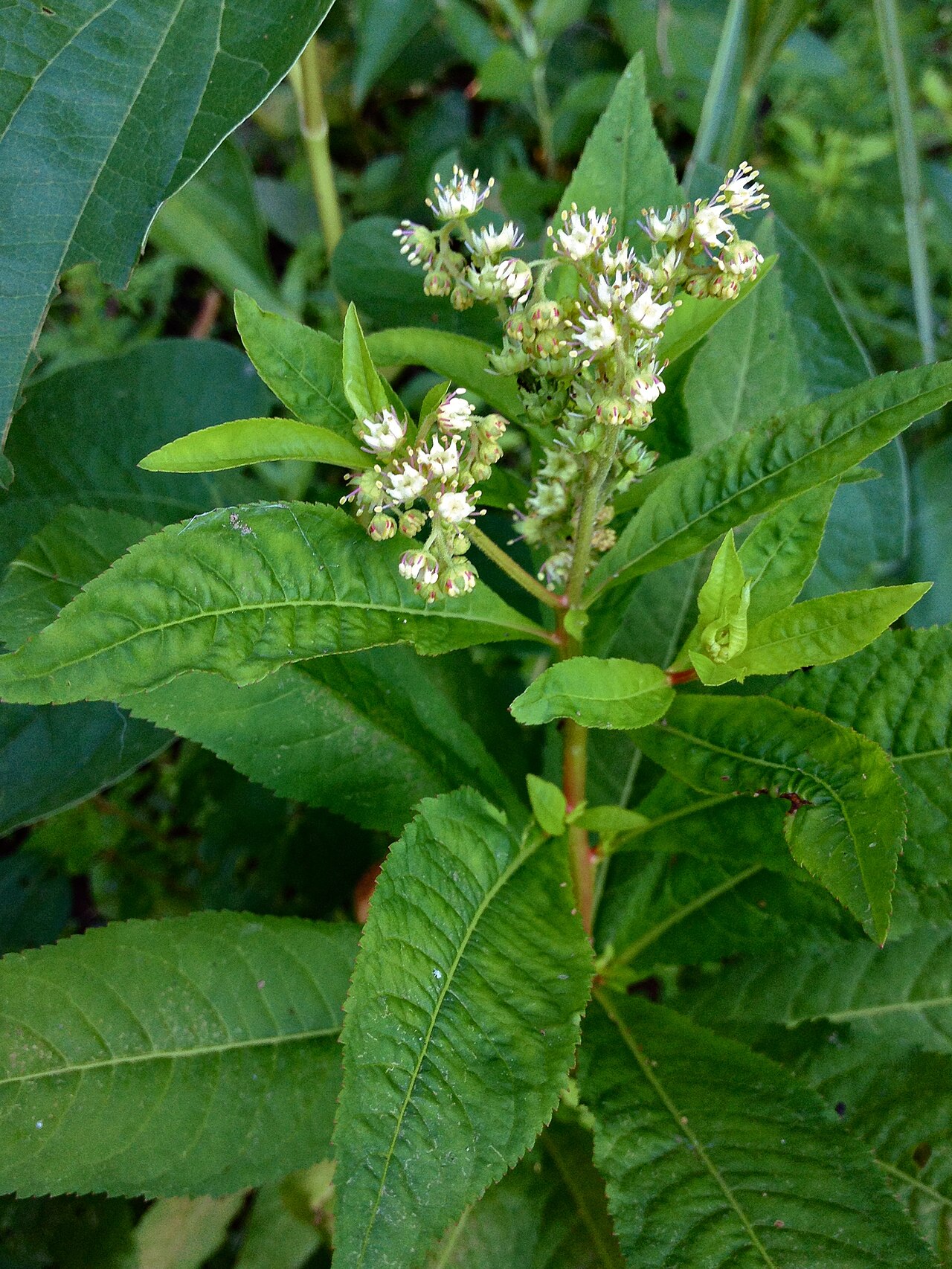
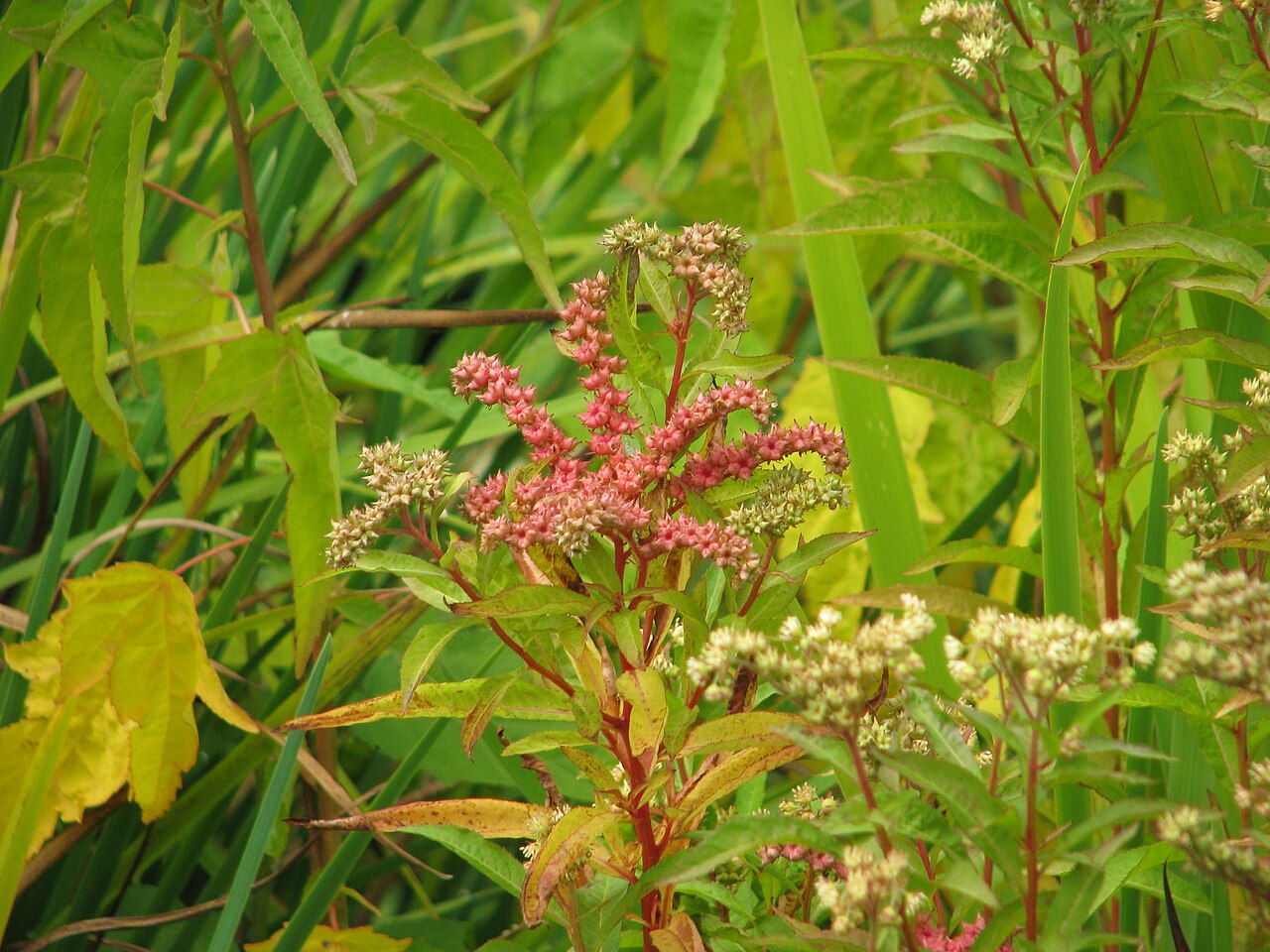
Penthorum sedoides, known as Ditch Stonecrop, is a native wetland perennial found across most of eastern and central North America. Plants grow 1 to 2 1/2 feet tall, with upright stems and narrow, finely toothed leaves, and from July to September they bear small, star-shaped, greenish-white flowers along the upper sides of a few curling branches at the top of the stem. In late summer and fall the star-shaped fruits and stems turn pink, red or purplish.
Despite its common name and its species name sedoides (“like Sedum“), ditch stonecrop is not a true stonecrop and is not succulent. Its star-shaped flowers and fruits resemble those of sedums, which is why early botanists placed it near them. Today it is placed in its own small family, Penthoraceae, which contains only one other species, native to eastern Asia. Older books list it in the stonecrop family (Crassulaceae) or the saxifrage family (Saxifragaceae).
Ditch stonecrop is a common, adaptable plant of muddy shores, ditches, marshes, wet meadows and floodplains. It is not showy, but it is easy to grow in a rain garden, at a pond edge or in any spot that stays wet, and its late-season color and curious fruits add interest. It is one of the few native plants that thrives in the wettest, muddiest corners of a yard.
Identification
Ditch stonecrop is best recognized in late summer by the combination of narrow, toothed leaves, small greenish flowers in one-sided, curving branches at the top of the stem, and star-shaped, five-beaked fruits.
Stems & Roots
Plants grow 1 to 2 1/2 feet tall (sometimes to 3 feet) from creeping rhizomes and stolons. Stems are upright, round, usually unbranched below the flower clusters, and often reddish, especially toward the base and in fall. Plants can form loose colonies in mud.
Leaves
Leaves are alternate, lance-shaped to narrowly elliptic, 2 to 4 inches long, pointed at both ends, with finely toothed edges. They are thin, not fleshy or succulent, and light green, turning orange, red or purplish in fall.
Flowers
From July to September, the stem ends in two to several curving branches up to about 3 inches long. Small flowers line the upper side of each branch. Each flower is about 1/4 inch across, with five greenish-yellow to whitish sepals, usually no petals, ten stamens with yellow to orange-brown anthers, and five green, partly united pistils in the center.
Fruit & Seeds
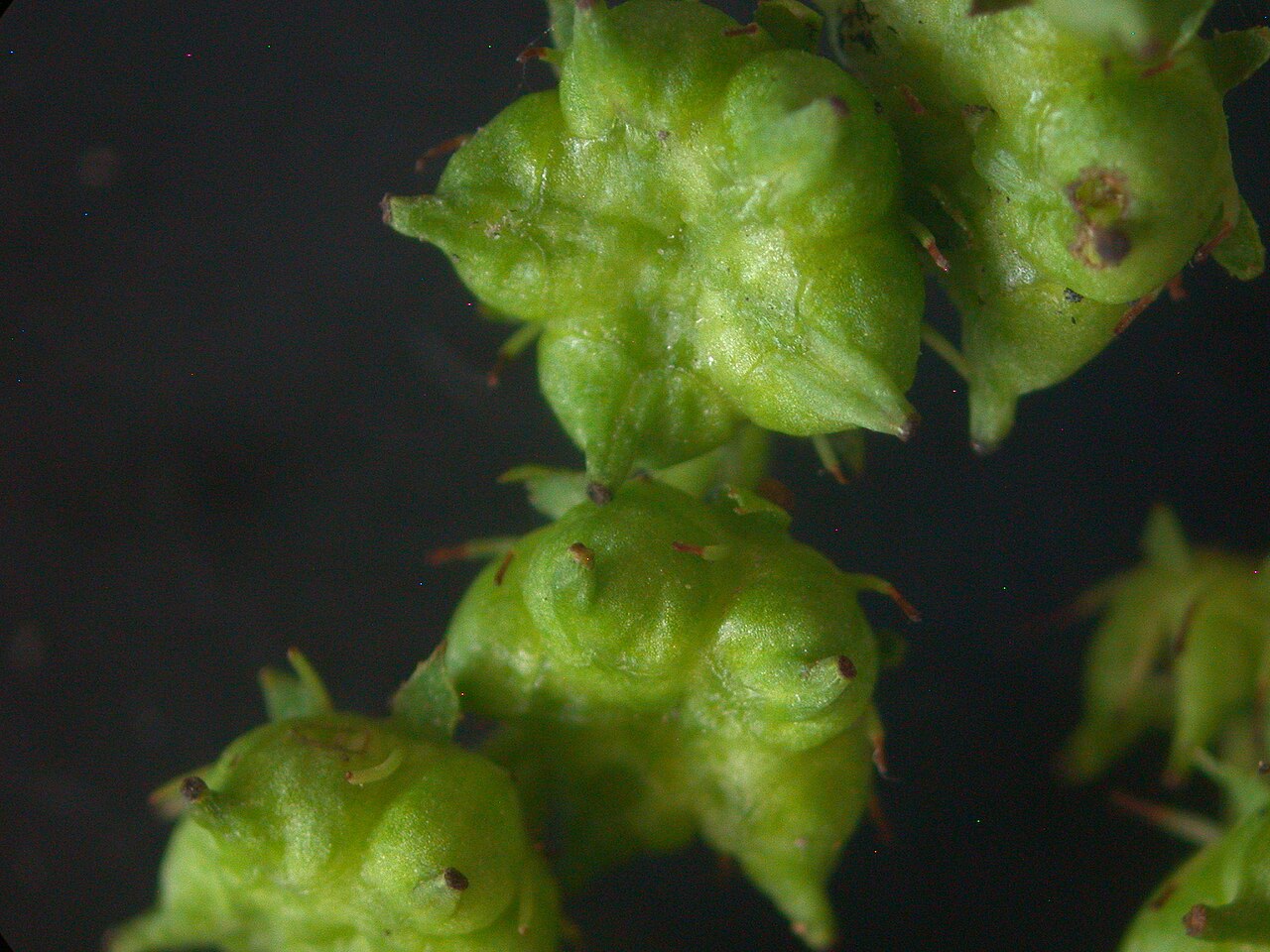
The five pistils develop into a single, five-beaked, star-shaped capsule about 1/4 inch across, green at first and turning red, pink or purplish-brown as it ripens. When ripe, the tops of the beaks break off like little lids, leaving open cups. Raindrops that fall into the cups splash out the tiny seeds, a dispersal method called splash-cup dispersal.
Look-alikes
Before it flowers, ditch stonecrop can be mistaken for a smartweed (Persicaria), willow-herb or loosestrife seedling. Smartweeds have papery sheaths (ocreae) around the stem at each leaf base, which ditch stonecrop lacks. Once in flower or fruit, the curving, one-sided branches and the star-shaped, five-beaked capsules are unmistakable.
Safety
Ditch stonecrop is not known to be poisonous. It is not a food or medicinal plant in North America, although its Asian relative Penthorum chinense is used in traditional Chinese medicine. As with any wild plant, do not eat it unless you are certain of its identity and safety.
Quick Facts
| Scientific Name | Penthorum sedoides |
| Family | Penthoraceae (ditch stonecrop family); formerly Crassulaceae or Saxifragaceae |
| Plant Type | Herbaceous perennial; rhizomatous wetland forb |
| Mature Height | 1–2 1/2 ft |
| Mature Spread | 1–2 ft; spreads by rhizomes and seed |
| Growth Rate | Moderate to fast |
| Sun Exposure | Full sun to part shade |
| Water Needs | High; wet to saturated soil, tolerates shallow water |
| Soil Type | Mud, muck, wet sand, silt or clay |
| Soil pH | About 5.5–7.5 (slightly acidic to slightly alkaline) |
| Bloom Time | July–September |
| Flower Color | Greenish-yellow to whitish |
| Fall Color | Orange, red and purplish stems, leaves and fruits |
| Fruit | Star-shaped, five-beaked capsule with tiny seeds |
| Deer Resistant | Moderate |
| USDA Hardiness Zones | 3–9 |
Native Range
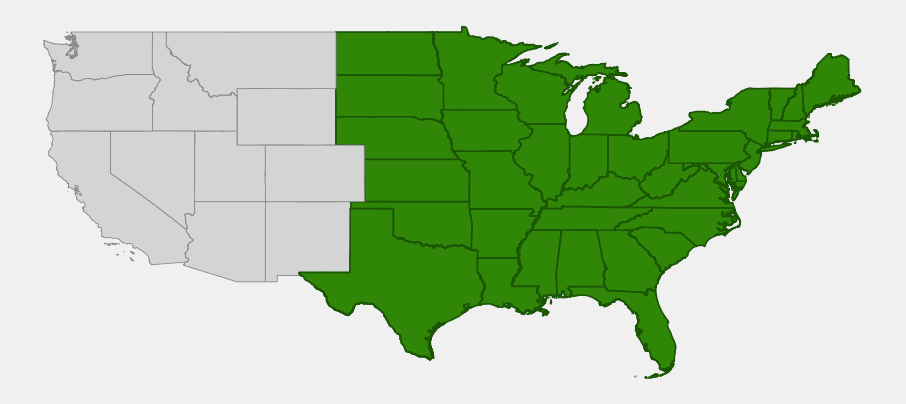
Ditch stonecrop is native to most of eastern and central North America, from New Brunswick, Quebec, Ontario and Manitoba south to Florida and Texas. USDA PLANTS records it as native in 37 states and the District of Columbia, from Maine west to North Dakota, South Dakota, Nebraska and Kansas, and south to the Gulf Coast from Florida to eastern Texas.
It is common throughout the Midwest, the Northeast, the Ohio and Mississippi valleys and the Southeast, wherever there are muddy shores and wet ground. On the western edge of its range it follows river valleys into the eastern Dakotas, Nebraska, Kansas and Oklahoma, and in Texas it grows mainly in the eastern part of the state. USDA also lists Oregon and Washington, but the Burke Herbarium treats the Pacific Northwest plants (and those in British Columbia) as introduced from eastern North America, where they grow as weeds of cultivated cranberry bogs. Those states are not counted as native range here.
Its habitat is open, wet ground: muddy shores of ponds, lakes and rivers, ditches, marshes, wet meadows, floodplains, swamp openings and sandbars. It often colonizes freshly exposed mud as water levels drop in late summer.
📋 Regional plant lists featuring Ditch Stonecrop: New York, Pennsylvania & Northern New Jersey · Ohio & Indiana · Michigan, Wisconsin & Eastern Minnesota · Kentucky & Tennessee · Nebraska, Kansas & Eastern Colorado · Connecticut, Massachusetts & Rhode Island · New Hampshire, Maine & Vermont · Maryland, Virginia & West Virginia · Delaware, Southern New Jersey & Long Island · Illinois, Iowa & Missouri · Alabama, Georgia & Mississippi · North & South Florida · North & South Carolina · Arkansas, Louisiana, Eastern Oklahoma & Eastern Texas · North Dakota, South Dakota & Western Minnesota
Growing & Care Guide
Ditch stonecrop is very easy to grow in any constantly moist or wet spot. It is a good choice for the lowest, wettest part of a rain garden or a muddy pond edge. It can self-seed freely in wet, open ground, so give it room or pull extra seedlings. Buy nursery-grown plants or seed.
Light
Full sun to part shade. It flowers and colors best in sun but tolerates several hours of shade.
Soil & Water
Plant it in wet to saturated soil: mud, muck, silt, sand or clay. It tolerates seasonal flooding and shallow standing water, and it does well in soil that alternates between flooded and merely wet. It does not tolerate dry soil.
Planting Tips
Plant in spring, 12 to 18 inches apart, at the water line of a pond, in the bottom of a rain garden or bioswale, or along a wet ditch. Combine it with monkeyflower, cardinal flower, sneezeweed and sedges for a long season of color. It also works in container water gardens set at or just below the water surface.
Pruning & Maintenance
Little care is needed. Leave the stems standing into fall for their color and to let the seeds disperse, then cut them back in late winter or early spring. If it spreads more than you want, pull extra seedlings in spring, which is easy in soft, wet soil.
Propagation
It grows readily from seed sown on the surface of wet soil in fall or after cold, moist stratification in spring; the tiny seeds need light to germinate. Clumps can also be divided in spring. In suitable wet, open sites it often self-sows.
Landscape Uses
- Rain gardens and bioswales: for the wettest, lowest zone
- Pond and stream edges: tolerates mud, flooding and shallow water
- Wetland restoration: quickly colonizes exposed mud and wet disturbed soil
- Fall color: red and purple fruits and stems in late summer and fall
- Naturalistic wet meadows: with monkeyflower, sneezeweed, sedges and rushes
Wildlife & Ecological Value
Ditch stonecrop is a modest but useful part of wetland plant communities.
For Pollinators
The small flowers offer pollen and a little nectar and are visited by small bees, wasps and flies. They can also self-pollinate, so seed set is reliable even with few visitors.
For Birds
The tiny seeds may be eaten by some birds and waterfowl, and dense stands provide cover for small wetland birds and insects at the water’s edge.
For Mammals
Muskrats and deer may eat the foliage occasionally, but it is not a major food plant.
Ecosystem Role
Ditch stonecrop is a pioneer of exposed mud and helps stabilize shorelines and ditch banks with its rhizomes. It is a typical member of the late-summer mudflat community, along with smartweeds, beggarticks and sedges, and it provides structure and food for aquatic insects and other small animals in shallow water.
Cultural & Historical Uses
The genus name Penthorum comes from the Greek pente, “five,” referring to the five-parted flowers and fruits. The species name sedoides means “like Sedum,” and the common names ditch stonecrop and Virginia stonecrop reflect the same resemblance. Linnaeus described it in 1753.
Botanists have long debated where ditch stonecrop belongs. It has been placed in the stonecrop family (Crassulaceae) and the saxifrage family (Saxifragaceae), and is now usually placed in its own family, Penthoraceae, in the order Saxifragales. Its only close relative is Penthorum chinense of eastern Asia, a classic example of the plant connections between eastern North America and eastern Asia.
The splash-cup seed dispersal of ditch stonecrop is an unusual adaptation among flowering plants; bird’s-nest fungi use the same principle to spread their spores. The open, cup-shaped capsules use the energy of falling raindrops to throw seeds a short distance, often onto the wet mud where they can germinate.
Frequently Asked Questions
Is ditch stonecrop a real stonecrop?
No. Despite its name, it is not a succulent and not in the true stonecrop family. It is the North American member of the small family Penthoraceae; its star-shaped flowers and fruits only resemble those of sedums.
Where does ditch stonecrop grow?
In wet, open places: muddy shores, ditches, marshes, wet meadows and floodplains across most of eastern and central North America.
Is ditch stonecrop invasive?
Not where it is native. It can spread by seed and rhizomes in wet, open soil, but it does not overwhelm other wetland plants. In the Pacific Northwest it is introduced and is a weed of cranberry bogs.
Does ditch stonecrop have fall color?
Yes. In late summer and fall the stems, leaves and star-shaped fruits often turn pink, red, orange or purplish.
Can I grow ditch stonecrop in a rain garden?
Yes. It is an excellent choice for the lowest, wettest part of a rain garden that holds water after storms, as long as the soil does not dry out for long periods.

Looking for a nursery that carries Ditch Stonecrop?
Browse our native plant nursery directory: Alabama & Arkansas · Connecticut, Delaware, Florida & Georgia · Illinois, Indiana, Iowa & Kansas · Kentucky, Louisiana, Maine, Maryland, Massachusetts, Michigan, Minnesota, Mississippi & Missouri · Nebraska, New Hampshire, New Jersey, New York, North Carolina, North Dakota, Ohio & Oklahoma · Pennsylvania, Rhode Island, South Carolina, South Dakota, Tennessee, Texas, Vermont & Virginia · West Virginia & Wisconsin