
Dwarf Verbena (Glandularia pumila)
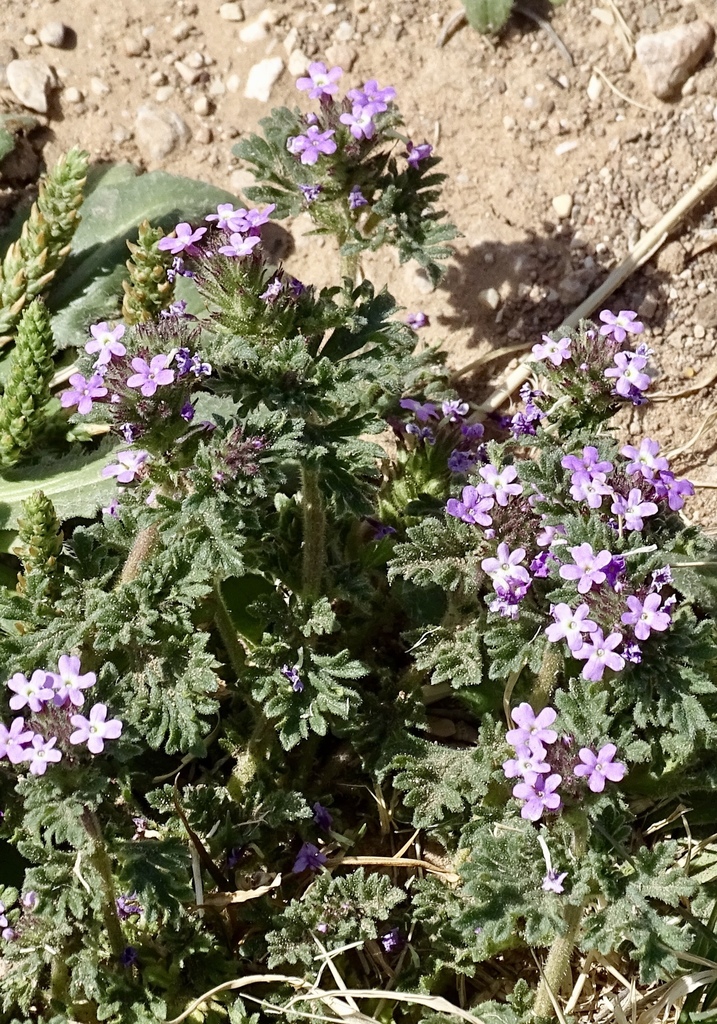
Glandularia pumila, known as Dwarf Verbena, pink mock vervain or dwarf vervain (formerly Verbena pumila), is a small annual wildflower of the verbena family (Verbenaceae). It forms low, sprawling clumps of hairy, finely divided leaves topped by small clusters of lavender to pink flowers, usually on stems no more than about 16 inches long.
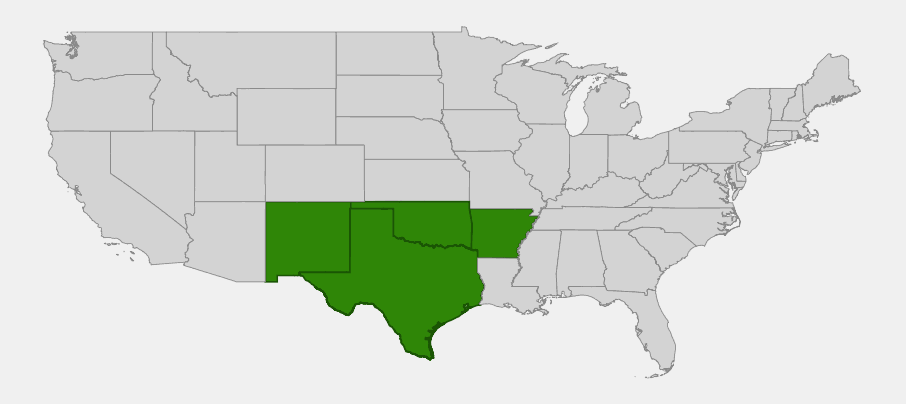
It is native mainly to Texas, with populations extending into Oklahoma, southeastern New Mexico and Arkansas. It is one of the first wildflowers of the year on the Edwards Plateau and in central and west Texas, flowering from February into early summer on rocky slopes, prairies, roadsides and open ground.
Dwarf verbena is a cheerful early nectar plant for bees and butterflies and a good choice for wildflower meadows, rock gardens and xeriscapes in its native range. It completes its life cycle in a season and comes back from seed.
Identification
In late winter and spring in Texas and nearby states, look for low, hairy mats with deeply cut leaves and small, flat-topped clusters of lavender-pink flowers that elongate into spikes as they bloom.
Growth Habit
It is a low annual with several stems that sprawl along the ground or curve upward, usually 4 to 16 inches long. The stems and leaves are covered in spreading hairs, some of them glandular, giving the plant a soft, slightly sticky feel.
Leaves
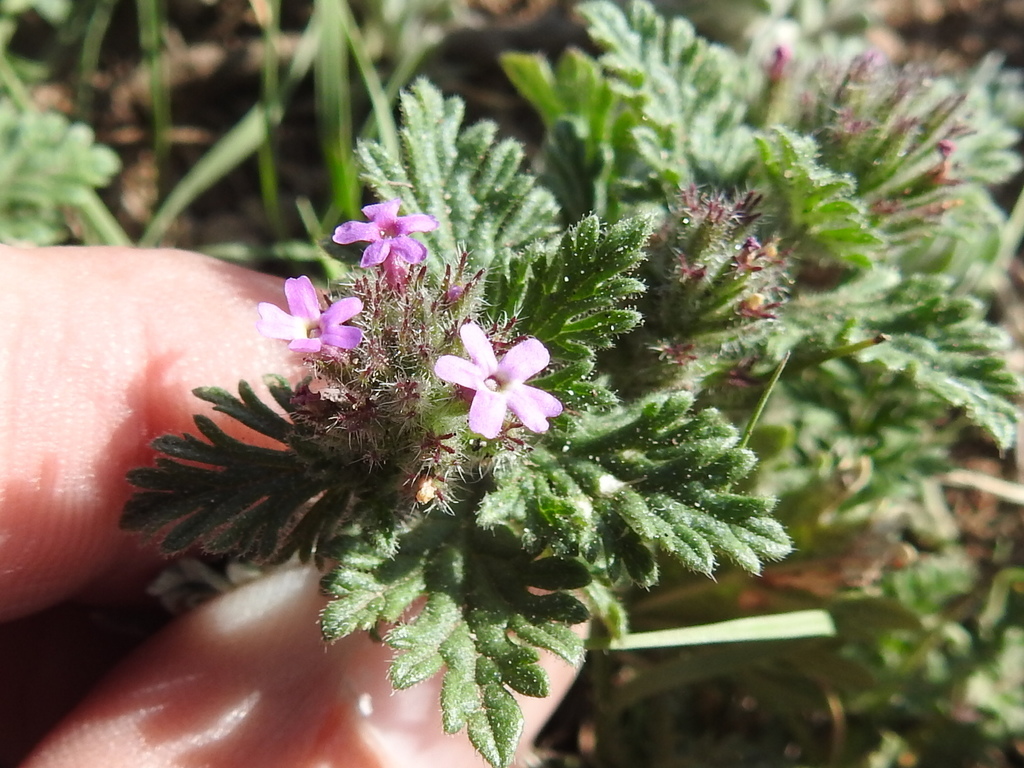
The leaves are opposite, about 1 inch long, and deeply divided into narrow, toothed lobes, much like small parsley or geranium leaves. They are hairy on both surfaces.
Flowers
The flowers grow in short, dense clusters at the stem tips that lengthen into spikes as blooming continues. Each flower has a slender tube and five spreading, notched lobes, about 1/4 to 3/8 inch across, in pale lavender, pink or purple. Bloom time is February to July, peaking in March and April.
Fruit
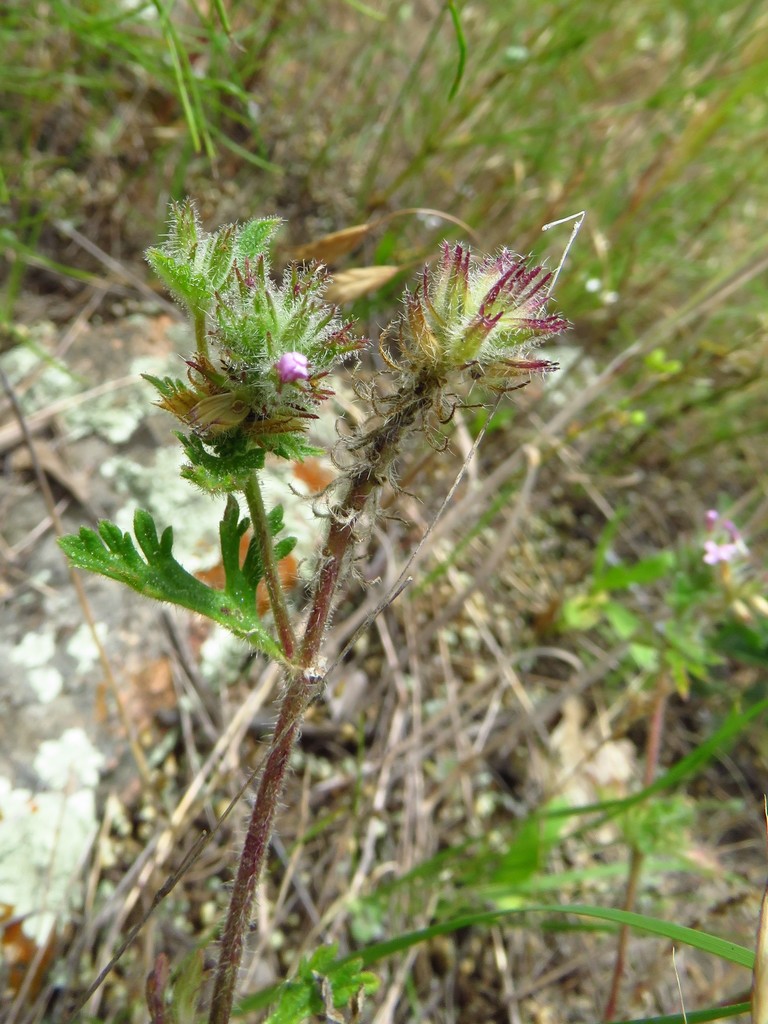
The fruit splits into four small nutlets, which stay enclosed in the hairy, glandular calyx. The spikes become long and bristly-looking as fruits mature.
Look-alikes
Dakota mock vervain (Glandularia bipinnatifida) is a perennial with larger, brighter flowers whose corolla tube sticks well out of the calyx. Rose vervain has much larger, rose-pink flowers and grows farther east. Dwarf verbena is smaller in every part, an annual, and has a corolla that barely sticks out past the calyx.
Quick Facts
| Scientific Name | Glandularia pumila (syn. Verbena pumila) |
| Family | Verbenaceae (verbena family) |
| Plant Type | Annual wildflower |
| Mature Height | 4–8 in (stems to 16 in long) |
| Mature Spread | 6–16 in |
| Growth Rate | Fast |
| Sun Exposure | Full sun |
| Water Needs | Low; dry to medium soil |
| Soil Type | Well-drained rocky, gravelly, sandy or limestone soils |
| Soil pH | Neutral to alkaline (about 6.5–8.5) |
| Bloom Time | February–July |
| Flower Color | Lavender, pink or light purple |
| Fall Color | None (annual) |
| Fruit | Four nutlets in a hairy calyx |
| Deer Resistant | Moderate |
| USDA Hardiness Zones | 7–9 (grown as a cool-season annual) |
Native Range
Dwarf verbena is native to the south-central United States and northern Mexico. USDA PLANTS lists it as native in Arkansas, New Mexico, Oklahoma and Texas.
Its center of abundance is Texas, especially the Edwards Plateau, the Cross Timbers, the Rolling Plains, central Texas blackland prairies and the Trans-Pecos. It reaches north into southwestern and central Oklahoma and west into southeastern New Mexico. Records from Arkansas are few and are outlying populations at the eastern edge of the range.
It grows in prairies, grassy openings, limestone and granite outcrops, rocky slopes, caliche flats, roadsides, pastures and disturbed ground, usually in dry, well-drained soils in full sun.
📋 Regional plant lists featuring Dwarf Verbena: South & West Texas · Arkansas, Louisiana, Eastern Oklahoma & Eastern Texas
Growing & Care Guide
Dwarf verbena is an easy, self-sowing annual for sunny, dry spots in Texas and the southern Plains. Sow it once in the right spot and it will usually come back from seed every spring.
Light
Full sun. It flowers best in open, sunny sites and gets leggy in shade.
Soil & Water
Well-drained, dry to medium soil, including thin rocky, gravelly, caliche or limestone soils. It needs winter and spring moisture to grow and bloom, then finishes as summer heat arrives. Avoid rich, wet soils.
Planting Tips
Scatter seed in fall on bare or lightly raked soil where it can get winter rains. It works well in wildflower meadows, between stepping stones, in rock gardens and along dry borders with bluebonnets and other spring annuals.
Pruning & Maintenance
No pruning is needed. Let plants set seed and dry out before mowing or clearing so the next generation is in the soil.
Propagation
Grow from seed sown in fall. Like other verbenas, the seed may germinate unevenly, and some of it stays dormant in the soil until later years.
Landscape Uses
- Wildflower meadows: early color with bluebonnets and other spring annuals
- Rock gardens: small, low mats in gravel and between stones
- Xeriscapes: thrives in thin, dry, alkaline soils
- Pollinator gardens: early nectar for bees and butterflies
- Roadside and pasture plantings: reseeds in open, sunny ground
Wildlife & Ecological Value
Small as it is, dwarf verbena blooms when few other flowers are open, so its nectar is valuable early in the season.
For Pollinators
The long, slender flower tubes are visited by butterflies, such as sulphurs, skippers and whites, as well as long-tongued bees and day-flying moths. Native bees gather pollen and nectar from the open flowers.
For Birds
Ground-feeding birds such as sparrows eat the small nutlets.
For Mammals
Rabbits and small mammals may graze the tender spring growth, but the hairy leaves are not a favorite.
Ecosystem Role
As an early annual on rocky and disturbed ground, it covers bare soil quickly in spring, helps reduce erosion, and provides early food for pollinators emerging from winter.
Cultural & Historical Uses
Glandularia means small glands and refers to the glands on the anthers that separate this genus from true Verbena. The species name pumila means dwarf or small. Botanists long kept these mock vervains in Verbena, and many references still list it as Verbena pumila.
In central Texas, dwarf verbena is often one of the first wildflowers of the year, blooming on roadsides and rocky ground as early as February, weeks before the bluebonnets peak.
Its seeds can wait in the soil through dry years, so dwarf verbena may be scarce one spring and carpet the same roadside the next after good fall and winter rains. Wildflower watchers in Texas often take a strong early verbena bloom as a sign of a good spring wildflower season.
Frequently Asked Questions
Is dwarf verbena an annual or perennial?
It is an annual. It grows over winter and spring, blooms, sets seed and dies back with summer heat, then returns from seed.
When does dwarf verbena bloom?
From February to July, with peak bloom in March and April in central Texas.
How do I tell dwarf verbena from Dakota mock vervain?
Dwarf verbena is smaller, with tiny flowers whose tubes barely stick out of the calyx. Dakota mock vervain is a perennial with larger, brighter purple flowers.
Where does dwarf verbena grow?
Mainly in Texas, plus Oklahoma, southeastern New Mexico, a few sites in Arkansas, and northern Mexico, on rocky slopes, prairies and roadsides.
How do I grow dwarf verbena?
Scatter seed in fall in a sunny, well-drained spot, keep the soil lightly moist through winter, and let the plants reseed each spring.

Looking for a nursery that carries Dwarf Verbena?
Browse our native plant nursery directory: Arkansas · New Mexico & Oklahoma · Texas

