
Small Skullcap (Scutellaria parvula)
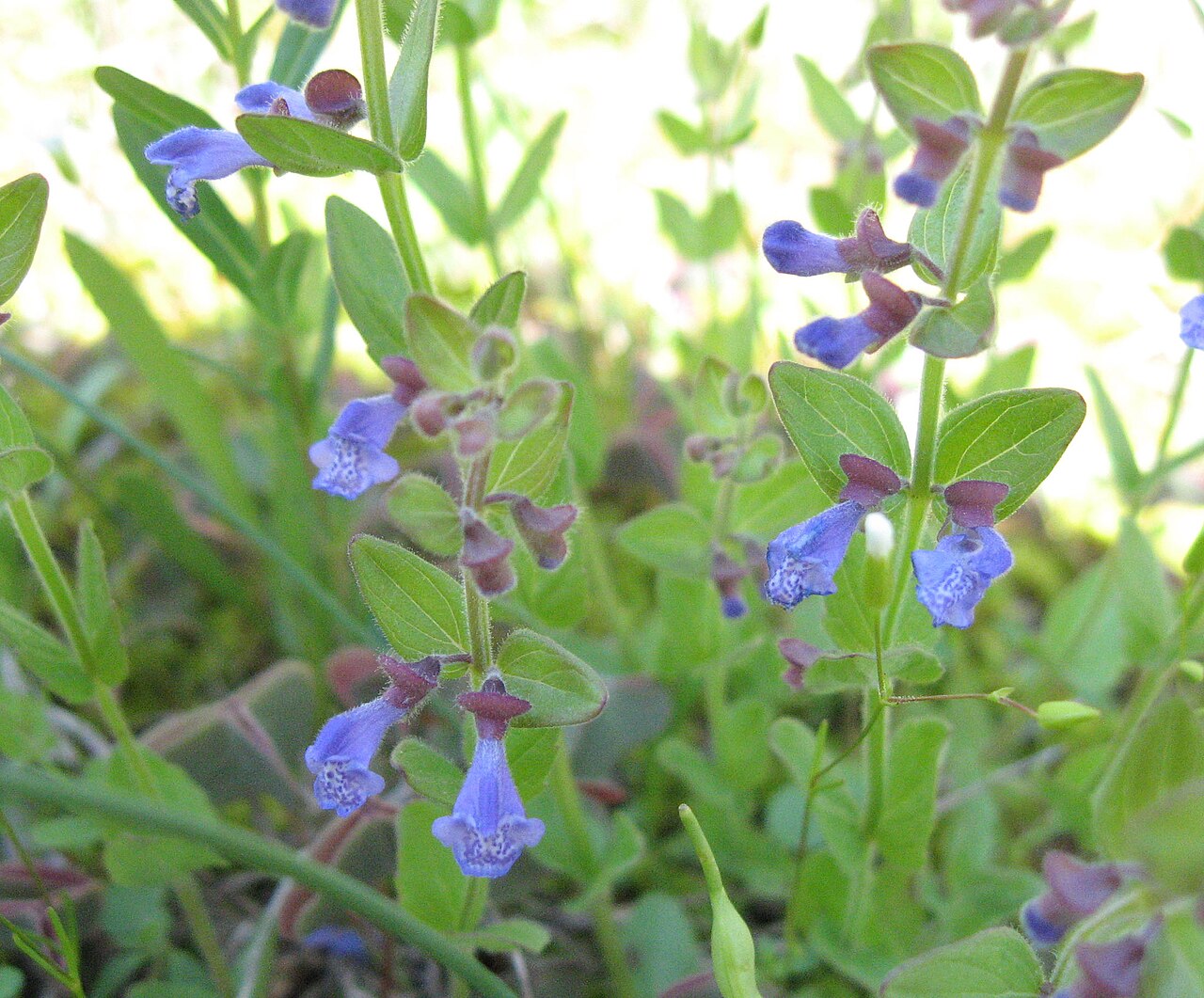
Scutellaria parvula, known as Small Skullcap, is a tiny perennial in the mint family (Lamiaceae). It grows only 3 to 12 inches tall, with square stems, small paired leaves and little blue-violet, two-lipped flowers, each about 1/3 inch long, tucked into the leaf axils. Like all skullcaps, the calyx at the base of each flower has a small raised cap on top, the “skullcap” that gives the genus its name.
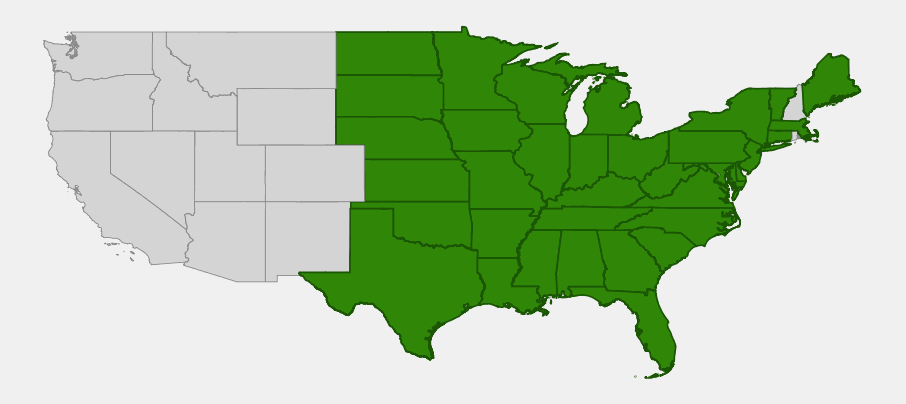
Small skullcap is native to a broad area of eastern and central North America, from Quebec, Ontario and Manitoba south to Florida and Texas and west to the Dakotas, Nebraska, Kansas and Oklahoma. It grows in dry, open, often thin-soiled places: prairies, limestone and cedar glades, rocky barrens, sandy savannas, open woods and roadsides.
It blooms from mid-spring into early summer. It is too small to stand out in most gardens, but it is a charming plant for a rock garden, a short prairie planting or a sunny, gravelly spot where taller plants do not crowd it, and it spreads slowly by thin rhizomes with chains of tiny tubers.
Identification
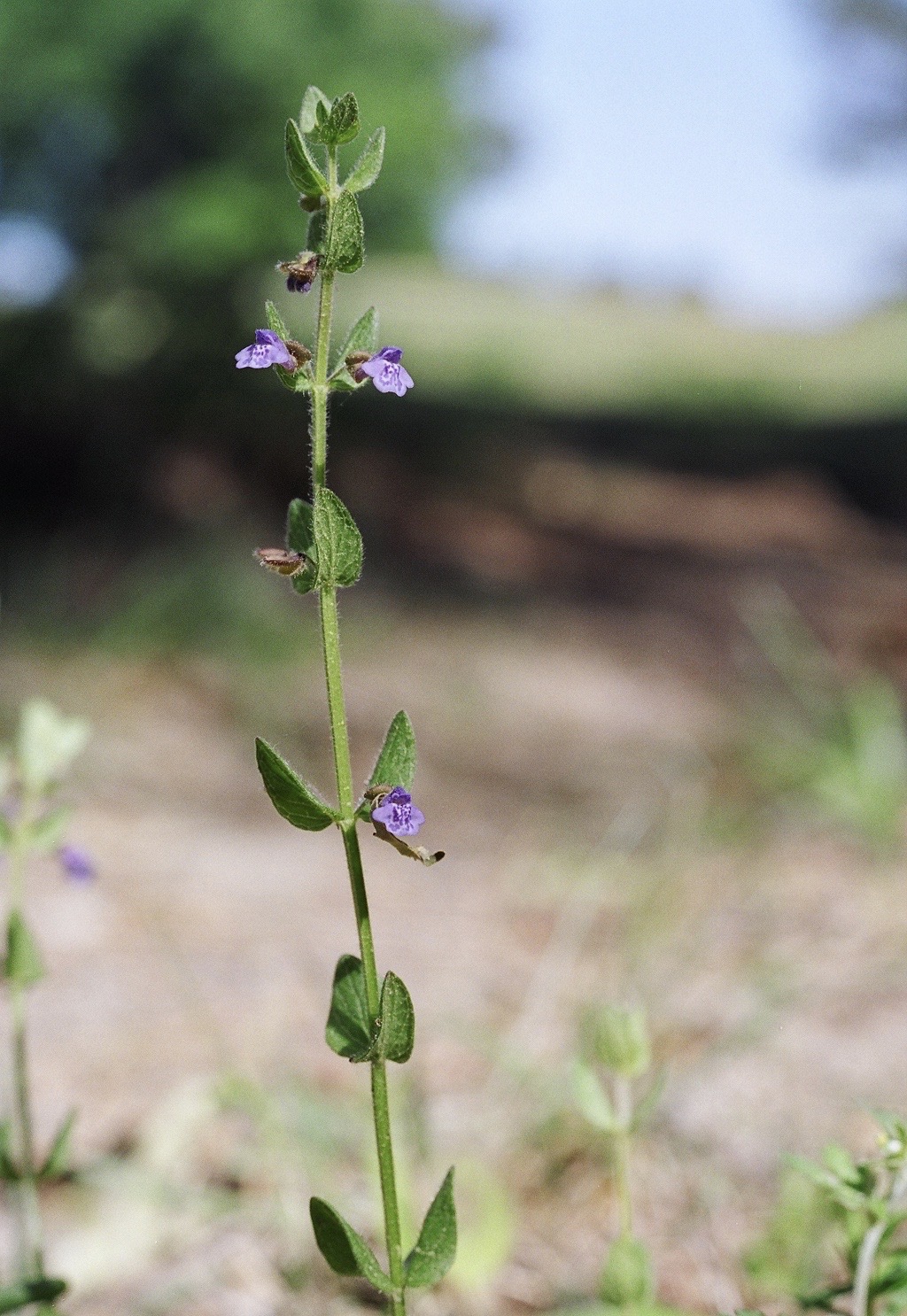
Look for a very small, upright mint with square stems, tiny paired leaves and single blue-violet flowers in the leaf axils, each with a small cap on the calyx.
Growth Habit
Small skullcap is a perennial that grows 3 to 12 inches tall, usually with several thin stems rising from the base. Underground it has slender rhizomes with small, bead-like tubers strung along them, which let it form loose patches over time. The stems are square, like those of other mints, and are finely hairy.
Leaves
The leaves are opposite, stalkless or nearly so, and small: about 1/4 to 3/4 inch long, oval to lance-shaped, with smooth or slightly toothed edges and a few prominent veins. Lower leaves are rounder and the upper ones narrower. Leaf hairs vary: some plants are covered in tiny glandular hairs, others in short, curved, non-glandular hairs. These differences have been used to separate several varieties, including var. parvula, var. missouriensis and the form known as Leonard’s skullcap.
Flowers
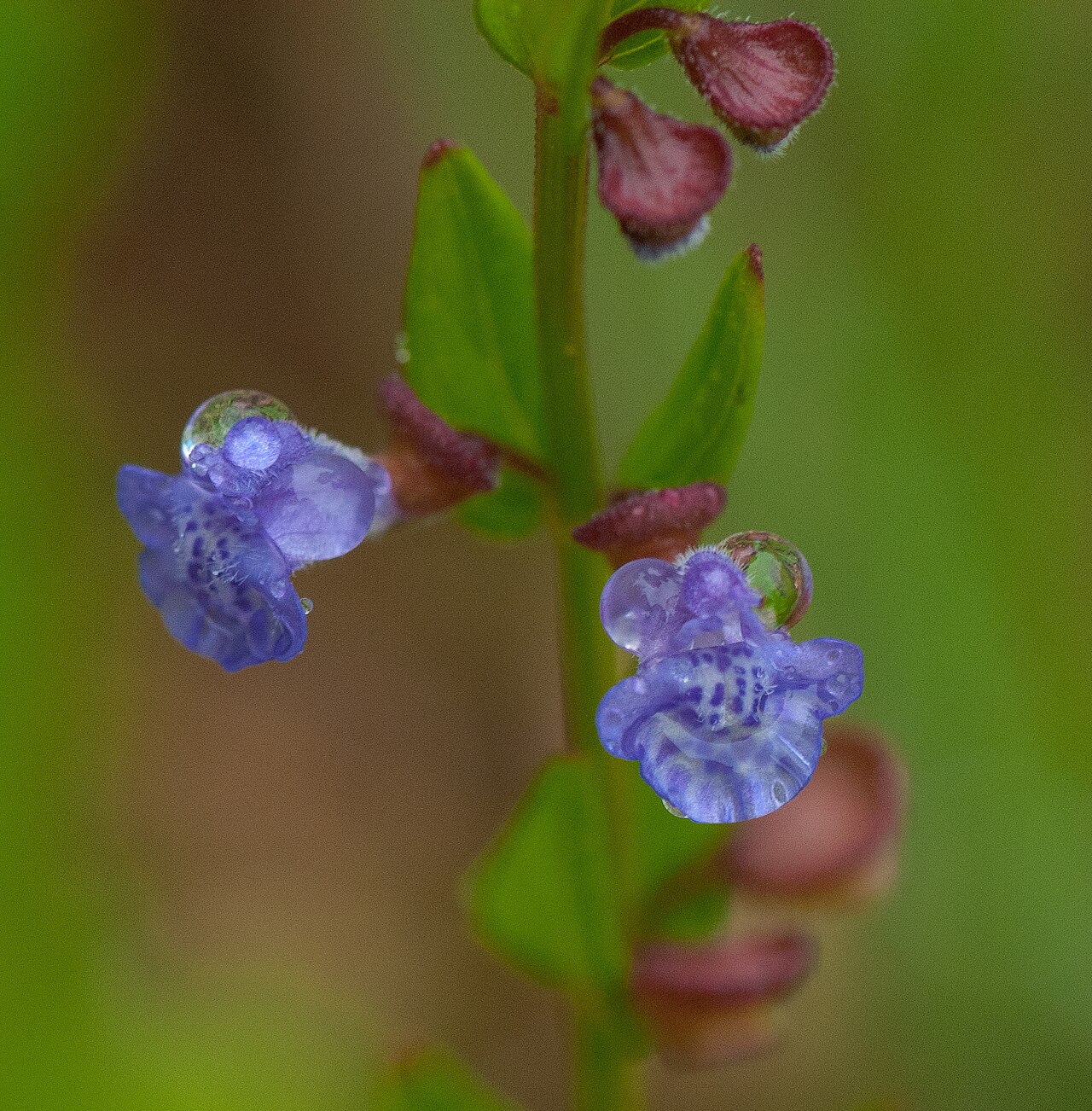
The flowers are borne singly in the axils of the middle and upper leaves, usually two at a node, facing the same way. Each flower is about 1/4 to 3/8 inch long, blue to violet, with a hooded upper lip and a broader lower lip that is paler and spotted with darker purple. The calyx has a small, rounded crest (the scutellum) on top, typical of skullcaps. Flowering runs from about April to July, earlier in the South.
Fruit & Seeds
After flowering, the calyx closes around four tiny nutlets. When ripe, the top part of the calyx falls away, and the nutlets drop out.
Look-alikes
Other skullcaps are much larger. Helmet skullcap has inch-long flowers in a showy spike, and hairy skullcap and downy skullcap are taller woodland plants with flowers in terminal clusters. Mad-dog skullcap grows in wet places and has its flowers in one-sided spikes. Small skullcap’s tiny size, small rounded leaves and single flowers in the leaf axils set it apart.
Quick Facts
| Scientific Name | Scutellaria parvula |
| Family | Lamiaceae (mint family) |
| Plant Type | Small herbaceous perennial with tuberous rhizomes |
| Mature Height | 3–12 in |
| Mature Spread | 6–12 in, slowly spreading |
| Growth Rate | Slow to moderate |
| Sun Exposure | Full sun to part shade |
| Water Needs | Low; drought tolerant |
| Soil Type | Thin, rocky, gravelly or sandy soil; limestone glades |
| Soil pH | Slightly acidic to alkaline (about 6.0–8.0) |
| Bloom Time | April–July |
| Flower Color | Blue to violet with a pale, spotted lower lip |
| Fall Color | None notable |
| Fruit | Four tiny nutlets inside the calyx |
| Deer Resistant | Yes (aromatic mint foliage; too small to attract much browsing) |
| USDA Hardiness Zones | 3–9 |
Native Range
Small skullcap is native to eastern and central North America. USDA PLANTS lists it as native in 35 states, from Maine and Vermont south to Florida and west to North Dakota, South Dakota, Nebraska, Kansas, Oklahoma and Texas, and in Manitoba, Ontario and Quebec in Canada. It is common in the Midwest, the Ozarks and the Interior Low Plateaus and more local in New England and along the northern edge of its range.
It is especially typical of the limestone cedar glades of Tennessee, Kentucky and northern Alabama, the dolomite glades and prairies of the Ozarks, the sand and gravel prairies of the upper Midwest and the tallgrass and mixed-grass prairies farther west. In the Southeast and East Texas it also grows on sandy soils in open pinelands and on roadsides.
Its habitats are dry and open: prairies, glades, barrens, rocky bluffs, sandy savannas, open oak and cedar woods, pastures and roadsides, generally where the vegetation is short and thin enough for such a small plant to get light.
📋 Regional plant lists featuring Small Skullcap: New York, Pennsylvania & Northern New Jersey · Ohio & Indiana · Michigan, Wisconsin & Eastern Minnesota · Kentucky & Tennessee · Nebraska, Kansas & Eastern Colorado · Connecticut, Massachusetts & Rhode Island · New Hampshire, Maine & Vermont · Maryland, Virginia & West Virginia · Delaware, Southern New Jersey & Long Island · Illinois, Iowa & Missouri · Alabama, Georgia & Mississippi · North & South Florida · North & South Carolina · Arkansas, Louisiana, Eastern Oklahoma & Eastern Texas · North Dakota, South Dakota & Western Minnesota
Growing & Care Guide
Small skullcap is rarely sold, but it is easy to keep where it is happy: sunny, dry, thin soil without heavy competition. It suits rock gardens, glade and prairie restorations, and the front edge of short native plantings.
Light
Full sun to part shade. It flowers best in sun and grows in light shade under open oaks and cedars, but it fades out under dense shade or tall, thick vegetation.
Soil & Water
Plant it in well-drained, thin soil: rocky or gravelly loam, limestone gravel or sand. It tolerates both slightly acidic and alkaline soil. Once established it needs no watering and handles summer drought well, often going partly dormant in the heat. Avoid rich, wet soil, where taller plants crowd it out and the tubers may rot.
Planting Tips
Use it in small groups at the front of a bed, along a gravel path, between rocks or in a short-grass prairie or glade planting with low companions such as bluets and blue-eyed grass. Space plants 6 to 8 inches apart. Keep vigorous spreading plants and tall grasses away from it.
Pruning & Maintenance
Very little care is needed. Remove tall weeds and leaf litter that would shade it. In a prairie or glade restoration, periodic burning or mowing in late winter helps keep the vegetation short enough for it.
Propagation
Divide a patch in early spring or fall, keeping some rhizome and its small tubers with each piece. It can also be grown from seed collected in early summer; sow it in fall outdoors or give it a few weeks of cold, moist stratification before sowing in spring. Seedlings are small and slow to reach flowering size.
Landscape Uses
- Rock gardens: a tiny, long-blooming mint for crevices and gravel
- Glade and prairie restoration: part of the native flora of glades and short prairies
- Pollinator gardens: spring and early summer flowers for small bees
- Edging: for the front of short, dry native plantings
- Xeriscapes: handles drought once established
Wildlife & Ecological Value
Small skullcap is a modest plant, but it adds spring flowers to dry, short-grass habitats where food for small pollinators can be limited.
For Pollinators
The small, two-lipped flowers are visited by small bees, such as small carpenter bees, sweat bees and mason bees, which can reach the nectar in the short tube.
For Birds
The tiny nutlets are of limited value to birds, but the prairies and glades where it grows support ground-nesting and seed-eating birds.
For Mammals
The aromatic, slightly bitter foliage is seldom browsed. Its small size also keeps it from being a significant food plant for deer or rabbits.
Ecosystem Role
Small skullcap is part of the diverse low layer of prairies, glades and barrens, growing in the gaps between bunchgrasses. Its presence often indicates intact, thin-soil habitat that has not been overgrown by shrubs or invasive plants.
Cultural & Historical Uses
The genus name Scutellaria comes from the Latin scutella, a small dish or shield, referring to the little cap on the calyx. The species name parvula means “very small,” a fitting name for one of the smallest skullcaps in North America.
Several varieties of small skullcap have been named, mainly on the basis of their leaf hairs. Plants with short, non-glandular hairs have often been called Leonard’s skullcap, either as Scutellaria leonardii or as a variety of S. parvula. Botanists differ on whether these deserve separate names.
Skullcaps have a long history in herbal medicine, mainly the larger mad-dog skullcap. Small skullcap is too small to have been used much, and wild plants should be left in place.
Frequently Asked Questions
How big does small skullcap get?
Usually only 3 to 12 inches tall, with flowers about 1/3 inch long. It is one of the smallest skullcaps in North America.
Why is it called skullcap?
The calyx at the base of each flower has a small raised crest that looks like a little cap. The Latin genus name refers to a small dish or shield.
Does small skullcap spread?
Slowly. It spreads by thin rhizomes with small, bead-like tubers, forming loose patches in open, thin soil.
When does small skullcap bloom?
From about April to July, earlier in the South and later in the North.
Where can I grow small skullcap?
In sunny, dry, well-drained spots with thin, rocky, gravelly or sandy soil, such as rock gardens, glades and short prairie plantings, across much of the eastern and central United States.

Looking for a nursery that carries Small Skullcap?
Browse our native plant nursery directory: Alabama & Arkansas · Connecticut, Delaware, Florida & Georgia · Illinois, Indiana, Iowa & Kansas · Kentucky, Louisiana, Maine, Maryland, Massachusetts, Michigan, Minnesota, Mississippi & Missouri · Nebraska, New Jersey, New York, North Carolina, North Dakota, Ohio & Oklahoma · Pennsylvania, South Carolina, South Dakota, Tennessee, Texas, Vermont & Virginia · West Virginia & Wisconsin

