
Gypsum Phacelia (Phacelia integrifolia)
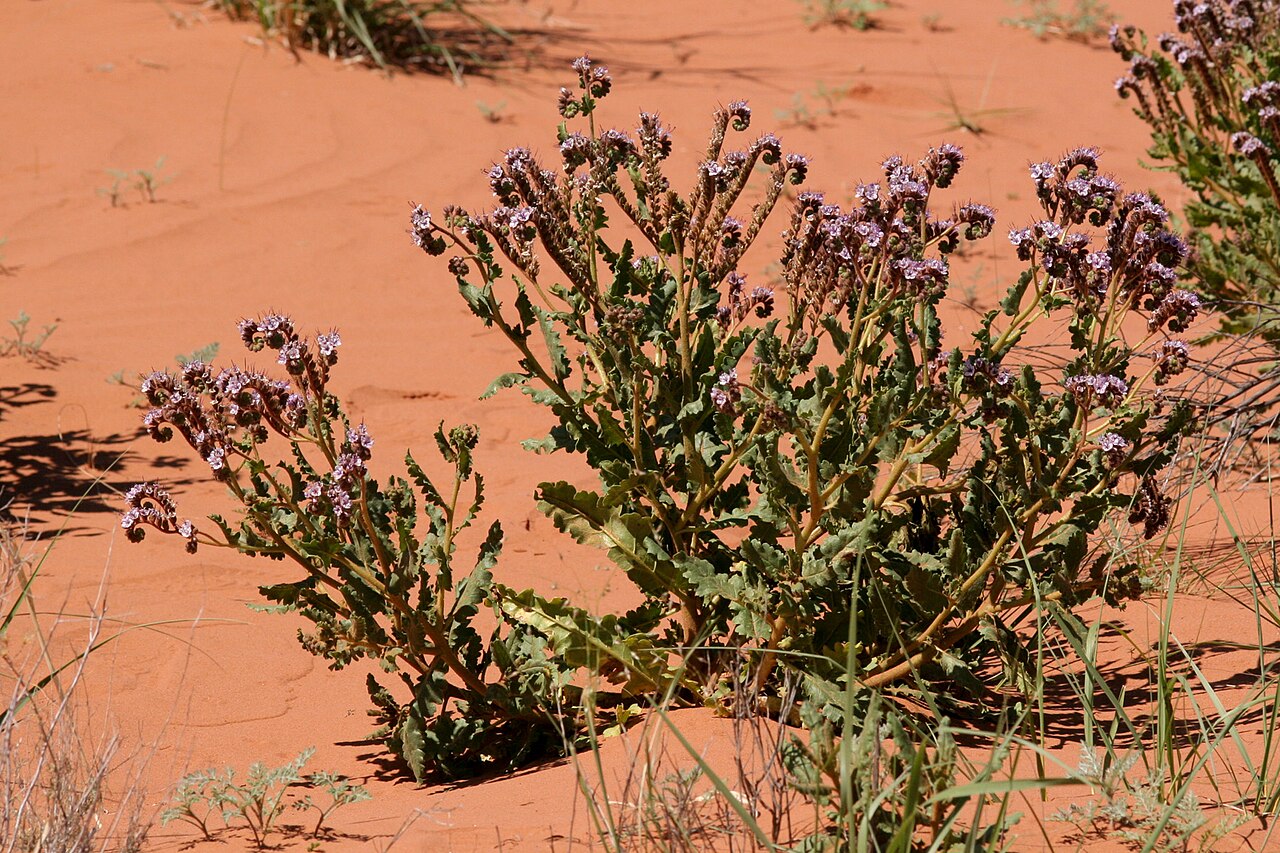
Phacelia integrifolia, known as Gypsum Phacelia or gypsum scorpionweed, is an annual or biennial wildflower in the borage family (Boraginaceae, formerly the waterleaf family, Hydrophyllaceae). It forms a rosette of scalloped, deeply veined leaves and then sends up leafy, sticky stems 1 to 2 1/2 feet tall, topped with curled coils of small, lavender to blue-purple bell-shaped flowers with long, protruding stamens. The whole plant is covered in glandular hairs and has a strong, musky smell.
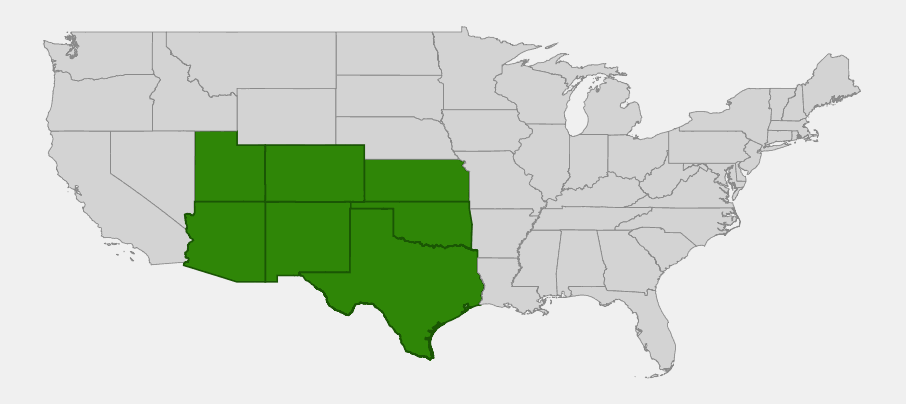
Gypsum phacelia grows from southern Utah and southwestern Colorado south through Arizona and New Mexico to western Texas, western Oklahoma and southwestern Kansas, and into northern Mexico. Despite its name it is not limited to gypsum: it grows on gypsum and limestone outcrops, sandy and gravelly plains, dunes, washes, clay badlands and rocky slopes in desert grassland, shrubland and pinyon-juniper country.
It blooms from late winter to early summer and is one of the best native bee plants of the Southwest in spring. For gardeners in dry, sunny parts of its range it is an easy, self-sowing wildflower for a pollinator meadow or a rock garden, as long as its sticky, scented foliage is planted away from paths.
Identification
Look for a sticky, strong-smelling plant with oblong, scalloped leaves and coiled, one-sided clusters of small lavender bells, each with stamens that stick out well past the petals.
Growth Habit
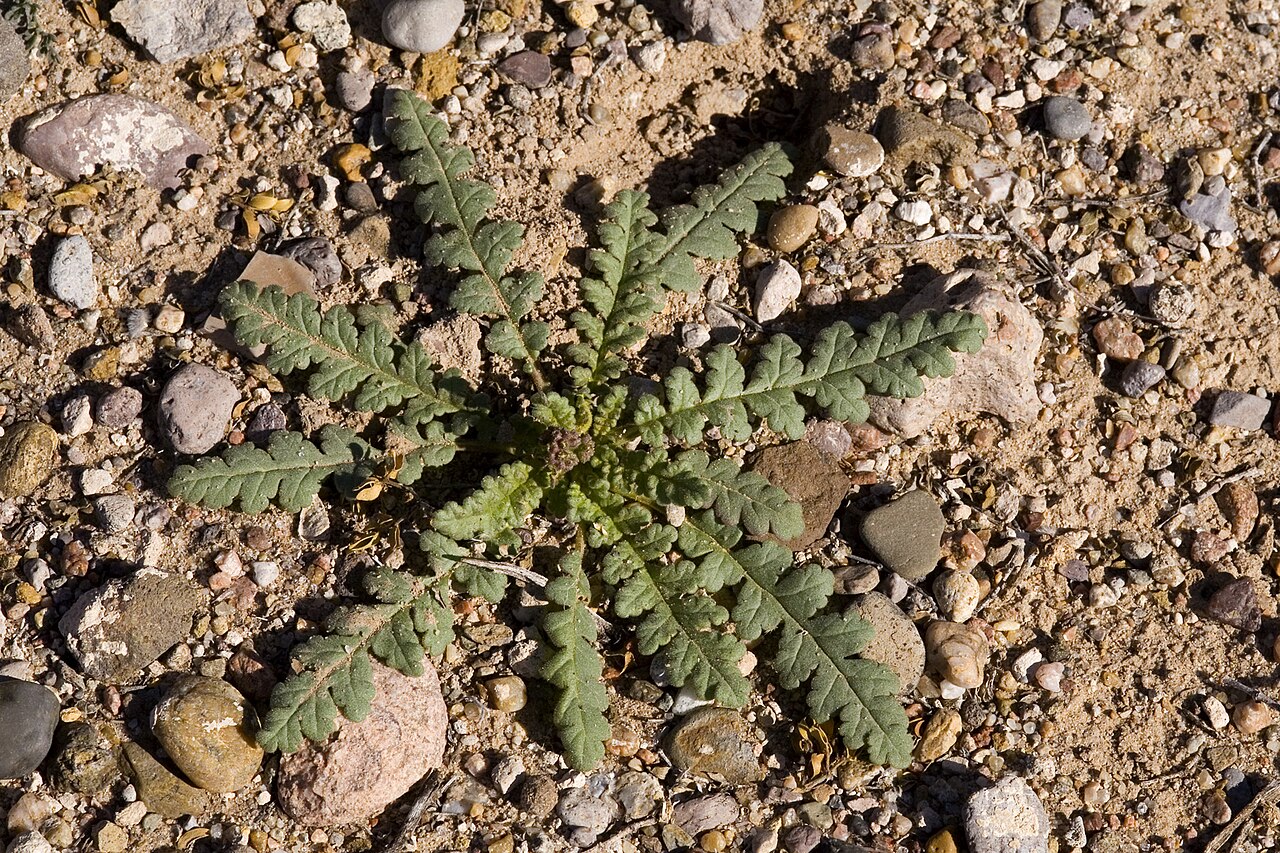
Gypsum phacelia usually germinates in fall or after summer rain, overwinters as a flat rosette, and flowers the following spring. Some plants behave as annuals and bloom within a few months. The flowering plant has one to several erect or spreading stems, branched above, usually 8 inches to 2 1/2 feet tall. It dies after setting seed.
Leaves
The leaves are oblong to lance-shaped, 1 to 4 inches long, with scalloped or shallowly lobed edges and deeply impressed veins that give them a wrinkled look. They are gray-green, sometimes tinged red, and covered with glandular hairs that feel sticky and give off a strong, musky odor. The species name integrifolia means “entire-leaved,” although the leaves are usually toothed rather than truly smooth-edged.
Flowers
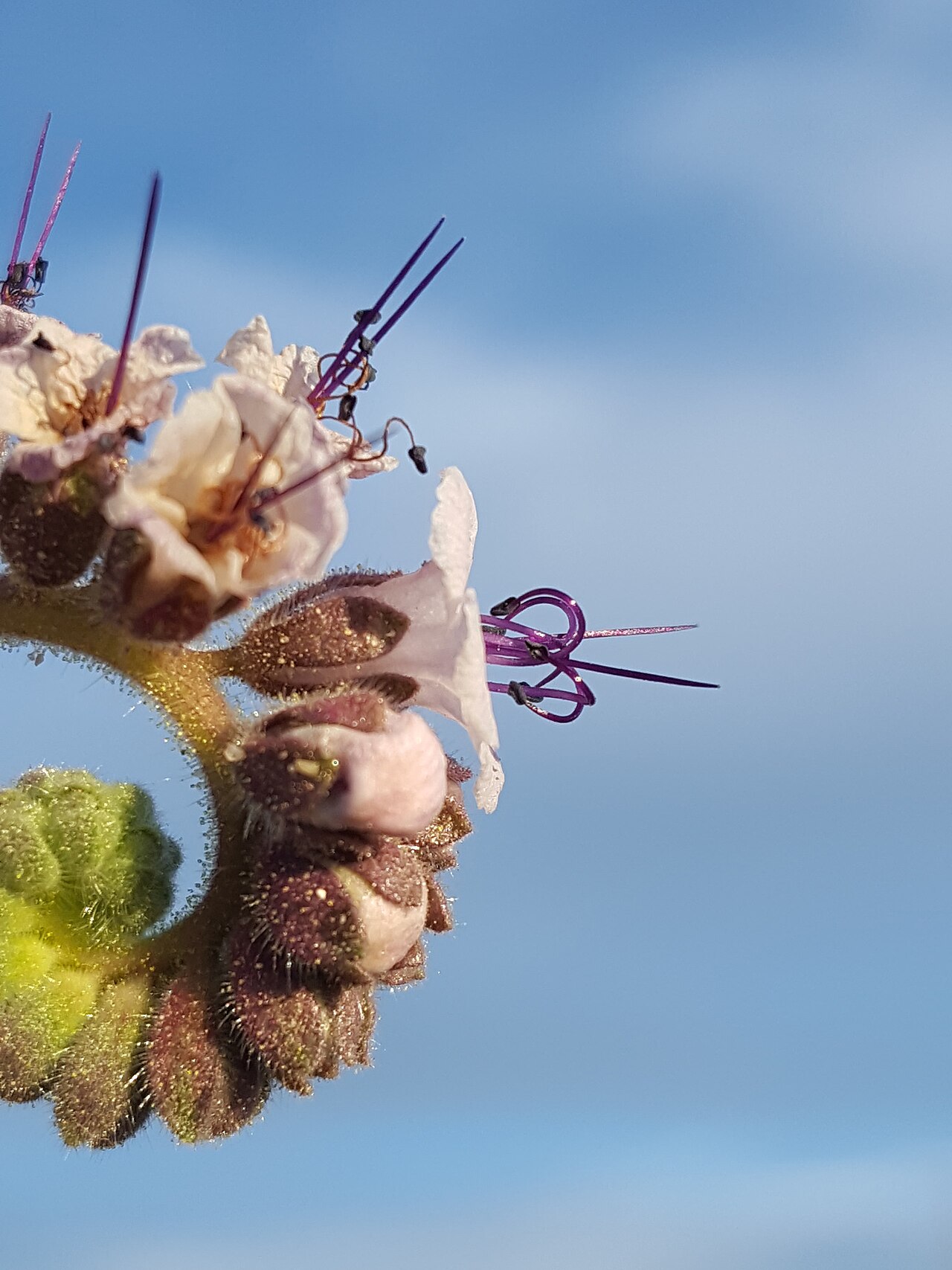
The flowers are crowded in coiled, one-sided clusters at the ends of the branches. Like other phacelias, the coil slowly unrolls as the flowers open from the base toward the tip, which is why the clusters are called scorpioid cymes and the group is called scorpionweed. Each flower is a small bell about 1/4 inch long, pale lavender, blue-purple or whitish, with five stamens and a forked style that stick well out of the corolla. Bloom runs mostly from February to May, and at higher elevations into June.
Fruit & Seeds
Each flower produces a small, rounded, hairy capsule with a few pitted, dark seeds. The seeds drop near the parent plant, so gypsum phacelia often forms loose colonies where the soil suits it.
Look-alikes
Notch-leaf scorpionweed (Phacelia crenulata) is similar, but it is usually smaller, has more deeply lobed leaves and deeper violet flowers, and is most common in the Mojave and Sonoran deserts. Fernleaf phacelia has finely divided leaves and grows in eastern woods. Caterpillar scorpionweed and other phacelias have more divided leaves; telling all of them apart sometimes requires a look at the seeds.
Quick Facts
| Scientific Name | Phacelia integrifolia |
| Family | Boraginaceae (borage family; formerly Hydrophyllaceae) |
| Plant Type | Annual or biennial wildflower |
| Mature Height | 8 in–2 1/2 ft |
| Mature Spread | 1–2 ft |
| Growth Rate | Fast |
| Sun Exposure | Full sun to part shade |
| Water Needs | Low |
| Soil Type | Gypsum, limestone, sandy, gravelly or clay; well drained |
| Soil pH | Neutral to alkaline (about 7.0–8.5) |
| Bloom Time | February–May (to June at higher elevations) |
| Flower Color | Lavender to blue-purple or whitish |
| Fall Color | None notable |
| Fruit | Small hairy capsule with pitted seeds |
| Deer Resistant | Yes; the sticky, smelly foliage is seldom browsed |
| USDA Hardiness Zones | 6–9 (annual/biennial) |
Native Range
USDA PLANTS lists gypsum phacelia as native in Arizona, Colorado, Kansas, New Mexico, Oklahoma, Texas and Utah. The Lady Bird Johnson Wildflower Center describes its range as southern Utah south to Arizona and northern Mexico and east to New Mexico, western Texas and western Oklahoma. It is not found in Canada.
It is most common in New Mexico, the Trans-Pecos and western Texas, and in northern and eastern Arizona. It reaches its northern and eastern edges in southern Utah, southwestern Colorado, the western Oklahoma gypsum hills and southwestern Kansas. Some botanists separate plants from parts of Texas and New Mexico as variety texana.
Gypsum phacelia grows on open, dry ground: gypsum and limestone outcrops and hills, sandy plains and dunes, gravelly washes, clay badlands, disturbed roadsides and rocky slopes, in desert grassland, Chihuahuan desert scrub and pinyon-juniper woodland. It is often one of the first wildflowers to appear on bare or recently disturbed soil.
📋 Regional plant lists featuring Gypsum Phacelia: Arizona & New Mexico · Utah & Western Colorado · Nebraska, Kansas & Eastern Colorado · South & West Texas
Growing & Care Guide
Gypsum phacelia is easy to grow from seed in dry, sunny gardens within its range. It is a short-lived plant that keeps itself going by self-sowing, so think of it as a wildflower for a meadow, rock garden or pollinator bed rather than a permanent border plant.
Light
Full sun is best. It will grow in light or part shade, where plants tend to be taller and looser.
Soil & Water
It does well in poor, well-drained soils: sand, gravel, caliche, limestone, gypsum and lean clay. Avoid rich, heavily watered beds, where plants become floppy and short-lived. Once seedlings are established, rain is usually enough; a few deep waterings in a very dry winter or spring help the rosettes reach blooming size.
Planting Tips
Sow seed directly on bare, loosened soil in fall, raking it in lightly. Seedlings form rosettes over winter and bloom in spring. Thin crowded seedlings to about a foot apart. Because the glandular hairs are sticky and can irritate sensitive skin, like those of several other phacelias, plant it away from paths and wear gloves when handling it.
Pruning & Maintenance
No pruning is needed. Leave some plants standing until the seed capsules are dry so the plant can reseed, then pull or cut the dead stems. Keep some bare ground open nearby, since seedlings need open soil to establish.
Propagation
Grow it from seed. Collect the small capsules when they turn brown in late spring and sow the seed outdoors in fall. Many phacelia seeds germinate best after a period of cool, moist conditions, so fall sowing gives better results than spring sowing.
Landscape Uses
- Pollinator gardens: an outstanding early spring bee plant
- Wildflower meadows: self-sows among native grasses on dry ground
- Rock and gravel gardens: thrives in lean, alkaline, well-drained soil
- Restoration: quickly covers bare, disturbed ground in its range
- Xeriscapes: needs little or no irrigation once established
Wildlife & Ecological Value
Phacelias are among the most valuable native bee plants in the West, and gypsum phacelia flowers early, when few other nectar and pollen sources are open in desert grassland and scrub.
For Pollinators
The flowers produce plenty of nectar and pollen and attract a wide range of native bees, including bumble bees, mining bees and small sweat bees, as well as honey bees, bee flies and butterflies. The Xerces Society, through the Lady Bird Johnson Wildflower Center, lists it as having special value to native bees.
For Birds
Seed-eating birds such as sparrows, finches and quail glean the small seeds from the ground, and insect-eating birds hunt the many insects that visit the flowers.
For Mammals
Its sticky, strong-smelling foliage is seldom eaten by deer or livestock. Rodents gather the seeds that fall to the ground.
Ecosystem Role
As an early colonizer of bare, disturbed and gypsum soils, gypsum phacelia helps cover and stabilize open ground and supports spring pollinator populations in a season when food is scarce.
Cultural & Historical Uses
The genus name Phacelia comes from the Greek phakelos, “a bundle” or “cluster,” referring to the crowded flower clusters. The common name scorpionweed, shared by many phacelias, describes the coiled flower clusters that resemble a scorpion’s curled tail.
The name gypsum phacelia reflects its frequent presence on gypsum outcrops and hills, including the gypsum hills of western Oklahoma and southern Kansas, although it grows on many other soils as well.
Phacelias have long been planted as bee forage and cover crops, and native species such as this one are increasingly included in western pollinator seed mixes and roadside plantings to support native bees.
Frequently Asked Questions
Does gypsum phacelia only grow on gypsum?
No. It is common on gypsum and limestone outcrops, but it also grows on sandy plains, dunes, gravel, clay and roadsides throughout its range.
Why is gypsum phacelia sticky?
The leaves and stems are covered in glandular hairs that produce a sticky, strong-smelling resin. These hairs may help protect the plant from grazing and drying out, and they can irritate sensitive skin.
Is gypsum phacelia an annual or a perennial?
It is an annual or biennial. Most plants form a rosette in fall, bloom the next spring and die after setting seed, but they reseed readily.
Is gypsum phacelia good for bees?
Yes. It is an excellent early spring source of nectar and pollen for native bees, including bumble bees and mining bees.
When does gypsum phacelia bloom?
Mainly from February to May, with some plants still blooming into June at higher elevations.

Looking for a nursery that carries Gypsum Phacelia?
Browse our native plant nursery directory: Arizona · Colorado · Kansas · New Mexico & Oklahoma · Texas & Utah

