
Leafcup (Polymnia canadensis)
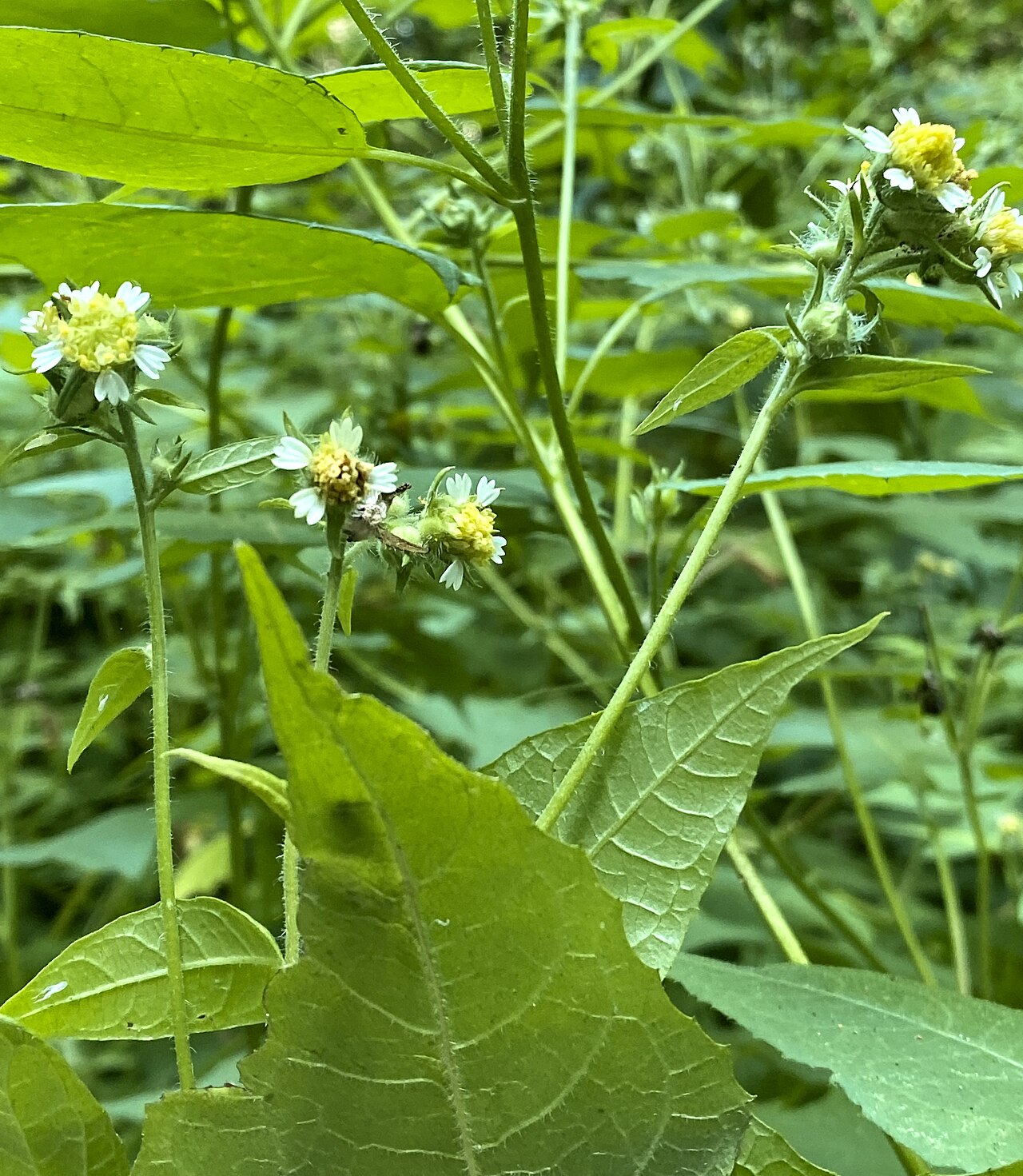
Polymnia canadensis, known as Leafcup, whiteflower leafcup (its USDA name) or pale-flowered leafcup, is a native woodland wildflower of the eastern and central United States and southern Ontario. It is a leafy, hairy plant 1½ to 4½ feet tall with large, deeply lobed leaves up to a foot long and, from midsummer into fall, small flower heads with a few short, three-lobed white rays around a cream-colored center.
It is a member of the aster family (Asteraceae) and a biennial or short-lived perennial. Because its small flowers are not very showy, it is little known to the public, yet it is a characteristic plant of rich, shady woods, ravines and limestone bluffs, and it is often a sign that the woodland ground flora is still largely intact.
This guide covers how to identify leafcup and tell it from its larger relative bear’s foot, where it grows, how to grow it in a shade garden, and the insects that visit it.
Identification
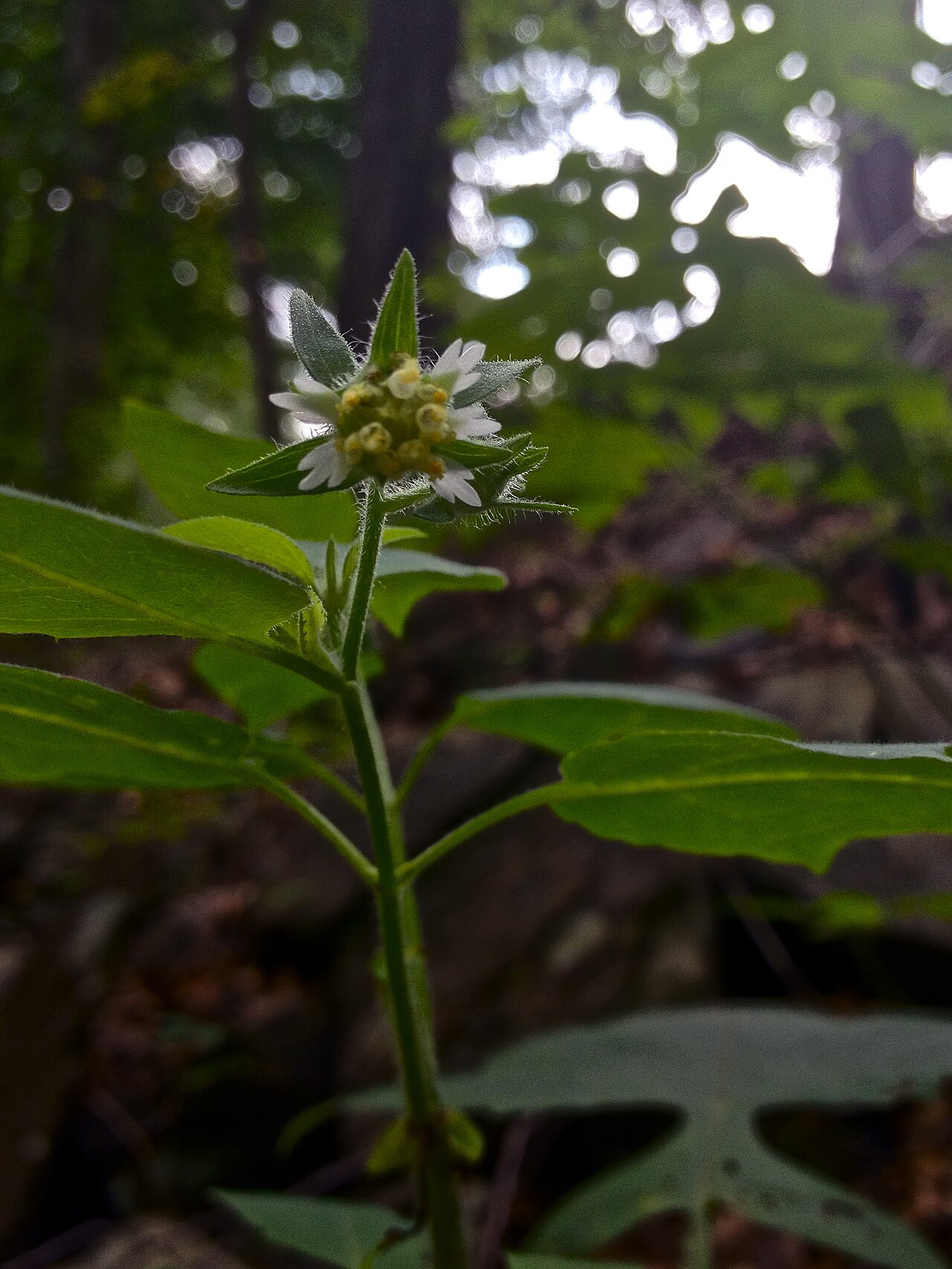
Leafcup is best recognized by its large, deeply lobed lower leaves, sticky-hairy stems, and small flower heads with few, short, white, three-toothed rays that bloom only a few at a time.
Stems & Leaves
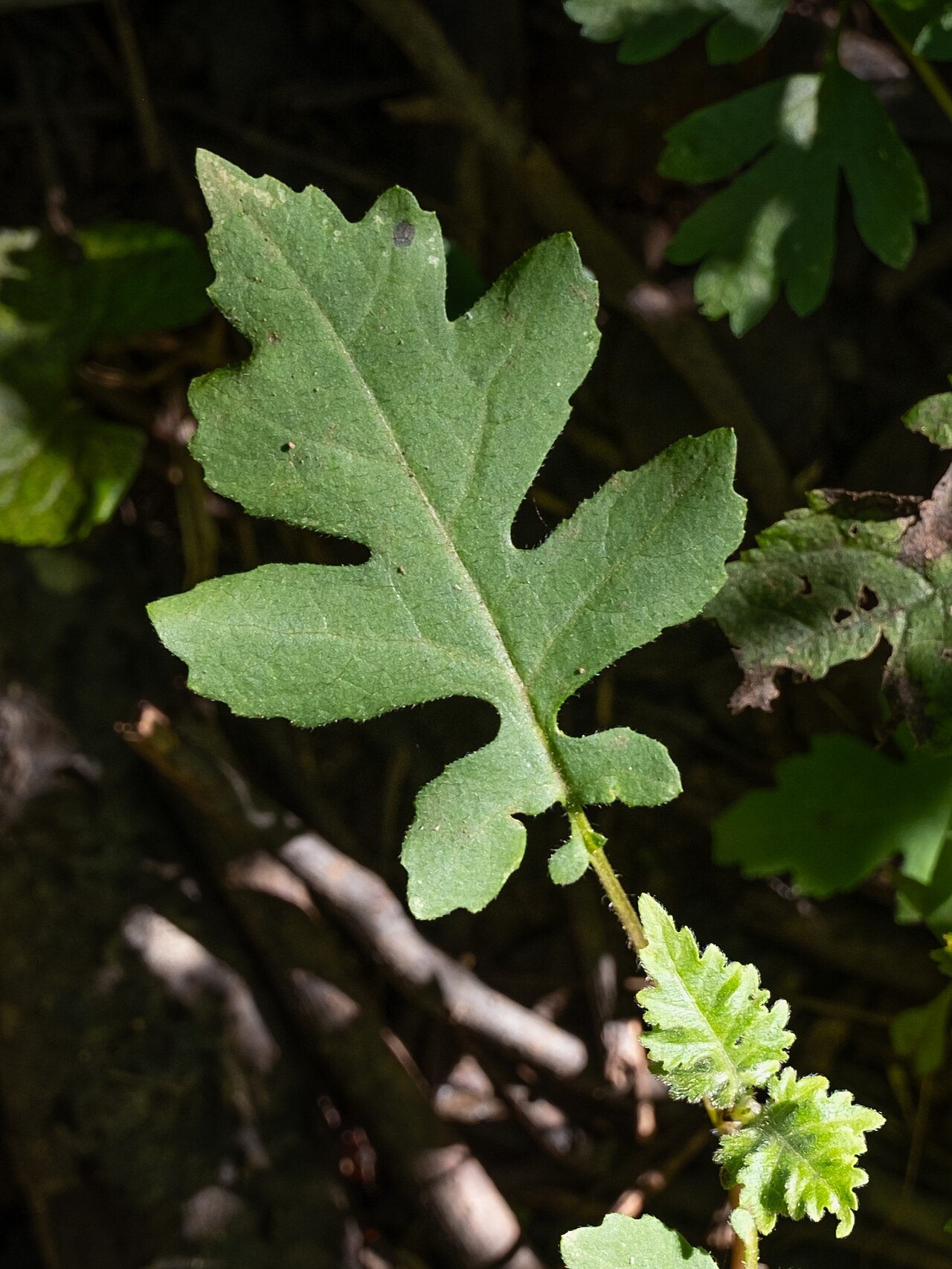
The stems are light green to reddish-brown and densely covered with long hairs, often slightly glandular and strong-smelling. Leaves are alternate or opposite, up to about 12 inches long and 8 inches wide, on hairy stalks up to 4 inches long. Lower and middle leaves are pinnately divided into usually 5 to 7 pointed lobes; upper leaves are smaller, with a pair of basal lobes or none. Pairs of toothed, leafy stipules sit at the base of the leaf stalks.
Flowers
Small branched clusters of flower heads appear at the tops of the stems and in the upper leaf axils from about June to October, with only a few heads open at a time. Each head is about ½ inch across, with 5 to 8 short white rays, each with three lobes at the tip (sometimes rays are missing), around a center of cream-colored disk florets. Five green, hairy bracts beneath the head curl back when it blooms.
Fruit & Seeds
Only the ray florets produce seed. The fruits are dark brown, three-angled cypselae about ⅛ inch long, without the tuft of hairs that many aster-family seeds have.
Similar Species
Bear’s foot or yellow leafcup (Smallanthus uvedalius, formerly Polymnia uvedalia) is a much larger plant, up to 8 feet tall, with bright yellow rays and palmately lobed leaves. The weedy, non-native Peruvian daisy (Galinsoga quadriradiata) has similar tiny white-rayed heads but is a small plant of gardens and open ground.
Quick Facts
| Scientific Name | Polymnia canadensis |
| Family | Asteraceae (aster family) |
| Plant Type | Herbaceous biennial or short-lived perennial |
| Mature Height | 1½–4½ ft |
| Mature Spread | 1–3 ft |
| Growth Rate | Moderate to fast |
| Sun Exposure | Part shade to full shade |
| Water Needs | Moderate; moist to slightly dry soil |
| Soil Type | Rich loam or rocky soil high in organic matter; often over limestone |
| Soil pH | About 6.0–8.0 |
| Bloom Time | June–October (mainly mid to late summer) |
| Flower Color | White rays with a cream-colored center |
| Fall Color | None notable |
| Fruit | Dark brown three-angled seeds without a hair tuft |
| Deer Resistant | Not well documented; hairy foliage is not a known favorite |
| USDA Hardiness Zones | 4–8 |
Native Range
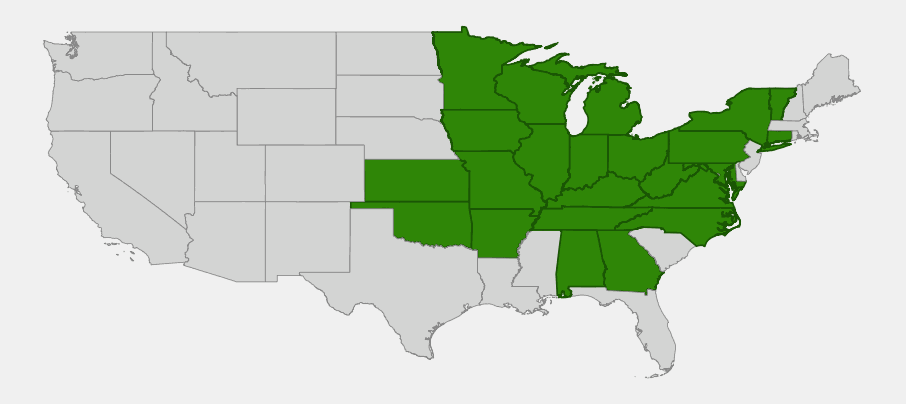
Leafcup is native to the eastern and central United States and southern Ontario. USDA PLANTS records it from Vermont, New York and Connecticut west through the Great Lakes states to Minnesota and Iowa, south through the Ohio Valley and Appalachians to Georgia and Alabama, and west to Missouri, Arkansas, Kansas and Oklahoma.
It is uncommon to occasional through most of that range. It is most frequent in the limestone regions of the Ohio Valley, the Interior Low Plateaus of Kentucky and Tennessee, and the Ozarks. In Minnesota and Wisconsin it reaches its northwestern limit in the southeastern part of those states, and in Kansas and Oklahoma it is confined to the eastern edge.
It grows in rich deciduous woods, wooded slopes and moist, shaded ravines, at the bases of bluffs, along shaded streams and at the edges of limestone or sandstone glades. It is usually found in higher-quality woods with oak-hickory, maple-basswood or beech-maple forest.
📋 Regional plant lists featuring Leafcup: New York, Pennsylvania & Northern New Jersey · Ohio & Indiana · Michigan, Wisconsin & Eastern Minnesota · Kentucky & Tennessee · Nebraska, Kansas & Eastern Colorado · Connecticut, Massachusetts & Rhode Island · New Hampshire, Maine & Vermont · Maryland, Virginia & West Virginia · Delaware, Southern New Jersey & Long Island · Illinois, Iowa & Missouri · Alabama, Georgia & Mississippi · North & South Carolina · Arkansas, Louisiana, Eastern Oklahoma & Eastern Texas
Growing & Care Guide
Leafcup is a good plant for naturalizing in a shady woodland garden, where its bold, lobed leaves add texture through summer. It is short-lived, so it works best where it can reseed.
Light
Light to medium shade is best, as under deciduous trees or on the north side of buildings. It tolerates some morning sun if the soil stays moist.
Soil & Water
Plant it in moist to slightly dry loam or rocky soil rich in organic matter; it grows naturally on limestone and tolerates neutral to slightly alkaline soils. Plant size depends strongly on moisture and fertility. Water during dry spells in the first season.
Planting Tips
Set plants 18 to 24 inches apart in a woodland border or along a shady path. It combines well with Virginia waterleaf, wild columbine, American bellflower and ferns.
Pruning & Maintenance
Little care is needed. Leave some flower heads to ripen so the plant can reseed, since individual plants live only two or a few years. Pull unwanted seedlings in spring. The hairy stems can be slightly sticky and aromatic.
Propagation
Grow it from seed. Sow ripe seed outdoors in fall, or give it about 60 days of cold, moist stratification before sowing in spring. Seedlings form a rosette the first year and usually bloom in the second.
Landscape Uses
- Woodland gardens: bold lobed leaves and a long, quiet bloom in shade
- Naturalized shade plantings: reseeds in rich, undisturbed woodland soil
- Pollinator gardens: late-season nectar and pollen in the shade
- Woodland restoration: a characteristic plant of rich, high-quality woods
- Native plant collections: an unusual member of the aster family
Wildlife & Ecological Value
Leafcup supports a surprising variety of insects in shady woods, from pollinators to specialist plant-feeders.
For Pollinators
Honeybees, bumblebees and various flies visit the flower heads for nectar and pollen, and small native bees probably do as well. Ants also take nectar from the disk florets but are poor pollinators.
For Birds
Its small seeds may be eaten by woodland songbirds, and the many insects that feed on the plant provide food for insect-eating birds.
For Mammals
There is little information on its use by mammals. Its hairy, aromatic foliage is not a favored browse.
Ecosystem Role
Several plant bugs, aphids and a leaf-mining leaf beetle (Sumitrosis inaequalis) feed on leafcup, and tree crickets and katydids feed on its flower heads. Its presence often marks woods where the native ground flora remains intact.
Cultural & Historical Uses
Carl Linnaeus named Polymnia canadensis in 1753. The genus name honors Polyhymnia, one of the nine Muses of Greek mythology, and canadensis means “of Canada,” where it grows in southern Ontario. Leafcup is now the best-known member of its small genus after its former relative bear’s foot was moved to Smallanthus.
Older references treat bear’s foot as Polymnia uvedalia, and some still list both plants as “leafcups,” with this species distinguished as whiteflower or pale-flowered leafcup. Because its flowers are small, leafcup is mostly appreciated by woodland botanists and naturalists as a plant of rich, intact forest.
Leafcup is rarely sold by nurseries but is occasionally offered by native plant specialists and seed suppliers. Buy plants or seed from propagated sources rather than collecting from the wild.
Frequently Asked Questions
What is the difference between leafcup and bear’s foot?
Leafcup has small white-rayed flower heads and pinnately lobed leaves. Bear’s foot (Smallanthus uvedalius) is a much larger plant with bright yellow rays and palmately lobed leaves, like a bear’s paw.
Is leafcup a perennial?
It is a biennial or short-lived perennial. Individual plants last only a few years, but they reseed in good conditions.
Does leafcup grow in shade?
Yes. It grows best in light to medium shade in rich, moist woodland soil.
When does leafcup bloom?
From about midsummer into fall, with only a few flower heads open at a time over about two months.
Is leafcup weedy?
No. It is an uncommon native woodland plant, usually found in good-quality woods. It reseeds modestly in gardens but is not aggressive.

Looking for a nursery that carries Leafcup?
Browse our native plant nursery directory: Alabama & Arkansas · Connecticut & Georgia · Illinois, Indiana, Iowa & Kansas · Kentucky, Maryland, Michigan, Minnesota & Missouri · New York, North Carolina, Ohio & Oklahoma · Pennsylvania, Tennessee, Vermont & Virginia · West Virginia & Wisconsin