
Long-Spurred Violet (Viola rostrata)
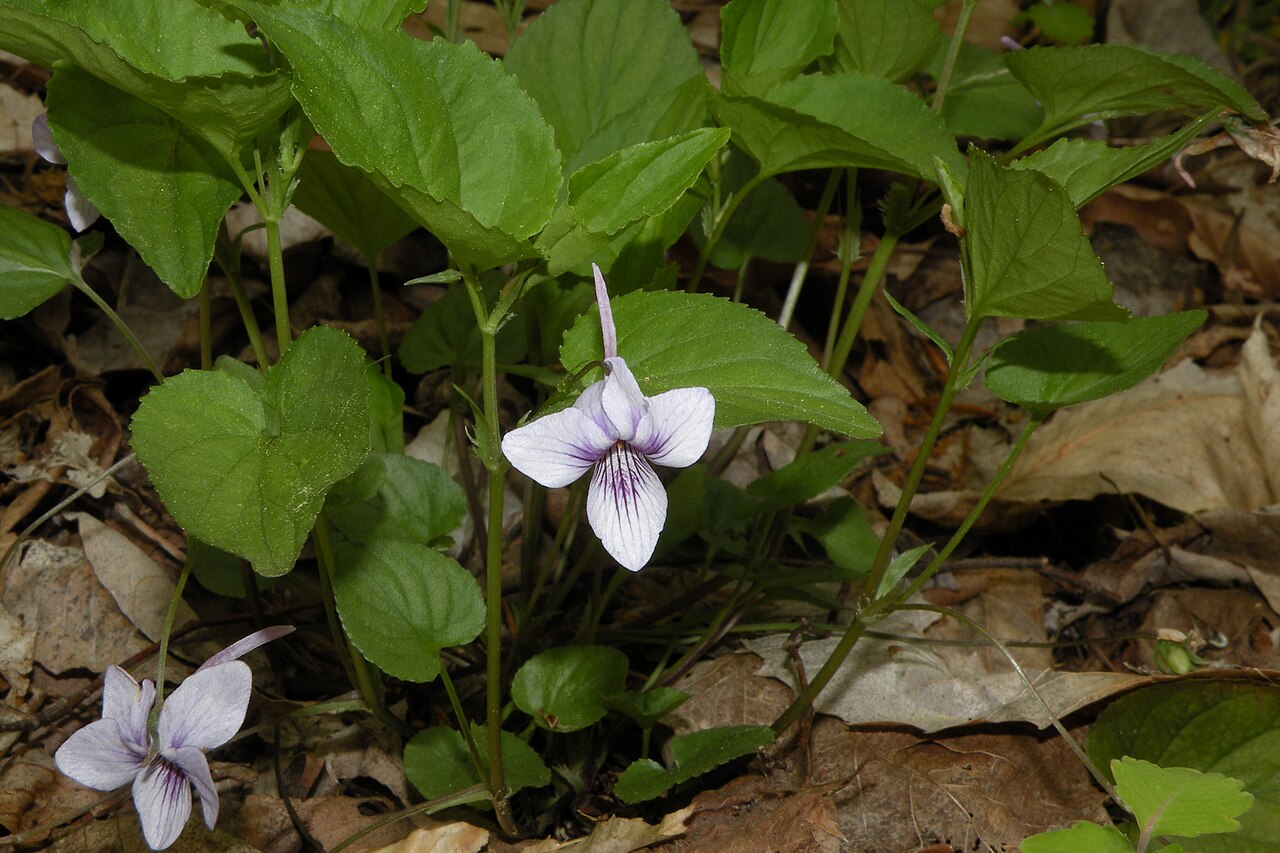
Viola rostrata, known as Long-Spurred Violet (USDA: longspur violet), is a native woodland violet of the Appalachians and the Great Lakes region. It is easy to recognize: each pale lilac flower has a remarkably long, slender spur, up to about 1/2 inch or more, that sticks straight back from the flower like a tiny horn. No other violet in eastern North America has a spur nearly as long. The species name rostrata means “beaked,” referring to this spur.
Long-spurred violet is a “stemmed” violet. Instead of all its leaves and flowers rising directly from the ground, it produces short, leafy stems 4 to 8 inches tall with heart-shaped, finely toothed leaves, and the flowers rise on slender stalks from the leaf axils. It blooms in April and May in rich, moist woods, often on slopes, in ravines and along streams, where it can form scattered patches.
Like other native violets, it is a host plant for the caterpillars of fritillary butterflies. It is a charming, well-behaved addition to a shaded woodland garden, where it mixes easily with ferns, foamflower and other spring wildflowers. Look for nursery-propagated plants or seed, and do not dig plants from the wild.
Identification
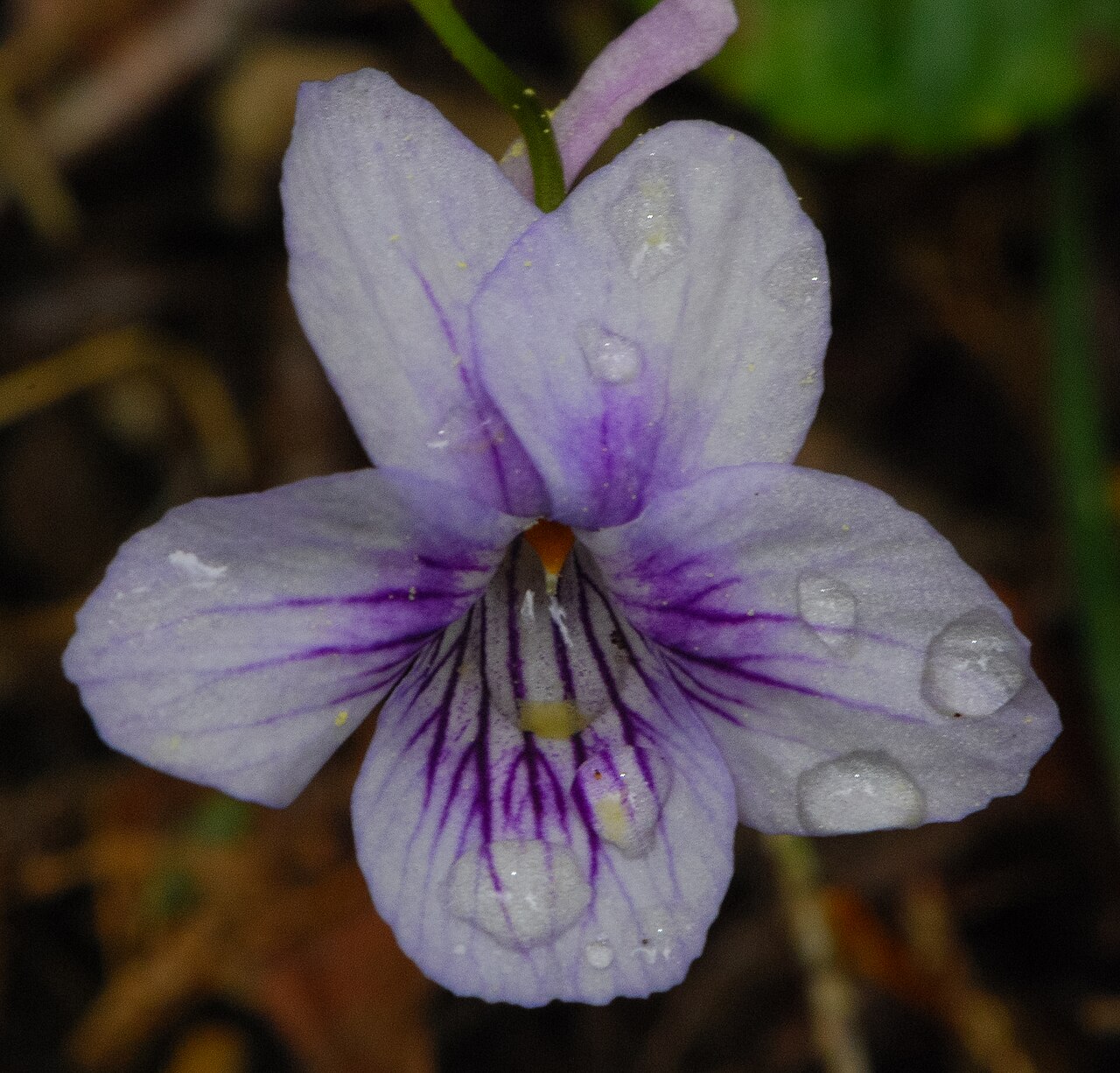
The very long, straight spur is the single best identification feature of long-spurred violet. Check also for leafy stems, beardless side petals and toothed stipules at the base of the leaf stalks.
Growth Habit
Plants grow 4 to 8 inches tall (rarely to 12 inches) from a short rhizome, producing several smooth, leafy stems in a small clump. In summer, new stems may lengthen slightly. Plants spread slowly by seed and form loose patches over time.
Leaves
Leaves are heart-shaped to nearly round, about 1 to 2 inches long, with finely scalloped or toothed edges and a pointed or blunt tip. They are smooth or nearly so and often have small dark spots. At the base of each leaf stalk are narrow stipules with long, comb-like teeth, a feature it shares with its relatives the dog violets.
Flowers
From April to May, flowers rise on slender stalks from the leaf axils, about 1/2 to 3/4 inch across. They have five pale lilac to lavender petals, darker toward the center and marked with dark violet lines. The two side petals have no beards (tufts of hairs), unlike those of many other violets. The spur at the back of the lower petal is slender, straight or slightly curved, and about 1/2 inch long or more, often as long as the rest of the flower.
Fruit & Seeds
Later in the season the plant produces small, closed, self-pollinating (cleistogamous) flowers near the base, along with the showy spring flowers. Both types produce small, three-parted capsules that split open and forcibly eject the seeds. Each seed carries a small, oily appendage (elaiosome) that attracts ants, which carry the seeds to their nests and help disperse them.
Look-alikes
Viola labradorica (American dog violet, often called V. conspersa) has similar leafy stems and pale violet flowers, but its spur is short and its side petals are bearded. Pale violet (V. striata) has creamy-white flowers with a short, thick spur and bearded side petals. Common blue violet lacks leafy stems, with leaves and flowers rising straight from the ground. Canada violet is taller, with white flowers that have yellow centers and purple-tinged backs.
Safety
Long-spurred violet is not considered poisonous. The leaves and flowers of many violets are edible in small amounts, but this species is uncommon in parts of its range and is best left in place for wildlife and other visitors to enjoy.
Quick Facts
| Scientific Name | Viola rostrata |
| Family | Violaceae (violet family) |
| Plant Type | Herbaceous perennial; leafy-stemmed woodland violet |
| Mature Height | 4–8 in |
| Mature Spread | 6–12 in |
| Growth Rate | Slow to moderate |
| Sun Exposure | Part shade to full shade |
| Water Needs | Medium; evenly moist soil |
| Soil Type | Rich, humusy loam |
| Soil pH | About 5.5–7.5 (slightly acidic to slightly alkaline) |
| Bloom Time | April–May |
| Flower Color | Pale lilac to lavender with dark violet center lines |
| Fall Color | None significant; leaves remain green into fall |
| Fruit | Small three-parted capsule that ejects seeds |
| Deer Resistant | Low to moderate; violets are sometimes browsed |
| USDA Hardiness Zones | 4–8 |
Native Range
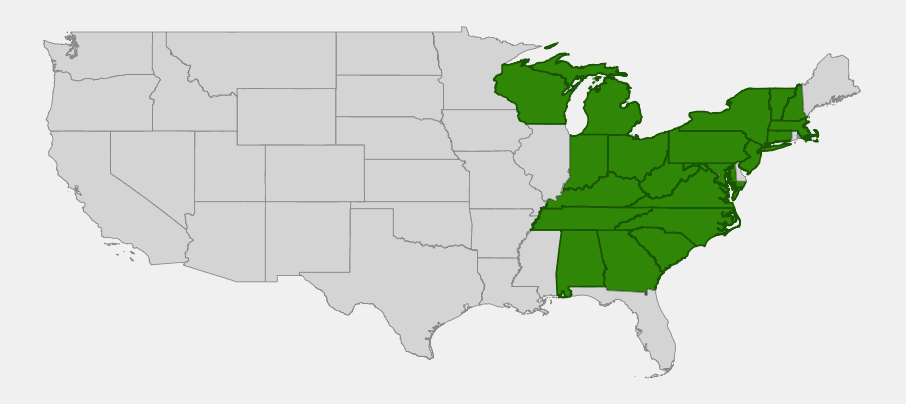
Long-spurred violet is native to eastern North America, from southern Quebec and Ontario south through the Appalachians. USDA PLANTS records it in 20 states: from Vermont, New Hampshire and Massachusetts west through New York, Pennsylvania, Ohio and Michigan to Wisconsin and Indiana, and south through the mountains to Virginia, West Virginia, Kentucky, Tennessee, North Carolina, South Carolina, Georgia and Alabama.
Its distribution centers on the Appalachian Mountains and plateaus and the southern Great Lakes region. It is fairly common in parts of New York, Pennsylvania, the Allegheny and Cumberland plateaus, and the southern Appalachians, but it is local or uncommon toward the edges of its range, such as in New England, New Jersey, Maryland, northern Alabama and the upland parts of Georgia and South Carolina.
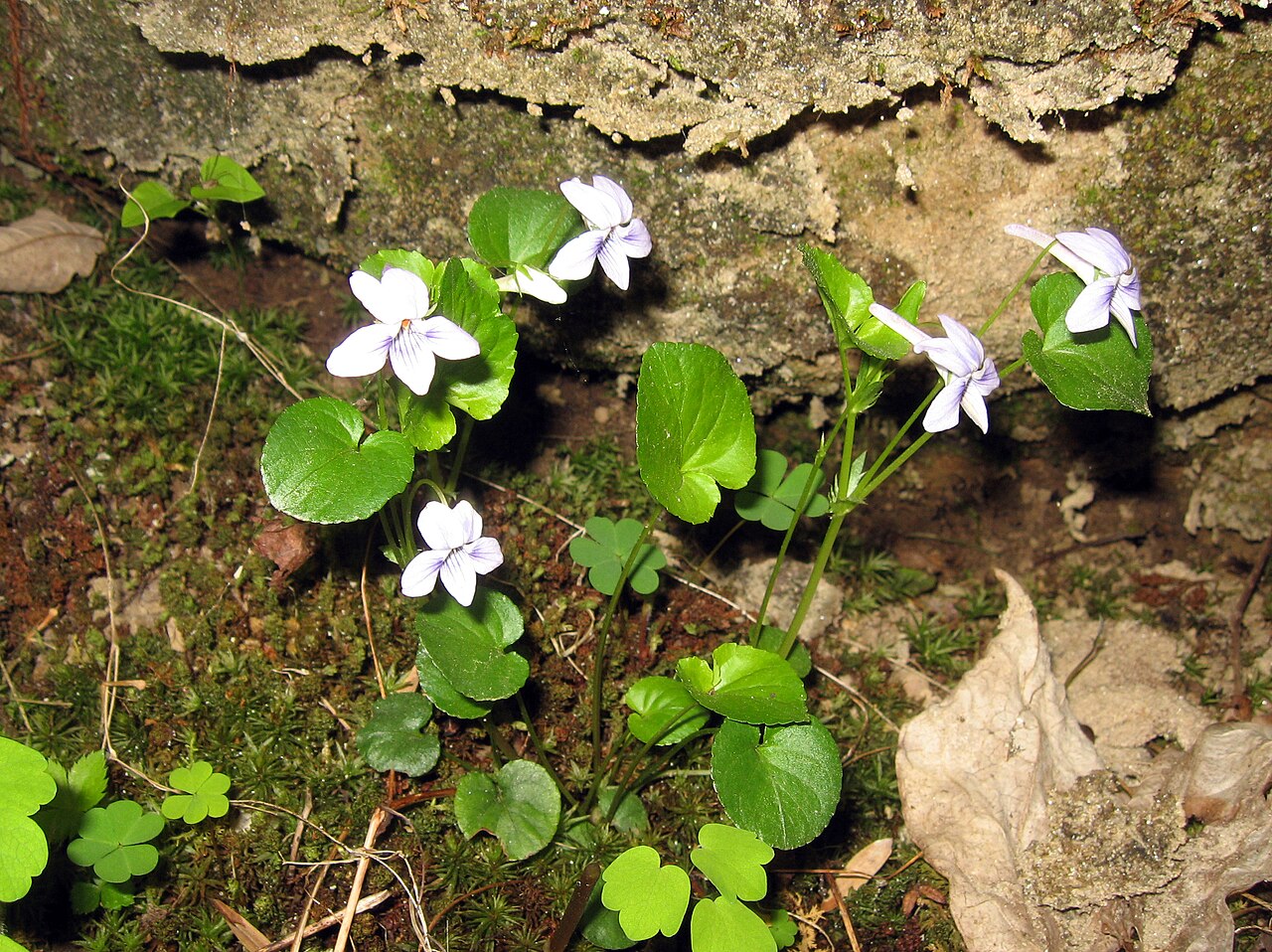
It grows in rich, moist deciduous and mixed woods, often on slopes, in ravines, on streambanks and below rock ledges and cliffs. It frequently grows on soils derived from limestone or other calcium-rich rock, but also on sandstone ledges and in acidic mountain coves where the soil is rich and moist.
📋 Regional plant lists featuring Long-Spurred Violet: New York, Pennsylvania & Northern New Jersey · Ohio & Indiana · Michigan, Wisconsin & Eastern Minnesota · Kentucky & Tennessee · Connecticut, Massachusetts & Rhode Island · New Hampshire, Maine & Vermont · Maryland, Virginia & West Virginia · Delaware, Southern New Jersey & Long Island · Alabama, Georgia & Mississippi · North & South Carolina
Growing & Care Guide
Long-spurred violet is an easy, small-scale plant for a shady garden with rich, moist soil. It is less aggressive than the common blue violet and spreads mainly by seed, so it fits well in a mixed woodland planting. Buy nursery-grown plants or seed; do not dig plants from the wild.
Light
Part shade to full shade, such as under deciduous trees. Morning sun is fine if the soil stays moist. Avoid hot afternoon sun, which scorches the leaves.
Soil & Water
Plant it in rich, loose, humusy soil that stays evenly moist but drains well. It does well in neutral to slightly alkaline soils, which mimic its limestone woodland habitats, but also grows in slightly acidic woodland soil. Water during dry spells, especially in the first year.
Planting Tips
Plant in spring or early fall, 6 to 9 inches apart, in small groups near paths or at the front of a woodland bed, where the curious spurred flowers can be seen up close. It looks good tucked among ferns, foamflower and other low spring wildflowers or along the base of rocks.
Pruning & Maintenance
Little care is needed. Leave fallen leaves as a natural mulch, which keeps the soil cool and moist and protects overwintering fritillary caterpillars. Avoid insecticides, which kill the caterpillars that depend on violets.
Propagation
Plants self-sow gently from ant-dispersed seed. To collect seed, watch for capsules that are turning upright and tan, and gather them just before they open. Sow fresh seed outdoors in fall; it needs a cold period to germinate. Small clumps can also be divided in early spring or fall.
Landscape Uses
- Woodland gardens: a small, unusual violet for shaded paths and rock edges
- Butterfly gardens: larval host for fritillary butterflies
- Shade groundcover mixes: with ferns, foamflower and wild ginger
- Rock gardens in shade: at the base of shaded boulders and ledges
- Woodland restoration: a native groundlayer violet of rich, moist forests
Wildlife & Ecological Value
Like other native violets, long-spurred violet is a small plant with a big role in woodland food webs.
For Pollinators
The long spur holds nectar that can be reached only by insects with long tongues, such as bumble bees, bee flies and butterflies. Smaller bees may visit to collect pollen. The plant also produces closed, self-pollinating flowers later in the season, which ensures seed even when pollinators are scarce.
For Birds
Ground-feeding birds such as wild turkeys and some songbirds eat violet seeds when they find them, and the insects that live among violets are food for woodland birds.
For Mammals
Rabbits and deer sometimes browse violets, and small rodents eat the seeds.
Ecosystem Role
Violets are the only food plants for the caterpillars of the greater fritillaries (Speyeria), including the great spangled fritillary and Aphrodite fritillary, and they are used by lesser fritillaries as well. Caterpillars hatch in fall, overwinter in leaf litter and feed on violet leaves in spring. Ants that carry violet seeds to their nests eat the oily appendage and discard the seed, often in nutrient-rich spots where it can germinate.
Cultural & Historical Uses
Long-spurred violet was described scientifically by the botanist Frederick Pursh in his Flora Americae Septentrionalis (1814). The species name rostrata, Latin for “beaked,” refers to the long spur, which looks like a slender beak projecting from the back of the flower.
Violets have long been popular wildflowers, used in folk medicine, as edible flowers and in perfumery, and several states have adopted violets as their state flower. Long-spurred violet has no special history of its own, but it is a favorite of wildflower enthusiasts because it is so distinctive and is often one of the prettiest violets on spring woodland walks.
A closely related plant in Japan and Korea, treated as Viola rostrata var. japonica or as a separate species, also has long spurs. The North American plants are the typical form of the species and are native only to eastern North America.
Frequently Asked Questions
How do I identify long-spurred violet?
Look for pale lilac flowers with a very long, slender spur projecting from the back, flowers rising from leafy stems, and beardless side petals. No other eastern violet has such a long spur.
Is long-spurred violet invasive in gardens?
No. It spreads mainly by ant-dispersed seed and forms loose patches. It is much less aggressive than common blue violet.
What butterflies use long-spurred violet?
Fritillary butterflies, such as the great spangled fritillary, lay eggs near violets, and their caterpillars feed on violet leaves in spring. Leaving leaf litter in place helps the overwintering caterpillars.
What growing conditions does it need?
Part to full shade and rich, moist, humusy soil, ideally neutral to slightly alkaline. It does not do well in hot, sunny or dry spots.
Is longspur violet the same plant?
Yes. Longspur violet is the USDA PLANTS common name for Viola rostrata; long-spurred violet is the name used in most field guides.

Looking for a nursery that carries Long-Spurred Violet?
Browse our native plant nursery directory: Alabama · Connecticut & Georgia · Indiana · Kentucky, Maryland, Massachusetts & Michigan · New Hampshire, New Jersey, New York, North Carolina & Ohio · Pennsylvania, South Carolina, Tennessee, Vermont & Virginia · West Virginia & Wisconsin