
Marsh Pea (Lathyrus palustris)
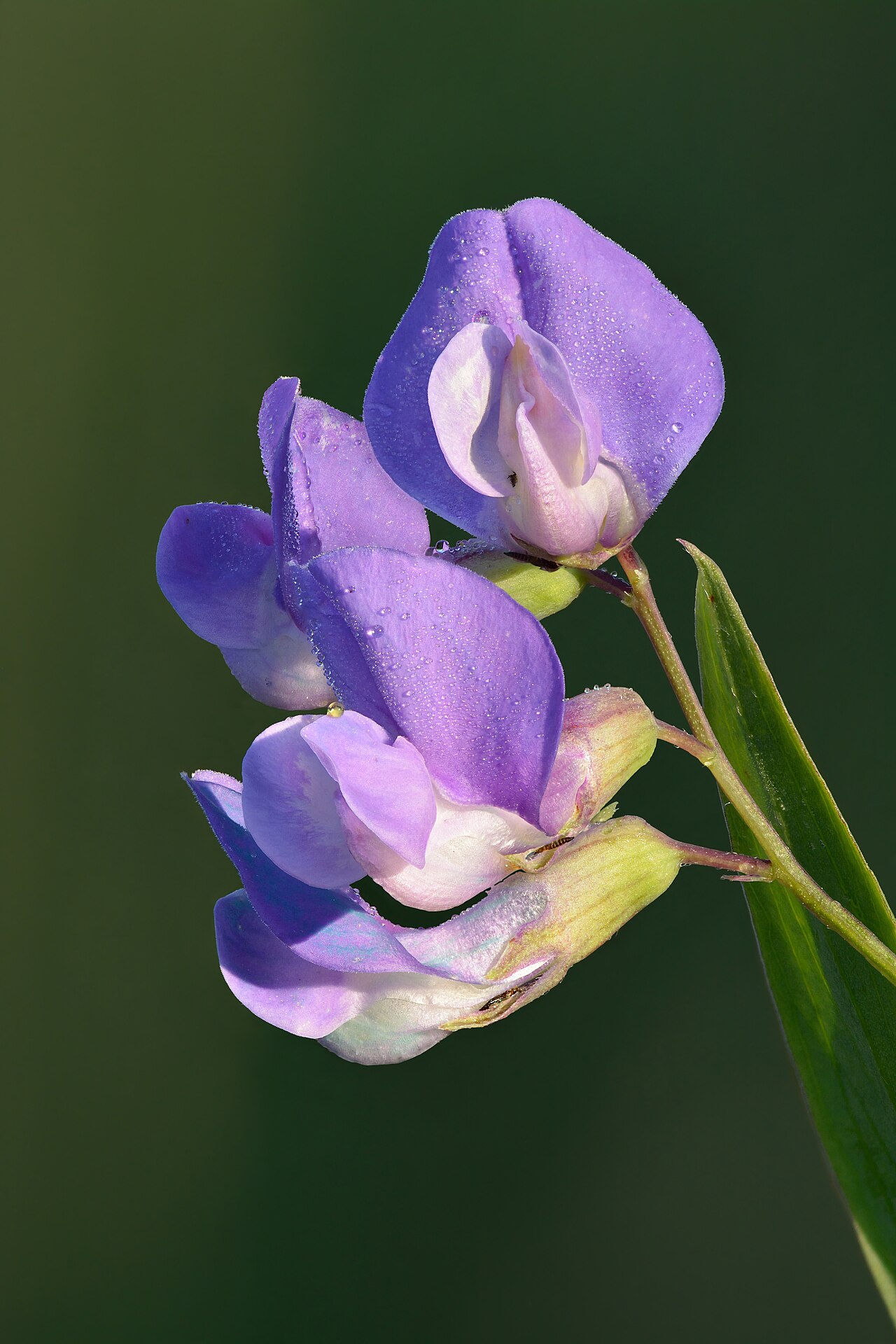
Lathyrus palustris, the Marsh Pea or marsh vetchling, is a slender native wild pea of wet meadows, marshes and shorelines. It climbs and scrambles through grasses and sedges with branched tendrils, reaching 1 to 3 feet or more. From June to August it bears small clusters of two to eight purple to lilac pea flowers. Its stems have narrow wings, and its leaves have just two to four pairs of narrow leaflets.
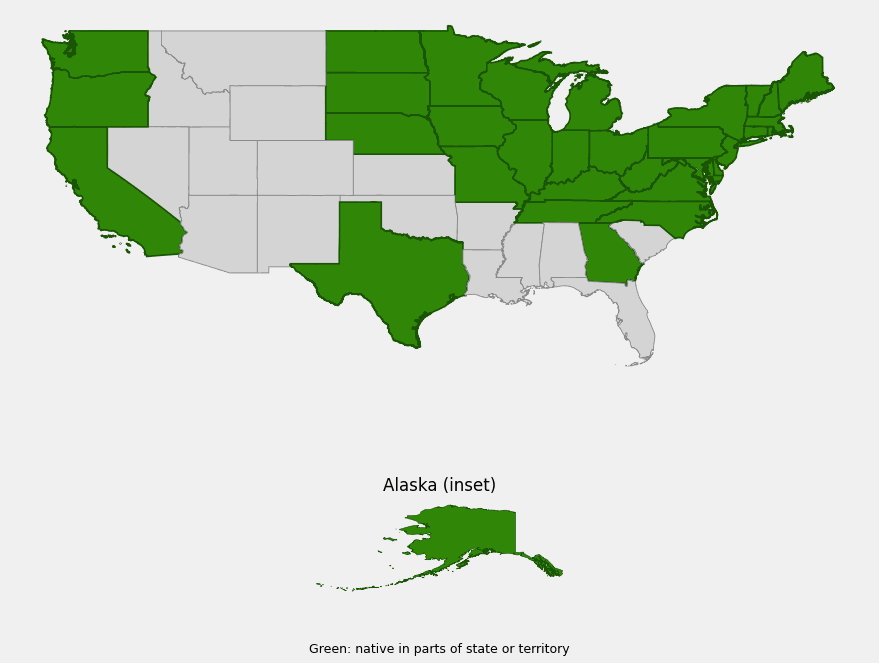
Marsh pea has a huge range around the Northern Hemisphere, across Europe, Asia and North America. In the United States it grows across the northern states from New England and the Mid-Atlantic to the Great Lakes and northern Plains, along the Pacific coast from California to Washington, and in Alaska, with a few scattered records farther south. It also grows in every Canadian province.
For gardeners, marsh pea is a delicate native vine for rain gardens, pond edges and wet meadow plantings, where it adds color, feeds bumblebees and enriches the soil with nitrogen. This guide covers how to identify it, where it grows, how to grow it and an important safety note about its seeds.
Identification
Marsh pea is one of several native wild peas and vetches that climb with tendrils. Its winged stem, its few pairs of narrow leaflets, and its wet habitat are the best clues.
Growth Habit
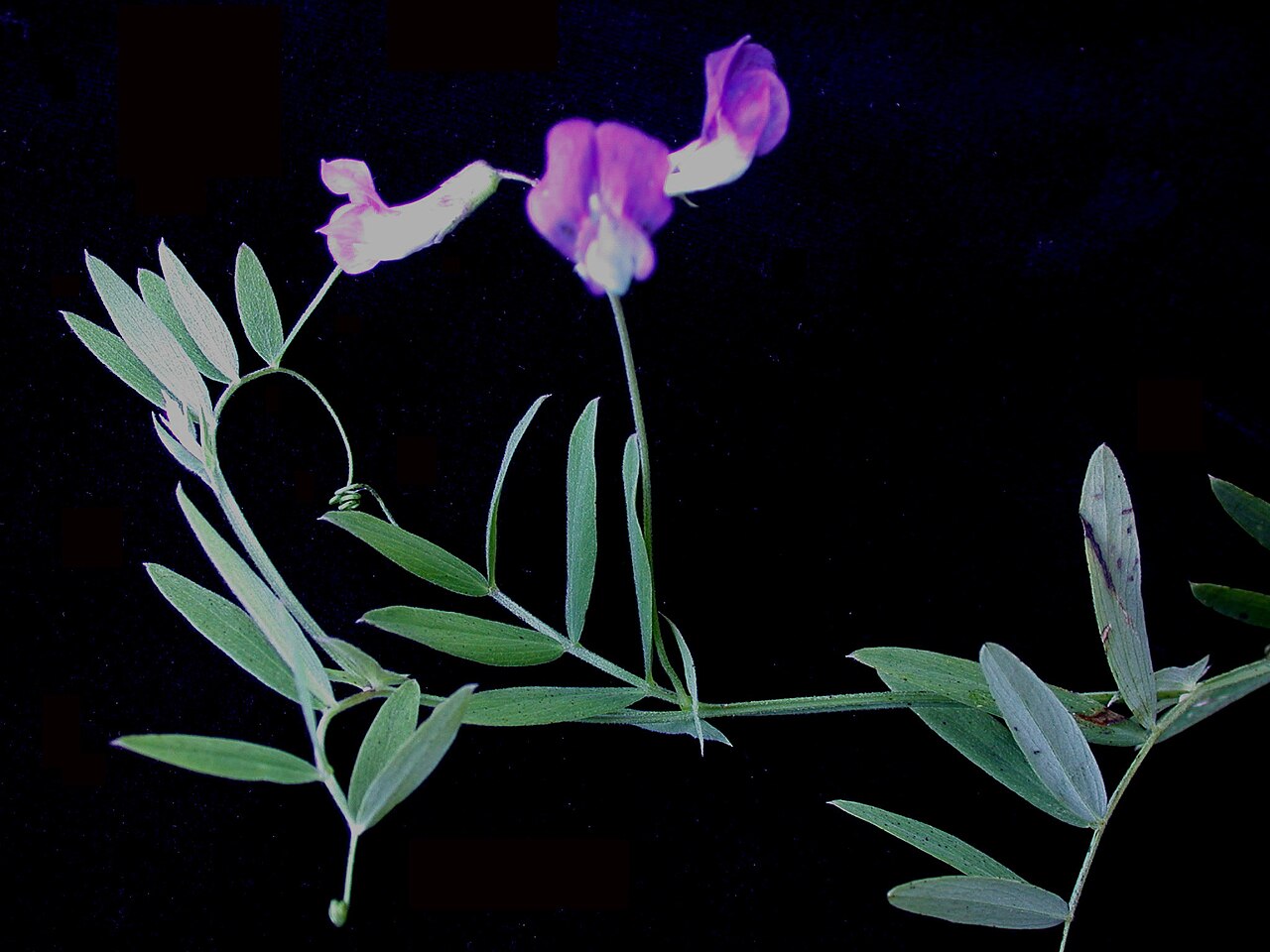
Marsh pea is a perennial, herbaceous vine that spreads by slender rhizomes. The stems are weak, 1 to 3 feet long (sometimes longer), angled and usually narrowly winged. They climb over other plants with tendrils or sprawl on the ground. The plant dies back to the ground each winter.
Leaves
The leaves are alternate and pinnately compound, with 2 to 4 pairs (occasionally more) of narrow, lance-shaped to oblong leaflets, each about 1 to 3 inches long. The leaf ends in a branched tendril. At the base of each leaf are two narrow, half-arrowhead-shaped stipules.
Flowers
From June to August, long stalks from the leaf axils carry 2 to 8 pea flowers, each ½ to ¾ inch long. They are reddish-purple to bluish-purple or lilac, sometimes paler, with a broad upper petal (the standard), two side petals (wings) and a keel.
Fruit
The fruit is a flat, smooth pod about 1½ to 2½ inches long, which turns brown and splits open when ripe, twisting to release several round seeds.
Look-alikes
Beach Pea grows on sandy beaches and lakeshores and has broader, fleshier leaflets and large, triangular stipules. Pacific Pea grows in dry woods and brush in the West. American Vetch has more pairs of leaflets and an unwinged stem; vetches (Vicia) have a ring of hairs at the tip of the style, while peas (Lathyrus) have hairs along one side of a flattened style.
Quick Facts
| Scientific Name | Lathyrus palustris L. |
| Family | Fabaceae (pea or legume family) |
| Plant Type | Herbaceous perennial vine with tendrils |
| Mature Height | 1–3 ft (climbing or sprawling) |
| Mature Spread | 1–3 ft; spreads slowly by rhizomes |
| Growth Rate | Moderate |
| Sun Exposure | Full sun to part shade |
| Water Needs | High; moist to wet soil |
| Soil Type | Wet loam, muck, peat or sandy soil |
| Soil pH | Slightly acidic to slightly alkaline, about 5.5–7.5 |
| Bloom Time | June–August |
| Flower Color | Reddish-purple to bluish-purple or lilac |
| Fall Color | None notable |
| Fruit | Flat brown pods; seeds are not safe to eat in quantity |
| Deer Resistant | No; deer and rabbits browse it |
| USDA Hardiness Zones | 2–7 |
Native Range
USDA PLANTS lists marsh pea as native in Alaska, California, Oregon and Washington in the West, and across the northern half of the East and Midwest: from Maine and the other New England states south to Delaware, Maryland, Virginia and West Virginia, and west through Pennsylvania, Ohio, Indiana, Illinois, Michigan, Wisconsin, Minnesota, Iowa and Missouri to the Dakotas and Nebraska. On the Pacific coast it grows mainly in coastal marshes and wet meadows near the sea.
Farther south it is rare and scattered. Kentucky, Tennessee and North Carolina have local populations in wet meadows and fens, and Georgia and Texas are known from very few outlying records; the Texas record is an old collection from the Davis Mountains. USDA also lists Louisiana and Oklahoma, but we could find no herbarium specimens or regional flora records for either state, so they are left off the map.
Typical habitats include wet meadows, sedge meadows, marshes, fens, wet prairies, shores of lakes and rivers, ditches and coastal salt-marsh edges. It usually grows in full sun among taller grasses and sedges that it can climb.
📋 Regional plant lists featuring Marsh Pea: New Hampshire, Maine & Vermont · Connecticut, Massachusetts & Rhode Island · New York, Pennsylvania & Northern New Jersey · Delaware, Southern New Jersey & Long Island · Maryland, Virginia & West Virginia · North & South Carolina · Kentucky & Tennessee · Alabama, Georgia & Mississippi · Ohio & Indiana · Michigan, Wisconsin & Eastern Minnesota · Illinois, Iowa & Missouri · North Dakota, South Dakota & Western Minnesota · Nebraska, Kansas & Eastern Colorado · Western Oregon & Western Washington · California & Nevada · Alaska · Idaho, Eastern Oregon & Eastern Washington
Growing & Care Guide
Marsh pea is easy to grow in any sunny, consistently moist spot. It is not a showy, dominant vine; it weaves gently through other wetland plants. Seed and plugs are offered by some native plant nurseries, especially in the Upper Midwest.
Light
Plant in full sun to part shade. It flowers best in sun, and in the wild it grows in open wet meadows and marsh edges.
Soil & Water
It needs soil that stays moist to wet through the growing season, such as a rain garden, pond or stream edge, low spot or wet meadow. It tolerates brief flooding. It is not fussy about soil type and grows in loam, muck, peat and wet sand.
Planting Tips
Set plants 12 to 18 inches apart among grasses, sedges and other wetland perennials that it can climb on. It does not need a trellis. Like other legumes, it forms root nodules with nitrogen-fixing bacteria, so it needs no fertilizer.
Pruning & Maintenance
Little care is needed. Cut back or mow the dead stems in late winter or early spring, along with the rest of a wet meadow planting. Water during droughts if the site dries out.
Propagation
Grow from seed: the seeds have a hard coat, so scarify them (nick or rub them with sandpaper) or soak them in warm water before sowing. Sow outdoors in fall or spring. Established patches can also be divided in spring by separating rooted rhizomes.
Landscape Uses
- Rain gardens and pond edges: a delicate native vine for constantly moist soil
- Wet meadow restoration: adds a nitrogen-fixing legume to sedge and grass meadows
- Pollinator gardens: summer flowers for bumblebees
- Shoreline plantings: scrambles through grasses on lakeshores and stream banks
- Wildlife gardens: leaves and seeds eaten by deer, rabbits, geese and other wildlife
Wildlife & Ecological Value
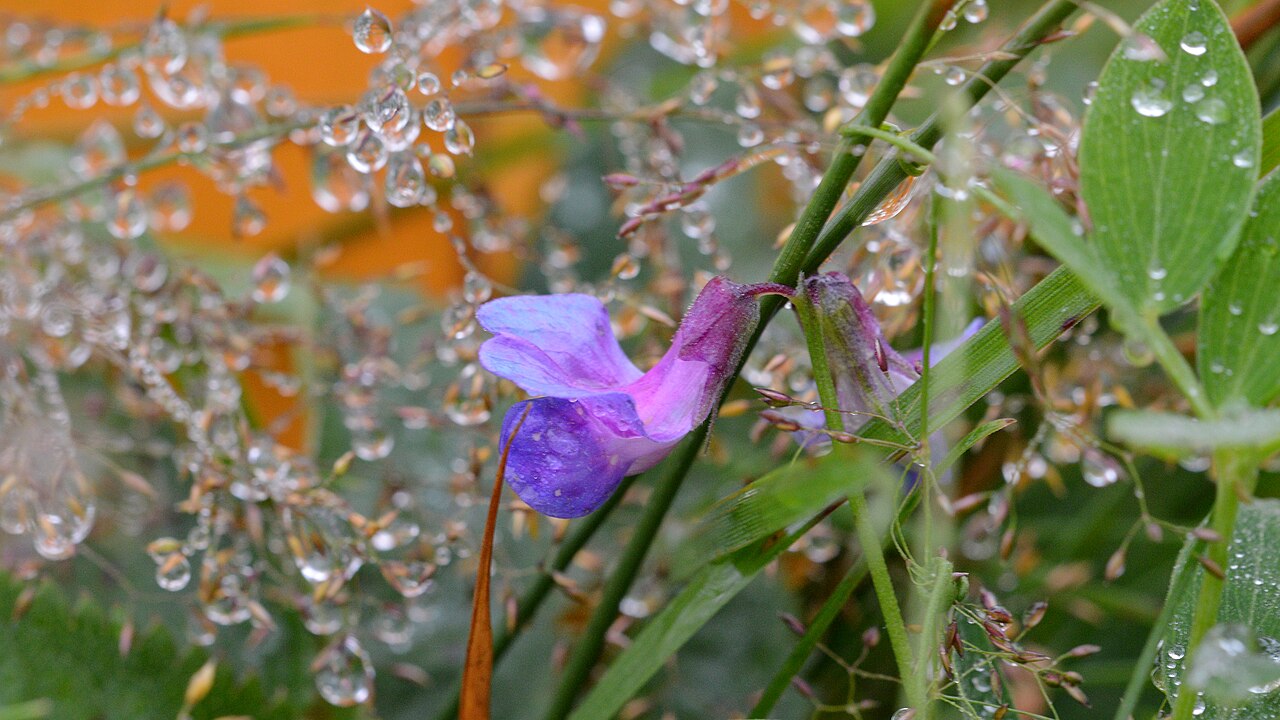
Like other native legumes, marsh pea feeds pollinators and enriches the soil of the wetlands where it grows.
For Pollinators
The flowers are visited mainly by bumblebees, which are strong enough to open the closed keel and reach the nectar. Wild peas and vetches are larval host plants for some sulphur butterflies, blues and moths.
For Birds
Ducks, geese, grouse and other birds eat the seeds. The plant also adds cover to the wet meadows where many wetland birds nest.
For Mammals
Deer, rabbits, muskrats and other mammals eat the leaves and stems, which are high in protein.
Ecosystem Role
Bacteria in the root nodules of marsh pea fix nitrogen from the air, which enriches the soil for nearby plants. In sedge meadows and wet prairies it is a regular part of the plant community and a sign of healthy, intact wetland.
Cultural & Historical Uses
Carl Linnaeus named Lathyrus palustris in 1753. Lathyrus is an old Greek name for a pea, and palustris means “of marshes.” Older North American books sometimes list a narrow-leaved form as Lathyrus myrtifolius, now treated as part of this species.
Safety note: the seeds of many Lathyrus species contain lathyrogens, amino acids that can cause a nerve disease called lathyrism when the seeds are eaten in large amounts over time. Lathyrism is best known from the grass pea (Lathyrus sativus), a crop eaten during famines. Do not eat marsh pea seeds or pods in quantity, and keep livestock from feeding heavily on the seeds.
Marsh pea is a good example of a circumboreal plant, found around the whole northern part of the globe. In parts of Europe, including Britain, it has become rare as wet meadows and fens have been drained, and in the United States it is also uncommon at the southern edge of its range.
Frequently Asked Questions
Is marsh pea edible?
It is not a good food plant. Like other wild Lathyrus peas, its seeds contain lathyrogens, which can cause the nerve disease lathyrism if eaten in quantity. Do not eat the seeds or pods.
How can I tell marsh pea from beach pea?
Marsh pea has narrow leaflets, small stipules and winged stems, and it grows in wet meadows and marshes. Beach Pea has broader, fleshy leaflets with large triangular stipules and grows on sandy beaches and dunes.
Where does marsh pea grow?
Across Canada and the northern United States, along the Pacific coast and in Alaska, mainly in wet meadows, marshes, fens, wet prairies and shores. It is rare in the southern part of its U.S. range.
Is marsh pea invasive?
No. It is a native plant that spreads slowly by rhizomes and blends in with other wetland plants. It does not smother other plants the way some non-native vines do.
Can I grow marsh pea in a rain garden?
Yes. It is a good choice for rain gardens, pond edges and wet meadows in full sun or light shade, as long as the soil stays moist. Scarify the seeds before sowing or start with nursery plugs.

Looking for a nursery that carries Marsh Pea?
Browse our native plant nursery directory: Alaska · California · Connecticut, Delaware & Georgia · Illinois, Indiana & Iowa · Kentucky, Maine, Maryland, Massachusetts, Michigan, Minnesota & Missouri · Nebraska, New Hampshire, New Jersey, New York, North Carolina, North Dakota & Ohio · Oregon · Pennsylvania, Rhode Island, South Dakota, Tennessee, Texas, Vermont & Virginia · Washington · West Virginia & Wisconsin

