
Thicket Bean (Phaseolus polystachios)
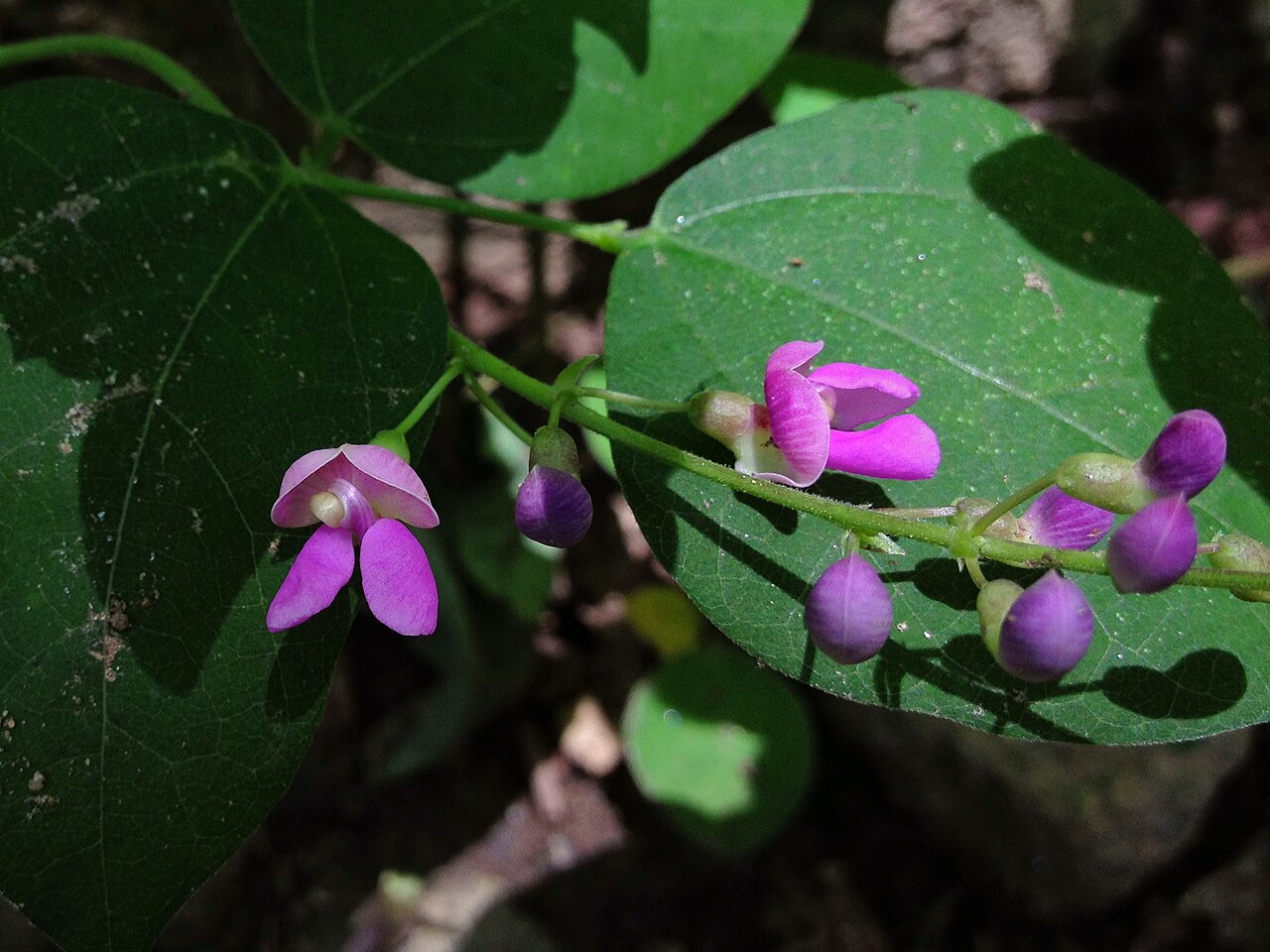
Phaseolus polystachios, known as Thicket Bean or wild kidney bean, is a perennial twining vine of open woods, thickets and woodland edges across the eastern United States. In late summer it hangs slender spikes of small, rosy-purple, pea-like flowers among broad, three-part leaves, followed by flat, curved pods.
It is the only wild true bean (Phaseolus) that is widespread in the eastern temperate United States; nearly all of its relatives, including the garden bean and lima bean, are tropical or subtropical. It grows from Texas and Florida north to Iowa, Michigan, New York and southern New England, and into southern Ontario. Despite its common name “wild kidney bean,” it is more closely related to the lima bean than to the common bean.
Thicket bean is a crop wild relative of interest to plant breeders, an excellent native vine for woodland gardens and pollinators, and a plant with a long history of human use. This page covers how to identify it, where it grows, how to grow it from seed, and its value to wildlife.
Identification
Thicket bean looks like a delicate wild version of a garden pole bean. Look for its three-part leaves, long-stalked spikes of small purple flowers with a coiled keel, and flat, sickle-shaped pods.
Size & Form
It is a herbaceous perennial vine that dies back to the ground each winter and regrows from a thick, tuberous root. The stems twine counterclockwise over shrubs, fences and low branches, usually reaching 6 to 15 feet. Older plants can form colonies.
Leaves
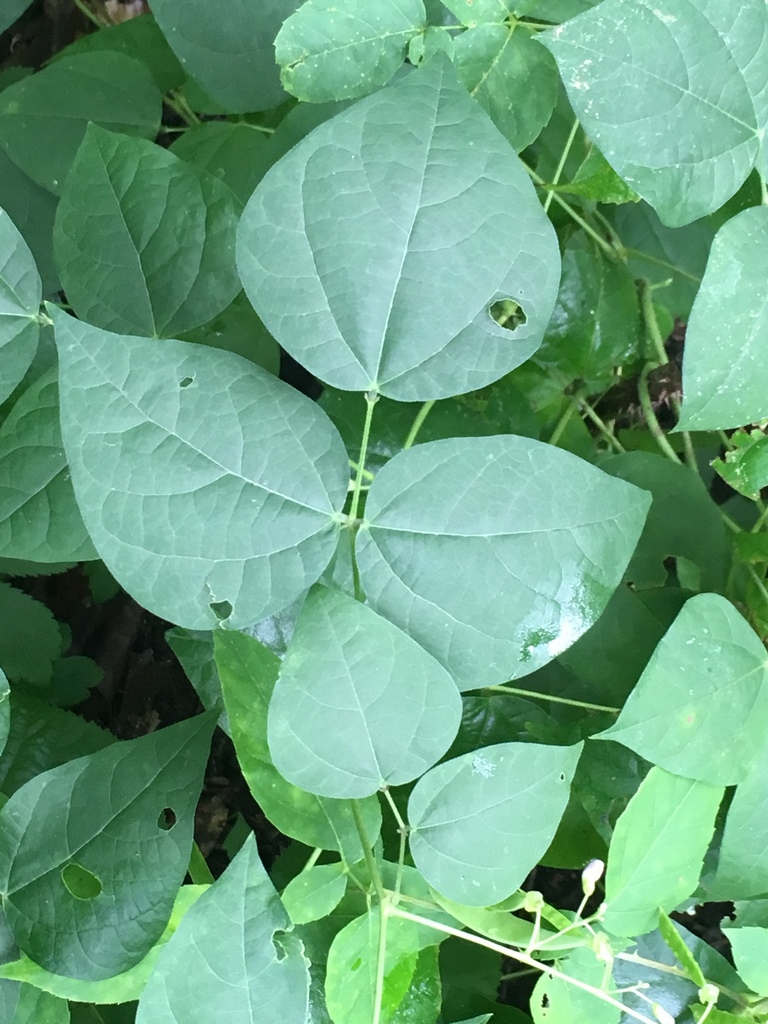
The leaves are alternate and divided into three broad leaflets, each about 2 to 4 inches long, egg-shaped to nearly round, with a rounded or heart-shaped base and a pointed tip. The end leaflet is on a longer stalk than the two side leaflets. They are thin and finely hairy, especially beneath.
Flowers
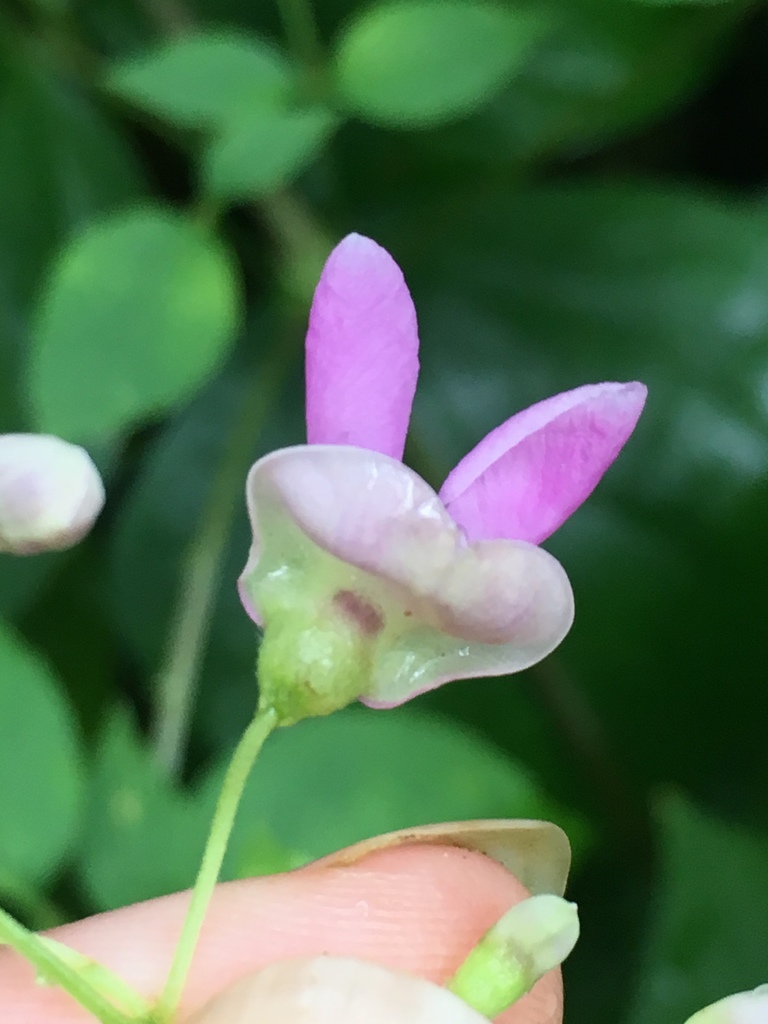
From about July to September, long-stalked, spike-like clusters (racemes) 4 to 10 inches long rise from the leaf axils. They carry many small flowers, about 3/8 inch long, rosy-purple to pink and sometimes pale lavender. The keel petal is coiled into a spiral, a hallmark of true beans. The species name polystachios means “many spikes.”
Pods & Seeds
The pods are flat, slightly curved, about 1 1/2 to 2 1/2 inches long, with a short beak, and usually hold 3 to 6 seeds. When dry, the two halves twist open and fling the seeds. The seeds are about 1/4 inch long, mottled brown or dark purple-black.
Similar Species
Hog peanut has smaller leaves and short clusters of pale lavender or white flowers. Trailing fuzzy bean and pink fuzzybean have pink flowers in tight heads at the ends of long stalks and narrow, round pods. American groundnut has five to seven leaflets and brownish-maroon flower clusters.
Quick Facts
| Scientific Name | Phaseolus polystachios (L.) Britton, Sterns & Poggenb. |
| Family | Fabaceae (pea or legume family) |
| Plant Type | Herbaceous perennial twining vine |
| Mature Height | Vines 6–15 ft long |
| Mature Spread | 3–6 ft |
| Growth Rate | Fast once established |
| Sun Exposure | Part shade to full sun |
| Water Needs | Low to medium; well-drained soil |
| Soil Type | Well-drained loam, sandy or rocky woodland soils |
| Soil pH | About 5.5–7.5 |
| Bloom Time | July–September |
| Flower Color | Rosy purple to pink |
| Fall Color | Leaves yellow before dieback |
| Fruit | Flat, curved pod 1.5–2.5 in, 3–6 seeds |
| Deer Resistant | No; browsed by deer |
| USDA Hardiness Zones | 5–9 |
Native Range
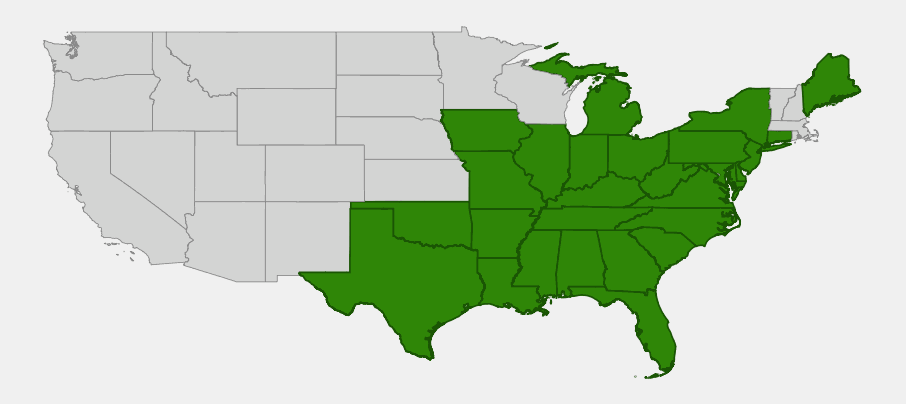
USDA PLANTS lists thicket bean as native from Texas, Oklahoma and Iowa east to the Atlantic coast, including Alabama, Arkansas, Connecticut, Delaware, Florida, Georgia, Illinois, Indiana, Kentucky, Louisiana, Maryland, Michigan, Mississippi, Missouri, New Jersey, New York, North Carolina, Ohio, Pennsylvania, South Carolina, Tennessee, Virginia and West Virginia, with an outlying record in Maine. It also reaches southern Ontario in Canada.
It is most common in the Southeast and lower Midwest, becoming rare at the northern edge of its range. In Connecticut it is listed as a species of special concern and is believed to be extirpated. USDA PLANTS also lists Puerto Rico, but the plant is rarely if ever recorded there and is not treated as part of its range on this page.
Botanists recognize three varieties: the widespread var. polystachios; var. sinuatus, with lobed leaflets, of sandy pinelands and scrub in Florida and the southeastern Coastal Plain; and var. smilacifolius, a narrow-leaved form of the Southeast; some botanists treat these as separate species.
📋 Regional plant lists featuring Thicket Bean: North & South Florida · Alabama, Georgia & Mississippi · North & South Carolina · Maryland, Virginia & West Virginia · Kentucky & Tennessee · Arkansas, Louisiana, Eastern Oklahoma & Eastern Texas · Illinois, Iowa & Missouri · Ohio & Indiana · Michigan, Wisconsin & Eastern Minnesota · New York, Pennsylvania & Northern New Jersey · Delaware, Southern New Jersey & Long Island · New Hampshire, Maine & Vermont
Growing & Care Guide
Thicket bean is rarely sold as a plant, but seed is occasionally available from native seed suppliers, and it is easy to start from seed. It suits woodland edges, informal fences and naturalistic gardens where a light, seasonal vine is welcome.
Light
It grows best in part shade or dappled light at the edge of woods, and also in full sun if the soil does not dry out completely. In deep shade it grows but flowers sparsely.
Soil & Water
Give it well-drained soil: loam, sand or rocky soil all work. It tolerates dry spells once established thanks to its tuberous root, but grows and flowers best with occasional summer water in drought. Avoid soggy, poorly drained ground, where the root can rot.
Planting Tips
Plant it where it can twine up a shrub, a split-rail or wire fence, or a tall obelisk. It is a light vine that does not smother sturdy shrubs. Because it needs day lengths over about 10 hours to vine and flower, it behaves best in its native latitudes.
Pruning & Maintenance
Little care is needed. Cut back the dead stems in late winter. Bean weevils often eat many of the seeds in the pods; this is normal in the wild.
Propagation
Grow it from seed. Nick or rub the hard seed coat with sandpaper, or soak seeds overnight, then sow them 1/2 to 1 inch deep in warm soil in spring, after frost. Seedlings form a tuberous root in the first year and usually flower in the second. Mature plants resent being moved.
Landscape Uses
- Woodland edges: a light, seasonal vine for shrubs and thickets in part shade
- Fences and trellises: twines up a split-rail fence or obelisk with late-summer flowers
- Pollinator gardens: nectar for bees and host plant for skipper and blue butterfly caterpillars
- Wildlife gardens: seeds for birds and small mammals; foliage browsed by deer
- Crop wild relative collections: a hardy wild relative of the lima bean valued by plant breeders
Wildlife & Ecological Value
Thicket bean is a nitrogen-fixing legume that supports a range of insects and other animals in eastern woodlands.
For Pollinators
The flowers are visited mainly by bees, including bumblebees and leafcutter bees, which can open the coiled keel. Like other native legumes, thicket bean is a host plant for caterpillars of skippers and blue butterflies, such as the silver-spotted skipper and eastern tailed-blue, which feed on legume leaves.
For Birds
Ground-feeding birds such as bobwhite quail and wild turkeys eat the seeds of native wild beans, as do other seed-eating birds.
For Mammals
Deer browse the leaves and stems, and small mammals eat the seeds. Its pods are also heavily eaten by seed weevils.
Ecosystem Role
Root nodules containing nitrogen-fixing bacteria let thicket bean add nitrogen to woodland soils, benefiting neighboring plants after its leaves and stems decay.
Cultural & Historical Uses
Archaeologists have found thicket bean seeds at Native American sites in Oklahoma and Arkansas, with some evidence that people selected plants with pods that stay closed, a first step toward domestication. Its small pods and seeds can reportedly be cooked and eaten like other beans.
Today plant breeders are interested in thicket bean as a crop wild relative of the lima bean. It shows resistance to white mold (Sclerotinia sclerotiorum), a serious disease of cultivated beans, and its cold tolerance is unusual in the genus.
Safety note: like other raw beans, raw wild bean seeds contain lectins and other compounds that can cause stomach upset. Never eat them raw; cook thoroughly if eating at all, and only if you are certain of the plant’s identification.
Frequently Asked Questions
Is thicket bean a native plant?
Yes. Thicket bean is native to the eastern United States, from Texas and Florida north to Iowa, Michigan and southern New England, and to southern Ontario. It is the only widespread wild true bean in the eastern U.S.
Is thicket bean edible?
Its pods and seeds were used by Native Americans and can reportedly be cooked like other beans, but they are small. Never eat raw beans, which contain compounds that cause stomach upset, and be certain of your identification.
How do I grow thicket bean?
Scarify or soak the seeds and sow them in warm soil in spring, in part shade to full sun and well-drained soil. Give the vine a shrub, fence or trellis to climb. It usually flowers in its second year.
Is thicket bean invasive?
No. It is a native perennial vine that dies back each winter and does not smother shrubs or trees. It can form small colonies over time.
How is thicket bean related to garden beans?
It belongs to the same genus as the common bean and lima bean, Phaseolus, but it is more closely related to the lima bean. Breeders are studying it as a source of disease resistance.

Looking for a nursery that carries Thicket Bean?
Browse our native plant nursery directory: Alabama & Arkansas · Connecticut, Delaware, Florida & Georgia · Illinois, Indiana & Iowa · Kentucky, Louisiana, Maine, Maryland, Michigan, Mississippi & Missouri · New Jersey, New York, North Carolina, Ohio & Oklahoma · Pennsylvania, South Carolina, Tennessee, Texas & Virginia · West Virginia

