
Pink Fuzzybean (Strophostyles umbellata)
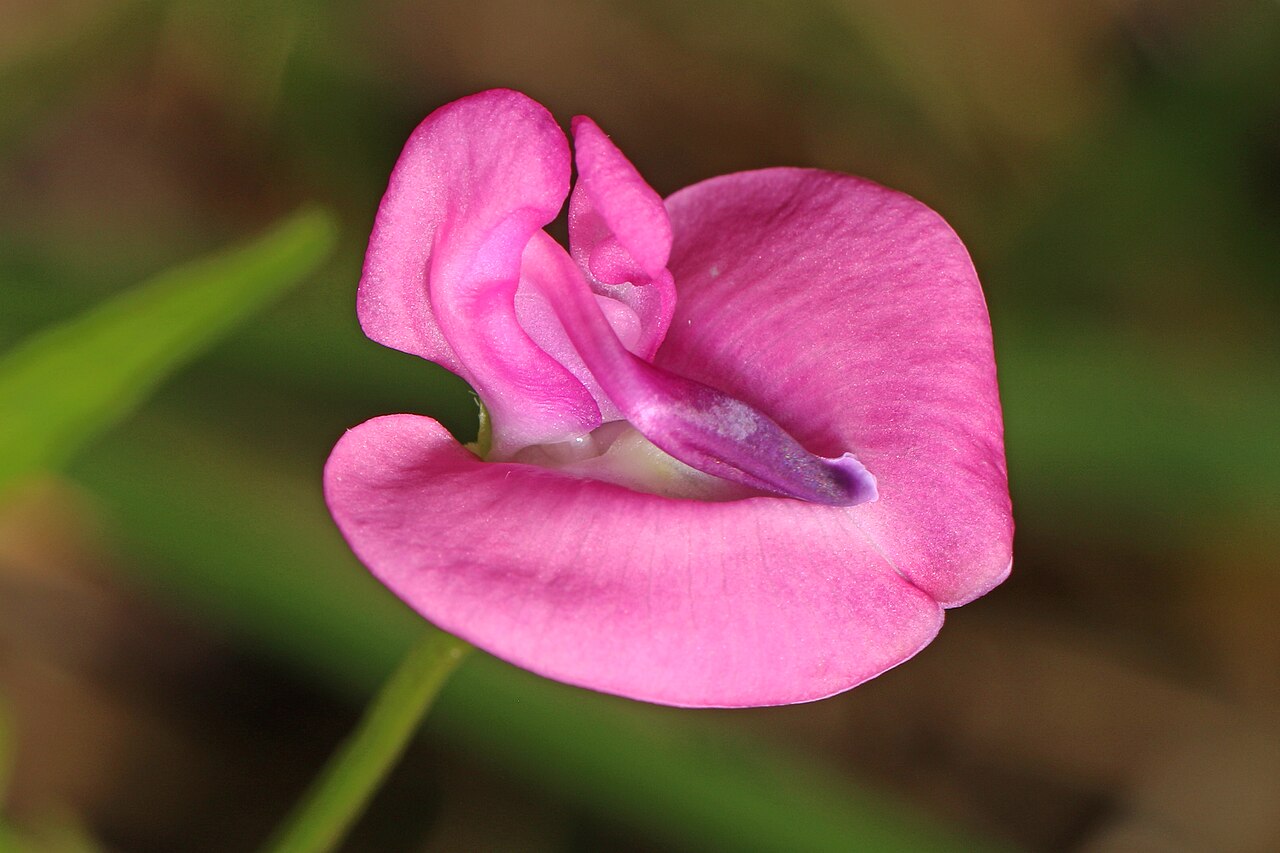
Strophostyles umbellata, known as Pink Fuzzybean, perennial wild bean or perennial woolly bean, is a slender, trailing and twining vine of the pea family (Fabaceae). It is one of three wild beans in the genus Strophostyles native to eastern North America, and the only one that is a true perennial, coming back each year from a deep, somewhat woody root.
From early summer into fall it sends up long, wiry stalks topped with small clusters of rose-pink, pea-like flowers. Each flower has a keel that curves upward into a distinctive beak, a feature that gives the genus its name. Narrow, slightly hairy pods follow, holding seeds with a fuzzy coating that explains the common name.
Pink fuzzybean is a plant of dry, sandy open woods, pine savannas, old fields and sunny roadsides across the Southeast and lower Midwest. It is easy to overlook until it flowers, but it is a good, low-maintenance legume for meadows, sandy native gardens and restoration plantings, where it adds nitrogen to the soil and feeds bees.
Identification
Look for a low, trailing or twining vine with three-part leaves and small heads of pink, beaked pea flowers held on stalks much longer than the leaves.
Growth Habit
Pink fuzzybean is a herbaceous perennial vine. Thin stems, about 2 to 5 feet long, sprawl across the ground or twine loosely around grasses and low shrubs. The stems are finely hairy and die back to the ground in winter; new shoots rise from a deep taproot in spring. Plants rarely climb high, so it usually reads as a low, scrambling groundcover in grassy places.
Leaves
The leaves are alternate and divided into three leaflets, like a bean leaf. Leaflets are oval to lance-shaped, about 1 to 2 inches long, with smooth edges and blunt or slightly pointed tips. Unlike its relative trailing fuzzy bean, the leaflets are normally not lobed. Both leaf surfaces are sparsely hairy, and small pointed stipules sit at the base of each leaf stalk.
Flowers
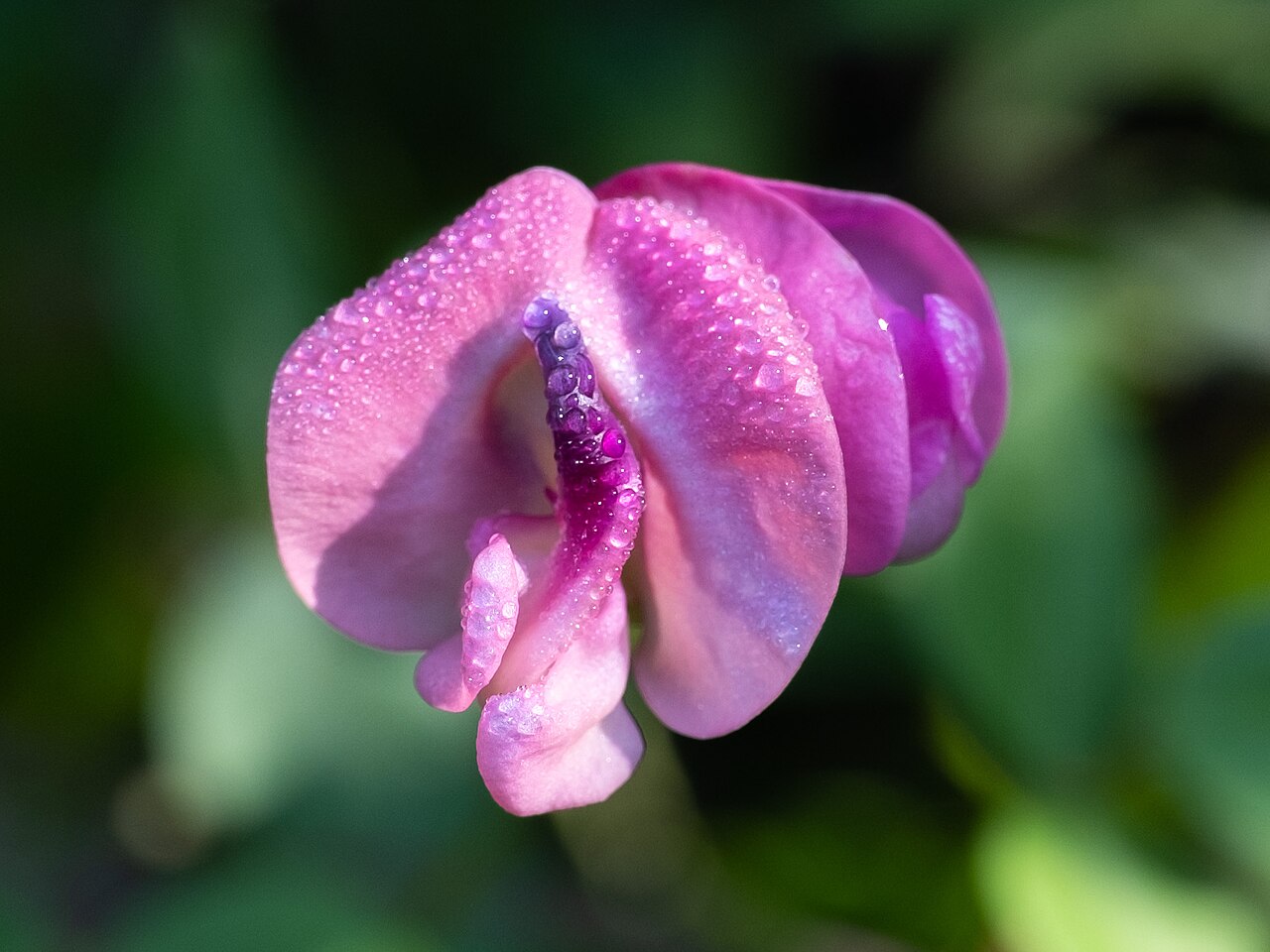
Flowers appear from about June to September. Two to ten pea-like flowers, each about 1/3 to 1/2 inch long, cluster in a small head at the tip of a slender stalk that is often 4 to 10 inches long or more, far longer than the nearby leaves. The flowers are rose-pink to pinkish purple and fade toward lavender or pale pink. The keel petals curve upward into a narrow, twisted beak.
Fruit & Seeds
After flowering, each head produces a few narrow, straight pods about 1 to 2 1/2 inches long, sparsely hairy and somewhat flattened. When ripe and dry, the pods split and twist open, flinging out several small, rectangular seeds. The seeds are covered in a whitish, fuzzy or mealy coating that can be rubbed off.
Look-alikes
Trailing fuzzy bean (Strophostyles helvola) is an annual with larger flowers, usually three-lobed leaflets and longer pods. Slickseed fuzzybean (Strophostyles leiosperma) is an annual with very narrow leaflets, smaller flowers and seeds without the fuzzy coat. American hog peanut (Amphicarpaea bracteata) has pale lilac to white flowers in short drooping clusters and lacks the upturned, beaked keel. Spurred butterfly pea has much larger, flat-faced lavender flowers.
Safety Notes
Pink fuzzybean is not known to be toxic, but it is not a food plant. Like many wild legumes, its seeds should not be eaten.
Quick Facts
| Scientific Name | Strophostyles umbellata |
| Family | Fabaceae (pea or legume family) |
| Plant Type | Herbaceous perennial vine |
| Mature Height | Trailing; stems 2–5 ft long, under 1 ft tall unless climbing |
| Mature Spread | 2–5 ft |
| Growth Rate | Moderate |
| Sun Exposure | Full sun to part shade |
| Water Needs | Low to moderate; dry to average soil |
| Soil Type | Sandy, loamy or gravelly; well drained |
| Soil pH | About 5.0–7.0 |
| Bloom Time | June–September |
| Flower Color | Rose-pink fading to lavender |
| Fall Color | Not significant |
| Fruit | Slender, hairy pods with fuzzy-coated seeds |
| Deer Resistant | No; browsed like other wild legumes |
| USDA Hardiness Zones | 6–9 |
Native Range
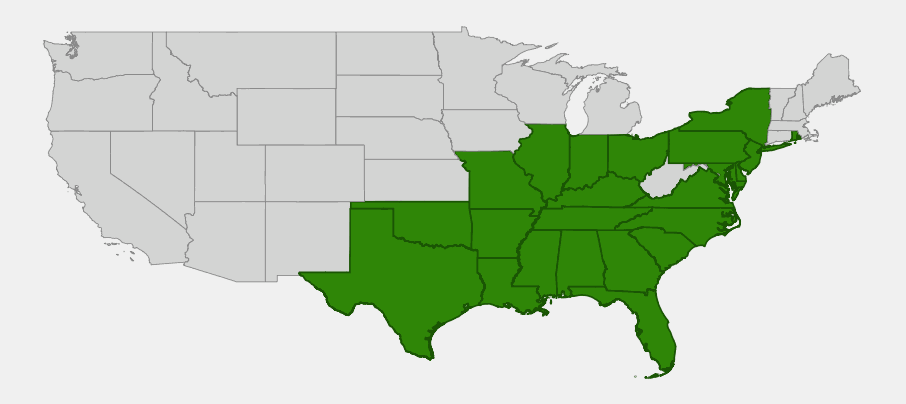
Pink fuzzybean is native to the eastern and south-central United States. USDA PLANTS lists it as native in Alabama, Arkansas, Delaware, Florida, Georgia, Illinois, Indiana, Kentucky, Louisiana, Maryland, Mississippi, Missouri, New Jersey, New York, North Carolina, Ohio, Oklahoma, Pennsylvania, Rhode Island, South Carolina, Tennessee, Texas and Virginia, as well as the District of Columbia.
It is most common on the Atlantic and Gulf Coastal Plains and in the southern interior from Tennessee and Kentucky west to the Ozarks, eastern Oklahoma and East Texas. Toward the northern edge of its range, in Ohio, Pennsylvania, New York and Rhode Island, it is scattered and local, mostly in sandy coastal or river-valley habitats, and is treated as rare in some of those states.
Typical habitats are dry to moist, open places with sandy or rocky soil: pine and oak woodlands, pine savannas and flatwoods, sandhills, woodland edges and clearings, old fields, powerline cuts and roadsides. It favors spots kept open by fire or mowing and tends to fade when shrubs close in.
📋 Regional plant lists featuring Pink Fuzzybean: North & South Florida · Alabama, Georgia & Mississippi · North & South Carolina · Maryland, Virginia & West Virginia · Kentucky & Tennessee · Arkansas, Louisiana, Eastern Oklahoma & Eastern Texas · Illinois, Iowa & Missouri · Ohio & Indiana · New York, Pennsylvania & Northern New Jersey · Delaware, Southern New Jersey & Long Island · Connecticut, Massachusetts & Rhode Island · New Hampshire, Maine & Vermont
Growing & Care Guide
Pink fuzzybean is seldom sold as a potted plant, but seed is occasionally offered by native seed suppliers in the Southeast. It is an informal plant for meadows, sandy slopes and wild corners rather than tidy beds.
Light
Full sun gives the most flowers. It also grows in light or partial shade under open pines and oaks, but flowers less as shade deepens.
Soil & Water
Grow it in well-drained, sandy, loamy or gravelly soil of low to average fertility. Once its taproot is established it tolerates drought well and needs no irrigation in most of its range. Avoid rich, heavily watered beds, where it is outcompeted by bigger plants.
Planting Tips
Sow seed or set out small plants among bunchgrasses such as little bluestem, where the stems can scramble and twine through the grass. It works well along a sunny path edge, on a dry bank or in a pollinator meadow. Because the stems trail, give it room or a low support rather than crowding it with tall, dense plants.
Pruning & Maintenance
Little care is needed. Do not fertilize; like other legumes it hosts nitrogen-fixing bacteria in its roots. In a meadow, mow or burn in late winter to keep shrubs from shading it out. Cut back the dead stems in late winter if you want a tidier look.
Propagation
Grow it from seed. Collect pods as they turn tan, before they twist open, and let them finish drying in a paper bag. The hard seed coat benefits from light nicking or a soak in hot water before sowing. Sow in spring after the soil warms, or in fall outdoors. Established plants have deep taproots and do not move well, so start with seed or small plants.
Landscape Uses
- Pollinator meadows: summer-long pink flowers for native bees
- Dry, sandy gardens: drought tolerant once its taproot is established
- Restoration: pine savannas, sandhills, old fields and roadsides
- Soil building: a native legume that adds nitrogen to poor soils
- Wildlife plantings: seeds for ground-feeding birds
Wildlife & Ecological Value
Like many native legumes, pink fuzzybean supports insects, birds and soil life out of proportion to its modest size.
For Pollinators
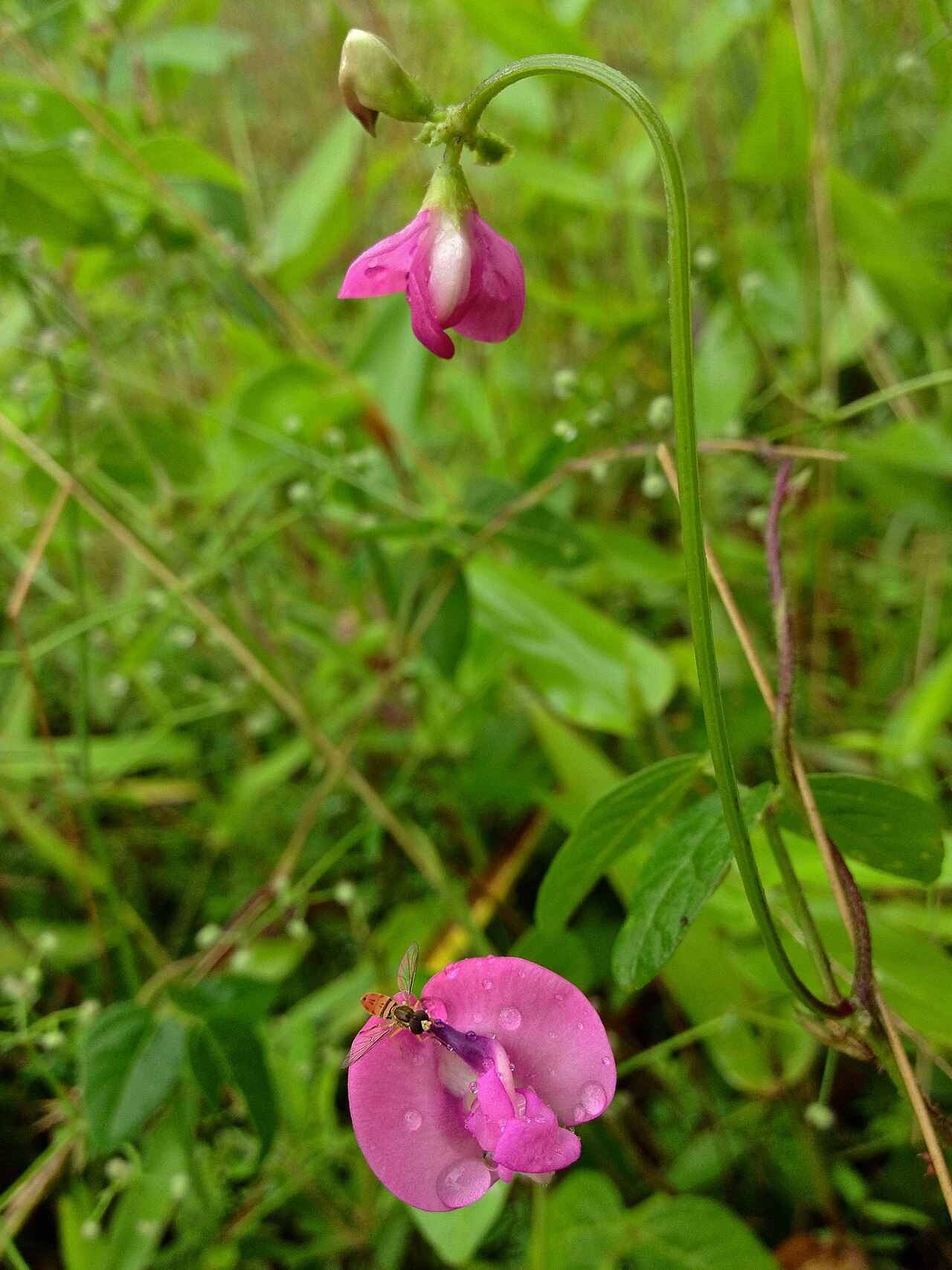
The pea-like flowers are visited mainly by bees strong enough to open the keel, including bumble bees, leafcutter bees and other native bees. The flowers bloom in mid to late summer, when many spring wildflowers have finished.
For Birds
The seeds of wild beans are eaten by ground-feeding birds such as northern bobwhite and mourning doves, and the low, tangled stems give cover in grassy places.
For Mammals
Deer, rabbits and other herbivores browse the foliage, as they do most wild legumes. Small rodents eat the seeds.
Ecosystem Role
Pink fuzzybean forms root nodules with nitrogen-fixing bacteria, adding nitrogen to the nutrient-poor sandy soils where it grows. It is a characteristic legume of fire-maintained pine and oak communities in the Southeast, and its foliage feeds leaf-eating insects that in turn feed birds.
Cultural & Historical Uses
The species was first described as Phaseolus umbellatus, placing it with the garden beans. Nathaniel Lord Britton later moved it to Strophostyles, a genus name from the Greek strophe (a turning) and stylos (column or style), referring to the curved, twisted keel and style. The epithet umbellata refers to the flowers clustered at the stalk tip, like a small umbel.
Wild beans are close relatives of the cultivated common bean. Their seeds and pods are small and tough, and there is little reliable record of pink fuzzybean being used as a food plant.
The common names vary widely: pink fuzzybean (the USDA name), pink wild bean, perennial wild bean and perennial woolly bean all refer to the same plant. “Fuzzy” and “woolly” describe the coating on the seeds, and “perennial” sets it apart from its two annual relatives.
Frequently Asked Questions
Is pink fuzzybean an annual or a perennial?
It is a perennial that returns each year from a deep taproot. Its two close relatives, trailing fuzzy bean and slickseed fuzzybean, are annuals.
Why is it called fuzzybean?
The seeds are covered with a whitish, fuzzy or mealy coating, and the pods are finely hairy.
Will pink fuzzybean take over my garden?
No. It is a slender, low vine that scrambles through grasses and rarely climbs high. It is easy to pull or cut back if it wanders too far.
What pollinates pink fuzzybean?
Mostly native bees, such as bumble bees and leafcutter bees, which are strong enough to open the keel and reach the pollen and nectar.
Where does pink fuzzybean grow naturally?
In dry, sandy or rocky open woods, pine savannas, sandhills, old fields and roadsides across the Southeast and lower Midwest, from New York and Ohio south to Florida and west to Oklahoma and East Texas.

Looking for a nursery that carries Pink Fuzzybean?
Browse our native plant nursery directory: Alabama & Arkansas · Delaware, Florida & Georgia · Illinois & Indiana · Kentucky, Louisiana, Maryland, Mississippi & Missouri · New Jersey, New York, North Carolina, Ohio & Oklahoma · Pennsylvania, Rhode Island, South Carolina, Tennessee, Texas & Virginia

