
Native Live-forevers (Dudleya)
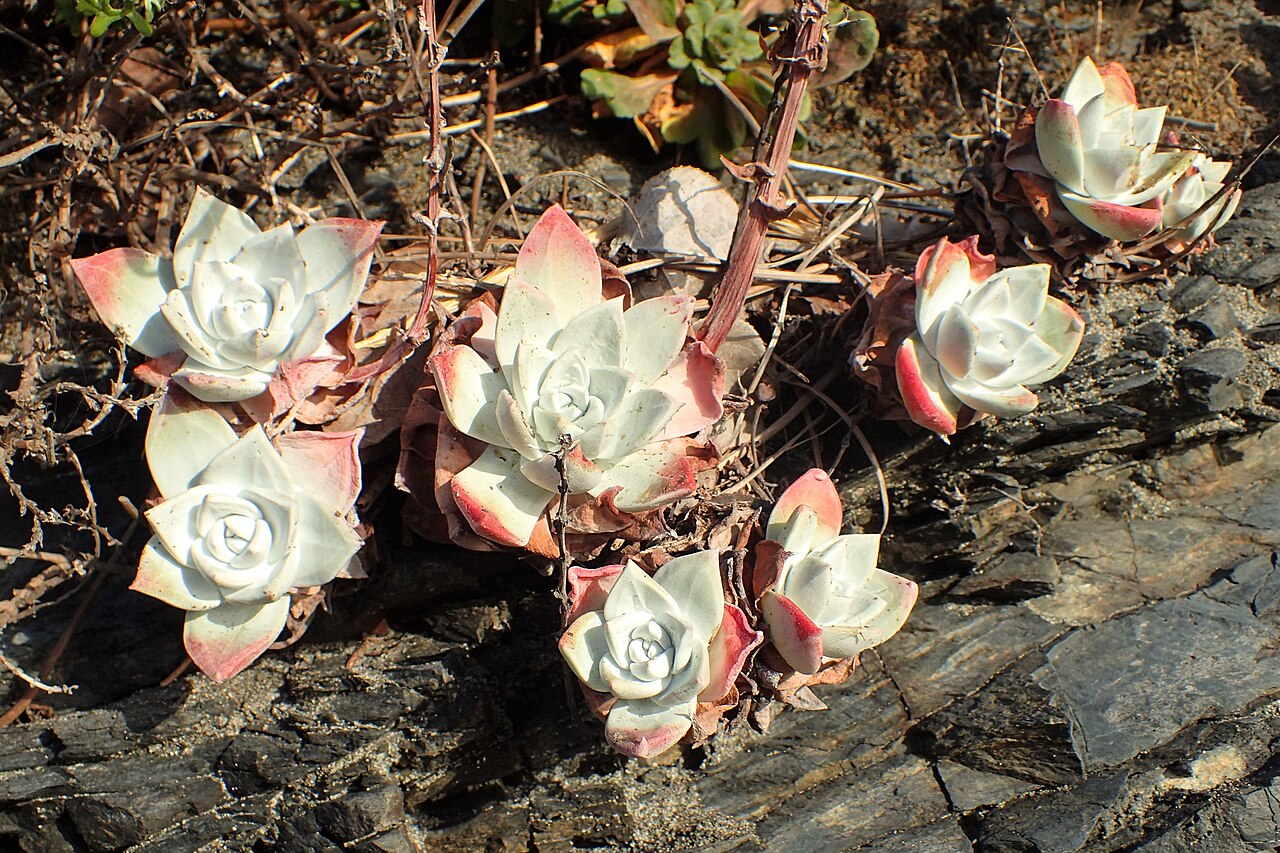
Live-forevers, or dudleyas, are the native succulents of the California coast and foothills. They form rosettes of thick, fleshy leaves, often frosted with a chalky white wax, that cling to sea cliffs, canyon walls and rock outcrops where few other plants can hold on. In spring and early summer, each rosette sends up one or more fleshy, leafy stalks topped with branched sprays of small, star- or tube-shaped flowers in yellow, orange, red, pink or white. Hummingbirds and bees visit them, and the rosettes live for many years, which is where the name live-forever comes from.
Despite how they are sometimes described, live-forevers are not shrubs. They are low perennial succulents in the stonecrop family, related to sedums and echeverias, and most stay under a foot tall except when in bloom. They are perfectly adapted to a Mediterranean climate: they grow during the cool, wet winter, flower in spring, and many go partly or fully dormant in the dry summer.
This guide covers the native species most often grown in gardens, where they grow wild, how to grow them without rotting them, and how to tell them from the Mexican and Canary Island succulents they resemble. If you came from our California flowering-plants article, the live-forevers described there are covered below.
Identification
Dudleyas belong to the stonecrop family (Crassulaceae). The genus is named for William Russell Dudley, the first head of the botany department at Stanford University.
Rosettes & Leaves
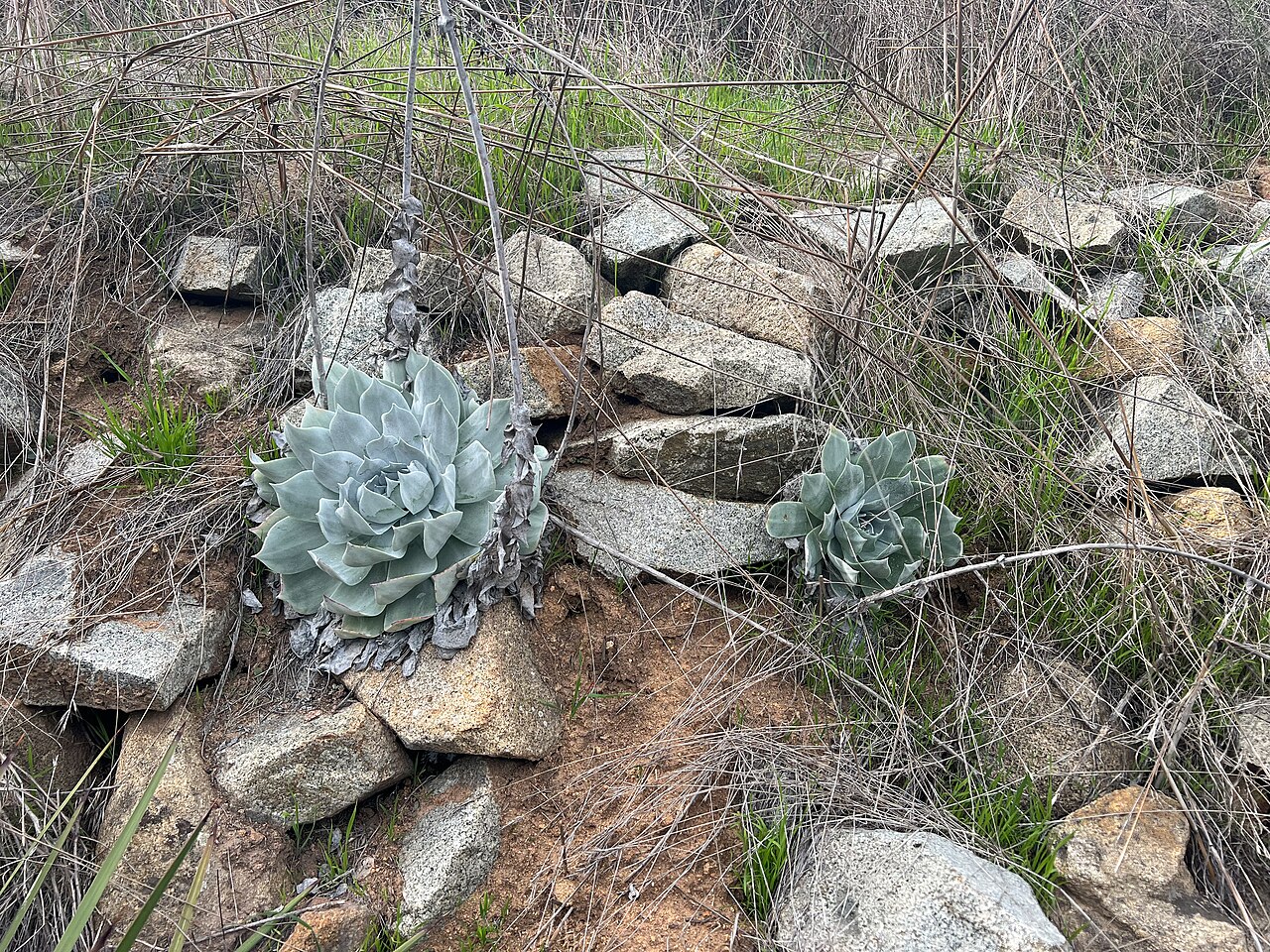
Most species form a basal rosette of thick, succulent leaves, either a single large rosette on a short, stout trunk (caudex) or clusters of many small rosettes. Leaves may be broad and pointed, narrow and lance-shaped, or round and finger-like, depending on species. Many are covered with a powdery white wax called farina that reflects sunlight and sheds water. In species such as chalk liveforever the wax is so thick the plant looks painted white. Some species, especially canyon liveforever, let their leaves wither in summer and regrow them with the fall rains.
Flowers
The flowering stalks rise from the side of the rosette, not from its center, and carry their own small, clasping leaves (bracts). The flowers sit along the branches of the cluster. Each has five petals, either spreading into a star (as in ladyfingers) or held upright and joined into a narrow tube (as in chalk liveforever). Colors include pale yellow, bright yellow, orange, red and white. Most species bloom from April to July.
Seeds
The fruits are small, upright follicles that split to release many dust-fine seeds, which lodge in rock crevices and moss.
How to Tell a Dudleya from an Echeveria
Dudleyas and echeverias look much alike. Dudleya flowers have petals that are mostly separate or joined only at the base, while echeveria flowers are bell-shaped with fleshy, joined petals, usually pink, orange or red. Dudleya leaves generally will not root and form new plants if snapped off, while echeveria leaves do so easily. And a dudleya’s chalky wax smudges permanently when touched, leaving fingerprints. Echeverias are not native to the US.
Quick Facts
| Scientific Name | Dudleya Britton & Rose |
| Family | Crassulaceae (Stonecrop) |
| US-Native Taxa | Several dozen species and subspecies (approximate), nearly all in California |
| Growth Form | Perennial succulent rosettes, single or clustered; not shrubs |
| Mature Height | Rosettes 2–24 in across; flower stalks 4 in–2 ft |
| Sun Exposure | Full Sun on the coast; Part Shade inland and in hot climates |
| Water Needs | Very low; winter rain only, no summer water for most species |
| Soil Type | Rocky, gravelly, fast-draining soil; rock crevices and walls |
| Bloom Time | Spring to early summer (April–July) |
| Flower Color | Pale yellow, yellow, orange, red, pink or white |
| Wildlife Value | Hummingbirds visit red and orange flowers; bees and other insects visit yellow and white ones |
| USDA Hardiness Zones | Mostly 9–11; a few inland species tolerate brief freezes |
| Conservation | Several taxa are federally threatened or endangered; wild plants are protected from poaching under California law |
Native Range
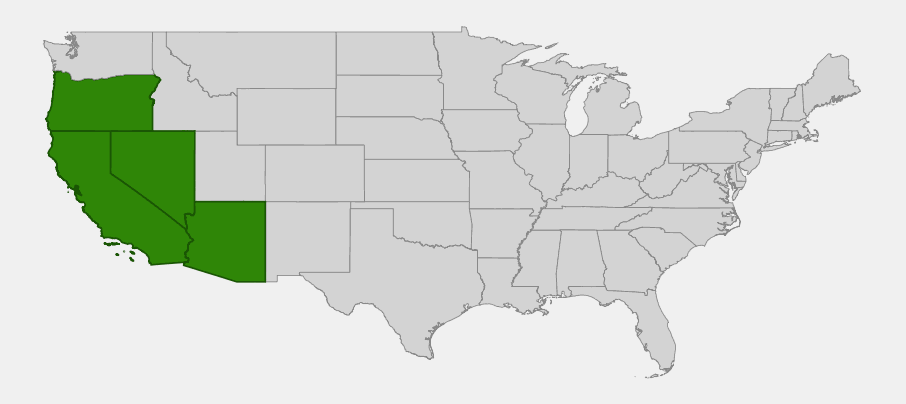
The genus Dudleya is native only to western North America: California, Baja California and a few neighboring areas. In the US, the great majority of species grow in California, from the Oregon border to Mexico and from the coast and Channel Islands to the inner Coast Ranges, Transverse and Peninsular Ranges and Sierra Nevada foothills. Bluff lettuce reaches the southern coast of Oregon. In the deserts, a few dudleyas grow on rocky slopes in western Arizona and southern Nevada.
Most species have small natural ranges, and many are confined to a single mountain range, island or rock type. Southern California, the Channel Islands and northern Baja California have the most species. Outside this range they are sometimes grown as houseplants or in containers, but they need protection from winter wet and hard frost.
📋 Regional plant lists with native live-forevers: California & Nevada · Western Oregon & Washington · Arizona & New Mexico
Native Species
These are the dudleyas most often grown or seen in the wild in California. Each linked name goes to our full growing guide.
Bluff lettuce (Dudleya farinosa) grows on coastal bluffs and sea cliffs from Monterey County north to southern Oregon. Its clustered rosettes of pale green to chalky gray leaves often turn pink or red at the tips, and its pale yellow flowers open in summer. It is one of the easiest dudleyas for coastal gardens and one of the species most targeted by poachers.
Chalk liveforever (Dudleya pulverulenta) is the showpiece of the genus: a single rosette up to 2 feet across of broad, heavily waxed, silvery-white leaves, sending out arching stalks of hanging red tubular flowers that hummingbirds love. It grows on rocky slopes and cliffs in coastal sage scrub and chaparral from San Luis Obispo County to Baja California. A desert form, sometimes treated as its own species (D. arizonica), grows in western Arizona and southern Nevada.
Canyon liveforever (Dudleya cymosa) is the most widespread dudleya, growing on rock outcrops in the foothills and mountains from northern California through the Sierra Nevada and Coast Ranges to southern California. Its green or reddish rosettes are smaller than chalk liveforever’s, and its flowers are bright yellow, orange or red. It has several subspecies, two of which are federally threatened.
Lanceleaf liveforever (Dudleya lanceolata) has narrow, lance-shaped, gray-green leaves in a single rosette and tall stalks of yellow to orange-red flowers. It is common on rocky slopes and road cuts across southern California into Baja California, including some inland and desert-edge sites.
Coast dudleya (Dudleya caespitosa) forms mats of many small, green to gray rosettes on coastal bluffs and rocks from Monterey County to Los Angeles County. Its flowers are yellow, sometimes tinged red, on branched stalks in spring and summer.
Ladyfingers (Dudleya edulis), also called fingertips, has clusters of round, finger-like green leaves and star-shaped creamy white flowers in early summer. It grows on rocky slopes in coastal sage scrub and chaparral in San Diego, Riverside and Orange counties and northern Baja California.
Rare island and local species. Many of the most unusual dudleyas grow in tiny ranges. Santa Barbara Island live-forever (D. traskiae) nearly vanished when introduced rabbits ate it and has recovered since they were removed. Laguna Beach dudleya (D. stolonifera) and Verity’s dudleya (D. verityi) are federally threatened. Green dudleya (D. virens) grows on the Channel Islands and the Palos Verdes Peninsula. Grow these only from legally propagated nursery stock.
Non-Native Look-Alikes
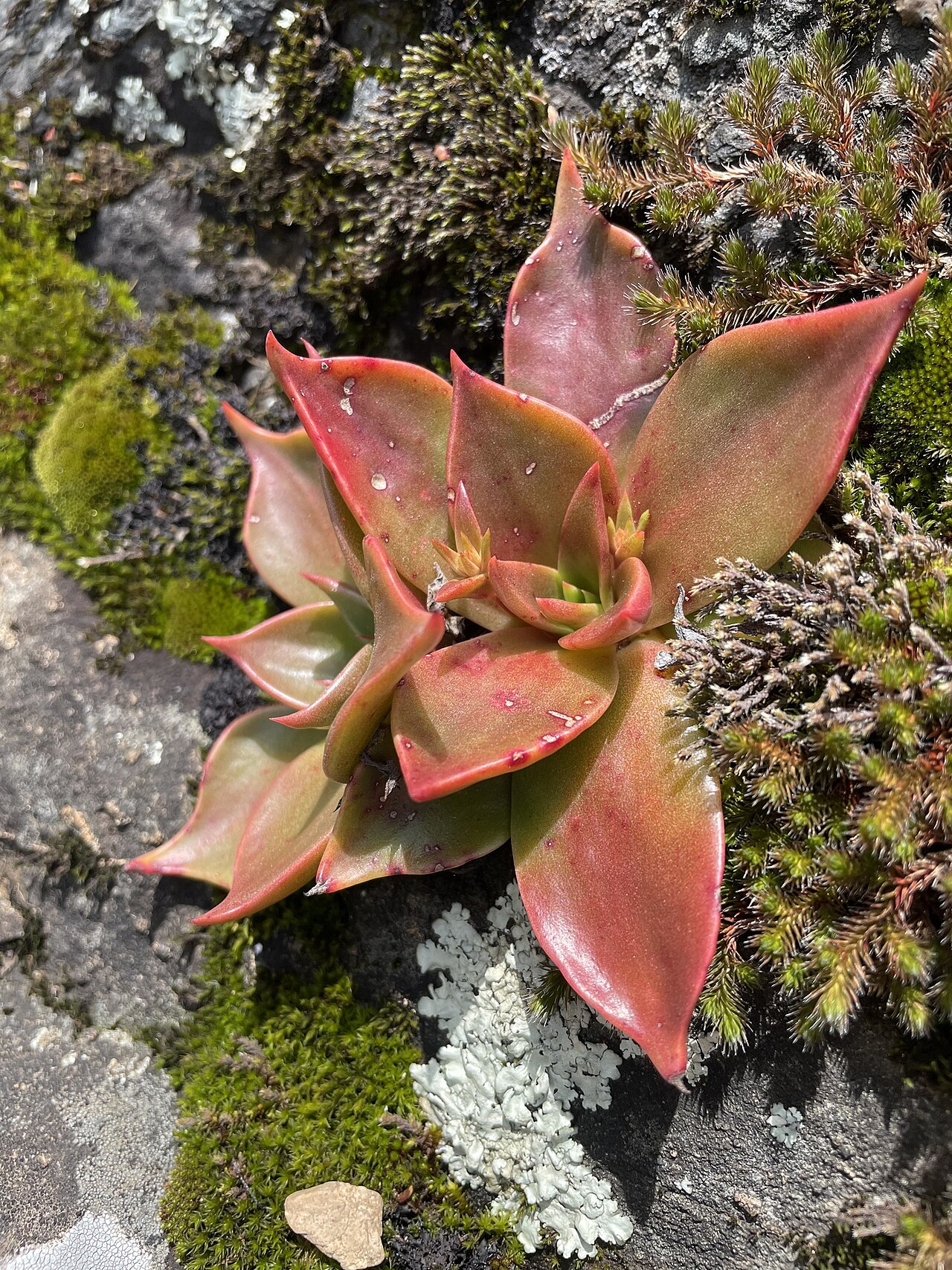
Dudleyas have few close relatives in US gardens, but several imported succulents are often mistaken for them.
- Echeverias (Echeveria spp.): Rosette succulents from Mexico and Central America, including the popular Mexican snowball (E. elegans). They have bell-shaped flowers and root easily from single leaves. See “How to Tell a Dudleya from an Echeveria” above.
- Britton’s dudleya (Dudleya brittonii): The giant chalk dudleya sold in many nurseries. It is a true dudleya but is native only to Baja California, Mexico, not to the US.
- Aeoniums (Aeonium spp.): Canary Island succulents with flat rosettes held at the tips of branching, woody stems. They have escaped in some coastal California canyons.
- Ice plant (Carpobrotus edulis): A South African succulent groundcover, not a rosette, but it grows in the same bluff habitats. It is invasive along the California coast, where it smothers native dudleyas and other bluff plants. Don’t plant it.
Growing & Care Guide
Light
Along the coast, give dudleyas full sun. Inland, where summers are hot, give them morning sun and afternoon shade or the bright, open shade of a north-facing rock or slope. Chalk liveforever and other heavily waxed species take the most sun.
Soil & Water
Drainage is everything. Plant in gritty, rocky soil, on a slope, in a rock wall or in a pot with a cactus mix. In the wild, dudleyas grow on cliffs where water runs off immediately, and in gardens they rot quickly in heavy, wet soil. Water during the cool season if winter rains fail, and give no summer water to most species, especially chalk liveforever and canyon liveforever; summer watering combined with warm soil is the most common way to kill them. Coastal species such as bluff lettuce tolerate a little more moisture.
Planting Tips
Set rosettes at an angle, or tuck them sideways into a crevice, so water drains out of the rosette instead of pooling in it. Plant in fall, when the plants are starting their growing season. Don’t touch the leaves of waxy species: fingerprints remove the wax, and it does not grow back until new leaves form.
Pruning & Maintenance
Cut off spent flower stalks once they dry. Leave dried lower leaves on the plant, as they shade the stem. Watch for mealybugs and aphids on the flower stalks, and protect plants from snails and slugs. In the wild, and in many gardens, rosettes slowly turn red or shed leaves in summer; this is normal summer stress, not a problem.
Propagation
Dudleyas grow from seed sown on the surface of a sandy mix in fall, though seedlings are slow. Clumping species such as bluff lettuce and coast dudleya can be divided or grown from rosette offsets. Unlike echeverias, they rarely root from single leaves. Never collect plants from the wild.
Landscape Uses
- Rock gardens, dry stone walls and slopes, where water drains instantly
- Coastal bluff gardens with seaside daisy, Pacific stonecrop and California poppy
- Coastal sage scrub plantings with California sagebrush, white sage, California buckwheat and coastal prickly pear
- Containers and troughs with a gritty cactus mix, especially in wet-winter climates
- Hummingbird gardens, with red-flowered chalk liveforever and canyon liveforever
Wildlife & Ecological Value
For Pollinators
Red and orange tubular flowers, such as those of chalk liveforever, are pollinated mainly by hummingbirds, including Anna’s and Allen’s hummingbirds. Yellow and white species are visited by native bees, flies and small butterflies.
For Wildlife
Lizards and small invertebrates shelter in the rock crevices where dudleyas grow. Deer, rabbits and rodents eat the rosettes where they can reach them, so garden plants in open beds may need protection.
Ecosystem Role
Dudleyas are among the few plants that can colonize bare rock, sea cliffs and thin soil over serpentine, volcanic or sandstone outcrops. Their dense mats help hold soil and moss on bluff faces and add color to coastal scrub in spring.
Conservation
Many dudleyas are rare. Several taxa, including Santa Barbara Island live-forever, Laguna Beach dudleya, Verity’s dudleya and two subspecies of canyon liveforever, are listed under the federal Endangered Species Act. Between 2017 and 2019, poachers stripped thousands of bluff lettuce plants from the coasts of Mendocino, Humboldt and Del Norte counties to sell overseas as ornamentals. California has since toughened the penalties for taking dudleyas from the wild. Buy only nursery-propagated plants from reputable native plant nurseries.
Cultural & Historical Uses
The name Dudleya edulis means “edible dudleya.” Kumeyaay and other Native peoples of southern California are recorded as eating the leaves of ladyfingers and some other species raw. This is history, not a recommendation; many dudleyas are rare and protected.
The genus was named in 1903 by Nathaniel Lord Britton and Joseph Nelson Rose in honor of William Russell Dudley. The old common name live-forever refers to how long the rosettes survive, even through long droughts.
Frequently Asked Questions
Is live-forever a shrub?
No. Live-forevers (Dudleya) are low succulents that form rosettes of fleshy leaves. Their flower stalks can reach about 2 feet, but the plants themselves have no woody branches. Flower color depends on species: yellow in bluff lettuce and coast dudleya, red in chalk liveforever, white in ladyfingers.
Do dudleyas need water in summer?
Most don’t. They grow in winter and rest in summer, and summer water in warm soil causes rot. Coastal species tolerate occasional summer water, but err on the dry side.
Can I take a dudleya from the wild?
No. Many species are rare or federally protected, and California law prohibits taking dudleyas from the wild without permission. Buy nursery-propagated plants.
Do hummingbirds visit dudleyas?
Yes. The red and orange tubular flowers of chalk liveforever and canyon liveforever are pollinated mainly by hummingbirds. Yellow and white flowers attract bees.
Can I grow dudleyas outside California?
In mild, dry-summer climates such as coastal Oregon and the low deserts of Arizona and Nevada, yes. Elsewhere, they do best in containers in a gritty mix, kept bright and dry in winter.

Looking for a nursery that carries Native Live-forevers?
Browse our native plant nursery directory: Arizona · California · Nevada · Oregon

