
Short’s Aster (Symphyotrichum shortii)
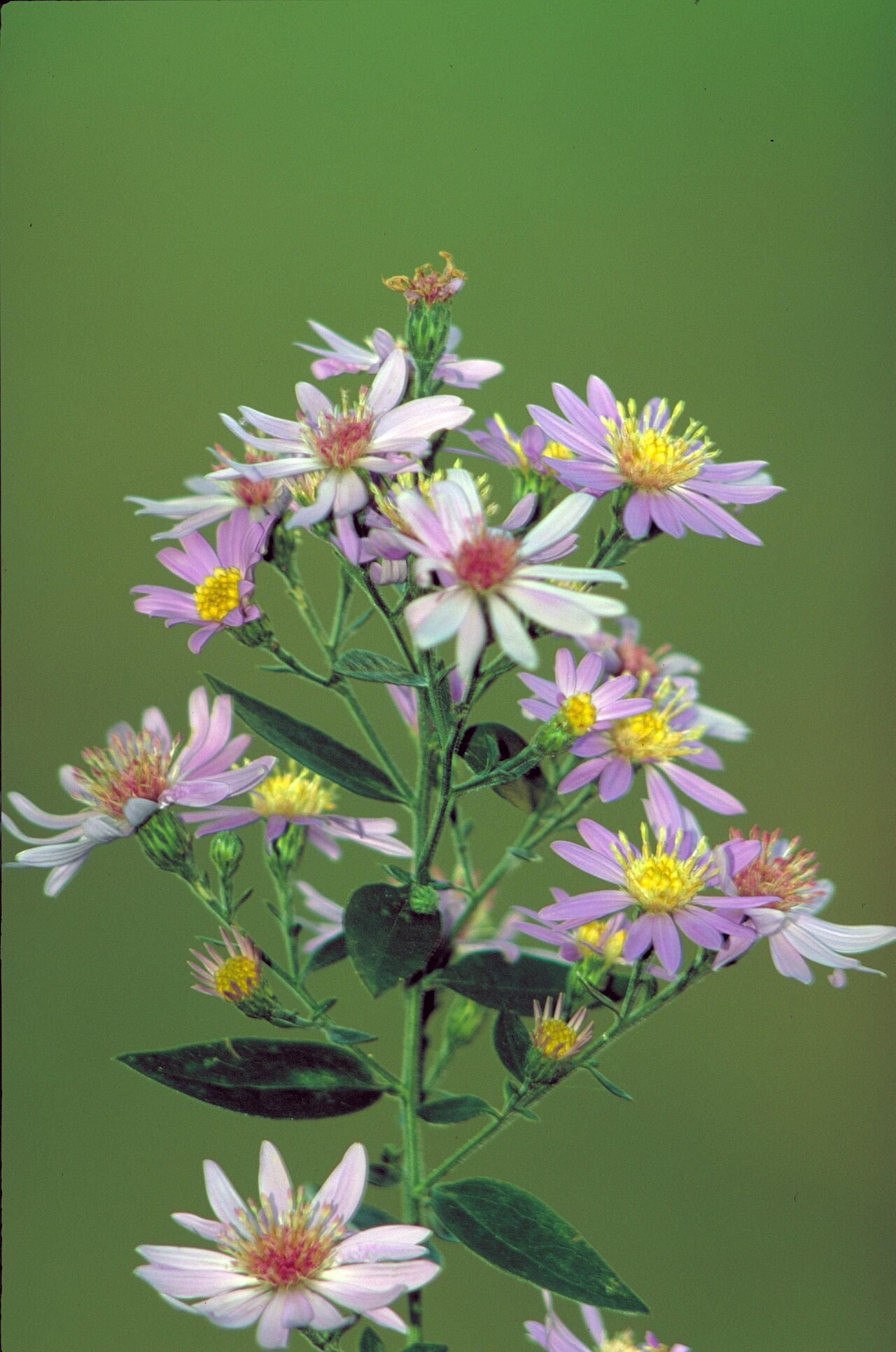
Symphyotrichum shortii, known as Short’s Aster (formerly Aster shortii), is a fall-blooming perennial of the aster family (Asteraceae) native to the eastern United States and southern Ontario. It grows 1 to 4 feet tall, with arching stems, long narrow leaves with heart-shaped bases, and open sprays of lavender-blue daisies with yellow centers in September and October.
It is a plant of open woods, wooded slopes, bluffs, ravines and woodland edges, especially on limestone soils, and it is most common in the Ohio Valley, the Interior Low Plateaus of Kentucky and Tennessee, and the southern Appalachian foothills. It tolerates more shade than most asters.
Short’s aster is one of the best blue asters for partly shaded gardens. Its late flowers are an important nectar source for bees and migrating butterflies. It is uncommon to rare at the edges of its range, so buy plants from native nurseries and never dig them from the wild.
Identification
Look in fall woods for a slender aster with long, narrow, heart-based leaves and loose sprays of lavender-blue flower heads whose bracts have small green diamond tips.
Growth Habit
It is a clump-forming perennial with one to several slender, often arching stems 1 to 4 feet tall, from a short rhizome. Stems are smooth or finely hairy in lines and branch near the top into an open, airy flower cluster.
Leaves
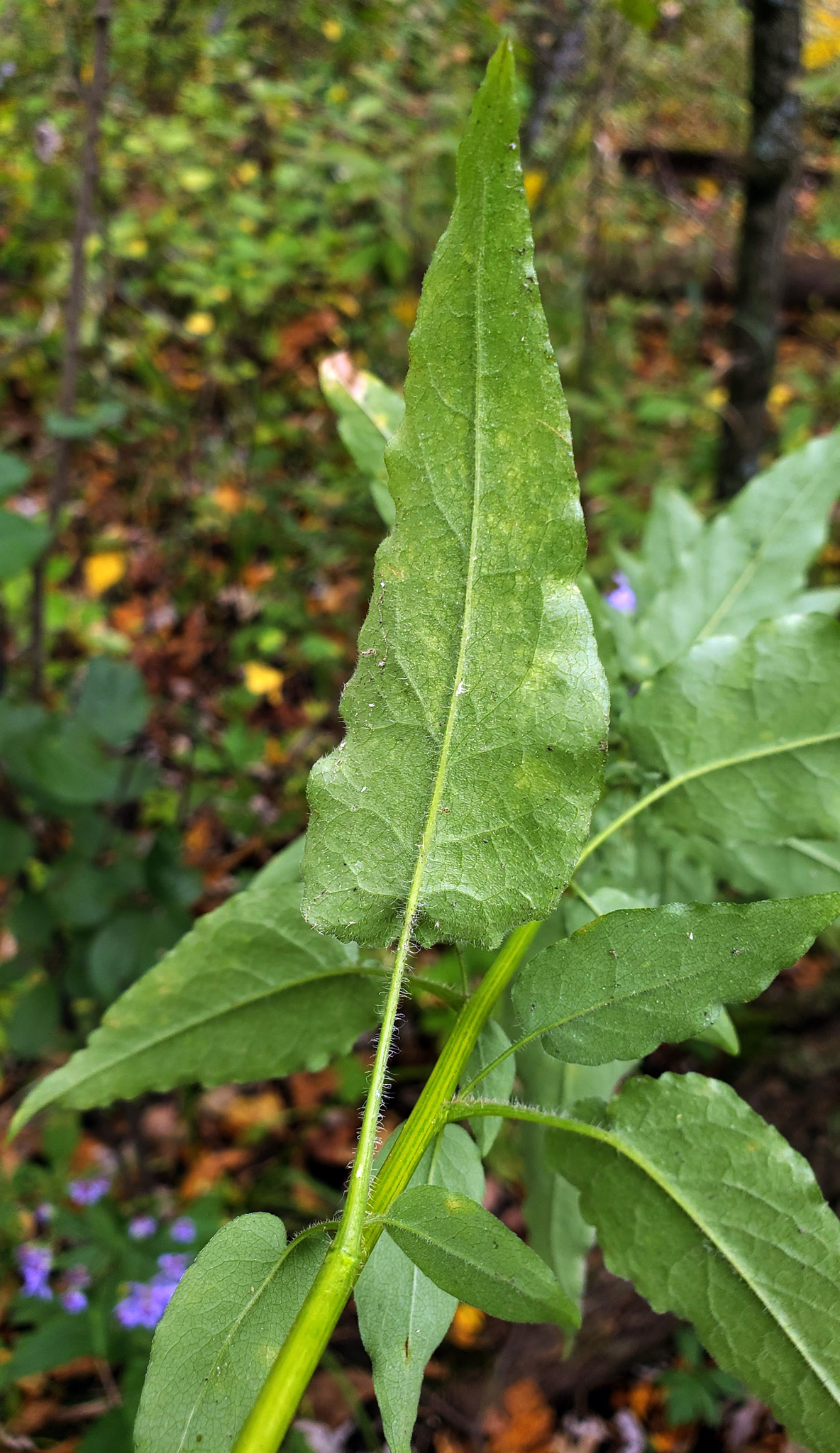
The leaves are alternate, lance-shaped to narrowly heart-shaped, 2 to 6 inches long, with a heart-shaped (cordate) or rounded base and a long, tapering tip. Edges are mostly smooth or only slightly toothed. The lower leaves have stalks; upper leaves are smaller and stalkless. Leaf surfaces are smooth to slightly rough above and paler beneath.
Flowers
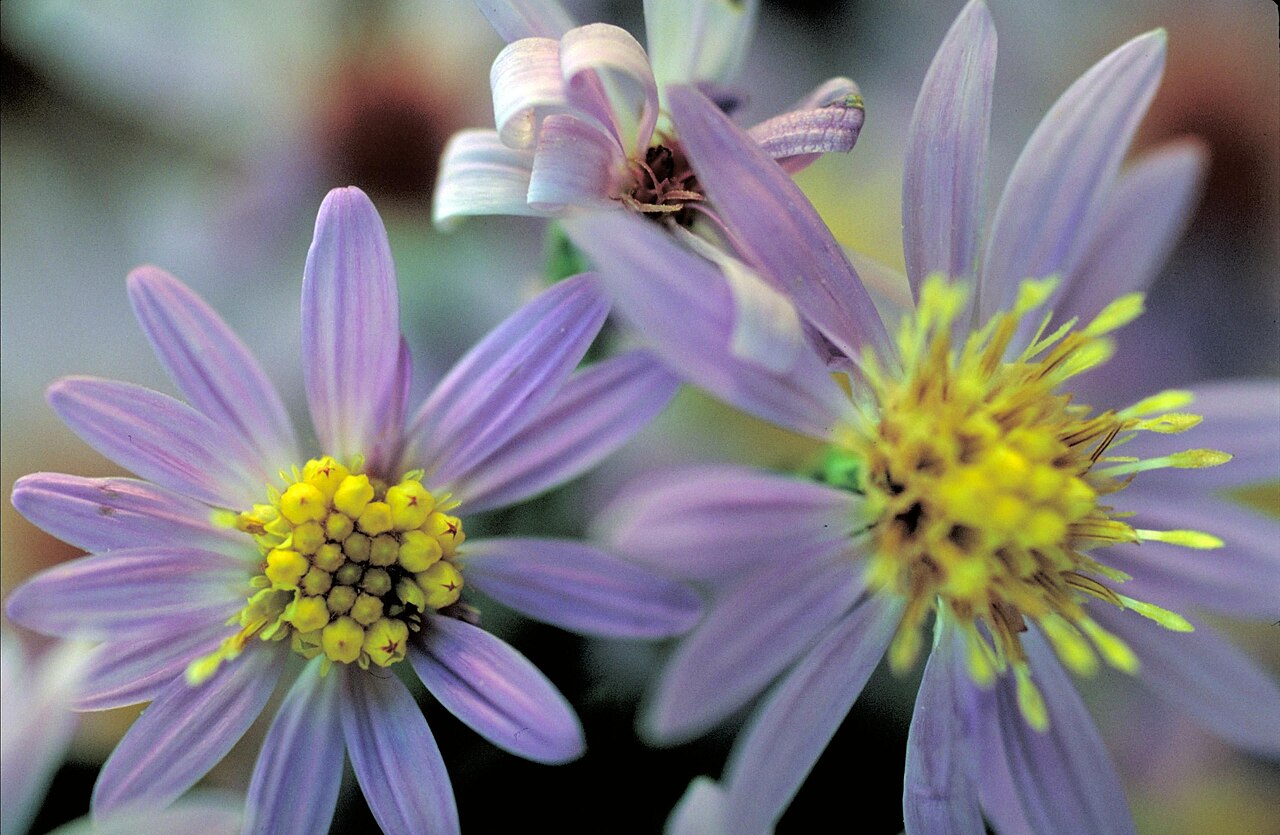
Flower heads are about 1 inch across, held in an open, branching cluster. Each head has 10 to 20 narrow, lavender to light blue rays around a yellow disk that turns reddish-purple with age. The bracts under the head are narrow, with green, diamond-shaped tips. Bloom time is September to October.
Fruit
The seeds are small, smooth achenes with a tuft of soft white bristles that carry them on the wind.
Look-alikes
Heart-leaved aster (Symphyotrichum cordifolium) has broad, toothed, heart-shaped leaves and many smaller pale flowers. Drummond’s aster has hairier, toothed leaves with winged stalks. Smooth blue aster has thick, waxy, clasping leaves and grows in sunny prairies. Short’s aster is recognized by its long, narrow, smooth-edged leaves with heart-shaped bases.
Quick Facts
| Scientific Name | Symphyotrichum shortii (syn. Aster shortii) |
| Family | Asteraceae (aster family) |
| Plant Type | Herbaceous perennial |
| Mature Height | 1–4 ft |
| Mature Spread | 1–2 ft |
| Growth Rate | Moderate |
| Sun Exposure | Part shade to full sun |
| Water Needs | Low to medium; dry to medium soil |
| Soil Type | Well-drained loam, rocky or limestone soils |
| Soil pH | Slightly acidic to alkaline (about 6.0–8.0) |
| Bloom Time | September–October |
| Flower Color | Lavender to light blue with yellow center |
| Fall Color | Leaves often turn purplish |
| Fruit | Small achene with white bristles |
| Deer Resistant | Moderate; sometimes browsed |
| USDA Hardiness Zones | 4–8 |
Native Range
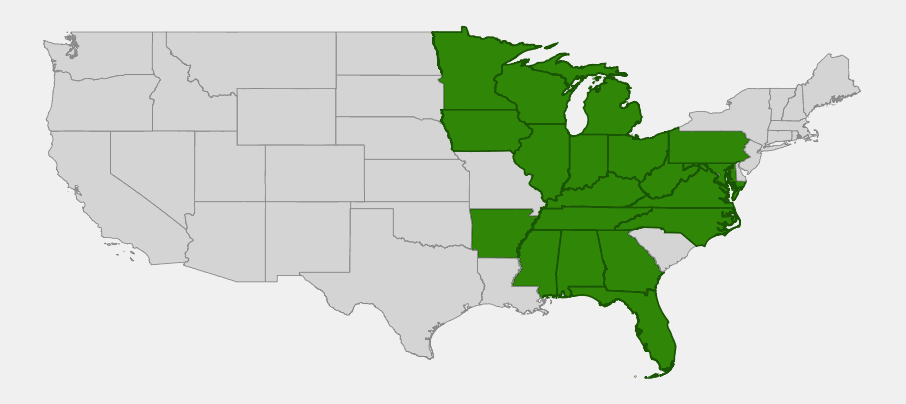
Short’s aster is native to eastern North America. USDA PLANTS lists it as native in Alabama, Arkansas, Florida, Georgia, Illinois, Indiana, Iowa, Kentucky, Maryland, Michigan, Minnesota, Mississippi, North Carolina, Ohio, Pennsylvania, Tennessee, Virginia, West Virginia and Wisconsin, and in Ontario, Canada.
Its core range is the Ohio Valley and the Interior Low Plateaus of Kentucky, Tennessee, southern Indiana and southern Ohio, where it is common on wooded limestone bluffs. It extends into the southern Appalachian foothills and Piedmont, south to Georgia, Alabama and Mississippi, and north into southern Wisconsin, Michigan and Iowa. Records from Minnesota, Florida, Arkansas and Maryland are scattered, outlying populations.
It grows in open deciduous woods, rocky wooded slopes, the tops and bases of bluffs, ravines, woodland edges, thickets and roadsides, usually on well-drained, often calcareous soils.
📋 Regional plant lists featuring Short’s Aster: North & South Florida · Alabama, Georgia & Mississippi · North & South Carolina · Maryland, Virginia & West Virginia · Kentucky & Tennessee · Arkansas, Louisiana, Eastern Oklahoma & Eastern Texas · Illinois, Iowa & Missouri · Ohio & Indiana · Michigan, Wisconsin & Eastern Minnesota · New York, Pennsylvania & Northern New Jersey
Growing & Care Guide
Short’s aster is an easy, adaptable perennial for woodland edges and partly shaded borders. It is more shade-tolerant and less floppy than many asters and blooms reliably every fall.
Light
Part shade to full sun. It flowers best with a few hours of direct sun but still blooms in light shade under open trees.
Soil & Water
Average to dry, well-drained soil, including rocky and clay-loam soils and limestone-based soils. Once established it tolerates drought and needs little watering.
Planting Tips
Plant in spring or fall, 18 to 24 inches apart, along woodland edges, under high shade or with goldenrods and sedges. Its arching stems look best when they can lean among neighbors.
Pruning & Maintenance
Cut stems back by about a third in early summer if you want shorter, bushier plants. Leave the seed heads standing in fall and winter for birds, and cut back old stems in early spring.
Propagation
Grow from seed sown outdoors in fall or given cold, moist stratification before spring sowing. Clumps can be divided in early spring every few years.
Landscape Uses
- Woodland edge gardens: late blue color in part shade
- Pollinator gardens: fall nectar for bees and migrating butterflies
- Shade borders: combines with wreath goldenrod and sedges
- Dry slopes and bluffs: tolerant of rocky, well-drained soil
- Woodland restoration: part of the native ground layer of open oak woods
Wildlife & Ecological Value
Like other asters, Short’s aster is a valuable late-season food plant for insects and birds.
For Pollinators
The flowers feed bumble bees, honey bees, sweat bees, mining bees and other native bees, as well as flies and butterflies, including migrating monarchs. Asters are larval host plants for the pearl crescent and many native moth caterpillars.
For Birds
Small birds, including finches and sparrows, eat the seeds in fall and winter, and insect-eating birds forage on the plants.
For Mammals
Deer and rabbits sometimes browse the leaves and stems.
Ecosystem Role
As a late bloomer, it provides nectar and pollen when few other woodland plants are flowering, helping bees build reserves before winter. Its seed heads and stems shelter overwintering insects.
Cultural & Historical Uses
Short’s aster is named for Charles Wilkins Short, a nineteenth-century Kentucky physician and botanist who collected widely in the Ohio Valley and taught at Transylvania University in Lexington.
Like many North American asters, it was long known as Aster shortii. Genetic studies showed that the American asters are distinct from the Old World genus Aster, and most were moved to Symphyotrichum, a name that is still unfamiliar to many gardeners.
In Kentucky and Tennessee, Short’s aster is one of the signature wildflowers of fall on wooded limestone bluffs along rivers, where its blue sprays mix with the yellows of goldenrods and the reds of turning leaves.
Frequently Asked Questions
Does Short’s aster grow in shade?
Yes. It tolerates part shade better than most asters and grows naturally in open woods and woodland edges, though it flowers best with some sun.
When does Short’s aster bloom?
From September to October, with lavender-blue flowers that last for several weeks.
How do I recognize Short’s aster?
Look for long, narrow, mostly smooth-edged leaves with heart-shaped bases and open sprays of lavender-blue flowers on slender, arching stems.
Is Short’s aster good for pollinators?
Yes. Its fall flowers feed many native bees and butterflies, including migrating monarchs, and asters are host plants for pearl crescent caterpillars.
Who is Short’s aster named after?
Charles Wilkins Short, a Kentucky physician and botanist of the 1800s.

Looking for a nursery that carries Short’s Aster?
Browse our native plant nursery directory: Alabama & Arkansas · Florida & Georgia · Illinois, Indiana & Iowa · Kentucky, Maryland, Michigan, Minnesota & Mississippi · North Carolina & Ohio · Pennsylvania, Tennessee & Virginia · West Virginia & Wisconsin

