
Hartford Fern (Lygodium palmatum)
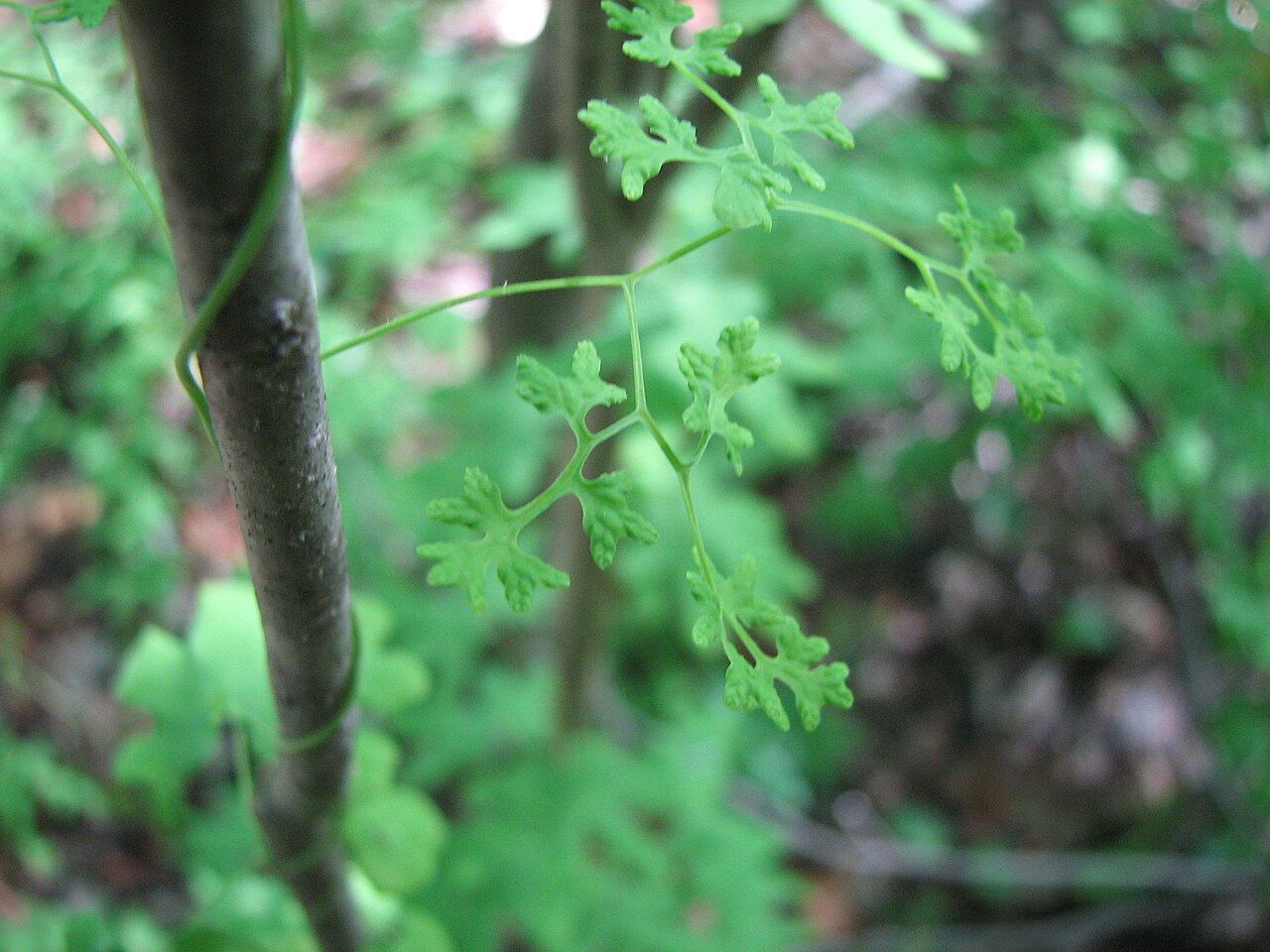
Lygodium palmatum, known as Hartford Fern, American climbing fern or Alice’s fern, is a remarkable native fern of the eastern United States: the only native North American member of the climbing ferns (Lygodiaceae), and one of very few ferns in the world that climbs. What looks like a slender green vine is actually a single frond, whose wiry central stalk (rachis) keeps growing and twining around shrubs, sedges and saplings for 3 feet or more, occasionally much longer.
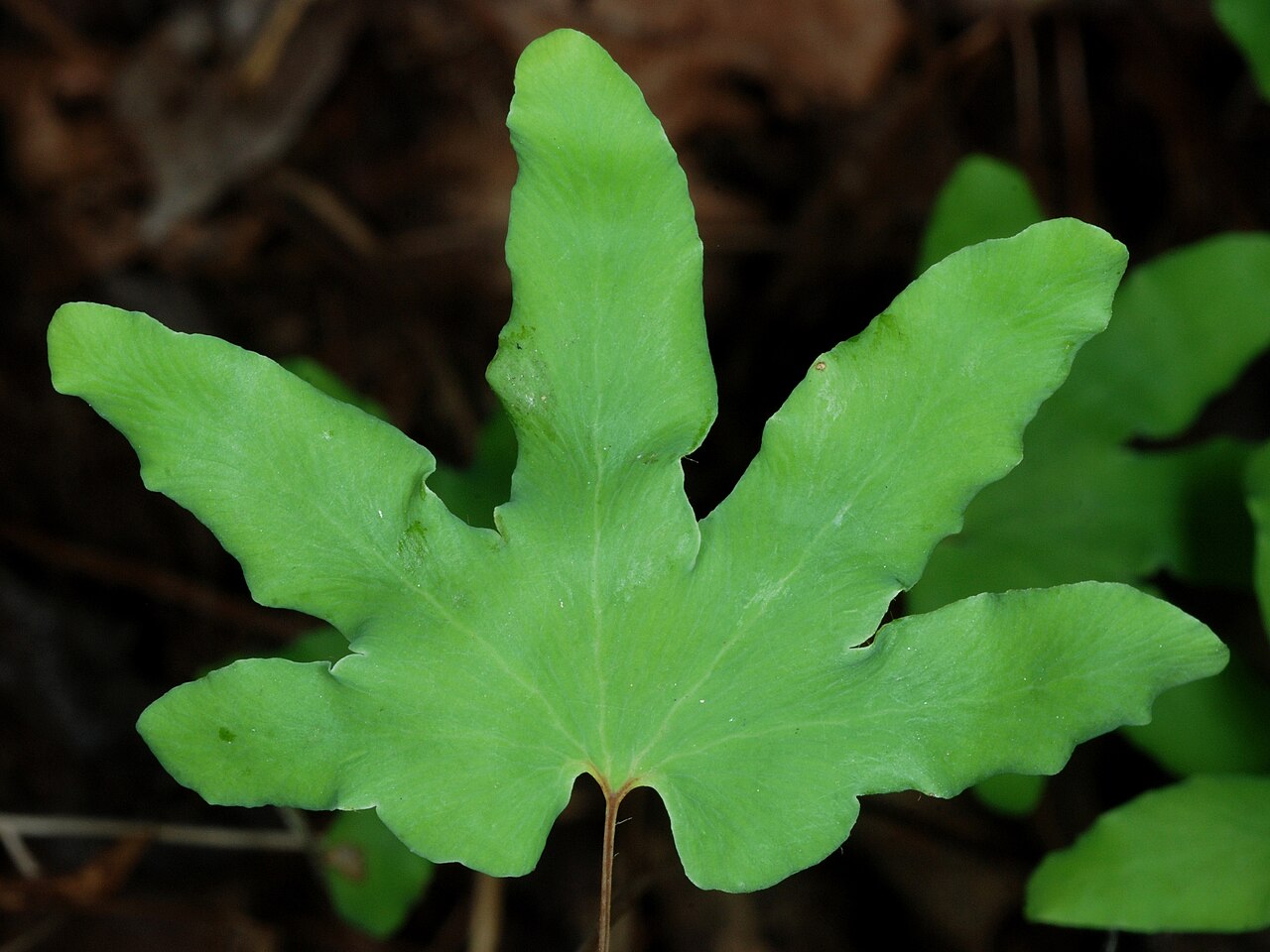
Along the twining stalk grow pairs of small, palm-shaped leaflets with five to seven rounded lobes, like little green hands. Toward the top of the frond the leaflets change into finely divided, frilly fertile leaflets that carry the spores. The fronds stay green into winter. The name Hartford fern recalls its former abundance around Hartford, Connecticut, where it was gathered by the armload in the 1800s for decorations.
That popularity nearly wiped it out locally. In 1869 Connecticut passed a law to protect it, often described as the first law in the United States to protect a plant species. Today the fern is rare and local through much of its range and protected or tracked as rare in several states. This guide covers how to identify it, where it grows, why it should never be collected, and how it differs from the invasive Old World climbing ferns spreading in the Southeast.
Identification
Nothing else in eastern North America looks quite like Hartford fern. Look for slender, wiry, vine-like stems twining through low vegetation, carrying pairs of hand-shaped, palm-lobed leaflets and, near the top, lacy fertile leaflets.
Rhizome & Growth Habit
The plant spreads by a slender, creeping, black, hairy rhizome just under the soil or moss surface. The fronds arise singly along it, often forming loose colonies or tangles. Each frond is a climbing structure: its rachis twines around stems of nearby shrubs, sedges, grasses and saplings, typically to 3 to 5 feet and occasionally to about 10 feet.
Sterile Leaflets
The leaflets (pinnae) are borne in pairs on very short side branches along the rachis. Sterile leaflets are palmately lobed, about 1 to 3 inches across, with five to seven blunt, rounded or slightly wavy lobes, and are bright green to yellow-green with a smooth texture. They resemble a small maple leaf or an open hand. In northern populations the undersides are mostly hairless; plants from Maryland southward tend to be finely hairy.
Fertile Leaflets
The upper part of each mature frond bears fertile leaflets that are repeatedly forked into many narrow, finger-like segments. The sporangia sit in two rows on the underside of these segments, each covered by a small flap. Spores ripen in late summer and fall, when the fertile tips turn brown.
Seasonal Change
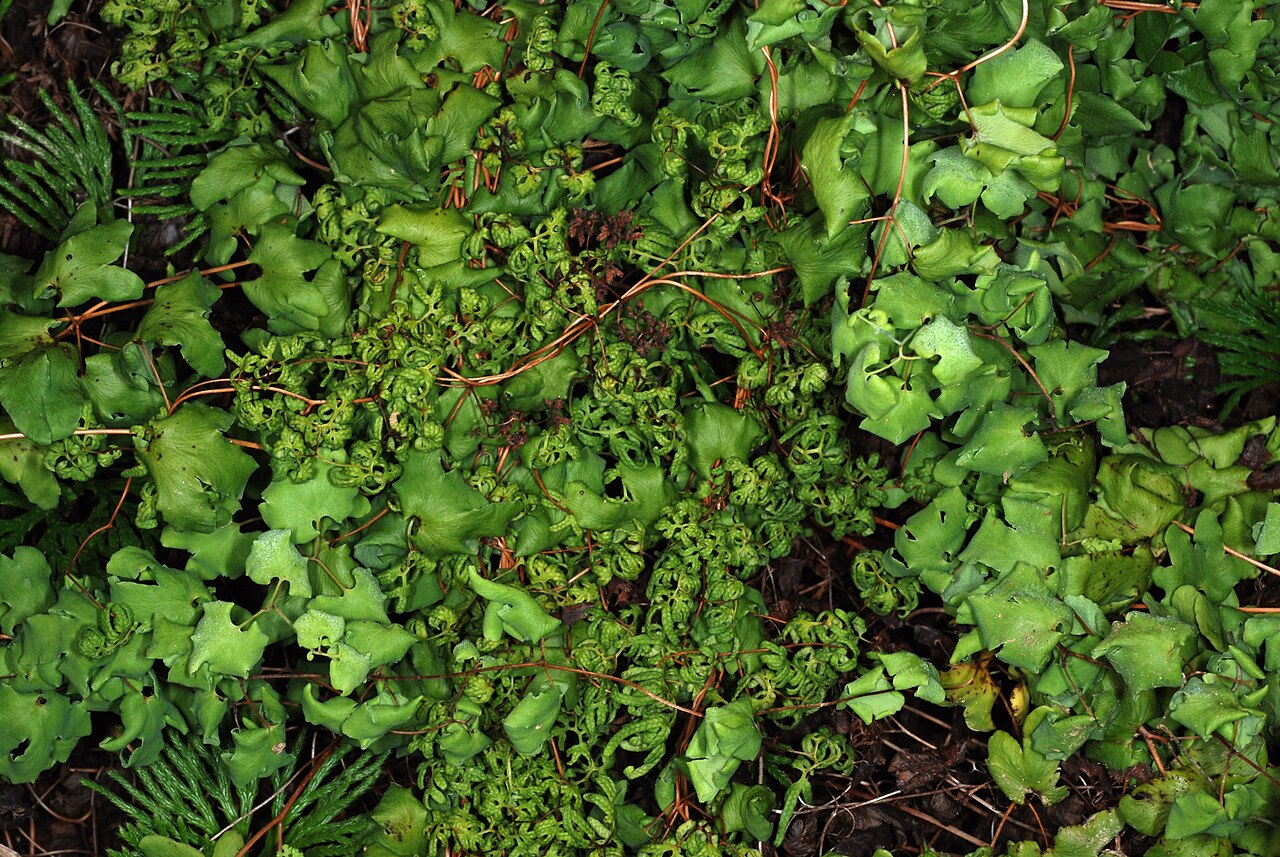
The fronds are evergreen to semi-evergreen: they usually stay green through much of the winter, turning bronze or brown by spring, when new fronds uncurl from the rhizome.
Look-alikes: Invasive Climbing Ferns
Two Old World climbing ferns are serious invaders in the Southeast. Japanese climbing fern (Lygodium japonicum) is spreading through forests from Florida and Texas north into the Carolinas, Tennessee and Arkansas; its leaflets are lacy and finely divided, often triangular, not palm-shaped. Old World climbing fern (Lygodium microphyllum) smothers trees and wetlands in southern Florida and has small, unlobed, oblong leaflets. Neither has the hand-shaped leaflets of Hartford fern. Before removing a climbing fern as an invasive, check the leaflets carefully, because the native species is rare and protected in several states.
Quick Facts
| Scientific Name | Lygodium palmatum (Bernh.) Sw. |
| Family | Lygodiaceae (climbing fern family) |
| Plant Type | Climbing, rhizomatous fern; evergreen to semi-evergreen fronds |
| Mature Height | Fronds twine 3–5 ft (occasionally to about 10 ft) |
| Mature Spread | Forms loose colonies from creeping rhizomes |
| Growth Rate | Slow to establish |
| Sun Exposure | Part shade to partial sun |
| Water Needs | High; consistently moist soil |
| Soil Type | Very acidic, moist, humus-rich or sandy soils, often with moss |
| Soil pH | About 4.0–5.5 |
| Bloom Time | None (fern); spores ripen late summer to fall |
| Flower Color | None; reproduces by spores |
| Fall Color | Fronds stay green into winter, turning bronze |
| Fruit | None; spores on finely divided fertile leaflets |
| Deer Resistant | Generally not browsed |
| USDA Hardiness Zones | 5–8 |
Native Range
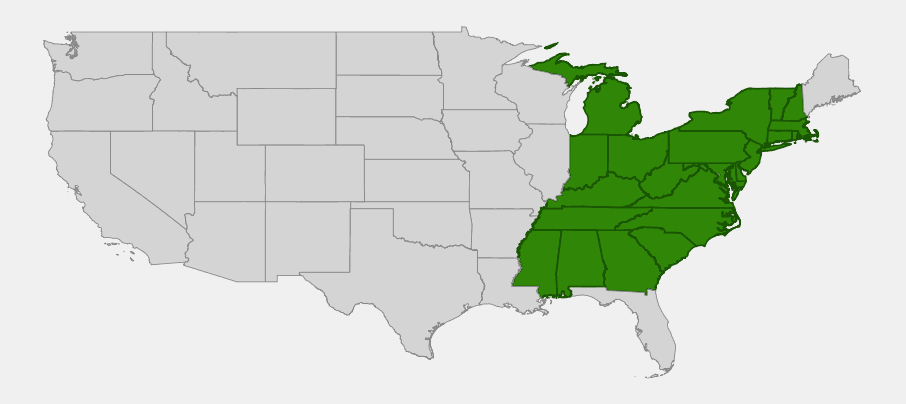
Hartford fern is a plant of the eastern United States. USDA PLANTS lists it in 23 states from New England south through the Appalachians and Piedmont to Georgia, Alabama and Mississippi, and west to Ohio, Indiana, Kentucky, Tennessee and Michigan. Its range is essentially Appalachian, with outlying populations on the Atlantic coastal plain (notably in New Jersey and on Long Island) and in Ohio, Indiana and southern Michigan.
USDA also lists Florida, but the Atlas of Florida Plants, the state’s flora, does not include the species, and the few Florida specimens are old collections; Florida is therefore left off this page’s range map. Across the rest of its range the fern is typically abundant where it occurs but known from relatively few, scattered sites, and it is listed or tracked as rare in several northern and western states at the edges of its range.
Typical habitats are moist, very acidic places with plenty of light: thickets and edges of bogs, swamps and streams, wet sandy or peaty soils, moist open woods, damp roadside banks and power-line clearings, often among mosses, sedges, blueberries and other heath shrubs. It needs constant moisture, high light and strongly acidic soil, and it thrives where all three are present.
📋 Regional plant lists featuring Hartford Fern: New York, Pennsylvania & Northern New Jersey · Ohio & Indiana · Michigan, Wisconsin & Eastern Minnesota · Kentucky & Tennessee · Connecticut, Massachusetts & Rhode Island · New Hampshire, Maine & Vermont · Maryland, Virginia & West Virginia · Delaware, Southern New Jersey & Long Island · Alabama, Georgia & Mississippi · North & South Carolina
Growing & Care Guide
Hartford fern is rarely available and difficult to grow, and wild plants must never be dug or picked: the species is protected or tracked as rare in many states, and its scattered colonies recover slowly. If you want to grow it, buy only plants propagated in a nursery from a reputable specialist fern grower.
Light
It needs more light than most ferns: bright, partial sun or light shade, such as a woodland edge or a clearing. In deep shade it grows poorly.
Soil & Water
The soil must be very acidic (about pH 4 to 5.5), consistently moist and rich in organic matter, such as a mix of peat or decayed leaves with sand. It does not tolerate drying out or alkaline water. A bog garden or the moist edge of an acidic pond, with blueberries and other heath plants, is the best garden setting.
Planting Tips
Plant nursery-grown stock in spring, setting the rhizome shallowly and mulching with acidic leaf litter or moss. Provide twiggy shrubs, sedges or thin stakes for the fronds to climb. Water with rainwater if your tap water is hard.
Pruning & Maintenance
Leave old fronds in place over winter; remove them in early spring before new growth starts. Keep competing vegetation from smothering the colony, but leave low shrubs for support.
Propagation
It can be propagated by careful division of nursery plants in spring or from spores, which are slow and have low viability. Spores sown fresh germinate best; spores stored for months lose most of their viability. Leave spore and plant collection in the wild to permitted researchers.
Landscape Uses
- Bog and acid wetland gardens: a unique climbing fern for constantly moist, acidic sites
- Conservation plantings: nursery-propagated plants can add to protected habitat restorations
- Native fern collections: the only native North American climbing fern
- Woodland-edge gardens: twines among blueberries and other heath shrubs
- Education: a living example of a historically overcollected and protected plant
Wildlife & Ecological Value
As a fern, Hartford fern offers no flowers, fruit or nectar, but its tangled colonies are part of the structure of acidic wetland edges and thickets.
For Pollinators
Ferns reproduce by spores and do not need pollinators, so the plant offers no nectar or pollen. Small insects and spiders use the tangles of fronds for shelter.
For Birds
Birds make little direct use of the plant, but the dense, twining colonies in shrubby wetland edges add cover for ground-foraging and nesting birds.
For Mammals
Like most ferns it is seldom browsed by deer, and it contributes cover for small mammals in thickets.
Ecosystem Role
Hartford fern is part of the specialized flora of acidic seeps, bog margins and wet thickets. Its preference for open, disturbed but constantly moist ground means it often appears after clearing or along utility rights-of-way, and colonies can decline when the canopy closes or the site dries out.
Cultural & Historical Uses
The genus name Lygodium comes from the Greek lygodes, flexible or willow-like, describing the twining fronds. The species name palmatum refers to the hand-shaped, palmate leaflets. The common name Hartford fern recalls its former abundance near Hartford, Connecticut.
In the 1800s the fern was a fashionable decoration: its evergreen, twining fronds were gathered in great quantities for Christmas garlands, picture frames and table decorations. As it became scarce around Hartford, and in 1869 Connecticut passed a law to protect it, often cited as the first law in the United States protecting a plant species.
The story of Hartford fern is an early lesson in plant conservation. Many states now protect or monitor it, and its remaining colonies depend on protecting acidic wetlands, avoiding herbicide spraying along rights-of-way where it grows, and leaving wild plants untouched.
Frequently Asked Questions
Is Hartford fern really a fern?
Yes. Its vine-like “stem” is actually the central stalk of a single fern frond, which keeps growing and twines around other plants. It reproduces by spores, like other ferns.
Why is it called Hartford fern?
It was once abundant around Hartford, Connecticut, where it was heavily collected for decorations. Its other names are American climbing fern and Alice’s fern.
Is it protected?
It is rare and protected or tracked as rare in several states, and Connecticut passed a law to protect it in 1869. Never dig or pick it from the wild.
How is it different from Japanese climbing fern?
Hartford fern has palm-shaped, hand-like sterile leaflets. Invasive Japanese climbing fern has lacy, finely divided, often triangular leaflets, and Old World climbing fern has small, unlobed leaflets. Check carefully before removing a climbing fern.
Can I grow Hartford fern?
Only with nursery-propagated plants and the right conditions: constantly moist, very acidic soil and bright light, as in a bog garden. It is difficult and slow to establish.

Looking for a nursery that carries Hartford Fern?
Browse our native plant nursery directory: Alabama · Connecticut, Delaware & Georgia · Indiana · Kentucky, Maryland, Massachusetts, Michigan & Mississippi · New Hampshire, New Jersey, New York, North Carolina & Ohio · Pennsylvania, Rhode Island, South Carolina, Tennessee, Vermont & Virginia · West Virginia

