
Small Woodland Sunflower (Helianthus microcephalus)
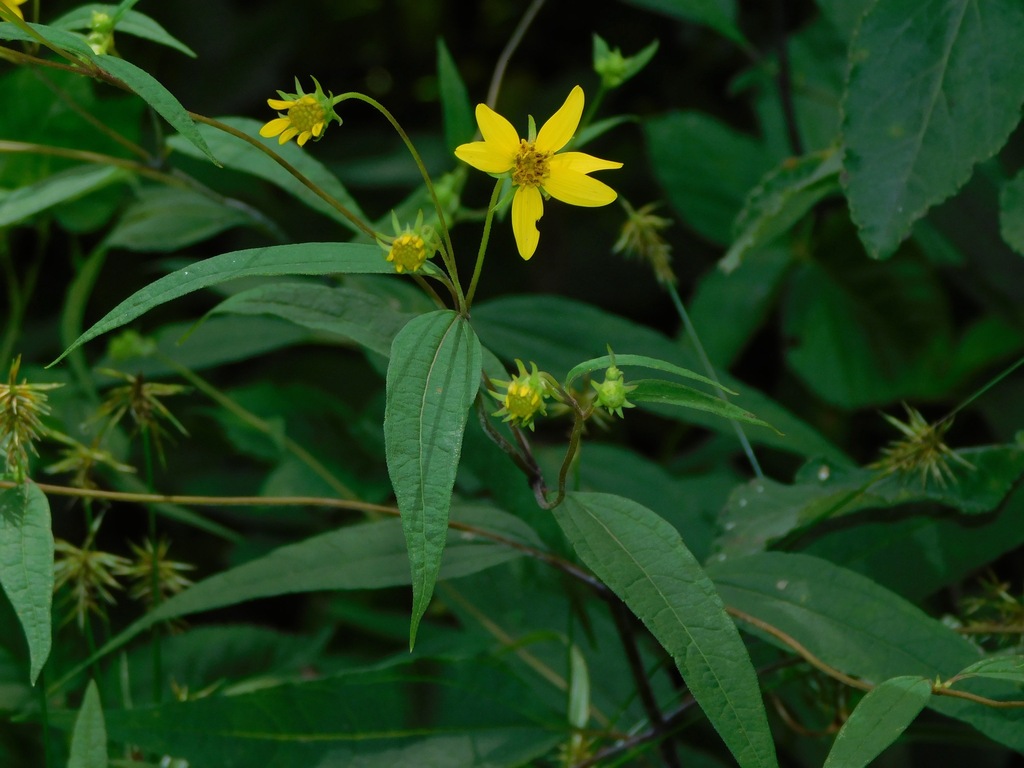
Helianthus microcephalus, known as Small Woodland Sunflower or small-headed sunflower, is a tall, airy native sunflower of open woods, forest edges and roadsides in the eastern United States. From late summer into fall it carries many small, bright yellow flower heads, each only about an inch across, on slender branching stems 3 to 6 feet tall. As the species name says (micro = small, cephalus = head), its flower heads are among the smallest of any eastern sunflower.
Unlike most sunflowers, which demand full sun, small woodland sunflower is adapted to partial shade. It brightens woodland edges, clearings and trailsides in the Appalachians and the Southeast at a time when few other plants are flowering in the shade, and its many small flowers feed bees, butterflies and, later, seed-eating birds.
In gardens it is a good choice for a lightly shaded border, a woodland edge or a naturalized area, and it is less aggressive than some of its spreading relatives. This guide covers how to identify it, where it grows, and how to grow it.
Identification
Small woodland sunflower is a slender, much-branched perennial with many small yellow flower heads. The small heads, few rays and stalked, resin-dotted leaves separate it from other woodland sunflowers.
Leaves & Stems
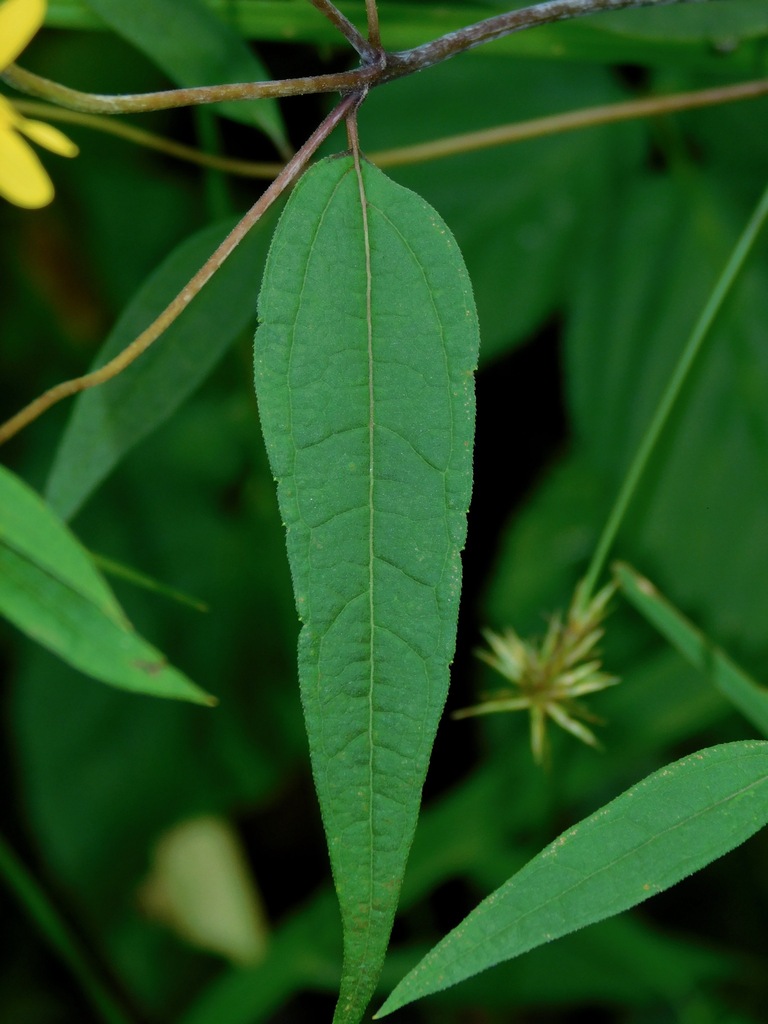
A perennial from a crown with short rhizomes. The stems are 3 to 6 feet tall, smooth and often somewhat waxy or purplish, branching in the upper part. The leaves are mostly opposite on the lower stem and sometimes alternate above, lance-shaped, 3 to 7 inches long, tapered to a slender point and to a short stalk. The upper surface is slightly rough, and the underside is paler and dotted with tiny resin glands.
Flower Heads
The flower heads are borne singly at the ends of slender branches, often many per plant. Each is about 1 to 1½ inches across, with about five to eight bright yellow rays and a small yellow disk less than ½ inch wide. They bloom from about July to September or October.
Seeds
After flowering, the small heads produce dark, flattened achenes (seeds), which are eaten by birds such as goldfinches.
Look-alikes
Woodland Sunflower (Helianthus divaricatus) has larger heads and stalkless leaves that spread at right angles from the stem. Thinleaf sunflower (Helianthus decapetalus) has larger heads with eight to twelve rays and a wider disk, and thin, coarsely toothed leaves. Pale-leaved Sunflower has larger heads and broader leaves that are whitish beneath. Small woodland sunflower’s combination of very small heads, few rays and narrow stalked leaves is distinctive.
Quick Facts
| Scientific Name | Helianthus microcephalus |
| Family | Asteraceae (aster family) |
| Plant Type | Herbaceous perennial wildflower |
| Mature Height | 3–6 ft |
| Mature Spread | 2–3 ft |
| Growth Rate | Moderate to fast |
| Sun Exposure | Part shade to full sun |
| Water Needs | Medium; tolerates some dryness |
| Soil Type | Average loam, sandy or rocky soil; tolerates clay |
| Soil pH | Acidic to neutral |
| Bloom Time | July–October |
| Flower Color | Bright yellow rays and yellow disk |
| Fall Color | Not notable |
| Fruit | Small dark achenes eaten by birds |
| Deer Resistant | Moderately; deer may browse young shoots |
| USDA Hardiness Zones | 5–9 |
Native Range
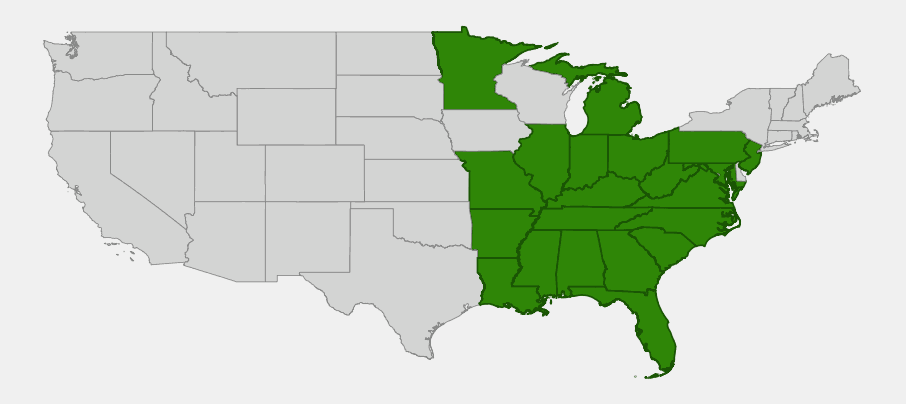
Small woodland sunflower is native to the eastern United States. Its main range runs from Pennsylvania, New Jersey and Ohio south through the Appalachians and Piedmont to northern Florida, and west to Illinois, Missouri, Arkansas and Louisiana. It is most common in the southern Appalachians, the Piedmont and the Ohio and Tennessee valleys.
USDA PLANTS also lists it in Michigan and Minnesota, which are outlying records at the northern edge of its range. Flora Novae Angliae treats it as an introduced plant of gardens and waste areas in Connecticut, so Connecticut is not shown on our map.
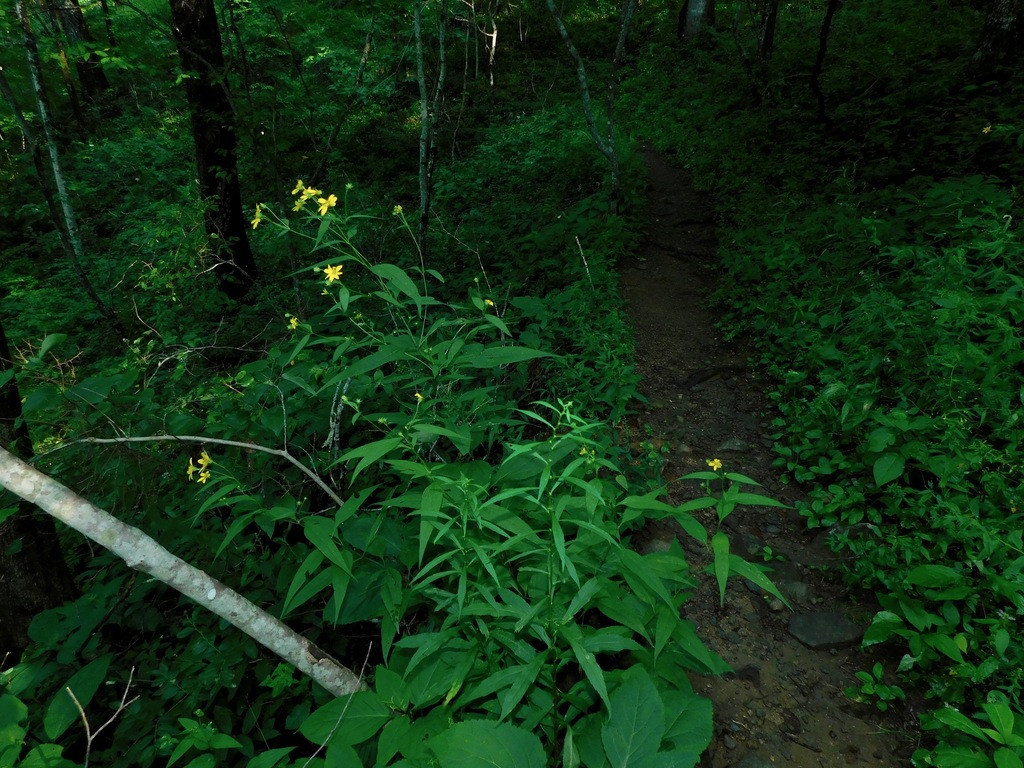
It grows in open deciduous woods, woodland edges and clearings, thickets, roadsides, power-line cuts and along trails. It is most often found in partial shade on well-drained soil, and it spreads into openings after logging or disturbance.
📋 Regional plant lists featuring Small Woodland Sunflower: New York, Pennsylvania & Northern New Jersey · Delaware, Southern New Jersey & Long Island · Maryland, Virginia & West Virginia · North & South Carolina · Alabama, Georgia & Mississippi · North & South Florida · Kentucky & Tennessee · Ohio & Indiana · Michigan, Wisconsin & Eastern Minnesota · Illinois, Iowa & Missouri · Arkansas, Louisiana, Eastern Oklahoma & Eastern Texas
Growing & Care Guide
Small woodland sunflower is easy to grow and less aggressive than many native sunflowers. It is offered by some native plant nurseries in the Southeast and Mid-Atlantic and is a good choice for gardeners who want a sunflower for light shade.
Light
Part shade to full sun. It flowers well in the bright, dappled shade of a woodland edge or under high-branched trees. In full sun it grows larger and may need more water.
Soil & Water
Average, well-drained soil is ideal, from sandy or rocky loam to clay. Water during its first season; established plants tolerate short dry spells. Rich soil and heavy fertilizer make it tall and floppy.
Planting Tips
Plant in spring or fall, about 2 feet apart, at the back of a border or in a woodland-edge planting. It looks best in groups, where the many small yellow heads form a loose cloud of color in late summer.
Pruning & Maintenance
If you want a shorter, bushier plant, cut the stems back by about a third in late spring or early summer. Leave the seed heads standing in fall for birds, and cut the old stems down in late winter. It spreads slowly by short rhizomes and self-sows modestly.
Propagation
Divide clumps in early spring. Seed sown outdoors in fall germinates the following spring; seed sown indoors benefits from a few weeks of cold, moist stratification.
Landscape Uses
- Woodland edges: late-summer color in partial shade
- Pollinator gardens: many small heads for bees and butterflies
- Naturalized areas: meadows, clearings and roadside plantings
- Bird gardens: seed heads for goldfinches and other finches
Wildlife & Ecological Value
Like other native sunflowers, small woodland sunflower supports a wide range of insects and birds.
For Pollinators
Its flowers attract many native bees, including specialist bees that collect pollen only from sunflowers and their relatives, along with butterflies, beetles and flies. It is a larval host plant for the silvery checkerspot, and sunflowers in general support the caterpillars of many moths.
For Birds
Goldfinches, chickadees and other small seed-eating birds feed on the seeds in fall, and the stems provide cover.
For Mammals
Deer and rabbits may browse young shoots. Small mammals eat fallen seeds.
Ecosystem Role
As a late-summer bloomer in partial shade, it provides nectar and pollen at woodland edges when most forest wildflowers have finished. It colonizes openings and edges after disturbance and helps stabilize soil along trails and roadsides.
Cultural & Historical Uses
John Torrey and Asa Gray described Helianthus microcephalus in 1842 in their Flora of North America. The genus name Helianthus comes from the Greek helios (sun) and anthos (flower). The species name means “small-headed.”
There are about 50 species of Helianthus, all native to North America, and the eastern woodland species are notoriously difficult to tell apart. Small woodland sunflower belongs to a group of perennial sunflowers that includes Jerusalem artichoke, thinleaf sunflower and pale-leaved sunflower.
Unlike Jerusalem artichoke, it has no edible tubers and no documented food use. Its value today is as a native ornamental and wildlife plant for shady gardens and restoration plantings.
Frequently Asked Questions
How big are the flowers of small woodland sunflower?
The flower heads are only about 1 to 1½ inches across, with about five to eight yellow rays and a small disk. They are smaller than those of most other eastern sunflowers.
Does small woodland sunflower grow in shade?
Yes. It grows in partial shade along woodland edges and in open woods, and it flowers better in shade than most sunflowers.
Is it invasive or aggressive?
It spreads slowly by short rhizomes and some self-seeding, but it is less aggressive than many other perennial sunflowers.
When does it bloom?
From about July to September or October, depending on location.
How is it different from woodland sunflower?
Woodland sunflower (Helianthus divaricatus) has larger heads and stalkless leaves that stick out at right angles. Small woodland sunflower has smaller heads, fewer rays and stalked leaves.

Looking for a nursery that carries Small Woodland Sunflower?
Browse our native plant nursery directory: Alabama & Arkansas · Florida & Georgia · Illinois & Indiana · Kentucky, Louisiana, Maryland, Michigan, Minnesota, Mississippi & Missouri · New Jersey, North Carolina & Ohio · Pennsylvania, South Carolina, Tennessee & Virginia · West Virginia

