A Southern Piedmont Front-Yard Bed: Native Shrubs for Clay and Summer Heat
Last updated: November 7, 2026
Front-yard beds in the southern Piedmont have a hard job. They usually sit in compacted clay left from construction, face the street in full sun and bake against brick, siding or a driveway from June through September.
Many shrubs sold for foundation plantings struggle there. A short list of native shrubs, chosen for clay tolerance, heat tolerance and a neat enough shape for the front of the house, do much better.
This plan covers the Piedmont of North Carolina, South Carolina, Georgia, southern Virginia and eastern Alabama: the rolling uplands between the mountains and the Coastal Plain. Each shrub was checked against the Wildflower Center’s range records and NC State’s Plant Toolbox.
Plan at a Glance
| Site | A sunny front-yard bed along the house, walk or driveway |
| Size | Example: 24 feet long by 8 feet deep; repeat sections for longer fronts |
| Sun | Full sun to afternoon sun; one shaded end is fine |
| Soil | Piedmont clay, often compacted; one low spot near a downspout |
| Maintenance | Low: one pruning visit a year, sucker control, mulch top-up |
| Best regions | Piedmont of NC, SC, GA, southern VA and eastern AL |
Check the Clay and the Heat Before Choosing Shrubs
NC State’s Extension Gardener Handbook suggests a simple drainage check: dig a hole, fill it with water and see whether water remains after 24 hours. If it does, the soil is poorly drained, and the handbook says to choose plants that tolerate wet conditions.
It also notes that soil texture is extremely difficult to change on a large scale. Rather than trying to turn clay into loam, pick shrubs that already grow in clay. Our heavy clay native garden guide explains how to sort wet clay from dry clay.
Then watch the heat. A bed beside a driveway or a west-facing wall gets reflected heat on top of full sun; our guide to native plants beside a hot driveway covers that edge in detail. Put the most heat-tolerant shrubs there and keep shade-preferring plants for the cooler end.
The Layout: Corners, Middle and Front Edge
A front-yard bed reads as intentional when it has three parts: taller shrubs anchoring the corners, a repeated mid-height shrub through the middle and a low, tidy edge along the lawn or walk.
Keep every shrub’s mature width in mind. NC State’s widths are listed in the palette below; set each shrub at least half its mature width plus a foot from the house, so branches don’t rub siding and you can reach windows. Our foundation planting guide covers clearance for windows, vents and meters.
Use odd numbers and repeat at least one shrub on both sides of the entry. Repetition does more for curb appeal than variety.
Corner Shrubs: Arrowwood Viburnum and Red Chokeberry
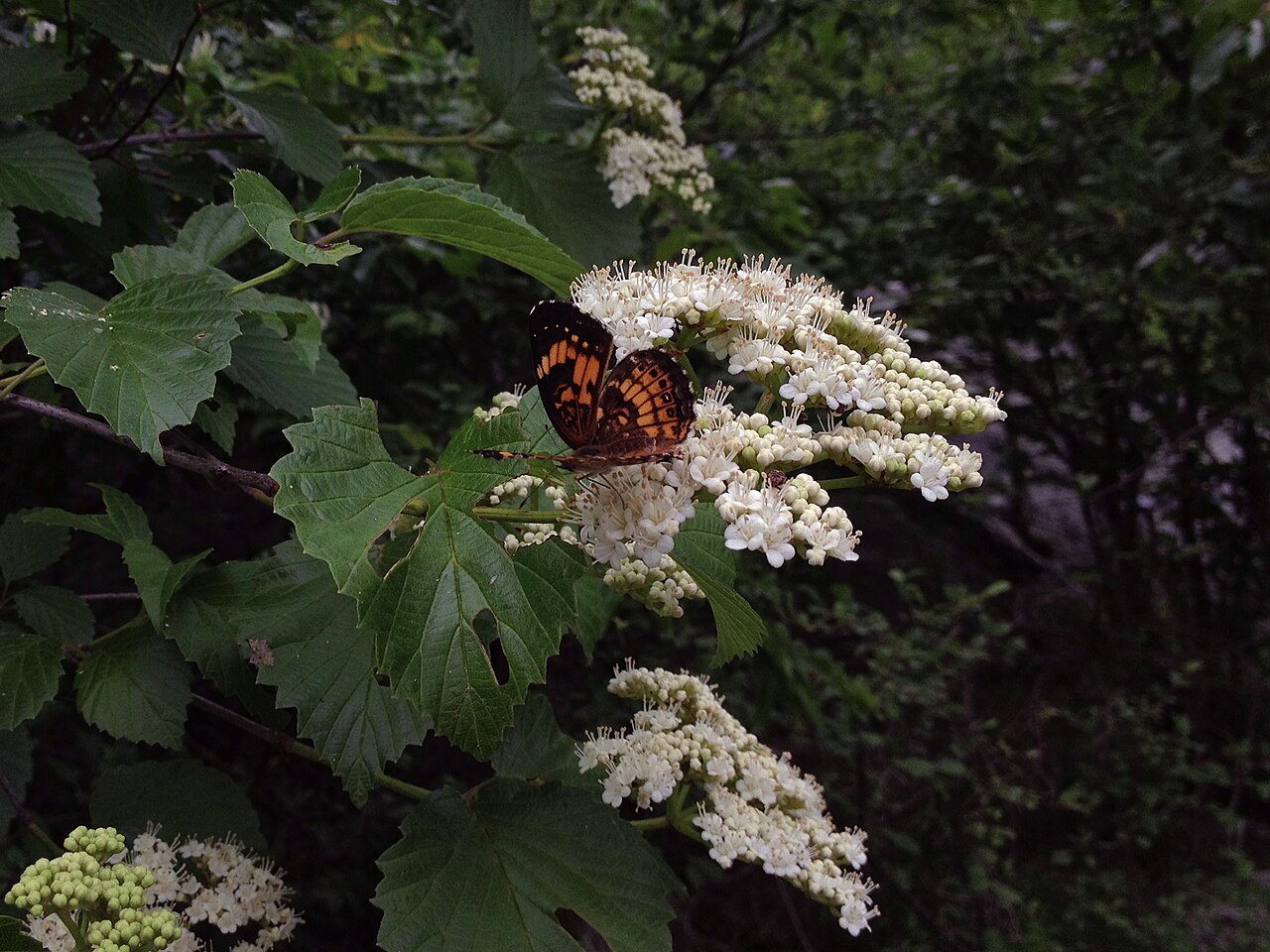
Arrowwood viburnum anchors the sunny corners. NC State lists clay among its soils, full sun to part shade, and a size of 5 to 10 feet tall and 6 to 10 feet wide. It tolerates occasional drought and flooding.
It flowers on old wood, so NC State advises pruning right after bloom. It also notes that more than one genetic strain is needed for fruit, so buy plants from two different sources if you want berries for birds.
Red chokeberry belongs at the corner nearest the downspout. NC State lists clay, tolerance of wet sites and occasional flooding, and the best flowers and fruit in full sun. It grows 6 to 12 feet tall but only 3 to 6 feet wide, which suits a tight corner.
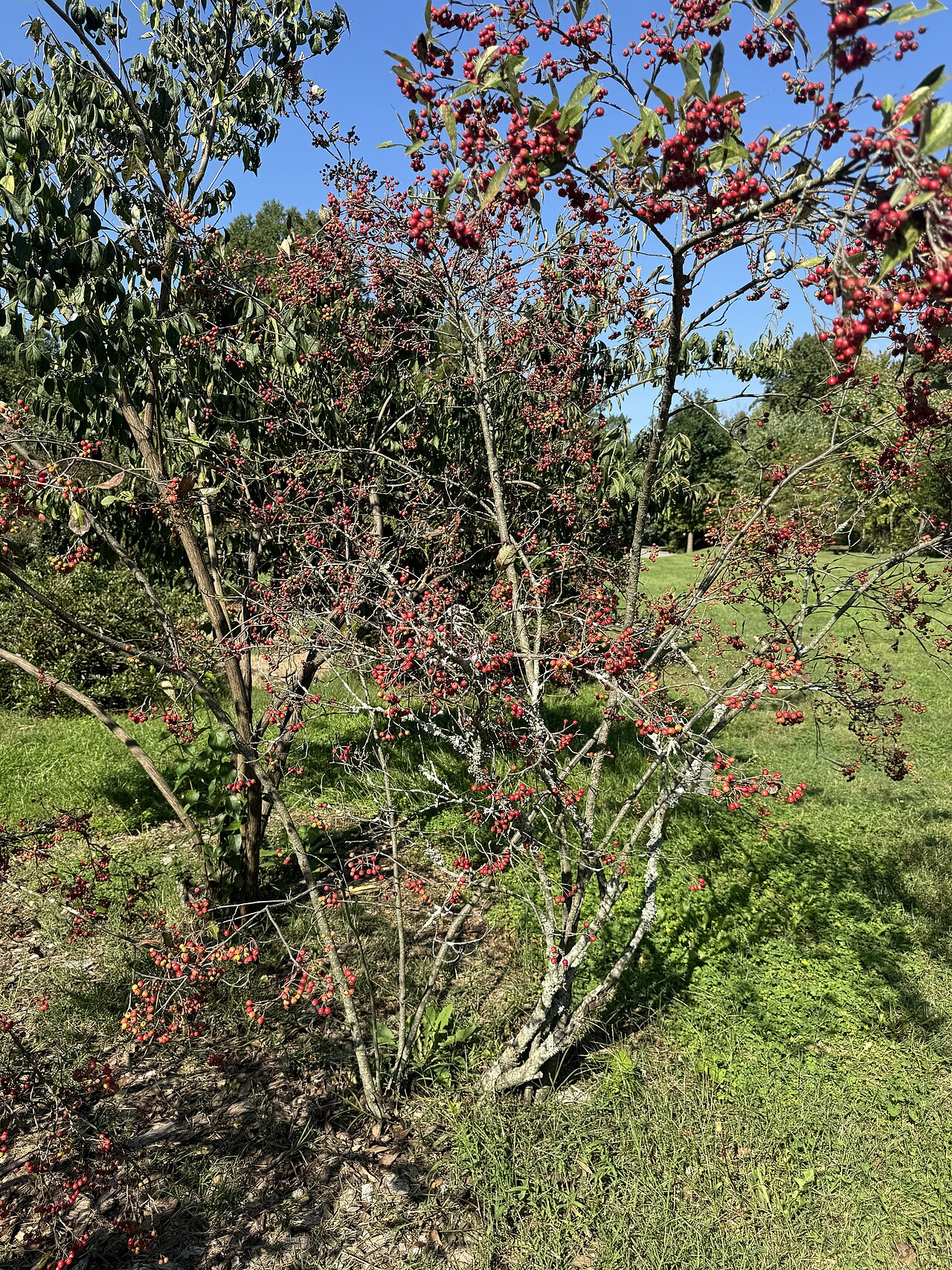
NC State notes that red chokeberry suckers and forms colonies, and it recommends removing root suckers to prevent spread. In a front bed, pull them each spring.
Middle Shrubs: Beautyberry and St. John’s Wort
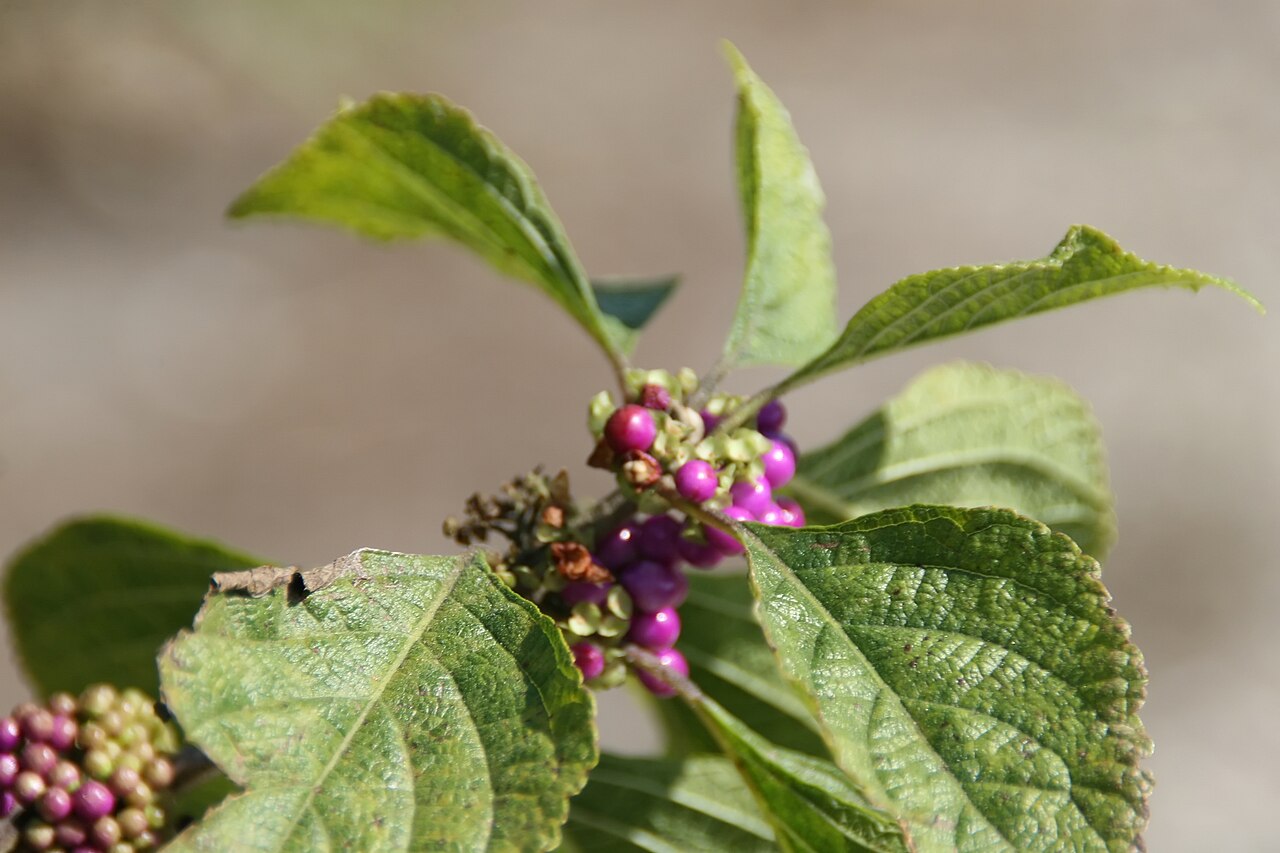
American beautyberry is the most heat-proof shrub in the plan. NC State lists clay among its soils and heat, drought and dry soil among the conditions it resists, with a size of 3 to 8 feet tall.
It flowers and fruits on new shoots, so NC State recommends cutting it back to about 1 foot in late winter. That keeps it compact enough for a front bed. Plant three in a row on each side of the entry. Our Southeast woodland-edge plan shows how the same shrub works at a shadier edge.
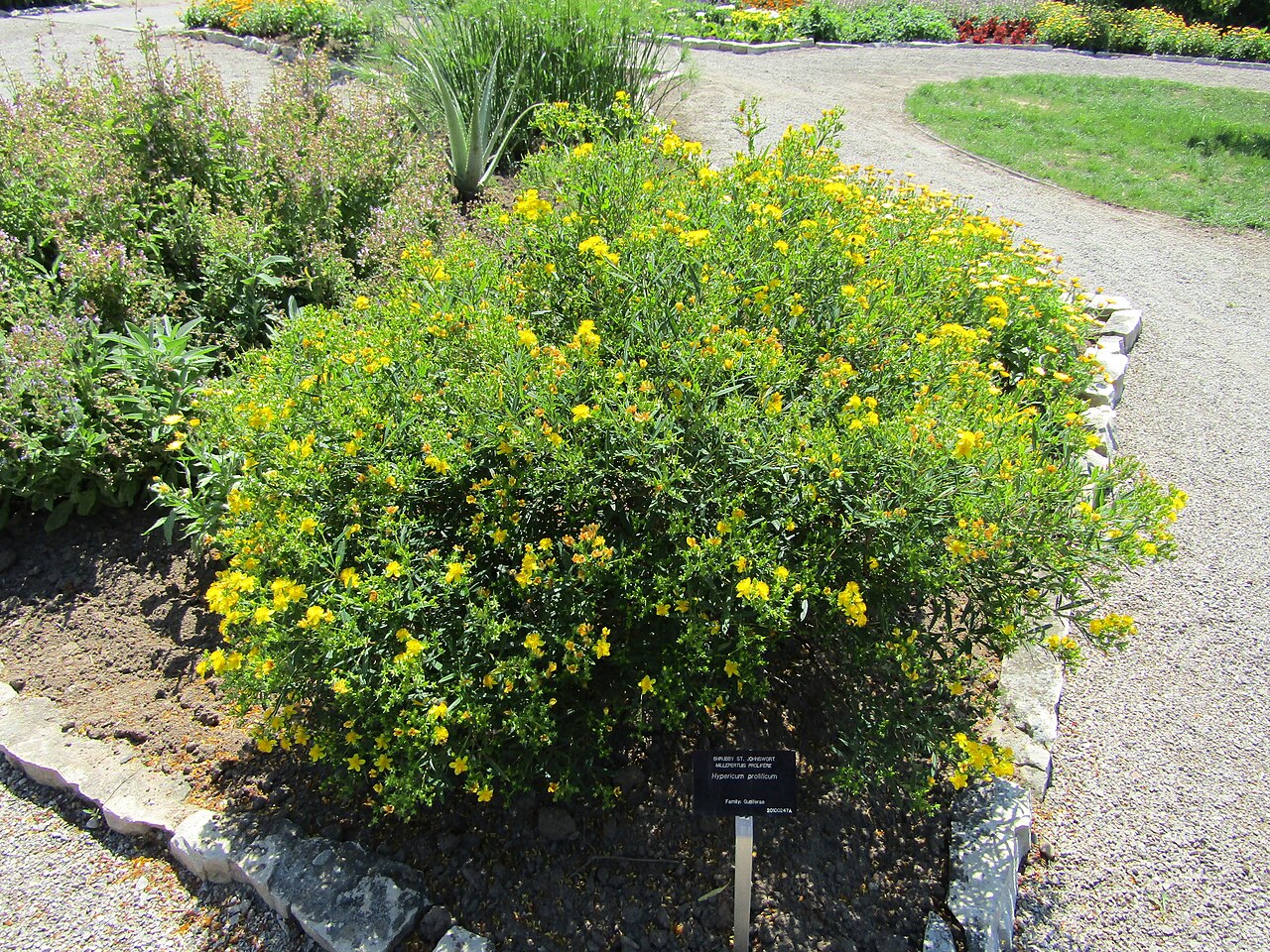
Shrubby St. John’s wort fills between them. NC State says it grows in sandy to clay soils, tolerates drought and blooms best in full sun, at 1 to 5 feet tall. NC State also warns that skin contact with the sap can cause photosensitivity in some people, so wear gloves when pruning.
Front Edge: Threadleaf Coreopsis
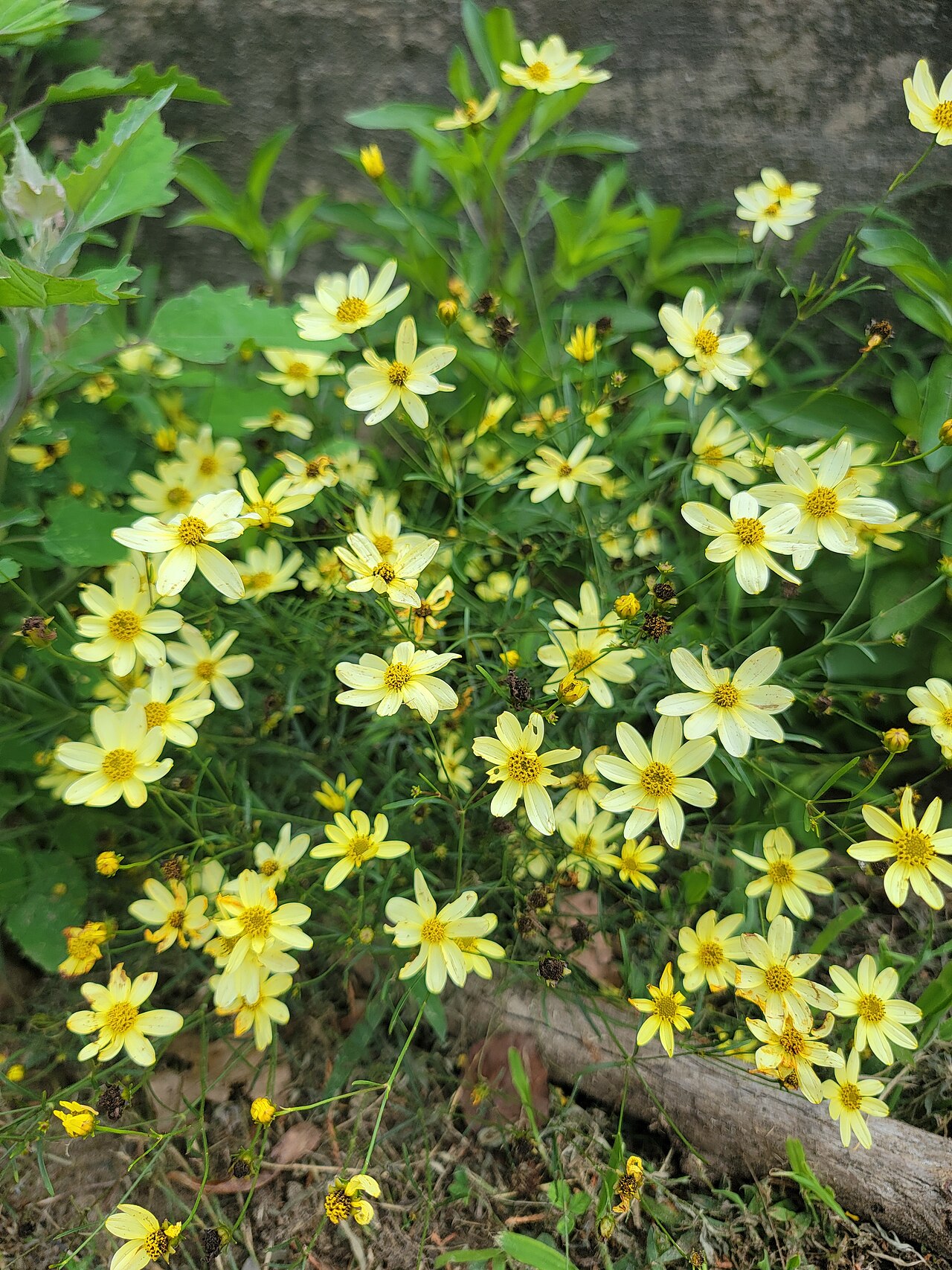
The front edge needs something low, fine-textured and tough. Threadleaf coreopsis fits. NC State describes it as fairly common in the central and eastern Piedmont of North Carolina and lists clay, heat, humidity and drought tolerance.
It grows 2 to 3 feet tall. NC State warns that if the soil is too rich or moist, the stems get weak and flop, so don’t amend the front edge with compost.
Shaded End and Downspout: Sweetspire and Sweetshrub
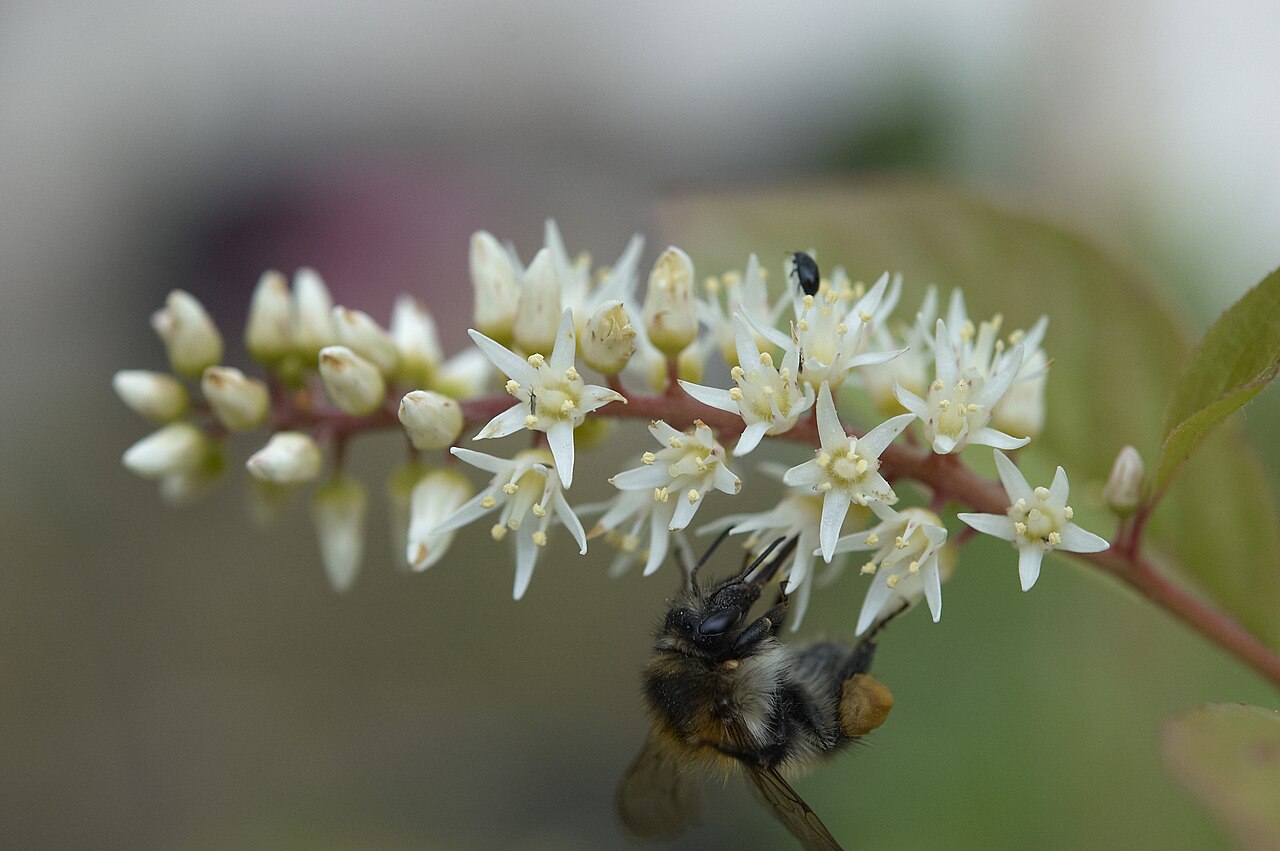
Virginia sweetspire handles both wet and dry spells, which makes it useful by a downspout. NC State lists resistance to drought and wet soil, a size of 4 to 8 feet and root suckering that forms colonies. The Wildflower Center lists clay and clay loam among its soils.
Sweetshrub goes at the end that gets afternoon shade. NC State lists clay and heat tolerance but notes it prefers some shade on hot summer afternoons and struggles in drought. It grows 6 to 12 feet tall and wide, so use only one in a bed this size.
Plant Palette
| Plant | Role | Height | Width | Native range |
|---|---|---|---|---|
| Arrowwood viburnum | Sunny corners | 5–10 ft | 6–10 ft | FL to e. TX, north to MA and OH |
| Red chokeberry | Downspout corner | 6–12 ft | 3–5 ft | N.S. to FL and e. TX |
| American beautyberry | Middle, repeated | 3–8 ft | 3–6 ft | VA to AR, south to FL and e. TX |
| Shrubby St. John’s wort | Middle filler | 1–5 ft | 1–4 ft | NY to s. MI and IA, south to GA, LA, OK |
| Threadleaf coreopsis | Front edge | 2.5–3 ft | 1.5–2 ft | Eastern U.S.; common in central and eastern NC Piedmont |
| Virginia sweetspire | Downspout / shaded end | 4–8 ft | 3–6 ft | S. NJ to KY, s. IL, MO, OK, south to FL and TX |
| Sweetshrub | Shaded end only | 6–12 ft | 6–12 ft | Southeastern U.S. |
Heights and widths from the NC State Extension Gardener Plant Toolbox. Ranges from the Lady Bird Johnson Wildflower Center, except threadleaf coreopsis and sweetshrub (NC State). Every plant here is listed by NC State for clay soils except sweetspire, which the Wildflower Center lists for clay.
Example Layout for a 24 × 8 ft Bed
| Left corner (sunny) | 1 arrowwood viburnum, set about 5 ft from the house |
| Right corner (downspout) | 1 red chokeberry plus 3 Virginia sweetspire in the low spot |
| Middle | 3 American beautyberry on each side of the entry, about 4 ft apart; 3 shrubby St. John’s wort between groups |
| Shaded end | 1 sweetshrub, at least 6 ft from other shrubs, as NC State advises |
| Front edge | 9 to 12 threadleaf coreopsis in a single row, about 18 in apart |
Installation Steps
- Plant in late fall or early spring. NC State says container plants do best then and need the least watering; late-spring and summer transplants are the most vulnerable to drought.
- Shade the pots. NC State notes dark containers absorb heat and can push root-ball temperatures above air temperature, so keep plants out of the sun until planting.
- Dig wide and plant high. Make the hole as deep as the root ball and two to three times wider, and set the plant at or slightly above grade. In very poorly drained spots, NC State suggests setting the root ball on a 6-inch mound.
- Don’t amend the backfill. NC State advises against it; refill with the native clay.
- Mulch and water slowly. Apply 2 to 3 inches of mulch, kept 6 inches from stems, and water clay slowly so it soaks in instead of running off.
The First Three Years
Year one: NC State advises 3 to 5 gallons of water twice a week for 1- to 3-gallon shrubs during establishment when it doesn’t rain. In a hot front bed, check the soil every few days in July and August.
Year two: Cut beautyberry to about 1 foot in late winter. Prune arrowwood and sweetspire only after they flower. Pull chokeberry and sweetspire suckers you don’t want.
Year three: Shrubs should be filling in. NC State suggests watering established woody plants every 10 days during prolonged dry spells. Divide or replace coreopsis that flops, and top up mulch in spring.
Mistakes to Avoid
- Amending the whole bed. It won’t change clay texture much, and rich soil makes coreopsis flop.
- Planting too close to the house. Use mature widths, not pot sizes.
- Summer planting. It means the heaviest watering and the most losses.
- Sweetshrub in full afternoon sun. Keep it at the shaded end.
- One arrowwood expecting berries. It needs a second genetic strain nearby.
- Mulch piled on a wet spot. NC State notes mulching a poorly drained area can make it worse.
What about evergreens? Few native evergreen shrubs suit hot, sunny Piedmont clay. Yaupon holly is often suggested, but the Wildflower Center’s habitat list for it is coastal: maritime woods, hammocks and sandy pinelands. Treat it as a Coastal Plain shrub, and check your county records before using it in the Piedmont.
Outside the Piedmont: check each shrub against your state list. The Wildflower Center gives American beautyberry’s range as Virginia to Arkansas and south, so north of Virginia swap it for more shrubby St. John’s wort, which reaches New York and Michigan.
📋 Find these plants in your region: see our native plant lists for North & South Carolina, Georgia, Alabama & Mississippi and Maryland, Virginia & West Virginia, which include several of these shrubs.
Frequently Asked Questions
What native shrubs grow in Piedmont red clay?
Arrowwood viburnum, red chokeberry, American beautyberry and shrubby St. John’s wort are all listed by NC State for clay soil. Virginia sweetspire handles clay that stays wet after rain.
Should I add compost to clay before planting shrubs?
Not to the backfill. NC State advises against amending the backfill and notes soil texture is very hard to change on a large scale. Choose clay-tolerant shrubs instead.
When is the best time to plant shrubs in the Piedmont?
Late fall or early spring. NC State says late-spring and summer transplants are the most susceptible to drought.
How do I keep beautyberry small in a front bed?
Cut it back to about 1 foot in late winter, as NC State recommends. It flowers and fruits on new growth, so you won’t lose the berries.
Which native shrub handles a wet downspout spot?
Red chokeberry and Virginia sweetspire. NC State lists both for wet soil, and sweetspire also tolerates drought.
Sources
- North Carolina Extension Gardener Plant Toolbox: arrowwood, red chokeberry, American beautyberry, shrubby St. John’s wort, threadleaf coreopsis, Virginia sweetspire, Carolina allspice: sizes, soils, light, heat and drought tolerance, pruning, suckering, toxicity.
- NC State Extension Gardener Handbook, Chapter 11: Woody Ornamentals: drainage check, soil texture, planting season, container heat, hole width, planting height, backfill, mulch, watering.
- Lady Bird Johnson Wildflower Center plant database: Viburnum dentatum, Aronia arbutifolia, Callicarpa americana, Hypericum prolificum, Itea virginica, Ilex vomitoria: native ranges, habitats and soils.