Fireberry Hawthorn (Crataegus chrysocarpa)
Crataegus chrysocarpa, commonly known as fireberry hawthorn or goldenberry hawthorn, is one of the most wide-ranging native hawthorns in North America, found from the Pacific Northwest across the northern United States and Canada to Newfoundland and New England. Despite the “golden” reference in its scientific name — chrysocarpa means “golden fruit,” describing the unripe berries — the ripe fruit of most populations is a vivid red, which gives rise to the more common name “fireberry.”
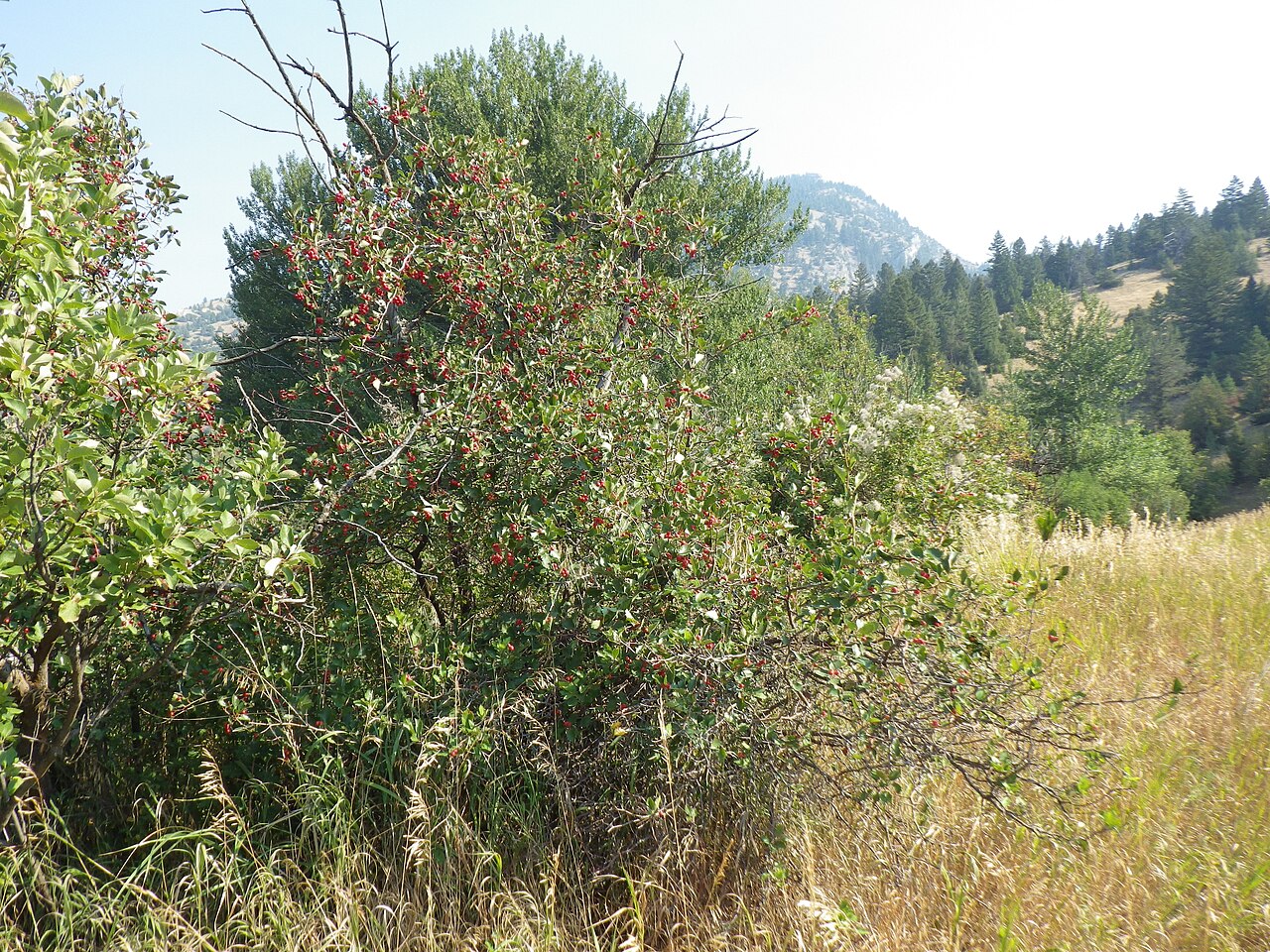
This member of the Rosaceae (rose) family typically grows as a dense, thorny, multi-stemmed shrub rather than a true tree, usually staying under 20 feet tall. Its white spring flowers and abundant clusters of bright red fall fruit make it a conspicuous and valuable wildlife plant across a huge range of climates, from humid New England woodlands to dry Rocky Mountain foothills. Botanists recognize several regional varieties — chrysocarpa, piperi, and vernonensis — reflecting the species’ remarkable adaptability across such a broad distribution.
Fireberry hawthorn’s combination of toughness, drought tolerance once established, and reliable fruit production makes it an excellent choice for naturalistic hedgerows, wildlife plantings, and difficult sites where showier ornamentals struggle. Its stout, needle-like thorns also make it a genuinely effective living barrier.
Identification
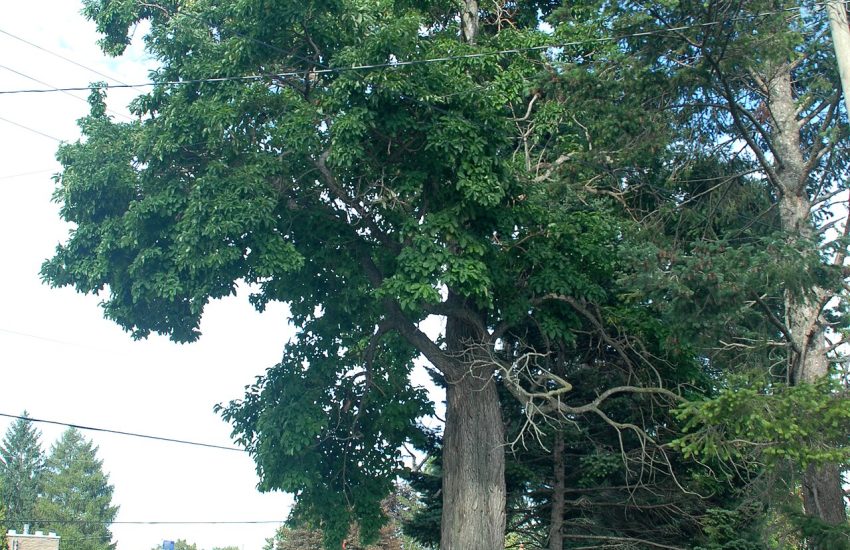
Fireberry hawthorn is usually a dense, rounded, multi-stemmed shrub 6 to 20 feet tall, occasionally forming a small single-trunked tree in favorable conditions. It spreads somewhat by root suckers and can form thickets, though it is generally less aggressive in this habit than some other native hawthorns.
Bark & Stems
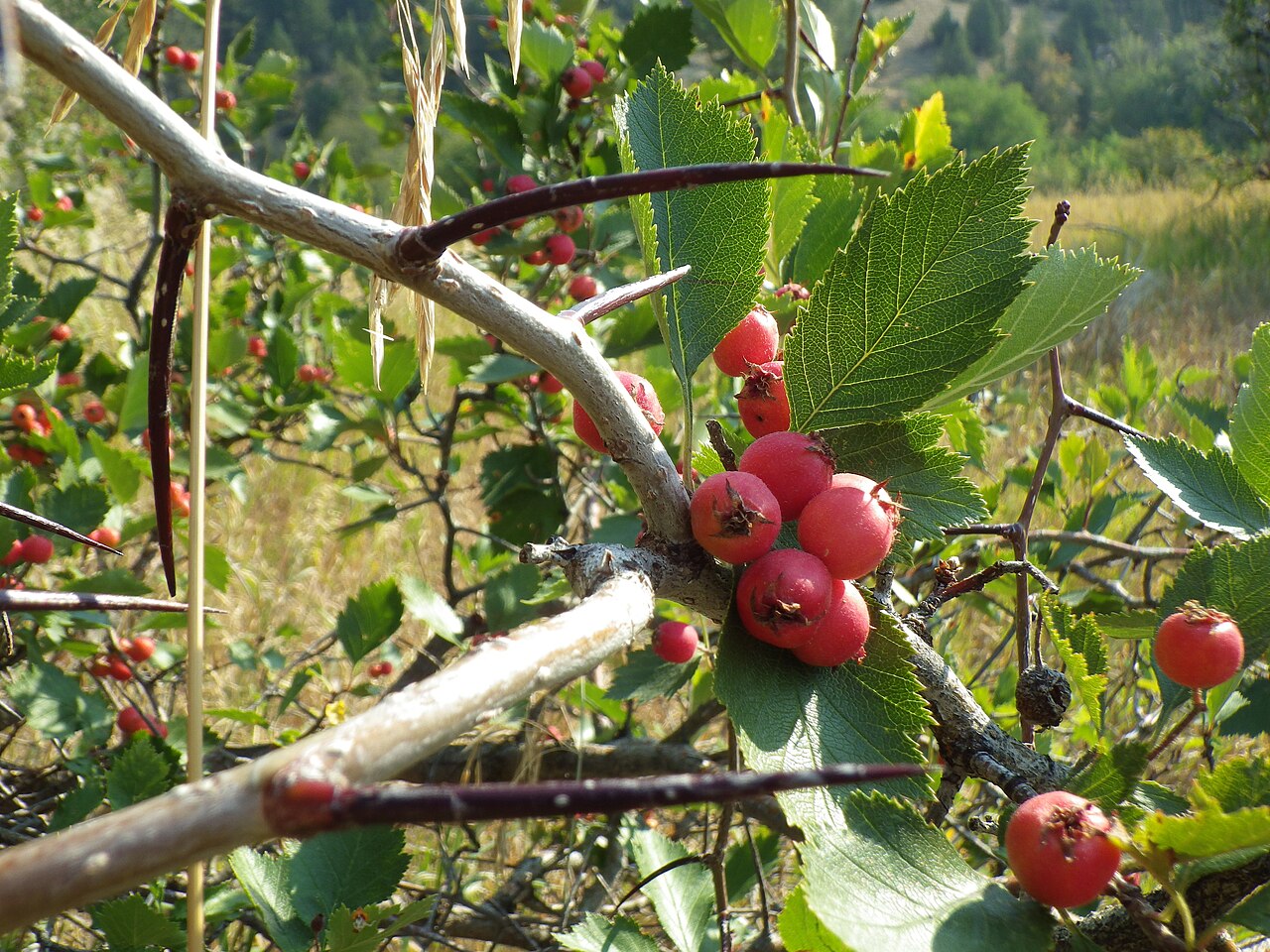
Stems are armed with notably long, slender, straight thorns, often exceeding an inch and sometimes reaching over 1¼ inches (3 cm) — among the longer thorns of any native hawthorn in its range. Bark on older stems is gray-brown and scaly; young twigs are reddish-brown and smooth.
Leaves
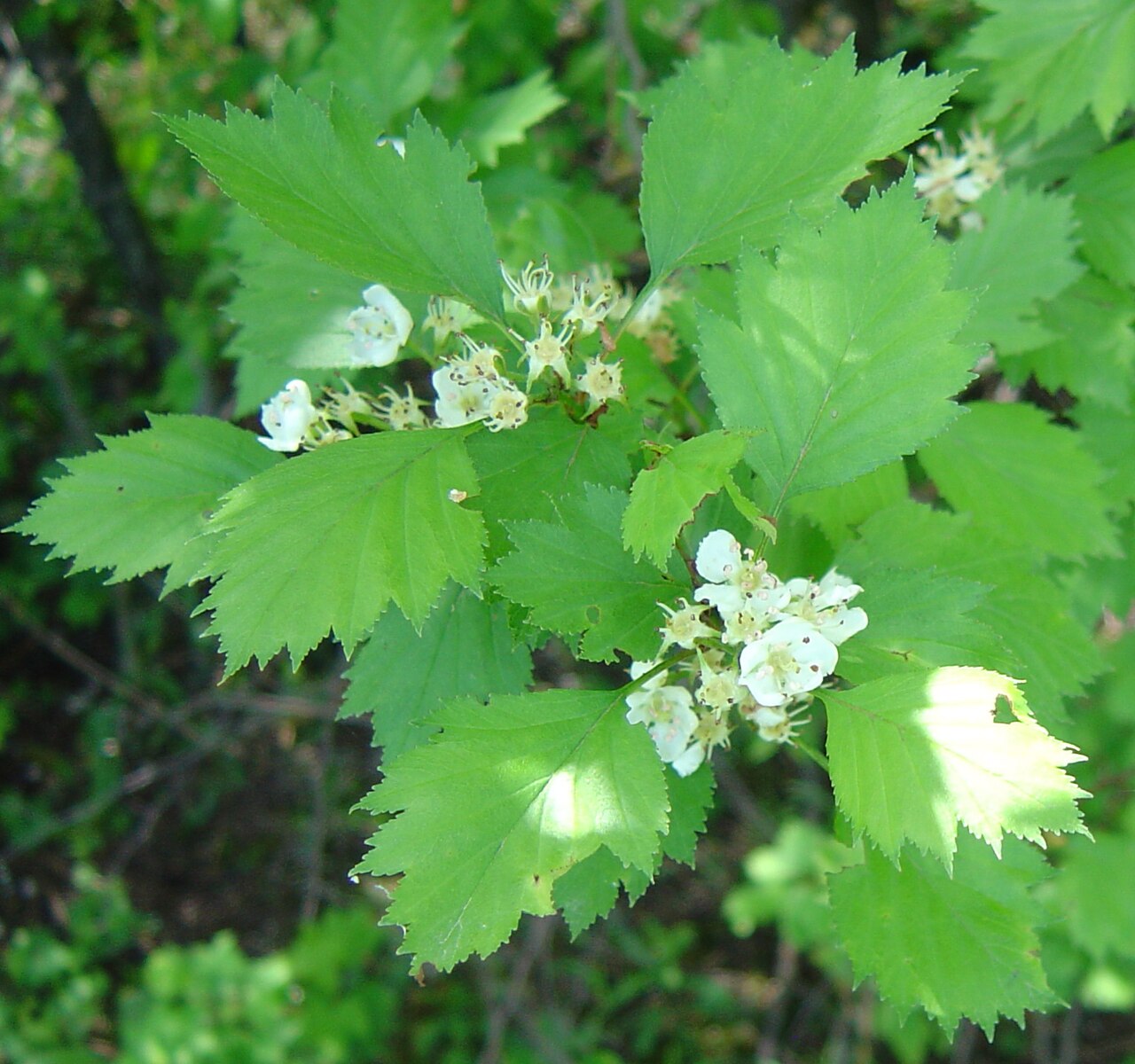
Leaves are simple, alternate, broadly oval to nearly round, 1½ to 3 inches long, with sharply and often doubly toothed margins and a texture that is thin but firm. Leaf shape and the depth of marginal teeth vary considerably across the species’ wide range and among its recognized varieties, a reflection of its adaptability to many different climates.
Flowers & Fruit
Clusters of white, five-petaled flowers about ½ to ¾ inch across open in mid to late spring. By late summer and early fall, these develop into round fruit roughly ⅓ to ½ inch across, typically ripening to bright red, though the scientific name references the gold color of the immature fruit; the botanical variety vernonensis instead ripens to a deep claret, nearly black, color. The abundant fruit often persists on the shrub well into winter.
Quick Facts
| Scientific Name | Crataegus chrysocarpa |
| Family | Rosaceae (Rose) |
| Plant Type | Deciduous Shrub / Small Tree |
| Mature Height | 6–20 ft |
| Mature Spread | 8–15 ft |
| Growth Rate | Slow to Moderate |
| Sun Exposure | Full Sun to Part Shade |
| Water Needs | Low to Moderate |
| Soil Type | Well-drained; tolerates rocky, sandy, or clay soils |
| Soil pH | 6.0–7.5 |
| Bloom Time | May – June |
| Flower Color | White |
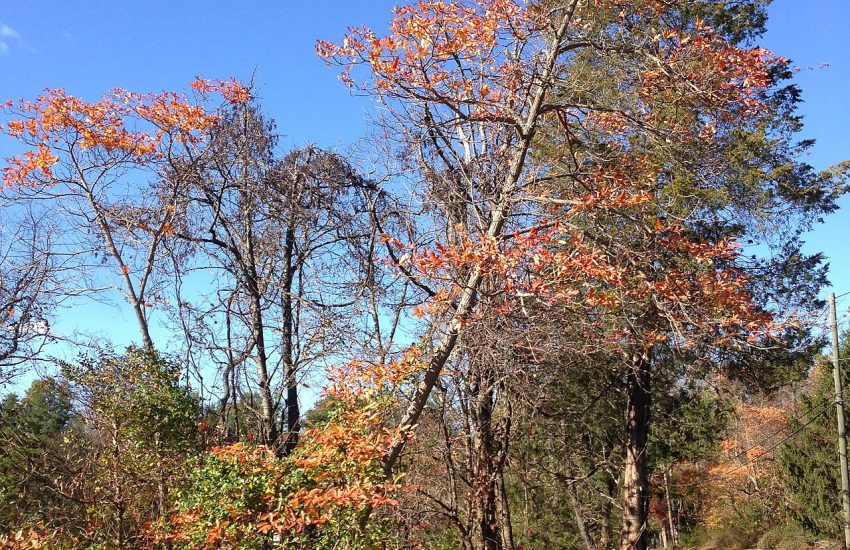
| Fall Color | Yellow to orange |
| Fruit | Bright red (occasionally claret) pomes, persisting into winter |
| Deer Resistant | Yes (long thorns deter browsing) |
| USDA Hardiness Zones | 3–7 |
Native Range
Fireberry hawthorn has one of the broadest ranges of any North American hawthorn, occurring from inland of the Cascade and Coast Ranges in Washington, Oregon, and British Columbia, across the northern Rocky Mountains and Great Plains, through the upper Midwest and Great Lakes, to the Atlantic Coast from Newfoundland south through New England and the mid-Atlantic. It also extends south through the Rocky Mountain states into the Southwest.
Given this enormous range, habitat varies considerably: in the Rocky Mountain states it grows on dry foothills, open slopes, and streamside thickets; in the upper Midwest and Northeast it favors woodland edges, old fields, fencerows, and rocky or calcareous upland sites; in the Pacific Northwest it occurs in the drier country east of the Cascades. Across all these settings, it consistently favors open, sunny sites with well-drained soil rather than deep shade or standing water.
This adaptability across such different climates and soils is reflected in the botanical varieties recognized within the species, which differ somewhat in leaf shape, fruit color, and regional distribution but share the same overall growth habit and wildlife value.
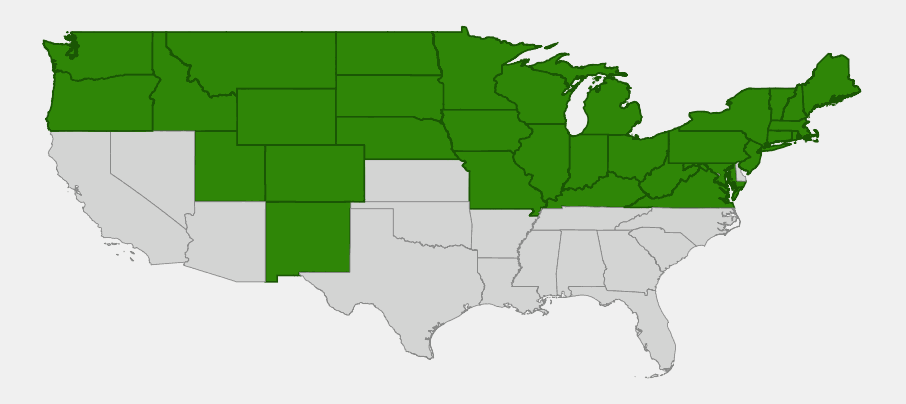
📋 Regional plant lists featuring Fireberry Hawthorn: Nebraska, Kansas & Eastern Colorado · Utah & Western Colorado · Connecticut, Massachusetts & Rhode Island · Illinois, Iowa & Missouri · Idaho, Eastern Oregon & Eastern Washington · Ohio & Indiana · Kentucky & Tennessee · Maryland, Virginia & West Virginia · New Hampshire, Maine & Vermont · Michigan, Wisconsin & Eastern Minnesota · North Dakota, South Dakota & Western Minnesota · Montana & Wyoming · New York, Pennsylvania & Northern New Jersey · Arizona & New Mexico
Growing & Care Guide
Fireberry hawthorn’s wide native range is a good indicator of just how adaptable and low-maintenance it is in cultivation. For general techniques that also apply here, see our broader hawthorn tree growing guide.
Light
Thrives in full sun, which produces the densest growth and heaviest fruit set. It tolerates light shade but becomes looser and flowers and fruits less heavily as shade increases.
Soil & Water
Remarkably adaptable to soil type, growing well in rocky, sandy, clay, or loamy ground as long as drainage is reasonable. Once established, it is notably drought tolerant, reflecting its wide distribution through dry Rocky Mountain foothill and Great Plains habitats, making it a strong candidate for drought-tolerant native landscaping in appropriate regions.
Planting Tips
Plant container or balled-and-burlapped stock in spring or fall in full sun. Because of its long, sharp thorns, site it well away from paths, patios, and areas with foot traffic — it makes an outstanding barrier planting precisely because people and most animals avoid pushing through it.
Pruning & Maintenance
Minimal pruning is needed; remove dead or damaged wood in late winter while dormant, wearing heavy gloves. Like other hawthorns, it can develop cedar-hawthorn rust where eastern redcedar grows nearby, but this is rarely serious on an established, well-sited plant.
Landscape Uses
Fireberry hawthorn is especially well suited to practical, low-water, wildlife-focused plantings:
- Living security hedge — exceptionally effective thanks to its long thorns, ideal where gardeners want to screen or reinforce a fence line
- Dry, rocky, or poor-soil sites that defeat less tolerant shrubs
- Wildlife and bird gardens — reliable, persistent winter fruit
- Naturalized hedgerows and windbreaks on farms and rural properties
- Erosion control on dry slopes and disturbed ground
Wildlife & Ecological Value
Across its huge range, fireberry hawthorn is a dependable wildlife resource in climates where fewer fruiting shrubs thrive.
For Pollinators
The abundant spring flowers attract a wide range of native bees, flies, and beetles, providing an important nectar and pollen source in open, sunny habitats where competing bloom can be sparse.
For Birds
Heavy crops of bright red fruit, often persisting into winter, are a critical late-season food source for robins, waxwings, grouse, and many other birds, especially in the drier western and northern parts of its range where fruiting shrubs are less abundant. The dense, thorny branches also provide excellent, predator-resistant nesting sites.
For Mammals
Small mammals and larger browsers such as deer feed on the fruit, while the long thorns offer the shrub real protection from foliage browsing. Dense thickets provide cover for rabbits and other small wildlife.
Ecosystem Role
As one of the most drought-tolerant and wide-ranging native hawthorns, fireberry hawthorn fills an important niche on dry, open, and disturbed sites across much of temperate North America, stabilizing soil, offering nesting structure, and supplying fruit in habitats where many other native fruiting shrubs cannot survive.
Cultural & Historical Uses
Fireberry hawthorn’s abundant fruit has a long history of use by Indigenous peoples across its range, who ate the berries fresh or dried them for storage, sometimes mixing them with other fruits such as chokecherries into preserved cakes. Hawthorn fruits in general have also long been associated with European and American folk traditions around heart-health tonics, though these remain historical practices rather than modern medical guidance.
The long, straight thorns were occasionally used by Indigenous peoples as awls, pins, or fish hooks, reflecting the resourceful use of the plant’s most distinctive feature. The extremely hard, dense wood of hawthorns in general, though too small in diameter for lumber, has traditionally been prized for small, tough items like tool handles and mallet heads.
Today, fireberry hawthorn is mainly of interest to native plant gardeners, restoration practitioners, and foragers who value its heavy, reliable fruit crops for wildlife and, less commonly, for home jam-making, though the fruit is mealy and better suited to wildlife than the table in most people’s judgment.
Frequently Asked Questions
Why is it called “fireberry” if the name means “golden fruit”?
The scientific name chrysocarpa (“golden fruit”) describes the color of the immature, unripe berries. As the fruit ripens it typically turns bright red — hence “fireberry” — though one botanical variety ripens to a dark claret color instead.
Is fireberry hawthorn drought tolerant?
Yes, notably so once established, reflecting its native range across dry Rocky Mountain foothills and Great Plains habitats. It still benefits from regular watering during its first one to two years while roots establish.
Can fireberry hawthorn be used as a hedge?
Yes — its long, sharp thorns make it one of the most effective living security hedges among native shrubs, discouraging both foot traffic and browsing animals.
How is it different from pear hawthorn or other native hawthorns?
Fireberry hawthorn has notably long, slender thorns (often over an inch), rounder leaves, and a much broader geographic range spanning from the Pacific Northwest to New England. Precise identification within the hawthorn genus often requires close attention to thorn length, leaf shape, and fruit color.
Do birds really rely on the fruit?
Yes, especially in drier western and northern habitats where fewer fruiting shrubs are available; the persistent winter fruit is an important food source for robins, waxwings, and overwintering birds when other food is scarce.

Looking for a nursery that carries Fireberry Hawthorn?
Browse our native plant nursery directory: Colorado & Connecticut · Idaho, Illinois, Indiana & Iowa · Kentucky, Maine, Maryland, Massachusetts, Michigan, Minnesota & Montana · Nebraska, New Hampshire, New Jersey, New Mexico & New York · Oregon · Ohio, Pennsylvania, Rhode Island, South Dakota, Utah & Vermont · Washington · Wisconsin, West Virginia & Wyoming