Blue Mistflower and Fall Asters: A Late-Season Border for Suitable Eastern Sites
Last updated: November 6, 2026

Most borders fade by September. A border built on blue mistflower and native fall asters does the opposite: it saves its best color for the last weeks before frost.
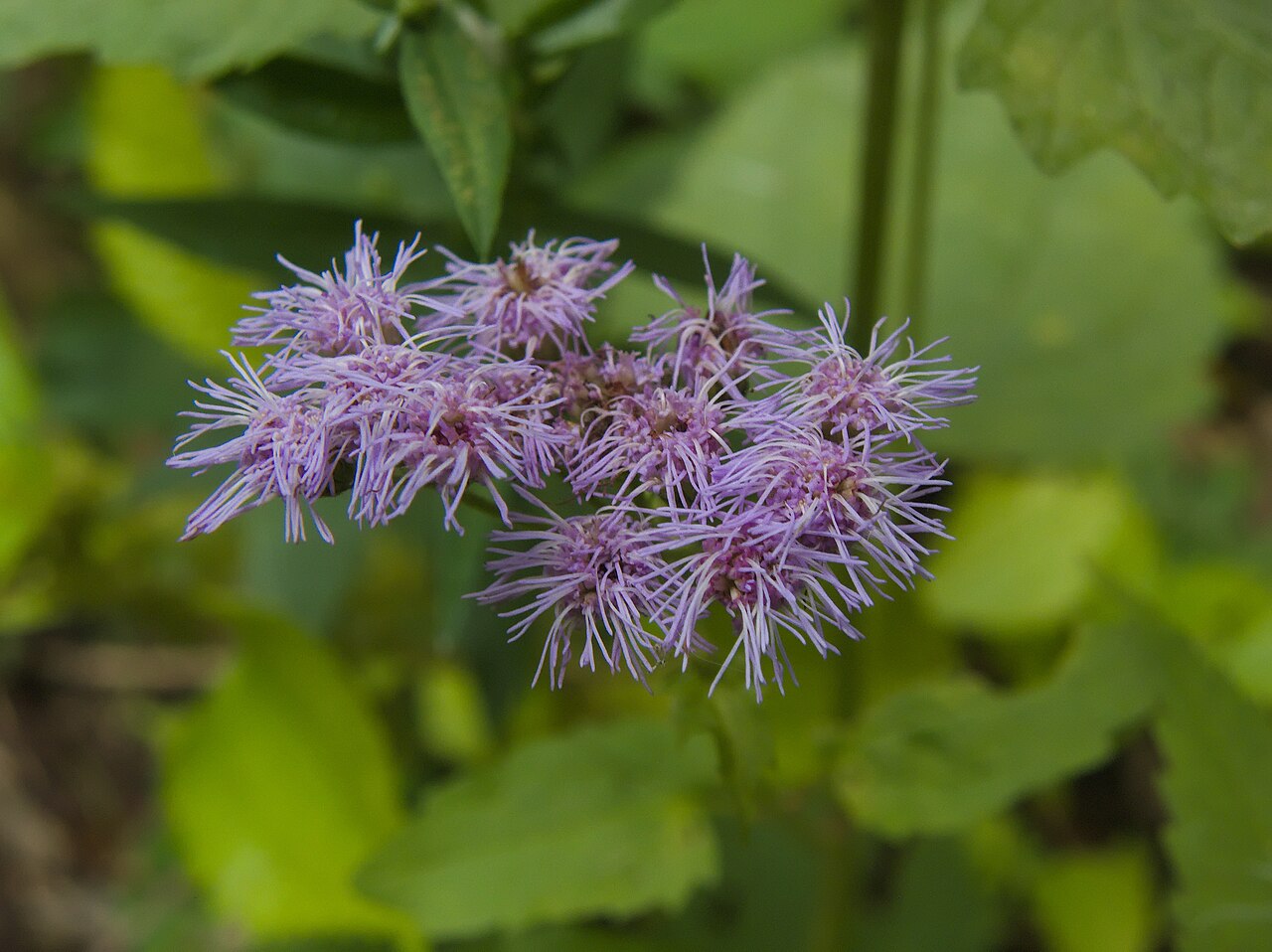
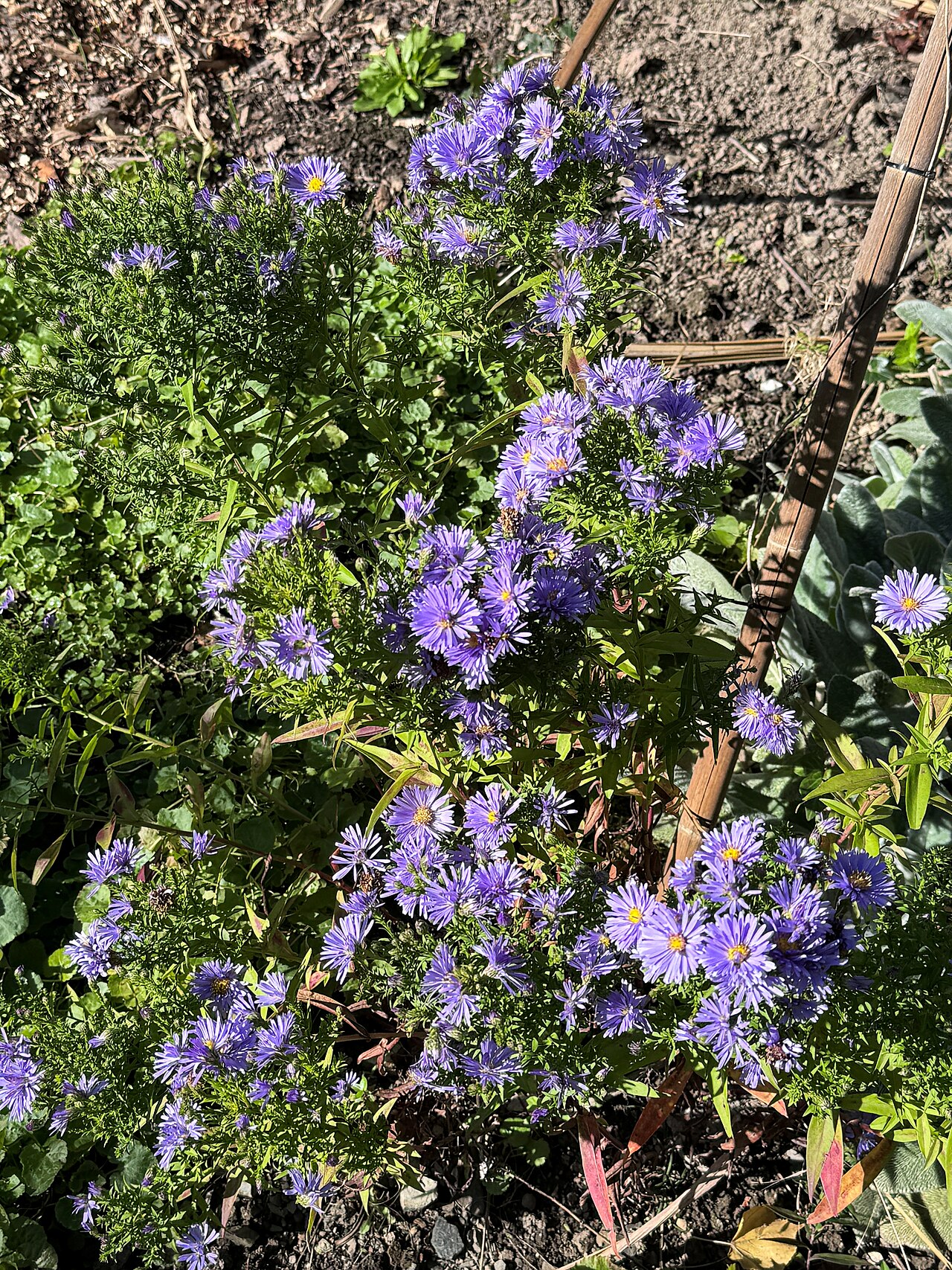
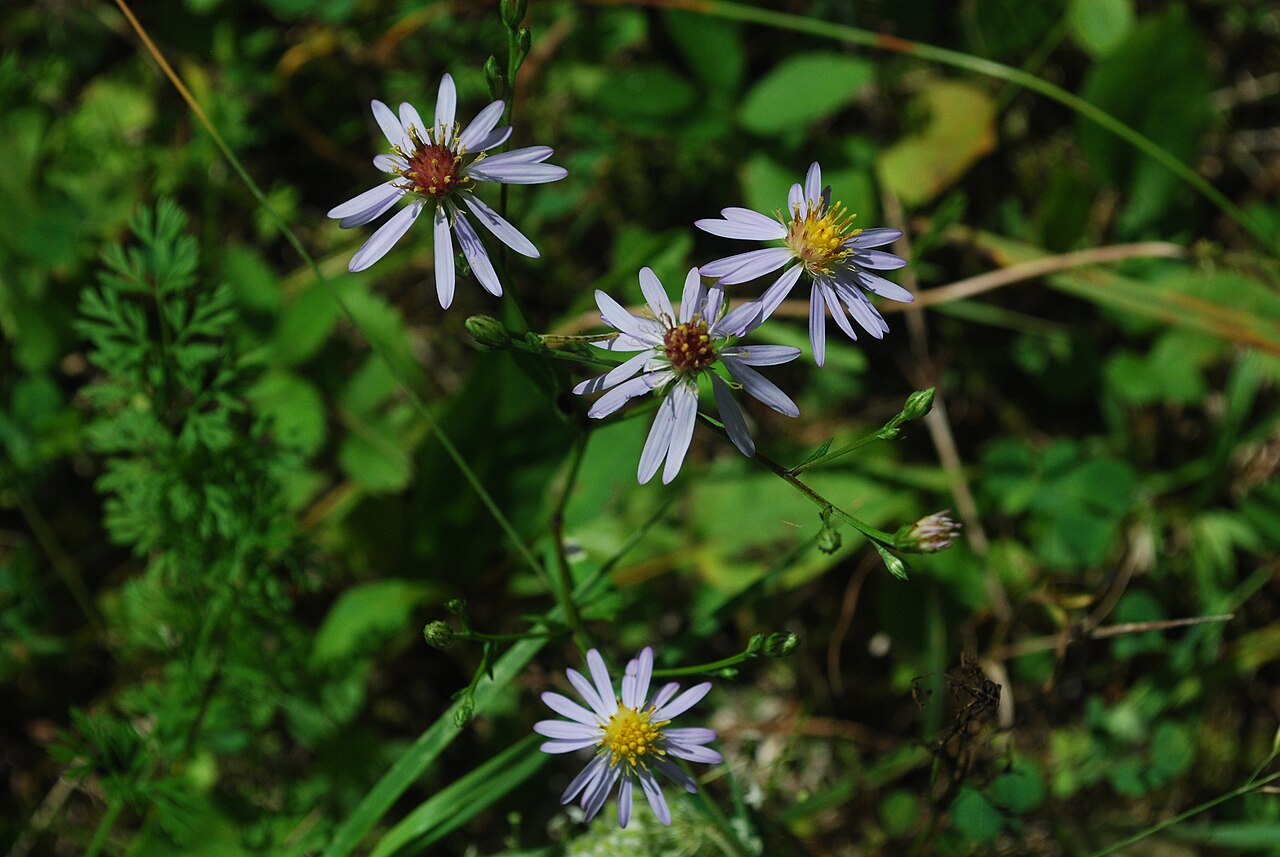
The pairing works because the plants share a season and a color family. Mistflower’s fuzzy powder-blue clusters sit beside the starry purple, lavender and blue of the asters, with goldenrod adding contrast.
It only works on the right site, though. These plants need sun and enough moisture, and they need to be native where you live. This plan shows how to check your site, arrange the plants by moisture and height, and keep the border in balance over its first three years.
Plan at a Glance
| Site | An open, sunny border with average to moist soil, ideally with a slight moisture difference from one end to the other. |
| Size | At least about 4 feet deep and 12 to 16 feet long, so the taller asters have room behind the front layer. |
| Sun | Full sun for the asters. Mistflower also handles part shade. |
| Soil | Moist, fertile loam or clay loam that does not stay waterlogged. Use the drier end for smooth and aromatic asters. |
| Maintenance | Moderate: spring pinching of tall asters, an edge check on mistflower, and division every few years. |
| Best regions | Eastern sites where both are native, roughly from New Jersey and Pennsylvania south to the Carolinas and west into the lower Midwest. |
Check That Your Site Suits Both Plants
Start with range. The Lady Bird Johnson Wildflower Center gives blue mistflower’s native range as New Jersey to southern Illinois and eastern Kansas, south to Florida and Texas.
For New England aster, the same database lists Quebec and Maine to South Carolina, west to the eastern Great Plains. The overlap is the core of the East and lower Midwest, which is where this border fits most naturally.
Next, check moisture. Illinois Wildflowers describes mistflower as preferring moist soil with poor drought tolerance. NC State describes New England aster as happiest in moist, fertile, well-drained soils, including clay loams.
That means the ideal site is evenly moist but not soggy. A low corner that floods for days is too wet for the asters; a sandy, sun-baked strip is too dry for mistflower.
- Dig a test hole after a soaking rain. If water still stands a day later, the spot is wetter than these asters prefer.
- Count sun hours. NC State recommends growing New England aster in full sun, so give the aster section the sunniest stretch.
- Look at the edges. Mistflower spreads by rhizomes, so a path or lawn edge on its side of the border makes control simpler.
Arrange the Border Along a Moisture Gradient
Few borders are evenly moist from end to end. Use that to your advantage by placing each plant where its preferred moisture falls.
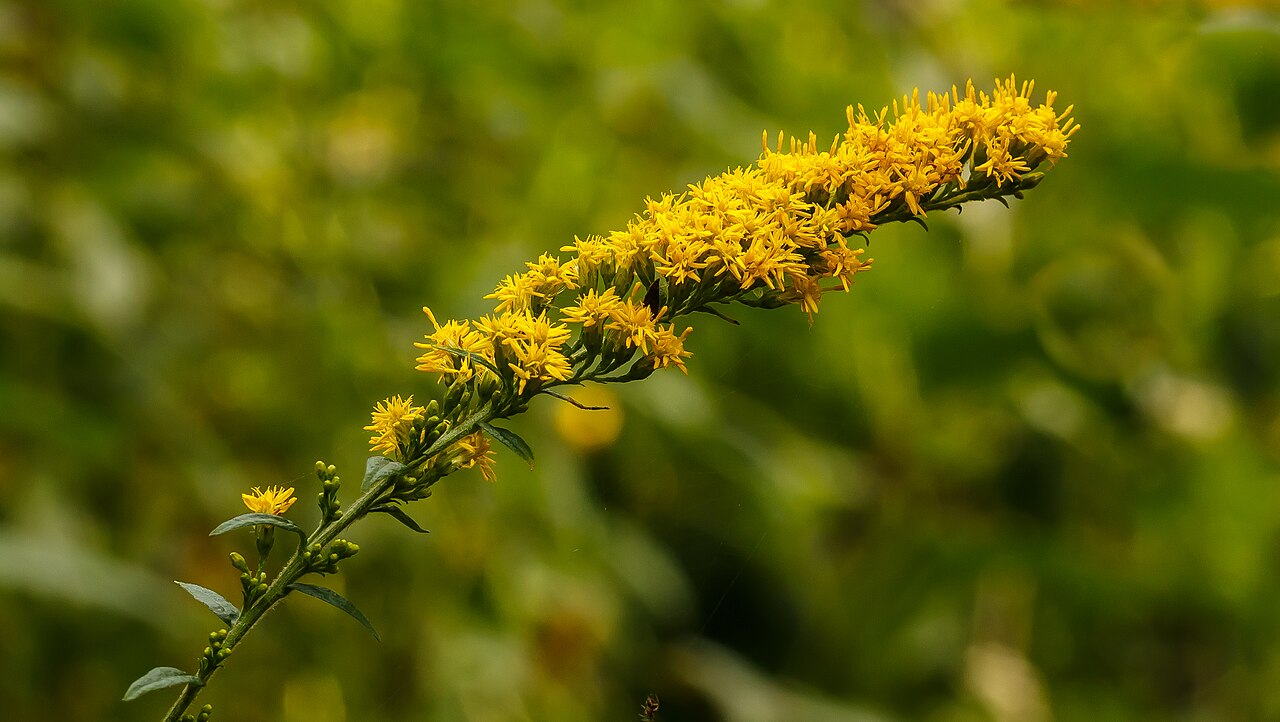
- Moist end: blue mistflower and rough-leaved goldenrod, both plants of damp meadows and low ground. Near the coast, New York aster fits here too.
- Middle: New England aster, which wants moisture but also good drainage.
- Drier end: smooth blue aster and aromatic aster. NC State describes smooth aster as drought-tolerant once established and aromatic aster as a plant of well-drained soil in full sun.
This arrangement keeps every plant in conditions it can handle without extra watering once established, and it naturally separates mistflower from the drought-tolerant asters that would struggle in its wet corner.
Layer by Height
New England aster is the tallest aster here. NC State lists it at 3 to 6 feet tall, so it belongs in the back or middle row, never at the front. Our New England aster border plan covers spacing those clumps for their mature size.
- Back row: sweet Joe-Pye weed (5 to 7 feet) where you have room, then New England aster.
- Middle row: rough-leaved goldenrod and, in coastal gardens, New York aster at 3 to 5 feet.
- Front row: aromatic aster, which NC State describes as forming dense, low mounds, and blue mistflower in its moist pocket.
Smooth blue aster, at 2 to 4 feet, can sit in the front-middle at the drier end. Its blue-green foliage, noted by NC State, looks tidy all season. For more front-row options, see what to plant in front of tall fall asters.
Plan the Bloom Sequence
This border is about the late season, but it does not all bloom at once. Staggering the start times keeps it interesting from midsummer to frost.
Late-Season Bloom Sequence
| Sweet Joe-Pye weed | July – September |
| Blue mistflower | July – November, depending on location |
| New England aster | August – October |
| Smooth blue aster | August – October |
| Rough-leaved goldenrod | August – November |
| Aromatic aster | September – November |
Bloom months from the Lady Bird Johnson Wildflower Center plant database. Timing varies with latitude and weather.
Aromatic aster is the closer. The Wildflower Center lists it blooming into November, after many New England asters have finished.
Use Drifts, Repetition and a Clear Edge
Plant asters in groups of three or more rather than single specimens. A drift of one species reads clearly from a distance and gives pollinators a bigger target.
Repeat at least one aster and the goldenrod along the length of the border. That rhythm ties the moist and dry ends together even though the plants change.
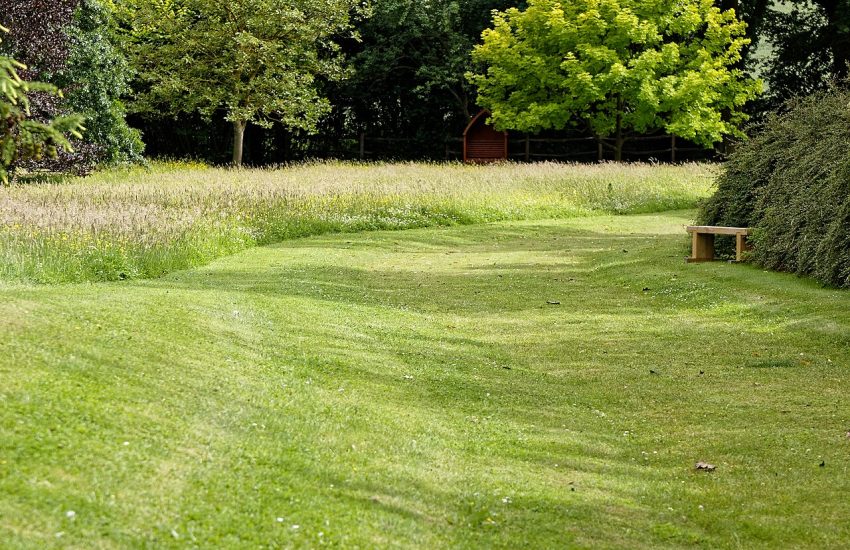
Keep mistflower in a defined area at the moist end, bordered by a path or lawn edge. Our guide to designing around blue mistflower in a small garden covers how to size and frame that pocket.
Plant Palette
| Plant | Role | Height | Sun / moisture | Native range |
|---|---|---|---|---|
| Blue mistflower (Conoclinium coelestinum) | Blue filler, moist end | 1.5–3 ft | Sun to part shade; moist | NJ to s. IL and e. KS, south to FL and TX |
| New England aster (Symphyotrichum novae-angliae) | Tall purple anchor, back/middle | 3–6 ft | Full sun; moist, well-drained | Quebec and ME to SC, west to the e. Great Plains |
| Smooth blue aster (Symphyotrichum laeve) | Blue, drier end | 2–4 ft | Full sun; dry to medium | Much of North America except FL, CA and the far north |
| Aromatic aster (Symphyotrichum oblongifolium) | Low late mound, front | 1–3 ft | Full sun; well-drained | PA to NC, west to ne. WY and TX |
| New York aster (Symphyotrichum novi-belgii) | Coastal option, moist middle | 3–5 ft | Sun to part shade; moist | Newfoundland to SC, mostly near the coast |
| Rough-leaved goldenrod (Solidago rugosa) | Gold contrast, moist end | Up to 6 ft | Sun to light shade; moist to wet | Newfoundland to GA, west to MI, MO and TX |
| Sweet Joe-Pye weed (Eutrochium purpureum) | Back-row height, summer bridge | 5–7 ft | Sun to part shade; moist | S. NH to PA and mountains to GA, west to MN, NE and OK |
Heights from the NC State Extension Plant Toolbox (rough-leaved goldenrod from the Lady Bird Johnson Wildflower Center); ranges from the Wildflower Center. Confirm each species for your county.
Sample Layout: A 4 × 16 Foot Border
- Moist end (first 5 feet): 1 to 2 blue mistflower at the front, 2 rough-leaved goldenrod behind.
- Middle (next 6 feet): 3 New England asters in a loose triangle toward the back, with 1 sweet Joe-Pye weed behind them if the border backs onto a fence.
- Drier end (last 5 feet): 2 smooth blue asters in the middle row and 3 aromatic asters along the front edge.
- Repeat: 1 more rough-leaved goldenrod near the drier end ties the gold through the whole length.
Space plants by their mature width. NC State lists New England aster at 1 to 3 feet wide and smooth and aromatic asters at up to 3 to 4 feet, so give the drier-end asters more room than the tall clumps.
Installation Steps
Step 1: Mark the gradient. After rain, note which end stays wet longest. That end gets mistflower and goldenrod.
Step 2: Prepare the soil lightly. These are native plants of meadows and open ground. Loosen compacted soil and remove turf, but skip heavy fertilizer, which tends to produce soft, leaning growth.
Step 3: Plant the back row first. Set Joe-Pye weed and New England asters, then the middle row, then the front row and mistflower last.
Step 4: Water through the first growing season. Even drought-tolerant asters need regular water until their roots establish.
Step 5: Mulch thinly. A light layer of shredded leaves holds moisture without smothering the crowns.
The First Three Years
Three-Year Maintenance Calendar
| Year 1 | Water during dry spells. Hand-weed. Expect a lighter bloom while roots establish. |
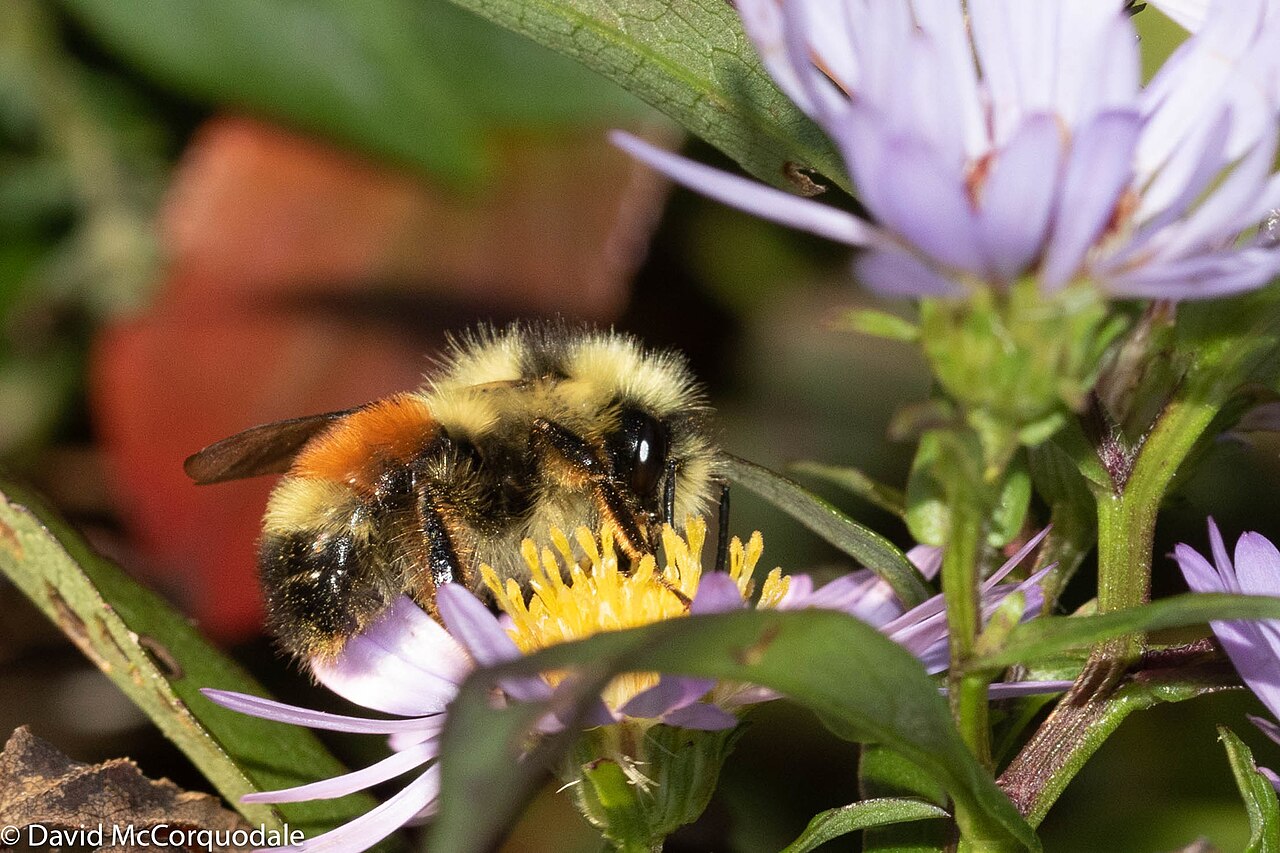
| Year 1, winter | Leave stems standing. NC State encourages leaving aromatic aster stems at 12 to 24 inches because native bees nest in the hollow stems. |
| Year 2, early spring | Clear old growth around new shoots. Walk the mistflower edge and remove runners past the line. |
| Year 2, late spring | Pinch New England aster stems to get bushier plants. NC State notes this also delays flowering a little. |
| Year 2, fall | Note which plants flopped, crowded neighbors, or seeded into paths. Mark them for spring. |
| Year 3, spring | Divide crowded clumps. The Wildflower Center recommends dividing New England aster every several years to keep it vigorous. Thin mistflower where it crowds the asters. |
If tall asters lean into the path, our guide to New England asters flopping covers pinching, support and site checks in more detail.
For winter, our New England aster winter cleanup guide explains what to leave standing for wildlife and what to cut in spring.
Mistakes to Avoid
- Putting tall asters in front. A 5-foot New England aster at the edge hides everything behind it and is more likely to sprawl onto the path.
- Planting drought-tolerant asters in the wet corner. Smooth and aromatic asters prefer well-drained soil. Keep them at the drier end.
- Letting mistflower run through the aster crowns. Give it a defined area at the moist end and check that edge each spring.
- Crowding for instant fullness. Asters fill out quickly. NC State notes that smooth aster readily self-seeds, so gaps fill on their own.
- Skipping airflow. NC State recommends good airflow around New England aster to help prevent leaf diseases. Don’t jam it against a fence or wall.
- Buying by common name only. “Fall aster” can mean many species and cultivars. Check the scientific name and its native range.
Regional Adjustments and Alternates
This plan fits the eastern sites where mistflower and New England aster overlap. Elsewhere, keep the same structure and swap species.
- Coastal Northeast and Mid-Atlantic: New York aster is the natural choice for moist sites. The Wildflower Center lists it mostly near the coast.
- Deep South and Gulf Coast: the Wildflower Center’s range for New England aster ends around South Carolina. Lean on aromatic aster, which ranges to Texas, alongside mistflower.
- Wisconsin, Minnesota and northern New England: these areas fall outside mistflower’s native range. Keep New England and smooth blue asters and use a regional native blue-flowered plant in the moist pocket.
- West of the Plains: start from your regional native plant list rather than this palette.
📋 More on these plants: read the full Mist Flower and New England aster profiles, or see the native plant lists for Maryland, Virginia & West Virginia (both species), Georgia, Alabama & Mississippi, Arkansas, Louisiana, Eastern Oklahoma & Eastern Texas, and Illinois, Iowa & Missouri.
Frequently Asked Questions
Do blue mistflower and New England aster bloom at the same time?
Largely, yes. The Lady Bird Johnson Wildflower Center lists mistflower from July to November and New England aster from August to October, so they overlap through late summer and early fall.
Will mistflower crowd out my asters?
It can in moist soil, because it spreads by rhizomes. Give it a defined area at the wetter end of the border and pull runners that reach the aster crowns each spring.
Which aster is best for the front of the border?
Aromatic aster. NC State describes it as forming dense, low mounds about 3 feet tall and wide, and it blooms late into fall.
Can I grow this border in part shade?
Mistflower tolerates part shade, but the asters in this plan bloom best in full sun. In a shadier site, plan a different border around shade-tolerant natives.
How often should I divide New England aster?
The Wildflower Center recommends dividing it every several years to keep it growing vigorously. Do it in spring when new shoots appear.
Sources
- Lady Bird Johnson Wildflower Center, Conoclinium coelestinum and Symphyotrichum novae-angliae: native ranges, bloom months, division and aggressiveness notes.
- Lady Bird Johnson Wildflower Center: S. laeve, S. oblongifolium, S. novi-belgii, Solidago rugosa and Eutrochium purpureum: ranges, bloom months, heights.
- North Carolina Extension Gardener Plant Toolbox: Conoclinium coelestinum, S. novae-angliae, S. laeve, S. oblongifolium, S. novi-belgii, Solidago rugosa and Eutrochium purpureum: size, light, soil, pinching, airflow, self-seeding and stem-nesting bees.
- Illinois Wildflowers, Mistflower: moisture preference, rhizomatous spread and drought tolerance.