A New England Aster Border That Leaves Room for Mature Plants
Last updated: November 6, 2026
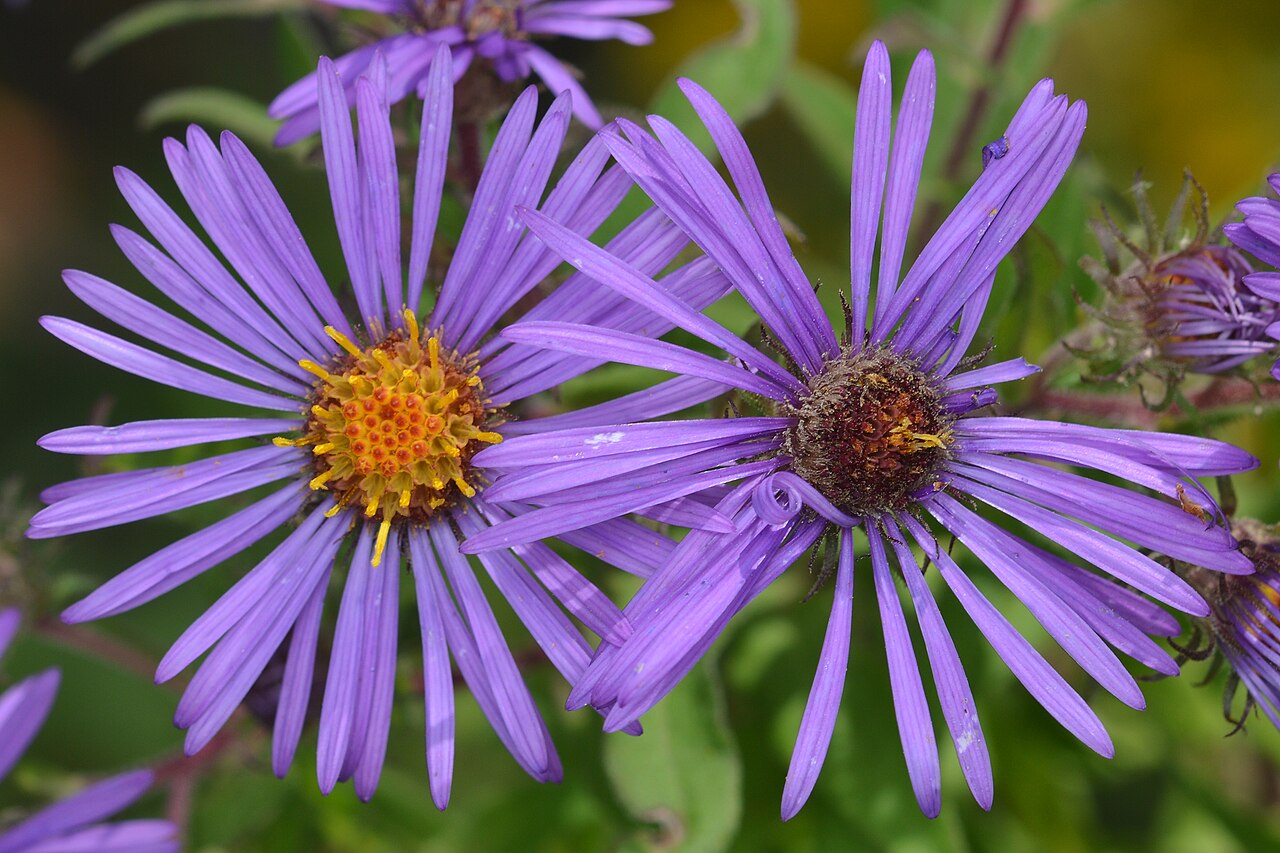
New England aster is sold as a modest plant in a quart or gallon pot. A few years later, the same plant can be a bushy clump taller than you and nearly an arm’s length across.
Borders planted to look full on day one rarely survive that growth gracefully. By the third summer the asters lean on their neighbors, mildew sets in where air can’t move, and dividing becomes an emergency rather than a choice.
This plan does the opposite. It sizes every plant for maturity, gives the asters neighbors that help hold them up, and leaves room to walk in and work. The border looks a little sparse in year one and right from year three on.
Plan at a Glance
| Site | An open border with good air movement, not pressed against a solid wall or fence. |
| Size | At least about 5 feet deep, so a 3-foot-wide aster clump has room behind a front row. |
| Sun | Full sun is best, per NC State. Part sun is tolerated. |
| Soil | Moist to average, well-drained loam or clay loam. Avoid heavy fertilizing. |
| Maintenance | Moderate: late-winter cutback, optional spring pinching, and division every two to three years. |
| Best regions | Eastern North America from Quebec and Maine to South Carolina, west to the eastern Great Plains. |
Assess the Site Before You Draw the Plan
Illinois Wildflowers lists the preference as full or partial sun with moist to average soil, in loam or clay. That makes New England aster easy to grow in most garden beds.
The same source points out two common problems. Hot, dry weather stresses the plant so it drops its lower leaves, and powdery mildew often shows up during cool, moist fall weather.
Both problems get worse in a crowded border. Check these site factors before you lay anything out:
- Air movement. A border backed by a solid fence or house wall traps humid air. Leave a gap behind the back row or choose a more open spot.
- Summer moisture. If the soil dries hard in July, plan to mulch and water in dry spells, or expect bare lower stems.
- Sun hours. Wisconsin Horticulture says asters grow well in full sun or part shade, while NC State recommends full sun for New England aster. Give the asters your sunniest stretch.
Design for Mature Size, Not Pot Size
The single most useful design habit is to draw each plant at its mature width. NC State lists New England aster at 3 to 6 feet tall and 1 to 3 feet wide.
On graph paper or with stakes and string, mark a circle for each plant at its mature width. Where circles barely touch, spacing is right. Where they overlap heavily, something will be crowded by year three.
Mature Size Reference
| Plant | Height | Width | Plant centers apart |
|---|---|---|---|
| New England aster | 3–6 ft | 1–3 ft | about 2.5–3 ft |
| Switchgrass | 3–7 ft | 2–3 ft | about 3 ft |
| Little bluestem | 2–4 ft | 1.5–3 ft | about 2 ft |
| Wild bergamot | 2–4 ft | 2–3 ft | about 2.5 ft |
| Purple coneflower | 3–4 ft | 1–2 ft | about 1.5–2 ft |
| Dense blazing star | 3–6 ft | 0.25–1.5 ft | about 1–1.5 ft |
Heights and widths from the NC State Extension Plant Toolbox. Spacing is a rule of thumb: plant centers roughly one mature width apart, a little wider for asters to keep air moving.
Give Tall Asters Neighbors That Hold Them Up
Illinois Wildflowers notes that New England aster stems often flop over in the absence of supportive vegetation. In prairies, grasses and other stiff perennials keep the stems upright.
You can borrow that structure. Place a sturdy clump-forming grass beside each aster group so the aster stems lean into it rather than onto the lawn.
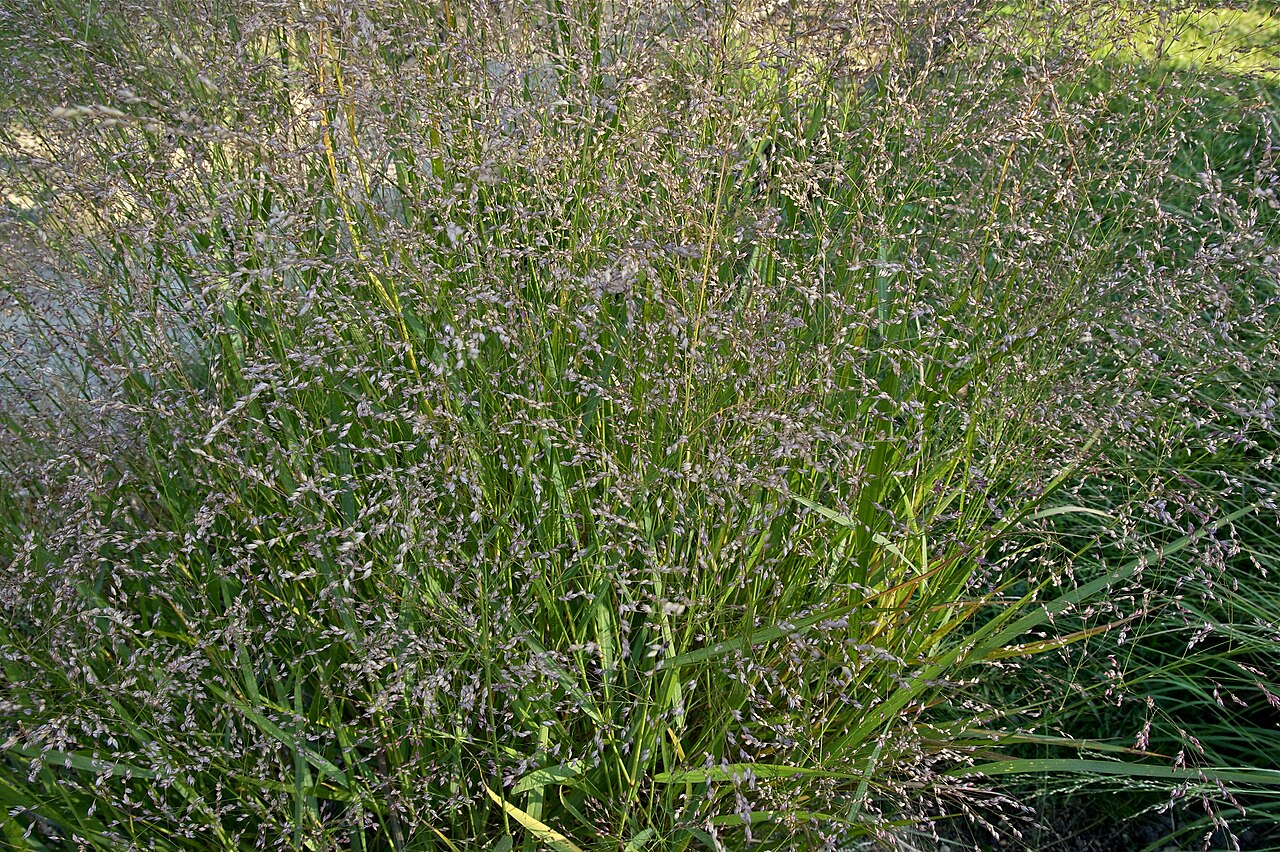
- Switchgrass is tall and upright enough to brace the back row. The Wildflower Center lists it as tolerant of dry and moist soils.
- Little bluestem is shorter and suits the front of the aster group, where it catches leaning stems low.
If you’d rather not rely on neighbors, Wisconsin Horticulture recommends staking tall asters in late summer. Pinching in spring, which NC State says gives a bushier plant, is another option. Our guide to New England asters flopping compares all three approaches.
Arrange Layers and Drifts With Breathing Room
Wisconsin Horticulture gives two simple rules: place tall types at the back of the border, and space plants widely to provide good air circulation and minimize powdery mildew.
In a 5-foot-deep border, that usually means two main rows plus a front edge:
- Back row: New England asters in groups of three, alternating with switchgrass.
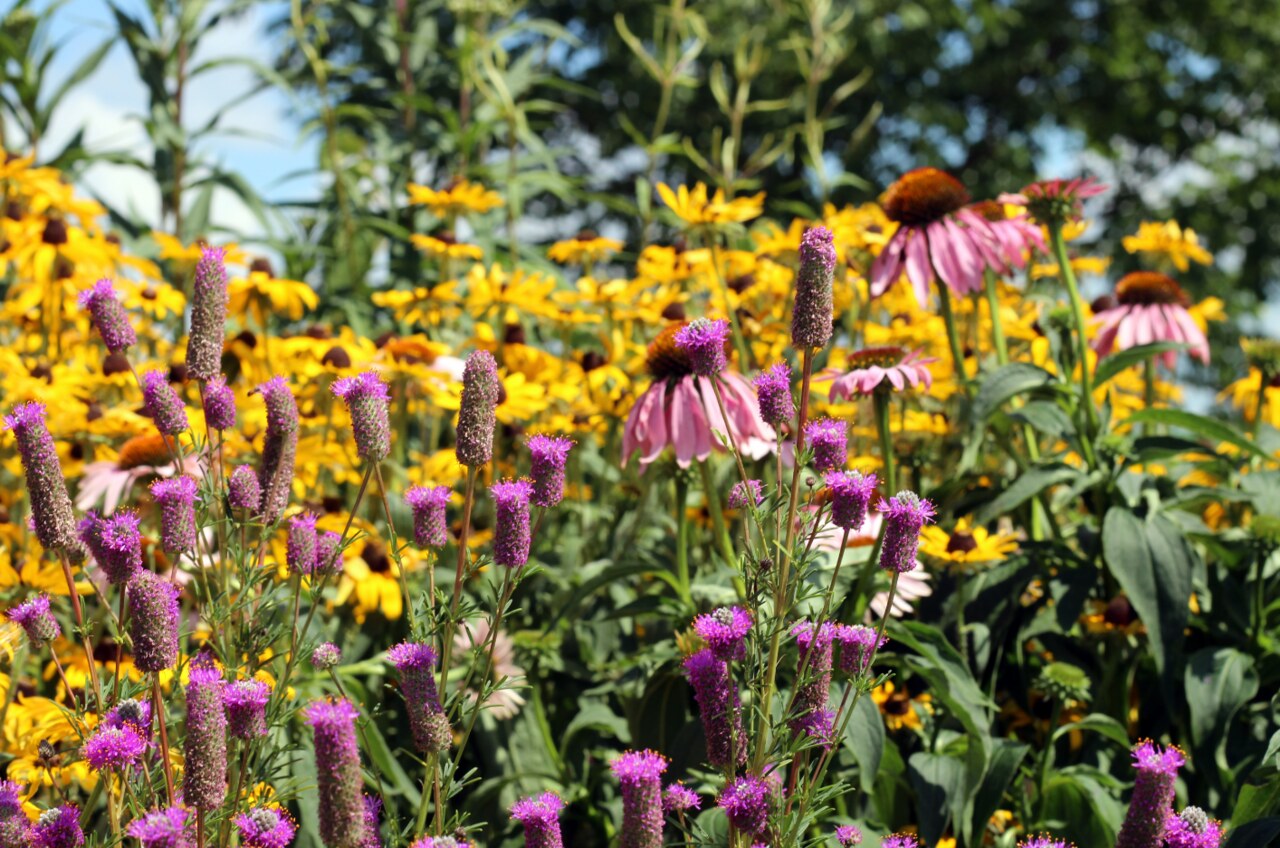
- Middle row: wild bergamot, purple coneflower and dense blazing star for summer bloom before the asters open.
- Front edge: little bluestem, plus shorter plants chosen to hide the aster’s lower stems.
That last point matters because New England aster often loses its lower leaves by late summer. Our companion guide on what to plant in front of tall fall asters covers that front layer in detail.
Leave Room to Work
A mature border needs access. Wisconsin Horticulture recommends dividing aster clumps every two or three years in spring, and you can’t do that without somewhere to stand.
Leave a narrow strip of mulch or stepping stones behind the back row, or run a path through the middle of a deep bed. That strip also helps air reach the back of the clumps.
Plant Palette
| Plant | Role | Height | Sun / moisture | Native range |
|---|---|---|---|---|
| New England aster (Symphyotrichum novae-angliae) | Fall anchor, back row | 3–6 ft | Full sun; moist, well-drained | Quebec and ME to SC, west to the e. Great Plains |
| Switchgrass (Panicum virgatum) | Upright brace, back row | 3–7 ft | Sun to part shade; dry to moist | Quebec to Saskatchewan and MT, south to FL; all but the westernmost U.S. |
| Little bluestem (Schizachyrium scoparium) | Low brace, front edge | 2–4 ft | Full sun; well-drained | Quebec and ME to Alberta and ID, south through much of the U.S. east of the Rockies |
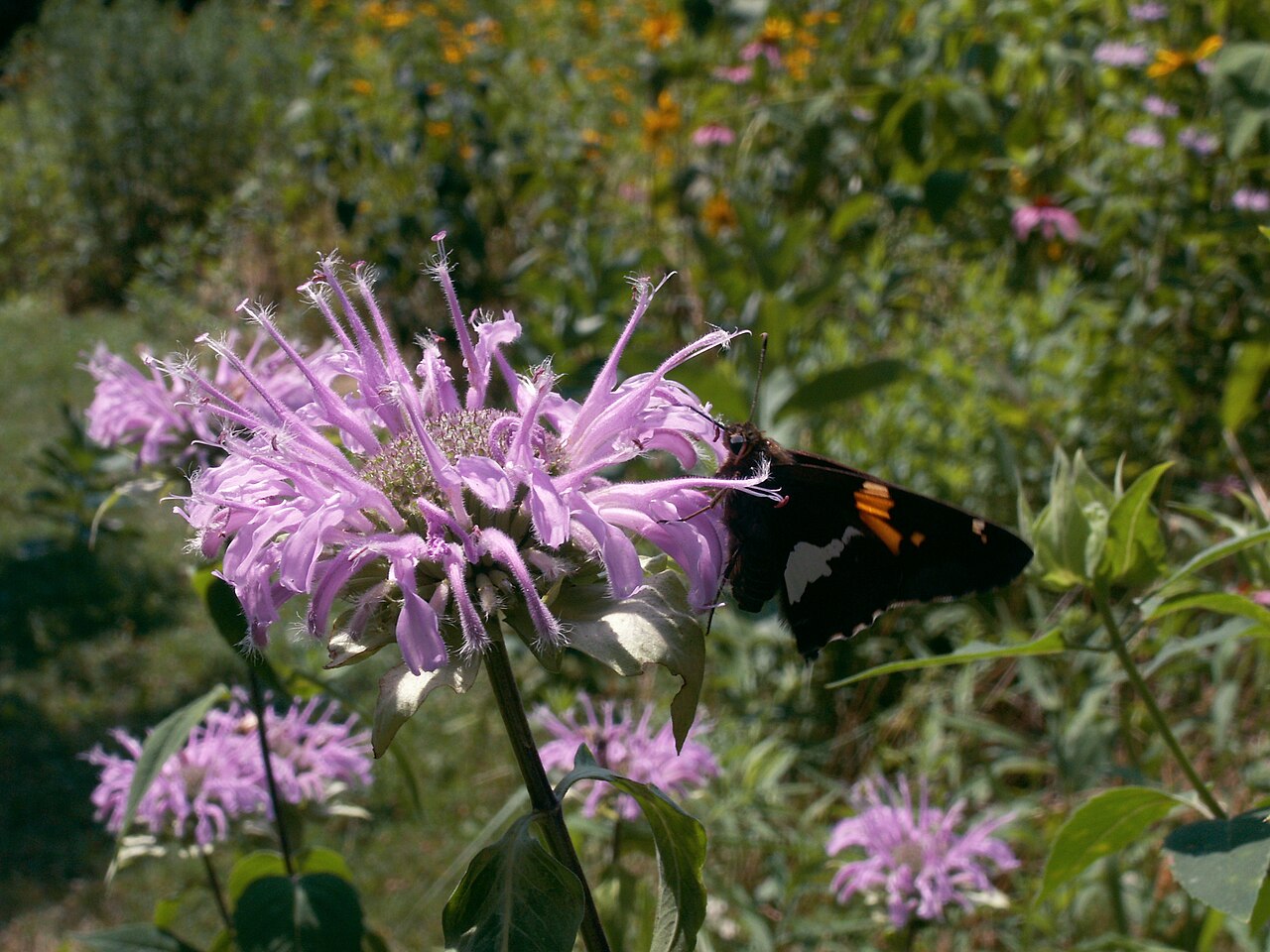
| Wild bergamot (Monarda fistulosa) | Summer bloom, middle row | 2–4 ft | Sun to part shade; dry to moist | Most of the U.S. and s. Canada east of the Rockies, except peninsular FL and the Maritimes |
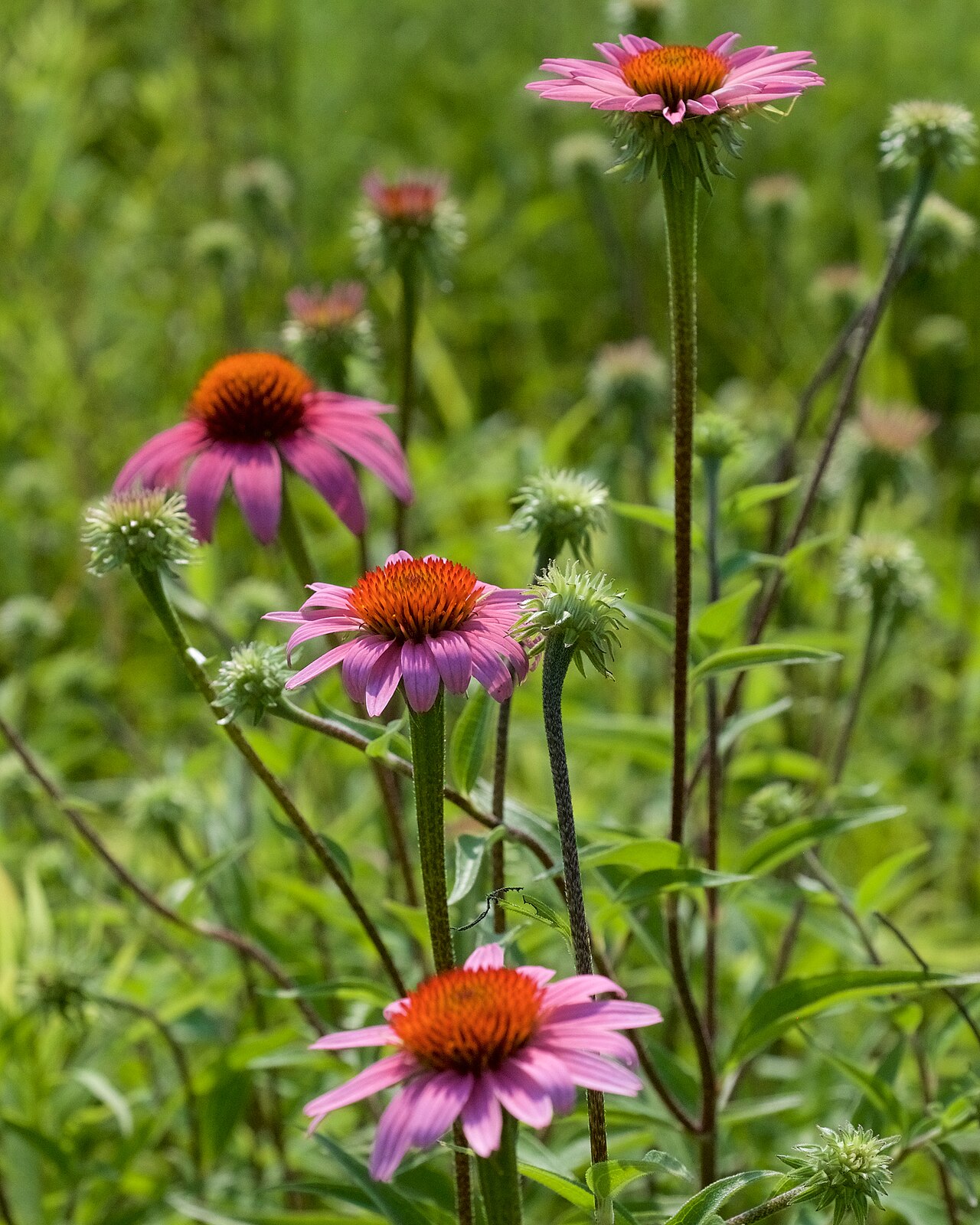
| Purple coneflower (Echinacea purpurea) | Summer bloom, middle row | 3–4 ft | Sun to part shade; well-drained | GA to extreme ne. TX, north to NC, OH, IL and IA |
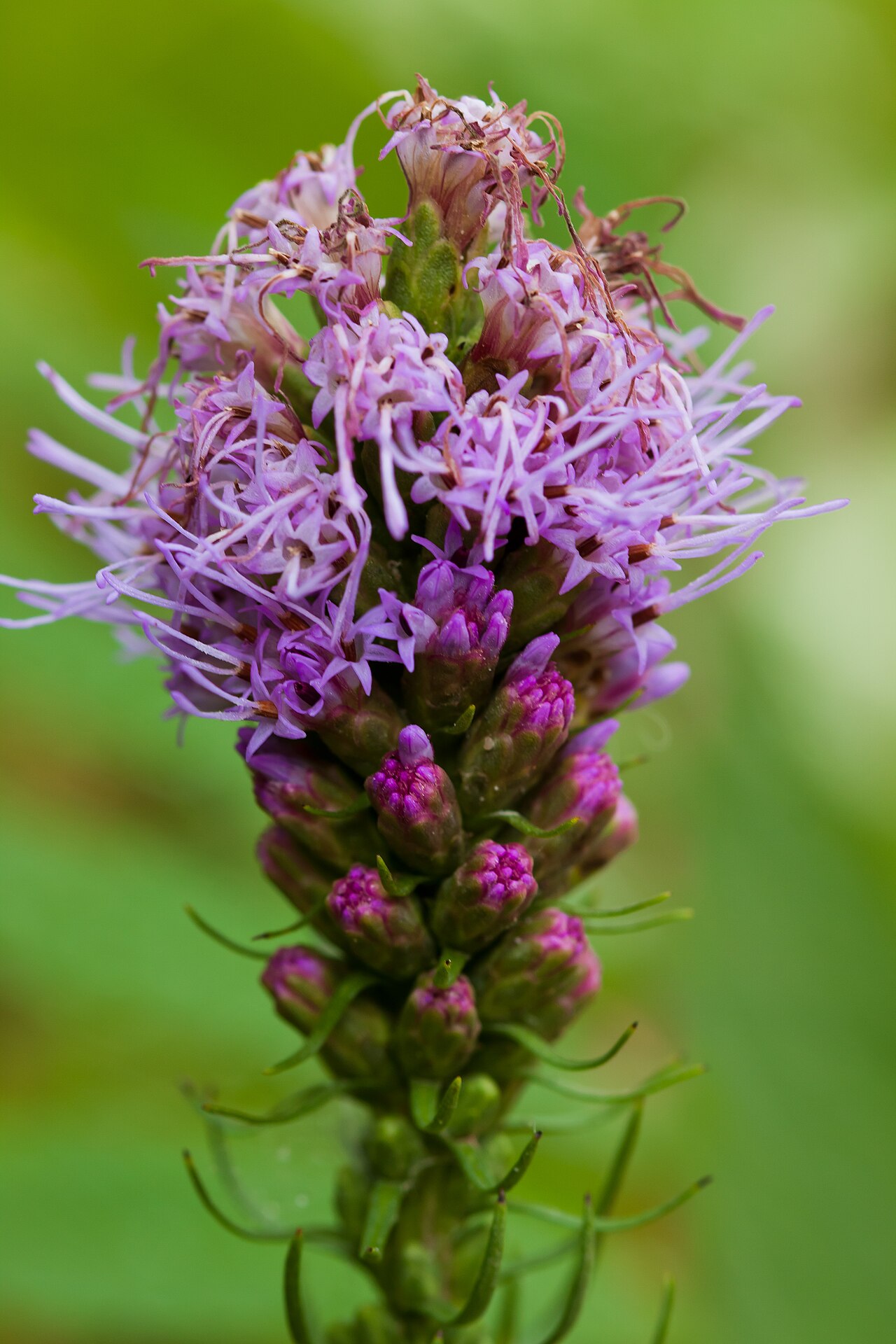
| Dense blazing star (Liatris spicata) | Vertical spikes, middle row | 3–6 ft | Full sun; moist | NJ to MI and IL, south to FL and LA |
Heights from the NC State Extension Plant Toolbox; ranges and moisture from the Lady Bird Johnson Wildflower Center. Not every plant here is native everywhere New England aster is. Check your county.
Sample Layout: A 5 × 15 Foot Border
- Back row (about 3 feet from the front): two groups of 3 New England asters, spaced about 3 feet apart, with 2 switchgrass between and at one end.
- Middle row: 2 wild bergamot, 3 purple coneflowers and 5 dense blazing star, set in small drifts.
- Front edge: 4 little bluestem spaced about 2 feet apart, with room left for shorter front-of-border plants.
- Access: an 18-inch mulch strip behind the back row.
That is about 22 plants for 75 square feet. It will look open in the first summer. That is the point.
Installation Steps
Step 1: Mark mature circles. Use stakes, string or flour to draw each plant’s mature width on the ground before you buy.
Step 2: Plant in spring. Wisconsin Horticulture says asters are best planted in spring, which gives roots a full season before winter.
Step 3: Set the back row and grasses first. Then fill the middle row and front edge in order.
Step 4: Resist filling the gaps. Mulch the open ground instead of adding extra perennials. The gaps close by the second or third year.
Step 5: Water through the first summer. Regular water while roots establish helps prevent the dry-weather leaf drop Illinois Wildflowers describes.
The First Three Years
Three-Year Maintenance Calendar
| Year 1 | Water in dry spells and weed the open mulch. Expect modest bloom. |
| Year 1–2, late winter | Cut dead stems to the ground, as Wisconsin Horticulture recommends, before new growth begins. |
| Year 2, late spring | Pinch aster tips if last year’s plants leaned. Watch for aster seedlings in the gaps and keep only the ones you want. |
| Year 2, late summer | Check whether the circles now touch. Stake any aster that is leaning past its neighbor. |
| Year 3, spring | Divide asters that have outgrown their circle. Wisconsin Horticulture suggests every two or three years in spring. |
If an aster has already spread into its neighbors, our division and spacing plan for crowded New England asters walks through digging, splitting and replanting.
Bare, browning lower stems in a dry summer are a separate issue. See New England aster leaves drying from the bottom for what to check.
Mistakes to Avoid
- Spacing by pot size. A nursery pot is well under a foot across. The plant inside may be 3 feet wide in a few years.
- Backing tall asters against a wall. Still air encourages powdery mildew. Leave a gap.
- Planting asters alone in open mulch. Without neighbors to lean on, stems are more likely to flop.
- Overfeeding. Rich, heavily fertilized soil tends to produce taller, softer stems.
- Forgetting access. If you can’t reach the back row, division and staking won’t happen.
- Choosing companions outside their range. Purple coneflower, for example, has a narrower native range than New England aster.
Regional Notes and Alternates
The Lady Bird Johnson Wildflower Center lists New England aster from Quebec and Maine to South Carolina, west to the eastern Great Plains. The companions don’t all match that range.
- Northeast and upper Midwest: purple coneflower’s native range, per the Wildflower Center, runs from Georgia to northeast Texas and north only to North Carolina, Ohio, Illinois and Iowa. Swap in wild bergamot or more blazing star where coneflower isn’t native.
- Northern edge and New England: dense blazing star is native from New Jersey to Michigan and Illinois southward, and only naturalized farther northeast. Use another regional native for vertical accents.
- Deep South: New England aster’s listed range ends around South Carolina. Our mistflower and fall aster border plan covers aromatic aster as a southern alternative.
📋 More on this plant: read the full New England Aster (Symphyotrichum novae-angliae) profile, or see it in our native plant lists for New York, Pennsylvania & Northern New Jersey, Ohio & Indiana, Michigan, Wisconsin & Eastern Minnesota, and Connecticut, Massachusetts & Rhode Island.
Frequently Asked Questions
How far apart should I plant New England asters?
NC State lists mature width at 1 to 3 feet. Spacing plant centers about 2.5 to 3 feet apart gives each clump room and keeps air moving, which Wisconsin Horticulture recommends to reduce powdery mildew.
How tall does New England aster get in a garden?
NC State gives 3 to 6 feet tall. Spring pinching gives a bushier plant, and NC State notes it also delays flowering a little.
What grows well next to New England aster?
Upright grasses such as switchgrass and little bluestem help support its stems. Summer bloomers like wild bergamot and blazing star fill the season before it flowers.
Why do my asters look crowded after a few years?
New England aster produces short, thick rhizomes, according to Illinois Wildflowers, and clumps widen over time. Division every two or three years keeps them in bounds.
Can I fill the gaps in a new border?
You can mulch them or sow a light cover of annuals, but avoid adding more perennials. Extra perennials become the crowding you were trying to avoid.
Sources
- Illinois Wildflowers, New England Aster: light and soil preference, short rhizomes, dry-weather leaf drop, powdery mildew, flopping without supportive vegetation.
- Wisconsin Horticulture (UW–Madison Extension), Aster, Symphyotrichum spp.: spring planting, tall types at the back, wide spacing for air circulation, staking, late-winter cutback, division every two or three years.
- North Carolina Extension Gardener Plant Toolbox: Symphyotrichum novae-angliae, Panicum virgatum, Schizachyrium scoparium, Monarda fistulosa, Echinacea purpurea and Liatris spicata: heights, widths, light and drainage; aster pinching.
- Lady Bird Johnson Wildflower Center: S. novae-angliae, P. virgatum, S. scoparium, M. fistulosa, E. purpurea and L. spicata: native distribution and moisture.