Designing a Native Woodland Floor With Ferns, Sedges, and Spring Flowers
Last updated: November 6, 2026
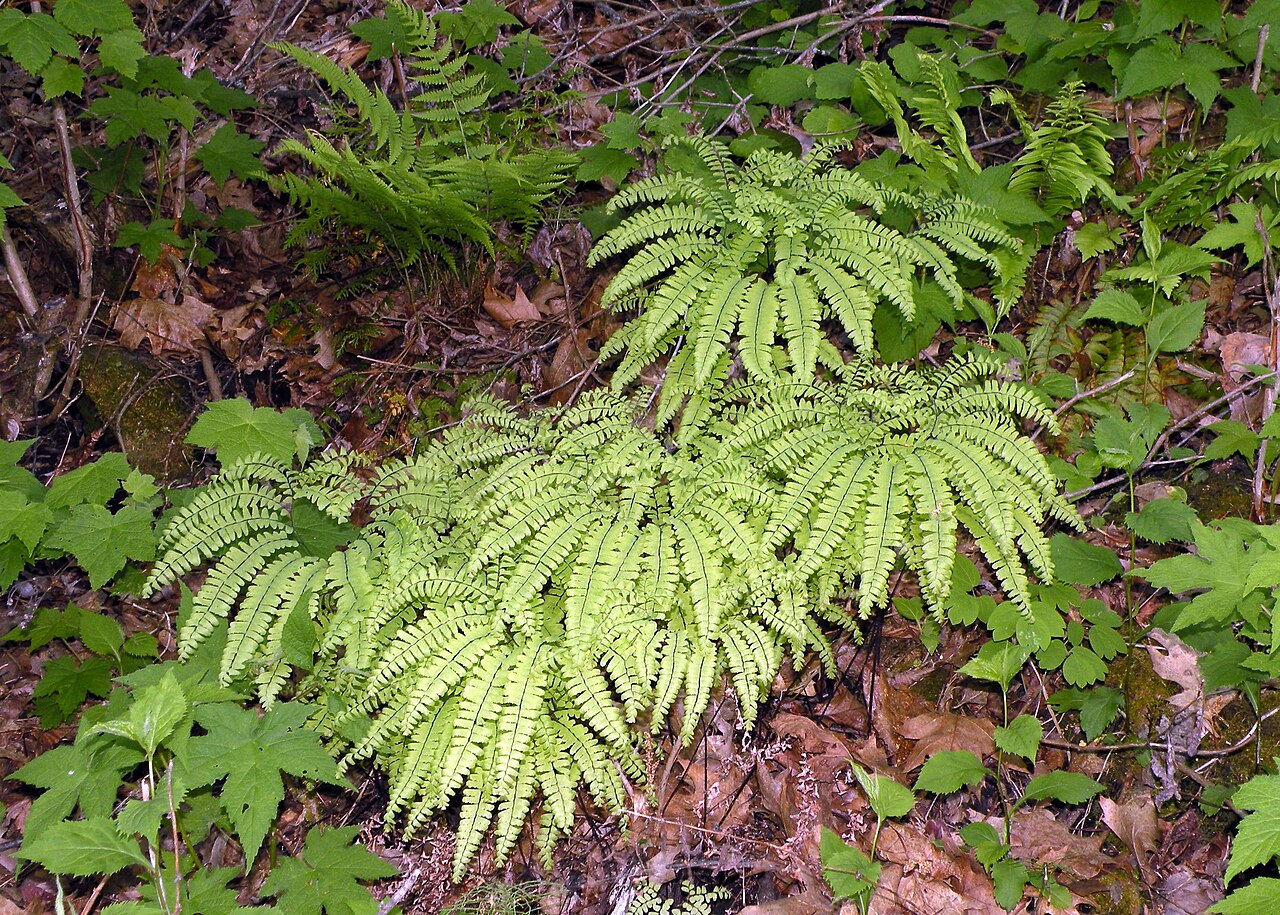
A healthy woodland floor is not a bed of mulch with a few hostas in it. It is a tight weave of ferns, sedges and wildflowers, layered so that something is always coming up as something else fades.
You can build a small version of that under your own trees or on the shady side of a house. The trick is to design for the whole season at once: spring flowers that appear early and vanish, sedges that hold the ground, and ferns that take over by summer.
This plan covers a moist, shady woodland floor. If your shade is dry and root-bound, start with our dry-shade border under established trees instead.
Plan at a Glance
| Site | Moist to average soil under deciduous trees, or the north or east side of a building |
| Size | Any; the sample plan is a 10 × 12-foot patch |
| Sun | Part shade to shade; bright spring light before the canopy leafs out helps the spring flowers |
| Soil | Existing woodland or garden soil with leaf litter; no fertilizer, minimal digging |
| Maintenance | Weed and water while plants establish, then little more than managing leaves |
| Best regions | Eastern and central North America for the plants named here; use your regional list elsewhere |
How a Woodland Floor Works
Landscape for Life, a sustainable-gardening program hosted by Colorado State University, describes the ground layer as everything below about 3 feet. Wildflowers, ferns, grasses and sedges grow there in tight combinations.
Those plants split up the season. Spring ephemerals bloom first, holding their leaves just a few inches above the leaf litter. As they go dormant, taller ferns and wildflowers grow up around and over them.
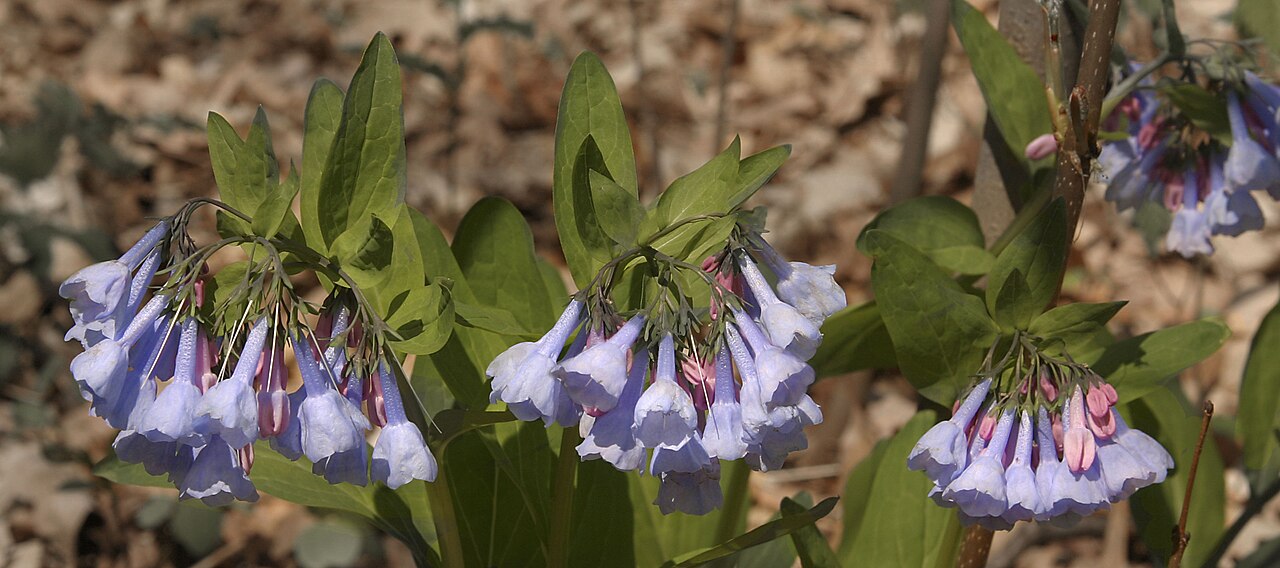
That rhythm is the whole design. Penn State Extension points out that ephemerals such as Virginia bluebells die back in summer and return the next spring, so each one needs a later plant beside it to fill the gap.
Site Assessment
Light
Jim Steffen, an ecologist at the Chicago Botanic Garden, notes that understory woodland plants need only 15 to 20 percent of full sun to flower and maintain themselves. He suggests the north or east side of a house or garage if you have no trees.
Watch the site in early spring and again in midsummer. Spring flowers depend on the light that reaches the ground before the trees leaf out.
Moisture
Several plants in this palette, including maidenhair fern and foamflower, want soil that stays evenly moist. The Wildflower Center warns that maidenhair fern will not survive drying out. If your soil is dry and full of tree roots, use dry-shade species instead.
Soil
Steffen’s advice is to change the existing soil as little as possible. He notes that woodland soil is often only a few inches deep, tends to be acidic, and holds its nutrients in plant roots. Rich, fertilized soil gives weak, leggy growth and feeds weeds.
Design: Three Layers on the Ground
Layer 1: Spring flowers
These are the early bloomers: Virginia bluebells, woodland phlox, foamflower and wild geranium. Plant them in drifts so the spring show reads as a carpet, not a scattering of dots.
Layer 2: Sedges and groundcovers
Sedges and low groundcovers hold the soil all season and fill the gaps between taller plants. They are the woodland version of a lawn: low, steady and green.
Layer 3: Ferns and taller perennials
Ferns and Solomon’s seal fill out in late spring and cover the spaces left by the ephemerals. Place them right beside your bluebells so the fading foliage disappears behind fresh fronds.
Plant densely, and plant together
Steffen recommends packing plants closely, because open soil invites weeds and lets one or two self-seeders take over. He also suggests planting the whole community at once rather than adding plants piecemeal, since newcomers struggle to establish among plants already in place.
Paths
A narrow, curving path of leaf litter or flat stones lets you walk through without compacting the planting. Keep it to one route so the rest of the floor stays undisturbed.
The Plant Palette
The plants below are native to eastern North America. Heights and growing conditions come from the Lady Bird Johnson Wildflower Center unless noted.
Ferns
Maidenhair fern has fan-shaped fronds up to about 30 inches long on black stems. The Wildflower Center calls for rich, moist, well-drained soil and warns it will not survive drying out.
Lady fern grows up to about 3 feet in moist, humus-rich soil in part shade to shade. Its lacy fronds are a good cover for fading spring flowers.
Sedges
Seersucker sedge has wide, crinkled leaves with wine-red bases. The U.S. Forest Service describes it growing in the deep shade of mesic forests, blooming early and tolerating a wide range of soils. Its leaves stay through winter.
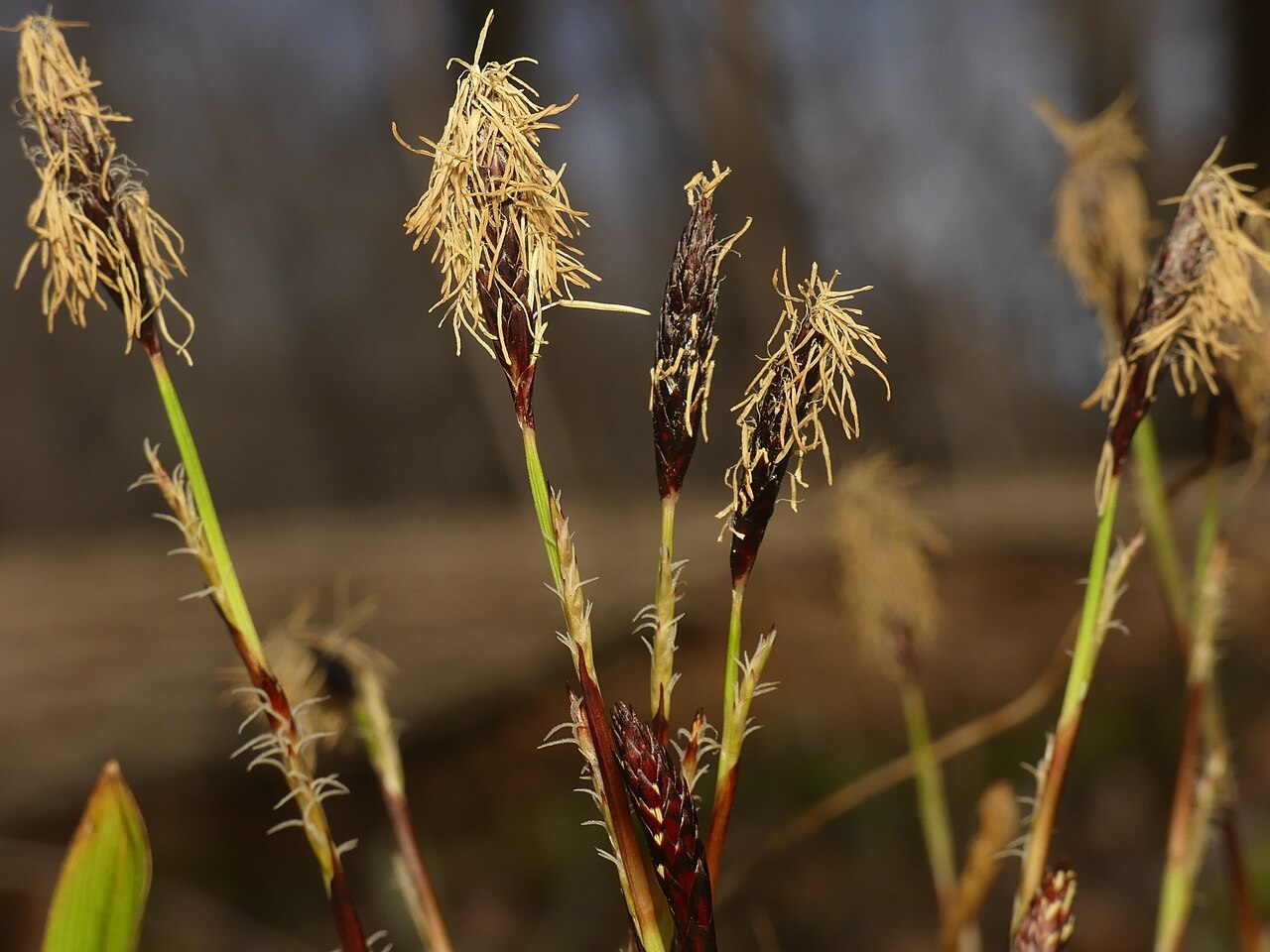
Eastern star sedge is a fine-textured sedge for moist soil, up to about 32 inches, that the Wildflower Center lists for sun to part shade. It works as filler between larger plants. In drier pockets, swap in Pennsylvania sedge.
Spring flowers
Virginia bluebells is the classic spring ephemeral. The Wildflower Center lists it for moist woods from Ontario and Nova Scotia south to Florida and west to Minnesota and Louisiana.
Woodland phlox grows up to about 20 inches with blue flowers from March to May. The Wildflower Center lists it for rich, moist soil in part shade to shade.
Foamflower carries spikes of white flowers up to about 16 inches tall. The Wildflower Center lists it for shade and moist, well-drained, humus-rich soil and notes it spreads by runners.
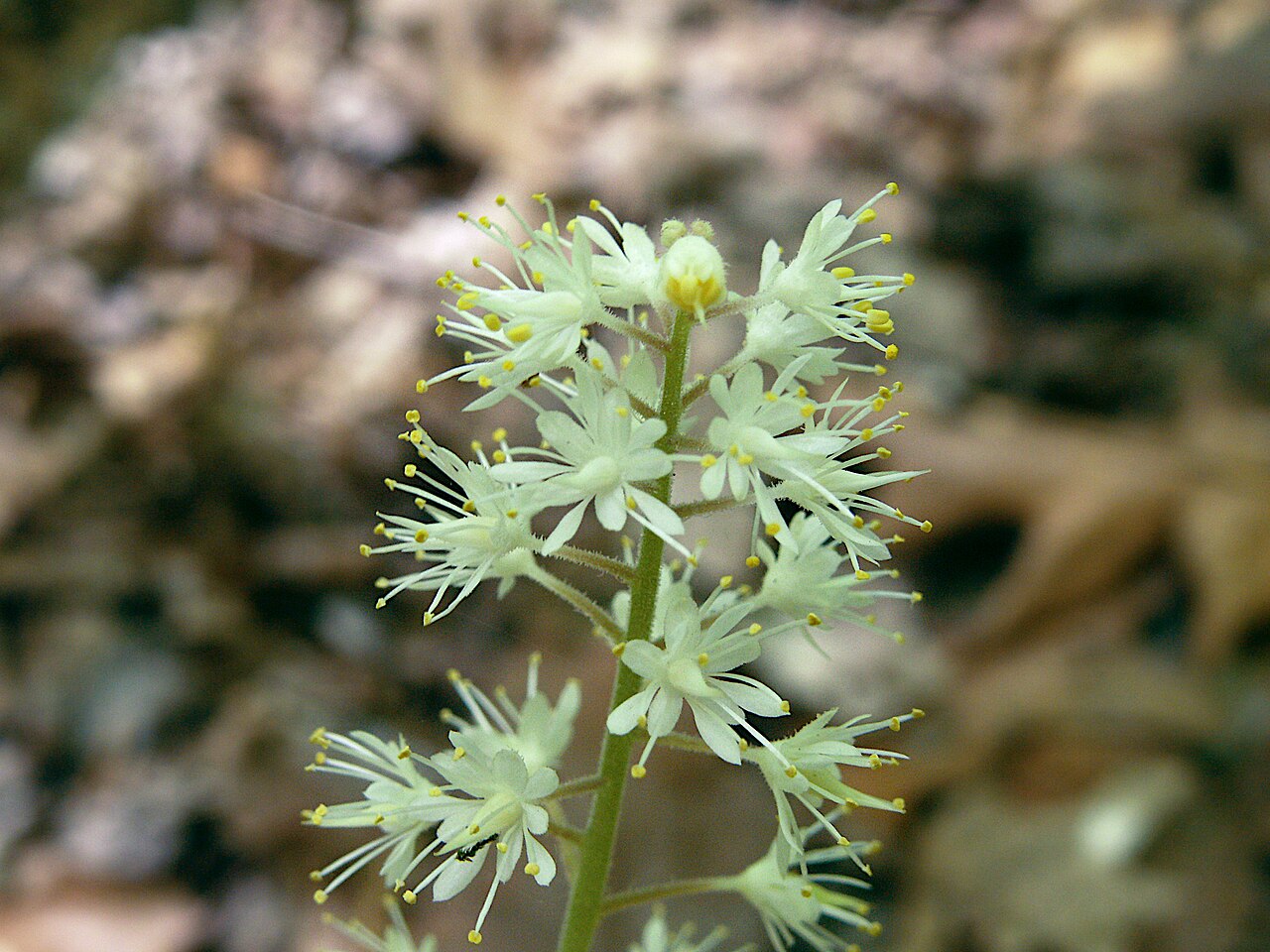
Wild geranium adds pink flowers on 1- to 3-foot stems in spring. The Wildflower Center lists it for dry or moist woods and says it does well under a variety of conditions.
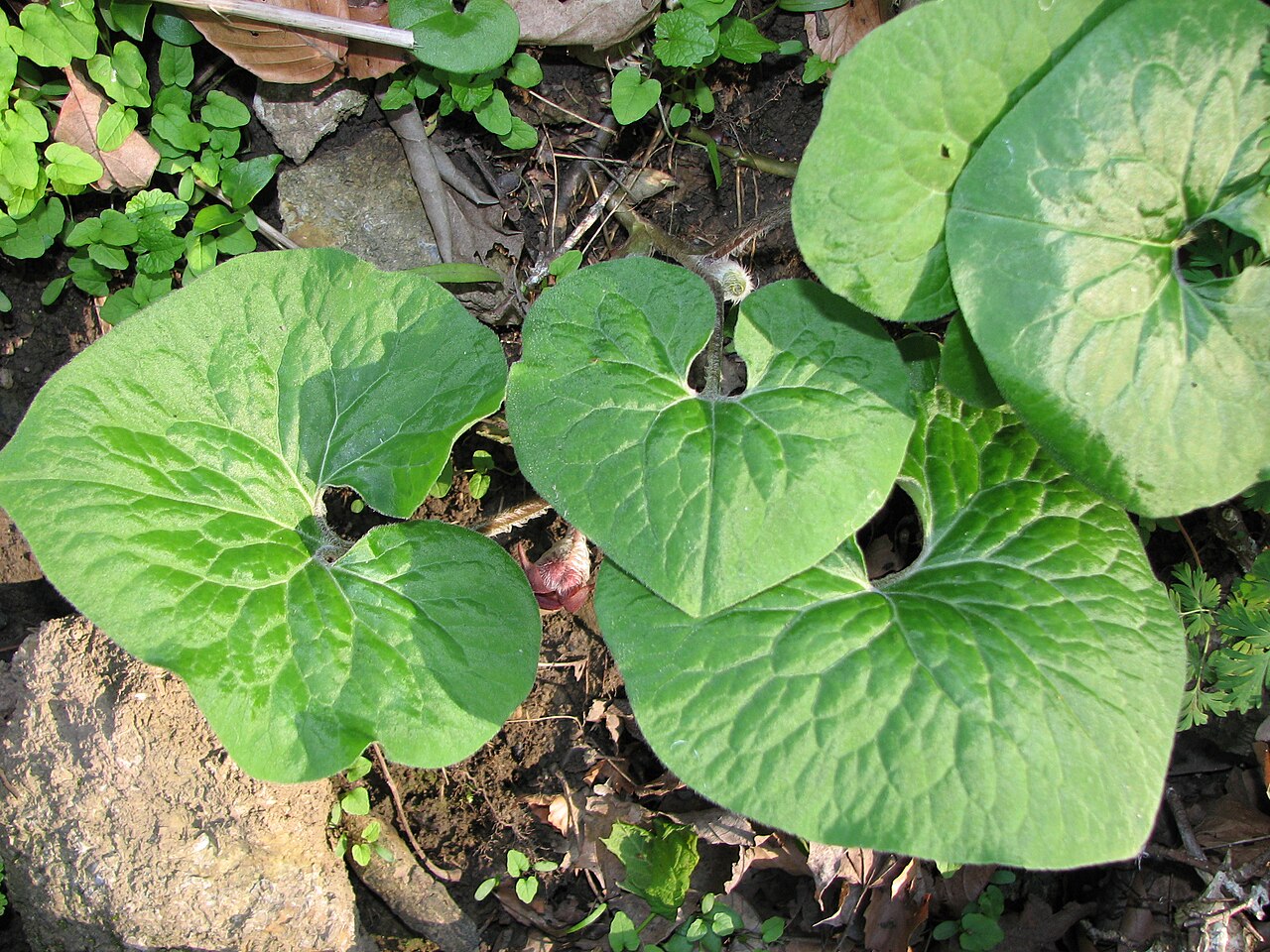
Wild ginger is a low groundcover, up to about 8 inches, with heart-shaped leaves. The Wildflower Center notes it does not grow in the high summer heat of Zone 8 and that touching it can irritate the skin of some people.
Summer structure
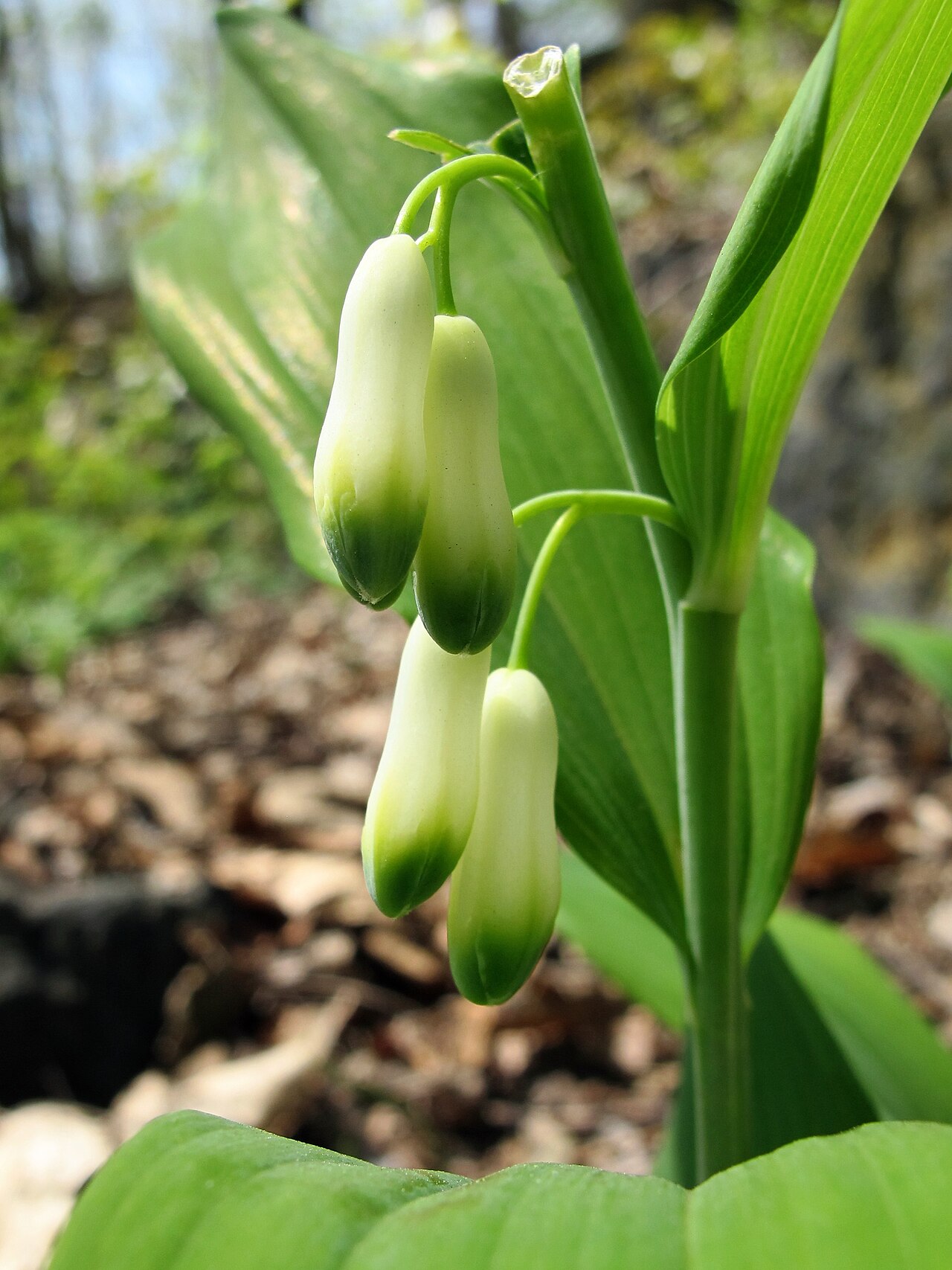
Solomon’s seal sends up arching stems, usually about 2 feet tall, with pairs of greenish-white bells hanging below. The Wildflower Center lists it for dry to moist soil and says it is versatile. Its berries are listed as poisonous with low toxicity, so plant it away from where small children play.
Plant Palette
Lady Bird Johnson Wildflower Center data unless noted. Confirm each plant is native to your state.
| Plant | Layer / role | Height | Light / moisture | Native range |
|---|---|---|---|---|
| Maidenhair fern (Adiantum pedatum) | Fern | Fronds to ~30 in. | Part shade–shade; evenly moist | Quebec, Ontario & AK, south to GA, OK & c. CA |
| Lady fern (Athyrium filix-femina) | Fern | To ~3 ft | Part shade–shade; moist | Nearly worldwide, in regional races |
| Seersucker sedge (Carex plantaginea) | Sedge | To ~3 ft (Wikipedia) | Deep shade; mesic (USFS) | New Brunswick to GA, west to MN & IA (Wikipedia) |
| Eastern star sedge (Carex radiata) | Sedge | To ~32 in. | Sun–part shade; moist | Eastern U.S. west to ND, NE & KS |
| Virginia bluebells (Mertensia virginica) | Spring ephemeral | To ~3 ft | Sun–part shade; moist | Ontario & Nova Scotia to FL, west to LA & MN |
| Woodland phlox (Phlox divaricata) | Spring flower | To ~20 in. | Part shade–shade; moist | Much of the eastern U.S. west to MN, KS & LA |
| Foamflower (Tiarella cordifolia) | Spring flower, groundcover | To ~16 in. | Shade; moist | New Brunswick to s. Ontario & MI, south to GA & MS |
| Wild geranium (Geranium maculatum) | Spring flower | 1–3 ft | Part shade–shade; dry–moist | Newfoundland to GA, west to Manitoba, e. KS & AR |
| Wild ginger (Asarum canadense) | Groundcover | To ~8 in. | Part shade–shade; moist | Quebec & New Brunswick to MN, south to FL & LA |
| Solomon’s seal (Polygonatum biflorum) | Summer structure | ~2 ft, sometimes 3+ | Part shade–shade; dry–moist | S. Canada south to FL & TX |
Sample Planting for a 10 × 12-Foot Woodland Floor
About 120 square feet, planted densely from plugs and small pots. Pair each ephemeral drift with a fern or Solomon’s seal beside it.
| Layer | Plants |
|---|---|
| Spring flowers | 9 Virginia bluebells in two drifts; 7 woodland phlox; 7 foamflower; 5 wild geranium |
| Sedges and groundcover | 15 seersucker or eastern star sedge; 9 wild ginger along the path |
| Ferns and structure | 5 maidenhair fern next to the bluebells; 3 lady fern at the back; 5 Solomon’s seal |
Installation Steps
- Plant in spring or early fall when the soil is moist and cool.
- Disturb the soil as little as possible. Steffen notes that tilling releases nutrients and exposes weed seeds. Pull weeds by hand and plant into the existing soil.
- Skip fertilizer and bark mulch. Steffen advises against both for woodland plantings. Leaf litter is the natural cover.
- Plant the whole community at once, tightly spaced, as Steffen recommends.
- Set ephemerals next to their summer partners. Bluebells beside a fern, phlox beside Solomon’s seal.
- Buy nursery-propagated plants. Steffen warns that ferns and spring ephemerals are often dug from the wild, which damages native woodlands. Ask the nursery where its plants came from.
- Water to establish. Steffen recommends watering only until plants are established.
First-Three-Years Maintenance Calendar
Year one
- Spring: water during dry spells and pull weeds by hand.
- Summer: do not panic when bluebells and other ephemerals disappear. That is dormancy, not death. Mark their spots so you do not dig into them.
- Fall: let the leaves fall and stay on the planting as cover.
Year two
- Spring: fill gaps with divisions of foamflower, sedge or wild ginger.
- Summer: water only in serious drought, and keep maidenhair fern from drying out.
- Fall: Steffen suggests clearing fallen leaves every other year so seeds that need light can germinate. This is a good year to do it.
Year three
- Spring: look for seedlings and let some stay. Steffen encourages scattering seed from your own plants.
- Summer: thin any spreader, such as foamflower or wild ginger, that is crowding the ephemerals.
- Fall: pull invasive plants like garlic mustard as soon as you spot them. Steffen names it and buckthorn among the invaders woodland gardeners must control.
Mistakes to Avoid
- Planting only spring flowers. Ephemerals vanish by summer. Without ferns and sedges, the bed looks empty for half the year.
- Fertilizing. Woodland natives are adapted to lean soil, and extra nutrients feed weeds.
- Leaving wide gaps. Open soil invites weeds and lets one aggressive self-seeder dominate.
- Buying wild-dug plants. Ask for nursery-propagated stock, especially for ferns and ephemerals.
- Putting moisture-loving plants in dry shade. Maidenhair fern and foamflower need steady moisture.
📋 Find plants for your region: see our native plant lists for Maryland, Virginia & West Virginia and Ohio & Indiana, or the list for your own state, for woodland species that fit your area. For more ideas on layering trees and shrubs above the floor, see our guide to woodland garden design with natives.
Frequently Asked Questions
What is a spring ephemeral?
A woodland wildflower that comes up, blooms and sets seed in early spring, then goes dormant by summer. Penn State Extension lists Virginia bluebells, bloodroot and Dutchman’s breeches among them.
How do I hide fading spring flowers?
Plant ferns or taller perennials right beside them. Landscape for Life notes that taller ferns and wildflowers naturally grow up around and over the ephemerals as they go dormant.
Should I mulch a native woodland garden?
Use leaf litter rather than bark mulch. Jim Steffen of the Chicago Botanic Garden advises against mulching and fertilizing woodland plantings, and suggests clearing fallen leaves every other year so light-dependent seeds can sprout.
How much sun does a woodland floor need?
Not much. Steffen says understory woodland plants need only 15 to 20 percent of full sun, which is why the north or east side of a building can work.
Can I grow spring wildflowers from seed?
Yes, with patience. Steffen notes that many ephemerals take five to seven years to flower from seed, so nursery-propagated plants are the faster route.
Sources
- Chicago Botanic Garden, Woodland Gardening (guidelines from ecologist Jim Steffen): light needs, soil disturbance, no mulch or fertilizer, dense community planting, leaf removal, wild collection, seed-grown ephemerals, invasive control.
- Landscape for Life (hosted by Colorado State University), Gardening for Wildlife: ground-layer structure and how ephemerals and ferns share space.
- Penn State Extension, Underplanting Trees – Respect the Roots: spring ephemerals and their summer dormancy.
- U.S. Forest Service, Plantain-leaf sedge (Carex plantaginea): habitat, early bloom, overwintering leaves, soil tolerance. Wikipedia, Carex plantaginea: height and range.
- Lady Bird Johnson Wildflower Center plant database: maidenhair fern, lady fern, eastern star sedge, Virginia bluebells, woodland phlox, foamflower, wild geranium, wild ginger, Solomon’s seal: light, moisture, height, warnings and native range.