A Native Garden With Leaf Litter: Where to Keep It and Where to Clear It
Last updated: November 7, 2026
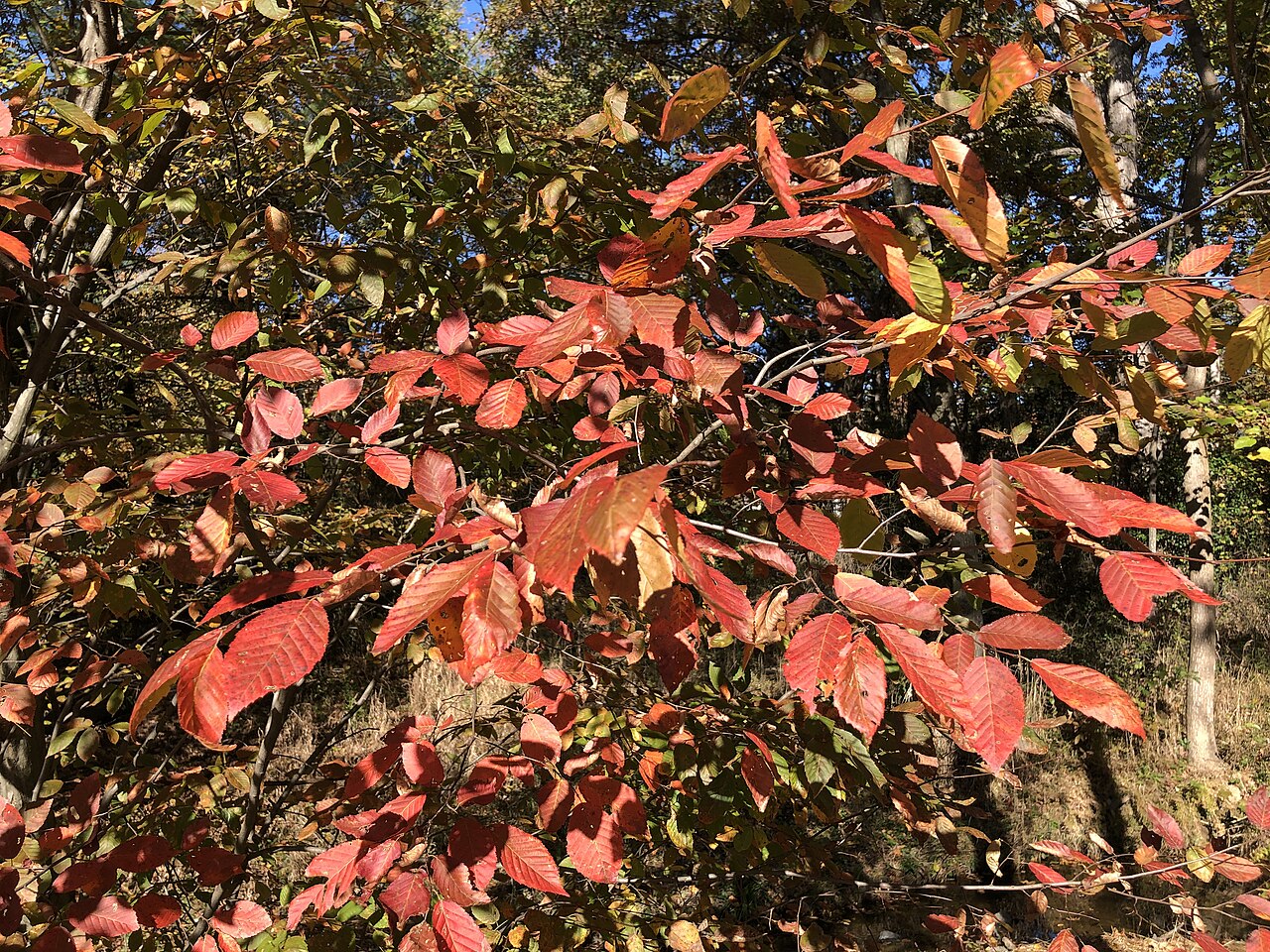
Every fall the same question comes up: rake it all, or leave it all? In a native garden, the honest answer is neither. Leaves are useful in some parts of the yard and a problem in others.
The fix is a plan, not a chore list. Decide ahead of time which areas keep their leaves, which areas get cleared, and where the cleared leaves go. Then fall cleanup becomes moving leaves a short distance instead of bagging them.
This guide walks through that plan. It uses a shady bed under an American hornbeam as the main example, but the zones work for any yard with deciduous trees. Plant choices must match your region, so swaps are listed for other areas.
Plan at a Glance
| Site | Any yard with deciduous trees or shrubs; the sample bed sits under one small understory tree |
| Size | The sample leaf zone is about 12 by 20 feet; scale it to your canopy |
| Sun | Part shade to shade under the trees; sunnier beds can hold leaves too |
| Soil | Moist, humus-rich soil suits the sample palette; dry shade needs different plants |
| Maintenance | One fall session moving leaves, plus a short spring check of paths and small plants |
| Best regions | Eastern North America for the main palette; western swaps are noted below |
Start by Mapping Your Leaf Zones
Walk the yard after most leaves have dropped and sketch it on paper. Mark every tree and shrub group, the lawn, paths, steps, the driveway, and the house walls.
Now sort the yard into three kinds of areas. Keep zones hold leaves where they fall, and clear zones are where leaves cause trouble.
Receiving zones are beds that can take the extra leaves you move.
Most yards end up with keep zones under trees, clear zones on hard surfaces and lawn, and receiving zones in shade beds. That map is the design.
Questions to answer for each area
- Do people walk, drive, or play here in fall and winter?
- Is there turf that needs light, or small evergreen plants that could be buried?
- Does water run from here toward a street drain, ditch, or stream?
- Is this close to the house in an area where wildfire is a real risk?
- Could leaves blow away, or will they stay put among stems and shrubs?
A yes to any of the first four questions points toward clearing. A no to all of them usually means the leaves can stay.
Where to Keep the Leaves
The Xerces Society calls leaves “habitat, not trash.” Many butterflies and moths do not migrate. They spend winter in the yard as eggs, caterpillars, pupae, or adults, and use leaf litter as cover.
That makes the ground under trees and shrubs the obvious keep zone.
Under trees and shrub groups
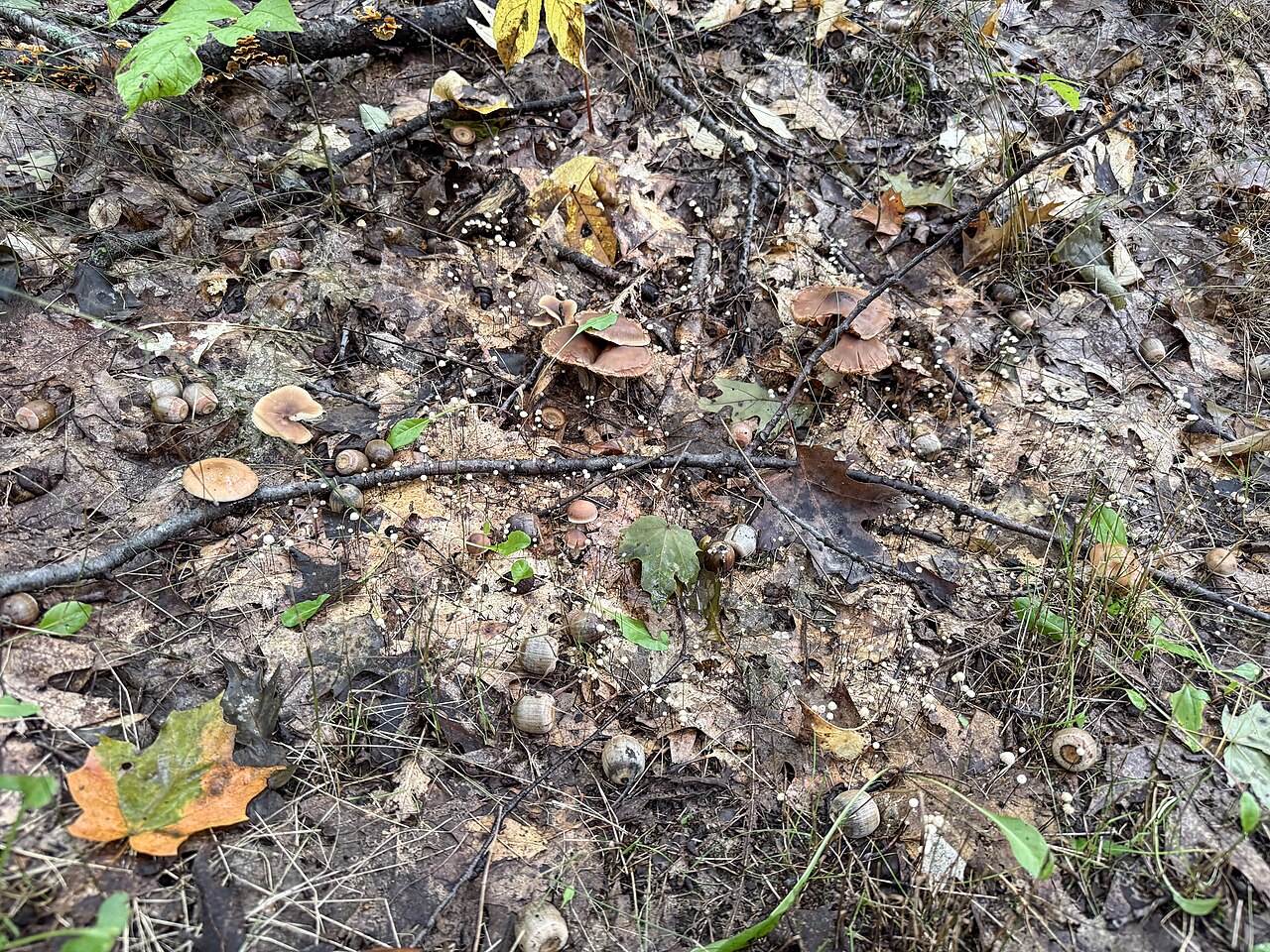
Leave the leaves under the drip line of trees and inside shrub groups. Penn State Extension’s guide to underplanting trees says woodland plants do well with a light, insulating blanket of leaves that soil organisms slowly break down.
Make the area look intentional. A clear edge, a few repeated groundcovers, and a path around it tell neighbors this is a planted bed, not a neglected one. Our hornbeam understory layout shows how to frame a small tree this way.
Shade and woodland beds
Shade beds are the best receiving zones. Woodland natives grow up through leaf litter in the wild, so a few extra inches of whole leaves fit their habits. Our guide to designing a native woodland floor covers the plant layers in more detail.
The Xerces Society suggests raking leaves into garden beds and around tree bases, and notes they help suppress weeds, hold moisture, and add nutrients.
A dedicated leaf corner
If you have more leaves than your beds can hold, set aside a back corner for a loose leaf pile. Xerces suggests letting a leaf pile break down on its own if you have space. A low screen of shrubs or tall perennials keeps it out of view.
Where to Clear the Leaves
Clearing some areas is part of good design. These are the places where leaves cause real problems.
The lawn
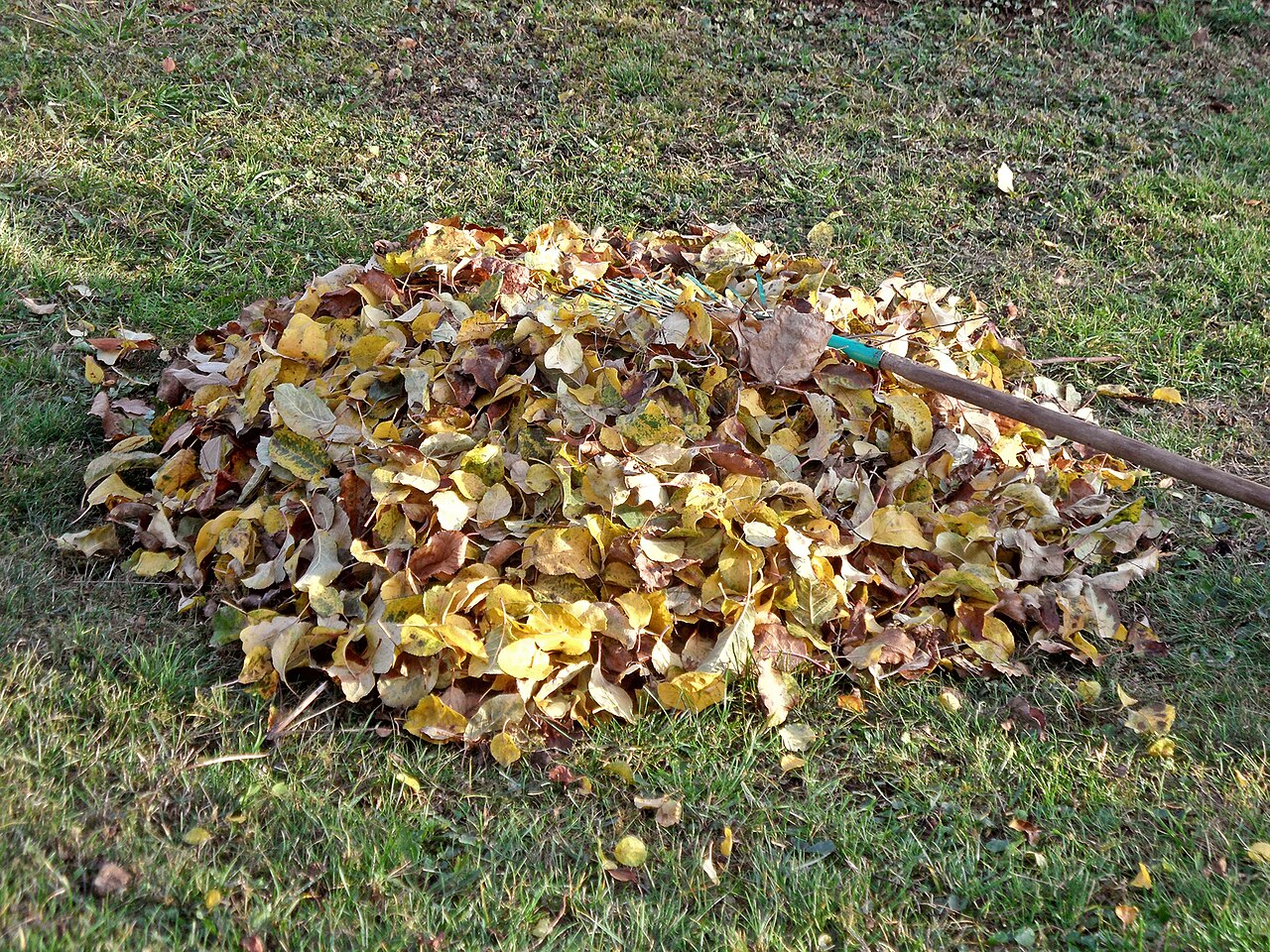
A thin layer is fine. University of Minnesota turf specialist Sam Bauer says 10 to 20 percent leaf cover on a lawn might be okay, but more than that can smother the grass, promote snow mold, and lead to more vole and mouse damage.
The easy fix is to move the extra leaves into a nearby bed. UNL Water notes you can also mow leaves into the lawn with a mulching mower or several passes, so the small pieces filter down into the grass.
Paths, steps, decks, and patios
Wet leaves on hard surfaces are slippery. Clear walkways, steps, and outdoor living spaces through fall and winter, and sweep the leaves onto the bed beside them.
A bed right next to a path gives you somewhere to push those leaves in seconds.
Streets, driveways, and drains
UNL Water advises keeping fallen leaves off streets, driveways, and gutters so they do not wash into storm drains. It also warns against dumping leaves along stream banks or near ponds, because leaves decomposing in water can feed excess algae.
If your yard slopes toward a street or a creek, keep the leaf zones uphill and away from the edge. Leave a strip that you clear or rake back.
Near the house where wildfire is a risk
Fire safety comes first. Defensible-space guidance generally calls for removing dead vegetation in the zone nearest a building, and fire agencies set the exact distances. If you live where wildfire is a concern, follow your local fire authority’s rules for leaves near walls, decks, and gutters, even if that means less habitat there.
On top of small or evergreen plants
Penn State notes that if leaves pile up deeply, you should gently rake some off so tender plants are not smothered. Low evergreens and small seedlings are most at risk. Leave a thin layer and move the rest.
Leaf Zones at a Glance
Use this as a starting point and adjust it to your own yard map.
| Area | What to do | Why |
|---|---|---|
| Under trees and shrub groups | Keep leaves whole where they fall | Winter cover for insects; slow soil building |
| Shade and woodland beds | Keep, and add moved leaves | Woodland plants grow up through litter |
| Back corner | Let a loose pile break down | Takes overflow from lawn and paths |
| Lawn | Keep only a thin layer; move or mow the rest | Heavy cover can smother turf and promote snow mold |
| Paths, steps, patios | Clear and sweep onto the next bed | Wet leaves are slippery |
| Driveway, street edge, drains | Clear | Keeps leaves out of storm drains and water |
| Near the house in wildfire areas | Clear to local fire rules | Dead leaves near buildings are fuel |
| Low evergreens and seedlings | Rake deep piles off | Prevents smothering |
Design the Bed So Leaves Have Somewhere to Go
Shape a leaf-friendly bed around the trees and paths you already have.
Layers
Use the tree as the top layer, then a groundlayer of ferns, sedges, and spring wildflowers planted in repeated drifts. The groundlayer should be tough enough to push up through a few inches of whole leaves.
Edges
Give the bed a firm edge. Stone, a mown strip, or a low curb holds the leaves in and shows the bed is deliberate. Make the bed big enough to catch most of what falls from the canopy above it.
Paths
Run paths along the bed, not through the middle of it. That way, leaves you sweep off the path land in the bed, and you can step in to check plants without crushing the litter.
Plant Palette
Heights are from the Lady Bird Johnson Wildflower Center unless noted. Native ranges are summarized from the same database. Confirm each plant for your state before buying.
| Plant | Role | Height | Sun / moisture | Native range |
|---|---|---|---|---|
| American hornbeam | Understory tree; leaf source | Usually 20–30 ft (PlantNative profile); up to about 40 ft | Part shade to shade; moist | Southern Ontario and Maine south to Florida, west to Minnesota, Iowa, Arkansas, east Texas |
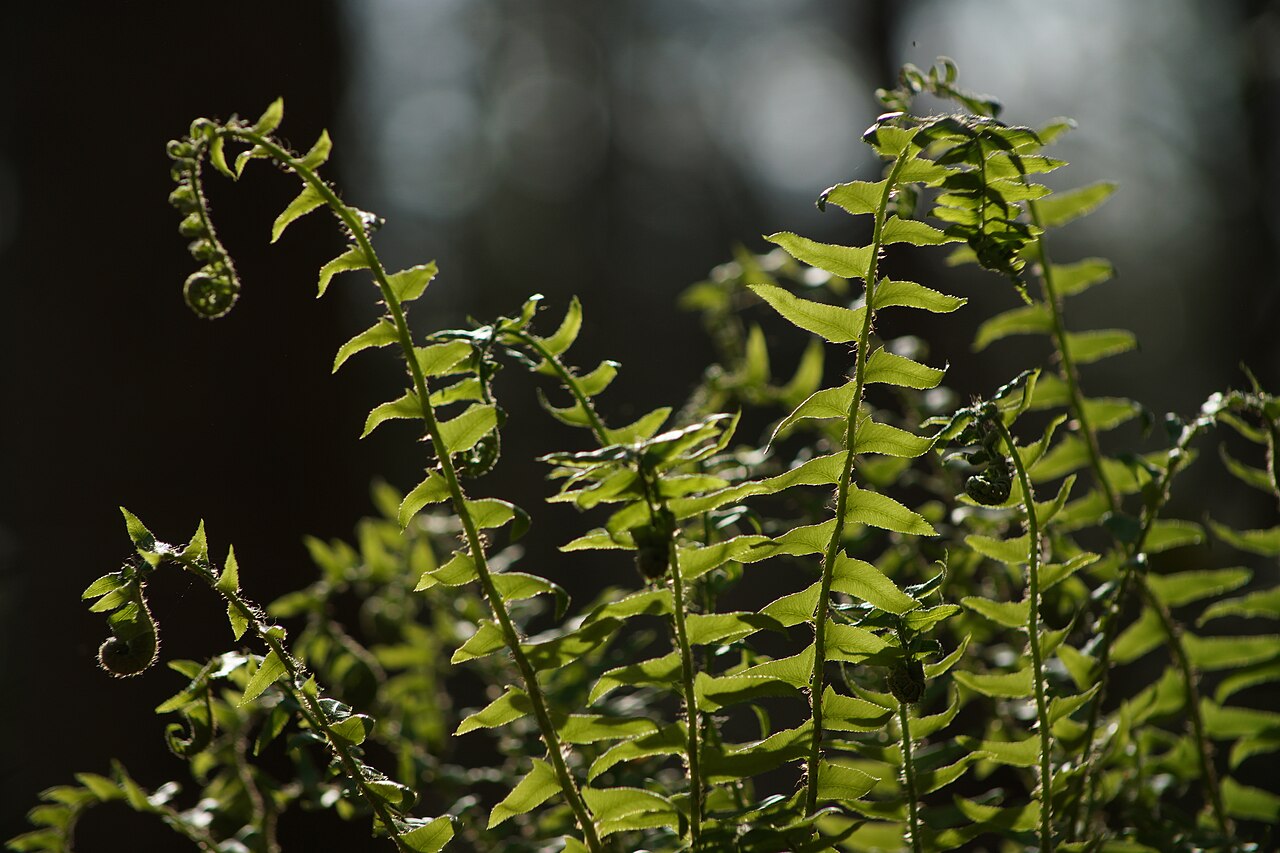
| Christmas fern | Evergreen groundlayer | 1.5–2 ft, sometimes 3 ft | Part shade to shade; moist, well-drained | Nova Scotia to southeast Minnesota, south to Florida, east Texas, Mexico |
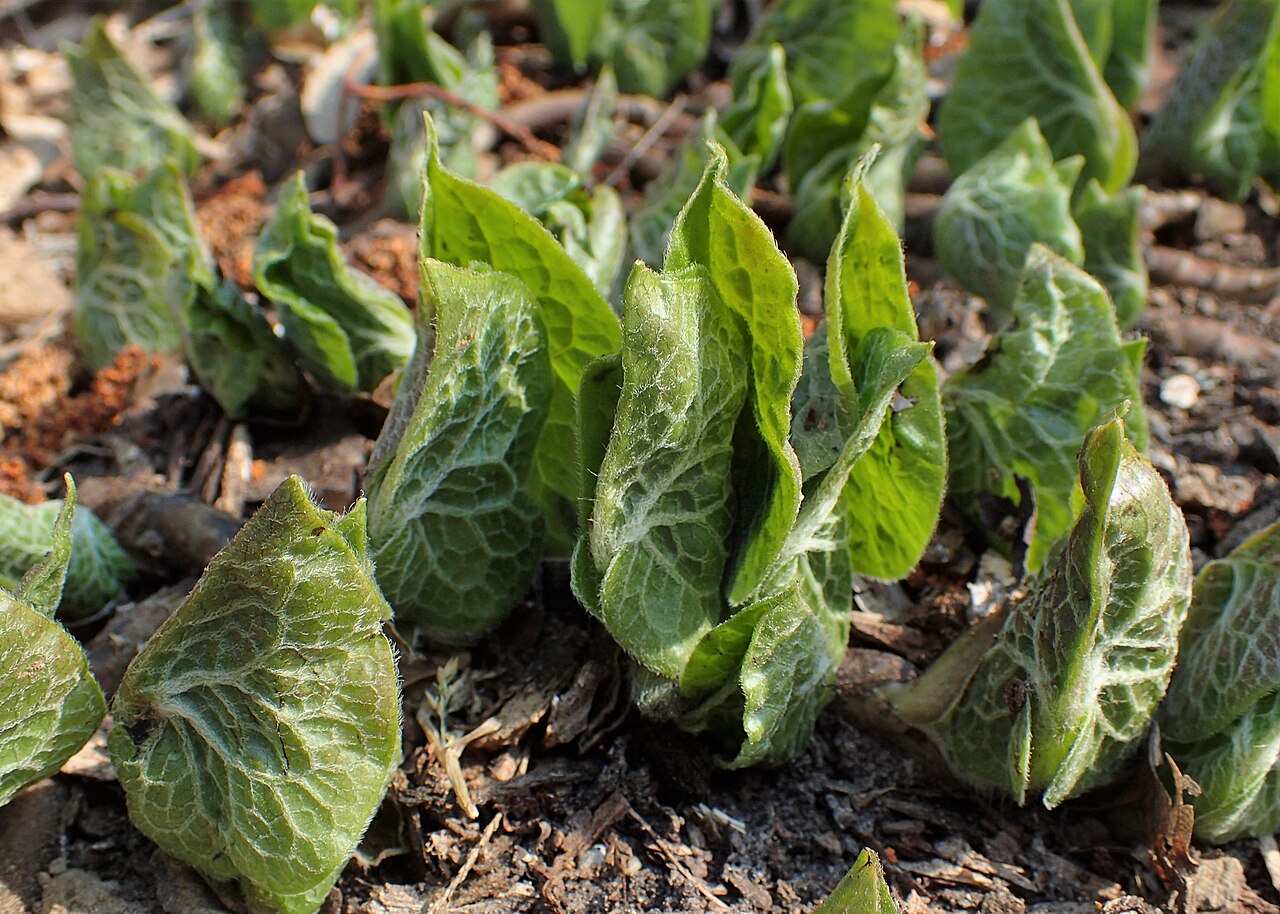
| Wild ginger | Low spreading groundcover | Up to about 8 in | Part shade to shade; moist, rich | Quebec and New Brunswick to Minnesota, south to Florida and Louisiana |
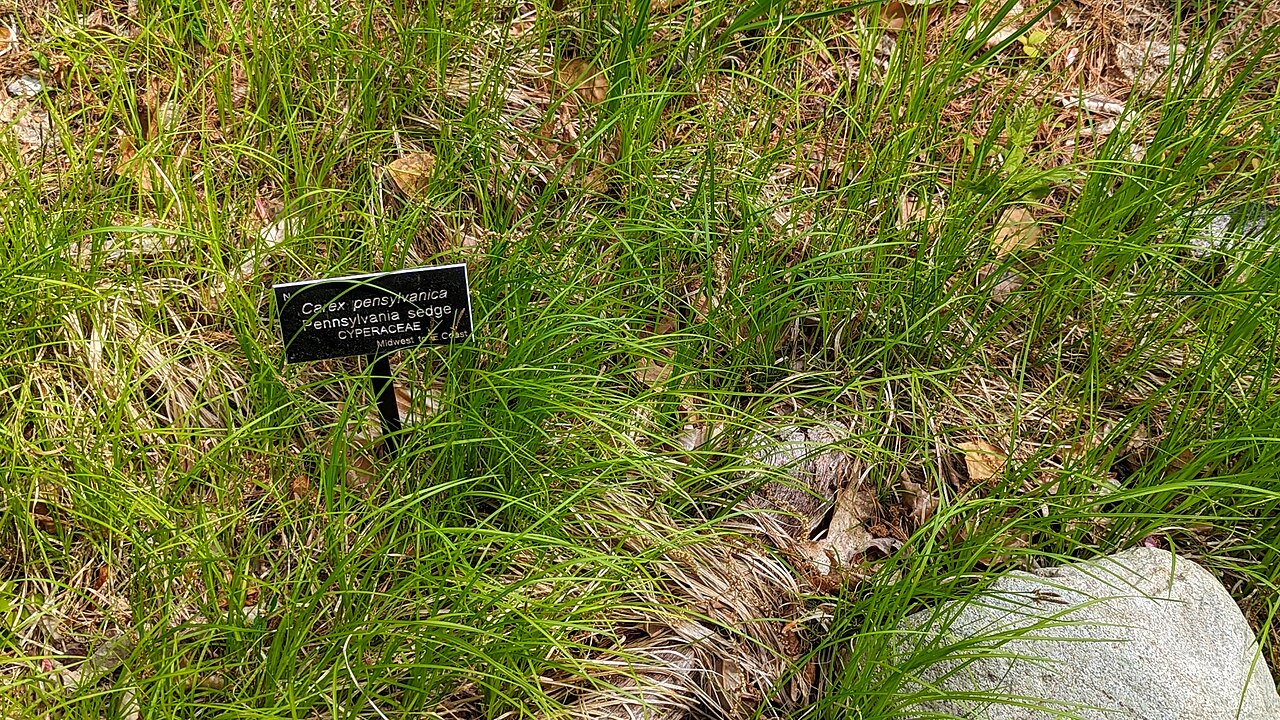
| Pennsylvania sedge | Fine-textured carpet for drier spots | 6–12 in | Sun to shade; dry to moist | Southern Quebec to Montana, south to Georgia, Arkansas, Wyoming |
| Mayapple | Spring colony; goes dormant in summer | About 1–1.5 ft (PlantNative profile) | Part shade; moist spring soil | Eastern North America |
| White wood aster | Late-season flowers in shade | Up to about 4 ft, often shorter | Part shade to shade; dry to moist | Eastern North America |
Regional swaps
In the Pacific Northwest, use western sword fern in place of Christmas fern and western wild ginger in place of the eastern species. In the hot Deep South, note that the Wildflower Center says wild ginger does not grow well in the summer heat of Zone 8, so lean on Christmas fern and sedges.
In dry shade under big oaks or maples, swap the moisture lovers for Pennsylvania sedge and white wood aster. Our dry-shade border plan covers planting without damaging tree roots.
Installation Steps
- Map and mark. Use the zone sketch to flag the bed edge with stakes or a hose. Include the area under the canopy and a bit beyond.
- Protect the roots. Penn State advises digging small planting pockets and moving to a new spot if you hit a root two inches or more across. Do not pile new soil over tree roots.
- Plant in drifts. Set ferns and sedges in groups, with wild ginger and mayapple filling between them. Space plants so they will knit together over a few seasons.
- Mulch lightly. After planting, Penn State suggests an inch or two of finely shredded bark or compost, then a deep watering. Leaves will take over the mulch job from the first fall.
- Set the edge. Install the edging and lay the path beside the bed so swept leaves fall into it.
- Water through establishment. Penn State recommends deep, consistent watering for the first year or two rather than frequent light sprinkles.
First Three Years: A Maintenance Calendar
Year one
- Fall: Let leaves stay in the new bed, but keep them light over small plants. Move lawn and path leaves into the bed’s outer edge.
- Spring: Check that new plants have pushed through. Gently lift heavy, matted leaves off any that are stuck. Pull weeds while they are small.
- Summer: Water during dry spells. Expect mayapple to die back; that is normal.
Year two
- Fall: Add more moved leaves to the bed’s interior as plants fill in. Start the back-corner leaf pile if you have overflow.
- Spring: Delay big cleanups. Xerces recommends waiting until late spring if you do need to remove leaves, so insects can emerge.
- Summer: Fill gaps with a few more of whatever plant is spreading best.
Year three
- Fall: The groundlayer should now hold leaves in place. Clear only the lawn, paths, and hard surfaces.
- Spring: Walk the bed once to free small evergreens and check edges.
Mistakes to Avoid
- Shredding everything. Xerces warns that shredded leaves do not give the same cover and the mower can destroy eggs, caterpillars, and cocoons. Keep leaves whole in the habitat zones; mowing them into the lawn is a separate job.
- Burying small plants. Deep piles can smother tender and evergreen plants. Spread leaves, do not dump them.
- Leaves where people walk. Slippery paths and steps are a safety problem. Clear them every time.
- Ignoring drains and water. Do not push leaves into the street or onto stream banks.
- Ignoring fire rules. In wildfire areas, local defensible-space rules override habitat goals near buildings.
- Black walnut leaves in compost or vegetable beds. UNL Water notes black walnut leaves contain juglone, which can inhibit some garden crops.
- Heavy spring digging. Xerces notes that around 70 percent of bee species nest in the ground. Keep spring soil disturbance shallow and limited.
📋 Check your region before buying. American hornbeam appears on the New York, Pennsylvania, and northern New Jersey list and the Michigan, Wisconsin, and eastern Minnesota list, which also includes wild ginger.
For more ideas on what to leave standing through winter, see our native seedhead garden for winter.
Frequently Asked Questions
Should I leave all the leaves in my native garden?
Not everywhere. Keep them under trees and in shade beds; clear lawns, paths, hard surfaces, drains, and, in wildfire areas, the zone next to the house.
How much leaf cover can a lawn handle?
University of Minnesota’s Sam Bauer suggests 10 to 20 percent cover might be okay. More than that can smother turf and encourage snow mold, so move or mow the extra.
Should I shred leaves before putting them in beds?
For habitat, no. The Xerces Society recommends leaving them whole, since shredding can destroy overwintering insects; shredding is fine for compost or lawn mowing.
When can I clean up leaves in spring?
If you need to remove some, Xerces suggests waiting until late spring. Free small evergreens and clear paths earlier if needed, but leave the rest of the litter in place.
Will leaves kill my groundcovers?
Woodland groundcovers such as wild ginger and Christmas fern grow up through leaf litter in the wild. Problems come from deep, matted drifts, so rake heavy piles thinner and check low evergreens in spring.
Sources
- Xerces Society: Leave the Leaves!: overwintering butterflies and moths, raking leaves into beds, not shredding, ground-nesting bees, late-spring cleanup.
- University of Minnesota Turfgrass Science: Do you really need to rake all those leaves?: 10–20 percent lawn cover, smothering, snow mold, vole damage.
- UNL Water (University of Nebraska–Lincoln): Don’t Let Leaves Smother the Turf: mowing leaves into lawns, black walnut juglone, storm drains and water quality.
- Penn State Extension: Underplanting Trees: Respect the Roots: leaving leaves in underplanted areas, raking deep piles, root protection, mulch, watering.
- Wikipedia: Defensible space (fire control): removing dead vegetation near structures.
- Lady Bird Johnson Wildflower Center plant database: Carpinus caroliniana, Polystichum acrostichoides, Asarum canadense, Carex pensylvanica, Eurybia divaricata: heights, light, moisture, native range.