
Florida Peperomia (Peperomia obtusifolia)
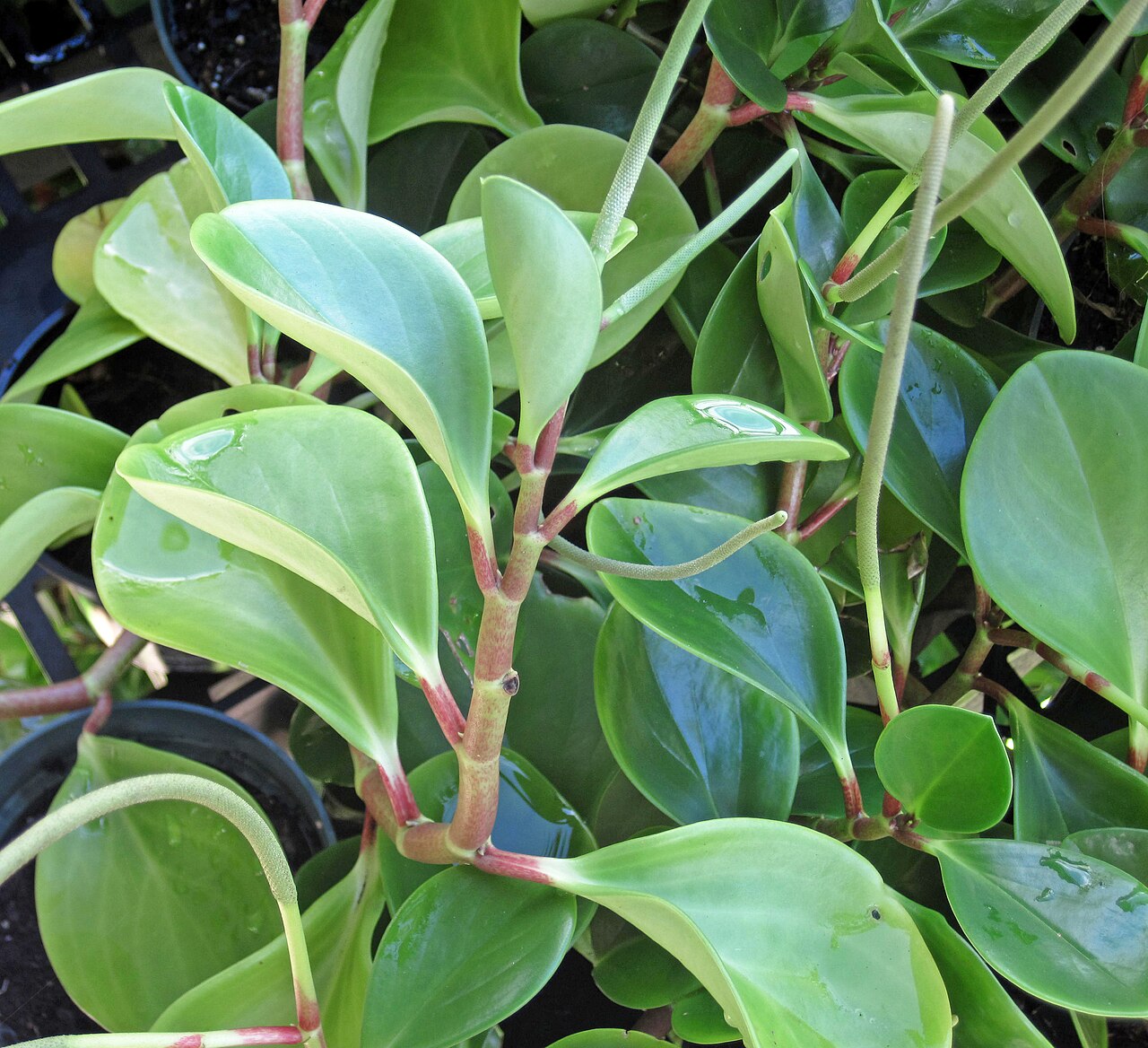
Peperomia obtusifolia, known in Florida as Florida Peperomia and in the houseplant trade as Baby Rubber Plant or American rubber plant, is a small, succulent-leaved evergreen perennial in the pepper family (Piperaceae). Most people know it as one of the most common houseplants on garden-center shelves, but it is also a genuine Florida native: a rare plant of the shaded tropical hammocks and cypress swamps of the southern peninsula, where it grows on the forest floor, over limestone and rotting logs, and as an epiphyte on tree bases.
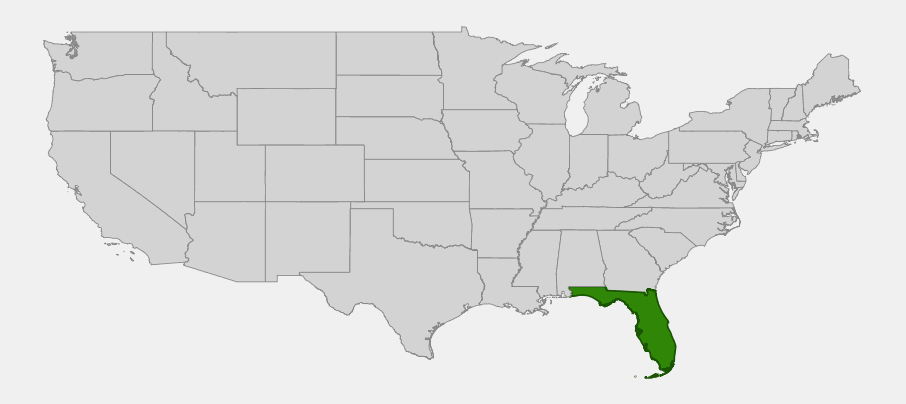
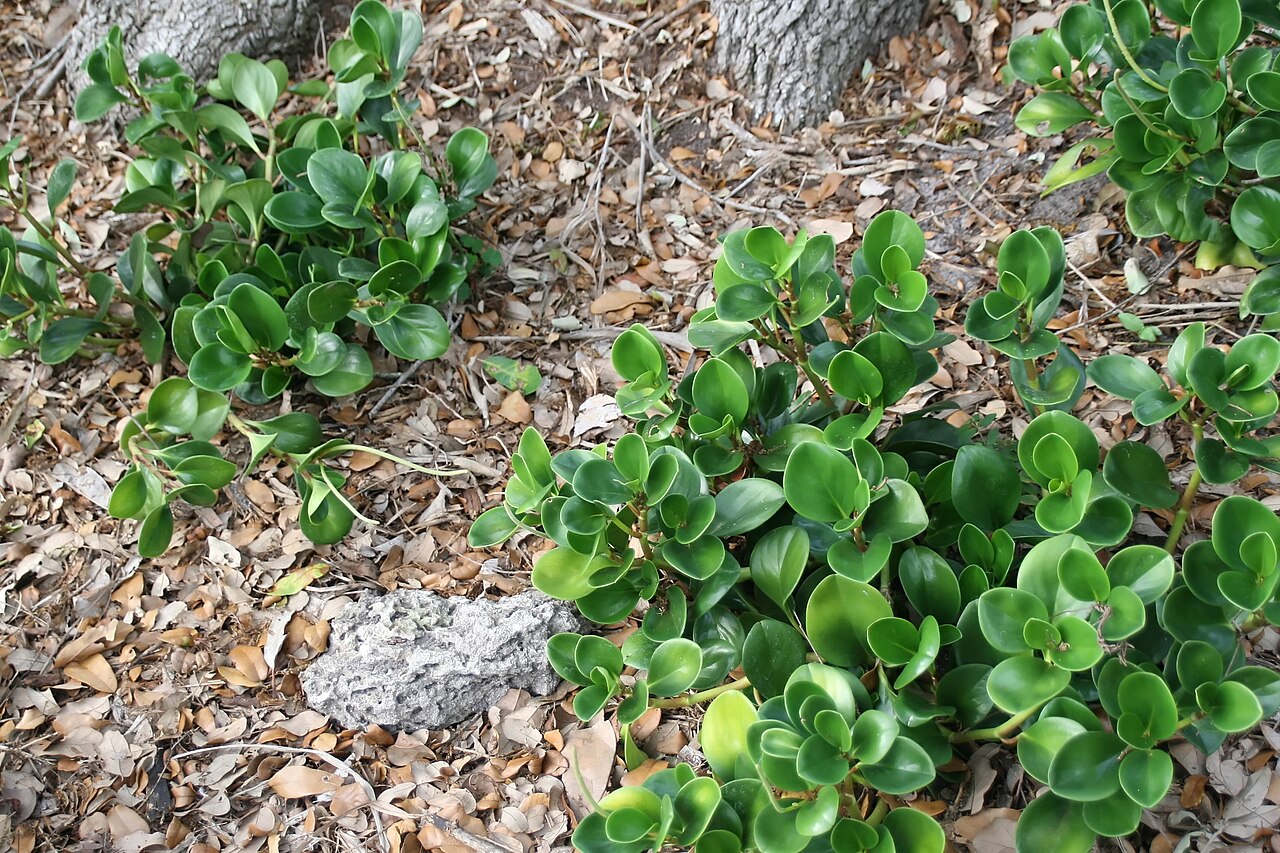
In the wild it forms low, sprawling mats only 6 to 9 inches tall and 1 to 2 feet wide, built from thick, glossy, spoon-shaped leaves on fleshy reddish stems. Through much of the year it sends up slender, upright flower spikes that look more like green pipe cleaners than flowers. The Atlas of Florida Plants (Institute for Systematic Botany) records vouchered wild populations in just six counties — Brevard, Indian River, Broward, Miami-Dade, Collier and mainland Monroe — and the species is listed as Endangered by the State of Florida.
That status shapes how this plant should be grown. Never dig or take cuttings from wild plants; buy nursery-propagated stock instead. The Florida Native Plant Society also points out that most plants sold as P. obtusifolia come from tropical American stock rather than Florida populations. It recommends local sources for restoration and native landscapes, both to protect the Florida genome and because locally adapted plants are more likely to succeed. For a windowsill, any nursery-grown plant is fine. For a South Florida hammock garden in zones 10–11, look for Florida-source plants from a native nursery.
Identification
Florida peperomia is a soft-stemmed, succulent herb with no woody tissue. Plants branch freely from the base and root wherever stems touch moist ground, so a single plant gradually becomes a loose colony. FNPS describes the mature size as 0.5–0.75 ft tall by 1–2 ft wide. In pots and sheltered indoor conditions, plants often grow a little taller (to about a foot) because the stems lean upward toward the light.
Stems
The stems are thick, smooth, fleshy and brittle, often flushed or flecked with reddish-purple, especially at the nodes and leaf bases. Older stems tend to lie on the ground and root at the nodes, while the tips turn upward. A cut stem snaps cleanly and shows watery, succulent tissue, much like a jade plant, and this water storage is why the plant handles short dry spells so well.
Leaves
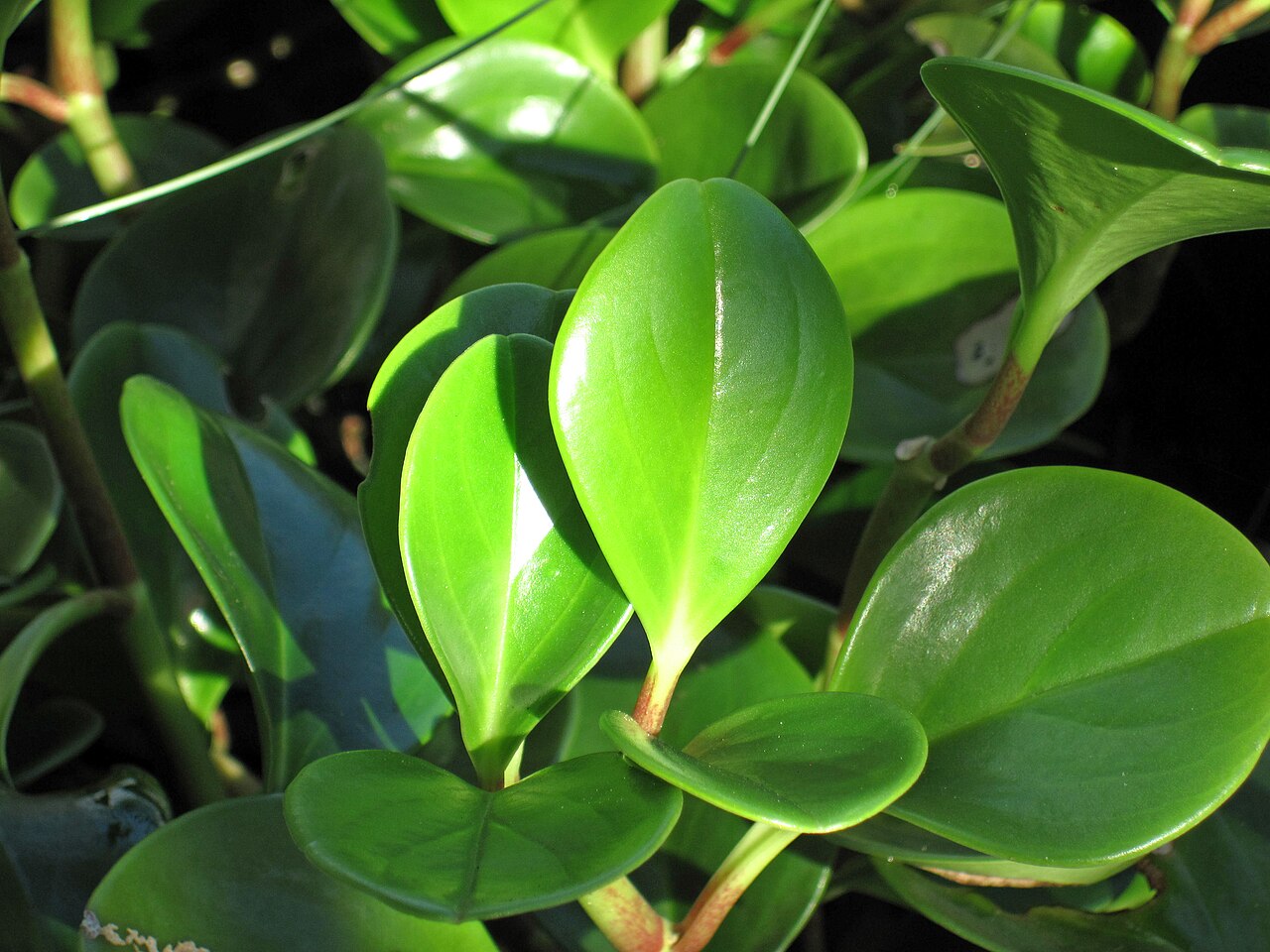
The leaves are alternate, simple and untoothed. They are broadly obovate to elliptic (wider toward the tip), typically 2–5 inches long, and so thick and rubbery that they inspired the name “baby rubber plant.” The upper surface is a deep, glossy green; the underside is paler. The tip is rounded and often shallowly notched (the “obtuse” leaf of the species name). The base tapers into a short, winged petiole that clasps the stem. Variegated and yellow-green leaves belong to cultivars (‘Variegata’, ‘Greengold’) selected for the houseplant trade. Wild Florida plants are plain green.
Flowers
Like all peperomias, this species has tiny flowers with no petals or sepals. Hundreds of them are packed onto slender, upright spikes (often called catkins or rat-tails) 2–5 inches long that rise from the stem tips and upper leaf axils. Each flower is little more than a minute bract, two stamens and a single ovary, so the spike looks like a greenish-white or cream rod with a finely granular surface. The spikes appear sporadically through the warm months and are interesting rather than showy.
Fruit & Seeds
Each pollinated flower produces a single minute, one-seeded fruit that stays embedded along the spike. The fruits are tiny and slightly sticky, and the mechanics of their dispersal in Florida are poorly documented. In cultivation the plant is almost always grown from cuttings instead.
Quick Facts
| Scientific Name | Peperomia obtusifolia (L.) A. Dietr. (syn. Peperomia floridana Small) |
| Family | Piperaceae (Pepper) |
| Plant Type | Evergreen succulent perennial herb / groundcover; terrestrial or epiphytic |
| Mature Height | 6–9 in (0.5–0.75 ft); to about 12 in in pots |
| Mature Spread | 1–2 ft, slowly colonizing by rooting stems |
| Growth Rate | Slow to moderate |
| Sun Exposure | Shade to part shade (outdoors); bright indirect light (indoors) |
| Water Needs | Moderate — evenly moist but never waterlogged; tolerates brief dry spells |
| Soil Type | Sand, loam or organic litter over limestone; must drain well |
| Soil pH | Acidic to neutral |
| Bloom Time | Sporadic, mainly during the warm months |
| Flower Color | Greenish-white to cream (tiny flowers on slender spikes) |
| Fall Color | None — evergreen |
| Fruit | Minute, slightly sticky one-seeded fruits along the spike |
| Deer Resistant | Not well documented; non-toxic to pets (ASPCA) |
| USDA Hardiness Zones | 10–11 outdoors (FNPS rates 9b–10b; frost-tender); any zone as a houseplant |
Native Range
Florida peperomia is a plant of the American tropics. Its range runs from southern Florida through the West Indies, including the Bahamas, the Greater and Lesser Antilles and Puerto Rico, and across Mexico and Central America into northern South America. Linnaeus first described it in 1753 as Piper obtusifolium, a black-pepper relative. He based the name on Charles Plumier’s 1693 illustration of a plant from the Caribbean, and that illustration is still the species’ lectotype. USDA PLANTS lists the species as native to the lower 48 states and Puerto Rico. Its only lower-48 range is Florida.
In Florida it reaches the northern edge of its range and is confined to the frost-protected southern peninsula. The Atlas of Florida Plants has vouchered wild specimens from Brevard and Indian River counties on the Atlantic coast, south through Broward and Miami-Dade, and from Collier and mainland Monroe on the Gulf side. These include the great strand swamps of the Big Cypress region, where it grows on logs, stumps and the bases of trees in deep shade. The Atlas maps only vouchered wild collections, so the many landscape and escaped houseplant specimens in South Florida are not counted.
The species is listed as Endangered by the State of Florida. Its natural habitats — tropical hardwood hammocks, mature cypress and hardwood swamps, and moist shaded limestone — are among the most heavily developed and drained landscapes in the state. Wild populations are small and scattered, and wild plants are vulnerable to collecting because the species is so familiar and easy to recognize. Florida’s Preservation of Native Flora law (s. 581.185, Florida Statutes) makes it illegal to harvest state-listed endangered plants from land you do not own without the owner’s permission, and plant collecting is prohibited outright on most public conservation lands. Because the plant roots from a single stem node, there is never a reason to take material from the wild.
📋 Regional plant lists featuring Florida Peperomia: none yet — no plantnative.org regional list currently covers South Florida’s tropical hammocks; see our full native plant directory for other Florida-native species.
Growing & Care Guide
This is one of the few native plants that is equally at home in a South Florida shade garden and on a windowsill in Minnesota. Outdoors it needs frost-free warmth, shade and good drainage. Indoors it needs bright, indirect light and a restrained hand with the watering can. In both settings, more plants are lost to soggy roots than to any other cause.
Light
Outdoors (zones 10–11): Grow it in shade to part shade, as on the hammock floor. Dappled light under a hardwood canopy or the north side of a building is ideal. Direct midday sun bleaches and scorches the leaves. Morning sun is tolerated if the soil stays moist.
Indoors: Give it bright, indirect light. An east window, or a spot a few feet back from a south or west window, keeps growth compact and leaves glossy. It tolerates average office light, but stems stretch and leaves get smaller in dim rooms. Variegated cultivars need more light than plain green plants to hold their color.
Soil & Water
Outdoors: FNPS lists sand, loam and organic substrates with acidic to neutral pH. In the wild it often roots into leaf litter and decaying wood over limestone, so drainage is fast even where the air stays humid. In the garden, plant into a deep layer of leaf mulch or compost-amended sandy soil, never in a low spot that holds standing water. Water through dry spells, especially in the spring dry season, but let the surface dry slightly between soakings. FNPS rates it as not salt tolerant, so keep it away from beachfront exposure and salt spray.
Indoors: Use a chunky, fast-draining mix, such as a regular potting mix lightened with a third perlite or fine orchid bark, in a pot with a drainage hole. Water thoroughly, then wait until the top inch or two of mix is dry before watering again. That might be every 7–10 days in summer and every two to three weeks in winter. The thick leaves store water, so the plant handles an occasional missed watering far better than constant wetness. Limp, yellowing lower leaves or blackened stem bases are signs of overwatering. Fertilize lightly, at half strength once a month in spring and summer, and not at all in winter.
Planting Tips
Plant outdoors after the last cool snap, from late winter through the rainy season, so roots establish in warm, moist conditions. Space plants 12–18 inches apart for a groundcover. Set them on a slight mound of mulch, or tuck them into pockets of organic matter on limestone, logs or stumps. Keep them well watered for the first few weeks. Foliage is damaged by temperatures near freezing, so in marginal 9b–10a gardens, plant against a warm wall or under evergreen canopy, or keep it in containers you can move indoors on cold nights. Indoors, keep it above about 50°F and away from cold drafts. Repot only every two or three years, into a pot just one size larger, because peperomias root shallowly and rot more easily in oversized pots.
Pruning & Maintenance
Little pruning is needed. Pinch back leggy stem tips to keep plants bushy, and use the trimmings as cuttings. Old flower spikes can be snipped off once they brown. Outdoors, let fallen leaves stay as mulch around the plants. Watch for mealybugs and fungus gnats indoors, which usually point to soil that stays too wet, and for snails and slugs on the soft leaves outdoors.
Propagation
FNPS lists division and stem cuttings as propagation methods, and both are easy. Take a 3–4 inch stem tip with two or three nodes, let the cut end dry for a few hours, then insert it in moist, well-drained mix or perlite. Roots form in a few weeks in warm conditions. Single leaves with a short petiole will also root and produce new shoots, but more slowly. Established clumps can be divided in spring. Propagate only from purchased or garden-grown plants; never take cuttings or divisions from wild Florida populations. For hammock restoration and native landscapes, start with Florida-source stock from a native nursery.
Landscape Uses
- Shade groundcover beneath hammock trees, in South Florida (zones 10–11) native landscapes
- Hammock restoration and wildlife gardens as part of the herbaceous layer, using Florida-source plants
- On logs, stumps and limestone boulders, echoing its epiphytic and rock-dwelling habit in the wild
- Containers and hanging baskets on shaded patios and porches
- Houseplant for bright, indirect light anywhere — compact, pet-safe and forgiving
- Terrariums and dish gardens (smaller cuttings), where its slow growth is an asset
Wildlife & Ecological Value
Florida peperomia is not a showy wildlife magnet. Its value lies in being part of the intact ground and epiphyte layer of South Florida’s tropical forests, a layer that has largely disappeared from developed landscapes.
For Pollinators
Pollination is poorly understood. FNPS notes that the flower structure of Peperomia species suggests wind and/or insect pollination, but not much is known, and it cites a Brazilian study of eight Peperomia species as some of the limited field work on the genus. Plant it for its role in a layered native planting rather than as a nectar source.
For Birds
The plant offers little direct food for birds. However, a hammock garden with a full groundcover layer under a canopy of stoppers, Pigeon Plum and Gumbo Limbo holds more leaf-litter insects. Ground-foraging migrants such as thrushes, ovenbirds and Gray Catbirds depend on those insects in South Florida’s winter months.
For Mammals
No significant browsing or seed-eating by mammals is documented. The low, dense mats give ground-level cover to small invertebrates, and the ASPCA lists baby rubber plant as non-toxic to dogs and cats, a practical advantage over many houseplants.
Ecosystem Role
In the hammock, Florida peperomia is one of the herbaceous plants that colonize fallen logs, stumps and humus pockets on limestone. It helps hold leaf litter in place and adds living cover to the forest floor alongside ferns and seedlings. Because it is at the northern limit of a mostly Caribbean range, Florida’s small populations are a reservoir of cold-edge genetic diversity, which is why FNPS urges gardeners to keep local stock separate from imported tropical material.
Cultural & Historical Uses
The genus name Peperomia means “resembling pepper,” from the Greek words for pepper and likeness. It is a nod to the family the plant shares with black pepper (Piper nigrum), the plant Linnaeus first placed it with when he named it Piper obtusifolium in 1753. German botanist Albert Dietrich moved it to Peperomia in 1831. Florida populations were later described as a separate species, Peperomia floridana Small, but they are now treated as part of the widespread P. obtusifolia.
Its leathery leaves, tolerance of low humidity and neglect, and slow, compact growth made it a standard indoor plant through the 20th century. Nurseries selected yellow-variegated, cream-edged and lime-green forms (‘Variegata’, ‘Greengold’ and others) that are still sold in garden centers today. Almost all of this commercial material traces to tropical American stock rather than Florida plants.
That popularity is the reason it’s worth knowing the Florida story. Many people who own a baby rubber plant don’t realize it is a native, state-endangered wildflower of the Everglades region. For native gardeners in South Florida, growing Florida-source plants in a shaded hammock garden, and leaving wild plants untouched, helps keep a living piece of the state’s tropical flora.
Frequently Asked Questions
Is the baby rubber plant really native to Florida?
Yes. Peperomia obtusifolia is native to southern Florida, the West Indies, Mexico, Central America and northern South America. The Atlas of Florida Plants documents wild populations in six South Florida counties, and USDA PLANTS lists it as native to the lower 48 states and Puerto Rico. The plants sold as houseplants are usually from tropical American stock, often as named cultivars.
Can I collect Florida peperomia from the wild?
No. It is listed as Endangered by the State of Florida. Harvesting it from land you do not own without the owner’s permission is illegal under Florida’s native flora law, and plant collecting is banned on most public conservation lands. Buy nursery-propagated plants, ideally Florida-source stock from a native nursery if you are planting outdoors in South Florida.
How often should I water a baby rubber plant indoors?
Water thoroughly, then let the top inch or two of potting mix dry before watering again. Typically that’s every week or so in summer and every two to three weeks in winter. Its fleshy leaves store water, so underwatering is far less dangerous than overwatering, which causes root and stem rot.
Can Florida peperomia grow outdoors in my yard?
In frost-free South Florida (USDA zones 10–11) it makes an excellent shade groundcover under hammock trees, on logs and around limestone. It needs shade to part shade and well-drained, organic soil, and it is not salt tolerant. FNPS rates it for zones 9b–10b, but it is frost-tender: in zone 9b and cooler areas, grow it in containers and bring them in when temperatures approach freezing.
Is baby rubber plant safe for cats and dogs?
Yes. The ASPCA lists Peperomia obtusifolia (baby rubber plant) as non-toxic to both dogs and cats. Large amounts of any plant can still upset a pet’s stomach, so it’s best to discourage chewing.
Sources: USDA PLANTS (PEOB2) · Atlas of Florida Plants, Institute for Systematic Botany · Florida Native Plant Society · ASPCA

Looking for a nursery that carries Florida Peperomia?
Browse our native plant nursery directory: Florida