
Pinewoods Milkweed (Asclepias humistrata)
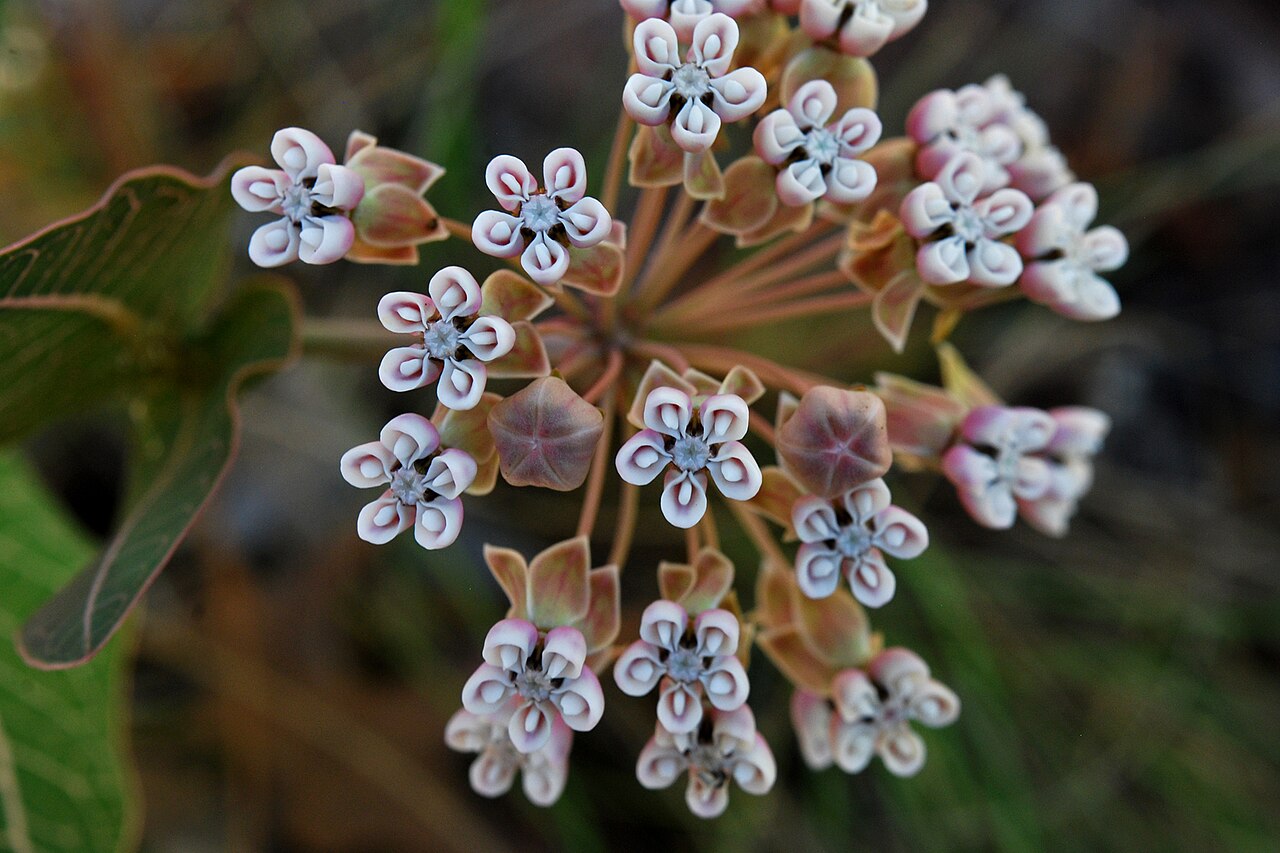
Asclepias humistrata, known as Pinewoods Milkweed or sandhill milkweed, is one of the most striking milkweeds of the Southeast. Its stout, pinkish stems sprawl outward across bare sand rather than standing upright, and they carry pairs of broad, clasping, gray-green leaves traced with bright pink to purple veins. In spring, rounded clusters of pale pink, lavender and cream flowers open at the stem tips. Even out of flower, few native plants look as unusual against white sandhill sand.
Pinewoods milkweed belongs to the dogbane family (Apocynaceae), which now includes the milkweeds. Like its relatives it has milky sap and is a host plant for monarch butterflies. In Florida and southern Georgia it is especially important in spring, when monarchs moving north out of Mexico and the Gulf Coast lay eggs on the fresh growth before most other milkweeds have emerged.
The species grows on the Coastal Plain from North Carolina south to central Florida and west to Louisiana, in deep, dry, well-drained sand: longleaf pine sandhills, turkey oak barrens, scrub and dry pine-oak woods. The species name humistrata means “spread on the ground.” This guide covers how to identify it, where it grows, and why it is one of the harder native milkweeds to grow, along with how to succeed with it in a sandy native garden.
Identification
Pinewoods milkweed is easy to recognize. No other milkweed in its range combines sprawling stems with broad, stalkless, pink-veined leaves.
Stems & Roots
Several stems rise from a deep, thick taproot. They are smooth, stout, often pink or purplish, and usually 1 to 2 feet long. Most lie on the sand or arch outward at a low angle, so a mature plant forms a loose, spreading clump. The taproot can reach several feet deep in sandhill soils, which lets the plant survive drought and fire.
Leaves
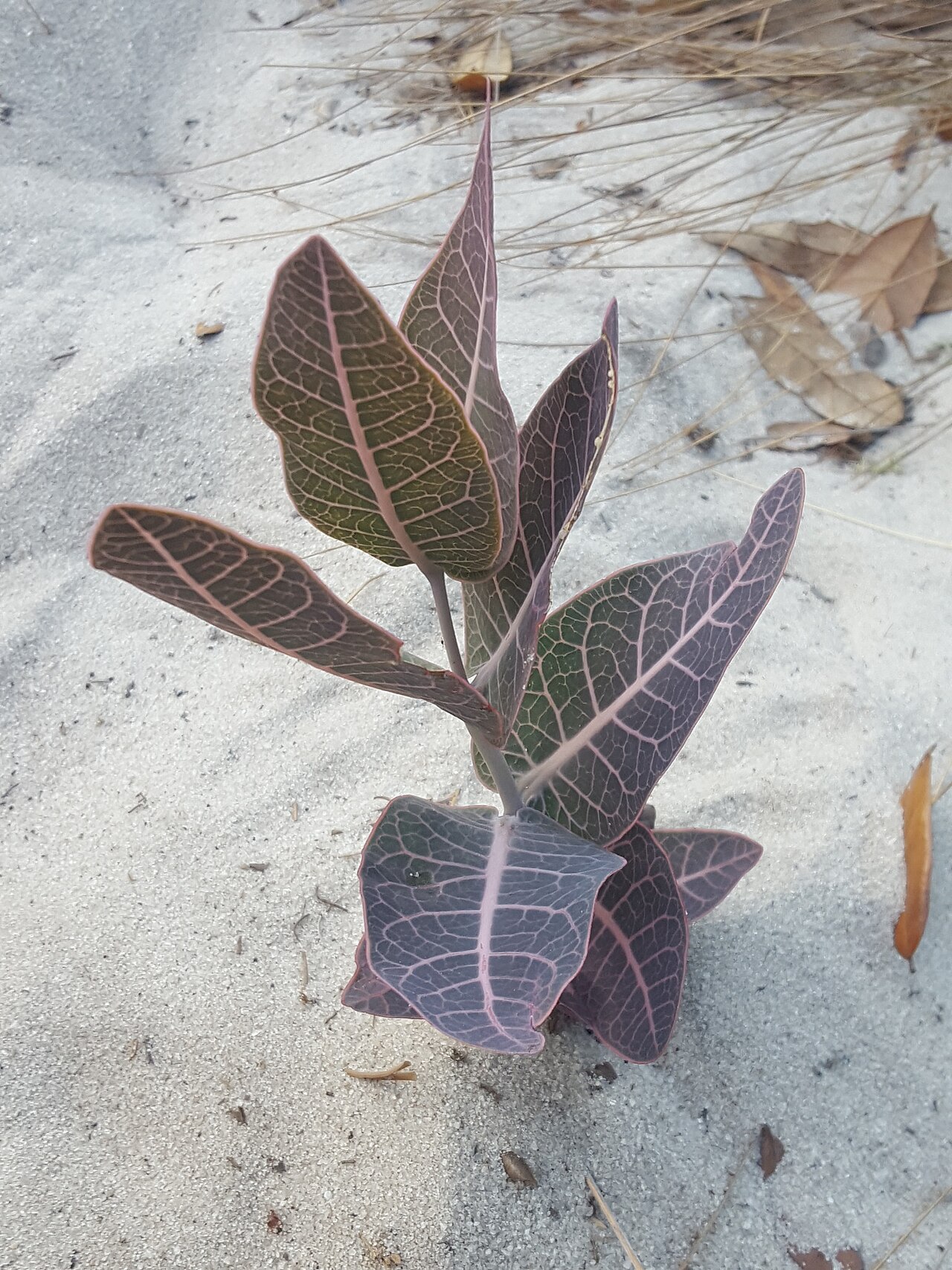
The leaves are in opposite pairs, usually five to ten pairs per stem. They are broad, oval to heart-shaped, 2 to 4 inches long, stalkless and clasping the stem at their bases. They are thick, smooth and gray-green, often with a whitish bloom, and the midrib and side veins are pink to deep purple. New leaves in early spring can be almost entirely purple.
Flowers
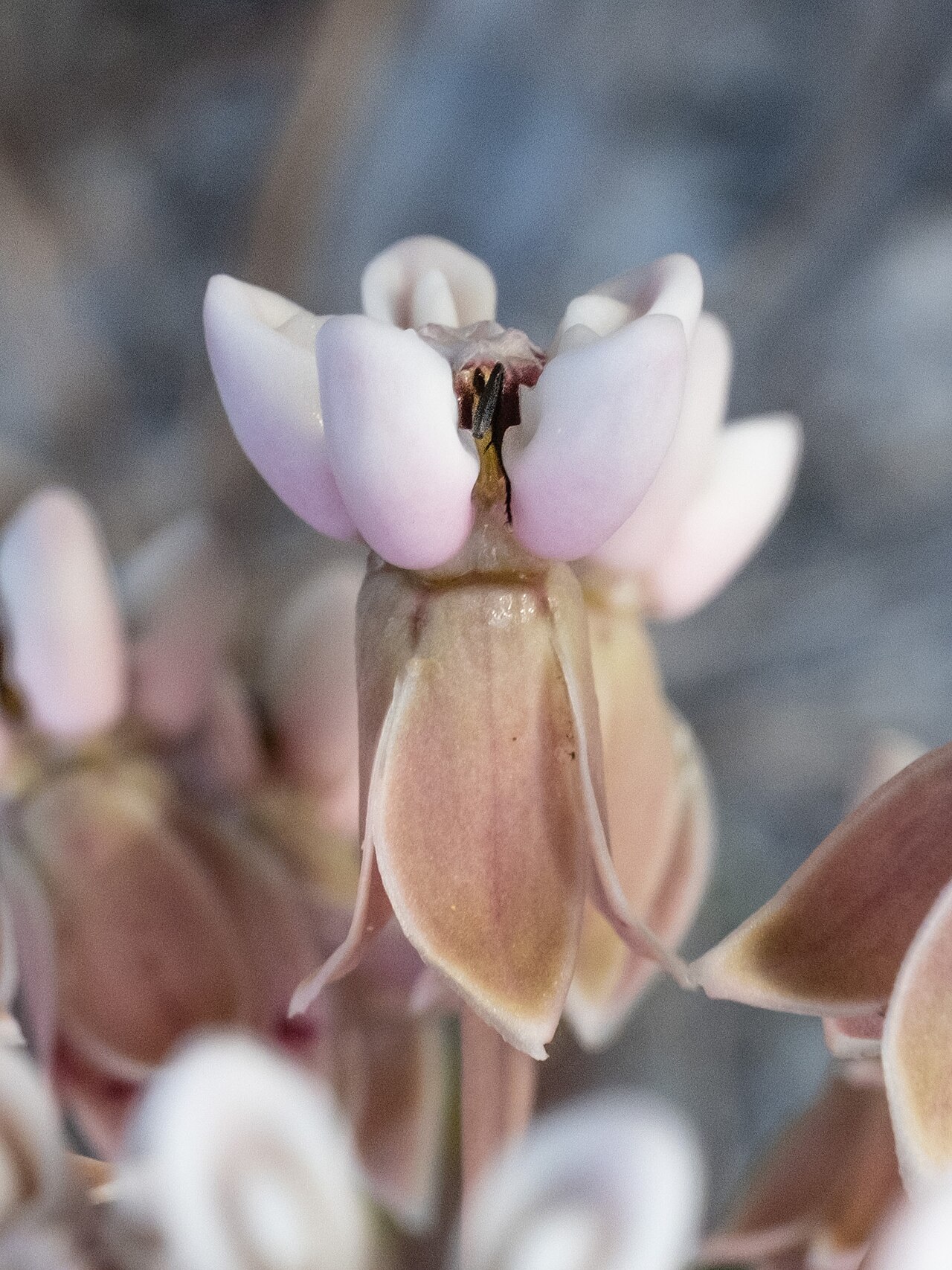
Flowers are borne in rounded clusters (umbels) at the stem tips and in the upper leaf axils, each cluster about 2 to 3 inches across. The flower buds are tan to dusky pink. In each open flower, five petals fold back sharply, pinkish tan to dusty rose, and above them sits a crown of five white to pale lavender hoods. Flowering is mostly from March through June, beginning earlier in Florida.
Fruit & Seeds
The fruit is a smooth, narrow seedpod (follicle), about 3 to 5 inches long. The pods are held upright on stalks that bend downward. When ripe in late spring and summer they split along one side and release flat brown seeds, each carrying a tuft of silky white hairs that carries it on the wind.
Similar Species
Few milkweeds in sandhills look like it. Pinewoods milkweed is sometimes confused with Asclepias amplexicaulis (clasping milkweed), which also has broad clasping leaves, but that species has upright stems, wavy-edged green leaves without pink veins, and larger flower clusters. Sandhill-dwelling Asclepias tuberosa (butterfly weed) has orange flowers and narrow, alternate leaves.
Quick Facts
| Scientific Name | Asclepias humistrata |
| Family | Apocynaceae (dogbane family; milkweed subfamily) |
| Plant Type | Herbaceous perennial with a deep taproot |
| Mature Height | 6–12 in tall; stems sprawl 1–2 ft long |
| Mature Spread | 1–3 ft |
| Growth Rate | Slow to establish; moderate once rooted |
| Sun Exposure | Full sun |
| Water Needs | Low; needs dry, very well-drained sand |
| Soil Type | Deep, dry, sterile sand |
| Soil pH | About 4.5–6.5 (acidic) |
| Bloom Time | March–June |
| Flower Color | Dusty pink to pinkish tan, with white to pale lavender hoods |
| Fall Color | None; stems die back in late summer or fall |
| Fruit | Smooth upright pods 3–5 in long; seeds with silky tufts |
| Deer Resistant | Yes; the toxic milky sap makes it rarely browsed |
| USDA Hardiness Zones | 7b–10a |
Native Range
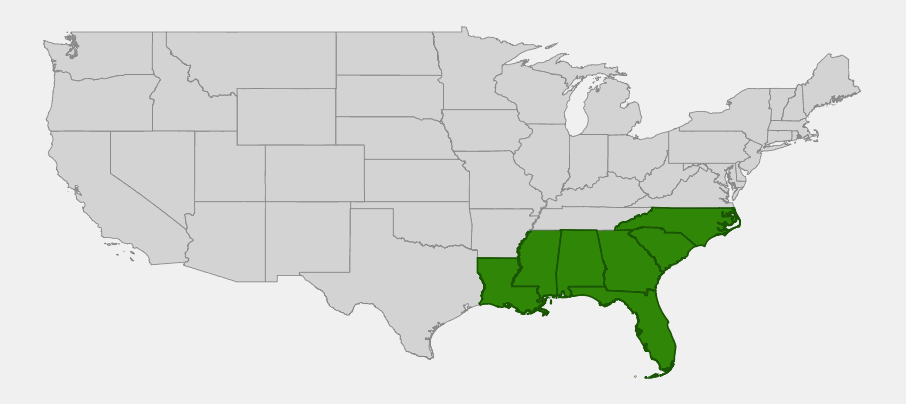
Pinewoods milkweed is a southeastern Coastal Plain species. USDA PLANTS and the Lady Bird Johnson Wildflower Center record it from seven states: North Carolina, South Carolina, Georgia, Florida, Alabama, Mississippi and Louisiana. It reaches its northern limit in the sandhills of southeastern North Carolina and its western limit in southeastern Louisiana.
It is most common in Georgia and Florida, where deep sand ridges are widespread. In Florida it grows through the Panhandle and the northern and central peninsula, on sandhills, scrub, and dry pine and oak woods, and becomes scarce farther south. It is a plant of open ground: it tolerates heat, drought and nutrient-poor sand but not shade, and it often appears on sandy road shoulders and firebreaks next to natural habitat.
Because its habitat is prime land for housing and pine plantations, and because sandhills that are not burned grow up into dense oak thickets, pinewoods milkweed has lost much of its former range. It remains common on well-managed public lands with frequent prescribed fire.
📋 Regional plant lists featuring Pinewoods Milkweed: North & South Florida · Alabama, Georgia & Mississippi · North & South Carolina · Arkansas, Louisiana, Eastern Oklahoma & Eastern Texas
Growing & Care Guide
Pinewoods milkweed has a reputation as a difficult garden plant, and it deserves it. Its long taproot makes established plants nearly impossible to move, and plants in rich, irrigated garden soil usually rot. It does succeed in the right setting: a sunny, dry, sandy bed that is left alone. A few native nurseries in Florida and Georgia grow it from seed. Never dig plants from the wild; they almost never survive, and the practice harms local populations.
Light
Give it full sun. It grows on open sandhills with only scattered pine shade, and plants in partial shade become weak and sparse.
Soil & Water
The soil must be deep, loose, very well-drained sand. Do not add compost, topsoil or fertilizer. Water a new plant only until it shows new growth, then let natural rainfall take over. Overwatering and heavy soils are the most common causes of failure. Once its taproot is down, it tolerates long droughts and summer heat.
Planting Tips
Start with small, nursery-grown plants in deep containers, or sow seed directly where you want plants to grow. Plant in late winter or early spring, without disturbing the root ball. Choose a permanent spot, since the taproot cannot be moved later. Leave bare sand or a thin layer of pine straw around it rather than wood mulch, which holds moisture against the crown.
Pruning & Maintenance
Little maintenance is needed. Expect plants to go dormant in late summer or fall and reappear from the root in late winter, sometimes after a year or two of very little growth. Mark their location. Do not spray pesticides anywhere near it, since the plant exists in a garden mainly to host monarch and queen caterpillars, which may strip the leaves completely; healthy plants regrow.
Propagation
Propagate from seed. Collect pods as they begin to split in late spring or summer, remove the silky floss, and sow fresh or after a short cold, moist stratification. Use deep pots (tree-pots or tall cones) filled with sand, and transplant while still small. Cuttings and division are not practical because of the taproot.
Landscape Uses
- Monarch and queen butterfly gardens: an early-season native host plant for southeastern gardens
- Sandhill and scrub restoration: a characteristic forb of longleaf pine–turkey oak sandhills
- Xeric and dry sand gardens: for hot, sunny, unirrigated spots where few plants thrive
- Pollinator plantings: spring nectar for bees, wasps and butterflies
- Specimen plant: its pink-veined leaves are ornamental even without flowers
Wildlife & Ecological Value
Pinewoods milkweed supports a set of insects that specialize on milkweeds, and it plays an outsized role in spring monarch migration in the Southeast.
For Pollinators
The flowers produce nectar that attracts bees, wasps, flies and butterflies. Like other milkweeds, it has an unusual pollination system: pollen is packed into paired sacs (pollinia) that clip onto the legs of visiting insects and are carried to the next flower.
For Birds
Birds do not eat the plant. Some birds use the silky seed floss to line nests, and the insects that feed on milkweeds are part of the food web of sandhill birds.
For Mammals
The milky sap contains cardiac glycosides that are toxic to mammals, and the plant is rarely browsed by deer or livestock. Keep pets and children from chewing it.
Ecosystem Role
Pinewoods milkweed is a larval host for monarch and queen butterflies and supports milkweed specialists such as milkweed bugs, milkweed beetles and milkweed aphids. Monarch caterpillars store the plant’s toxins and become distasteful to predators. Because it emerges early and grows on open sand, it is one of the first milkweeds available to monarchs returning north in spring in Florida and Georgia. The plant is adapted to frequent fire and resprouts quickly from its deep taproot after a burn.
Cultural & Historical Uses
Thomas Walter described Asclepias humistrata in his Flora Caroliniana of 1788, one of the first floras of the American Southeast, written from his plantation on the Santee River in South Carolina. The species name, from Latin humi (on the ground) and stratus (spread out), describes its sprawling stems.
The genus name honors Asklepios, the Greek god of medicine. Several milkweeds were used medicinally by Native Americans and early settlers, but they are poisonous, and pinewoods milkweed is not used today. Its value is ecological and ornamental.
Interest in pinewoods milkweed has grown with concern for monarch butterflies. Southeastern conservation groups encourage gardeners to plant native milkweeds such as this one instead of tropical milkweed (Asclepias curassavica), a non-native species that keeps growing through mild winters and can encourage monarchs to breed year-round, increasing disease. For dry, sandy yards in Florida and Georgia, pinewoods milkweed is one of the best native choices.
Frequently Asked Questions
Is pinewoods milkweed good for monarchs?
Yes. It is a native host plant for monarch and queen butterflies and is especially valuable in spring, when it is one of the first milkweeds to leaf out in Florida and southern Georgia.
Why does my pinewoods milkweed keep dying?
Usually because the soil is too rich or too wet. It needs deep, dry, sandy soil with no fertilizer and little or no irrigation. It also goes dormant in late summer and fall, which can look like death; leave the spot alone and it will often return in spring.
Can I transplant pinewoods milkweed?
Not successfully once established. The deep taproot breaks when dug. Plant small nursery-grown plants or seed in a permanent location, and never dig plants from the wild.
Is pinewoods milkweed poisonous?
Yes. Like other milkweeds, its sap contains cardiac glycosides that are toxic to people, pets and livestock if eaten. The sap can also irritate eyes, so wash your hands after handling it.
Is pinewoods milkweed the same as sandhill milkweed?
Yes. Both names refer to Asclepias humistrata. “Sandhill milkweed” is common in Florida, while USDA PLANTS uses “pinewoods milkweed.”

Looking for a nursery that carries Pinewoods Milkweed?
Browse our native plant nursery directory: Alabama · Florida & Georgia · Louisiana & Mississippi · North Carolina · South Carolina