
Velvetleaf Milkweed (Asclepias tomentosa)
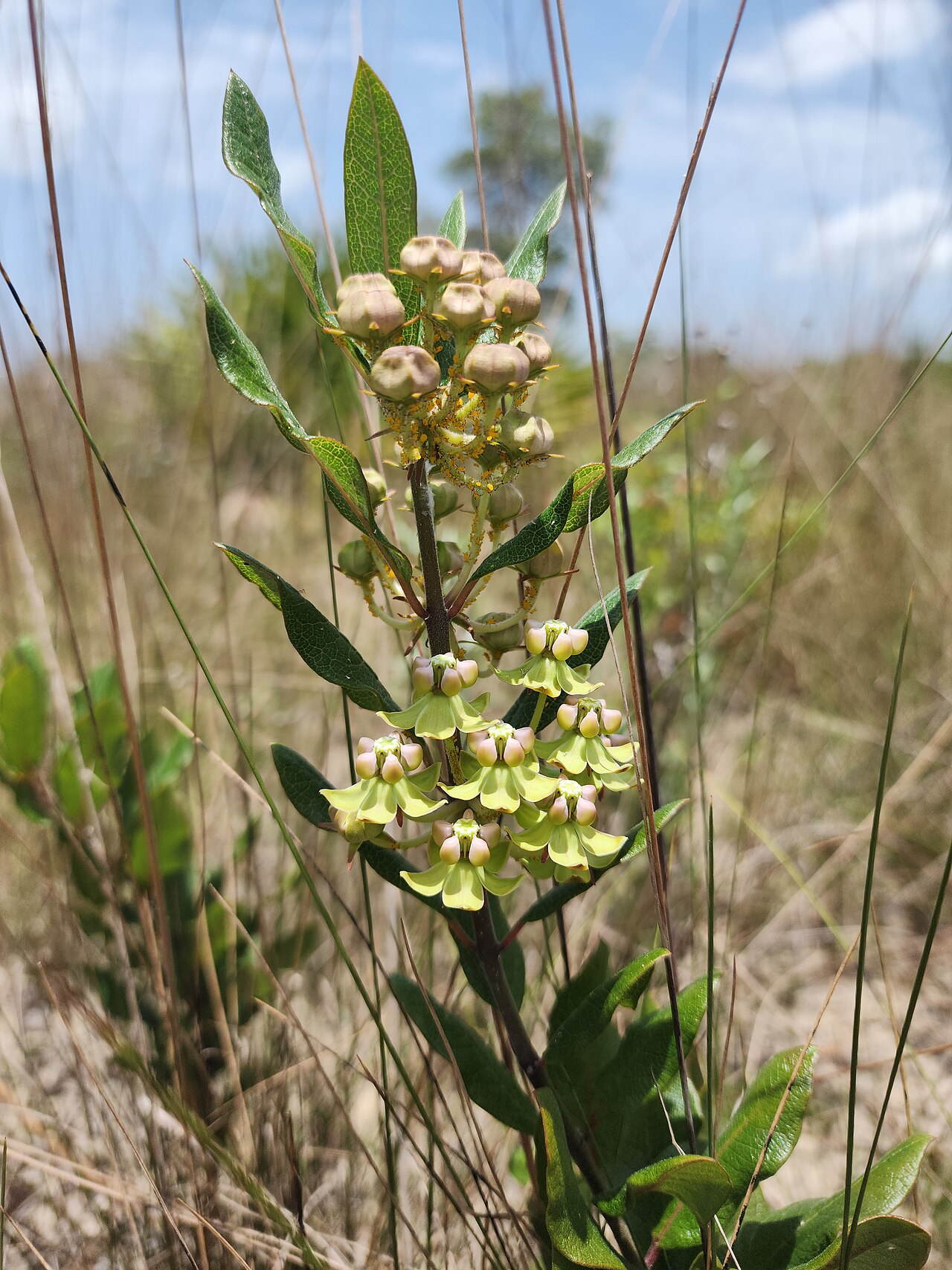
Asclepias tomentosa, known as Velvetleaf Milkweed, velvet milkweed or tuba milkweed (the USDA PLANTS common name), is a sturdy perennial milkweed of the deep, dry sands of the southeastern Coastal Plain. Its upright stems and broad, gray-green leaves are covered with soft, short hairs that make the whole plant feel like velvet. In late spring and summer it carries rounded clusters of pale green to yellowish-green flowers. It belongs to the dogbane family (Apocynaceae), which now includes all the milkweeds.
Velvetleaf milkweed grows in some of the harshest habitats in the Southeast: sandhills, scrub, scrubby flatwoods and the edges of dry oak hammocks, where summer sand gets very hot and rain drains away almost instantly. It survives by sending a deep, thick taproot far down into the sand. Like other milkweeds, it is a larval host plant for monarch, queen and soldier butterflies, and its flowers are a nectar source for many insects.
It is not a common nursery plant, and it is much less familiar than butterfly weed, but it is one of the best milkweeds for dry, sandy gardens in Florida and the coastal Southeast. This guide covers how to recognize it, where it grows, how to grow it from seed, and its role in sandhill and scrub ecosystems.
Identification
Several milkweeds grow in Florida sandhills and scrub. Velvetleaf milkweed stands out for its upright habit, broad paired leaves, dense velvety hairs, and greenish flowers.
Stems & Root
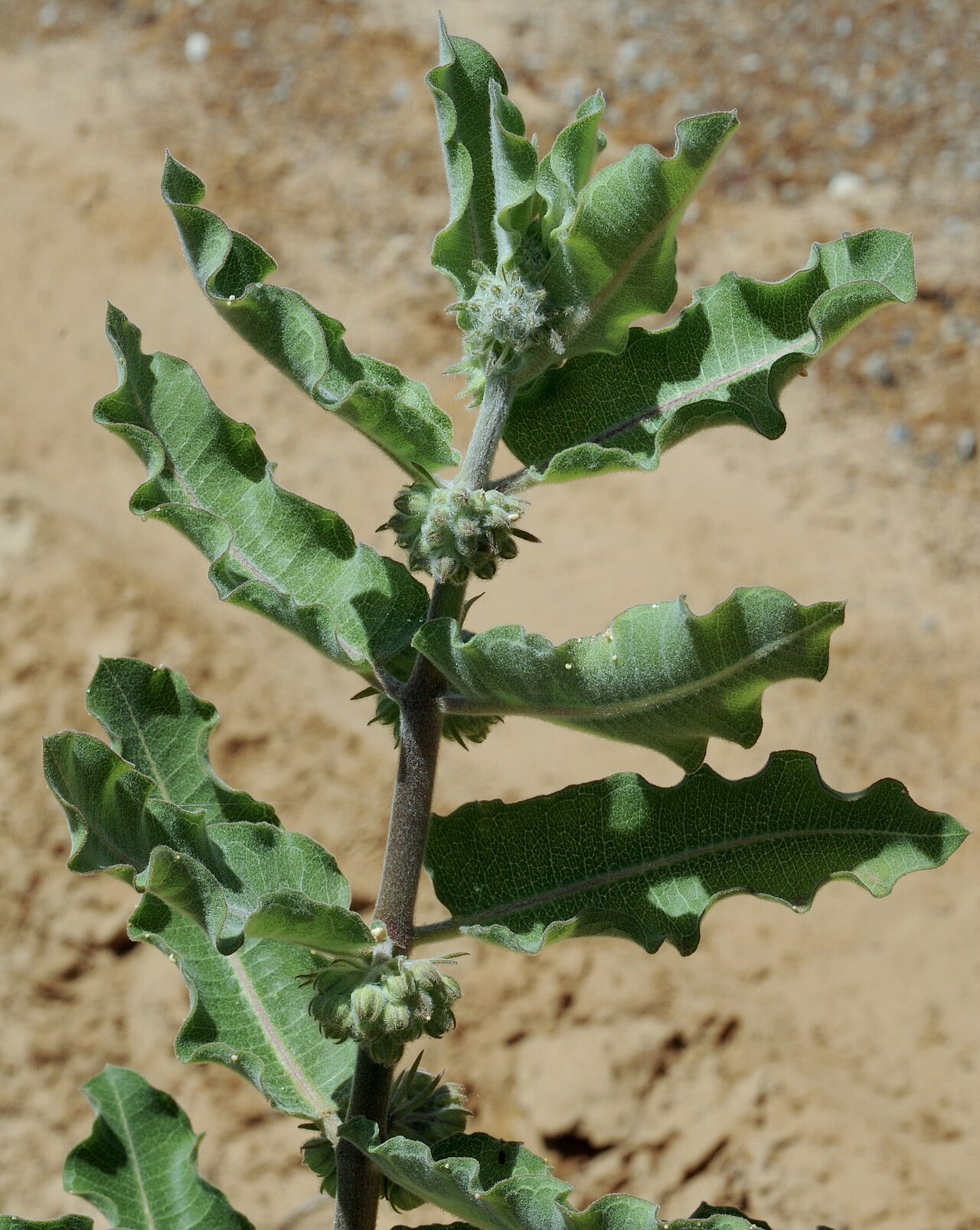
Each plant grows from a deep, thick, woody taproot. It sends up one to several stout stems, usually unbranched, typically 1 to 3 feet tall and occasionally taller. Stems are densely covered in short, soft hairs and, like all milkweeds, contain milky sap that oozes when they are broken. The plant dies back to the root in winter.
Leaves
The leaves are opposite, in widely spaced pairs, broadly oval to oblong, about 2 to 5 inches long, on short stalks. They are thick, gray-green and covered on both surfaces with soft hairs, so they feel like velvet or felt. The species name tomentosa means “densely hairy”. The leaf edges are often wavy. These features separate it from sandhill milkweed (A. humistrata), which has hairless, pink-veined leaves that clasp the stem.
Flowers
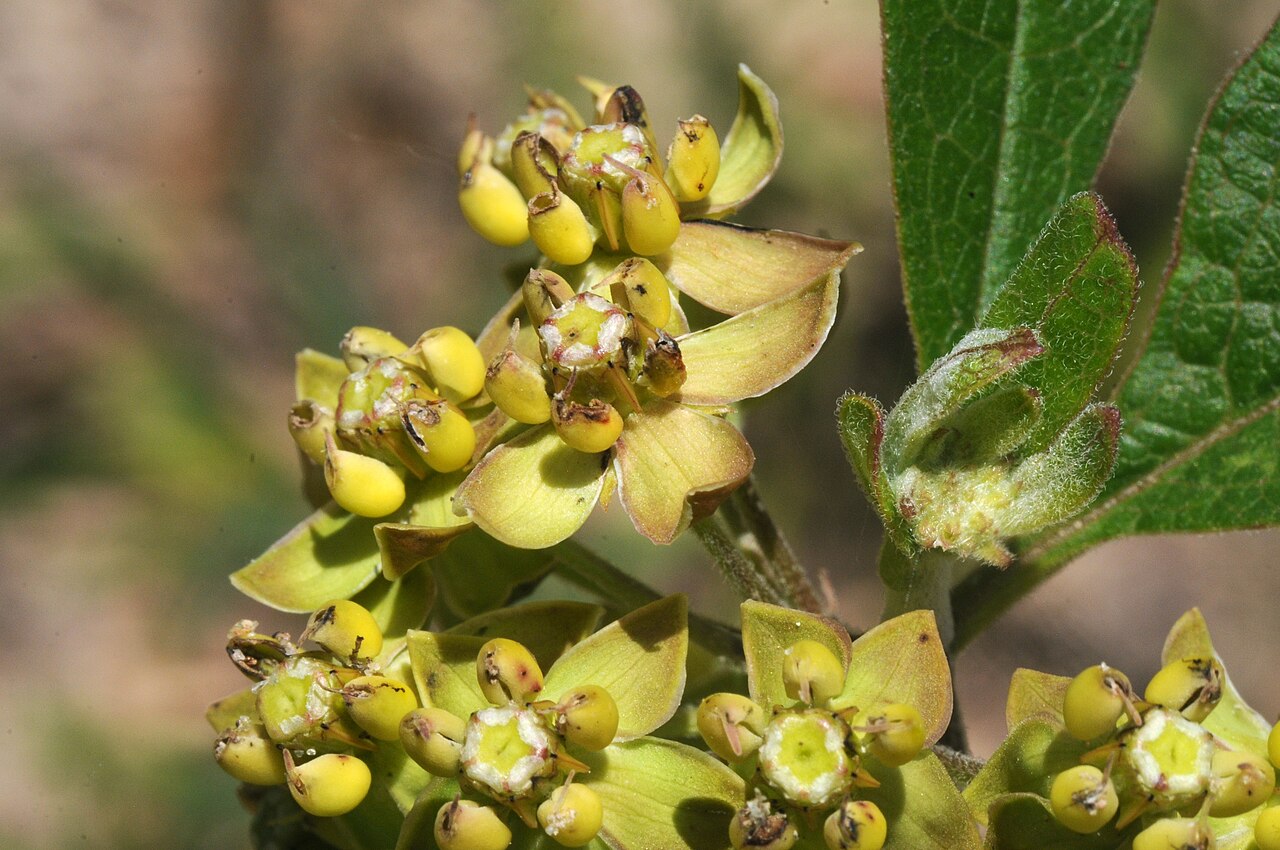
Flowers appear mainly from May through August in rounded clusters (umbels) on short stalks from the upper leaf axils. Each flower is about half an inch long, with five reflexed petals that are pale green to yellowish green, sometimes tinged with pink or purple, and a crown of five upright, cream to pale yellow-green hoods. As with all milkweeds, pollen is packed into paired sacs (pollinia) that catch on the legs of visiting insects.
Fruit & Seeds
Pollinated flowers develop into slender, upright pods (follicles) several inches long, covered in short hairs. In late summer and fall they split along one side to release flat brown seeds, each attached to a tuft of silky white floss that carries it on the wind.
Quick Facts
| Scientific Name | Asclepias tomentosa |
| Family | Apocynaceae (dogbane family, milkweed subfamily) |
| Plant Type | Herbaceous perennial from a deep taproot |
| Mature Height | 1–3 ft (occasionally taller) |
| Mature Spread | 1–1.5 ft |
| Growth Rate | Slow to establish; moderate once established |
| Sun Exposure | Full sun |
| Water Needs | Low; very drought tolerant |
| Soil Type | Deep, dry, well-drained sand |
| Soil pH | About 4.5–6.5 (acidic) |
| Bloom Time | May–August |
| Flower Color | Pale green to yellowish green, sometimes tinged pink; cream hoods |
| Fall Color | None; stems die back in winter |
| Fruit | Slender hairy pod with silky-tufted seeds |
| Deer Resistant | Yes; milky sap is toxic and seldom browsed |
| USDA Hardiness Zones | 8–10 |
Native Range
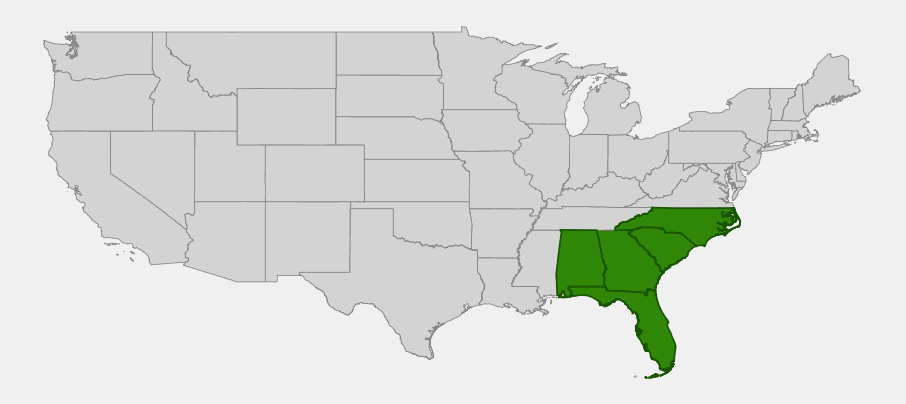
Velvetleaf milkweed is native to the southeastern Coastal Plain. USDA PLANTS records it from Florida, Georgia, Alabama, South Carolina and North Carolina. In Florida it occurs from the Panhandle south through the central ridges, and the Atlas of Florida Plants maps it in scattered counties across much of the state. It is generally uncommon and becomes rare toward the northern edge of its range in the Carolinas.
Outside the Southeast, the species also grows in a few deep-sand areas of eastern Texas, where it is sometimes called tuba milkweed. Two of the photos on this page come from those Texas populations. Because USDA PLANTS does not list Texas for this species, Texas is not shaded on the map.
Throughout its range it is a plant of deep, excessively drained, acidic sands: longleaf pine and turkey oak sandhills, oak scrub, scrubby flatwoods, xeric hammock edges and old dunes. These habitats depend on frequent fire. Velvetleaf milkweed resprouts quickly from its taproot after a burn and often flowers best in the following season. Its biggest threats are loss of sandhill and scrub to development and the overgrown, shaded conditions that follow long periods without fire.
📋 Regional plant lists featuring Velvetleaf Milkweed: North & South Florida · Alabama, Georgia & Mississippi · North & South Carolina
Growing & Care Guide
Velvetleaf milkweed is a plant for dry, sunny, sandy sites, and it is happiest when left alone. Look for plants or seed from native plant nurseries or seed suppliers that propagate it, and never dig it from the wild: its deep taproot almost never survives being moved.
Light
Full sun is essential. In shade it grows weakly, flops and flowers poorly. In the wild it disappears as sandhills and scrub become overgrown.
Soil & Water
Plant it in deep, well-drained sand. It is adapted to some of the driest soils in Florida and needs no irrigation once established. Heavy, rich or wet soil leads to root rot. Water young plants only until they are established, usually through the first growing season, and do not fertilize.
Planting Tips
Plant small container plants (deep “tree pots” are best) in spring or early summer so they can root before winter. Disturb the root ball as little as possible. Mark the location, because the plant dies back to the ground in winter and emerges late in spring. Group several plants for better pollination and seed set.
Pruning & Maintenance
No pruning is needed. Leave stems standing until the pods have released their seeds, then cut them back in winter if you wish. Do not spray for insects. Oleander aphids and milkweed bugs are common on milkweeds and rarely harm established plants, and pesticides would also kill caterpillars. In a large natural area, periodic burning or mowing in winter mimics the fires that keep its habitat open.
Propagation
Grow it from seed. Collect pods just as they begin to split, before the floss fluffs out. Cold, moist stratification for about 30 days improves germination. Sow seed in deep containers of sandy mix, and transplant seedlings while they are small, before the taproot grows long. Plants may take two or more years to flower.
Landscape Uses
- Butterfly gardens on sand: a native host plant for monarch, queen and soldier caterpillars where common milkweeds struggle
- Sandhill and scrub restoration: adds a native milkweed to longleaf pine and scrub plantings
- Xeriscapes: thrives in hot, dry, unirrigated sand
- Wildflower meadows on sandy soil: mix with wiregrass, blazing stars and other sandhill wildflowers
- Educational gardens: a good example of the many native milkweeds beyond the common garden species
Wildlife & Ecological Value
Velvetleaf milkweed is a small but important part of fire-maintained sandhill and scrub communities, where it feeds both pollinators and butterfly caterpillars.
For Pollinators
The flowers produce nectar and attract a wide range of insects, including native bees, bumblebees, honeybees, wasps, flies and butterflies. Milkweed pollination is unusual: the pollen sacs clip onto the legs of visiting insects and are carried to the next flower. The Xerces Society notes the species is of special value to native bees and bumblebees.
For Birds
Birds do not eat the plant, but insect-eating birds forage on the many insects it attracts.
For Mammals
The milky sap contains toxic cardiac glycosides (cardenolides), so deer and other browsing animals usually avoid it. It is also toxic to livestock and pets if eaten in quantity.
Ecosystem Role
Velvetleaf milkweed is a larval host plant for monarch, queen and soldier butterflies. Their caterpillars feed on the leaves and store the plant’s toxins as a defense against predators. Milkweed specialists such as milkweed bugs, milkweed beetles and milkweed tussock moths also depend on it. Because it resprouts after fire, it is one of the first plants to provide food for these insects after a sandhill is burned.
Cultural & Historical Uses
Stephen Elliott, a South Carolina botanist and banker, described Asclepias tomentosa in the 1810s in his Sketch of the Botany of South-Carolina and Georgia, one of the first major floras of the Southeast. The genus name honors Asklepios, the Greek god of medicine, a reference to the long history of milkweeds in traditional medicine.
Milkweeds as a group were used by Native Americans and European settlers for fiber, as medicine and, after careful preparation, as food in some species. Velvetleaf milkweed is too scattered and uncommon to have been an important resource. Its value today lies in its ecological role and in what it shows about plant adaptation to dry, hot sand.
Interest in velvetleaf milkweed has grown with efforts to support monarchs using native milkweeds suited to local conditions. In Florida, native plant and butterfly groups recommend native species such as this one instead of tropical milkweed (A. curassavica), which is not native to the state.
Frequently Asked Questions
Is velvetleaf milkweed good for monarchs?
Yes. It is a native larval host plant for monarch, queen and soldier butterflies, and its flowers provide nectar for adult butterflies and many other insects. It is a good choice for sandy, dry gardens in its native range.
Why is it called tuba milkweed?
Tuba milkweed is the common name used by USDA PLANTS and in parts of its range, including Texas. Velvetleaf milkweed and velvet milkweed refer to its soft, densely hairy leaves.
Can I transplant velvetleaf milkweed from the wild?
No. The deep taproot is almost impossible to dig intact, so transplanted plants rarely survive, and digging harms wild populations. Grow it from seed or buy nursery-propagated plants.
Why did my velvetleaf milkweed disappear?
It is a perennial that dies back to its root in winter and comes up again in late spring, often later than other plants. If it does not return, the usual cause is too much water, rich soil or shade, which lead to root rot.
How is it different from sandhill milkweed?
Sandhill milkweed (A. humistrata) has hairless, pink-veined leaves that clasp the stem and sprawling stems. Velvetleaf milkweed is upright, with velvety gray-green leaves on short stalks and greenish flowers.

Looking for a nursery that carries Velvetleaf Milkweed?
Browse our native plant nursery directory: Alabama · Florida & Georgia · North Carolina · South Carolina