
Eastern Silver Aster (Symphyotrichum concolor)
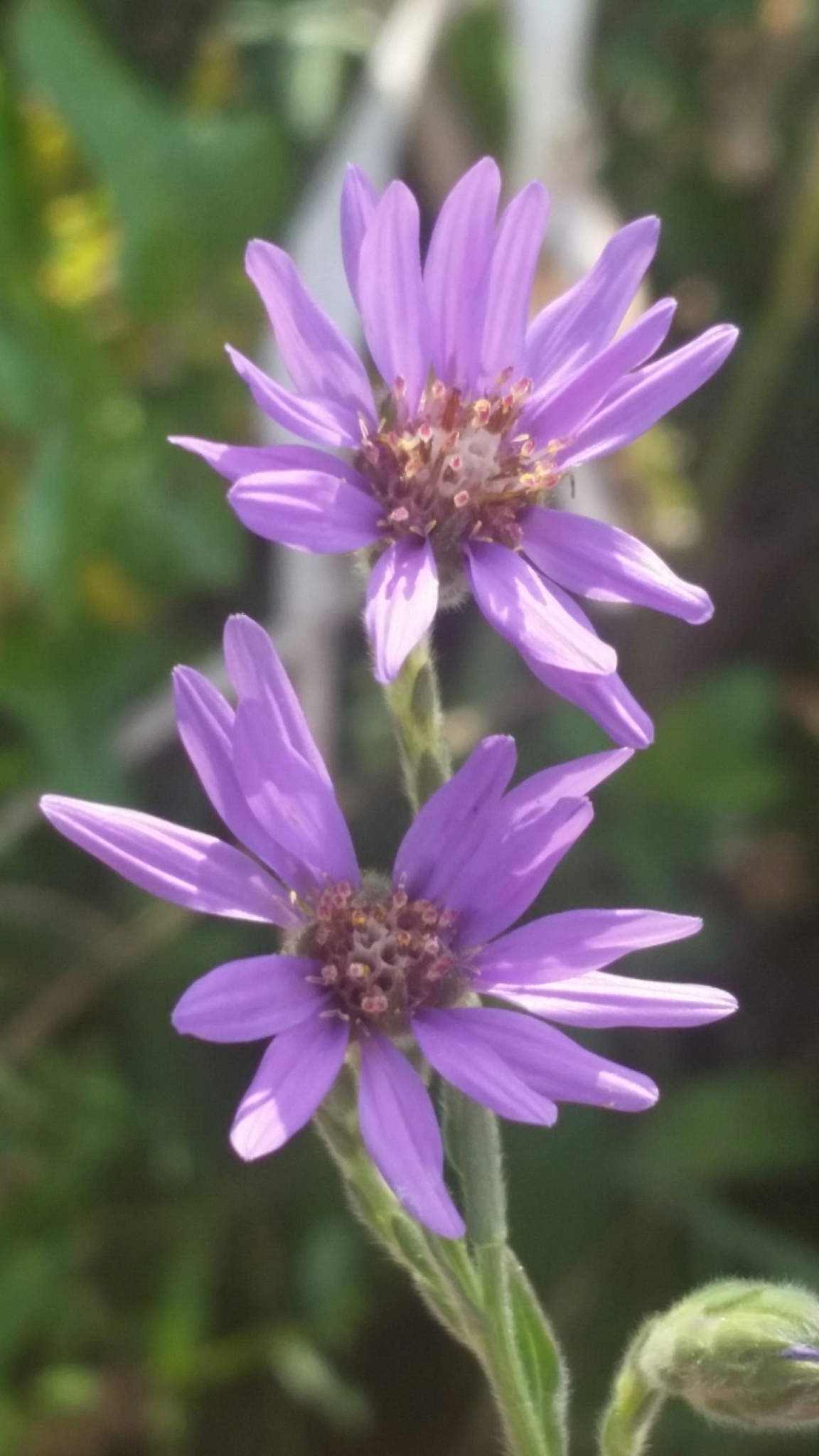
Symphyotrichum concolor, known as Eastern Silver Aster or eastern silvery aster, is a slender fall-blooming wildflower of dry, sandy pinelands and openings in the eastern United States. Its stems and leaves are covered with fine, silky, silvery hairs that give the whole plant a soft gray-green sheen, and from late summer into late fall its wand-like stems are lined with lavender to rose-purple flower heads. It is a member of the aster family (Asteraceae) and was long known as Aster concolor, the name still used in many older field guides.
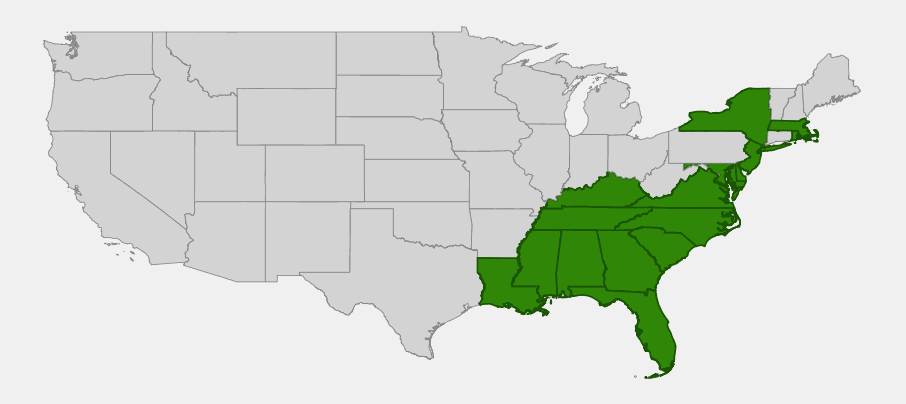
The species name concolor means “of one color” and refers to the leaves, which are equally silvery on both surfaces. Unlike many asters that form bushy, many-branched plants, eastern silver aster usually grows as a few upright stems 1 to 2½ feet tall, with flowers arranged along the upper stem in a long, narrow cluster. It is native to Florida according to the Atlas of Florida Plants, and USDA PLANTS records it from Massachusetts south to Florida and west to Louisiana, Tennessee and Kentucky.
For gardeners, it is a choice plant for dry, sunny, sandy sites and for late-season color in meadows and pine savanna plantings. This guide covers how to identify it, where it grows, how to grow it and its value for pollinators.
Identification
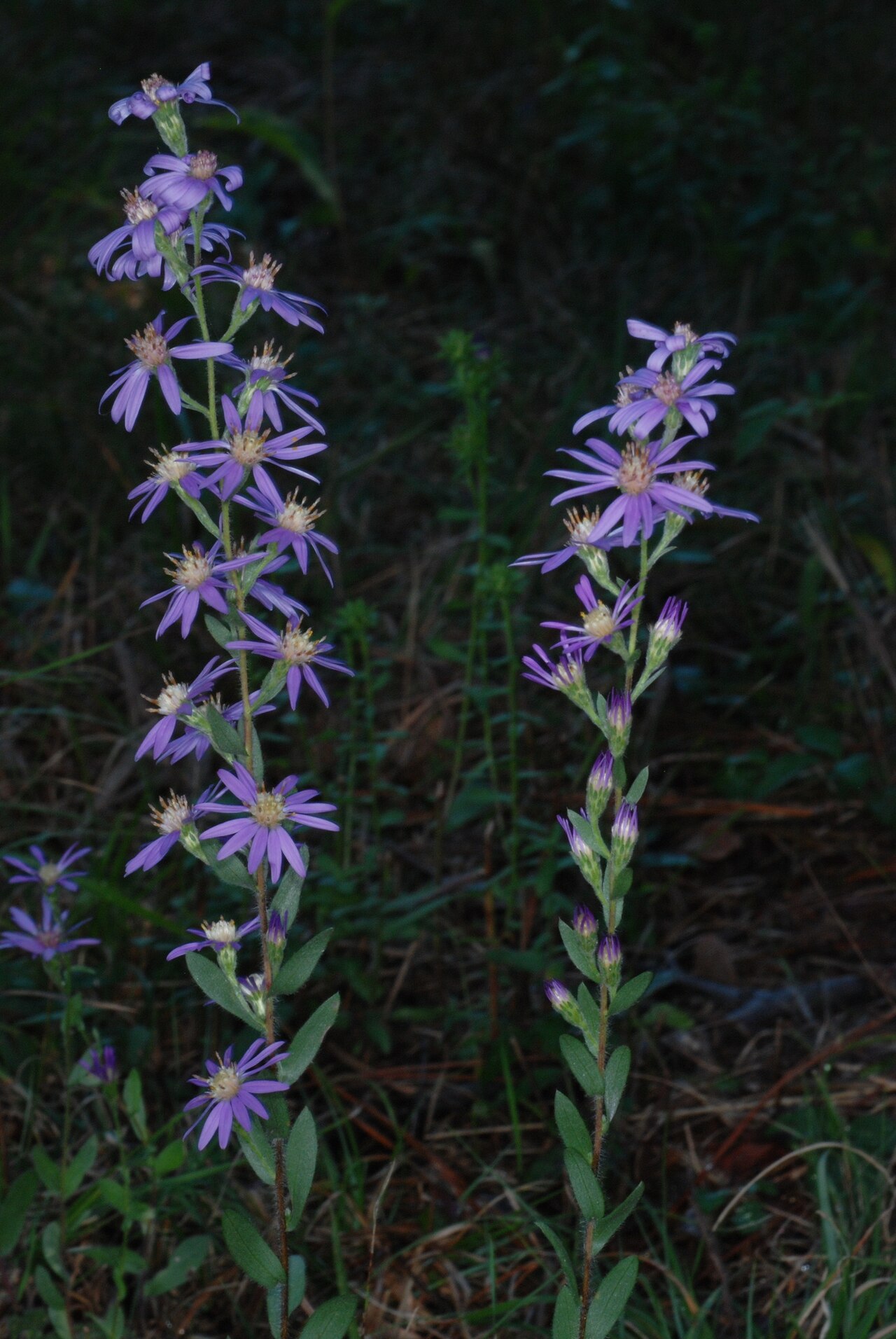
Eastern silver aster is one of the easiest asters to recognize. Look for silky, silvery leaves that clasp or hug the stem, unbranched or sparsely branched wand-like stems, and flower heads in a long, narrow spike.
Stems & Habit
Plants grow from a short, woody base with fibrous roots and send up one to several stiff, upright stems, usually 1 to 2½ feet (30 to 80 cm) tall. Stems are densely covered with fine, silky hairs and are often unbranched below the flower cluster. Old stems may persist through winter.
Leaves
The leaves are alternate, stalkless, oblong to elliptic, and mostly 1/2 to 2 inches long, getting smaller toward the top of the stem. Both surfaces are covered with flattened, silky hairs, giving them a soft, silvery-gray to gray-green look. The lower leaves often wither before flowering.
Flowers
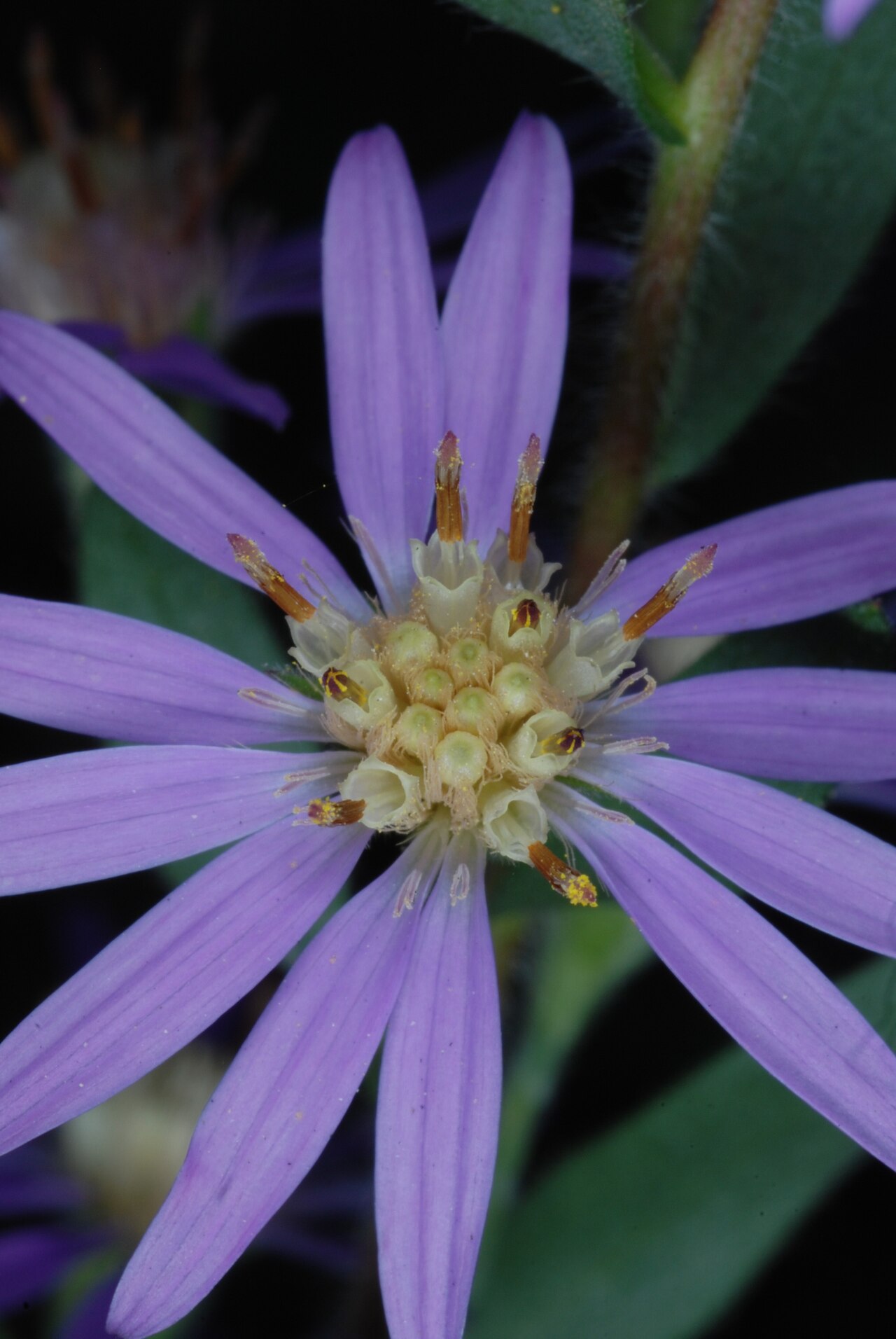
The flower heads are about 3/4 to 1 inch across, arranged in a long, narrow, spike-like cluster along the upper stem. Each head has roughly 8 to 12 or more lavender to rose-purple rays, rarely white, around a disk of small tubular florets that are yellow at first and turn pinkish or purple. The overlapping bracts beneath each head are also silky-hairy. Bloom runs from late summer to late fall. The Lady Bird Johnson Wildflower Center records flowering from August into December.
Fruit & Seeds
Each flower produces a small, dry, hairy fruit (cypsela), commonly called an achene, topped with a tuft of tan bristles (pappus) that carries it on the wind. Seeds ripen a few weeks after flowering.
Similar Species
Silky Aster (S. sericeum) of the Midwest and Plains has similarly silky leaves but is a bushier, more branched plant, and its range barely overlaps. Savannah Aster (S. chapmanii) of Florida Panhandle wet savannas has narrow, smooth leaves. Late Purple Aster (S. patens) has rough, green leaves that clasp the stem with heart-shaped bases. Blazing stars have similar purple spikes but lack ray flowers.
Quick Facts
| Scientific Name | Symphyotrichum concolor (L.) G.L. Nesom (syn. Aster concolor, Lasallea concolor, Virgulus concolor) |
| Family | Asteraceae (aster family) |
| Plant Type | Herbaceous perennial wildflower |
| Mature Height | 1–2½ ft (30–80 cm) |
| Mature Spread | 6–12 in |
| Growth Rate | Moderate |
| Sun Exposure | Full sun |
| Water Needs | Low; drought tolerant once established |
| Soil Type | Dry, well-drained sand or sandy loam |
| Soil pH | Acidic, about 4.5–6.5 |
| Bloom Time | Late summer to late fall (about August–December) |
| Flower Color | Lavender to rose-purple rays (rarely white); yellow disk turning purple |
| Fall Color | Silvery foliage; seed heads tan |
| Fruit | Small hairy cypsela (achene) with a tuft of bristles |
| Deer Resistant | Moderately; hairy foliage is less favored than that of many asters |
| USDA Hardiness Zones | 6–10 |
Native Range
Eastern silver aster is a plant of the Atlantic and Gulf Coastal Plain and Piedmont. USDA PLANTS and the Lady Bird Johnson Wildflower Center record it from Massachusetts, Rhode Island, New York, New Jersey, Delaware, Maryland, the District of Columbia and Virginia south through the Carolinas and Georgia to Florida, and west to Alabama, Mississippi, Louisiana, Tennessee and Kentucky. It also grows in the Bahamas.
It is most common in the Southeast, particularly in Florida, Georgia and the Carolinas, where it grows in sandhills, dry pine flatwoods, pine savannas, scrub edges, old fields and sandy roadsides. Farther north it is rare and limited to sandy pine barrens and coastal plain openings. NatureServe ranks it as critically imperiled in Maryland and New York and possibly extirpated in Delaware, though it is secure across its range as a whole.
In Florida the Atlas of Florida Plants lists it as native, and it occurs in dry, sandy pinelands across much of the state. Like most pineland wildflowers, it thrives with frequent fire, which clears away shrubs and leaf litter and stimulates flowering. Where fire is suppressed and the canopy closes, it declines.
📋 Regional plant lists featuring Eastern Silver Aster: North & South Florida · Alabama, Georgia & Mississippi · North & South Carolina · Maryland, Virginia & West Virginia · Kentucky & Tennessee · Arkansas, Louisiana, Eastern Oklahoma & Eastern Texas · New York, Pennsylvania & Northern New Jersey · Delaware, Southern New Jersey & Long Island · Connecticut, Massachusetts & Rhode Island
Growing & Care Guide
Eastern silver aster is easy to grow if you give it sun and sharp drainage. It is not as commonly sold as garden asters, but native plant nurseries in Florida and the Southeast offer it, and it grows readily from seed. Use nursery-grown plants or seed from cultivated sources rather than digging wild plants, especially in the northern states where it is rare.
Light
Full sun. In shade the stems flop and the plant blooms poorly.
Soil & Water
It needs dry to moderately dry, well-drained sandy soil, and it does best in acidic, nutrient-poor sand. Rich, moist garden soils make plants tall and floppy and shorten their life. Water new plants until established; afterward they need no irrigation except in extreme drought. Do not fertilize.
Planting Tips
Plant in fall or early spring, about 12 inches apart, in groups of three or more for a better display. It looks best mixed with grasses such as wiregrass or little bluestem and other fall wildflowers such as golden asters and blazing stars, which support its slender stems.
Pruning & Maintenance
Leave stems standing after bloom so seed can ripen and feed birds, then cut them down in late winter. A late-winter mowing or prescribed burn in larger plantings mimics the fire that keeps its natural habitat open. Avoid pinching or cutting back in summer, which can reduce flowering.
Propagation
Sow fresh seed in fall or early spring on the surface of a sandy mix and keep it lightly moist. Germination is usually good without special treatment, though a short period of cold, moist stratification can help. Established clumps can be carefully divided in late winter.
Landscape Uses
- Pine savanna and meadow plantings: late-season color with grasses, golden asters and blazing stars
- Dry, sunny gardens: for sandy beds, slopes and rock gardens where silvery foliage stands out
- Pollinator gardens: a valuable late nectar source for bees and butterflies
- Habitat restoration: in sandhills, pine barrens and dry pinelands within its native range
- Cut flowers: the slender flowering stems last well in small arrangements
Wildlife & Ecological Value
Blooming when many other wildflowers have finished, eastern silver aster is an important late-season food source for insects in dry pinelands.
For Pollinators
The flower heads provide nectar and pollen to bumblebees, sweat bees, mining bees and other native bees in fall, as well as to butterflies, skippers, flies and wasps. Plants in the genus Symphyotrichum are larval host plants for the pearl crescent butterfly.
For Birds
Small seed-eating birds such as sparrows and finches eat the seeds in late fall and winter, especially when stems are left standing.
For Mammals
Rabbits and deer may graze young shoots, though the hairy foliage is less favored than that of many asters. The plant is otherwise of minor importance to mammals.
Ecosystem Role
It is part of the diverse groundcover of fire-maintained pinelands and sandhills, among the most species-rich plant communities in North America. It flowers abundantly after fire and helps bridge the gap between summer and winter for pollinators.
Cultural & Historical Uses
Linnaeus described this species in 1753 as Aster concolor. In the late twentieth century, studies of asters showed that the North American species were not closely related to the Old World asters, and they were divided among several genera. Guy Nesom moved this species to Symphyotrichum in the mid-1990s. Along the way it has also been placed in Lasallea and Virgulus, and USDA PLANTS lists these names, together with Aster plumosus and Aster simulatus, as synonyms.
Two varieties are recognized in some treatments: the widespread var. concolor and var. devestitum. Both are covered by this page.
Eastern silver aster has little recorded traditional use. Its main value today is ecological and ornamental: it is a favorite of native plant gardeners for its silvery foliage and late bloom, and it is used in seed mixes for pine savanna and sandhill restoration.
Frequently Asked Questions
Is eastern silver aster the same as Aster concolor?
Yes. Aster concolor is the older name. The species is now placed in Symphyotrichum, along with most other North American asters.
Why is it called silver aster?
The leaves and stems are covered with fine, flattened, silky hairs that give the plant a silvery or gray-green shine. The name concolor refers to the leaves being the same color on both sides.
When does eastern silver aster bloom?
From late summer into late fall, roughly August to December depending on location. In Florida it often blooms from September to November.
Does it need rich soil?
No. It grows best in poor, dry, acidic sand. Rich, moist soil makes it floppy and short-lived.
Is it good for pollinators?
Yes. It provides nectar and pollen to bees, butterflies and other insects late in the season, when few other flowers are available.

Looking for a nursery that carries Eastern Silver Aster?
Browse our native plant nursery directory: Alabama · Delaware, Florida & Georgia · Kentucky, Louisiana, Maryland, Massachusetts & Mississippi · New Jersey, New York & North Carolina · Rhode Island, South Carolina, Tennessee & Virginia