
Roundleaf Thoroughwort (Eupatorium rotundifolium)
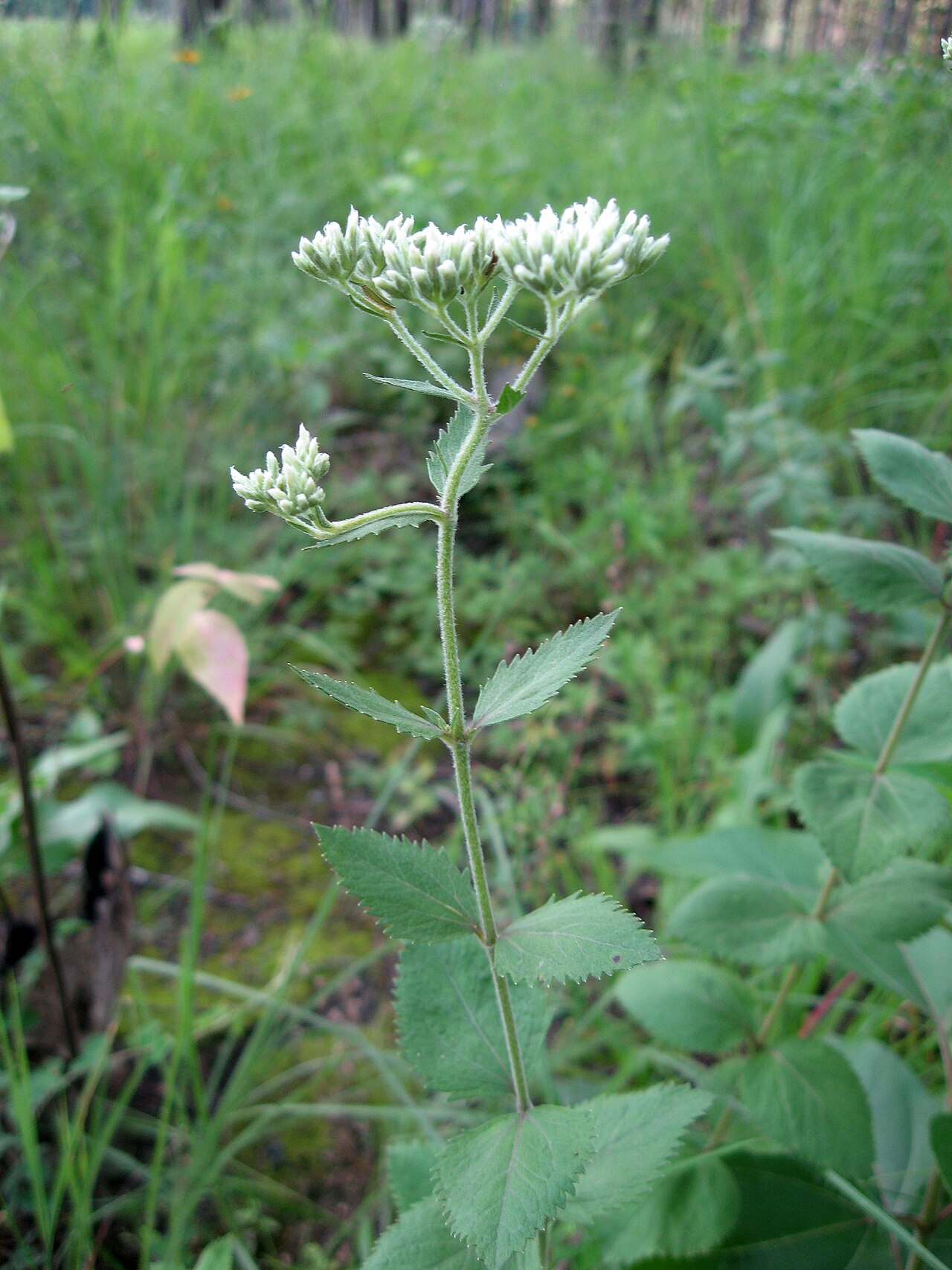
Eupatorium rotundifolium, known as Roundleaf Thoroughwort, roundleaf boneset or false horehound, is a hairy perennial wildflower of open pinelands, savannas, old fields and woodland edges across the eastern United States. It belongs to the aster family (Asteraceae). In late summer and fall it produces flat-topped clusters of small, fuzzy white flower heads above pairs of rounded, coarsely toothed, stalkless leaves, and the flowers are swarmed by bees, wasps, flies and butterflies.
Roundleaf thoroughwort is a close relative of the better-known Boneset (Eupatorium perfoliatum), but its leaves are separate at the base rather than joined around the stem, and they are broad and roundish rather than long and tapering. The name “false horehound” refers to the resemblance of its gray-hairy, wrinkled leaves to those of horehound, a Eurasian herb in the mint family.
It grows from Maine and New York south to Florida and west to Arkansas and eastern Texas, and it is especially common on the Coastal Plain of the Southeast, including much of Florida. It is easy to grow, tolerates poor soil and drought, and is an excellent late-season pollinator plant for sunny meadows and naturalistic gardens. This guide covers how to identify it, where it grows, how to grow it, and why insects love it.
Identification
The genus Eupatorium includes many similar white-flowered species in the Southeast, and they hybridize and vary, so identification is not always easy. Roundleaf thoroughwort is one of the more distinctive members of the group, thanks to its broad, round leaves.
Stems & Habit
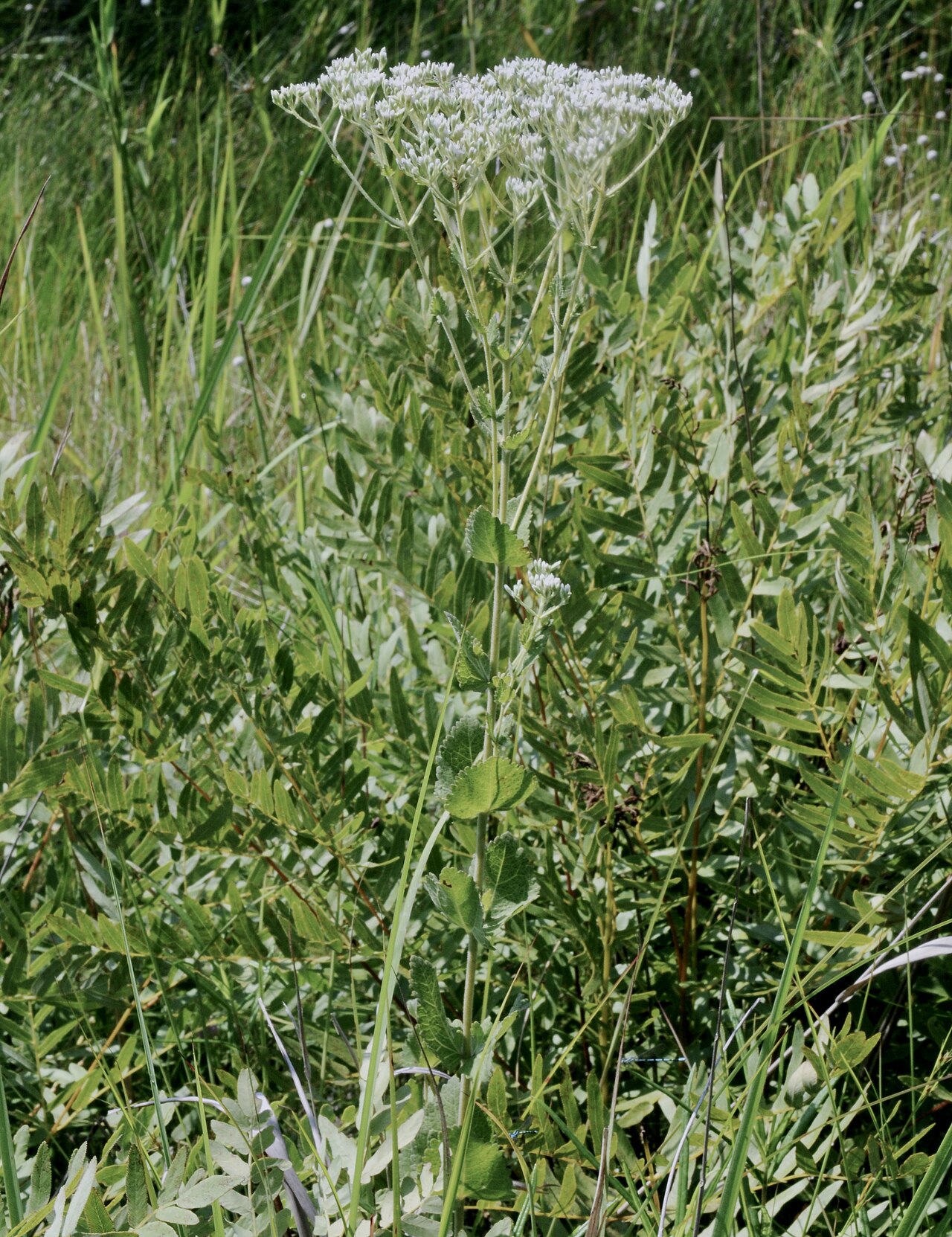
It grows from a short rootstock and produces one to several erect stems, usually 1 to 3 feet tall and occasionally to about 4 or 5 feet. The stems are densely covered with short, spreading, grayish hairs and branch only near the top, in the flower cluster.
Leaves
The leaves are opposite, stalkless or nearly so, and broadly ovate to almost round, usually 1 to 3 inches long and nearly as wide. They have a rounded or slightly heart-shaped base, coarsely toothed edges, three prominent veins from near the base, and a rough, hairy surface with a wrinkled look. Each pair of leaves is set at right angles to the pair below. Leaves get smaller toward the top. Narrower-leaved forms have been named as varieties, such as var. ovatum and var. scabridum.
Flowers
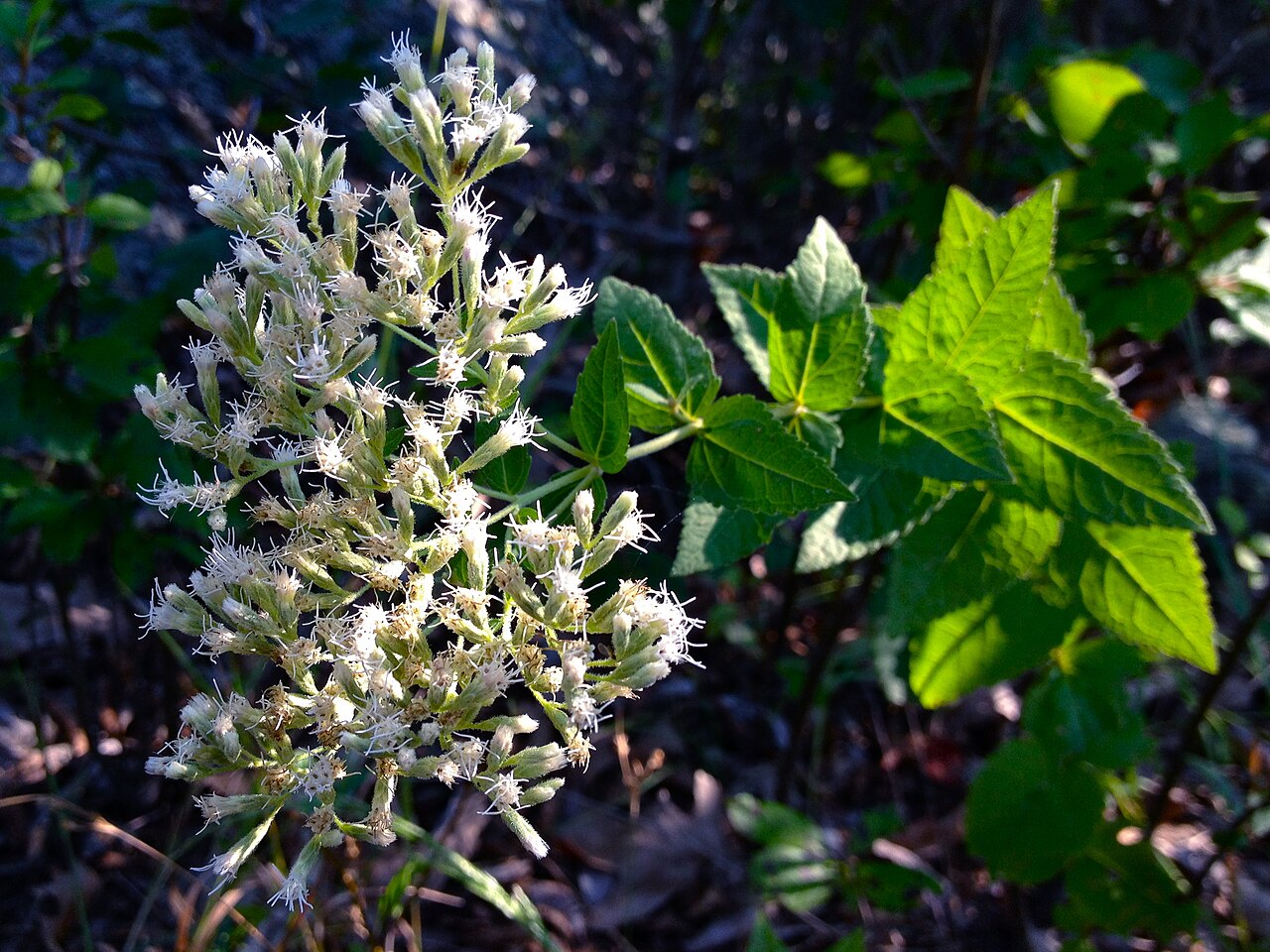
The flower heads are small, about ¼ inch long, each containing about five white, tubular disk florets with long, protruding, thread-like styles that give the heads a fuzzy look. There are no ray florets. The heads are crowded into a branched, flat-topped to slightly rounded cluster, 2 to 6 inches across, at the top of the stem. Flowering is from July through October, with peak bloom in late summer.
Fruit & Seeds
The fruits are small, dark, ribbed achenes topped by a tuft of fine white bristles (pappus) that carry them on the wind, like tiny dandelion seeds. Many populations of roundleaf thoroughwort reproduce partly by apomixis, forming seed without fertilization, which helps explain the plant’s variability.
Quick Facts
| Scientific Name | Eupatorium rotundifolium |
| Family | Asteraceae (aster family) |
| Plant Type | Herbaceous perennial wildflower |
| Mature Height | 1–3 ft (occasionally to 5 ft) |
| Mature Spread | 1–2 ft |
| Growth Rate | Moderate to fast |
| Sun Exposure | Full sun to partial shade |
| Water Needs | Low to moderate; dry to moist soils |
| Soil Type | Sandy, loamy or clay soils; often acidic and nutrient-poor |
| Soil pH | About 4.5–7.0 |
| Bloom Time | July–October |
| Flower Color | White |
| Fall Color | Not notable; fluffy seed heads turn tan |
| Fruit | Small achene with a tuft of white bristles |
| Deer Resistant | Yes; the bitter, hairy foliage is seldom browsed |
| USDA Hardiness Zones | 5–9 |
Native Range
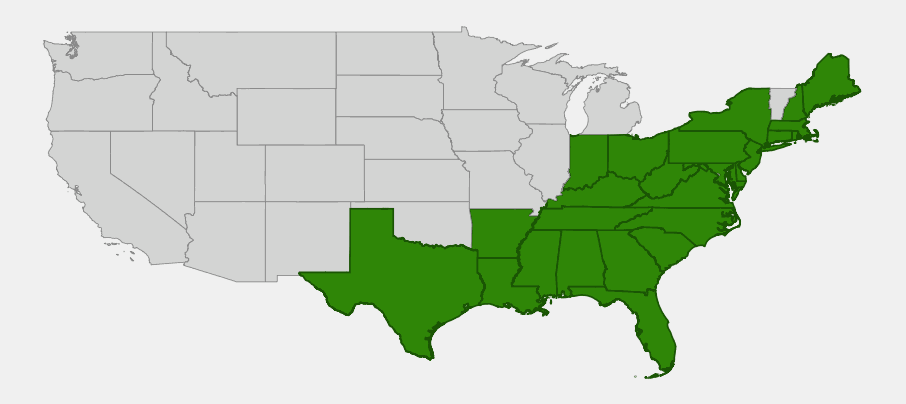
Roundleaf thoroughwort is native to the eastern United States. The Lady Bird Johnson Wildflower Center records it from 24 states and the District of Columbia, from Maine, New Hampshire and Massachusetts south through the Atlantic states to Florida, and west through Pennsylvania, Ohio, Indiana, Kentucky and Tennessee to Arkansas, Louisiana and eastern Texas. It also grows in Maryland. USDA PLANTS lists it as native to the lower 48 states.
It is most abundant on the Atlantic and Gulf Coastal Plain from New Jersey to Florida and eastern Texas, where it is a familiar late-summer wildflower of pine savannas, flatwoods, sandhills and roadsides. In Florida it is most common in the northern and central parts of the state. Farther north and inland it becomes less common and is limited to sandy barrens, open oak and pine woods and acidic clearings. In parts of New England it is rare.
Its habitats include open pine woods and savannas, mesic to dry pine flatwoods, sandhills, the edges of bogs and wet savannas, old fields, power-line clearings and roadsides. It thrives where fire, mowing or other disturbance keeps the vegetation open.
📋 Regional plant lists featuring Roundleaf Thoroughwort: North & South Florida · Alabama, Georgia & Mississippi · North & South Carolina · Maryland, Virginia & West Virginia · Kentucky & Tennessee · Arkansas, Louisiana, Eastern Oklahoma & Eastern Texas · Ohio & Indiana · New York, Pennsylvania & Northern New Jersey · Delaware, Southern New Jersey & Long Island · Connecticut, Massachusetts & Rhode Island · New Hampshire, Maine & Vermont
Growing & Care Guide
Roundleaf thoroughwort is not often sold as a garden plant, but seed and plugs are available from some native plant nurseries and seed companies in the Southeast and Mid-Atlantic. It is easy to grow in a sunny, informal setting and asks for very little care.
Light
Plant it in full sun for sturdy stems and the heaviest bloom. It tolerates partial shade along woodland edges, but plants in shade are taller, weaker and flower less.
Soil & Water
It grows in a wide range of soils, from dry sand to moist loam and clay, and it prefers acidic, nutrient-poor conditions. Once established it is drought tolerant, and it also handles seasonally moist ground. Do not fertilize: rich soil makes plants floppy and favors competing weeds.
Planting Tips
Sow seed on the soil surface in fall or early winter, since it benefits from a period of cold, moist conditions, or plant plugs in spring. Space plants about 12 to 18 inches apart. It is best suited to meadows, prairie and savanna plantings, the back of informal borders and other sunny spots where it can mingle with grasses and other wildflowers.
Pruning & Maintenance
Leave the stems standing over winter for their seed and for insects that overwinter in hollow stems, and cut them back in late winter or early spring. Mowing or a controlled burn every year or two in late winter imitates the natural disturbance that keeps its habitat open. It can self-seed modestly; pull unwanted seedlings in spring.
Propagation
Grow it from seed collected in fall when the fluffy seed heads are ripe. Seed germinates best after 30 to 60 days of cold, moist stratification. Established clumps can also be divided in early spring.
Landscape Uses
- Pollinator gardens: an outstanding late-summer and fall nectar source for bees, wasps, flies and butterflies
- Meadows and prairie plantings: pairs well with little bluestem, blazing stars, goldenrods and asters
- Pine savanna and sandhill restoration: a common component of fire-maintained groundcover on the Coastal Plain
- Roadsides and rights-of-way: thrives in sunny, mowed, low-fertility sites
- Naturalistic and xeriscape gardens: drought-tolerant and low-maintenance once established
Wildlife & Ecological Value
Like most thoroughworts, roundleaf thoroughwort is a magnet for insects in late summer, and it is an important food source in the pinelands and old fields where it grows.
For Pollinators
The fuzzy white flower heads offer easily reached nectar and pollen to a wide range of insects. The Xerces Society notes it has special value to native bees, and it is also visited by many wasps, flies, beetles and butterflies, including hairstreaks, skippers and fritillaries. Thoroughwort flowers are famous among naturalists for the variety of wasps they attract, including thread-waisted wasps and other beneficial predators. Some Eupatorium species are also visited by certain moths that collect plant chemicals from them.
For Birds
Small birds such as sparrows and finches eat the seeds in fall and winter. The many insects that visit the flowers are an important food source for insect-eating birds that nest in pinelands and old fields.
For Mammals
The bitter, hairy foliage is seldom browsed by deer or rabbits, so it is a good choice where deer are a problem.
Ecosystem Role
Roundleaf thoroughwort is a characteristic plant of the fire-maintained groundcover of Coastal Plain pinelands and savannas. It resprouts readily after fire and often flowers abundantly in the season following a burn. It is an indicator of open, sunny, low-nutrient habitats.
Cultural & Historical Uses
The genus Eupatorium takes its name from Mithridates VI Eupator, king of Pontus in the 1st century BCE, who was said to have used a plant in this group as a medicine. “Thoroughwort” is an old English name for boneset, whose leaves are pierced “through” by the stem. Roundleaf thoroughwort shares the name, even though its leaves are not joined around the stem.
Like boneset, roundleaf thoroughwort has been used in folk medicine, as a bitter tonic and for fevers and colds. These uses are not well studied, and many members of the genus contain compounds that can be harmful in large amounts. The plant should not be used as medicine without professional advice.
Linnaeus described the species in 1753 from specimens collected in North America. Its variability has given botanists much to study: research on the genus has shown that many populations of roundleaf thoroughwort are of hybrid origin and reproduce by apomixis, and several forms once considered separate species are now treated as varieties of it.
Frequently Asked Questions
How is roundleaf thoroughwort different from boneset?
Boneset has long, tapering leaves joined at the base so that the stem appears to pierce them, and it grows in wetter places. Roundleaf thoroughwort has short, roundish, separate leaves and grows in drier, open pinelands and fields.
Why is it called false horehound?
Its gray-hairy, wrinkled, toothed leaves resemble those of horehound (Marrubium vulgare), a Eurasian herb in the mint family. The two plants are not related.
Is roundleaf thoroughwort good for pollinators?
Yes. It is one of the best late-season nectar plants in pinelands and meadows, visited by native bees, wasps, flies and butterflies, and the Xerces Society notes its special value to native bees.
Does it spread aggressively?
No. It forms clumps and self-seeds modestly in open, sunny ground, but it is not invasive and is easily managed in a garden.
Where does it grow in Florida?
It is most common in northern and central Florida, in pine flatwoods, sandhills, savannas and along roadsides, where it blooms from late summer into fall.

Looking for a nursery that carries Roundleaf Thoroughwort?
Browse our native plant nursery directory: Alabama & Arkansas · Connecticut, Delaware, Florida & Georgia · Indiana · Kentucky, Louisiana, Maine, Maryland, Massachusetts & Mississippi · New Hampshire, New Jersey, New York, North Carolina & Ohio · Pennsylvania, Rhode Island, South Carolina, Tennessee, Texas & Virginia · West Virginia