
Arrowleaf Tearthumb (Polygonum sagittatum)
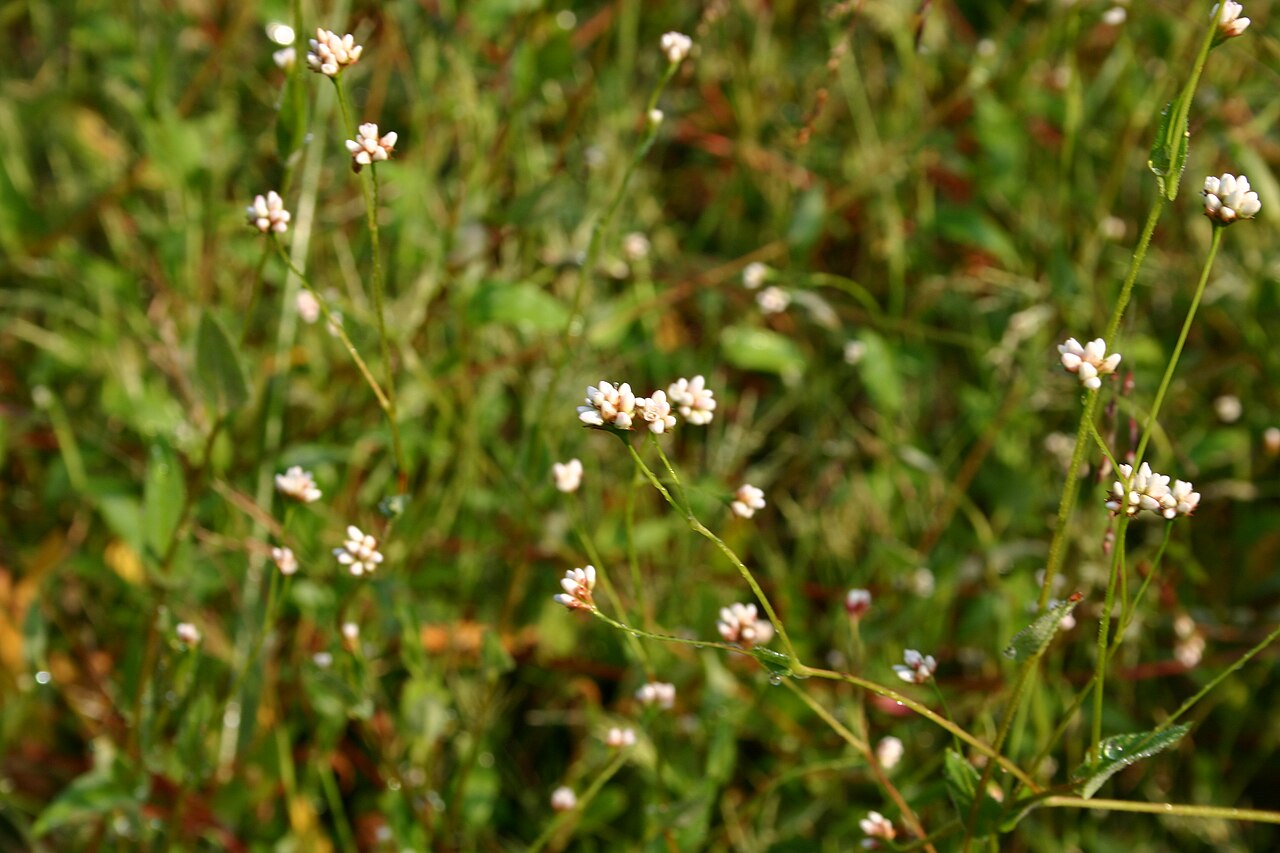
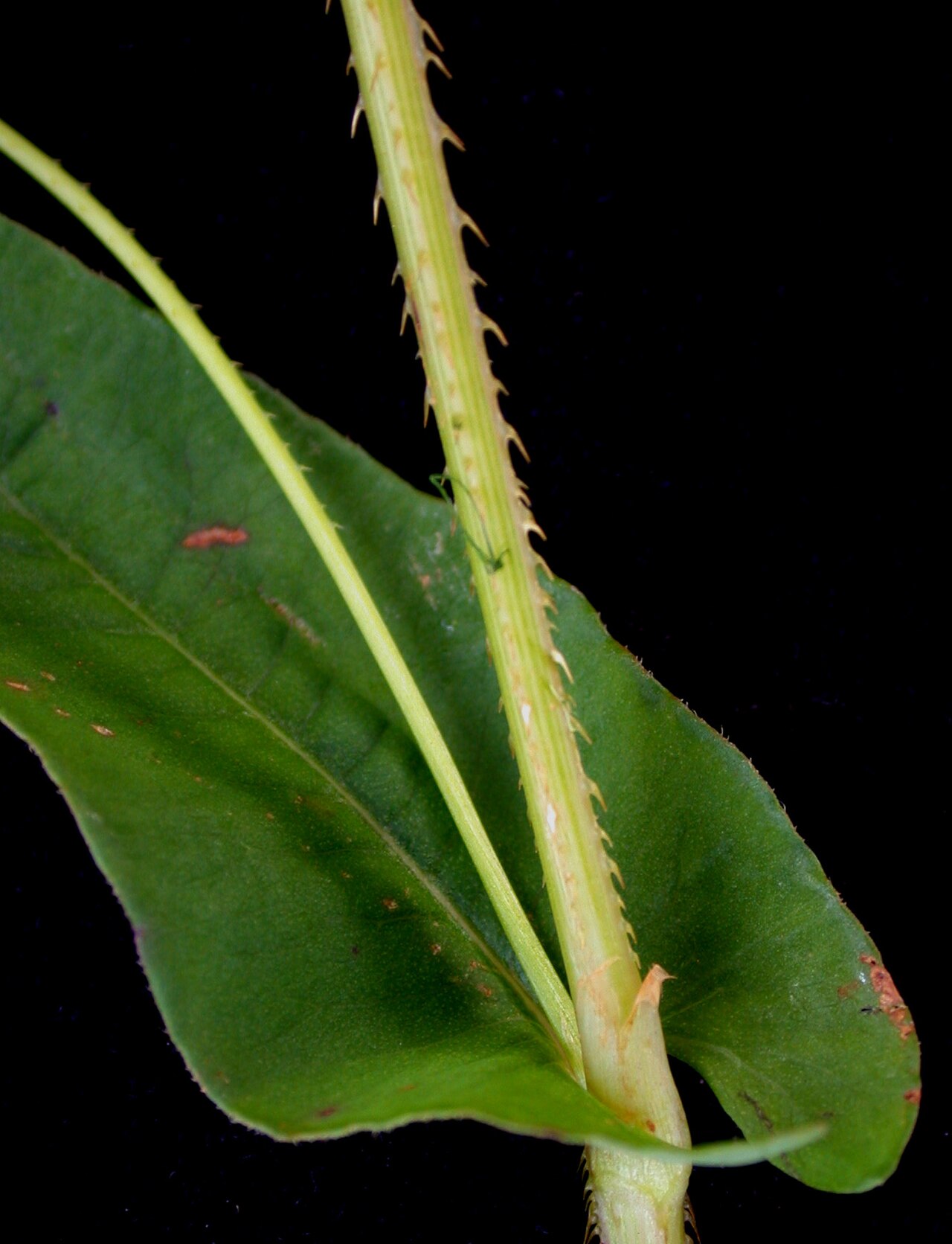
Polygonum sagittatum, the Arrowleaf Tearthumb (also called arrow-leaved tearthumb, American tearthumb or arrow-vine), is a scrambling annual of marshes, wet meadows and stream banks across eastern and central North America. Its weak, four-angled stems are lined with tiny, backward-pointing prickles that hook onto surrounding plants, letting it clamber up to 3 to 6 feet through sedges, grasses and shrubs. Anyone who has pushed through a late-summer wet meadow bare-armed knows how it earned its common name.
The leaves are narrow and arrow-shaped, with two backward-pointing lobes at the base, and from midsummer into fall the plant carries small, rounded heads of white to pink flowers on long, slender stalks. It is a member of the buckwheat or smartweed family (Polygonaceae) and is often placed in the genus Persicaria as Persicaria sagittata, the name used by the Flora of North America and many recent field guides. USDA PLANTS keeps it in Polygonum.
Arrowleaf tearthumb is rarely planted on purpose, but it is a valuable native wetland plant. Its seeds feed waterfowl, rails and sparrows, its tangles shelter small animals, and it helps knit together the edges of marshes and streams. This guide explains how to identify it, how to tell it apart from the invasive mile-a-minute vine, and where it fits in wetland gardens and restorations.
Identification
Arrowleaf tearthumb is easiest to recognize by touch and leaf shape. The combination of prickly, angled stems, arrowhead-shaped leaves and small round flower heads on long stalks is distinctive.
Stems
The stems are slender, weak, four-angled and usually 1 to 6 feet long. They grow upright when young but soon lean and sprawl, supported by surrounding plants. Each angle of the stem carries a row of small, sharp, downward-pointing prickles that catch on skin and clothing. At each node a thin, papery sheath (ocrea), typical of the smartweed family, wraps the stem at the leaf base.
Leaves
The alternate leaves are lance-shaped to oblong, about 1 to 4 inches long, with an arrowhead (sagittate) base whose two lobes point backward. They are held on short stalks, or are nearly stalkless, and the midribs on the underside often carry a few small prickles. The leaves are bright green, sometimes tinged red late in the season.
Flowers
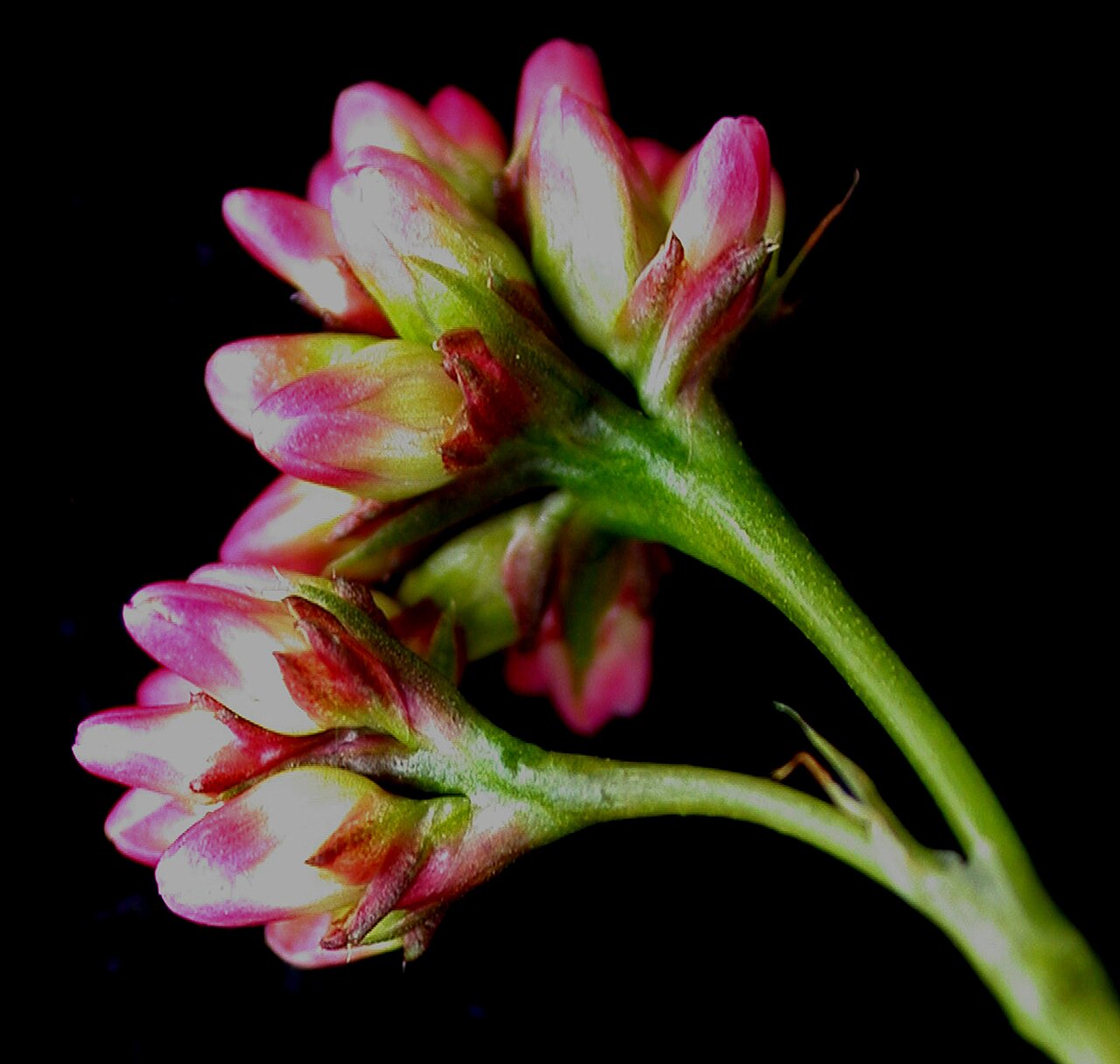
From about July to October, small, rounded to slightly elongated flower heads, each about a quarter to half an inch long, appear at the tips of long, slender stalks, often in pairs. Each head contains a dense cluster of tiny flowers with five petal-like tepals, which are white, greenish-white or pink, often with darker rose tips. The flowers do not open widely; they look like small beads.
Fruit & Seeds
Each flower produces a single three-sided, shiny, dark brown to black achene about an eighth of an inch long, enclosed by the persistent tepals. Seeds ripen from late summer into fall and drop into water or wet soil, where they remain dormant over winter before germinating in spring.
Similar Species
Halberd-leaved tearthumb (Polygonum arifolium) shares the prickly stems, but its leaves are broader, with outward-spreading basal lobes like a halberd, and it has fewer flowers in looser clusters. Mile-a-minute (Persicaria perfoliata), an aggressive invasive from Asia, has triangular leaves, round leafy collars that encircle the stem, and glossy blue berry-like fruit. Arrowleaf tearthumb never has blue fruit or saucer-shaped collars.
Quick Facts
| Scientific Name | Polygonum sagittatum L. (syn. Persicaria sagittata, Tracaulon sagittatum, Truellum sagittatum) |
| Family | Polygonaceae (buckwheat or smartweed family) |
| Plant Type | Annual herb with scrambling, prickly stems |
| Mature Height | 1–6 ft long, climbing on other plants |
| Mature Spread | 1–3 ft; forms tangled patches |
| Growth Rate | Fast |
| Sun Exposure | Full sun to partial shade |
| Water Needs | High; wet to saturated soils and shallow water |
| Soil Type | Muck, peat, sandy or silty wet soils |
| Soil pH | Acidic to slightly alkaline (about 5.0–7.5) |
| Bloom Time | July–October |
| Flower Color | White, greenish-white or pink |
| Fall Color | Leaves sometimes reddish before frost |
| Fruit | Small, three-sided, dark brown to black achene |
| Deer Resistant | Generally yes; the prickly stems are seldom browsed |
| USDA Hardiness Zones | 3–9 (as a reseeding annual) |
Native Range
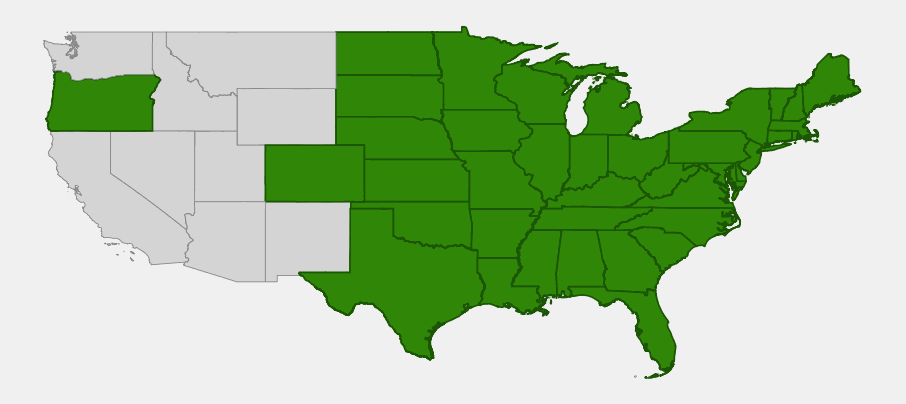
Arrowleaf tearthumb is one of the most widespread wetland plants of eastern North America. USDA PLANTS lists it as native in 39 states and the District of Columbia, from Maine and Minnesota south to Florida and Texas and west to North Dakota, South Dakota, Nebraska, Kansas and Oklahoma, with outlying populations in Colorado and Oregon. In Canada it ranges from Manitoba and Ontario east through Quebec to New Brunswick, Nova Scotia, Prince Edward Island, Newfoundland and Labrador, and it also grows on the French islands of Saint Pierre and Miquelon.
It is most common in the glaciated Northeast and Great Lakes region and along the Atlantic and Gulf Coastal Plain, where marshes, swamps and wet meadows are abundant. In the Great Plains it is local, limited to stream and river margins and wet depressions. The same species, or a very close relative, also grows in eastern Asia, including China, Korea, Japan and the Russian Far East.
Typical habitats include freshwater marshes, wet meadows, sedge meadows, shrub swamps, wooded swamp edges, beaver ponds, stream and river banks, lake shores, ditches and other places with saturated soil. It favors sunny openings but tolerates partial shade, and it often grows thickly where water levels fluctuate, exposing mud in summer.
📋 Regional plant lists featuring Arrowleaf Tearthumb: New York, Pennsylvania & Northern New Jersey · Idaho, Eastern Oregon & Eastern Washington · Ohio & Indiana · Michigan, Wisconsin & Eastern Minnesota · Kentucky & Tennessee · Nebraska, Kansas & Eastern Colorado · Connecticut, Massachusetts & Rhode Island · New Hampshire, Maine & Vermont · Maryland, Virginia & West Virginia · Delaware, Southern New Jersey & Long Island · Illinois, Iowa & Missouri · Alabama, Georgia & Mississippi · North & South Florida
Growing & Care Guide
Arrowleaf tearthumb is not a plant for borders or paths, but it has a place in naturalized wetland gardens, rain-garden margins and restoration sites. In most cases you will not need to plant it at all: it usually arrives on its own wherever there is wet, open ground, and the gardener’s job is simply to decide where to let it stay.
Light
It grows best in full sun to partial shade. In deep shade it becomes sparse and flowers little.
Soil & Water
Provide constantly moist to saturated soil, including mud flats, shallow water at pond edges or the low zone of a rain garden. It is not fussy about soil type and grows in muck, peat, sand or silt. It will not survive in dry garden soil.
Planting Tips
If you want to establish it in a restoration, sow seed in fall on wet, bare soil so that it gets the cold, moist winter it needs to germinate. Combine it with sturdier companions such as sedges, rushes, jewelweed and buttonbush, which it will use as support. Keep it away from paths and seating areas, since the prickly stems scratch skin.
Pruning & Maintenance
No maintenance is needed in natural areas. If it becomes a nuisance along a trail or shoreline, pull plants in early summer before they flower, wearing gloves and long sleeves. As an annual, it does not return from the roots, so preventing seed set steadily reduces its numbers.
Propagation
Propagation is by seed. Collect ripe achenes in fall and sow them outdoors right away, or store them moist and cold over winter and sow in spring. Plants self-sow readily wherever they find open, wet ground.
Landscape Uses
- Wetland restoration: a native annual that quickly covers wet, disturbed soil and provides seed for wildlife
- Pond and stream margins: scrambles through emergent plants at the water’s edge
- Naturalized rain gardens: suits the wettest zone of large, informal rain gardens away from paths
- Wildlife habitat: seed source for waterfowl, rails and sparrows
- Natural barriers: its prickly tangles discourage foot traffic through sensitive wetland edges
Wildlife & Ecological Value
Arrowleaf tearthumb rarely attracts attention, but in many marshes and wet meadows it produces large amounts of seed and forms protective cover at a time of year when wildlife needs both.
For Pollinators
The small flowers are visited by a variety of small insects, including small bees, flies and wasps, especially in late summer and early fall. They are not a major nectar source, but they add to the late-season supply in wetlands.
For Birds
Like the seeds of many smartweeds, tearthumb seeds are eaten by ducks and other waterfowl, rails, and seed-eating songbirds such as sparrows. Its tangles also provide cover for marsh birds such as swamp sparrows and common yellowthroats.
For Mammals
Small mammals such as mice and voles eat the seeds and shelter in the tangled stems. The prickly stems discourage most browsing, including by deer.
Ecosystem Role
As a fast-growing annual, arrowleaf tearthumb quickly covers exposed mud and disturbed wet soil, helping to hold it until perennial plants fill in. Its seeds remain in the soil seed bank for some time, so it reappears after floods, beaver activity or drawdowns. It is one of many native smartweeds that form the base of late-season food webs in freshwater wetlands.
Cultural & Historical Uses
Linnaeus described the species in 1753 as Polygonum sagittatum, from the Latin sagitta, “arrow,” for the shape of its leaves. Later botanists placed it in a series of segregate genera, including Tracaulon and Truellum, and many now use Persicaria sagittata. These names reflect long-standing debate about how to divide the large smartweed genus Polygonum.
The common name “tearthumb” is old and descriptive, and it is shared with its relative, halberd-leaved tearthumb. Other folk names such as scratch-grass and arrow-vine also refer to the plant’s prickles and leaf shape. There is little documented use of the plant by Native American peoples, although some smartweeds were used medicinally.
Today arrowleaf tearthumb is mostly of interest to wetland ecologists and naturalists. It is listed as an obligate wetland plant by the U.S. Army Corps of Engineers in every region where it occurs, so its presence is one of the indicators used to identify and delineate wetlands.
Frequently Asked Questions
Is arrowleaf tearthumb invasive?
No. It is a native wetland annual in eastern North America. It can form dense tangles in good years, but it does not displace native plant communities the way the invasive mile-a-minute vine does.
How do I tell arrowleaf tearthumb from mile-a-minute?
Mile-a-minute (Persicaria perfoliata) has triangular leaves, circular leafy collars around the stem at each node and glossy blue berry-like fruits. Arrowleaf tearthumb has narrow arrowhead-shaped leaves, papery sheaths at the nodes and small white to pink flower heads with dark seeds. If you see blue fruit, report it to your local invasive species program.
Is arrowleaf tearthumb harmful?
It is not known to be poisonous, but the prickles can scratch skin. Wear gloves and long sleeves when working in thick patches.
Should I plant arrowleaf tearthumb in my garden?
It is best suited to naturalized wetlands, pond edges and large rain gardens, where it supports wildlife. In small gardens or near paths, it is usually better to enjoy it where it appears on its own than to plant it.
When does arrowleaf tearthumb bloom?
It flowers from midsummer to frost, mostly July through October, and seeds ripen from late summer into fall.

Looking for a nursery that carries Arrowleaf Tearthumb?
Browse our native plant nursery directory: Alabama & Arkansas · Colorado, Connecticut, Delaware, Florida & Georgia · Illinois, Indiana, Iowa & Kansas · Kentucky, Louisiana, Maine, Maryland, Massachusetts, Michigan, Minnesota, Mississippi & Missouri · Nebraska, New Hampshire, New Jersey, New York, North Carolina, North Dakota, Ohio & Oklahoma · Oregon · Pennsylvania, Rhode Island, South Carolina, South Dakota, Tennessee, Texas, Vermont & Virginia · West Virginia & Wisconsin