
American Germander (Teucrium canadense)
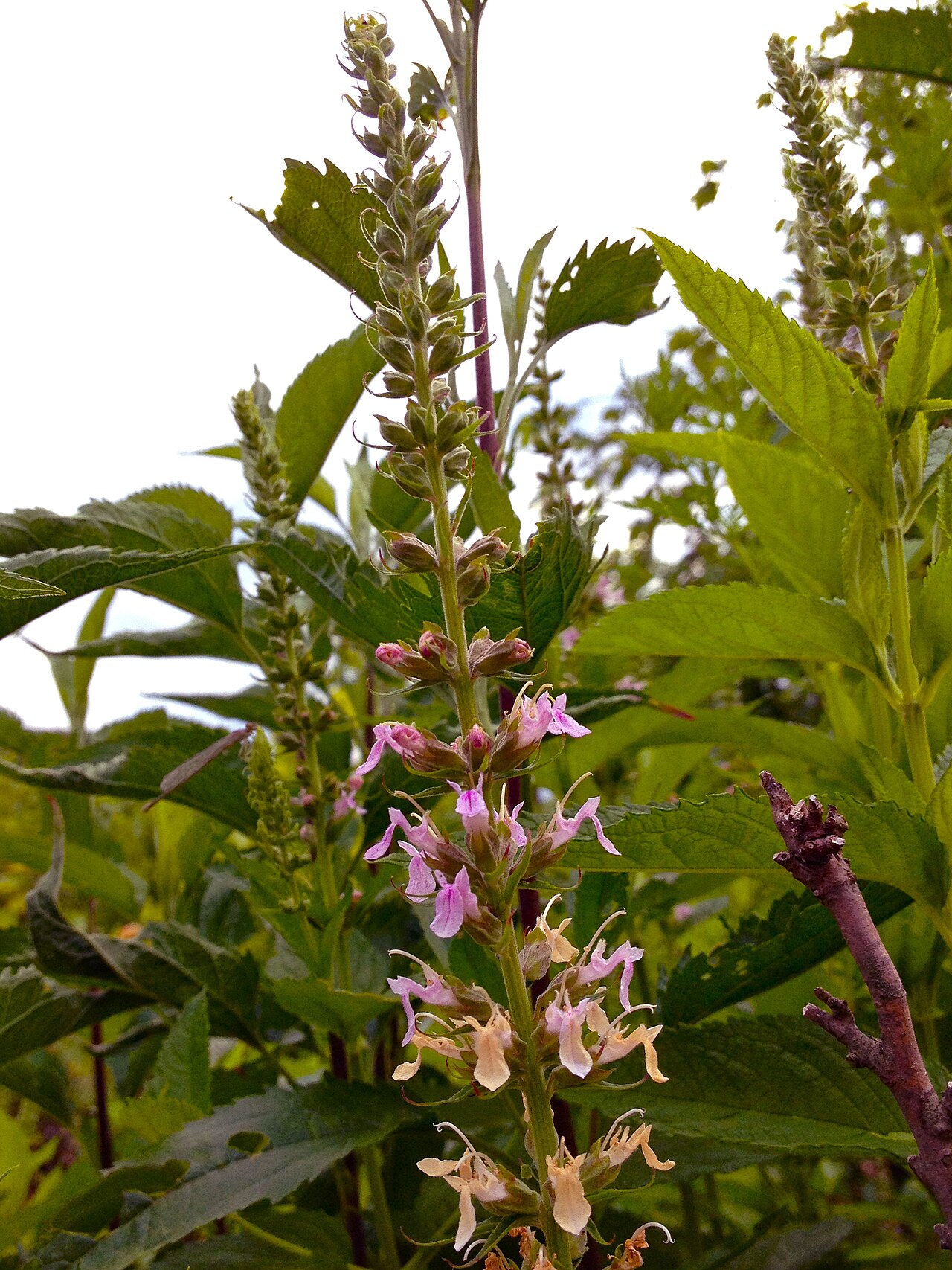
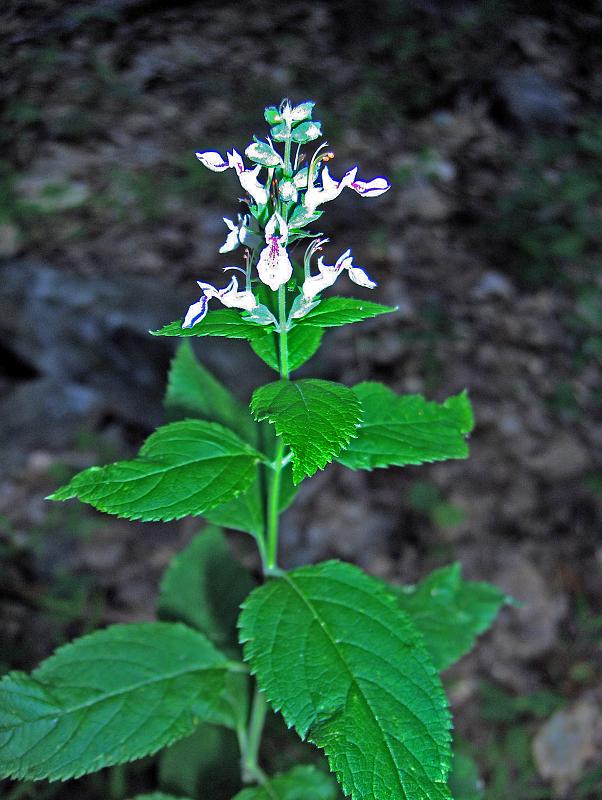
Teucrium canadense, known as American Germander, Canada germander (the USDA common name) or wood sage, is a native perennial of the mint family (Lamiaceae). It grows 1 to 3 feet tall from creeping rhizomes, with square, downy stems, opposite toothed leaves and, in summer, a dense spike of pale lavender-pink to whitish flowers at the top of each stem. It forms loose colonies in moist meadows, prairies, marsh edges, stream banks, ditches and open woods.
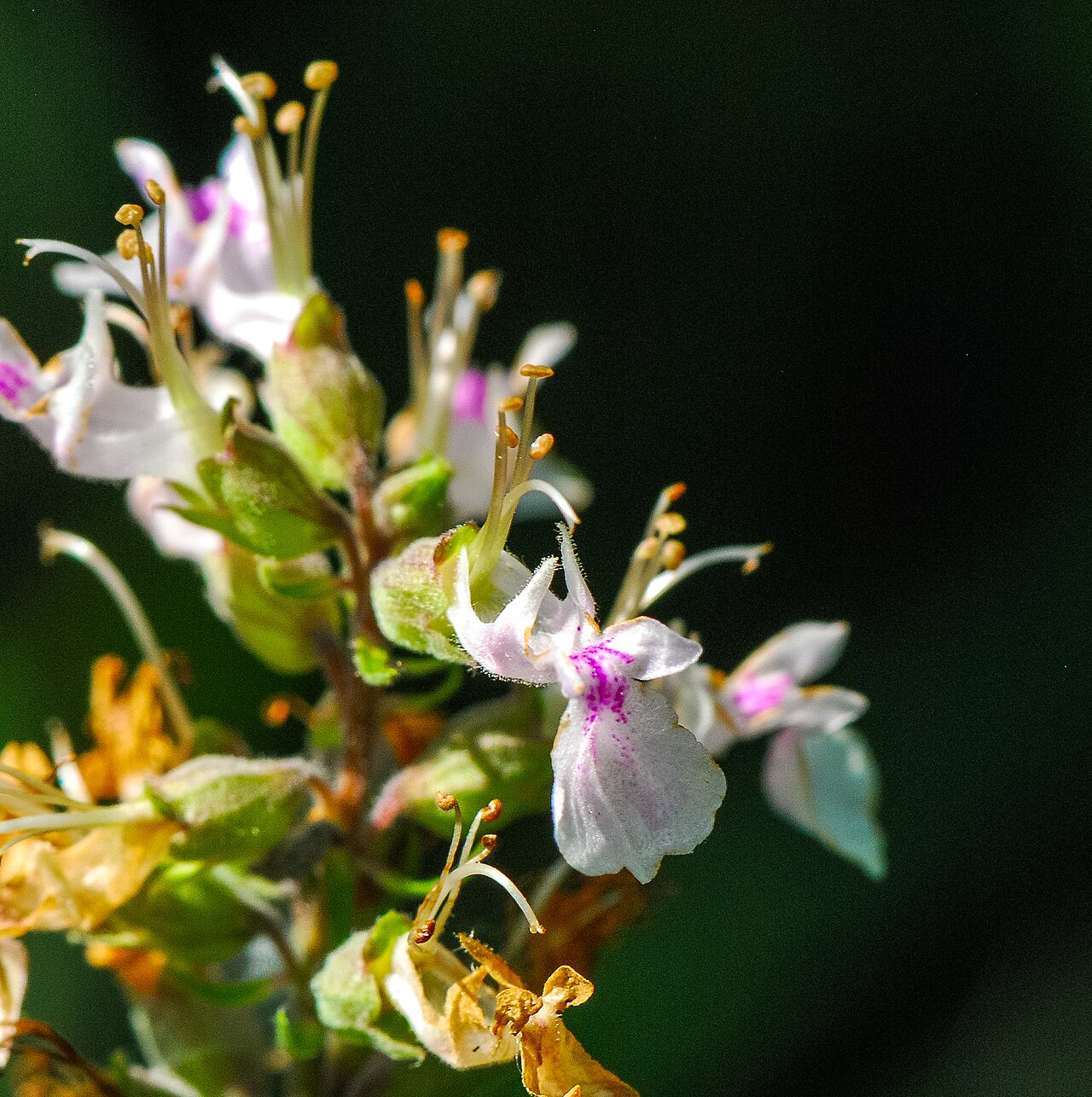
Up close, the flowers are unusual. Most mint-family flowers have two lips, but germander flowers seem to have only one: a broad, spotted lower lip that serves as a landing pad for bees. The upper lip is reduced to two small lobes, and the stamens arch out through the gap. Bumblebees and other long-tongued bees visit the flowers heavily, and a good clump in bloom can hum with activity for weeks in midsummer.
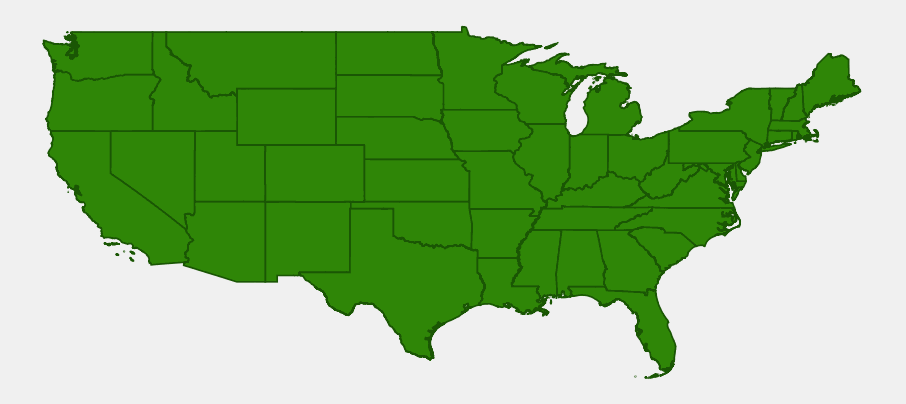
American germander grows in all of the lower 48 states and across southern Canada, one of the widest ranges of any native mint. It is an easy, adaptable plant for rain gardens, pond edges, wet meadows and pollinator plantings. It does spread, so this guide covers identification, range, how to grow it and how to keep it where you want it.
Identification
American germander resembles several other summer-blooming mints with spikes of pinkish flowers, such as hedge-nettles and obedient plant. The “missing” upper lip of the flower is the key feature.
Stems & Roots
Plants spread by slender rhizomes and produce upright, usually unbranched stems 1 to 3 feet tall (occasionally to about 4 feet). The stems are square in cross-section, like most mints, and covered with fine, soft hairs. Unlike many mints, the plant has little fragrance when crushed; some people find the odor faintly unpleasant.
Leaves
The leaves are opposite, lance-shaped to oblong, about 2 to 5 inches long, with coarsely toothed edges and short stalks. The upper surface is green and somewhat wrinkled, and the underside is paler and densely hairy. Leaves are spaced along the stem up to the base of the flower spike.
Flowers
From June to August, and into September in some areas, each stem ends in a dense, spike-like raceme 2 to 8 inches long. Flowers are arranged in whorls, opening from the bottom of the spike upward. Each flower is about 1/2 to 3/4 inch long and pale lavender, pink or nearly white, with darker purple or pink spots on the lower lip. The large lower lip has a broad central lobe that curves downward. The upper lip is split, and the four stamens and the style arch up and forward through the cleft. The hairy, bell-shaped calyx has five teeth.
Fruit & Seeds
After flowering, each calyx holds four small, rounded, brown nutlets, which drop near the parent plant in late summer and fall. The dried spikes, with their persistent calyces, remain on the stems into winter.
Look-alikes
Hedge-nettles (Stachys) have similar spikes and leaves, but their flowers have a distinct, hooded upper lip. Obedient plant (Physostegia virginiana) has smooth stems and larger, tubular, hooded flowers that stay in place when pushed sideways. Purple loosestrife, an invasive non-native, has six-petaled magenta flowers that are not lipped at all.
Quick Facts
| Scientific Name | Teucrium canadense (incl. var. canadense, var. occidentale, var. virginicum) |
| Family | Lamiaceae (mint family) |
| Plant Type | Herbaceous perennial spreading by rhizomes |
| Mature Height | 1–3 ft (occasionally to 4 ft) |
| Mature Spread | 1–2 ft; spreads into colonies |
| Growth Rate | Moderate to fast |
| Sun Exposure | Full sun to part shade |
| Water Needs | Medium to high; moist to wet soil |
| Soil Type | Adaptable: sand, loam, clay; tolerates limestone soils |
| Soil pH | About 6.0–8.0 |
| Bloom Time | June–August (into September) |
| Flower Color | Pale lavender-pink to whitish, spotted purple |
| Fall Color | None of note |
| Fruit | Four small brown nutlets in each calyx |
| Deer Resistant | Generally yes; foliage is bitter and seldom browsed |
| USDA Hardiness Zones | 3–9 |
Native Range
American germander is native across North America. USDA PLANTS and the Lady Bird Johnson Wildflower Center list it in all of the lower 48 states and the District of Columbia; LBJ describes its range as Saskatchewan east to Newfoundland, south to Florida, west to Texas and North Dakota, and in all the western states and British Columbia. In Canada it grows from British Columbia and Saskatchewan east to Manitoba, Ontario, Quebec, New Brunswick, Nova Scotia and Prince Edward Island. It also extends into Mexico.
It is most common in the East and the Midwest, in moist prairies, sedge meadows, marsh and pond edges, stream and river banks, floodplain woods and thickets, wet ditches and roadsides. Along the Atlantic coast it grows at the upper edges of brackish and freshwater marshes. In the arid West it is mainly a plant of riparian zones, springs and irrigated meadows.
Several varieties have been named, based mostly on the type and density of hairs on the stems and calyx. Western plants with glandular hairs are often called var. occidentale, and some treatments recognize var. virginicum and others in the East. USDA PLANTS treats the species broadly.
📋 Regional plant lists featuring American Germander: New York, Pennsylvania & Northern New Jersey · Idaho, Eastern Oregon & Eastern Washington · Ohio & Indiana · Montana & Wyoming · Michigan, Wisconsin & Eastern Minnesota · Kentucky & Tennessee · Nebraska, Kansas & Eastern Colorado · Utah & Western Colorado · Connecticut, Massachusetts & Rhode Island · New Hampshire, Maine & Vermont · Maryland, Virginia & West Virginia · Delaware, Southern New Jersey & Long Island · Arizona & New Mexico · Illinois, Iowa & Missouri · Alabama, Georgia & Mississippi · North & South Florida
Growing & Care Guide
American germander is easy to grow in any moist, sunny spot and is rarely bothered by pests or deer. It spreads steadily by rhizomes, so it is best in rain gardens, wet meadows, pond margins and larger pollinator beds, where it can form a colony among other robust natives.
Light
Full sun gives the strongest stems and the most flowers. It also does well in part shade, such as the edge of a woodland or a stream bank with afternoon shade, though it may flop and bloom less.
Soil & Water
It prefers consistently moist to wet soil and tolerates seasonal flooding, heavy clay and limestone soils. It can grow in average garden soil if watered during dry spells, but in dry conditions it stays short and spreads slowly. It does not need fertilizer.
Planting Tips
Plant in spring or early fall, about 18 to 24 inches apart. In a mixed bed, pair it with tall, sturdy companions such as Joe-Pye weed, swamp milkweed, boneset and blue vervain that can hold their own against its rhizomes. In a small garden, a buried edging or a bed surrounded by lawn helps contain it.
Pruning & Maintenance
Cut stems back in late winter or early spring, leaving the dried spikes standing through winter for structure and for insects that overwinter in hollow stems. Pull or dig unwanted shoots in spring to keep the colony in bounds. Powdery mildew can appear in hot, humid weather, especially on plants in dry soil, but rarely does serious harm.
Propagation
Divide established clumps or take sections of rhizome in spring or fall; they root quickly. Seed germinates best after a period of cold, moist stratification (about 30 to 60 days) and can be sown outdoors in fall. Stem cuttings taken in early summer also root readily.
Landscape Uses
- Rain gardens and bioswales: tolerates periodic flooding and heavy soils
- Pond and stream margins: rhizomes help hold soil along moist banks
- Pollinator gardens: a strong bumblebee plant in midsummer
- Wet meadow and prairie restoration: a native mint for moist, sunny restoration sites throughout North America
- Naturalized areas: forms self-sustaining colonies in damp, open ground
Wildlife & Ecological Value
American germander is especially valuable to native bees. Its broad lower lip is built for bees heavy enough to push into the flower, and its long midsummer bloom fills a gap between spring and late-summer wildflowers.
For Pollinators
Bumblebees are the main visitors. As they land on the lower lip and push in for nectar, the arching stamens and stigma touch their backs. Other long-tongued bees, such as leafcutter bees and digger bees, also visit, along with some butterflies, skippers and bee-mimicking flies. Many bees collect nectar more than pollen from it.
For Birds
Birds make little direct use of the plant, but colonies in wet meadows and marsh edges provide cover for birds such as sedge wrens, common yellowthroats and swamp sparrows, and the insects it supports feed their young.
For Mammals
Deer and rabbits generally leave it alone, likely because of its bitter, hairy foliage. Small mammals may eat the seeds.
Ecosystem Role
Germander is a characteristic plant of moist, open habitats, from tallgrass prairie swales to Atlantic coastal marsh edges and western riparian zones. Its rhizomes knit together soil on flood-prone banks, and its hollow, square stems give overwintering shelter to small insects. It supports specialist and generalist bees through the middle of the summer.
Cultural & Historical Uses
Linnaeus named Teucrium canadense in 1753. The genus name honors Teucer, a legendary king of Troy said to have used a related plant as medicine. The common name “germander” is a corruption, via medieval Latin, of the Greek chamaidrys, “ground oak,” the name of the European wall germander, whose leaves look like small oak leaves.
Several Native American peoples are recorded as using American germander in traditional medicine, usually as a tea or infusion of the leaves. European species of Teucrium, particularly wall germander, were once sold in herbal weight-loss products. They were linked to serious liver damage and banned or restricted in several countries in the 1990s. American germander should not be used as an herbal remedy without expert advice.
Today it is valued mainly as a pollinator and restoration plant. Native plant nurseries sell it for rain gardens and wet meadows, and it is a useful, adaptable native alternative to non-native ornamental mints and to invasive purple loosestrife in sunny wet sites.
Frequently Asked Questions
Is American germander invasive?
It is native throughout the lower 48 states, so it is not invasive, but it spreads by rhizomes and can form sizable colonies in moist soil. Plant it where it has room or contain it with edging.
Does American germander smell like mint?
Not really. It belongs to the mint family and has square stems and lipped flowers, but the foliage has little scent, and some people find it slightly unpleasant.
What pollinators visit American germander?
Mainly bumblebees, plus other native bees such as leafcutter and digger bees, and occasional butterflies and skippers. It blooms in midsummer, when bees need a steady nectar supply.
Can it grow in a rain garden?
Yes. It tolerates both standing water for short periods and drier spells once established, which makes it a good choice for rain gardens, bioswales and pond edges.
Is it the same as Canada germander or wood sage?
Yes. Canada germander is the USDA common name, and wood sage is an older name. All refer to Teucrium canadense.

Looking for a nursery that carries American Germander?
Browse our native plant nursery directory: Alabama, Arizona & Arkansas · California · Colorado, Connecticut, Delaware, Florida & Georgia · Idaho, Illinois, Indiana, Iowa & Kansas · Kentucky, Louisiana, Maine, Maryland, Massachusetts, Michigan, Minnesota, Mississippi, Missouri & Montana · Nebraska, Nevada, New Hampshire, New Jersey, New Mexico, New York, North Carolina, North Dakota, Ohio & Oklahoma · Oregon · Pennsylvania, Rhode Island, South Carolina, South Dakota, Tennessee, Texas, Utah, Vermont & Virginia · Washington · West Virginia, Wisconsin & Wyoming