
Woodland Strawberry (Fragaria vesca)
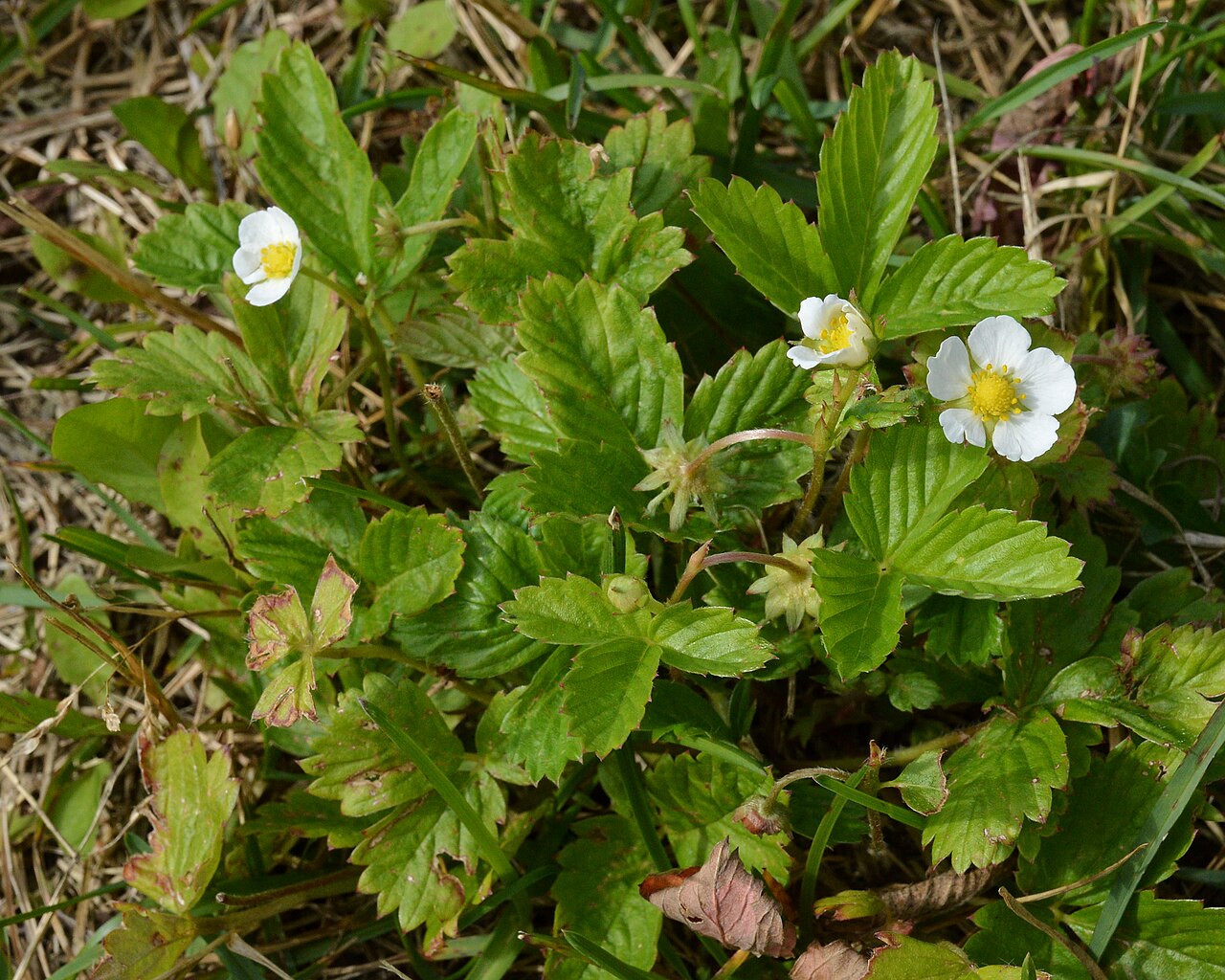
Fragaria vesca, known as Woodland Strawberry (also wood strawberry or, in Europe, alpine strawberry and fraise des bois), is a small, low-growing native perennial of open woods, forest edges, clearings and rocky slopes. It forms loose patches of bright green, three-parted, toothed leaves, spreads by slender runners, and in spring and early summer bears small white flowers followed by tiny, intensely flavored red berries.
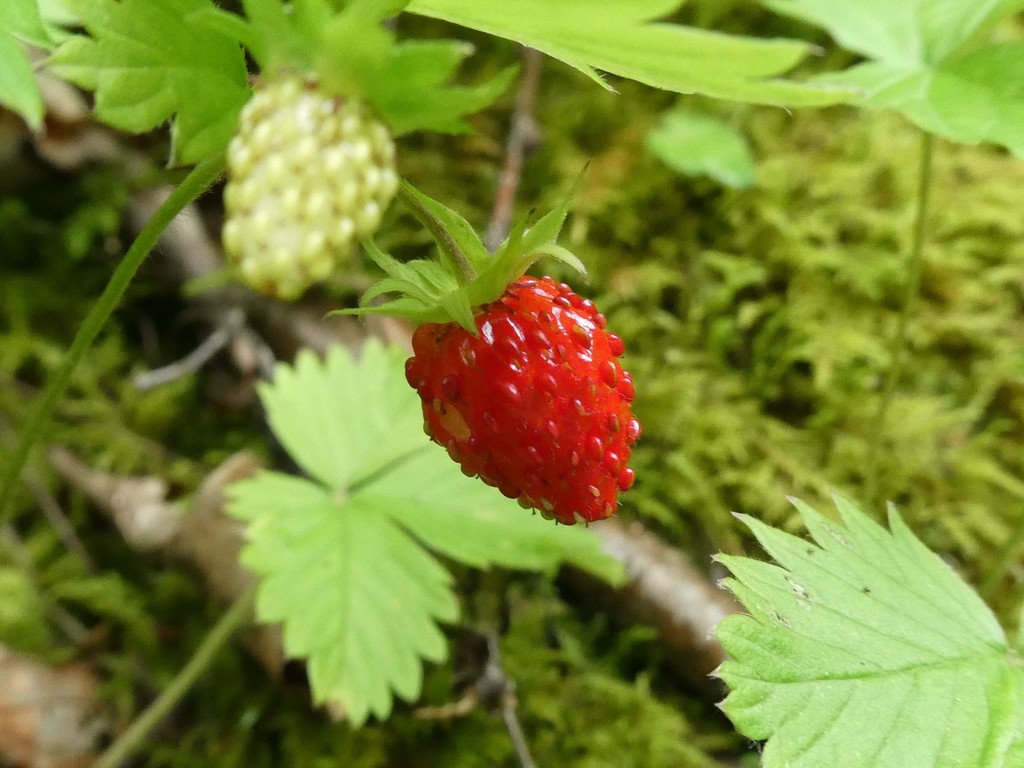
It is a member of the rose family (Rosaceae) and is one of only a few strawberry species native to North America. Unlike the more widespread wild strawberry (Fragaria virginiana), whose seeds sit in small pits on the berry, woodland strawberry has seeds that sit on the surface of a conical berry, and its flowers and fruit are often held up above the leaves. Woodland strawberry also grows naturally across Europe and northern Asia, and the familiar “alpine strawberries” of gardens are European forms of the same species.
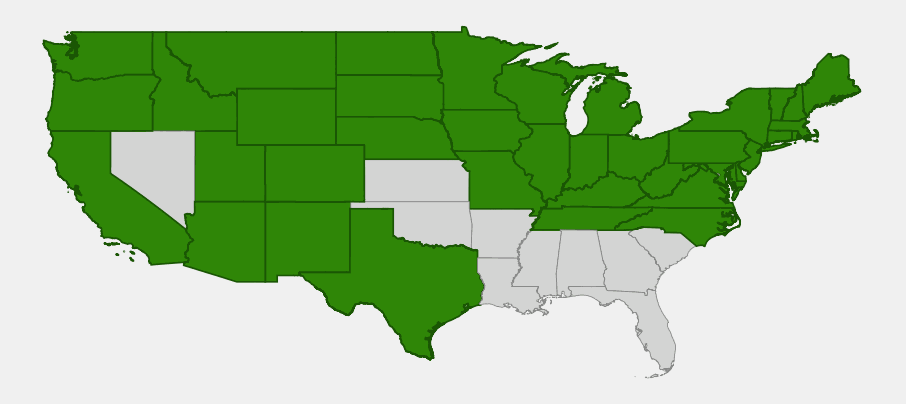
In North America it is native in a broad band across the north, through the Appalachians and the Midwest, and throughout the western mountains, with distinct native subspecies in the East and West. It makes a charming, edible ground cover for partly shaded native gardens and is an important food for wildlife. This guide covers identification, range, care, wildlife value and its long history with people.
Identification
Woodland strawberry is easily confused with wild strawberry (Fragaria virginiana), and the two often grow together. The best field marks are the leaves, the position of the fruit and the way the seeds sit on the berry.
Growth Habit
Woodland strawberry is a low perennial, usually 3 to 8 inches tall, growing from a short, thick crown. In summer it sends out slender, often reddish runners (stolons) that root at the nodes and form new plants, so a single plant gradually becomes a loose patch.
Leaves
The leaves grow in a basal rosette on hairy stalks 2 to 8 inches long. Each leaf is divided into three oval leaflets 1 to 2½ inches long with coarse, pointed teeth. The leaflets are bright, often yellowish green and somewhat thin, with prominent veins that make the surface look ridged or puckered, and they are silky-hairy underneath. On the end leaflet, the tooth at the very tip is usually as long as or longer than the teeth beside it, while on wild strawberry it is usually shorter.
Flowers
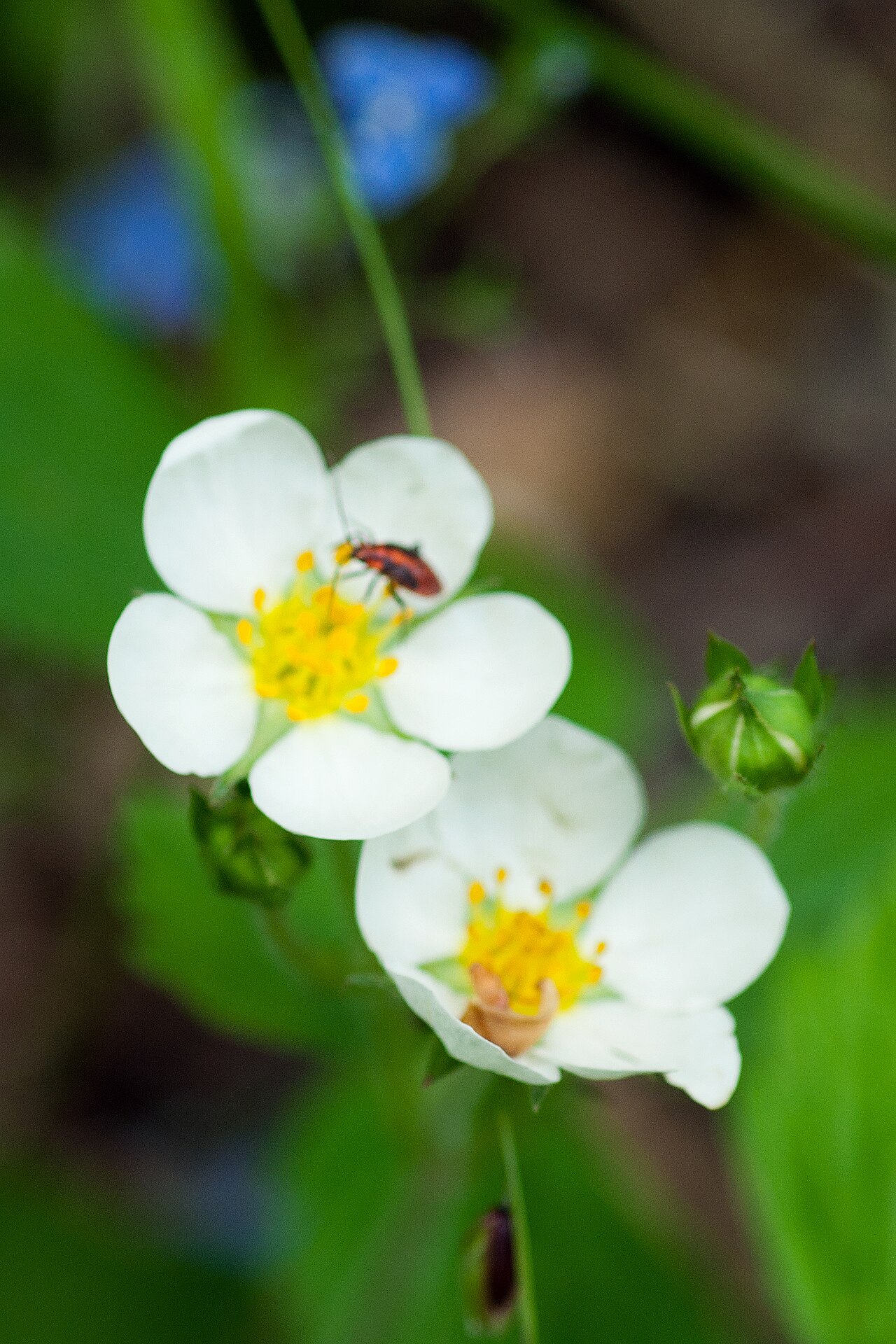
From about April to June, with some flowering into late summer in cool places, small clusters of flowers rise on hairy stalks, often reaching as high as or higher than the leaves. Each flower is about ½ to ¾ inch across, with five rounded white petals, a ring of many yellow stamens and a yellow-green center of pistils.
Fruit & Seeds
The fruit is a small, conical to rounded red berry, usually ⅓ to ½ inch long, ripening from June to August. What we call the berry is actually the swollen tip of the flower stem. The true fruits are the tiny seed-like achenes, which sit on the surface of the berry rather than in pits. The berries are soft, juicy and very aromatic, with a flavor many people consider better than any cultivated strawberry. Some plants have pale or whitish ripe berries.
Quick Facts
| Scientific Name | Fragaria vesca L. |
| Family | Rosaceae (rose family) |
| Plant Type | Low herbaceous perennial (forb) spreading by runners |
| Mature Height | 3–8 in |
| Mature Spread | 6–12 in per plant; spreads by runners into patches |
| Growth Rate | Moderate to fast |
| Sun Exposure | Part shade to full sun |
| Water Needs | Moderate; prefers evenly moist, well-drained soil |
| Soil Type | Loam, sandy or rocky soil rich in organic matter |
| Soil pH | About 5.5–7.5 |
| Bloom Time | April–June (sometimes later in cool sites) |
| Flower Color | White |
| Fall Color | Some leaves turn red or bronze; partly evergreen |
| Fruit | Small conical red berry with seeds on the surface, June–August |
| Deer Resistant | No; deer, rabbits and other animals eat the leaves and fruit |
| USDA Hardiness Zones | 3–9 |
Native Range
Woodland strawberry has a wide but patchy native range in North America. USDA PLANTS records it as native in 38 states, across the Northeast and the Great Lakes states, south through the Appalachians to North Carolina and Tennessee, west through the Midwest and northern Plains, and throughout the western mountains from Washington, Oregon and California to Montana, Wyoming, Colorado, Utah, Arizona, New Mexico and the mountains of west Texas. In Canada it grows from British Columbia and the Northwest Territories east through the Prairie Provinces, Ontario and Quebec to New Brunswick, Nova Scotia and Newfoundland. It is introduced, not native, in Hawaii.
North American populations belong to native subspecies distinct from the European plant. Eastern plants are usually called subsp. americana, which grows in rich, rocky woods and forest edges from Newfoundland and the Great Lakes to the southern Appalachians. Western plants are mostly subsp. bracteata, which grows in forests and meadows throughout the Rockies, Cascades, Sierra Nevada and Coast Ranges, and coastal California has subsp. californica. The European subsp. vesca has escaped from gardens in a few places.
Its typical habitats are partly shaded: open deciduous and mixed woods, conifer forests, forest edges and clearings, rocky slopes and ledges, stream banks, meadows, and roadsides. In the East it often favors rocky, limestone-influenced or rich soils, while in the West it is common in aspen groves, ponderosa pine and Douglas-fir forests and mountain meadows up to about 10,000 feet.
📋 Regional plant lists featuring Woodland Strawberry: New York, Pennsylvania & Northern New Jersey · Idaho, Eastern Oregon & Eastern Washington · Ohio & Indiana · Montana & Wyoming · Michigan, Wisconsin & Eastern Minnesota · Kentucky & Tennessee · Nebraska, Kansas & Eastern Colorado · Utah & Western Colorado · Connecticut, Massachusetts & Rhode Island · New Hampshire, Maine & Vermont · Maryland, Virginia & West Virginia · Delaware, Southern New Jersey & Long Island · Arizona & New Mexico · Illinois, Iowa & Missouri
Growing & Care Guide
Woodland strawberry is easy to grow and makes an attractive, edible ground cover for woodland edges, partly shaded borders and rock gardens. For the most ecological value, choose plants or seed of the native North American subspecies from a native plant nursery in your region. Most “alpine strawberries” sold as vegetables are European cultivars.
Light
It grows in part shade to full sun. Dappled shade or morning sun with afternoon shade is ideal, especially in hot summer areas. In full sun it fruits heavily but needs steady moisture. In deep shade it grows but flowers and fruits sparsely.
Soil & Water
It prefers loose, well-drained soil rich in organic matter, such as woodland loam or leafy compost, and it tolerates rocky and somewhat alkaline soils. Keep the soil evenly moist, especially while plants are establishing and fruiting. A light mulch of shredded leaves helps keep roots cool and berries clean. It needs little or no fertilizer.
Planting Tips
Plant in spring or early fall, spacing plants about 8 to 12 inches apart for a ground cover. Set the crown right at the soil surface; buried crowns rot, and exposed ones dry out. Plant it where its runners can fill in among ferns, woodland wildflowers and low shrubs, or along the edge of a path.
Pruning & Maintenance
Little care is needed. Remove old, tattered leaves in early spring, and redirect or pull runners that stray where they are not wanted. Older patches can lose vigor after several years; renew them by replanting rooted runners into refreshed soil. Netting may be needed if you want to beat the birds and chipmunks to the berries.
Propagation
The easiest method is to pot up rooted runners in late summer or early fall. It is also easy from seed: mash ripe berries, dry or rinse out the tiny seeds, and sow them on the surface of moist potting mix. A few weeks of cold, moist stratification improves germination.
Landscape Uses
- Edible ground cover: a low, spreading carpet with small, flavorful berries
- Woodland gardens: fills gaps among ferns and spring wildflowers in dappled shade
- Rock gardens and path edges: tucks into crevices and along walkways
- Wildlife gardens: early flowers for pollinators and summer fruit for birds and mammals
- Containers: well suited to pots and hanging baskets near a kitchen door
Wildlife & Ecological Value
Woodland strawberry is a small plant, but its flowers, leaves and fruit support a surprising amount of wildlife.
For Pollinators
The open, white flowers are easy for many insects to use. They are visited by small native bees such as sweat bees and mining bees, as well as hover flies, small beetles and early butterflies. Strawberry foliage is eaten by the caterpillars of a number of native moths.
For Birds
Many birds eat the berries, including American robins, gray catbirds, thrushes, cedar waxwings, towhees, grouse and wild turkeys. They spread the seeds in their droppings, helping the plant colonize new clearings.
For Mammals
Chipmunks, squirrels, mice, foxes, black bears and other mammals eat the fruit, and deer, elk and rabbits graze the leaves. Turtles, including box turtles in the East, also eat fallen berries.
Ecosystem Role
Woodland strawberry is a common ground-layer plant of open woods and forest edges. Its runners quickly cover bare soil after disturbances such as treefalls, fire and logging, helping to protect the soil. Because both birds and mammals eat and spread its seeds, it is constantly recolonizing new openings.
Cultural & Historical Uses
Woodland strawberries have been gathered as food for thousands of years on several continents. In North America, many Indigenous peoples gathered the berries in early summer, eating them fresh, mashing them into cakes or drying them for winter, and they used the leaves and roots for teas and medicines. Strawberry season was, and in some communities still is, marked with celebrations of thanks.
In Europe, Fragaria vesca was the strawberry people knew until the eighteenth century. It was brought into gardens in the Middle Ages, and selected forms, including the everbearing “alpine” or “fraises des bois” strawberries, are still grown today. The modern garden strawberry came from a cross between two other American species, Fragaria virginiana and F. chiloensis, and it largely replaced the woodland strawberry in cultivation.
Linnaeus named the species in 1753. Fragaria comes from the Latin fragrans, “fragrant”, and vesca means “small” or “weak”. Today woodland strawberry is also an important plant in science. Because it is small, quick to grow and has a simple, diploid genome, which was sequenced in 2010, it is widely used as a model plant for studying the genetics of strawberries, roses, apples and other members of the rose family.
Frequently Asked Questions
How do I tell woodland strawberry from wild strawberry?
Woodland strawberry (Fragaria vesca) has conical berries with seeds on the surface, flowers and fruit often held up at or above the leaves, and a terminal tooth on the end leaflet that is as long as or longer than the teeth beside it. Wild strawberry (F. virginiana) has rounder berries with seeds sunk in small pits, fruit usually held beneath the leaves, and a shorter terminal tooth.
Are woodland strawberries edible?
Yes. The berries are small but sweet and highly aromatic, and many people consider them the best-tasting strawberries of all. They are delicious fresh, in desserts, or in jam. Be sure of your identification, and avoid plants along busy roads or in sprayed areas.
Is woodland strawberry native to North America?
Yes. Native subspecies grow across much of northern and western North America, including subsp. americana in the East and subsp. bracteata in the West. The species also grows natively in Europe and Asia. Most alpine strawberries sold for vegetable gardens are European forms, so look for native-sourced plants if you want the local subspecies.
Will woodland strawberry grow in shade?
It grows well in part shade and dappled shade, which is its natural habitat at forest edges and in open woods. It fruits best with at least a few hours of sun, and it grows but produces little fruit in deep shade.
Does woodland strawberry spread aggressively?
It spreads by runners into loose patches but is not aggressive. It is easy to pull or redirect and rarely crowds out other woodland plants. It makes an attractive, gentle ground cover.

Looking for a nursery that carries Woodland Strawberry?
Browse our native plant nursery directory: Arizona · California · Colorado, Connecticut & Delaware · Idaho, Illinois, Indiana & Iowa · Kentucky, Maine, Maryland, Massachusetts, Michigan, Minnesota, Missouri & Montana · Nebraska, New Hampshire, New Jersey, New Mexico, New York, North Carolina, North Dakota & Ohio · Oregon · Pennsylvania, Rhode Island, South Dakota, Tennessee, Texas, Utah, Vermont & Virginia · Washington · West Virginia, Wisconsin & Wyoming