
Sorrelvine (Cissus trifoliata)
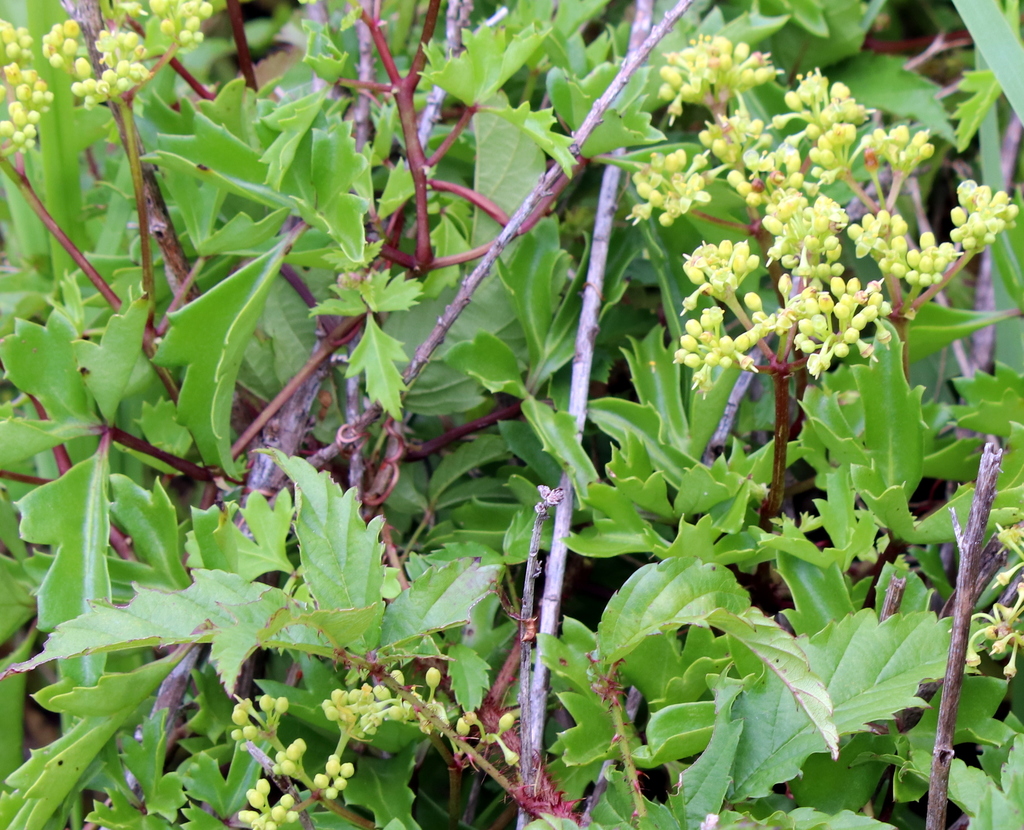
Cissus trifoliata, known as Sorrelvine, is a tough, fleshy-leaved native vine of the grape family (Vitaceae). It is common across Texas and the Southwest borderlands and reaches east along the Gulf Coast to Florida and Georgia, north to Oklahoma, Kansas and Missouri, and south through Mexico and the Caribbean, including Puerto Rico and the U.S. Virgin Islands. Many Texans know it as possum grape, marine ivy or cow-itch vine, and older Texas floras call it Cissus incisa.
Sorrelvine is a climber that sprawls over fences, brush piles, rocks and small trees by means of coiling tendrils. Its leaves are thick and somewhat succulent, typically divided into three toothed leaflets or deeply three-lobed, and they give off a sharp, unpleasant smell when crushed. From late spring through summer it carries flat clusters of tiny greenish-yellow flowers that are busy with small bees and wasps, followed by glossy blue-black berries that birds eat. Below ground, the plant stores water and food in swollen, tuberous roots, which let it resprout after drought, frost or cutting.
Gardeners in hot, dry regions value sorrelvine as a nearly indestructible native screen for chain-link fences and harsh, sunny spots, and wildlife gardeners value it for its flowers and fruit. It is also vigorous enough to become a nuisance in tidy gardens, and its sap can irritate the skin. This guide covers identification, range, growing tips, wildlife value and a few cautions.
Identification
Sorrelvine is easy to recognize once you know its thick, fleshy, three-parted leaves and their distinctive odor. Its leaf shape varies a lot, though, so look at several leaves and at the tendrils and fruit as well.
Stems & Roots
Young stems are green, smooth to slightly hairy and somewhat fleshy, becoming woody and corky toward the base on old plants. The vine climbs with forked tendrils that grow opposite the leaves and coil around supports, and it can reach 10 to 30 feet over trees and fences, or simply sprawl over the ground and brush. Underground it forms thick, tuberous roots that store water. In colder parts of its range and after hard frosts, the top dies back and the vine resprouts from these roots in spring.
Leaves
The alternate leaves are thick, fleshy and somewhat waxy, usually 1 to 3½ inches long including the stalk. Most are divided into three leaflets or deeply cut into three lobes, with coarse, irregular teeth; the end leaflet is symmetric while the side leaflets are lopsided. Some leaves are merely toothed and almost undivided. When crushed, the leaves release a sharp, rank odor, one of the best field marks. The fleshy texture helps the plant hold water through drought.
Flowers
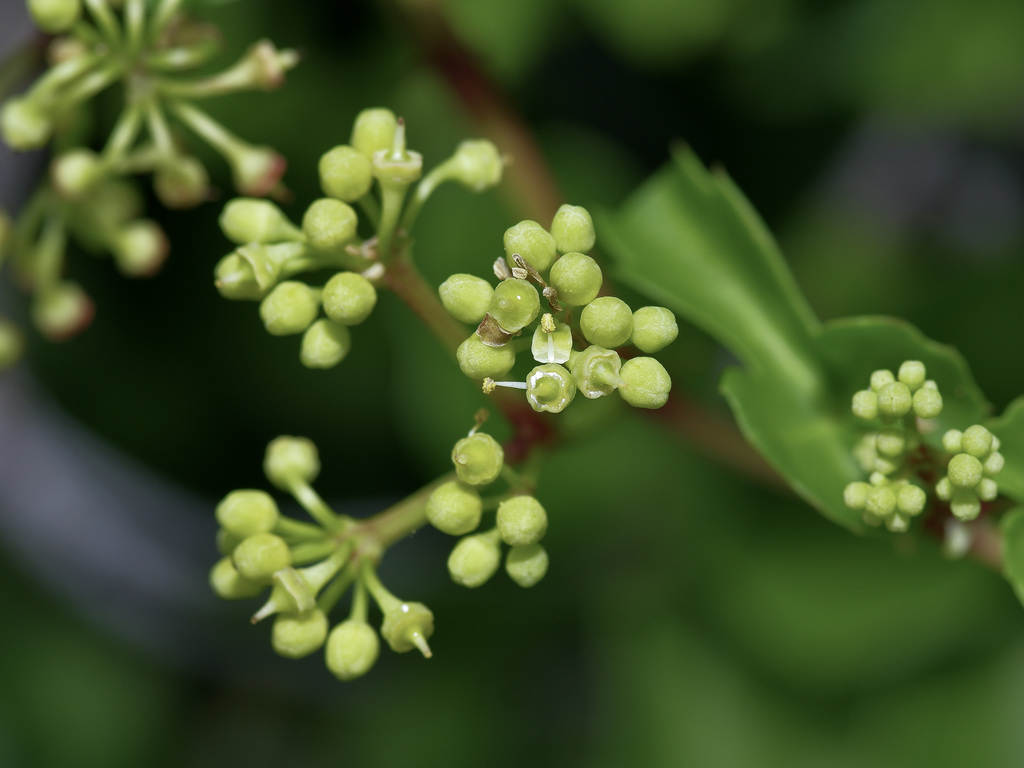
The flowers grow in flat-topped or rounded clusters (cymes) on stalks opposite the leaves. Each flower is tiny, about ⅛ inch across, with four greenish-yellow to cream petals that soon fall, four stamens and a small nectar disk around the ovary. Plants bloom mainly from about May through September, and in frost-free areas they can flower almost year-round.
Fruit
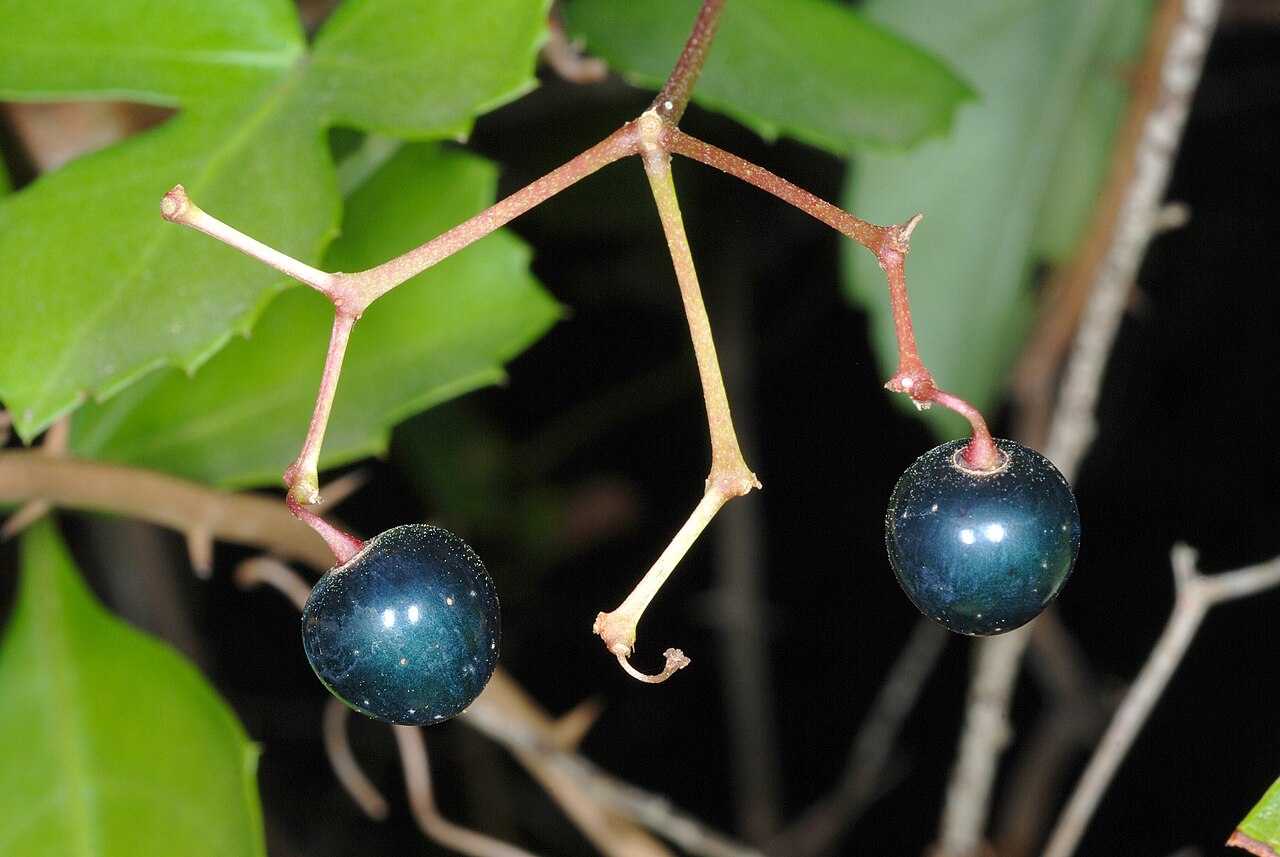
The fruit is a small, round to egg-shaped berry about ¼ to ⅜ inch long, green at first and ripening glossy blue-black. Each berry usually contains a single seed. Berries ripen from summer into fall and are eaten by birds.
Similar Species
Possum Grape (Cissus verticillata), which grows in Florida, south Texas and the tropics, has simple, heart-shaped leaves and long aerial roots. Heartleaf Peppervine and peppervine (Nekemias arborea) are thin-leaved grape-family vines with different leaf shapes and no strong odor. Virginia Creeper has five thin leaflets. Poison ivy also has three leaflets, but its leaves are thin, not fleshy, it has no tendrils, and it bears white berries; always check carefully before handling any three-leaved vine.
Quick Facts
| Scientific Name | Cissus trifoliata (L.) L. (syn. Cissus incisa auct., Sicyos trifoliatus L.) |
| Family | Vitaceae (grape family) |
| Plant Type | Perennial vine with fleshy leaves and tuberous roots; climbs by tendrils |
| Mature Height | Climbs or sprawls 10–30 ft |
| Mature Spread | Variable; spreads widely over fences and shrubs |
| Growth Rate | Fast |
| Sun Exposure | Full sun to part shade |
| Water Needs | Low; very drought tolerant once established |
| Soil Type | Adaptable: sand, clay, caliche, limestone and shell soils |
| Soil pH | About 6.0–8.5 (slightly acidic to alkaline) |
| Bloom Time | May–September (longer in frost-free areas) |
| Flower Color | Greenish yellow to cream |
| Fall Color | None notable; may die back after frost |
| Fruit | Small glossy blue-black berry, usually one-seeded |
| Deer Resistant | Fairly; the rank-smelling leaves are seldom browsed heavily |
| USDA Hardiness Zones | 7–11 |
Native Range
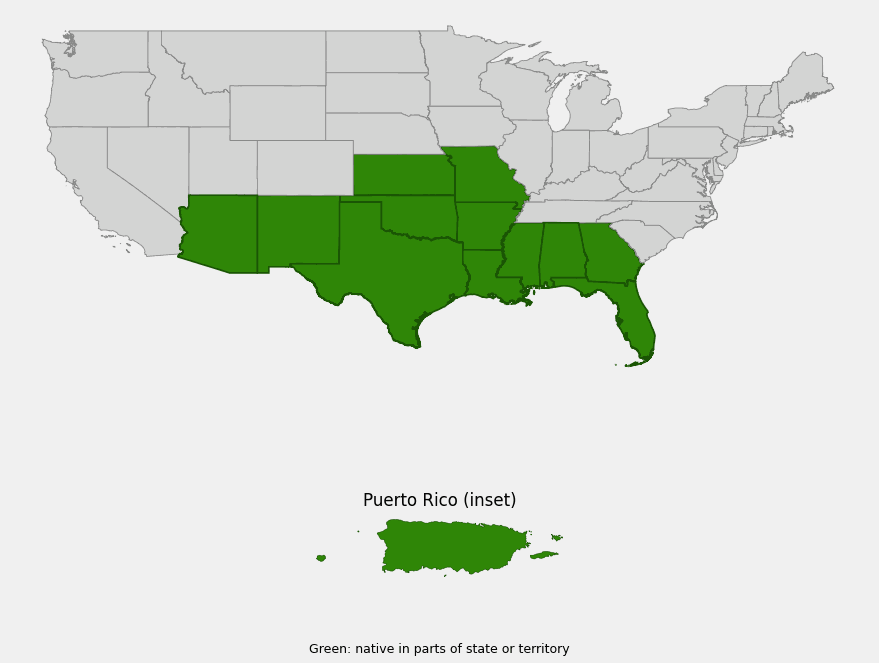
Sorrelvine is native across the southern United States. USDA PLANTS records it in Arizona, New Mexico, Texas, Oklahoma, Kansas, Missouri, Arkansas, Louisiana, Mississippi, Alabama, Georgia and Florida, as well as Puerto Rico and the U.S. Virgin Islands. Beyond the United States it ranges through Mexico, the West Indies and Central America to northern South America.
It is most abundant in Texas, where the Lady Bird Johnson Wildflower Center describes it as found throughout most of the state, in brushland, thickets, stream banks, chaparral, salt marsh edges, open woodlands and disturbed ground. It is also common in south-central Oklahoma and along the Gulf Coast. Farther from this core it is local: in southern Arizona and New Mexico it grows in canyons and along washes, in Kansas and Missouri it is confined to a few southern counties, and in Georgia and Florida it is mostly found in coastal hammocks, shell mounds and sandy thickets.
Sorrelvine thrives on calcareous and disturbed soils, and it is often seen on limestone outcrops, caliche roadsides, fencerows and the edges of mesquite and live oak brush. Its tuberous roots let it survive drought and frost, and in urban Texas it is a familiar volunteer on chain-link fences and alleys.
📋 Regional plant lists featuring Sorrelvine: South & West Texas · Arkansas, Louisiana, Eastern Oklahoma & Eastern Texas · Nebraska, Kansas & Eastern Colorado · Illinois, Iowa & Missouri · Alabama, Georgia & Mississippi · North & South Florida · Arizona & New Mexico · Puerto Rico
Growing & Care Guide
Sorrelvine needs almost no care. The main job is to give it the right place, somewhere it can climb freely without smothering other plants, and to keep it within bounds.
Light
Full sun to part shade. It flowers and fruits best in sun, and it handles reflected heat from walls and pavement well. In shade it grows more slowly with fewer flowers.
Soil & Water
Sorrelvine grows in almost any well-drained soil, including rocky limestone, caliche, heavy clay and sand, and it tolerates alkaline and somewhat salty soils near the coast. Water new plants during their first summer. After that it is extremely drought tolerant thanks to its succulent leaves and water-storing roots, and it usually needs no supplemental water or fertilizer.
Planting Tips
Plant container-grown vines in spring or fall next to a sturdy fence, trellis, arbor or rough wall. It climbs by tendrils, so it needs wire, lattice or a chain-link fence rather than a flat surface. Allow plenty of room, and avoid planting it beside small shrubs or trees you do not want covered.
Pruning & Maintenance
Cut back vines in late winter as needed to keep them off shrubs, roofs and gutters. Pull or cut runaway shoots during the growing season, and remove unwanted seedlings that birds plant elsewhere. Because the tuberous roots resprout readily, it is hard to remove completely once established, so choose its location carefully. Wear gloves and long sleeves when pruning, because the sap can irritate the skin.
Propagation
Clean seeds from ripe berries and sow them in fall, or store them cold and moist for a few weeks before spring sowing. Sorrelvine also roots readily from stem cuttings taken in late spring or summer, and from pieces of tuberous root.
Landscape Uses
- Fence and screen cover: quickly covers chain-link fences and trellises in hot, dry sites
- Wildlife gardens: nectar for small pollinators and berries for birds
- Xeriscapes and hot walls: thrives on rocky, alkaline soil with little water
- Coastal and brushland restoration: within its native range, as part of thicket and hammock vegetation
- Erosion control: sprawling stems and deep tuberous roots help hold banks and slopes
Wildlife & Ecological Value
Sorrelvine may not be showy, but in the dry Southwest and along the Gulf Coast it is one of the most productive native vines for wildlife over a long season.
For Pollinators
The tiny, open flowers have exposed nectar that short-tongued insects can reach easily. Small native bees, honey bees, wasps, flies and beetles visit them in large numbers, and small butterflies sometimes stop for nectar. Because flowering continues through the heat of summer, the vine fills a gap when many other plants are resting.
For Birds
Mockingbirds, thrashers, cardinals, thrushes and other fruit-eating birds eat the blue-black berries and spread the seeds. The dense tangles provide cover and nest sites for small birds in open brush country.
For Mammals
Small mammals use the tangled stems for cover, and raccoons, opossums and other omnivores may eat fallen fruit. The rank foliage is not a preferred browse for deer.
Ecosystem Role
Sorrelvine is a pioneer on disturbed and rocky ground, where its sprawling growth helps shade and hold the soil. Its leaves feed the caterpillars of moths that specialize on the grape family, and its flowers support a large community of small insects, which in turn feed lizards, spiders and birds. Its tuberous roots let it recover quickly after drought, frost and fire.
Cultural & Historical Uses
Linnaeus first described this plant in 1753 as Sicyos trifoliatus, a name that placed it with the bur cucumbers, and later transferred it to Cissus, the genus of tropical grape-family vines. For much of the twentieth century, Texas botanists called it Cissus incisa, and that name still appears in many field guides and nursery lists.
Another common name, cow-itch vine, reflects its reputation for irritating the skin. The sap and crushed leaves can cause redness and itching in sensitive people, so it is wise to wear gloves when handling it. The berries are not considered edible for people and should not be eaten; keep children and pets from sampling them.
Despite those cautions, sorrelvine has a place in regional gardening. Native plant growers in Texas recommend it as a fast, drought-proof cover for fences in places where few other vines survive, and its long flowering season makes it a reliable insect magnet for wildlife gardens.
Frequently Asked Questions
Is sorrelvine poisonous?
The berries are not considered edible for people and should not be eaten. The sap and crushed leaves can irritate the skin of some people, which is why it is called cow-itch vine. Wear gloves and long sleeves when pruning it, and wash skin afterward.
Is sorrelvine the same as poison ivy?
No. Both can have three leaflets, but sorrelvine has thick, fleshy, coarsely toothed leaves, coiling tendrils and blue-black berries. Poison ivy has thin leaves, climbs with hairy aerial roots rather than tendrils and has whitish berries.
Why does sorrelvine smell bad?
The leaves contain compounds that release a sharp, rank odor when crushed. The smell probably helps discourage browsing animals, and it is a useful field mark.
Will sorrelvine take over my yard?
It can. It grows fast, resprouts from tuberous roots and is spread by birds, so it can smother shrubs if left alone. Plant it where it has room to climb, prune it each winter, and pull unwanted seedlings while they are small.
Is Cissus incisa the same plant?
Yes. Cissus incisa is a name long used in Texas for this vine. Current sources, including USDA PLANTS, treat it as Cissus trifoliata.

Looking for a nursery that carries Sorrelvine?
Browse our native plant nursery directory: Alabama, Arizona & Arkansas · Florida & Georgia · Kansas · Louisiana, Mississippi & Missouri · New Mexico & Oklahoma · Texas