
American Bistort (Polygonum bistortoides)
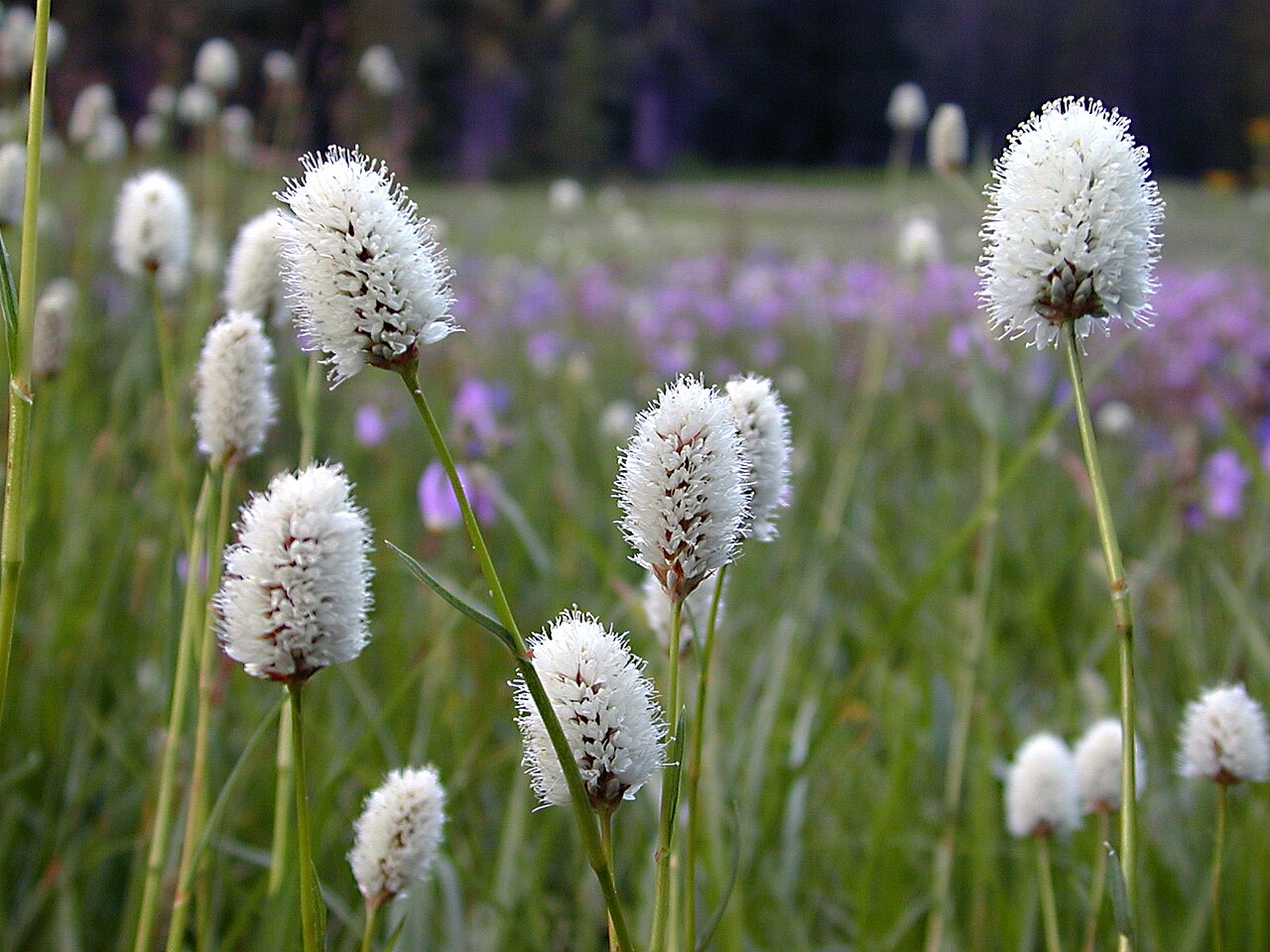
Polygonum bistortoides, known as American Bistort or western bistort, is one of the most familiar wildflowers of western mountain meadows, in the buckwheat family (Polygonaceae). From late spring to late summer, depending on elevation, its slender, mostly leafless stems rise 8 to 30 inches above a cluster of long, narrow basal leaves, each topped by a dense, white to pale pink, thumb-sized flower spike.
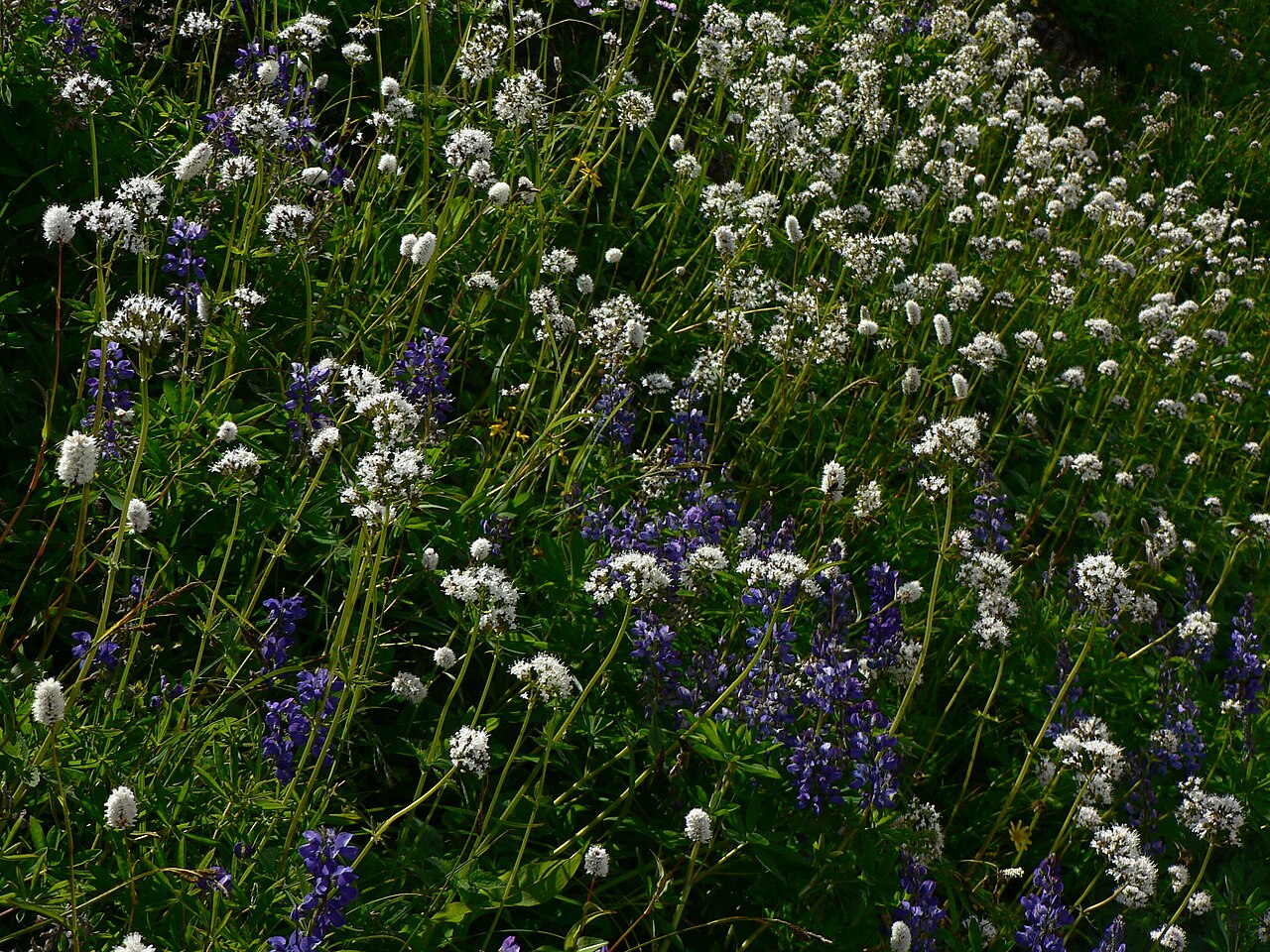
In moist subalpine meadows it often grows by the thousands, its white “cotton swab” or “bottlebrush” heads bobbing above the grasses with lupines, paintbrushes and elephant’s head. It grows from a short, twisted, starchy rhizome, which gives the bistorts their name (from Latin bis torta, “twice twisted”) and was an important traditional food for Indigenous peoples of the West.
Many botanists, including the Flora of North America, now place it in the genus Bistorta as Bistorta bistortoides; USDA PLANTS keeps it in Polygonum. This guide covers identification, range, growing it in a moist garden or meadow, and its value to pollinators and wildlife.
Identification
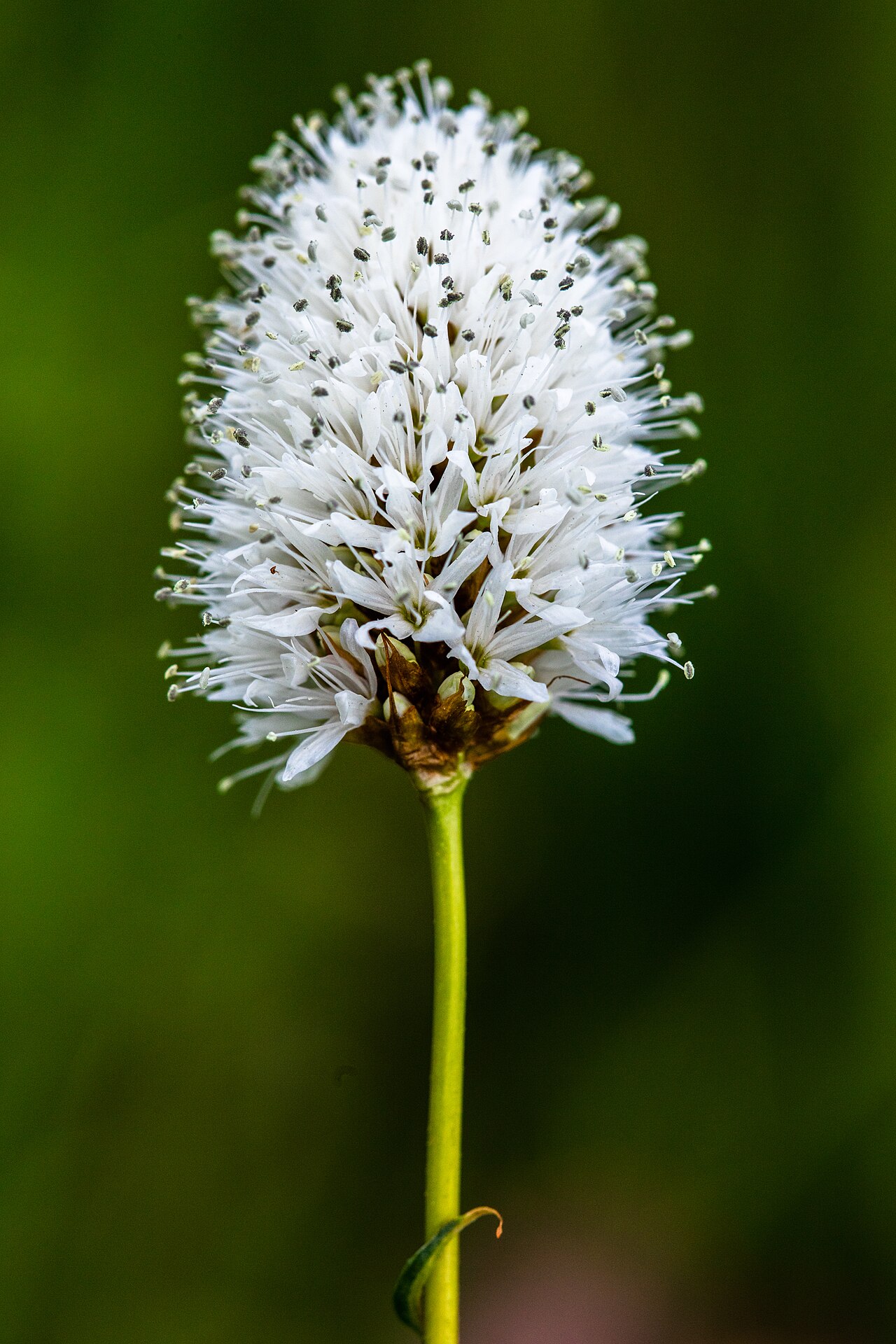
American bistort is easy to recognize in mountain meadows: look for long, narrow basal leaves and tall, slender stems ending in a single dense, rounded to cylindrical white flower spike.
Growth Form
A perennial herb growing from a short, thick, twisted rhizome. Each plant produces one to three unbranched flowering stems, usually 8 to 30 inches tall, which are often reddish.
Leaves
Most leaves are basal, long and narrow, lance-shaped to elliptic, about 2 to 8 inches long, on long stalks. The stem carries only a few smaller, stalkless leaves. As in other members of the knotweed group, each leaf base is wrapped around the stem in a papery brown sheath called an ocrea. Young leaves emerging from melting snow are often reddish.
Flowers
The flowers are tiny, white to pale pink, with five petal-like tepals and eight long stamens that stick out and give the spike a fuzzy look. They are packed into a dense, rounded to oblong spike about ½ to 2 inches long and up to an inch wide. Bloom time follows snowmelt, from about May at lower elevations to August or September near treeline. The flowers have a mildly unpleasant smell that attracts flies as well as bees.
Fruit & Seeds
Each flower produces a small, shiny, three-sided, yellow-brown to olive-brown achene about ⅛ inch long.
Similar Species
Alpine bistort (Bistorta vivipara) is smaller, with a narrow spike whose lower flowers are replaced by tiny bulblets. Valerians, such as Sitka valerian, have rounded white flower clusters but opposite, divided leaves. Pale agoseris and yarrow grow in the same meadows but have very different flower heads.
Quick Facts
| Scientific Name | Polygonum bistortoides (syn. Bistorta bistortoides) |
| Family | Polygonaceae (buckwheat family) |
| Plant Type | Herbaceous perennial from a rhizome |
| Mature Height | 8–30 in |
| Mature Spread | 6–12 in |
| Growth Rate | Slow to moderate |
| Sun Exposure | Full sun to part shade |
| Water Needs | High; moist to wet soil in spring and summer |
| Soil Type | Moist meadow soils, loam to gravelly; tolerates wet ground |
| Soil pH | About 5.0–7.0; low lime tolerance |
| Bloom Time | May–September (following snowmelt) |
| Flower Color | White to pale pink |
| Fall Color | Leaves may turn reddish to tan |
| Fruit | Small, shiny, three-sided achenes |
| Deer Resistant | No; browsed by deer, elk and other grazers |
| USDA Hardiness Zones | 3–8 |
Native Range
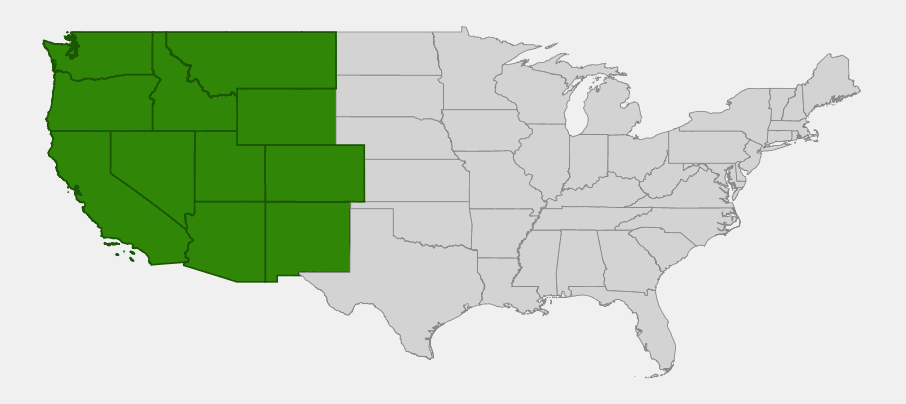
American bistort is native to the mountains of the western United States and adjacent Canada. USDA PLANTS records it in Washington, Oregon, Idaho, Montana, Wyoming, Colorado, Utah, Nevada, California, Arizona and New Mexico, and in Alberta and British Columbia. It also reaches northern Mexico in small areas.
It is most common in the Rocky Mountains, the Cascades, the Sierra Nevada and the Olympic Mountains, as well as the higher ranges of the Great Basin and the Southwest. It also grows at low elevation in some coastal meadows of Oregon and northern California, an unusual extension of a mainly montane plant.
Its main habitat is moist mountain meadows, stream banks, seeps and snowmelt areas, from montane forest openings up through subalpine meadows to alpine tundra. It ranges from near sea level on the Pacific coast to above 11,000 feet in the Rockies and Sierra Nevada, and it is classed as a wetland-associated (FACW) plant in much of its range.
📋 Regional plant lists featuring American Bistort: Arizona & New Mexico · California & Nevada · Idaho, Eastern Oregon & Eastern Washington · Utah & Western Colorado · Montana & Wyoming · Western Oregon & Western Washington
Growing & Care Guide
American bistort is a lovely plant for moist meadow, rain garden or pond-edge plantings in cool climates of the West and in mountain gardens. It is slow from seed and not common in nurseries, but it is long-lived once established where its soil stays moist into summer.
Light
Give it full sun in cool, mountain or northern gardens. In warmer, lower-elevation gardens, afternoon shade helps it cope with heat.
Soil & Water
Plant it in moist to wet, humus-rich soil that does not dry out in spring and early summer. It tolerates seasonally saturated soil and prefers neutral to acidic conditions; it has low tolerance for alkaline, limy soil. It does not suit hot, dry gardens.
Planting Tips
Plant nursery-grown plants in spring or fall, 8 to 12 inches apart, in drifts among moist-meadow companions such as tufted hairgrass, mountain bluebells and elephant’s head. It looks best in groups, as it grows in the wild.
Pruning & Maintenance
Little is needed. Cut back spent flower stems if you like, or leave them for their seeds. Keep the soil moist through the growing season and mulch lightly with leaf litter.
Propagation
Grow it from fresh seed sown in fall outdoors, where winter cold and moisture help it germinate; seedlings grow slowly and may take a few years to bloom. Established clumps can be divided carefully in early spring or fall, keeping a piece of rhizome with each division.
Landscape Uses
- Moist meadow and rain gardens: white flower spikes above grasses
- Mountain and high-elevation gardens: a classic subalpine wildflower
- Pond and stream edges: tolerates seasonally saturated soil
- Pollinator gardens: bees, flies and butterflies
- Wetland and meadow restoration: within its western mountain range
Wildlife & Ecological Value
American bistort is a common and important plant in western mountain meadows, feeding insects, birds and mammals through the short mountain summer.
For Pollinators
Bumblebees, solitary bees, flies and butterflies visit the flowers. Its scent attracts flies, which are important pollinators at high elevations. It is listed as a larval host plant for the mountain fritillary (Boloria alaskensis), a small butterfly of high mountains and the north.
For Birds
Grouse, ptarmigan and other birds eat the seeds and leaves, and seed-eating birds pick the achenes from the spikes in late summer.
For Mammals
Elk, deer, bighorn sheep and mountain goats graze the leaves and flower stalks. Rodents such as pocket gophers, voles and ground squirrels eat the starchy rhizomes, and black and grizzly bears dig them.
Ecosystem Role
Its rhizomes can live for decades, and it is one of the most abundant flowering plants in many subalpine meadows, where it contributes heavily to the food supply of grazers and insects during the brief growing season.
Cultural & Historical Uses
The name bistort comes from the Latin bis torta, “twice twisted,” describing the contorted rhizome of the European bistort. Bistortoides means “like bistort,” and Polygonum means “many knees,” a reference to the swollen joints of many species in the family.
The starchy rhizomes of American bistort were an important food for many Indigenous peoples of the West, eaten raw, roasted or boiled in soups and stews, and the young leaves were eaten as greens. These traditional uses relied on careful harvest; please do not dig wild plants.
For many hikers, the sight of thousands of white bistort spikes waving over a green meadow is a defining image of the western high country in summer.
Frequently Asked Questions
Is American bistort the same as Bistorta bistortoides?
Yes. USDA PLANTS calls it Polygonum bistortoides, while many other floras, including the Flora of North America, use Bistorta bistortoides. Both names refer to the same plant.
Where does American bistort grow?
In moist meadows, stream banks and snowmelt areas in the mountains of the western United States and adjacent Canada, from Washington and Montana south to California, Arizona and New Mexico.
Is American bistort edible?
Its starchy rhizomes and young leaves were traditional foods for many Indigenous peoples. If you are curious, grow your own. Do not dig wild plants, and always be sure of a plant’s identity before eating any part of it.
Can I grow American bistort in my garden?
Yes, in cool gardens with moist to wet soil, such as a meadow, rain garden or pond edge. It grows slowly and does poorly in hot, dry gardens.
Why does American bistort smell?
Its flowers have a mildly unpleasant scent that attracts flies, which are important pollinators in high mountain meadows, along with bees and butterflies.

Looking for a nursery that carries American Bistort?
Browse our native plant nursery directory: Arizona · California · Colorado · Idaho · Montana · Nevada & New Mexico · Oregon · Utah · Washington · Wyoming