
Goat’s Rue (Tephrosia virginiana)
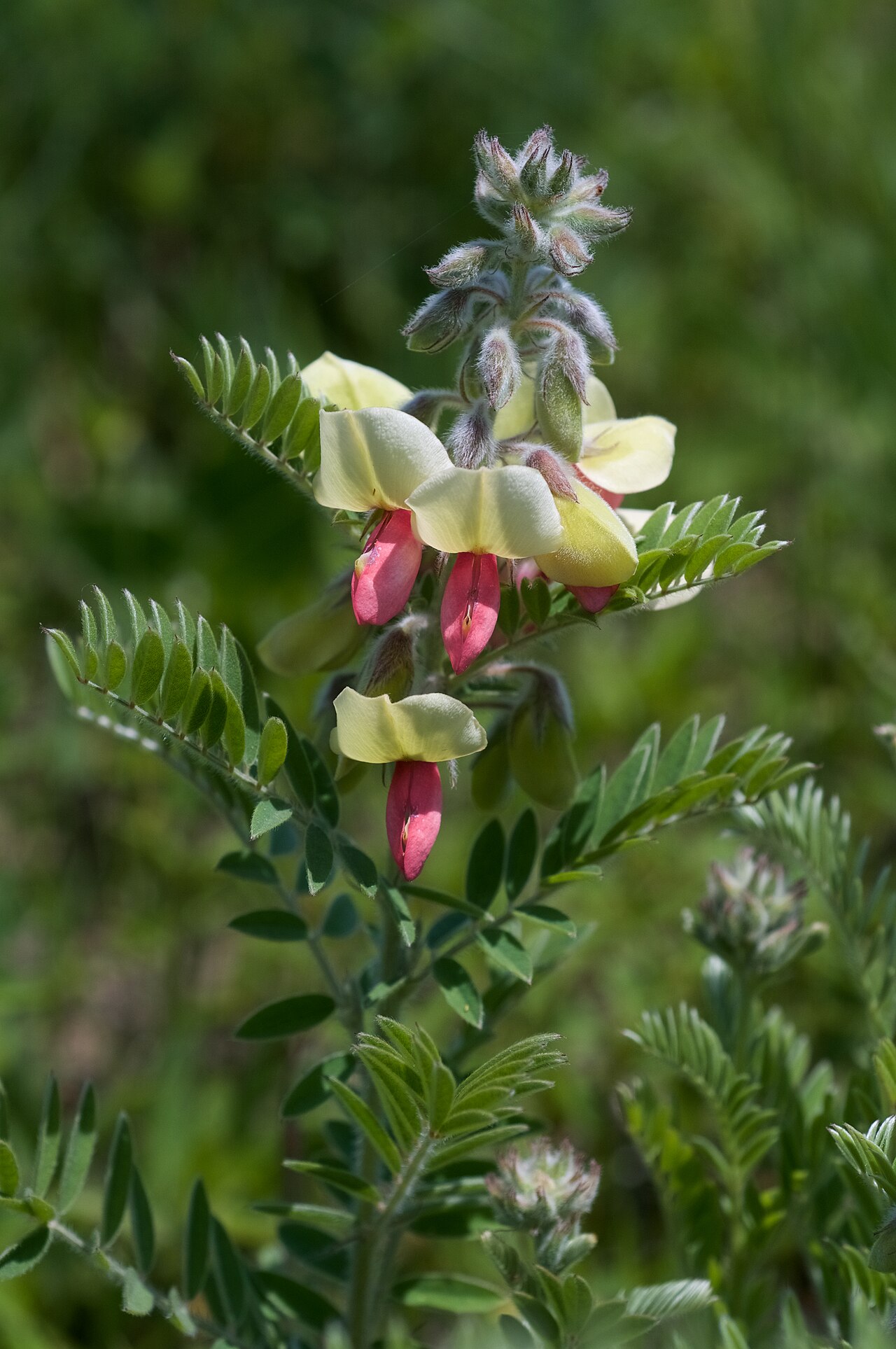
Tephrosia virginiana, known as Goat’s Rue, Virginia tephrosia, catgut or rabbit pea, is a native perennial legume of dry, sandy, open places across the eastern and central United States. It grows 1 to 2 feet tall in a bushy mound of feathery, compound leaves covered in soft, silvery hairs. In late spring and early summer, the stems are topped with dense clusters of striking two-toned pea flowers, with a creamy yellow upper petal and rose-pink lower petals.
It belongs to the pea family (Fabaceae) and, like many legumes, works with soil bacteria to fix nitrogen. Goat’s rue grows from a long, tough, woody taproot, which gives it the folk name catgut and lets it survive drought and fire in sand prairies, oak and pine savannas, barrens, dunes and dry open woods.
Goat’s rue is one of the most attractive native legumes for dry, sandy gardens and prairie plantings, and it is an important food source for native bees. Its roots contain rotenone-like compounds and are toxic. This guide covers how to identify goat’s rue, where it grows natively, how to grow it, a safety note, and its value for wildlife.
Identification
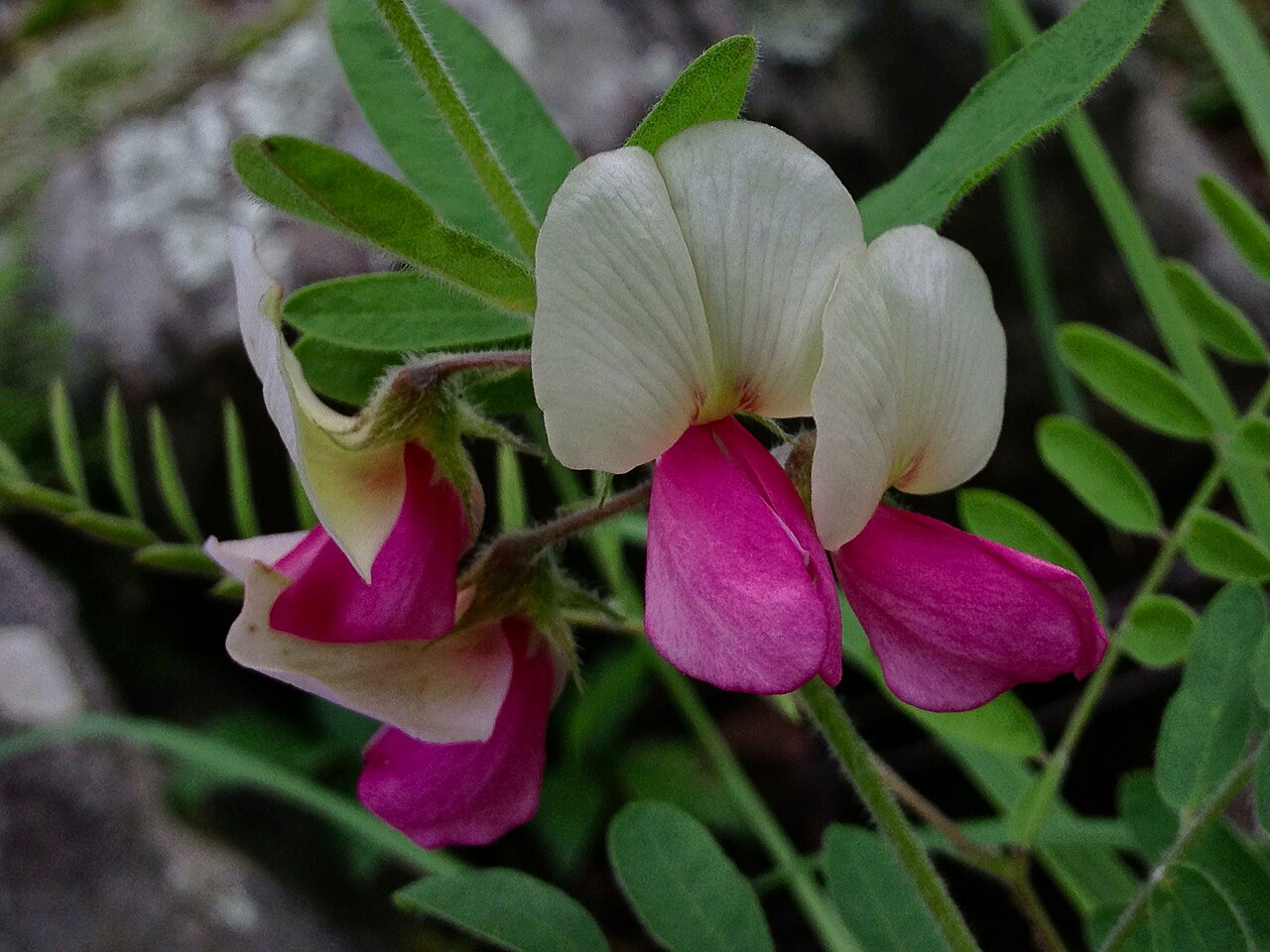
Goat’s rue is easy to identify in bloom by its bicolored, yellow-and-pink pea flowers and its silvery, hairy, feather-like leaves.
Growth Habit
It is a long-lived perennial with several upright to sprawling, hairy stems 1 to 2 feet tall, forming a rounded, bushy clump. The stems rise each year from a deep, woody, fibrous taproot. Mature plants can form attractive low mounds.
Leaves
The leaves are alternate and pinnately compound, 2 to 5 inches long, with about 8 to 15 pairs of narrow, oblong leaflets plus one at the tip. Each leaflet is ½ to 1 inch long. Stems and leaves are covered with soft, silky white hairs, which give the whole plant a grayish or silvery look.
Flowers
The flowers are crowded into dense clusters (racemes) at the tops of the stems. Each is a pea-like flower about ¾ inch long with a broad, creamy yellow to whitish upper petal (the banner) and rose-pink to purplish side petals (wings) and lower keel. Flowers open mainly from May to July.
Fruit & Seeds
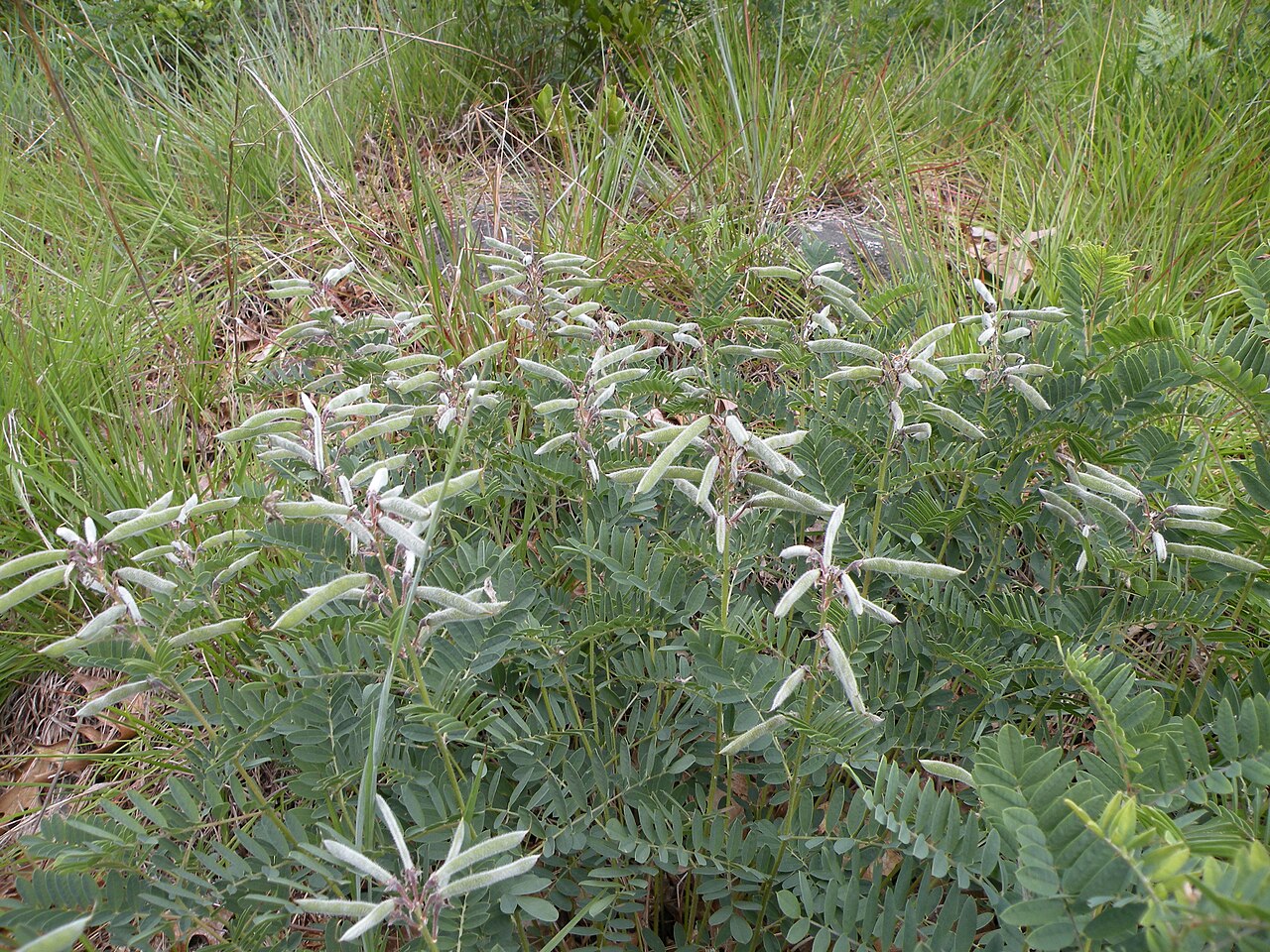
The fruit is a narrow, flat, slightly curved pod 1 to 2 inches long, densely covered with silky hairs. Pods ripen in mid to late summer and split open, often twisting, to release several small, bean-like seeds.
Look-alikes
Its flowers are unlike other native legumes in its range. Out of bloom, the silvery, pinnate leaves may resemble those of Partridge Pea, which has smooth leaflets and yellow flowers, or of lead plant (Amorpha canescens), a small shrub with purple flower spikes. Other Tephrosia species in the Southeast, such as hoary pea (Tephrosia spicata), have fewer, scattered flowers that are pink to red without the yellow banner.
Quick Facts
| Scientific Name | Tephrosia virginiana |
| Family | Fabaceae (pea family) |
| Plant Type | Herbaceous perennial legume |
| Mature Height | 1–2 ft |
| Mature Spread | 1–2 ft |
| Growth Rate | Slow to establish |
| Sun Exposure | Full sun to part shade |
| Water Needs | Low; very drought tolerant |
| Soil Type | Dry, well-drained sandy, gravelly or rocky soils |
| Soil pH | About 4.5–6.5 (acidic) |
| Bloom Time | May–July |
| Flower Color | Creamy yellow and rose-pink (bicolored) |
| Fall Color | Foliage turns tan to golden |
| Fruit | Narrow, silky-hairy pod |
| Deer Resistant | Low to moderate |
| USDA Hardiness Zones | 3–9 |
Native Range
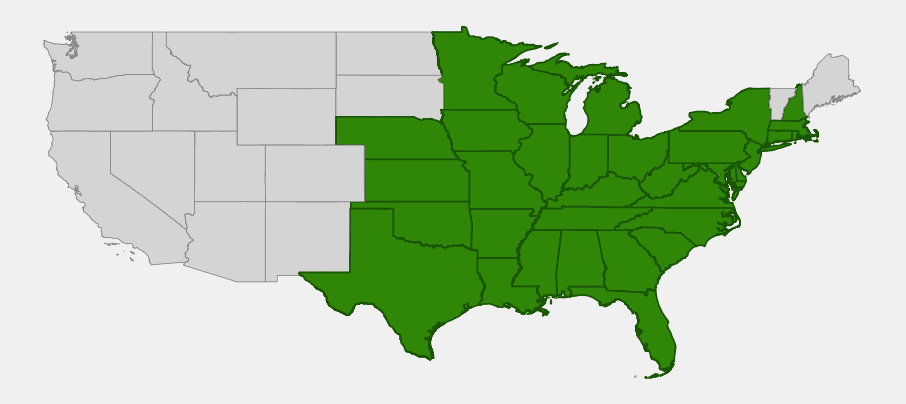
Goat’s rue has a broad range in the eastern and central United States and southern Ontario. USDA PLANTS records it as native in 33 states, from southern New Hampshire, Massachusetts and Rhode Island south along the Atlantic states to Florida, and west through the Great Lakes and Ohio Valley to Michigan, Wisconsin, Minnesota, Iowa and Nebraska, and south across Kansas and Oklahoma to Texas and Louisiana.
It is most common on the sandy soils of the Atlantic and Gulf Coastal Plains, in the Piedmont and in the sand prairies and oak savannas of the Midwest. It grows in sand prairies, oak and pine savannas and barrens, open dry woods, sandhills, dunes, rocky glades and roadside banks, nearly always on dry, acidic, well-drained soil.
At the northern edge of its range, in New England, Minnesota and Wisconsin, it is local and confined to sand plains and pine barrens, and it is considered rare in some of these states. It depends on open conditions maintained by fire and declines where woods grow dense.
📋 Regional plant lists featuring Goat’s Rue: North & South Florida · Alabama, Georgia & Mississippi · North & South Carolina · Maryland, Virginia & West Virginia · Kentucky & Tennessee · Arkansas, Louisiana, Eastern Oklahoma & Eastern Texas · Illinois, Iowa & Missouri · Ohio & Indiana · Nebraska, Kansas & Eastern Colorado · Michigan, Wisconsin & Eastern Minnesota · New York, Pennsylvania & Northern New Jersey · Delaware, Southern New Jersey & Long Island · Connecticut, Massachusetts & Rhode Island · New Hampshire, Maine & Vermont
Growing & Care Guide
Goat’s rue is a tough, long-lived plant once established, but it is slow from seed and resents disturbance because of its deep taproot. Grow it in dry, sandy, acidic soil where many other plants struggle, and be patient for the first couple of years.
Light
It flowers best in full sun but tolerates part shade, such as in open oak and pine woods. In dense shade it grows weakly and rarely blooms.
Soil & Water
Plant it in dry to medium, very well-drained, sandy, gravelly or rocky soil, ideally acidic. It does not need fertilizer, since it fixes its own nitrogen, and it tolerates long dry periods. Avoid rich, heavy or wet soil.
Planting Tips
Start from seed or small container plants, and choose the spot carefully, because the deep taproot makes established plants very hard to move. Space plants 12 to 18 inches apart. Do not dig plants from the wild; they rarely survive transplanting.
Pruning & Maintenance
Little care is needed. Cut back dead stems in late winter or early spring. In prairie plantings, periodic burning or mowing in the dormant season keeps the site open and helps it thrive.
Propagation
Grow it from seed. The hard seed coat should be scarified (nicked or lightly sanded) or soaked in hot water before sowing, and treating seed with an appropriate legume inoculant can improve establishment. Sow in spring in deep pots or directly in place. Seedlings grow slowly at first and may take two to three years to bloom.
Landscape Uses
- Sand prairie and savanna plantings: a showy legume for dry, sandy, acidic soils
- Dry, sunny gardens: very drought tolerant once established
- Pollinator gardens: attracts bumblebees and other native bees
- Restoration: a characteristic plant of sandhills, barrens and oak savannas
- Soil improvement: fixes nitrogen in poor sandy soils
Wildlife & Ecological Value
Goat’s rue is a valuable plant for wildlife in dry, sandy habitats, where its flowers, foliage and seeds support many species.
For Pollinators
The pea flowers are mainly pollinated by bees strong enough to open them, especially bumblebees, leafcutter bees and other medium to large native bees. The foliage is a larval food plant for some skipper butterflies and other insects.
For Birds
Ground-feeding birds, such as bobwhite quail and wild turkeys, eat the seeds, and the low, dense clumps provide cover in open sandy habitats.
For Mammals
Deer, rabbits and livestock browse the foliage. The roots, however, contain toxic compounds and are not eaten.
Ecosystem Role
As a nitrogen-fixing legume, goat’s rue adds nitrogen to poor, sandy soils, benefiting neighboring plants. Its deep taproot lets it resprout quickly after fire, making it an important part of fire-maintained savannas and sandhills.
Cultural & Historical Uses
The genus name Tephrosia comes from the Greek tephros, “ash-colored,” for the grayish hairs on the leaves of many species. The common name goat’s rue was originally used for the European Galega officinalis, which was thought to increase milk production in goats, and it was later applied to this American plant.
The roots of goat’s rue contain rotenone and related compounds, such as tephrosin, that are toxic to fish and insects. Several Native American peoples of the Southeast pounded the roots and put them in streams to stun fish, which could then be gathered easily. Some peoples also used the plant medicinally. The name catgut refers to the long, tough, stringy roots.
Safety note: The roots and other parts of goat’s rue contain rotenone-like compounds. Do not eat any part of the plant, and do not use it to poison fish, which is illegal in most states. Keep it away from fish ponds and keep children and pets from chewing on the roots.
Frequently Asked Questions
Why is it called goat’s rue?
The name was first used for a European plant, Galega officinalis, believed to increase milk in goats. It was later applied to this unrelated American legume.
Is goat’s rue poisonous?
Yes. Its roots contain rotenone-like compounds that are toxic to fish and insects and can be harmful if eaten. Do not eat any part of it, and keep it away from fish ponds.
Can I transplant goat’s rue?
It is very hard to transplant because of its deep, woody taproot. Start with seed or small container plants, and never dig it from the wild.
How do I grow goat’s rue from seed?
Scarify the hard seed or soak it in hot water, then sow it in spring in deep pots or directly in sandy soil. A legume inoculant can help. Expect slow growth for the first year or two.
What soil does goat’s rue need?
Dry, well-drained, sandy or gravelly soil, ideally acidic. It does poorly in rich, heavy or wet soil.

Looking for a nursery that carries Goat’s Rue?
Browse our native plant nursery directory: Alabama & Arkansas · Connecticut, Delaware, Florida & Georgia · Illinois, Indiana, Iowa & Kansas · Kentucky, Louisiana, Maryland, Massachusetts, Michigan, Minnesota, Mississippi & Missouri · Nebraska, New Hampshire, New Jersey, New York, North Carolina, Ohio & Oklahoma · Pennsylvania, Rhode Island, South Carolina, Tennessee, Texas & Virginia · West Virginia & Wisconsin