
Spring Ladies’ Tresses (Spiranthes vernalis)
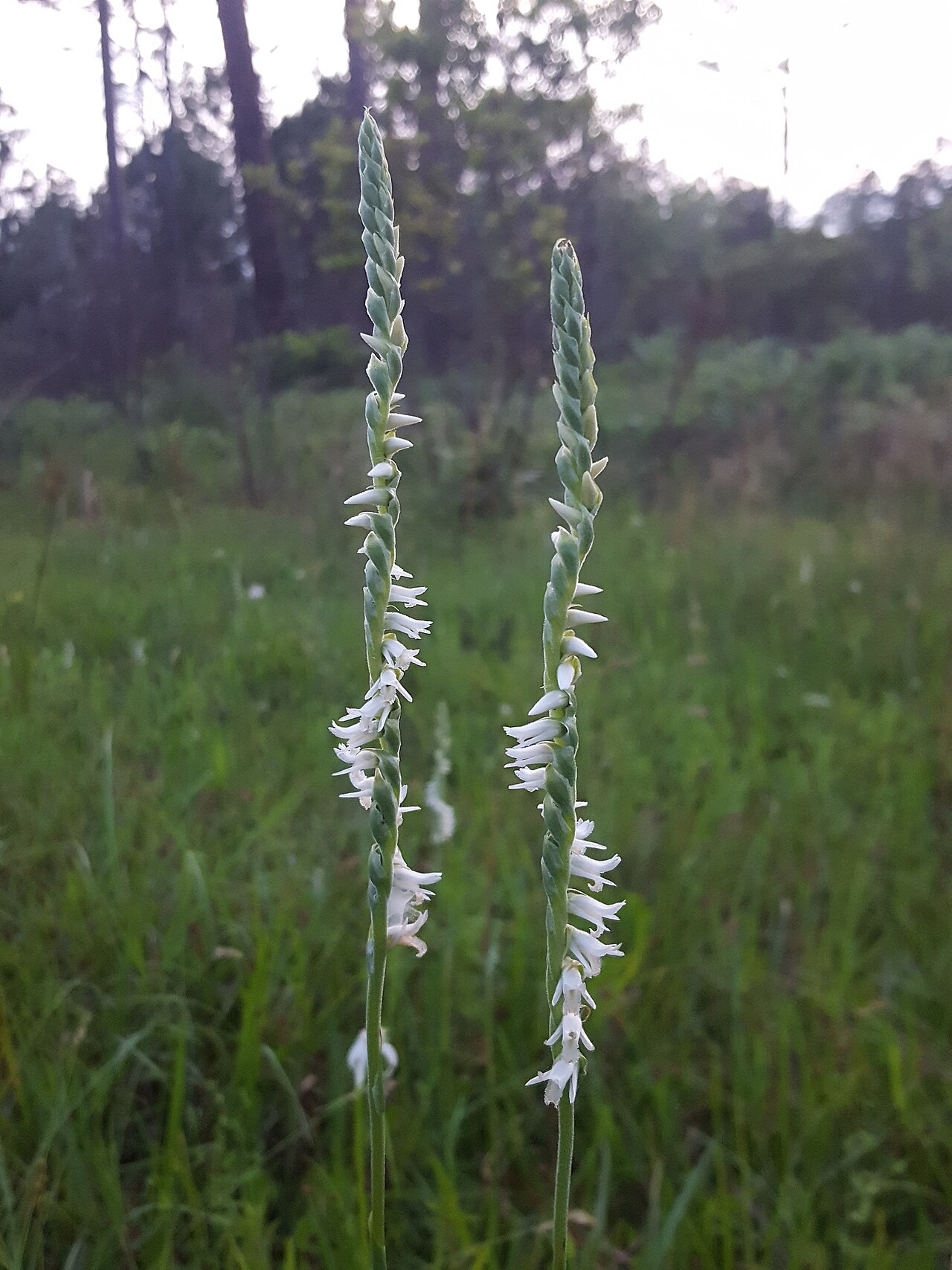
Spiranthes vernalis, known as Spring Ladies’ Tresses (USDA: spring lady’s tresses), is a small native orchid of open, grassy places across the eastern and central United States. Its slender spike carries small white flowers arranged in a neat spiral around the stem, like a braid of hair, the source of the name ladies’ tresses. As the species name vernalis (“of spring”) suggests, it is the earliest-blooming of the common eastern ladies’ tresses, flowering from late winter in Florida and Texas to midsummer in the North.
Unlike most native orchids, spring ladies’ tresses is surprisingly tolerant of disturbance. It turns up in old fields, pastures, roadsides, cemeteries and even lawns, as well as in prairies, pine flatwoods and coastal grasslands. Plants often go unnoticed until the flower spikes appear, and they may bloom in large numbers one year and be scarce the next.
Like all orchids, it depends on specific soil fungi to germinate and grow, so it cannot simply be dug up and moved. Never dig ladies’ tresses from the wild. If you find them in your lawn or field, the best way to help them is to delay mowing until after they bloom and set seed. If you want to grow them, buy only nursery-propagated plants from a reputable native orchid grower.
Identification
Spring ladies’ tresses is a slender orchid usually 8 to 24 inches tall, sometimes taller. In bloom, look for a single, tight spiral of small white flowers on a hairy stem, with a few narrow, grass-like leaves at the base.
Roots & Leaves
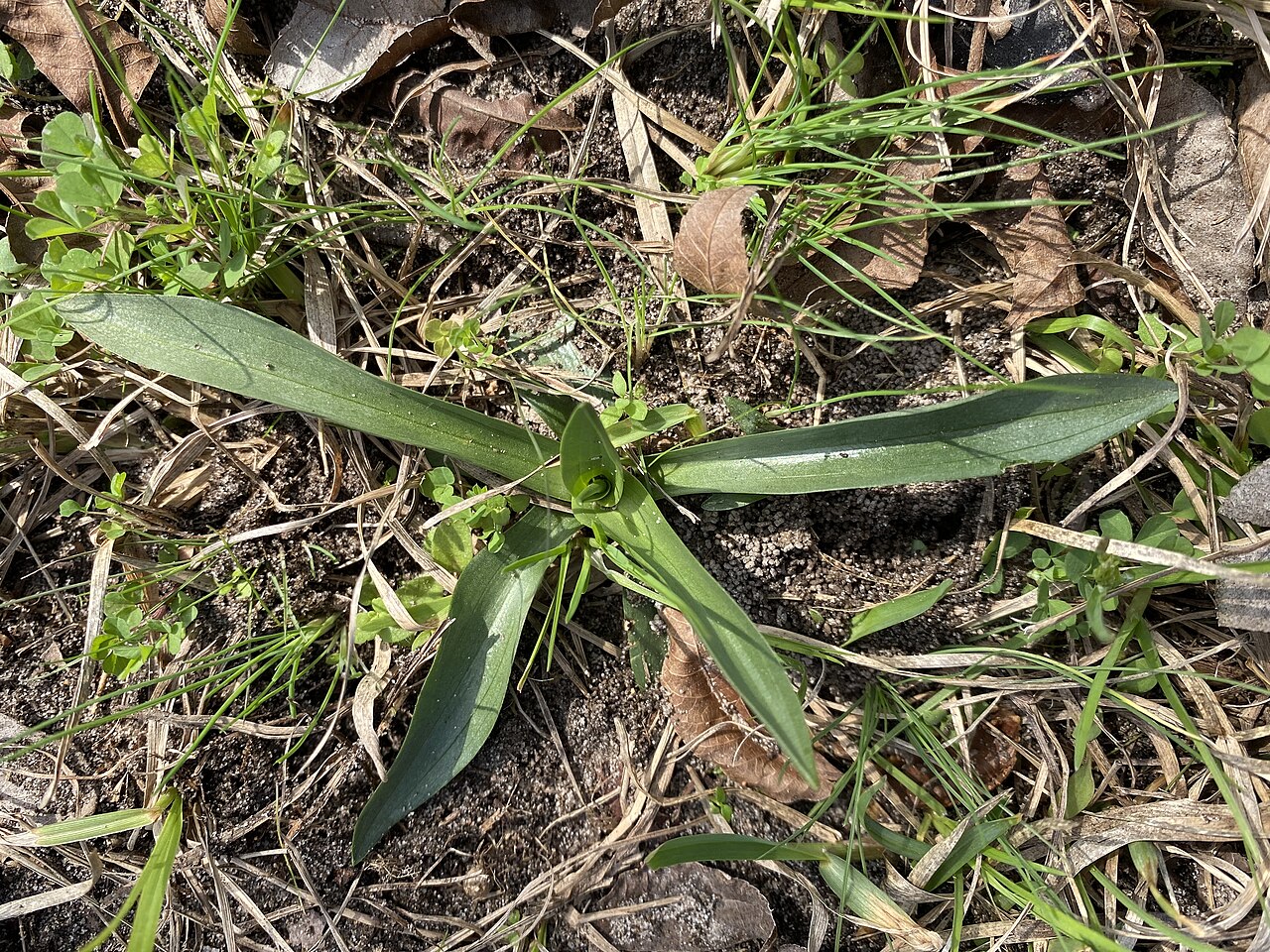
The plant grows from a cluster of thick, fleshy, tuberous roots. Basal leaves are few (usually 2 to 5), narrow and grass-like, 2 to 10 inches long, and often still present at flowering, although they may wither in dry years. Upper stem leaves are reduced to small, sheathing bracts. In winter and early spring, the plant is only a small rosette of leaves.
Flowers
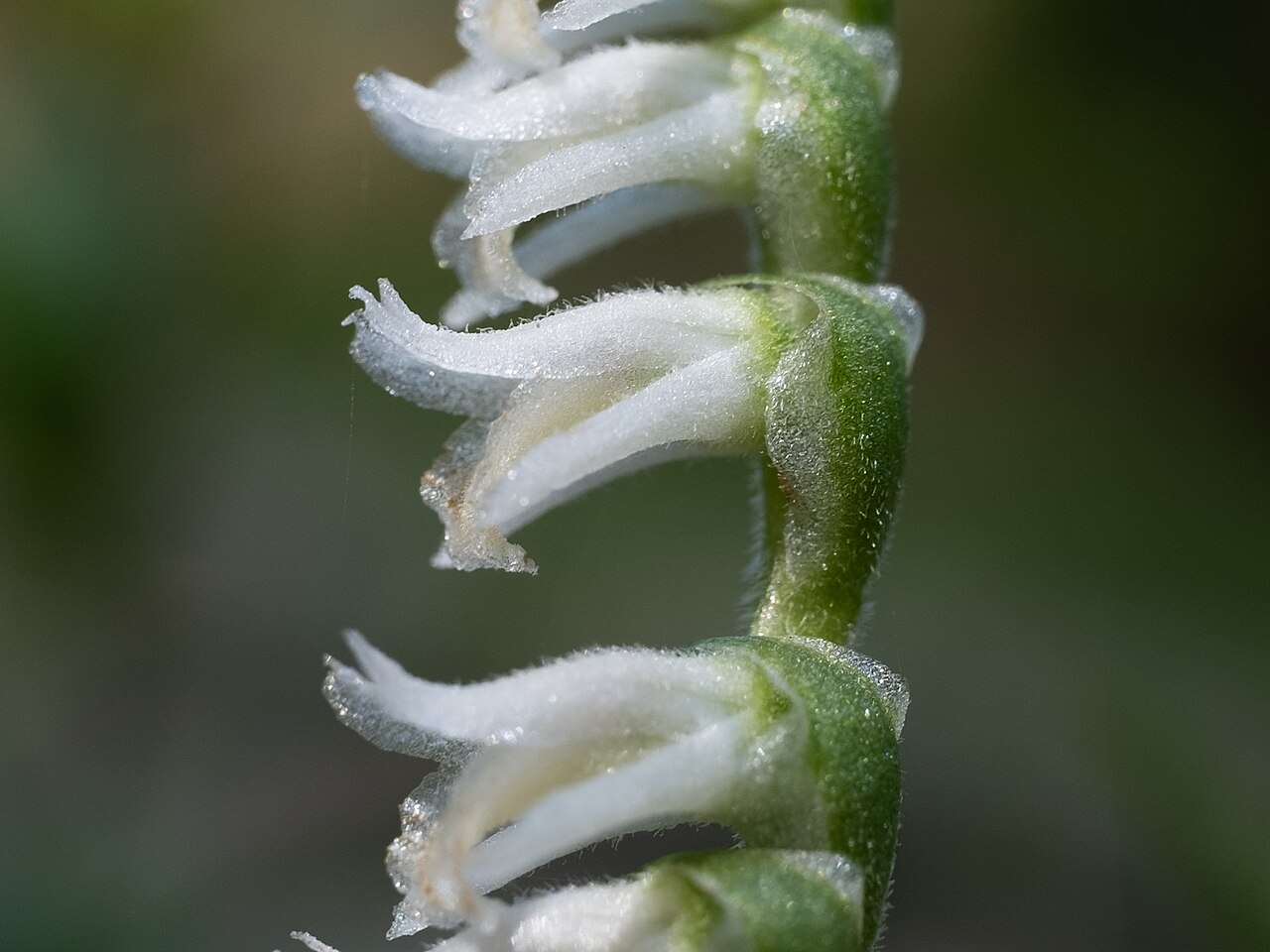
The flowering spike carries 10 to 50 or more small white flowers, each about 1/4 to 1/2 inch long, arranged in a single rank that twists around the stem in a tight or loose spiral. The flowers are tubular and nodding slightly outward, with a lip that is often pale yellow in the center. They have a light, sweet fragrance. Bloom time runs from March and April in the Deep South to June through August in the North.
Hairs on the Stem
The upper stem, bracts and flower bases are covered with short hairs. In spring ladies’ tresses these hairs are pointed rather than tipped with tiny round glands, a technical feature that helps separate it from several similar species. A hand lens is useful.
Fruit & Seeds
Each pollinated flower produces a small capsule packed with thousands of dust-like seeds. The seeds have almost no stored food and can only germinate when they are colonized by a suitable mycorrhizal fungus in the soil. Seed is released in summer and dispersed by wind.
Look-alikes
Fragrant ladies’ tresses blooms in fall, grows in wet places and has larger, strongly fragrant flowers in several ranks. Nodding ladies’ tresses (Spiranthes cernua) and Great Plains ladies’ tresses (S. magnicamporum) also bloom in late summer and fall and have flowers in several ranks. Little ladies’ tresses (S. tuberosa) and slender ladies’ tresses (S. lacera) have smooth (hairless) or glandular stems and smaller flowers. Spring ladies’ tresses is the one most often found blooming in spring and early summer in open, grassy places.
Safety & Conservation
Spring ladies’ tresses is not known to be poisonous, but it should never be picked or dug. It is common in much of the South and Midwest but becomes rare toward the northern edge of its range in New England, New York and the Great Lakes states, where several states track it as a plant of conservation concern. Wild-dug plants almost always die because they lose their fungal partners.
Quick Facts
| Scientific Name | Spiranthes vernalis |
| Family | Orchidaceae (orchid family) |
| Plant Type | Terrestrial orchid; herbaceous perennial from tuberous roots |
| Mature Height | 8–24 in, occasionally to 36 in |
| Mature Spread | 2–6 in |
| Growth Rate | Slow |
| Sun Exposure | Full sun to light shade |
| Water Needs | Low to medium; dry to moist soil |
| Soil Type | Sandy, loamy or clay soils in open grassland |
| Soil pH | About 5.0–7.0 (acidic to neutral) |
| Bloom Time | March–August, depending on latitude |
| Flower Color | White to creamy white, lip often pale yellow |
| Fall Color | None; leaves wither, new rosette forms in fall or winter |
| Fruit | Small capsule with thousands of dust-like seeds |
| Deer Resistant | Moderate; flower spikes are sometimes browsed |
| USDA Hardiness Zones | 5–10 |
Native Range
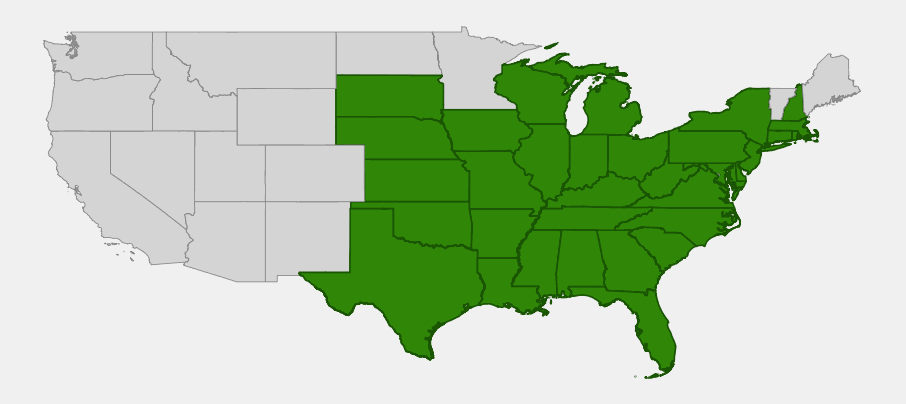
Spring ladies’ tresses is native from the eastern and central United States south through Mexico to Central America, and it also grows in the Bahamas. USDA PLANTS records it in 33 states plus the District of Columbia: from Massachusetts, New Hampshire and southern Michigan west to Iowa, Nebraska and Kansas, and south to Florida and Texas. It is not recorded from Canada.
It is most common on the Atlantic and Gulf Coastal Plains and in the southern and central states, from the Carolinas and Florida west through Louisiana and eastern Texas to Oklahoma and Missouri, where it can be abundant in pastures and roadside grasslands. In Texas it ranges from the Piney Woods and coastal prairies south into the South Texas plains. Northward it becomes scattered and local; populations in New England, New York, Michigan and Wisconsin are at the edge of its range, and the USDA record for South Dakota is an outlying one.
Habitats include dry to moist prairies and meadows, old fields and pastures, pine savannas and flatwoods, sandy coastal grasslands, roadsides, cemeteries, mowed lawns and the edges of open woods. It favors sunny spots with short or sparse vegetation and often appears in places that are mowed or grazed regularly.
📋 Regional plant lists featuring Spring Ladies’ Tresses: New York, Pennsylvania & Northern New Jersey · Ohio & Indiana · Michigan, Wisconsin & Eastern Minnesota · Kentucky & Tennessee · Nebraska, Kansas & Eastern Colorado · Connecticut, Massachusetts & Rhode Island · New Hampshire, Maine & Vermont · Maryland, Virginia & West Virginia · Delaware, Southern New Jersey & Long Island · Illinois, Iowa & Missouri · Alabama, Georgia & Mississippi · North & South Florida · North & South Carolina · Arkansas, Louisiana, Eastern Oklahoma & Eastern Texas · South & West Texas
Growing & Care Guide
Spring ladies’ tresses is not a typical garden plant, but it is one of the more adaptable native orchids. The best way to grow it is often to protect plants that already appear in a meadow or lawn. Never dig plants from the wild: buy only nursery-propagated (laboratory-grown) plants from a reputable native orchid grower.
Light
Full sun to light shade. It needs open conditions with short or sparse vegetation and fades out when taller grasses, shrubs or trees shade it.
Soil & Water
Grow it in well-drained sandy or loamy soil, from fairly dry to moist, with low to moderate fertility. Avoid fertilizer, rich compost and heavy mulch. Established plants tolerate summer drought, especially when dormant, but should not sit in waterlogged soil.
Planting Tips
Plant nursery-propagated plants in fall or early spring in a sunny meadow patch, a short-grass prairie planting or an unfertilized lawn area, setting the tuberous roots at the same depth they grew in the pot. Mark the location, since the plant is small and easy to lose. Keep competing vegetation short.
Pruning & Maintenance
If ladies’ tresses appear in your lawn, stop mowing that area from late winter until the flowers have faded and the capsules have released seed, then mow normally. Avoid herbicides, which can kill these orchids. Occasional mowing or light grazing outside the bloom season helps keep competing plants in check.
Propagation
Seed requires a specific mycorrhizal fungus or sterile laboratory culture to germinate, so propagation is done by specialist growers. In the garden, plants may slowly self-sow in suitable open sites where the right fungi are present. Mature plants occasionally produce new shoots from their roots, but division is not recommended for home gardeners.
Landscape Uses
- Meadow and prairie gardens: a delicate early-summer accent among short native grasses
- No-mow lawn areas: protect volunteer plants by delaying mowing until after bloom
- Native orchid collections: an adaptable species for sunny, well-drained sites
- Nature education: an easy-to-find wild orchid on roadsides and in pastures
- Grassland conservation: an indicator of long-lived, unplowed grassland
Wildlife & Ecological Value
Spring ladies’ tresses is a small plant, but like all orchids it is linked to a network of pollinators and soil fungi.
For Pollinators
The fragrant flowers produce nectar at the base of the lip and are pollinated mainly by bees, especially bumble bees and other medium-sized bees. A bee typically starts at the bottom of the spike and works its way up the spiral. The lower, older flowers are in their female phase while the upper, younger flowers release pollen, which encourages pollen transfer between plants.
For Birds
The plant has no special value for birds, but the open grasslands where it grows are home to meadowlarks, sparrows and other grassland birds.
For Mammals
Deer and rabbits sometimes nip the flowering spikes. Mowing at the wrong time of year is a bigger threat than browsing.
Ecosystem Role
Like all orchids, spring ladies’ tresses relies on mycorrhizal fungi that supply sugars and nutrients to its seedlings, and adult plants continue to associate with these fungi. Its presence in a field often indicates soil that has not been plowed or heavily fertilized for many years, along with an intact community of soil fungi.
Cultural & Historical Uses
The genus name Spiranthes comes from the Greek words for “coil” and “flower,” describing the spiral arrangement of the blossoms. The common name ladies’ tresses compares the twisted flower spike to braided hair. Older books list the species as Ibidium vernale.
The species was described in 1845 by George Engelmann and Asa Gray, two of the leading American botanists of the 19th century, based on spring-flowering plants from the southern United States. Its spring bloom time set it apart from the familiar late-summer and fall ladies’ tresses.
Today spring ladies’ tresses is a favorite find for wildflower enthusiasts, partly because it so often appears in unexpected places such as church lawns, cemeteries and roadside verges. Many gardeners have discovered it when they let part of a lawn grow out, and orchid groups encourage mowing schedules that let these and other small native orchids bloom and set seed.
Frequently Asked Questions
Is spring ladies’ tresses a real orchid?
Yes. It is a member of the orchid family (Orchidaceae). Its flowers are small, but each one has the typical orchid structure, including a specialized lip and a column that combines the male and female parts.
I found ladies’ tresses in my lawn. What should I do?
Enjoy them. Stop mowing that area while they are in bloom and until the seed capsules have opened, then mow as usual. Do not fertilize or use herbicides there. Do not try to dig them up; they rarely survive transplanting.
Can I buy spring ladies’ tresses?
Occasionally. Look for nursery-propagated plants from reputable native orchid growers. Never buy wild-collected plants or dig plants from the wild.
When does spring ladies’ tresses bloom?
From late winter or early spring in Florida and Texas to early and midsummer farther north. It is usually the first ladies’ tresses of the year in its area.
How do I tell spring ladies’ tresses from other ladies’ tresses?
Look at bloom time, habitat and the stem hairs. Spring ladies’ tresses blooms in spring and early summer in dry to moist open grassland, has flowers in a single spiraling rank, and has pointed, not gland-tipped, hairs on the upper stem.

Looking for a nursery that carries Spring Ladies’ Tresses?
Browse our native plant nursery directory: Alabama & Arkansas · Connecticut, Delaware, Florida & Georgia · Illinois, Indiana, Iowa & Kansas · Kentucky, Louisiana, Maryland, Massachusetts, Michigan, Mississippi & Missouri · Nebraska, New Hampshire, New Jersey, New York, North Carolina, Ohio & Oklahoma · Pennsylvania, Rhode Island, South Carolina, South Dakota, Tennessee, Texas & Virginia · West Virginia & Wisconsin