
Wild Licorice (Glycyrrhiza lepidota)
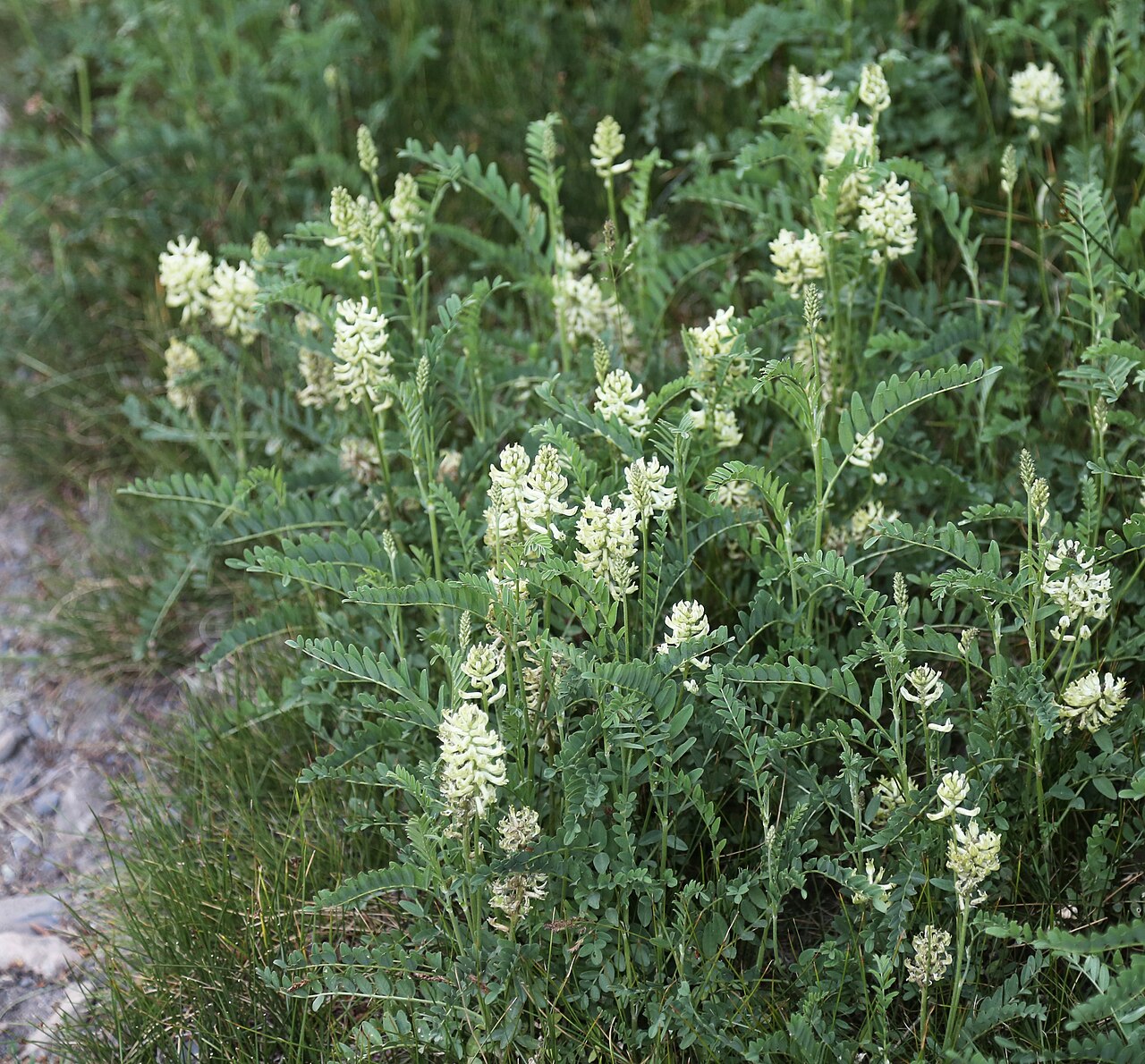
Glycyrrhiza lepidota, known as Wild Licorice (USDA: American licorice), is a native perennial legume of the Great Plains and the West. It belongs to the pea family (Fabaceae) and is a close relative of the Old World licorice plant (Glycyrrhiza glabra), the source of commercial licorice. Wild licorice grows 1 to 3 feet tall from deep, spreading rhizomes, with feathery, pinnately compound leaves that are dotted with tiny glands and feel slightly sticky.
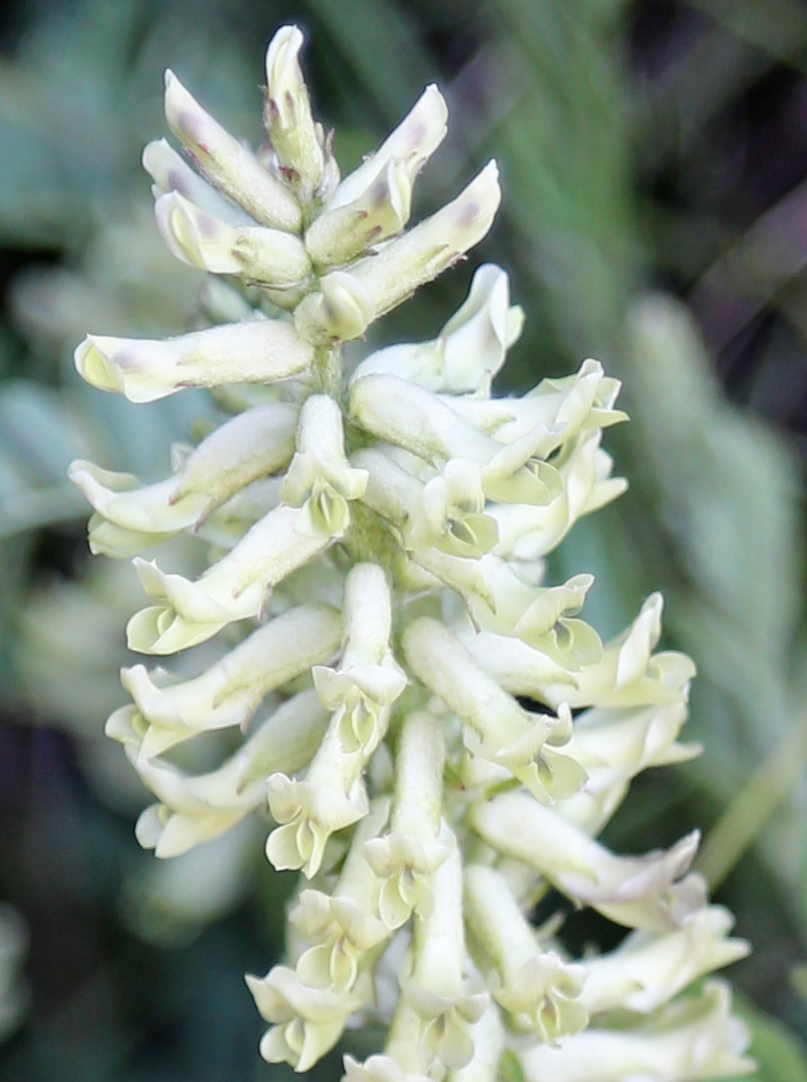
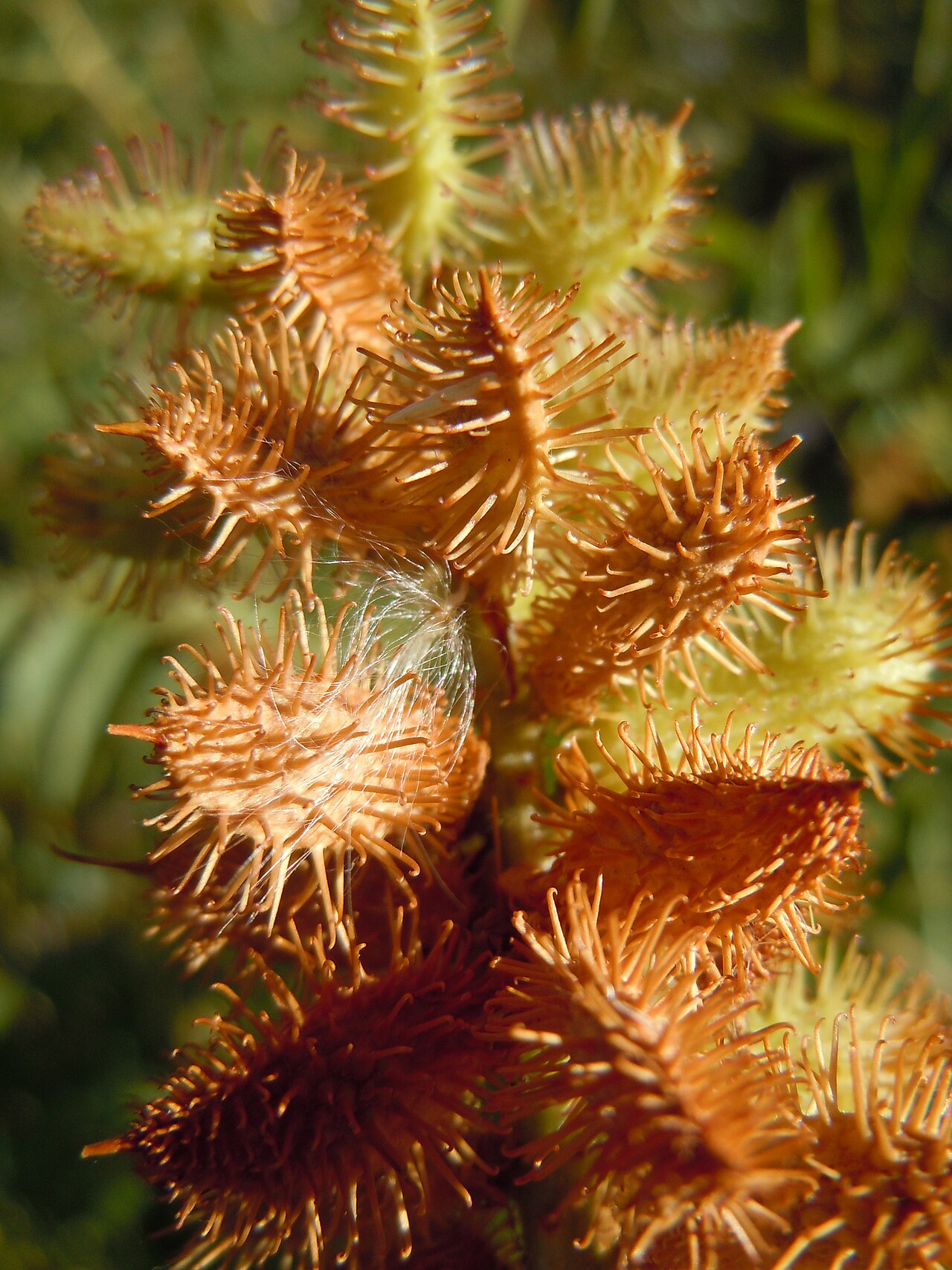
In early summer it produces dense, upright spikes of creamy white to pale yellow pea flowers. By late summer these become clusters of reddish brown pods covered in hooked prickles, which look and act like small cockleburs, hitching rides on animal fur and clothing. Its long roots taste sweet, like licorice, and Indigenous peoples across the West used them as food and medicine.
Wild licorice grows in moist prairie swales, stream and river banks, floodplains, lake shores, ditches and roadsides, often in heavy clay or mildly saline soils. It forms large colonies and is an excellent native plant for stabilizing banks and restoring moist grasslands in the Plains and the West. In gardens, give it room, since it spreads vigorously by rhizomes.
Identification
Wild licorice is easiest to identify by its combination of pinnate, glandular leaves, creamy flower spikes and, later in the season, the unmistakable bur-like pods.
Stems & Growth Habit
The plant grows from a deep taproot and long, branching rhizomes that send up many stems, forming colonies that can cover large areas. The stems are upright, branched, 1 to 3 feet tall (occasionally to 4 feet), and dotted with small glands that make them slightly sticky.
Leaves
The leaves are alternate and pinnately compound, 3 to 7 inches long, with 11 to 19 lance-shaped leaflets, each about 1 to 1 1/2 inches long with a pointed tip. The leaflets are dotted with tiny scale-like glands, especially underneath, and have a faintly sticky feel and a mild scent. The species name lepidota means “scaly,” referring to these glands.
Flowers
From about May to August, dense spikes 1 to 2 inches long grow on stalks from the upper leaf axils. Each spike holds many narrow, tubular pea flowers about 1/2 inch long, creamy white to yellowish white, sometimes faintly tinged green. The spikes resemble those of some milkvetches but are denser and stand above the foliage.
Fruit & Seeds
The pods are about 1/2 to 3/4 inch long, oblong, reddish brown at maturity and densely covered in hooked prickles, so the clustered pods look like burs. Each pod holds a few small, kidney-shaped seeds. The burs catch in fur, feathers and clothing, carrying the seeds to new places.
Look-alikes
Milkvetches (Astragalus) and sweet clovers have similar compound leaves and pea flowers, but their pods are smooth, not bur-like. Cocklebur (Xanthium) has similar spiny burs but broad, rough, triangular leaves. Old World licorice (G. glabra), occasionally cultivated, has bluish-purple flowers and smooth or slightly bristly pods.
Safety Note
The roots contain glycyrrhizin, the same sweet compound found in commercial licorice root. Eaten in large amounts or over long periods, glycyrrhizin can raise blood pressure and lower potassium levels. People with heart or kidney conditions and pregnant women should avoid licorice root. Do not use it as a remedy without medical advice.
Quick Facts
| Scientific Name | Glycyrrhiza lepidota |
| Family | Fabaceae (pea family) |
| Plant Type | Rhizomatous herbaceous perennial legume |
| Mature Height | 1–3 ft (to 4 ft) |
| Mature Spread | 3 ft or more; spreads into colonies |
| Growth Rate | Fast |
| Sun Exposure | Full sun to part shade |
| Water Needs | Medium; moist soil, tolerates dry spells |
| Soil Type | Clay, loam, sand; tolerates saline and alkaline soils |
| Soil pH | About 6.0–8.5 |
| Bloom Time | May–August |
| Flower Color | Creamy white to pale yellow |
| Fall Color | Leaves turn yellow |
| Fruit | Reddish brown bur-like pod with hooked prickles |
| Deer Resistant | No; deer and pronghorn eat the foliage |
| USDA Hardiness Zones | 3–9 |
Native Range
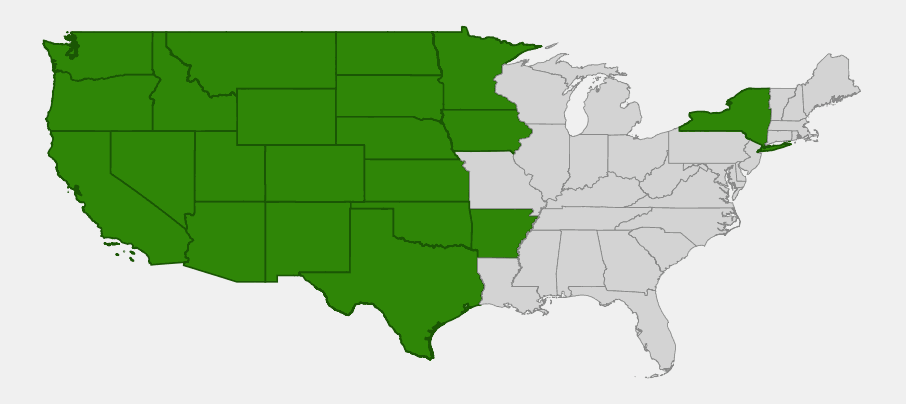
Wild licorice is native to central and western North America. USDA PLANTS lists it as native in the lower 48 states and Canada. Its range extends from British Columbia, Alberta, Saskatchewan, Manitoba and western Ontario south across Washington, Oregon, Idaho, Montana, the Dakotas and Minnesota, through Wyoming, Nebraska, Iowa, Colorado and Kansas, and south to California, Nevada, Utah, Arizona, New Mexico, Oklahoma, Texas and Arkansas, and into northern Mexico.
It is most common on the Great Plains and in western river valleys. In the Pacific states it grows mostly east of the Cascades and in the interior of California. USDA also records it in New York; NatureServe treats it as a native species there that has not been seen in many years. Farther east, in New England, Pennsylvania, Virginia, Indiana and Illinois, it is introduced according to NatureServe and Go Botany, so those states are not shown on the map.
It grows in moist, open places: prairie swales and draws, floodplains, stream and river banks, lake and pond margins, wet meadows, irrigation ditches, fence rows and roadsides. It is also common on mildly saline or alkaline flats and along the edges of playas and sloughs in the West.
📋 Regional plant lists featuring Wild Licorice: Idaho, Eastern Oregon & Eastern Washington · Montana & Wyoming · Michigan, Wisconsin & Eastern Minnesota · Nebraska, Kansas & Eastern Colorado · Utah & Western Colorado · Arizona & New Mexico · Illinois, Iowa & Missouri · Arkansas, Louisiana, Eastern Oklahoma & Eastern Texas · South & West Texas · North Dakota, South Dakota & Western Minnesota · California & Nevada
Growing & Care Guide
Wild licorice is easy to grow and very hardy, but it spreads by deep rhizomes and is hard to remove once established. Use it where you want a vigorous ground-covering colony, such as a large meadow, a streambank or a low, moist area, rather than a small garden bed. Buy plants or seed from native nurseries; do not dig wild plants.
Light
Full sun is best. It tolerates part shade, such as along wooded stream edges, but grows thinner there.
Soil & Water
It does best in moist soil, including heavy clay, and tolerates seasonal flooding, alkaline soil and moderate salinity. Once its deep roots are established it handles summer dry spells well. Because it is a legume that fixes nitrogen with root bacteria, it does not need fertilizer.
Planting Tips
Plant rhizome pieces or container plants in spring, or sow scarified seed in late spring. Space plants 2 to 3 feet apart for a colony. Keep it away from formal beds and vegetable gardens, or plant it inside a deep root barrier. Combine with tall prairie grasses and moisture-loving wildflowers in meadows and swales.
Pruning & Maintenance
Little care is needed. Cut back dead stems in late winter. Mow or pull unwanted shoots to keep the colony in bounds. Remove the burs before they ripen near paths or where pets roam, since they tangle in fur.
Propagation
Divide rhizomes in early spring or fall. The hard seeds need scarification (nick the seed coat or soak in hot water overnight) before sowing. Seed sown in warm soil germinates within a few weeks, and seedlings grow quickly.
Landscape Uses
- Streambank stabilization: deep rhizomes hold soil along banks and ditches
- Moist prairie and swale restoration: a native legume that adds nitrogen to the soil
- Wildlife plantings: cover and food for game birds, small mammals and browsers
- Saline and alkaline sites: one of few native legumes tolerant of mildly salty soils
- Ethnobotanical gardens: to show a native relative of commercial licorice
Wildlife & Ecological Value
Wild licorice supports a range of wildlife in western grasslands and riparian areas, from bees to pronghorn.
For Pollinators
The flowers are visited by bumblebees and other native bees, which can open the narrow pea flowers. The leaves are eaten by the caterpillars of some legume-feeding moths and butterflies.
For Birds
The Lady Bird Johnson Wildflower Center notes that upland game birds eat the seeds. Colonies provide nesting and escape cover for grassland birds.
For Mammals
Deer and pronghorn eat the foliage, small mammals eat the seeds, and pocket gophers eat the rhizomes. The burs are carried long distances in the fur of deer, coyotes and other mammals.
Ecosystem Role
As a nitrogen-fixing legume, wild licorice enriches the soil in grasslands and floodplains. Its spreading rhizomes stabilize stream banks and disturbed soils. It also increases on some grazed rangelands, since it recovers well after grazing and disturbance.
Cultural & Historical Uses
Indigenous peoples throughout the Plains and the West used wild licorice extensively. Go Botany notes that it was used as an herbal remedy for fever, stomach ache, toothache, ear infection and sore throat, and to strengthen the throat for singing. The sweet roots were chewed fresh or roasted and eaten, and the leaves were used in poultices.
The genus name Glycyrrhiza comes from Greek words meaning “sweet root.” The roots of wild licorice contain glycyrrhizin, the compound responsible for licorice’s sweet taste, though they are less sweet than those of the cultivated Old World licorice used for candy and flavoring.
Early travelers and settlers on the Plains learned of the plant’s sweet roots from Indigenous people, and it appears in many accounts of Plains plant uses. Today wild licorice is valued in reclamation and streambank restoration in the West for its tough, spreading roots and its ability to fix nitrogen.
Frequently Asked Questions
Is wild licorice the same plant used to make licorice candy?
No. Commercial licorice comes from Old World licorice (Glycyrrhiza glabra). Wild licorice is a close native relative with a similar but milder sweet taste in its roots.
Is wild licorice root safe to eat?
Small amounts were traditionally eaten, but the roots contain glycyrrhizin, which in large or frequent doses can raise blood pressure and lower potassium. People with heart or kidney problems and pregnant women should avoid it.
Does wild licorice spread?
Yes. It spreads by deep rhizomes and forms large colonies, which makes it great for banks and meadows but hard to control in small gardens.
Why do the seed pods stick to my clothes?
The pods are covered with hooked prickles, like cockleburs. They catch on fur and clothing so animals and people carry the seeds to new places.
Where does wild licorice grow best?
In full sun and moist soil, especially along streams, floodplains and prairie swales. It tolerates clay, alkaline and mildly saline soils.

Looking for a nursery that carries Wild Licorice?
Browse our native plant nursery directory: Arizona & Arkansas · California · Colorado · Idaho, Iowa & Kansas · Minnesota & Montana · Nebraska, Nevada, New Mexico, New York, North Dakota & Oklahoma · Oregon · South Dakota, Texas & Utah · Washington · Wyoming