
Mohr’s Bluestem (Andropogon mohrii)
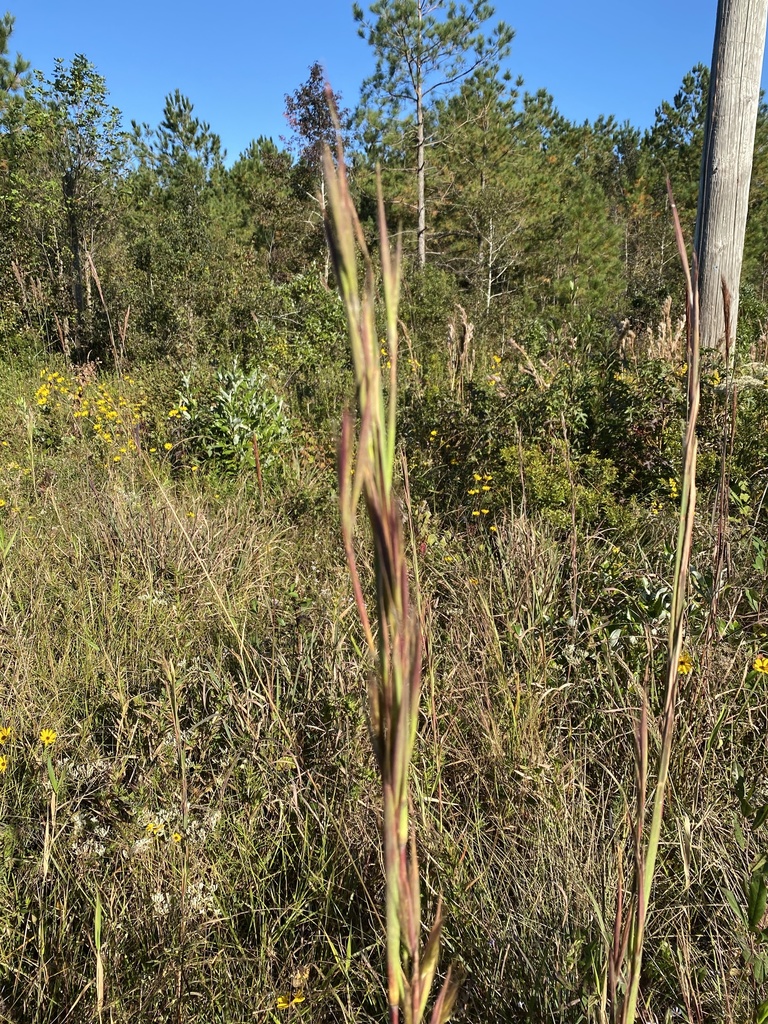
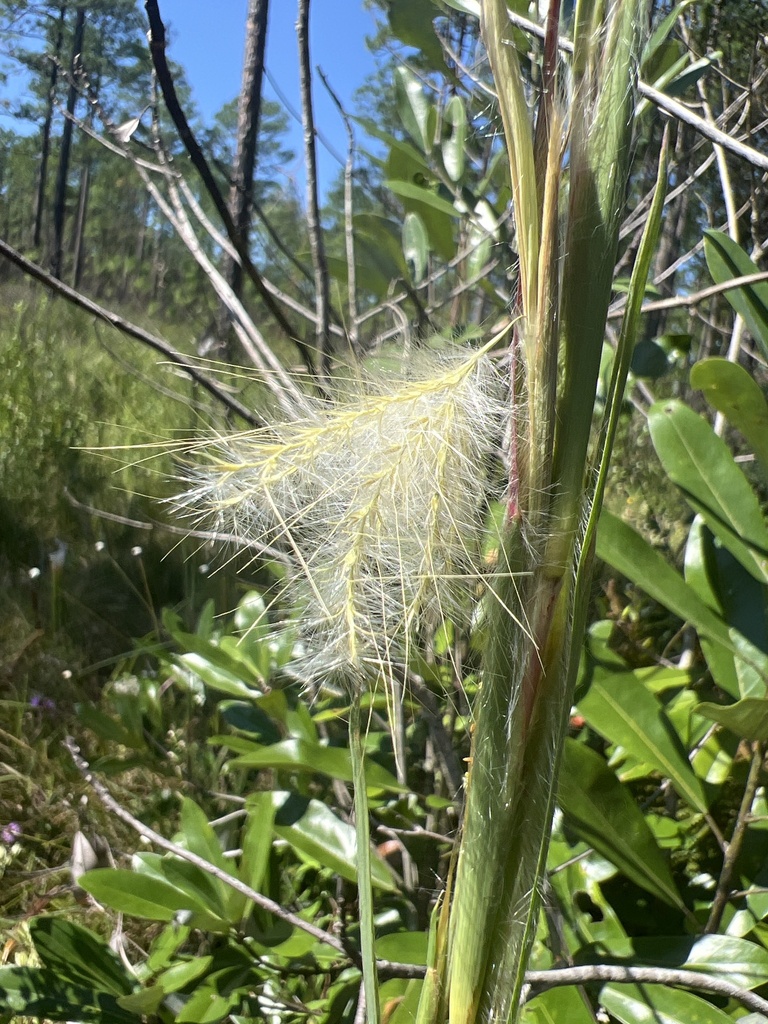
Andropogon mohrii, known as Mohr’s Bluestem, is a native perennial bunchgrass of the southeastern Coastal Plain. It forms upright clumps 2 to 4 feet tall in flower, with flat, often bluish-green leaves and, in fall, narrow, leafy flower clusters that turn fluffy and silvery with long, silky hairs. It is a relative of broomsedge (Andropogon virginicus) and is sometimes called broomsedge bluestem, but it is a separate species with a much narrower habitat. Some recent floras place it in the genus Anatherum as Anatherum mohrii.
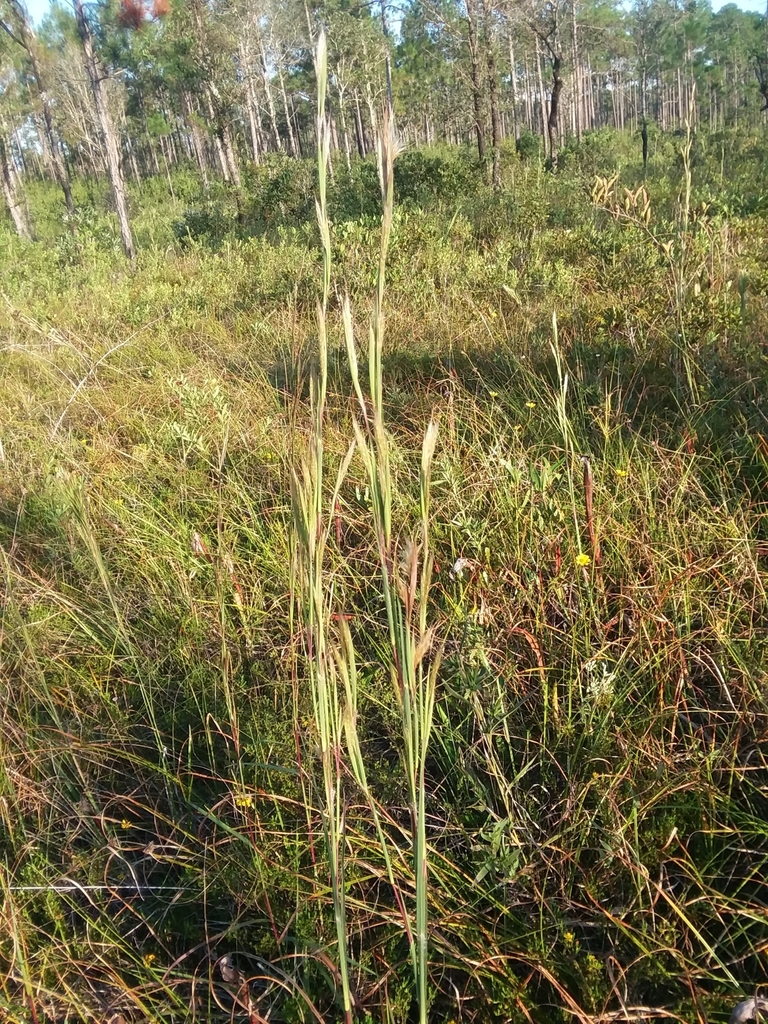
It grows in wet pine savannas and flatwoods, seepage bogs, pitcher plant bogs and moist, sandy openings from southeastern Virginia south to Florida and west to Louisiana. These fire-maintained longleaf pine wetlands are some of the most species-rich plant communities in North America.
Mohr’s bluestem is rarely sold, but it is a fine native grass for wet-site restoration and for bog and rain gardens on the Coastal Plain. Its silvery fall plumes and coppery winter color fit naturally with pitcher plants, meadow beauties and other savanna wildflowers.
Identification
Look for a clumping, broomsedge-like grass in wet pine savannas, with bluish-green leaves and, in fall, silvery, silky, leafy flower clusters along the upper stem.
Growth Habit
It is a warm-season perennial bunchgrass that grows in dense to loose tufts. Flowering stems are usually 2 to 4 feet tall and branch in the upper part. After frost, the whole plant turns tan to coppery orange and stays standing through winter.
Leaves
The leaf blades are flat or folded, about 1/8 to 1/4 inch wide, and often bluish-green or glaucous. The leaf sheaths are smooth to hairy and are often keeled. Basal leaves form a leafy clump in spring and summer.
Flowers & Seed Heads
The flower clusters appear in late summer and fall (about September to November). Pairs of slender branches (rames) are partly enclosed in narrow, leaf-like sheaths (spatheoles) along the upper stem, giving a narrow, leafy, plume-like look. As the seeds ripen, the long, silky white hairs on the rames make the clusters look fluffy and silvery. Each fertile spikelet has a fine, twisted awn.
Fruit
The seeds are small grains carried away by the wind on their silky hairs in late fall and winter.
Look-alikes
Broomsedge (Andropogon virginicus) is very similar and much more widespread, especially in old fields and dry, disturbed ground. Bushy bluestem (Andropogon glomeratus) has dense, bushy flower clusters at the top of the stem. Separating these bluestems reliably requires a hand lens and a regional flora such as Weakley’s Flora of the Southeastern United States; habitat (wet, fire-maintained pine savanna) is a useful clue for Mohr’s bluestem.
Quick Facts
| Scientific Name | Andropogon mohrii (syn. Anatherum mohrii) |
| Family | Poaceae (grass family) |
| Plant Type | Warm-season perennial bunchgrass |
| Mature Height | 2–4 ft (in flower) |
| Mature Spread | 1–2 ft |
| Growth Rate | Moderate |
| Sun Exposure | Full sun |
| Water Needs | High; moist to wet soil |
| Soil Type | Acidic sandy or peaty soil, wet in winter and spring |
| Soil pH | Acidic (about 4.5–6.0) |
| Bloom Time | Late summer to fall (September–November) |
| Flower Color | Silvery-white silky seed heads |
| Fall Color | Tan to coppery orange |
| Fruit | Small grains carried by silky hairs |
| Deer Resistant | Yes; seldom browsed |
| USDA Hardiness Zones | 7–9 |
Native Range
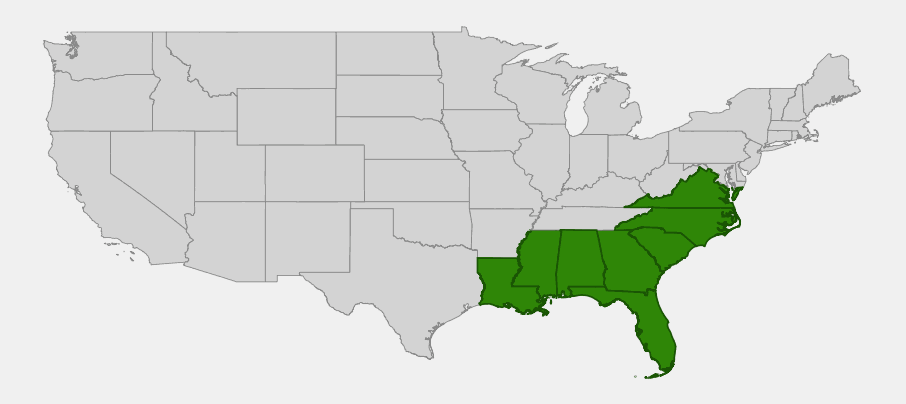
Mohr’s bluestem is a southeastern Coastal Plain grass. USDA PLANTS records it from eight states: Alabama, Florida, Georgia, Louisiana, Mississippi, North Carolina, South Carolina and Virginia.
It grows from southeastern Virginia south through the Carolinas and Georgia to northern and central Florida, and west along the Gulf Coastal Plain through the Florida Panhandle, southern Alabama and southern Mississippi to Louisiana. It is most frequent in the longleaf pine savannas of the Carolinas and the Gulf Coast, and less common toward the northern end of its range in Virginia.
Its habitats are wet, open, sunny places on acidic sandy or peaty soils: wet longleaf pine savannas and flatwoods, seepage slopes and pitcher plant bogs, margins of pocosins and depression ponds, and moist, mowed roadsides and power-line corridors. It depends on frequent fire, which keeps these habitats open.
📋 Regional plant lists featuring Mohr’s Bluestem: Maryland, Virginia & West Virginia · Alabama, Georgia & Mississippi · North & South Florida · North & South Carolina · Arkansas, Louisiana, Eastern Oklahoma & Eastern Texas
Growing & Care Guide
Mohr’s bluestem is best suited to restoration and naturalistic plantings on the southeastern Coastal Plain, where its wet, acidic, sunny habitat can be matched. It is seldom available from nurseries, though native seed suppliers in the region sometimes offer it.
Light
Full sun. It does not tolerate shade and declines when shrubs or trees close in.
Soil & Water
Plant in acidic, sandy or peaty soil that stays moist to wet, especially in winter and spring. It tolerates brief flooding and short summer dry spells once established. Avoid fertilizer and lime.
Planting Tips
Sow seed or set out plugs in a sunny, moist spot such as a bog garden, rain garden, pond edge or wet meadow. Plant plugs about 12 to 18 inches apart. Combine it with other savanna plants such as pitcher plants, meadow beauties, toothache grass and wiregrass.
Pruning & Maintenance
Leave the stems standing through winter for color and wildlife cover. In late winter, cut back the old growth or, where safe and permitted, use prescribed fire as in its native habitat. Remove encroaching shrubs and trees.
Propagation
Grow from seed collected in late fall. Sow it on the surface of moist soil in late winter or spring; warm temperatures and light improve germination. Mature clumps can also be divided in spring.
Landscape Uses
- Savanna restoration: a characteristic grass of wet longleaf pine savannas
- Bog and rain gardens: tolerates wet, acidic soils in full sun
- Fall and winter interest: silvery plumes and coppery winter color
- Wildlife habitat: cover and seeds for birds in wet meadows
- Erosion control: bunches stabilize moist sandy soils
Wildlife & Ecological Value
Mohr’s bluestem is a structural grass in some of the most biologically diverse habitats in North America.
For Pollinators
Grasses are wind-pollinated and offer no nectar. However, bluestems are larval food plants for several grass-feeding skipper butterflies.
For Birds
Its clumps provide nesting and roosting cover for ground birds such as northern bobwhite and for sparrows that winter in pine savannas. Small birds eat the seeds.
For Mammals
Small mammals use the dense clumps for cover. The mature leaves are low in quality as forage and are seldom browsed by deer.
Ecosystem Role
Like wiregrass and other savanna grasses, its dry leaves carry the frequent, low-intensity fires that maintain longleaf pine savannas and keep them open for pitcher plants, orchids and many other rare plants.
Cultural & Historical Uses
The species is named for Charles Mohr, a German-born pharmacist and botanist who lived in Mobile, Alabama, and wrote Plant Life of Alabama (1901), one of the first comprehensive state floras of the South. The genus name Andropogon comes from Greek words meaning “man’s beard,” for the hairy flower clusters.
Botanists have long debated how to classify the broomsedge group of bluestems. Some recent classifications move these species into the genus Anatherum, so you may see Mohr’s bluestem listed as Anatherum mohrii.
Wet longleaf pine savannas once covered huge areas of the Coastal Plain, but most have been lost to drainage, development, pine plantations and fire suppression. Grasses like Mohr’s bluestem are used to judge habitat quality and are included in restoration seed mixes where the original savannas are being restored.
Frequently Asked Questions
Is Mohr’s bluestem the same as broomsedge?
No. They are closely related and look alike, but broomsedge (Andropogon virginicus) is a widespread old-field grass, while Mohr’s bluestem is a Coastal Plain species of wet pine savannas and bogs.
Where does Mohr’s bluestem grow?
On the southeastern Coastal Plain from Virginia to Florida and west to Louisiana, mainly in wet longleaf pine savannas, flatwoods and seepage bogs.
Can I grow Mohr’s bluestem in my garden?
Yes, in full sun and moist to wet, acidic soil, such as a bog garden or rain garden on the Coastal Plain. Look for seed from regional native seed suppliers.
Why is it sometimes called Anatherum mohrii?
Some recent floras have moved the broomsedge group of bluestems into the genus Anatherum. Both names refer to the same plant.
Does Mohr’s bluestem need fire?
In the wild, yes. Frequent fire keeps its savanna habitat open. In a garden, cutting it back in late winter and keeping out shrubs works well.

Looking for a nursery that carries Mohr’s Bluestem?
Browse our native plant nursery directory: Alabama · Florida & Georgia · Louisiana & Mississippi · North Carolina · South Carolina & Virginia