
Arrowweed (Pluchea sericea)
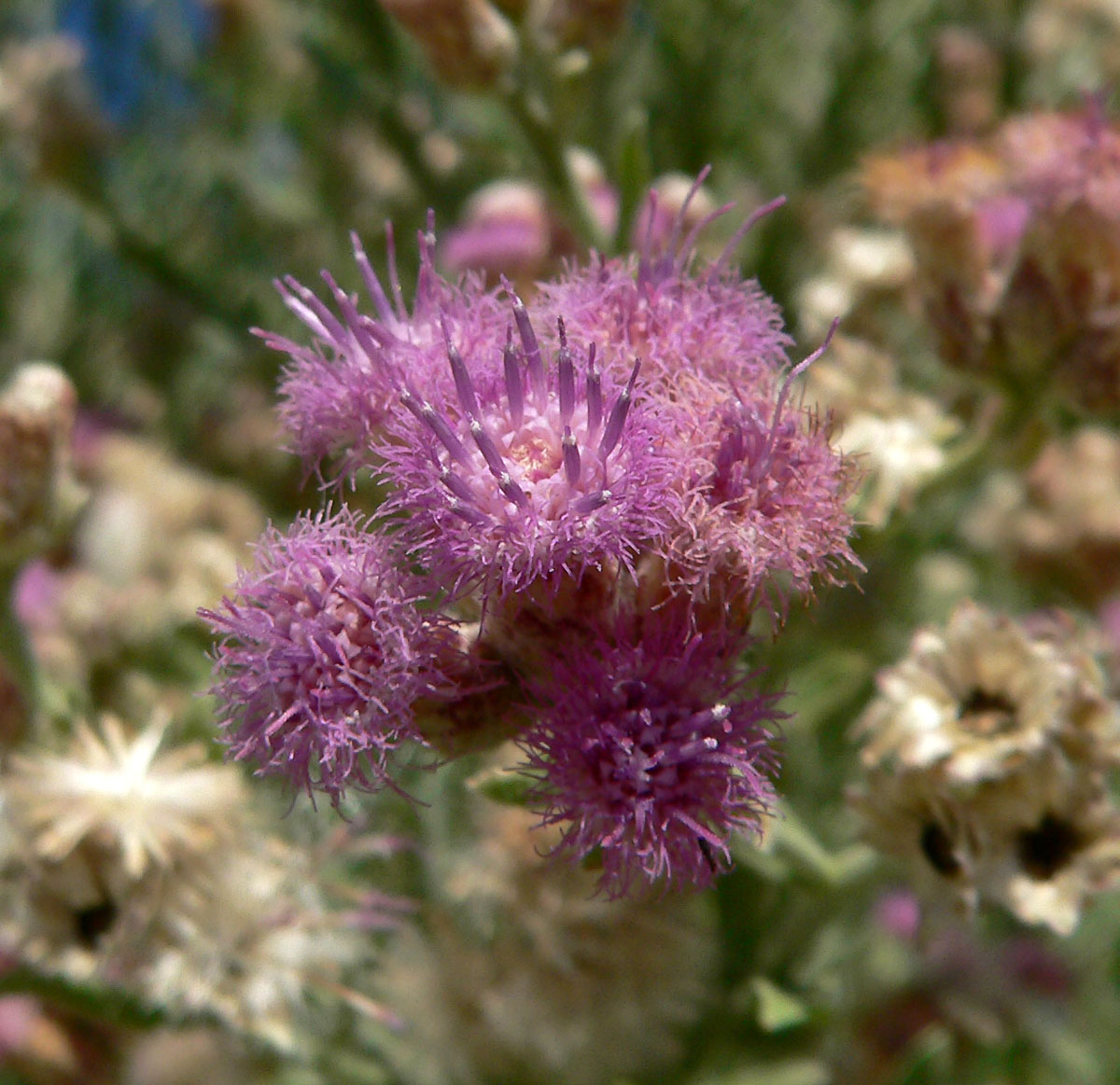
Pluchea sericea, known as Arrowweed, is a willowy, thicket-forming shrub of desert streams, springs, washes and salty flats in the southwestern United States and northwestern Mexico. Its many long, straight, unbranched stems, usually 3 to 10 feet tall, are lined with narrow, silvery-silky leaves, and from spring into summer they carry clusters of small, fuzzy pink to purple flower heads. It was formerly called Tessaria sericea.
Arrowweed is a member of the aster family (Asteraceae) and spreads by underground runners into dense stands along rivers and around springs, often with mesquite, willows, cottonwoods and saltbush. Its roots reach groundwater, and it tolerates salty and alkaline soils, heat and periodic flooding. Bees, butterflies and many other insects visit its flowers.
Its common name comes from its long, straight stems, which Indigenous peoples of the Southwest used for arrow shafts, as well as for baskets, thatch and building. Arrowweed is a tough, useful plant for erosion control, riparian restoration and wildlife habitat in low desert landscapes where there is some moisture underground.
Identification
Look for dense thickets of straight, slender, willow-like stems with narrow, silvery-gray leaves and small clusters of pink to purple fuzzy flower heads near the stem tips, along desert water or on salty flats.
Growth Habit
Arrowweed is an upright, multi-stemmed shrub, usually 3 to 10 feet tall and occasionally up to about 15 feet. It produces many long, straight, wand-like stems from spreading rhizomes and forms dense colonies. The stems are covered with fine, silky hairs and are slightly woody at the base.
Leaves
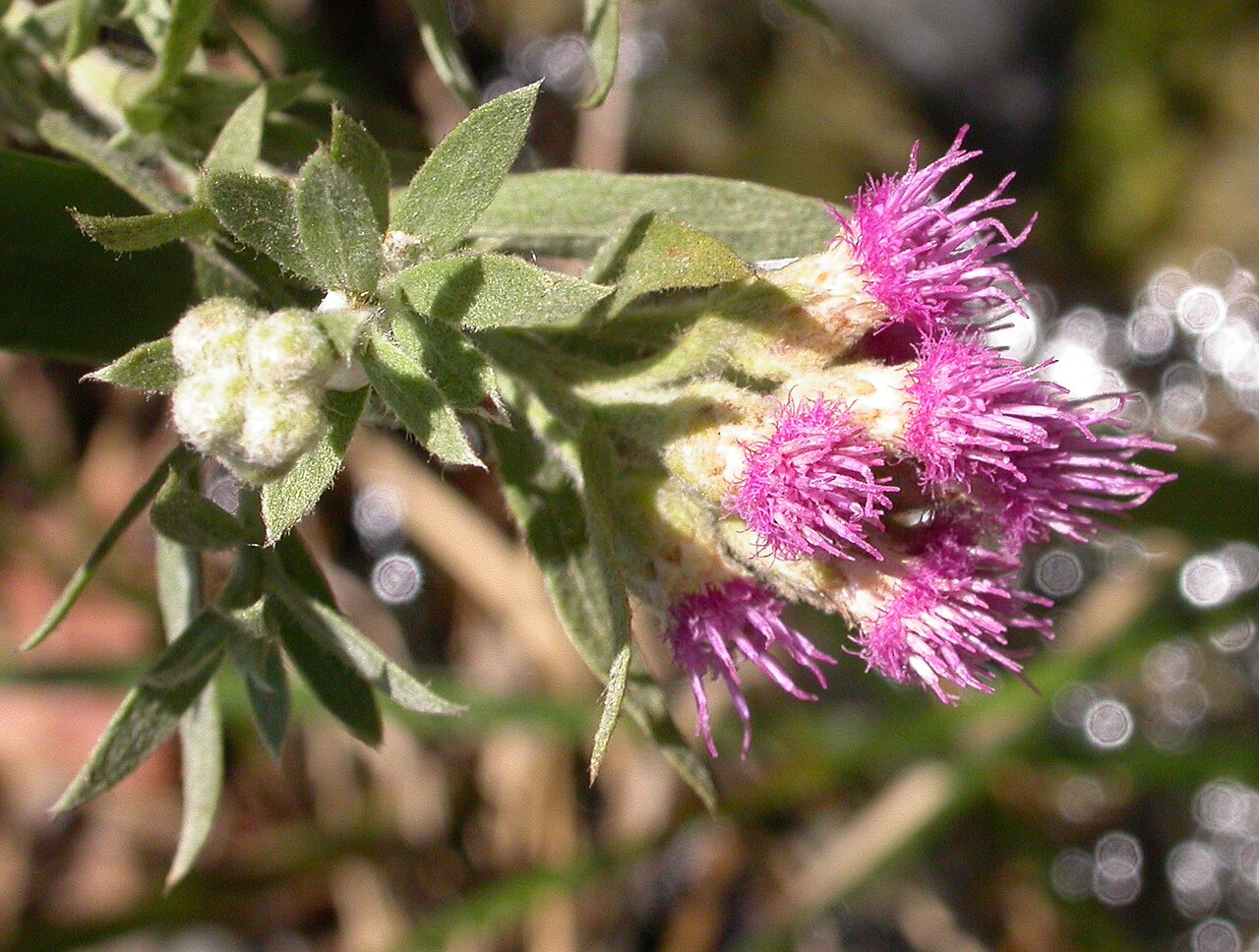
The leaves are alternate, 3/4 to 1 1/2 inches long, narrowly lance-shaped to elliptic, stalkless or nearly so, and evenly covered on both sides with fine, flat-lying silky hairs that make them silvery to gray-green. They have a mild aromatic smell when crushed.
Flowers
The flower heads are small, about 1/4 inch across, and grow in rounded, crowded clusters at the ends of short side branches near the stem tips. They have no rays; each head is made of many tiny, pink to rose-purple disk florets surrounded by pinkish, overlapping bracts. Bloom time is mostly March to July, sometimes longer near permanent water.
Fruit & Seeds
Each tiny seed (achene) has a tuft of white, hair-like bristles. The mature heads turn whitish and fluffy, and the seeds are scattered by wind and water.
Look-alikes
Seepwillow (Baccharis salicifolia) grows in similar places but has green, sticky, toothed leaves and white flower heads. Sandbar and other willows have green leaves and catkins. Non-native saltcedar (Tamarix) has tiny, scale-like leaves and plumes of pink flowers. The related marsh fleabane (Pluchea odorata) is a non-woody plant with broad, toothed leaves.
Quick Facts
| Scientific Name | Pluchea sericea (formerly Tessaria sericea) |
| Family | Asteraceae (aster family) |
| Plant Type | Thicket-forming deciduous to semi-evergreen shrub |
| Mature Height | 3–10 ft (rarely to 15 ft) |
| Mature Spread | Spreads by rhizomes into colonies |
| Growth Rate | Fast |
| Sun Exposure | Full sun |
| Water Needs | Moderate to high; needs groundwater or moist soil |
| Soil Type | Sandy, silty or gravelly alluvium; tolerates saline and alkaline soils |
| Soil pH | Neutral to strongly alkaline (about 7.0–9.0) |
| Bloom Time | March–July |
| Flower Color | Pink to rose-purple |
| Fall Color | None; silvery-gray foliage |
| Fruit | Small achenes with white bristles |
| Deer Resistant | Yes; rarely browsed |
| USDA Hardiness Zones | 7–10 |
Native Range
Arrowweed grows in the deserts of the southwestern United States and northwestern Mexico. USDA PLANTS lists it as native in Arizona, California, Nevada, New Mexico, Texas and Utah. In Mexico it grows in Baja California, Sonora and Chihuahua.
It is common along the lower Colorado River and its tributaries, around springs and seeps in the Mojave Desert, in Death Valley, Ash Meadows and the Owens Valley, along the Gila and Salt Rivers in Arizona, in southwestern Utah, in the Rio Grande valley of New Mexico and in the Trans-Pecos region of West Texas, including El Paso, Hudspeth, Presidio and Brewster Counties.
Its habitats include river and stream banks, floodplains, sandbars, washes, springs, marsh edges, playas and salty, alkaline flats with shallow groundwater. It grows from below sea level in Death Valley to about 5,000 feet.
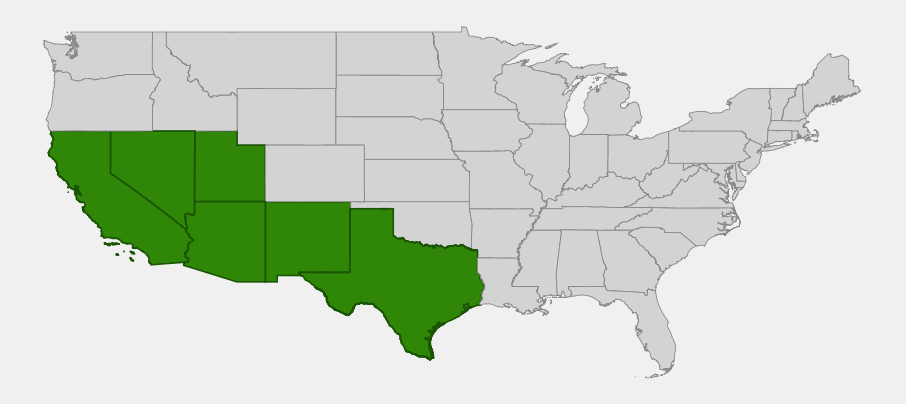
📋 Regional plant lists featuring Arrowweed: Utah & Western Colorado · Arizona & New Mexico · South & West Texas · California & Nevada
Growing & Care Guide
Arrowweed is easy to grow in hot, sunny, low desert gardens wherever its roots can reach moisture. It is available from some native plant nurseries in the Southwest and is often used in riparian restoration.
Light
Full sun. It becomes thin and leggy in shade.
Soil & Water
It grows in sand, silt or gravel and tolerates salty and alkaline soils that many plants cannot. It needs regular water until its roots reach moist soil or groundwater. Without that, it needs deep watering every week or two in summer; established plants on a high water table need none.
Planting Tips
Plant it along drainage channels, the edges of ponds and basins, or low areas that collect runoff. Give it plenty of room, since it spreads by rhizomes into wide thickets. It is a good screen and windbreak, but not a plant for small, tidy gardens.
Pruning & Maintenance
Cut old, woody stems to the ground every few years in late winter to renew the stand. Remove suckers that spread beyond where you want them. It is fire-adapted and resprouts after cutting or burning.
Propagation
It is usually propagated from rhizome divisions or stem cuttings, which root readily in moist soil. Fresh seed can also be sown on the surface of moist soil in warm weather.
Landscape Uses
- Riparian restoration: stabilizes banks and replaces non-native saltcedar along desert rivers
- Erosion control: its rhizomes bind sandy and silty soil
- Screens and windbreaks: tall, dense silvery stems in a short time
- Saline sites: one of few shrubs for salty, alkaline soils
- Wildlife plantings: cover and nectar in hot desert landscapes
Wildlife & Ecological Value
Arrowweed thickets are an important part of desert riparian and spring habitats.
For Pollinators
The flowers attract many bees, wasps, flies and butterflies, including hairstreaks and other small butterflies, and provide nectar over a long spring and summer season.
For Birds
Dense thickets give nesting and roosting cover to many birds, including many riparian songbirds, and shelter to quail. Insects on the plants feed many birds.
For Mammals
The thickets shelter small mammals and provide cover for wildlife coming to water. The foliage is bitter and seldom browsed.
Ecosystem Role
Arrowweed stabilizes riverbanks, floodplains and spring margins, traps sediment and helps build up soil. It recovers quickly after floods and fires and is one of the key native shrubs used to restore habitat after saltcedar removal.
Cultural & Historical Uses
The genus Pluchea honors Noël-Antoine Pluche, an 18th-century French naturalist. The species name sericea means “silky,” for the silvery hairs on its leaves.
As its common name says, Indigenous peoples of the Southwest, including the Cahuilla and Mojave, used the straight stems for arrow shafts. The stems were also used for thatching houses and shelters, making baskets, cradleboards and fish traps, and building fences and granaries. Arrowweed is still gathered for traditional crafts.
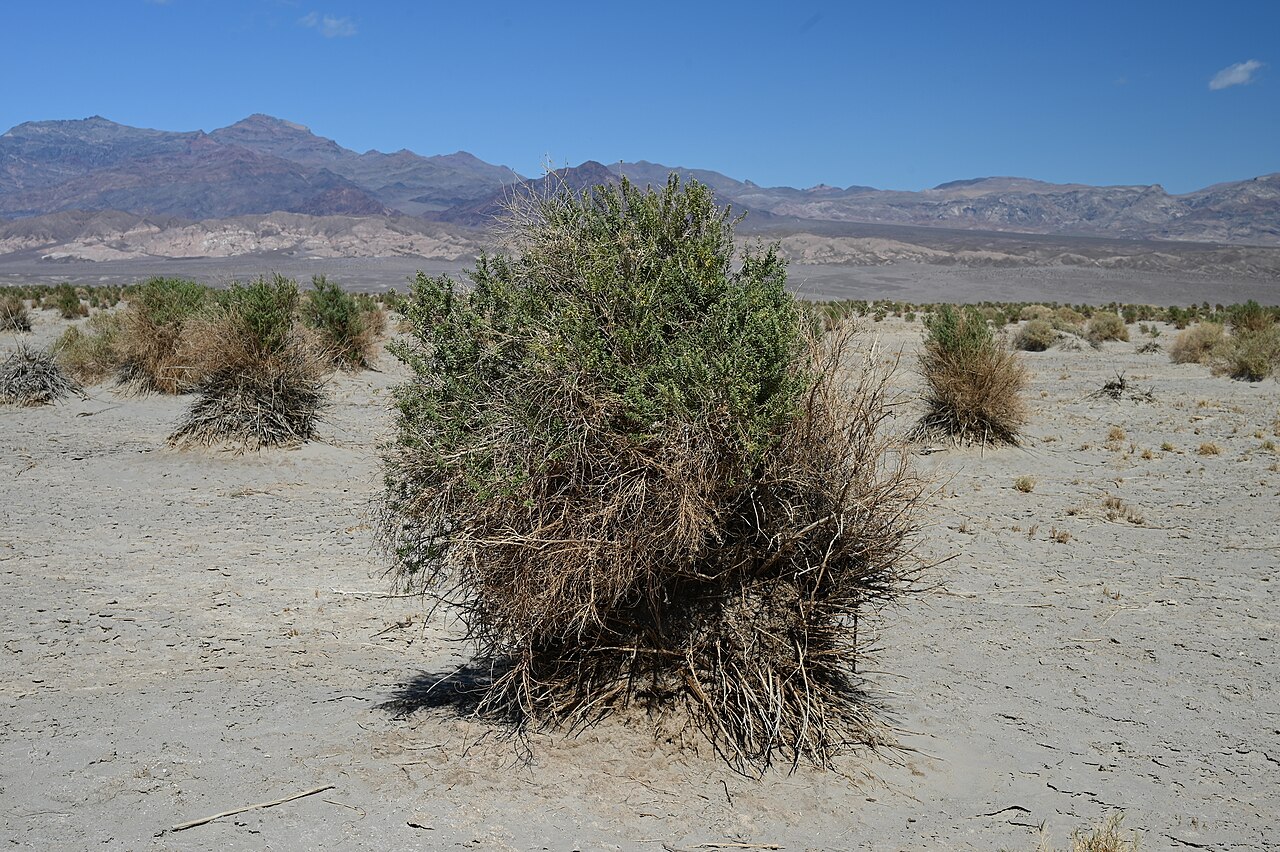
At the Devil’s Cornfield in Death Valley National Park, wind has eroded the sand from around the bases of arrowweed clumps, leaving them standing on pedestals of roots and soil that look like shocks of harvested corn.
Frequently Asked Questions
Why is it called arrowweed?
Its long, straight stems were used by Indigenous peoples of the Southwest to make arrow shafts.
Is arrowweed invasive?
No, it is native to the desert Southwest. It does spread by rhizomes into thickets, so give it room.
Does arrowweed tolerate salty soil?
Yes. It grows well in saline and alkaline soils along rivers, springs and playas.
Does arrowweed need a lot of water?
It needs moist soil or shallow groundwater. In gardens, plant it where runoff collects or water it deeply until its roots reach moisture.
Is Tessaria sericea the same plant?
Yes. Tessaria sericea is an older name for arrowweed, now usually placed in Pluchea.

Looking for a nursery that carries Arrowweed?
Browse our native plant nursery directory: Arizona · California · Nevada & New Mexico · Texas & Utah