
Silky Evolvulus (Evolvulus sericeus)
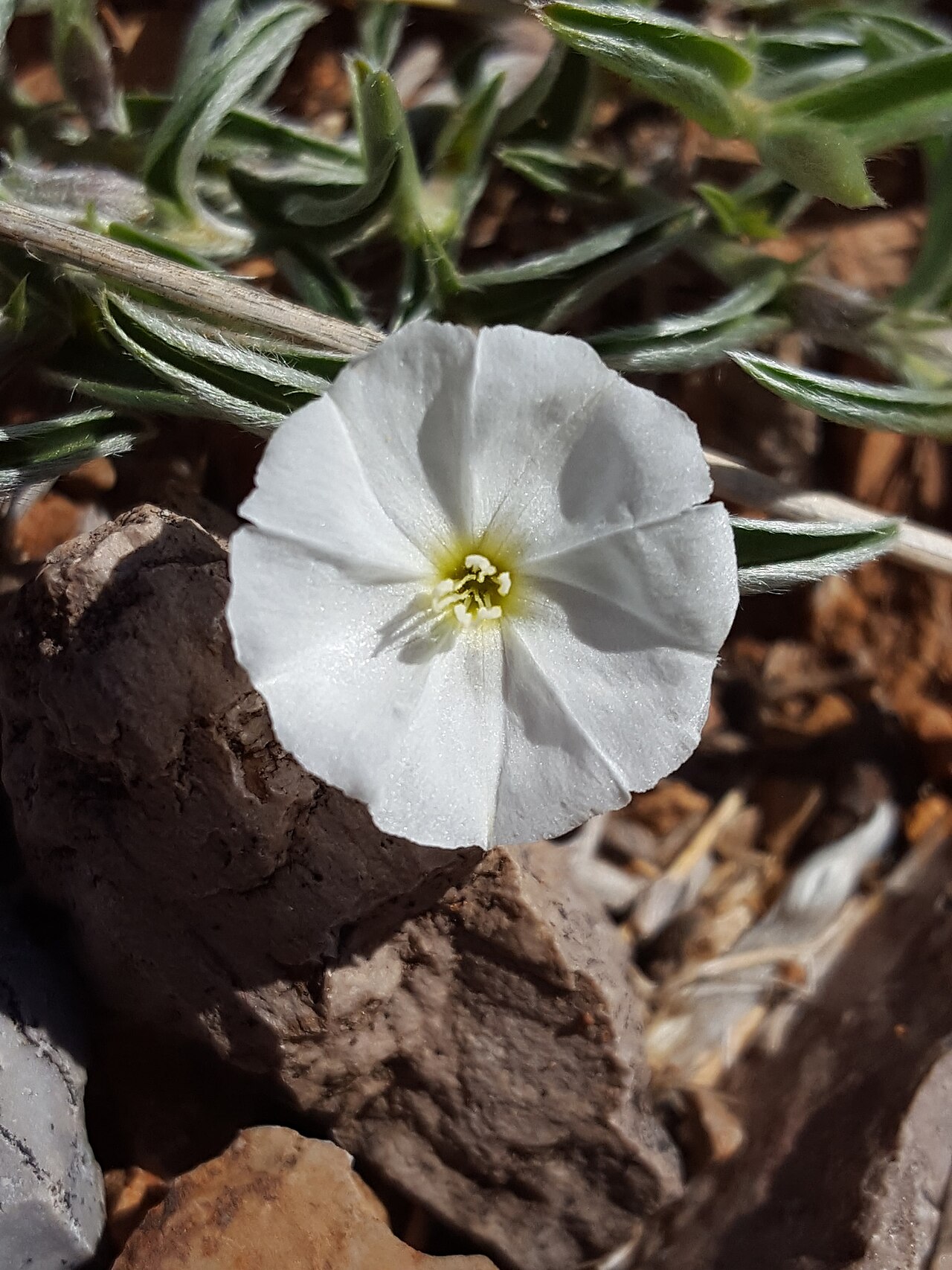
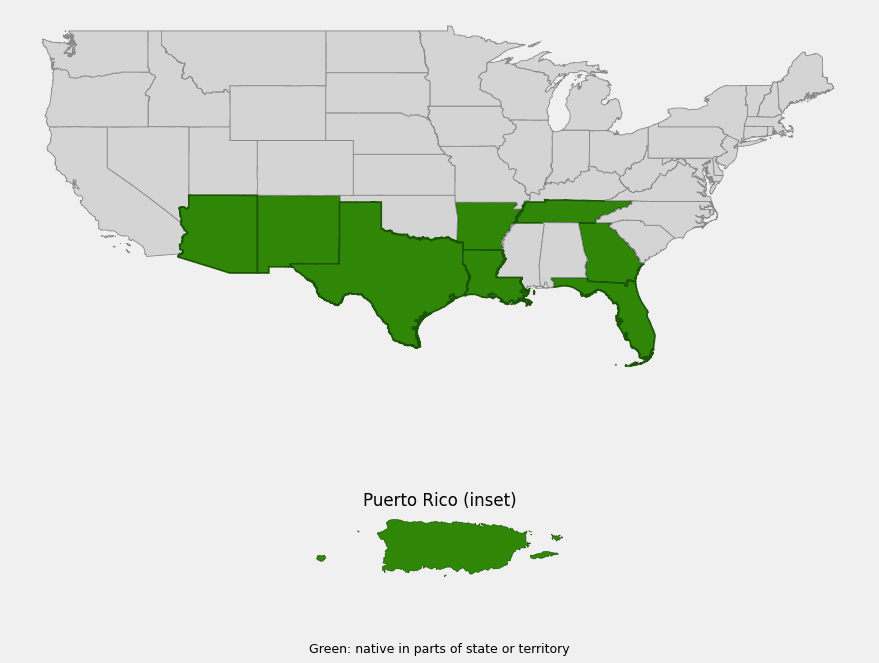
Evolvulus sericeus, known as Silky Evolvulus (USDA: silver dwarf morning-glory), is a small native perennial of the morning glory family (Convolvulaceae). It is also called silky dwarf morning-glory or white dwarf morning-glory. It grows in prairies, grasslands, open woods and rocky or sandy ground across the southern United States, from Arizona and New Mexico through Texas to Louisiana, Arkansas, Georgia and Florida, and in Puerto Rico, with a range that extends through Mexico and the Caribbean to South America.
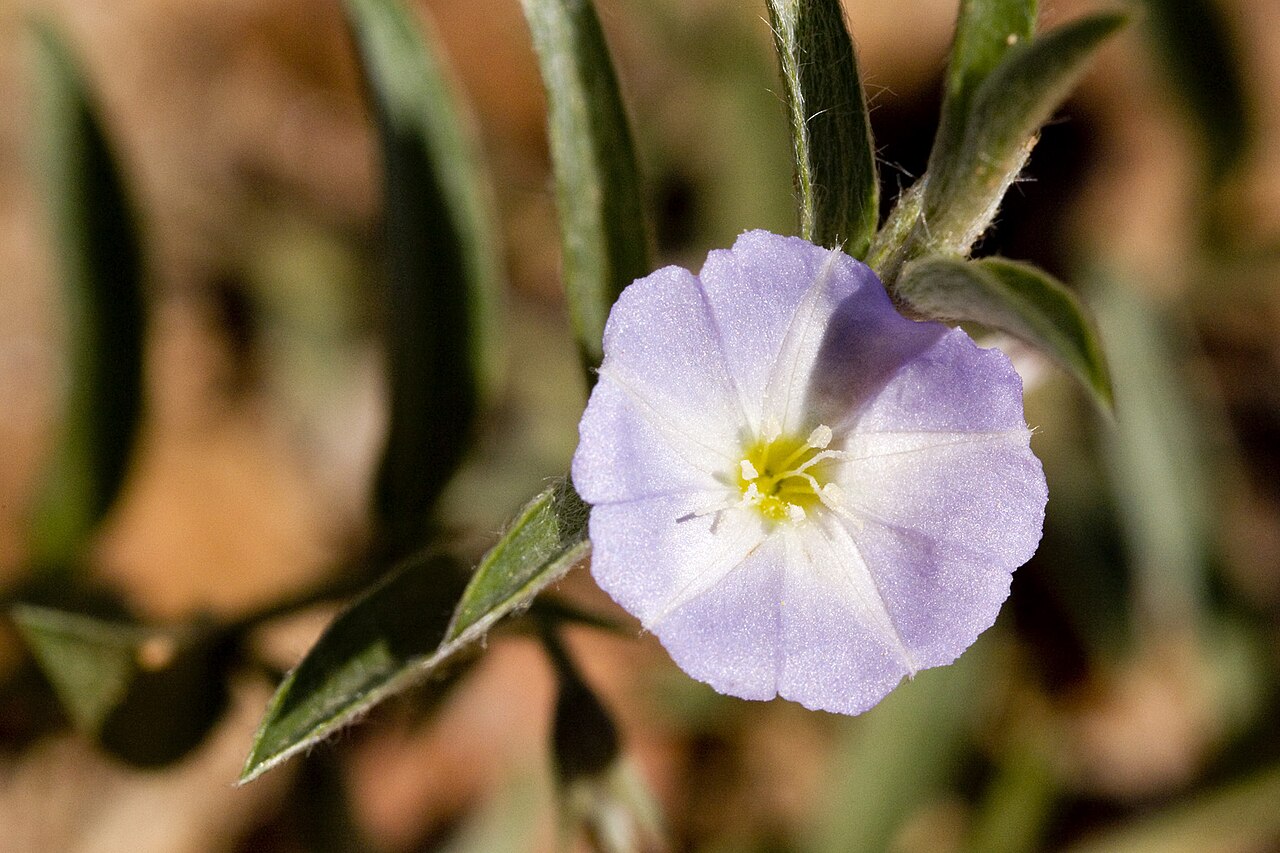
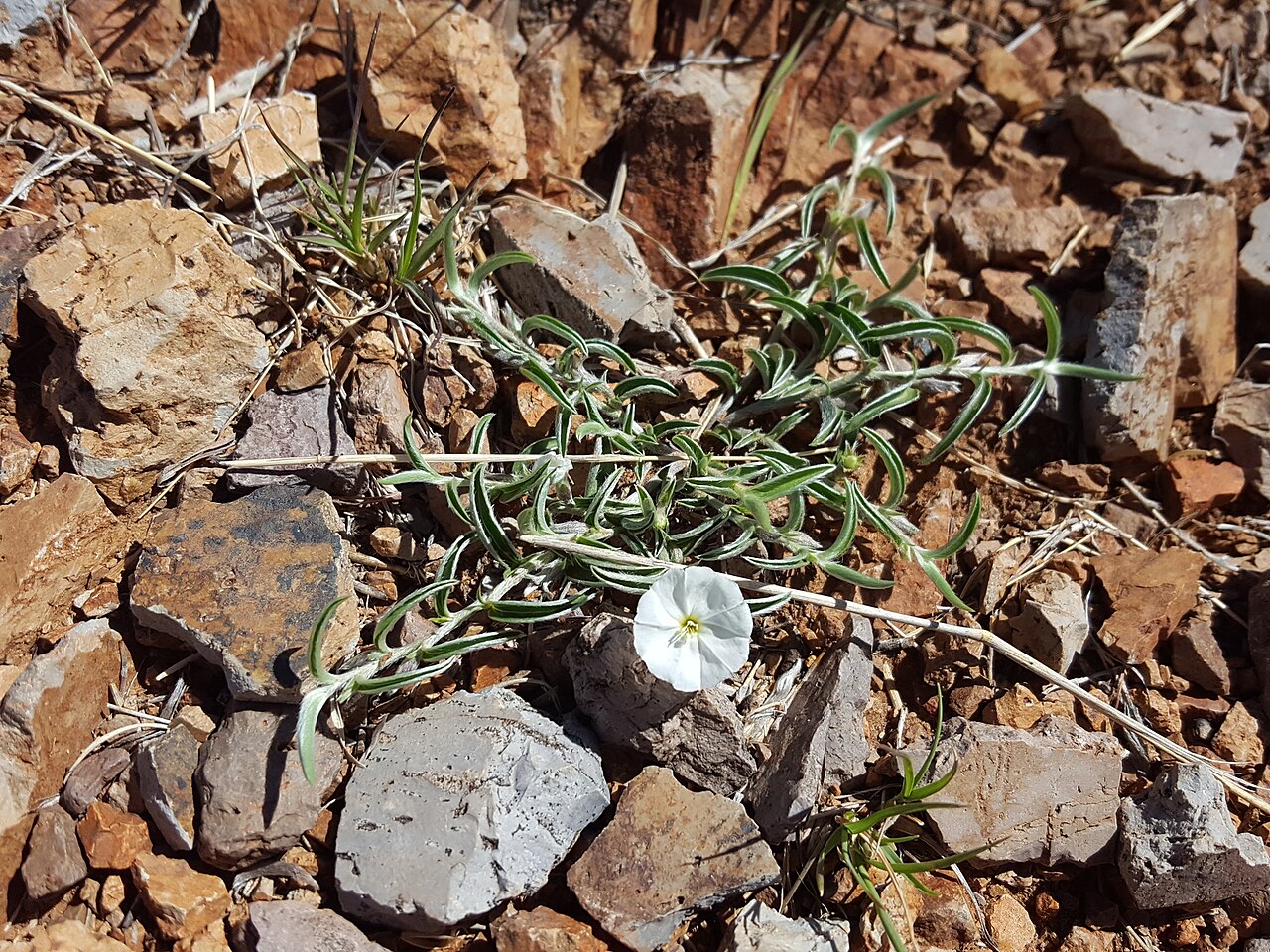
It is a modest little plant: a tuft of thin stems a few inches high with narrow leaves covered in silky, flattened hairs, especially on their undersides, which give the plant a silvery sheen. From spring into summer, and often again after rain, it bears small, flat, saucer-shaped flowers, white or pale blue to lavender with a yellow-green eye. Unlike most of its morning glory relatives, it does not twine or climb.
Silky evolvulus is a good native for rock gardens, prairie gardens and dry, sunny spots in mild-winter regions, where it adds delicate flowers among grasses and other wildflowers. It is drought tolerant, needs little care and stays small. It is related to the popular blue daze (Evolvulus glomeratus), sold as a bedding plant.
Identification
Look for a low, non-climbing plant with thin stems, narrow, silky-haired leaves, and small, flat, white to pale blue flowers held singly in the leaf axils, usually in dry, open, sunny ground.
Stems & Roots
Several thin, wiry stems grow from a woody root crown, lying on the ground or curving upward, usually 2 to 8 inches tall and up to about 1 foot long. They are covered with fine, flattened, silky hairs. The plant does not twine like most morning glories.
Leaves
The leaves are alternate, stalkless or nearly so, narrowly lance-shaped to linear, about 1/2 to 1 inch long. They are covered with silky, flattened hairs, often densely on the underside and more sparsely on the upper side, which gives them a silvery or gray-green look. The leaves sometimes fold along the midrib.
Flowers
Flowers are borne singly on short stalks from the upper leaf axils, mostly from April to July, with more flowers after summer rains in the Southwest and almost year-round in the tropics. Each is a flat, shallow saucer about 1/3 to 1/2 inch across, white to pale blue or lavender, with a small yellowish or greenish center and five faint, pleated lines. The flowers open in the morning and close by afternoon.
Fruit
Each flower produces a small, round capsule about 1/8 inch across, which splits into four parts to release up to four small, smooth seeds.
Look-alikes
Shaggy dwarf morning-glory (Evolvulus nuttallianus) has lavender to blue flowers and leaves densely covered with long, spreading hairs on both sides. Slender dwarf morning-glory (E. alsinoides) has blue flowers on long, thread-like stalks. Field bindweed (Convolvulus arvensis), a non-native weed, has arrow-shaped leaves and twining stems. Blue-eyed grass (Sisyrinchium) has grass-like leaves and six-parted flowers.
Safety
Silky evolvulus is not known to be toxic, but it is not a food plant, and some plants in the morning glory family contain irritating compounds. Do not eat it, and keep pets from chewing on garden plants.
Quick Facts
| Scientific Name | Evolvulus sericeus |
| Family | Convolvulaceae (morning glory family) |
| Plant Type | Low herbaceous perennial; non-climbing |
| Mature Height | 2–8 in |
| Mature Spread | 6–12 in |
| Growth Rate | Moderate |
| Sun Exposure | Full sun |
| Water Needs | Low; dry to moderately moist, well-drained soil |
| Soil Type | Sand, sandy or silty loam, gravel, limestone or rocky soil |
| Soil pH | About 6.0–8.0 |
| Bloom Time | April–July; also after summer rains, nearly year-round in the tropics |
| Flower Color | White to pale blue or lavender |
| Fall Color | None |
| Fruit | Small round capsule with up to 4 seeds |
| Deer Resistant | Moderate; small and seldom browsed |
| USDA Hardiness Zones | 7–11 |
Native Range
USDA PLANTS lists silky evolvulus as native in the lower 48 states, Puerto Rico and the U.S. Virgin Islands. In the states it is recorded from Arizona, Arkansas, Florida, Georgia, Louisiana, New Mexico, Tennessee and Texas. The Lady Bird Johnson Wildflower Center describes it as widespread on sandy or silty soil across the southern half of Texas to Florida and California and south to Argentina. It ranges through Mexico, Central America, the Caribbean and much of South America.
In the United States it is most common in Texas, especially in the southern and central parts of the state, including the Edwards Plateau, the Rio Grande Plains and the Coastal Bend, and in East Texas prairies. It also grows in the grasslands of southern Arizona and New Mexico, in prairies and saline barrens of western Louisiana and southern Arkansas, in pinelands and dry prairies of peninsular Florida, and in a few counties of southern Georgia. In Tennessee it is known only from an outlying herbarium record in the Central Basin. In Puerto Rico it grows in dry coastal forest and open areas in the southwest.
Typical habitats are dry, open places: prairies and grasslands, rocky limestone slopes, sandy pinelands and flatwoods, saline prairies, desert grasslands, roadsides and other sunny sites with short vegetation.
📋 Regional plant lists featuring Silky Evolvulus: Kentucky & Tennessee · Arizona & New Mexico · Alabama, Georgia & Mississippi · North & South Florida · Puerto Rico · Arkansas, Louisiana, Eastern Oklahoma & Eastern Texas · South & West Texas
Growing & Care Guide
Silky evolvulus is an easy, low-maintenance native for dry, sunny gardens in the southern United States. It is offered mainly by native plant nurseries and seed suppliers in Texas and the Southwest. Buy nursery-grown plants or seed rather than digging plants from the wild.
Light
Full sun. In shade it becomes sparse and flowers poorly, and the flowers open fully only in bright light.
Soil & Water
It needs well-drained soil: sand, gravel, rocky limestone or sandy loam. It tolerates alkaline and slightly acidic soils. Once established it is drought tolerant and needs water only during long dry spells. Avoid heavy, wet clay and overwatering, which cause root rot.
Planting Tips
Because it is so small, plant it at the front of a bed, along a path, in a rock garden or between stepping stones, where its flowers can be seen. Plant 6 to 12 inches apart, in groups of three or more. Keep tall, aggressive neighbors from shading it out.
Pruning & Maintenance
It needs almost no care. Pull weeds by hand around it, and trim back old stems in late winter if they look untidy. Do not fertilize.
Propagation
Sow seed in spring on the surface of well-drained soil or barely cover it; nicking the hard seed coat can speed germination. Stem cuttings taken in late spring may also root in a sandy mix.
Landscape Uses
- Rock gardens: tiny silvery tufts with white to pale blue flowers
- Prairie and meadow gardens: a low wildflower between grasses
- Dry, sunny borders: front-of-border edging plant that needs little water
- Pollinator gardens: small flowers for bees and small butterflies
- Grassland restoration: native groundcover for southern prairie and savanna plantings
Wildlife & Ecological Value
Silky evolvulus is a small but useful part of southern prairie and grassland plant communities.
For Pollinators
The small, open flowers are visited by small native bees, including sweat bees, and by small butterflies and flies. Because each flower lasts only one morning but the plant blooms over a long season, it provides a steady trickle of pollen and nectar.
For Birds
Quail, doves and sparrows may eat the small seeds, and ground-nesting birds use grasslands with low wildflowers like this one for foraging.
For Mammals
Rabbits and other small mammals occasionally nibble the plants. Its low growth means larger grazers rarely eat much of it.
Ecosystem Role
As a small perennial of open, dry ground, silky evolvulus helps fill the spaces between bunchgrasses and adds diversity to short-grass prairie, savanna and pineland communities. Its presence is a sign of open, well-maintained grassland.
Cultural & Historical Uses
The genus name Evolvulus comes from Latin evolvere, “to unroll” or “untwist,” because, unlike most of their relatives in the morning glory family, these plants do not twine. The species name sericeus means “silky,” for the silky hairs on its leaves and stems.
The species was described in the 1700s by the Swedish botanist Olof Swartz from plants collected in the West Indies. It is one of the most widespread species of Evolvulus, ranging across the warmer parts of the Americas, and several varieties have been named for its different forms.
In the garden trade, the best-known Evolvulus is blue daze (E. glomeratus), a Brazilian species grown for its bright blue flowers. Silky evolvulus is less showy but is a true native of the southern United States and is grown by native plant gardeners in Texas and the Southwest.
Frequently Asked Questions
Is silky evolvulus a morning glory?
It belongs to the morning glory family, but it does not climb or twine. It is a small, tufted perennial with flat, saucer-shaped flowers.
What color are the flowers?
Usually white, sometimes pale blue or lavender, with a yellowish-green center. They open in the morning and close by afternoon.
Is silky evolvulus drought tolerant?
Yes. Once established it grows in dry, rocky or sandy soil with little or no supplemental water.
Where does silky evolvulus grow in Texas?
It is common across much of Texas, especially the southern and central parts, including the Edwards Plateau, South Texas and coastal prairies, and it also occurs in East Texas.
Can I grow it in a container?
Yes. It works well in a shallow pot or trough with a gritty, well-drained mix in full sun. Water sparingly.

Looking for a nursery that carries Silky Evolvulus?
Browse our native plant nursery directory: Arizona & Arkansas · Florida & Georgia · Louisiana · New Mexico · Tennessee & Texas