
Marsh Cinquefoil (Comarum palustre)
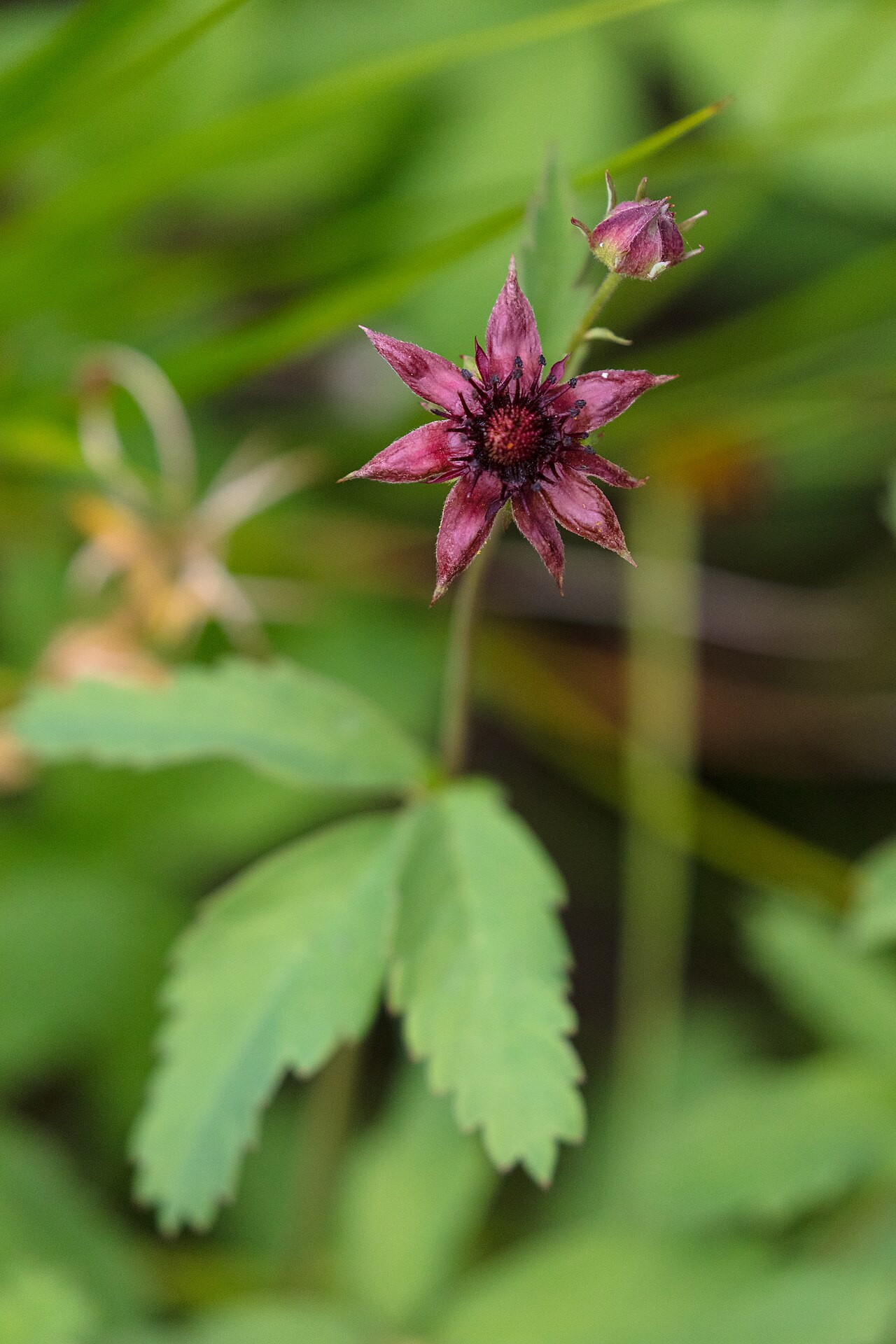
Comarum palustre, known as Marsh Cinquefoil or purple marshlocks (the name used by USDA), is a native perennial wetland plant in the rose family (Rosaceae). It sprawls through bogs, fens, marshes and shallow water on long, reddish, semi-woody stems, and in summer it opens striking, star-shaped flowers of deep wine-red to purple. Many books still list it as Potentilla palustris, because it was long placed with the cinquefoils.
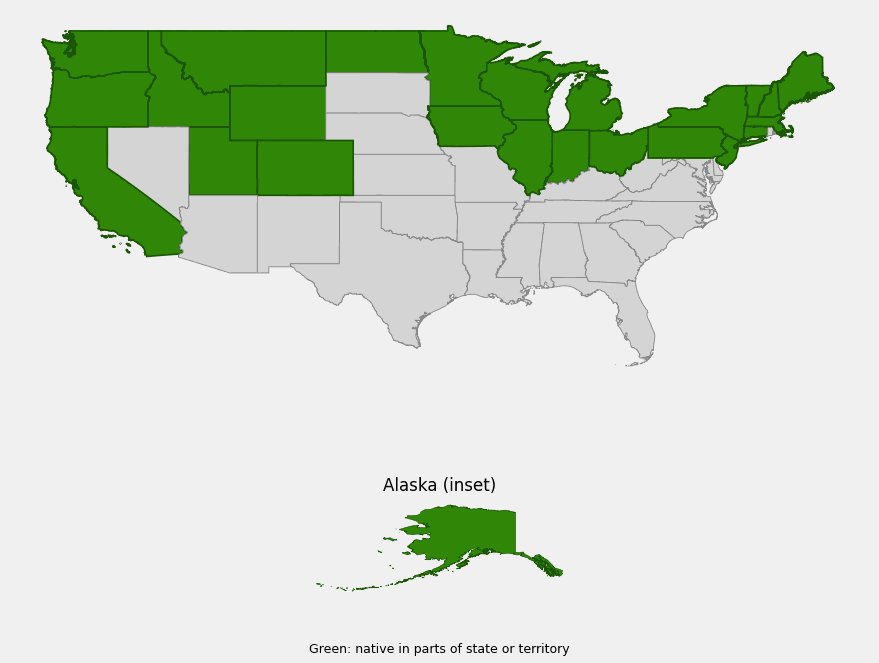
It is circumboreal, growing across the cool parts of North America, Europe and Asia. In the United States it ranges from Alaska and the Pacific Northwest across the northern Rockies and the Upper Midwest to New England and New Jersey, with outlying populations south in the mountains of California, Utah and Colorado.
For gardeners in cool climates, marsh cinquefoil is an unusual, long-lived plant for pond margins, bog gardens and rain gardens with constant moisture. Its dark flowers attract bees and flies, and its creeping stems help hold wet shorelines.
Identification
Look for a sprawling wetland plant with toothed, compound leaves and star-shaped, dark reddish-purple flowers, growing in bogs, fens or shallow water in summer.
Growth Habit
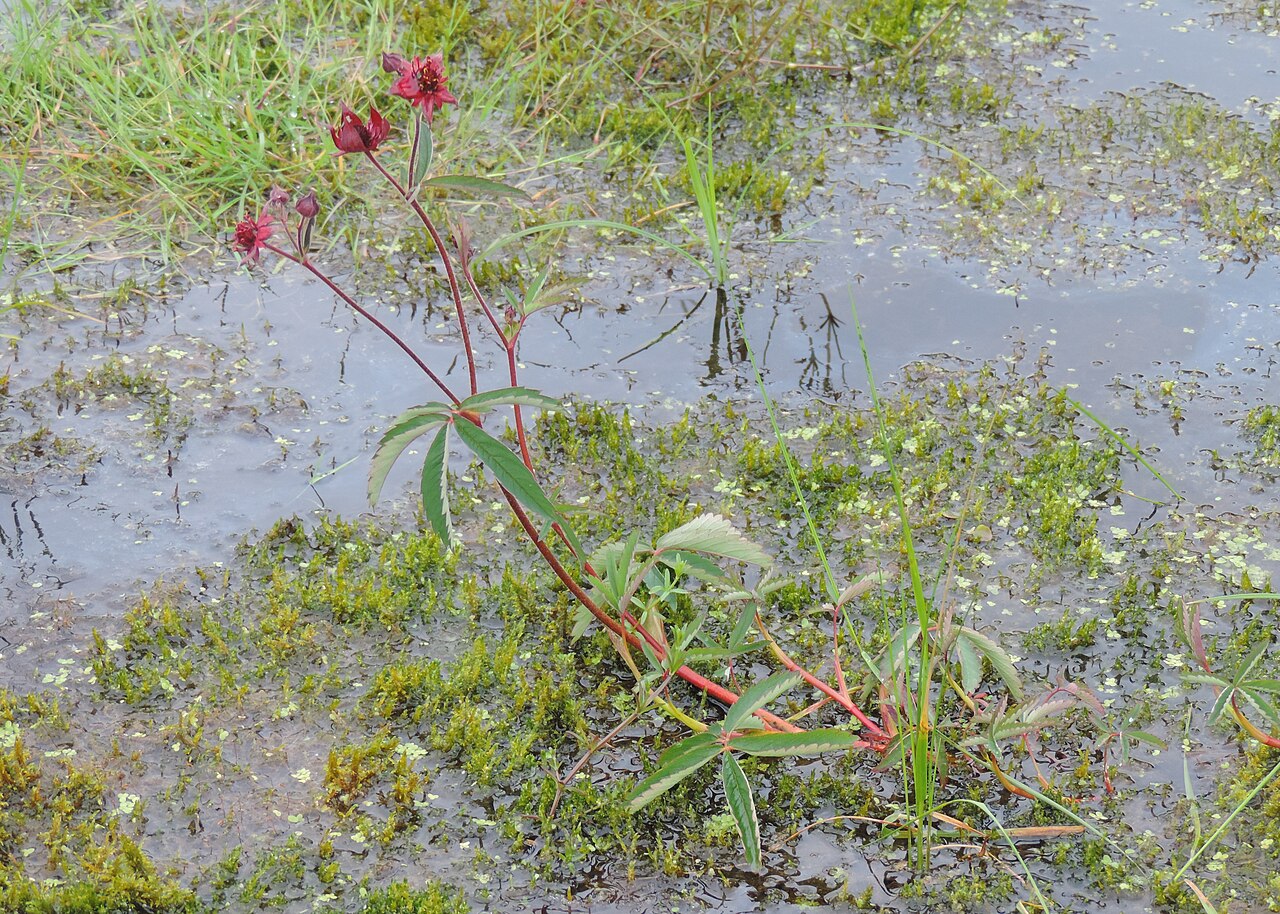
A perennial with long, creeping, reddish-brown stems that are woody at the base. They root at the nodes and often sprawl through moss or float out over shallow water, with the flowering tips rising 8 to 24 inches above the surface. It can form large colonies.
Leaves
The leaves are alternate and pinnately compound, with five to seven oblong, sharply toothed leaflets that are green above and paler, often grayish and hairy, beneath. The lower leaves have long stalks; the upper leaves are smaller, with three leaflets.
Flowers
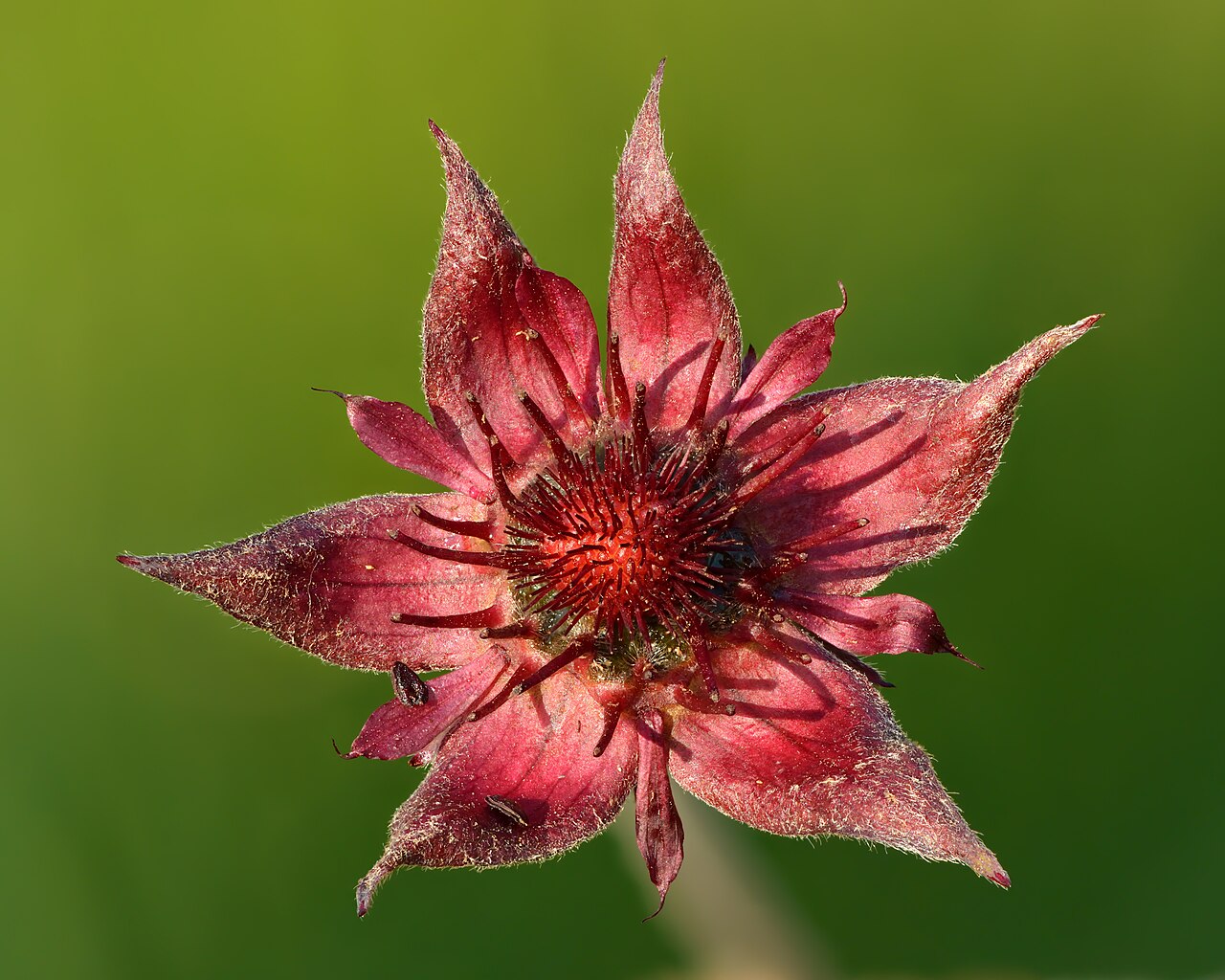
The flowers are about 3/4 to 1 1/4 inches across and star-shaped. The five large, pointed, dark red to purple parts are sepals; the five true petals are much smaller, narrow and dark purple, sitting between them. The center holds many dark red stamens around a dome of pistils. Flowering is from about June to August.
Fruit
After flowering, the center swells into a spongy, strawberry-like receptacle covered with small, smooth achenes, held within the persistent reddish sepals.
Look-alikes
No other North American wetland plant has its dark red-purple, star-shaped flowers. Without flowers, its leaves resemble other cinquefoils or strawberries. Shrubby cinquefoil (Dasiphora fruticosa) grows in some of the same fens but is an upright shrub with yellow flowers and small, untoothed leaflets.
Quick Facts
| Scientific Name | Comarum palustre (syn. Potentilla palustris) |
| Family | Rosaceae (rose family) |
| Plant Type | Perennial wetland herb or subshrub |
| Mature Height | 8–24 in above water or soil |
| Mature Spread | 2–4 ft or more, by creeping stems |
| Growth Rate | Moderate |
| Sun Exposure | Full sun to partial shade |
| Water Needs | Wet; saturated soil or shallow water |
| Soil Type | Peat, muck or wet organic soil |
| Soil pH | Acidic to neutral (about 4.5–7.0) |
| Bloom Time | Summer (June–August) |
| Flower Color | Dark wine-red to reddish purple |
| Fall Color | Leaves may turn red |
| Fruit | Spongy, strawberry-like head of small achenes |
| Deer Resistant | Moderately |
| USDA Hardiness Zones | 2–7 |
Native Range
Marsh cinquefoil is native across the Northern Hemisphere. USDA PLANTS records it as native in Alaska and 24 states of the lower 48, and it occurs in every Canadian province and territory. It is also widespread in northern Europe and Asia.
In the West it grows from Alaska through Washington and Oregon, with outlying populations in the mountains of northern California. It extends through Idaho, Montana and Wyoming, with southern outliers in Utah and Colorado. In the East it is found from Minnesota, North Dakota, Iowa and Illinois east through the Great Lakes states to Pennsylvania, New Jersey, New York and New England. It becomes rare toward the southern edge of its range.
It lives in cold, wet, often acidic places: sphagnum bogs and fens, floating peat mats, marshes, wet meadows, the shallow edges of lakes, ponds and slow streams, and beaver wetlands, from low elevations in the north to subalpine wetlands in the western mountains.
📋 Regional plant lists featuring Marsh Cinquefoil: New York, Pennsylvania & Northern New Jersey · Idaho, Eastern Oregon & Eastern Washington · Ohio & Indiana · Montana & Wyoming · Michigan, Wisconsin & Eastern Minnesota · Utah & Western Colorado · Connecticut, Massachusetts & Rhode Island · New Hampshire, Maine & Vermont · Delaware, Southern New Jersey & Long Island · Illinois, Iowa & Missouri · Alaska · North Dakota, South Dakota & Western Minnesota · Western Oregon & Western Washington · California & Nevada
Growing & Care Guide
Marsh cinquefoil is easy to grow if it has constant moisture and cool summers. It is best suited to northern gardens and cool mountain or coastal climates.
Light
Full sun to partial shade. It flowers best in sun where summers are cool.
Soil & Water
Give it wet, organic soil that never dries out, such as the edge of a pond, a bog garden, or shallow water up to a few inches deep. It tolerates acidic peat and does not need fertilizer. It struggles in hot, dry summers and in soil that dries out.
Planting Tips
Plant nursery-grown plants in spring at the water’s edge or in a container sunk in a pond margin, and let the stems creep outward. Space plants 2 to 3 feet apart. Combine it with other bog and pond-edge natives such as blue flag iris, sedges and wild calla. Buy plants from native nurseries; do not dig them from wild bogs and fens, which are sensitive habitats.
Pruning & Maintenance
Little care is needed. Cut back old stems in early spring if they become untidy, and thin colonies if they spread farther than you want.
Propagation
It roots easily from stem sections placed in wet soil or shallow water. It can also be grown from seed, which germinates best after a period of cold, moist stratification.
Landscape Uses
- Pond and lake margins: creeping stems that soften and hold wet shorelines
- Bog gardens: a long-lived companion for pitcher plants and bog shrubs
- Rain gardens in cool climates: tolerates long periods of saturated soil
- Wetland restoration: native cover for fens, marshes and shorelines
- Pollinator gardens: summer nectar for bees and flies near water
Wildlife & Ecological Value
Marsh cinquefoil is a characteristic plant of northern wetlands, where it adds summer flowers and helps build floating mats and shorelines.
For Pollinators
The open, dark red flowers produce abundant nectar and are visited by bumble bees, solitary bees, flies and butterflies, including fritillaries in some wetlands.
For Birds
The dense, sprawling stems provide cover for wetland birds and their young along shorelines and in bogs.
For Mammals
Moose, deer and other wetland browsers occasionally eat its foliage, and its creeping stems are part of the vegetation used by muskrats and beavers.
Ecosystem Role
Its long, rooting stems help knit together floating peat mats and stabilize soft wetland edges. It is a typical species of bogs, fens and northern marshes, habitats that store large amounts of carbon and support many specialized plants and animals.
Cultural & Historical Uses
The genus name Comarum comes from the Greek name for the strawberry tree, referring to the strawberry-like fruit. The species name palustre means “of the marsh.”
Botanists long placed this plant in Potentilla, the cinquefoils, as Potentilla palustris. DNA studies showed that it belongs in a separate lineage, closer to the strawberries, and most modern floras now use Comarum palustre.
Its unusual dark flowers, which can look almost black from a distance, make it a favorite of botanists, naturalists and photographers exploring northern bogs and fens, and its range on both sides of the Atlantic and Pacific makes it one of the most widespread wetland wildflowers in the world.
Frequently Asked Questions
Is marsh cinquefoil the same as Potentilla palustris?
Yes. Potentilla palustris is an older name for the same plant, now usually called Comarum palustre.
When does marsh cinquefoil bloom?
From about June to August.
Can I grow marsh cinquefoil in a pond?
Yes. It grows well at pond margins and in shallow water a few inches deep, in cool climates.
Where does marsh cinquefoil grow wild?
In bogs, fens, marshes and lake and pond edges across the northern United States, Alaska and Canada, and in Europe and Asia.
Why are the flowers so dark?
Both the large sepals and the small petals are dark red to purple, giving the flower its unusual wine-red color.

Looking for a nursery that carries Marsh Cinquefoil?
Browse our native plant nursery directory: Alaska · California · Colorado & Connecticut · Idaho, Illinois, Indiana & Iowa · Maine, Massachusetts, Michigan, Minnesota & Montana · New Hampshire, New Jersey, New York, North Dakota & Ohio · Oregon · Pennsylvania, Utah & Vermont · Washington · Wisconsin & Wyoming