
American Threefold (Trixis californica)
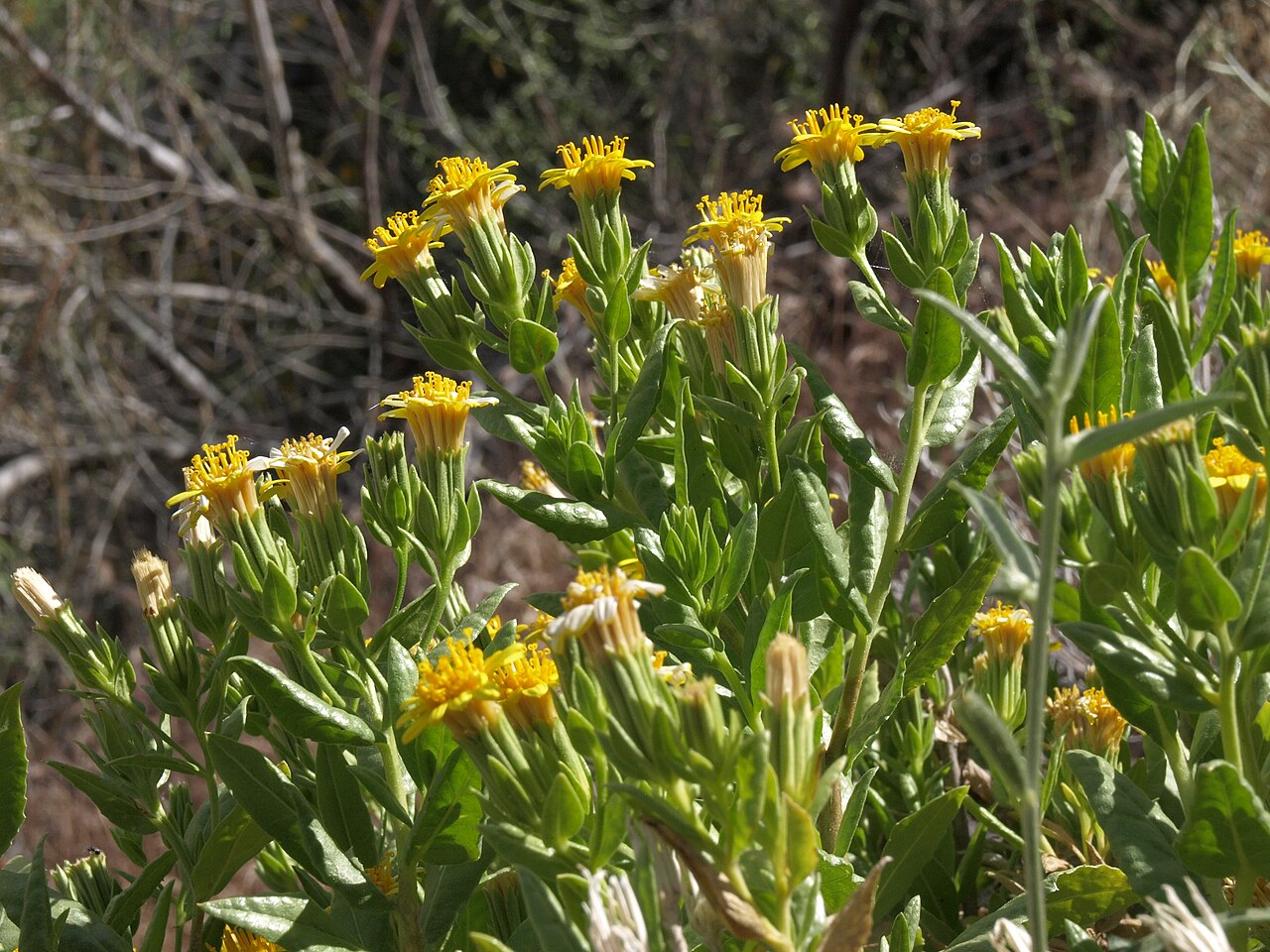
Trixis californica, known as American Threefold, American trixis or California trixis, is a leafy, low desert shrub in the aster family (Asteraceae). It grows on rocky slopes, in canyons and along desert washes from southern California east through Arizona and southern New Mexico to western Texas, and south into northern Mexico.
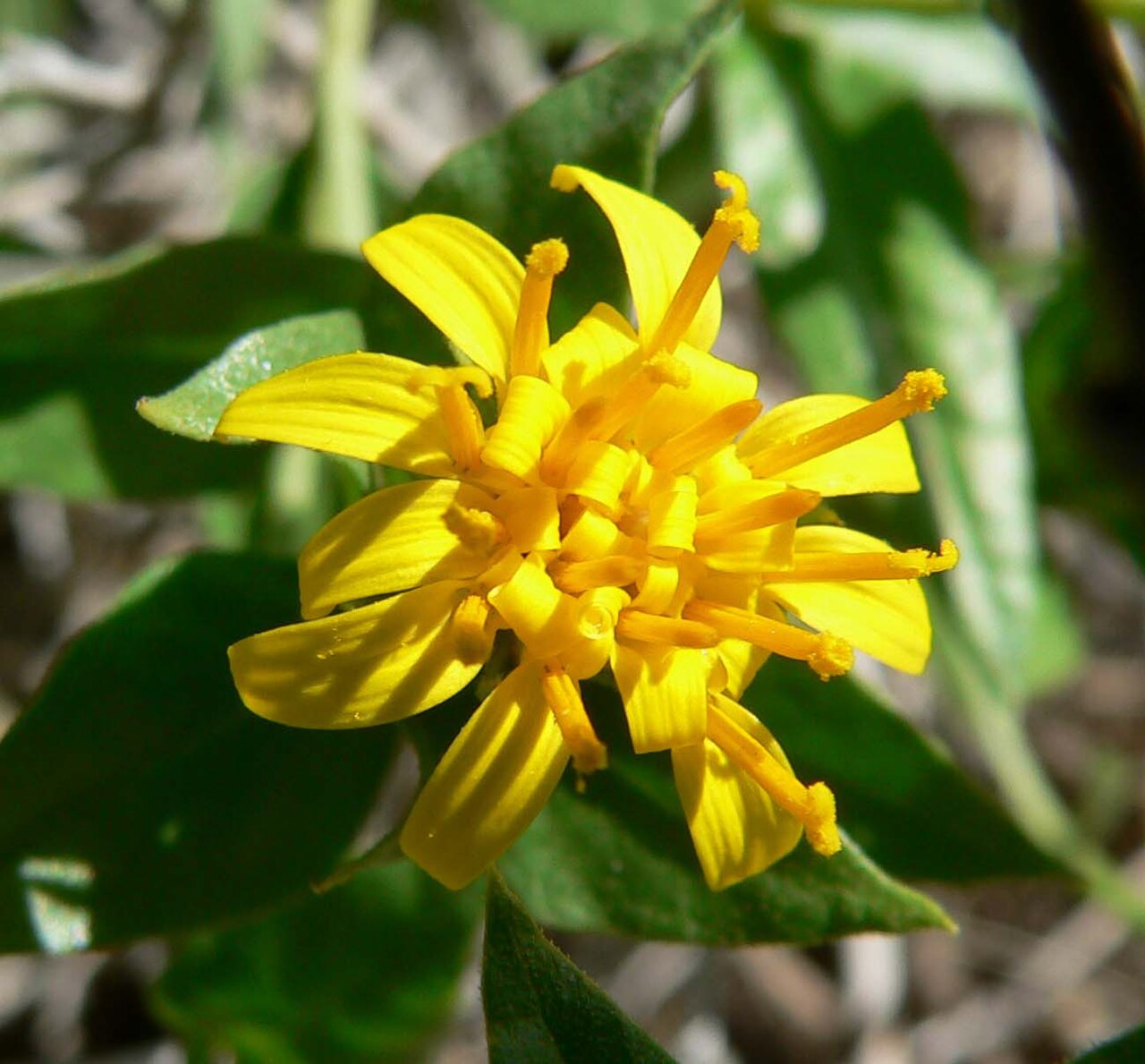
The plant forms a rounded, much-branched mound of bright green, lance-shaped leaves, usually 1 to 3 feet tall and often wider than tall. Through much of the year it carries clusters of yellow flower heads at the branch tips. Each head is made of small, two-lipped florets rather than the usual daisy-like rays, which gives the flowers a ragged, starry look. The common name “threefold” translates the genus name, a reference to the three-lobed lip of each floret.
Because it stays green and blooms in almost any month after rain, American threefold is a welcome plant in desert gardens. It is drought-tolerant, attracts bees and butterflies, and adds soft green texture among cacti and gray-leaved desert shrubs.
Identification
Look for a bushy, bright green desert shrub with narrow, lance-shaped leaves and small clusters of rayless yellow flower heads whose florets split into ragged lips.
Growth Habit
American threefold is a shrub or subshrub with many slender, leafy stems from a woody base. It is usually 1 to 3 feet tall and often spreads wider than its height, though old plants in sheltered canyons can grow taller. In the dry season it may drop some leaves, but it greens up quickly after rain.
Leaves
The leaves are alternate, lance-shaped, about 1 to 2 inches long and up to about 1 inch wide, dark to bright green, and often finely toothed on the edges. They are slightly rough or sticky and crowded along the stems, which makes the plant look much greener and leafier than most desert shrubs around it.
Flowers
Flower heads are about 3/4 inch across and are borne in small, flat-topped or branched clusters at the stem tips, sometimes singly. Each head has roughly 15 yellow florets. Each floret is two-lipped: the outer lip is broad and three-toothed, and the inner lip is narrow and curled. The main bloom is in spring and again in fall, but plants can flower from about February to October and nearly year-round in mild winters.
Fruit & Seeds
The fruits are small, slender achenes topped by a tuft of soft, whitish to tan bristles (pappus) that carry the seeds on the wind.
Look-alikes
Brittlebush has silvery-gray leaves and yellow daisy flowers with true rays, held well above the foliage on long stalks. Desert goldeneye and other Viguiera relatives such as skeletonleaf goldeneye also have ray flowers. Turpentine bush has needle-like leaves and a strong resinous smell. American threefold is the only one with broad green leaves and rayless, two-lipped florets.
Safety Notes
American threefold is not known to be toxic to people or pets. As with any plant, do not eat it.
Quick Facts
| Scientific Name | Trixis californica |
| Family | Asteraceae (aster family) |
| Plant Type | Evergreen to semi-evergreen shrub |
| Mature Height | 1–3 ft (occasionally taller) |
| Mature Spread | 2–4 ft |
| Growth Rate | Moderate |
| Sun Exposure | Full sun to partial shade |
| Water Needs | Low; occasional deep water in summer |
| Soil Type | Rocky, gravelly or sandy, well-drained |
| Soil pH | About 6.5–8.5 |
| Bloom Time | February–October; nearly year-round after rain |
| Flower Color | Bright yellow |
| Fall Color | None; stays green |
| Fruit | Small achenes with tan bristles |
| Deer Resistant | Moderately |
| USDA Hardiness Zones | 8–11 |
Native Range
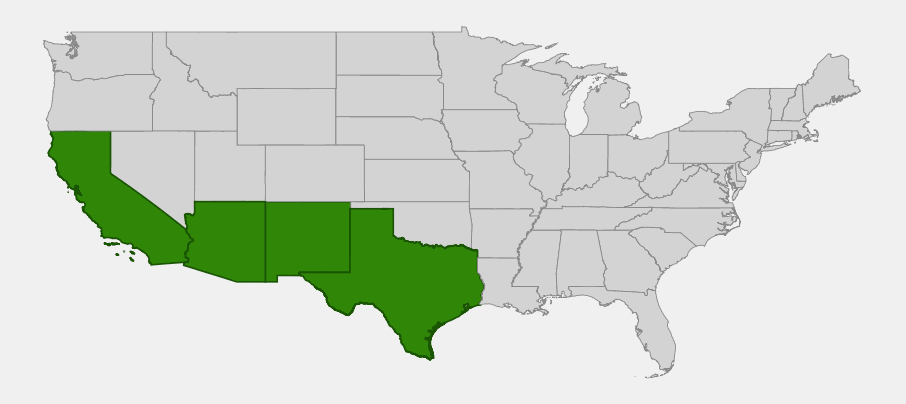
American threefold is native to the warm deserts of the southwestern United States and northern Mexico. USDA PLANTS lists it as native in Arizona, California, New Mexico and Texas. In California it grows in the Colorado (Sonoran) Desert of Riverside, San Diego and Imperial counties. It is widespread in southern and central Arizona, reaches southwestern New Mexico, and extends to western Texas. In Mexico it ranges from Baja California and Sonora east to Chihuahua, Coahuila, Nuevo León and Tamaulipas.
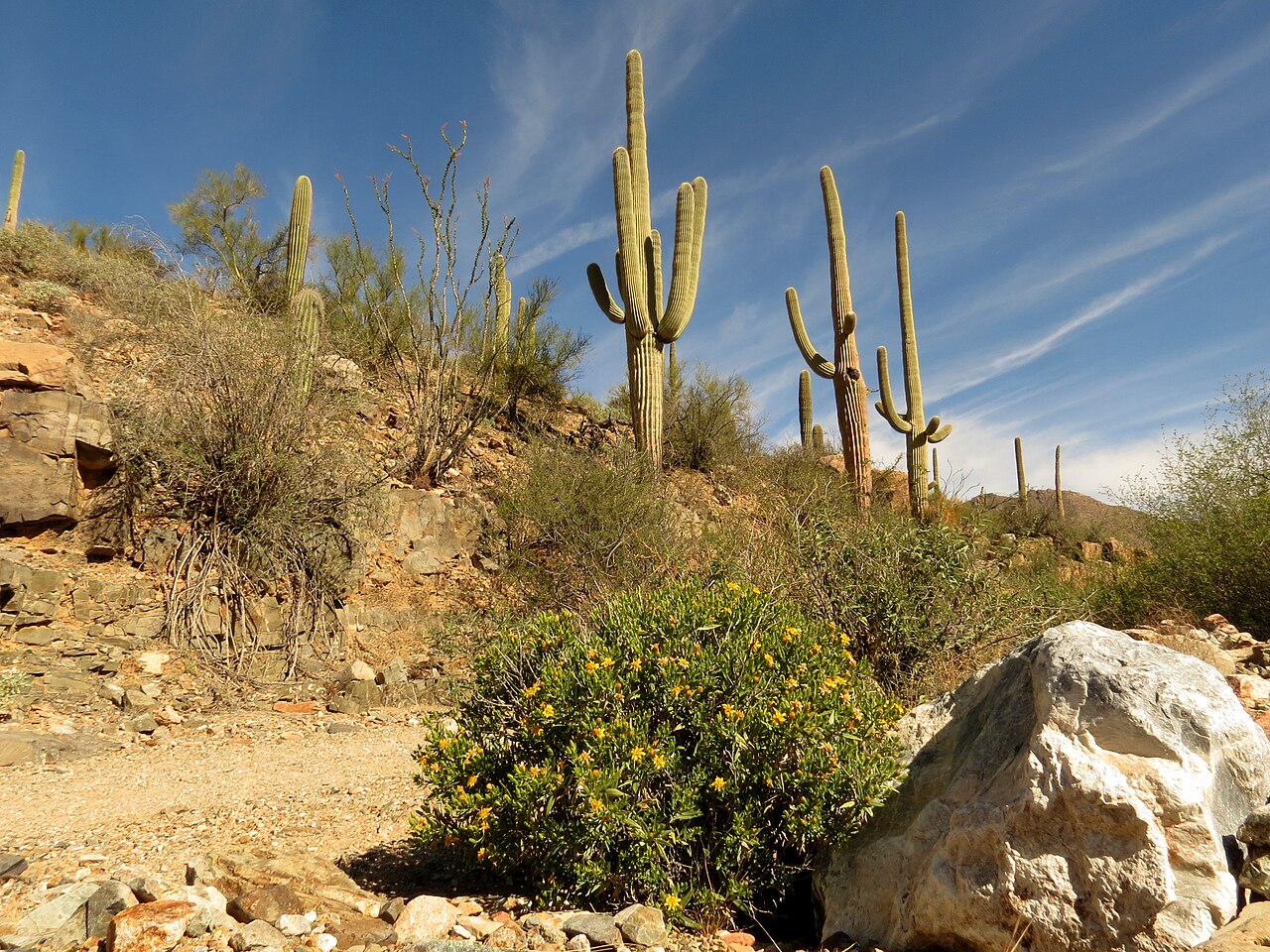
It grows from near sea level to about 5,000 feet. In the Sonoran Desert it is most common along washes, at the base of cliffs and on rocky slopes, often tucked under or beside larger shrubs and trees such as palo verde, ironwood and creosote bush.
Typical habitats are rocky hillsides, canyons, desert washes, thorn scrub and desert grassland edges. It favors spots where a little extra water collects, such as wash banks and rock crevices, which helps it stay green longer than many neighbors.
📋 Regional plant lists featuring American Threefold: South & West Texas · Arizona & New Mexico · California & Nevada
Growing & Care Guide
American threefold is sold by native and desert plant nurseries in Arizona and southern California. It is an easy, low-water shrub for warm-winter gardens, and it looks best with a little extra water during long dry spells.
Light
It grows in full sun to partial shade. In the hottest low deserts it looks greener and lusher with some afternoon shade or under the light canopy of a palo verde or mesquite.
Soil & Water
Give it well-drained, rocky, gravelly or sandy soil. Once established it survives on rainfall in most of its range, but a deep watering every two to four weeks in the hot season keeps it leafy and in flower. Avoid frequent shallow watering and poorly drained soil.
Planting Tips
Plant in fall or early spring. Space plants about 3 feet apart. Use it in mixed desert plantings, along dry washes, on rocky slopes, or as a green filler around cacti, agaves and gray-leaved shrubs such as brittlebush. It is cold-hardy to about the low 20s °F.
Pruning & Maintenance
Little care is needed. Cut back leggy or frost-damaged stems in late winter to keep the plant compact. Do not fertilize.
Propagation
Grow it from fresh seed sown in warm weather; seeds have no special pretreatment needs, though germination can be uneven. Cuttings taken in spring or early summer can also root.
Landscape Uses
- Desert and xeriscape gardens: green, flowering filler among cacti and gray-leaved shrubs
- Pollinator gardens: long bloom season for bees and butterflies
- Wash and slope plantings: natural on rocky banks and dry stream beds
- Habitat restoration: desert wash and slope revegetation in the Southwest
- Under desert trees: tolerates light shade beneath palo verde or mesquite
Wildlife & Ecological Value
American threefold flowers in most months after rain, so it gives desert insects a dependable source of nectar and pollen.
For Pollinators
Native bees, honey bees, butterflies and flies visit the flower heads for nectar and pollen. Because it can bloom in late winter and again in fall, it fills gaps when few other desert plants are flowering.
For Birds
Finches, sparrows and other small birds eat the seeds, and the dense, leafy mounds give cover to quail and ground-foraging birds.
For Mammals
Desert mammals such as rabbits and deer may browse the leafy stems, especially in dry seasons when green food is scarce.
Ecosystem Role
Growing along washes and beneath larger shrubs and trees, it is part of the understory layer of Sonoran and Chihuahuan Desert scrub, adding leaf litter and shelter that help other small plants and animals.
Cultural & Historical Uses
The species was named by Albert Kellogg, one of the founders of the California Academy of Sciences. The genus name Trixis comes from the Greek word for “threefold,” for the three-lobed outer lip of each floret, and it gives the plant its common English name. Trixis belongs to the Mutisia subfamily of the aster family, a group centered in South America; American threefold is one of the few members that reaches the United States.
Ethnobotanists Richard Felger and Mary Beck Moser recorded that the Seri people of coastal Sonora, Mexico, smoked the leaves for pleasure.
Two varieties are often recognized: var. californica, the common form in the United States, and var. peninsularis of Baja California.
Frequently Asked Questions
Why is it called threefold?
“Threefold” is the English meaning of the Greek genus name Trixis, which refers to the three-lobed outer lip of each small floret.
Does American threefold need water in the garden?
It survives on rainfall once established in its native range, but a deep watering every few weeks in hot, dry months keeps it greener and in bloom.
When does American threefold bloom?
Mostly in spring and fall, but it can flower from about February to October and nearly year-round after good rains.
Is American threefold good for pollinators?
Yes. Its yellow flower heads draw native bees, honey bees and butterflies over a long season.
Where does American threefold grow?
It grows on rocky slopes, in canyons and along washes from southern California to western Texas and into northern Mexico, from near sea level to about 5,000 feet.

Looking for a nursery that carries American Threefold?
Browse our native plant nursery directory: Arizona · California · New Mexico · Texas

