
Drummond’s Aster (Symphyotrichum drummondii)
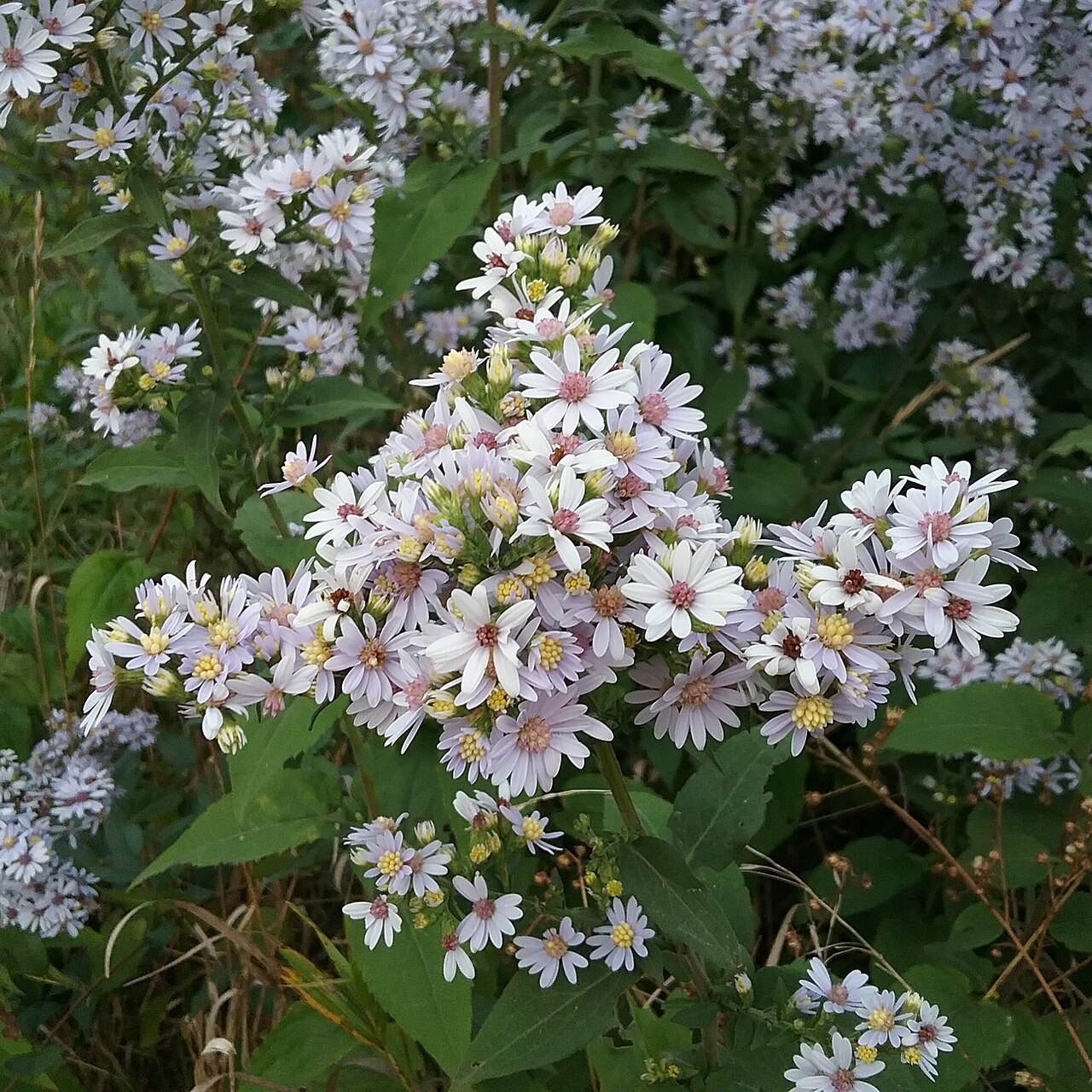
Symphyotrichum drummondii, known as Drummond’s Aster or hairy heart-leaved aster, is a fall-blooming perennial of the aster family (Asteraceae). It grows in open woods, thickets and woodland edges of the central and south-central United States, from the Great Lakes states and the Ohio Valley west to Nebraska and south to Texas and the Gulf states. It was long known as Aster drummondii.
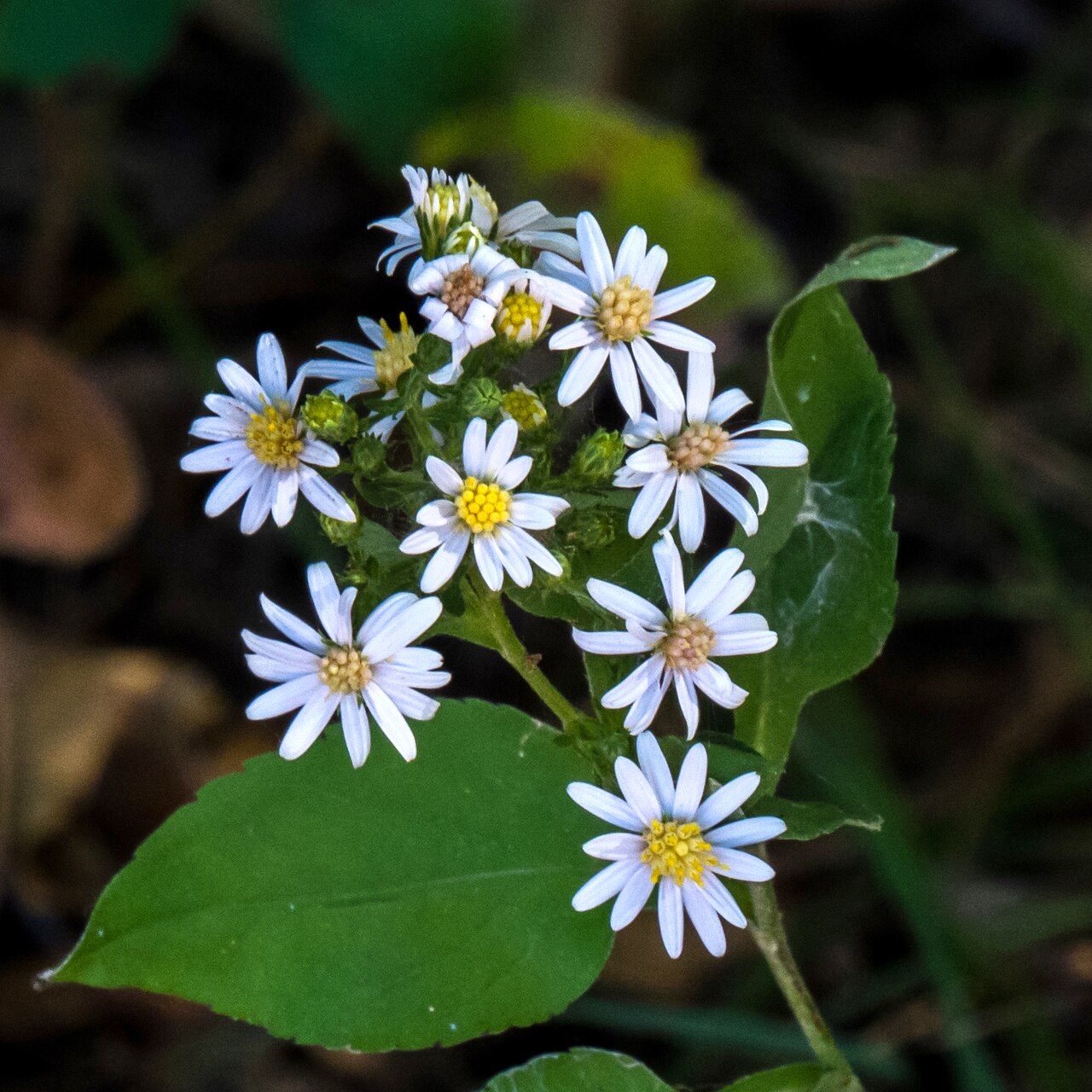
From late summer into November, Drummond’s aster produces airy sprays of hundreds of small flower heads with pale blue, lavender or white rays and yellow centers that age to reddish purple. Its lower leaves are heart-shaped on winged stalks, and its stems and leaves are noticeably hairy, which helps separate it from the similar blue wood aster.
Drummond’s aster is an easy, adaptable native for part-shade gardens, woodland edges and naturalized areas. It is one of the best late-season plants for bees and butterflies in light shade, and it hosts the caterpillars of the pearl crescent and other aster-feeding butterflies.
Identification
Look for a branched, hairy aster in open woods or along shady edges in fall, with heart-shaped lower leaves on winged stalks and clouds of small, pale blue to white flower heads.
Growth Habit
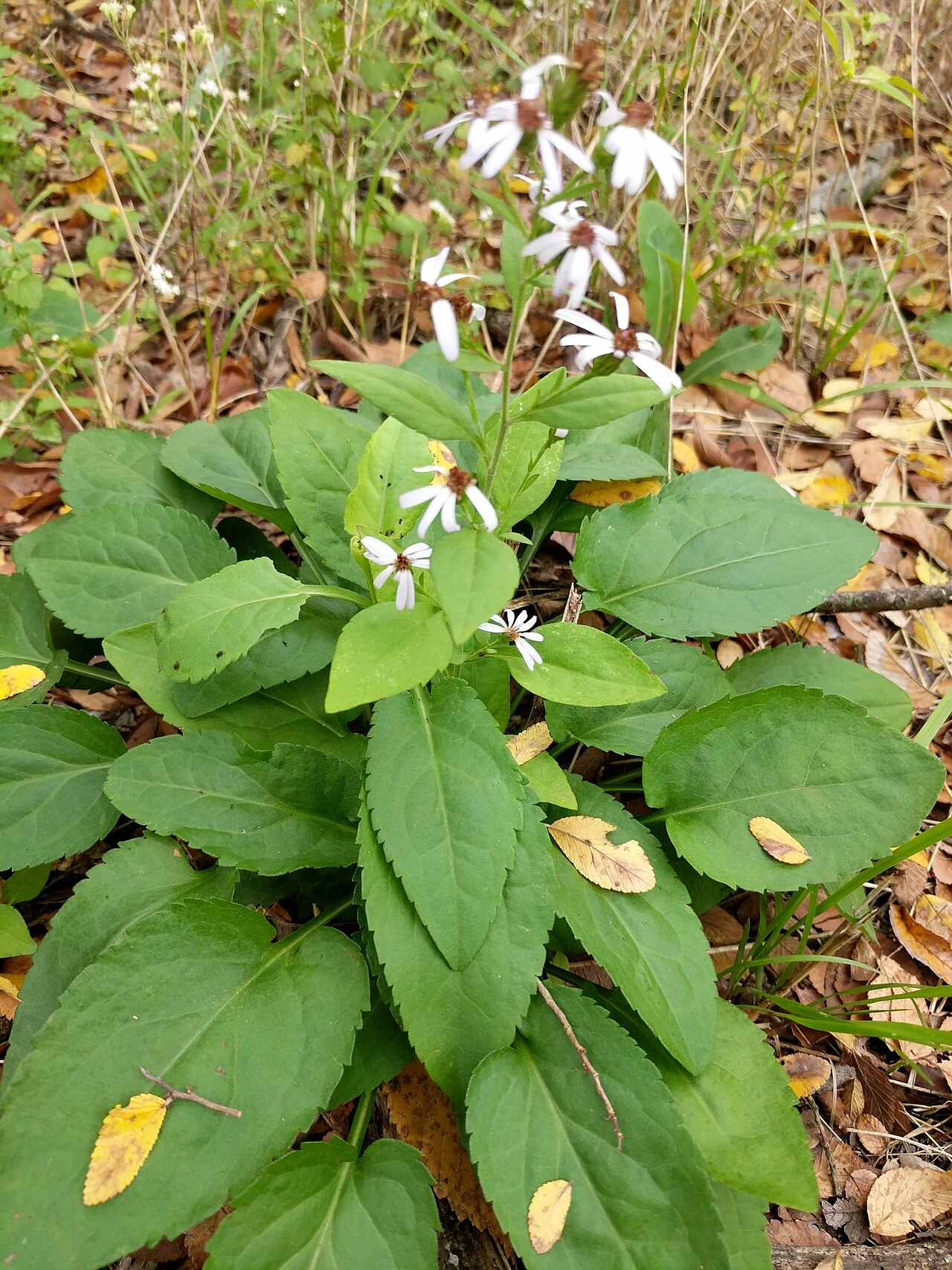
Drummond’s aster is a clump-forming perennial with one to several upright stems from a short, woody base and rhizomes. Stems are 1 1/2 to 4 feet tall, often leaning in shade, and branch in the upper part into a broad, open flower cluster. The stems are densely covered with short, spreading hairs.
Leaves
Basal and lower stem leaves are heart-shaped to oval, 2 to 5 inches long, with toothed edges and a deeply notched base. Their stalks are distinctly winged, a key feature. The leaves are rough or softly hairy above and densely hairy below. Leaves get smaller and narrower up the stem and become nearly stalkless in the flower cluster. Basal leaves often wither by flowering time.
Flowers
Flowers appear from about late August to November. Flower heads are 1/2 to 3/4 inch across, borne in large, open, branched clusters. Each head has about 10 to 20 pale blue, lavender or white ray florets around a center of yellow disc florets that turn reddish purple as they age. The green bracts under the head are narrow, with green, diamond-shaped tips.
Fruit & Seeds
The fruits are small, dry cypselae, each with a tuft of whitish bristles (pappus) that carries it on the wind. Seeds ripen from October to December.
Look-alikes
Blue wood aster (Symphyotrichum cordifolium) also has heart-shaped leaves on winged stalks but has smooth or only sparsely hairy stems and leaves. Arrow-leaved aster (Symphyotrichum urophyllum) has narrower, arrow-shaped leaves, mostly white rays and a narrow, wand-like flower cluster. Short’s aster (Symphyotrichum shortii) has narrow, unwinged leaf stalks and larger heads. Botanists sometimes treat Drummond’s aster as a variety of blue wood aster, and the two can intergrade where they meet.
Safety Notes
Drummond’s aster is not known to be toxic to people or pets.
Quick Facts
| Scientific Name | Symphyotrichum drummondii |
| Family | Asteraceae (aster family) |
| Plant Type | Herbaceous perennial |
| Mature Height | 1.5–4 ft |
| Mature Spread | 1–2 ft |
| Growth Rate | Moderate |
| Sun Exposure | Part shade to full sun |
| Water Needs | Low to medium; dry to moist soil |
| Soil Type | Loam, clay or rocky soil |
| Soil pH | About 5.5–8.0 |
| Bloom Time | Late August–November |
| Flower Color | Pale blue, lavender or white with yellow centers |
| Fall Color | Fall flowers; foliage may turn reddish |
| Fruit | Small seeds with white tufts |
| Deer Resistant | Moderate |
| USDA Hardiness Zones | 4–9 |
Native Range
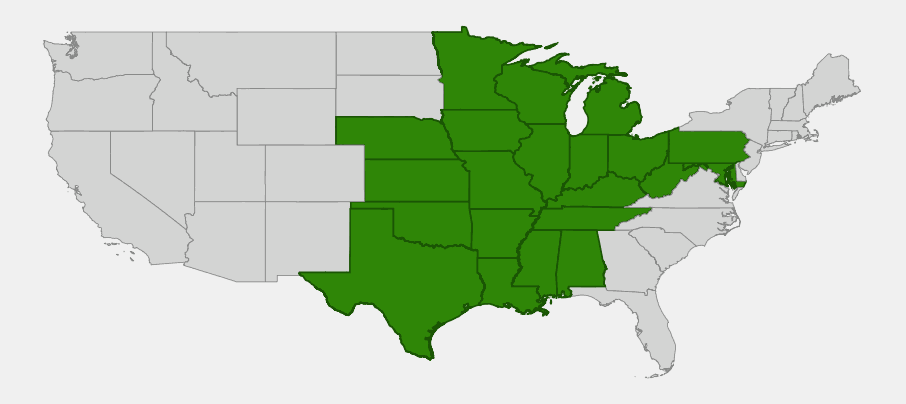
Drummond’s aster is native to the central and south-central United States and northern Mexico (Coahuila). USDA PLANTS lists it as native in Alabama, Arkansas, Illinois, Indiana, Iowa, Kansas, Kentucky, Louisiana, Maryland, Michigan, Minnesota, Mississippi, Missouri, Nebraska, Ohio, Oklahoma, Pennsylvania, Tennessee, Texas, West Virginia and Wisconsin.
It is most common in the Mississippi and Ohio valleys, the Ozarks and the eastern Plains, from southern Minnesota, Iowa and Illinois to eastern Kansas, Oklahoma and Texas. The records from Pennsylvania, Maryland and West Virginia are at the eastern edge of the range. A southern form, sometimes called Texas aster (variety texanum), grows in Texas and nearby states.
Typical habitats are dry to moist open woods, woodland edges and clearings, thickets, savannas, wooded slopes and bluffs, stream banks and roadsides. It does well in light shade but also grows in sunny edges and old fields.
📋 Regional plant lists featuring Drummond’s Aster: Arkansas, Louisiana, Eastern Oklahoma & Eastern Texas · Alabama, Georgia & Mississippi · Kentucky & Tennessee · Illinois, Iowa & Missouri · Ohio & Indiana · Nebraska, Kansas & Eastern Colorado · Michigan, Wisconsin & Eastern Minnesota · Maryland, Virginia & West Virginia · New York, Pennsylvania & Northern New Jersey · South & West Texas · North Dakota, South Dakota & Western Minnesota
Growing & Care Guide
Drummond’s aster is available from native plant nurseries and seed suppliers in the Midwest and South. It is easy to grow, tolerates dry shade and needs little care.
Light
It grows in part shade to full sun. Dappled shade under open trees or a spot with morning sun suits it best; in deep shade it flowers less and the stems lean.
Soil & Water
It adapts to loam, clay and rocky soil, from fairly dry to moist, as long as water does not stand. Water new plants during dry spells in their first season. Established plants tolerate dry shade and summer drought.
Planting Tips
Plant it along woodland edges, under high shade trees, in a shade garden with sedges and woodland goldenrods, or in a naturalized meadow edge. Space plants about 18 inches apart. It combines well with wreath goldenrod and white snakeroot for fall color in shade.
Pruning & Maintenance
For shorter, bushier plants, cut the stems back by about one-third in late spring or early summer. Leave the seed heads standing through winter for birds, and cut old stems down in early spring. Divide crowded clumps every few years.
Propagation
Sow seed outdoors in fall or give it 30 to 60 days of cold, moist stratification before spring sowing. Plants are easily divided in early spring. Softwood cuttings taken in late spring also root well.
Landscape Uses
- Woodland edge and shade gardens: late color in dry to moist part shade
- Pollinator gardens: abundant fall nectar and pollen for bees and butterflies
- Butterfly gardens: larval host for the pearl crescent and other aster specialists
- Naturalized areas: spreads moderately by seed and short rhizomes
- Savanna and open-woods restoration: a typical fall aster of oak woodlands
Wildlife & Ecological Value
Like other fall asters, Drummond’s aster is an important late-season resource for pollinators and other wildlife.
For Pollinators
The flowers attract bumblebees, honeybees, small native bees, syrphid flies and butterflies such as monarchs on fall migration, sulphurs and skippers. Many specialist bees that collect pollen only from asters and their relatives visit it. Its leaves feed the caterpillars of the pearl crescent (Phyciodes tharos) and other aster-feeding butterflies and moths.
For Birds
Finches, sparrows and other small birds eat the seeds in late fall and winter, and the clumps give cover to ground-feeding birds.
For Mammals
Rabbits and deer browse the foliage, sometimes heavily, but plants usually regrow.
Ecosystem Role
As a long-blooming fall aster of open woods and edges, Drummond’s aster helps bridge the gap between summer flowers and winter, supporting late-season insects and the birds and other animals that feed on them.
Cultural & Historical Uses
The species honors Thomas Drummond (c. 1793–1835), a Scottish naturalist who collected plants in Texas in the early 1830s and sent specimens back to Britain. John Lindley named it Aster drummondii.
In 1995 the botanist Guy Nesom moved most North American asters into the genus Symphyotrichum, based on differences from the Old World asters. The new genus name comes from Greek words meaning “coming together” and “hair,” which may refer to the bristles on the fruit.
Drummond’s aster is one of a group of closely related heart-leaved asters, and botanists continue to debate whether it should be treated as its own species or as a variety of blue wood aster. Both are excellent native plants for fall color in shade.
Frequently Asked Questions
Is Drummond’s aster the same as blue wood aster?
They are close relatives and are sometimes treated as one species. Drummond’s aster has hairier stems and leaves, while blue wood aster is smooth or only sparsely hairy.
Does Drummond’s aster grow in shade?
Yes. It grows well in part shade at woodland edges and under open trees, and it tolerates dry shade once established.
When does Drummond’s aster bloom?
It blooms from late August through November, often among the last wildflowers in shady areas.
Is Drummond’s aster good for pollinators?
Yes. Bees, flies and butterflies visit its flowers in fall, and it is a host plant for the pearl crescent butterfly.
How do I keep Drummond’s aster from flopping?
Give it some sun and cut the stems back by about a third in late spring or early summer. Plants grown in deep shade or rich soil tend to lean.

Looking for a nursery that carries Drummond’s Aster?
Browse our native plant nursery directory: Alabama & Arkansas · Illinois, Indiana, Iowa & Kansas · Kentucky, Louisiana, Maryland, Michigan, Minnesota, Mississippi & Missouri · Nebraska, Ohio & Oklahoma · Pennsylvania, Tennessee & Texas · West Virginia & Wisconsin

