
Ragged Fringed Orchid (Platanthera lacera)
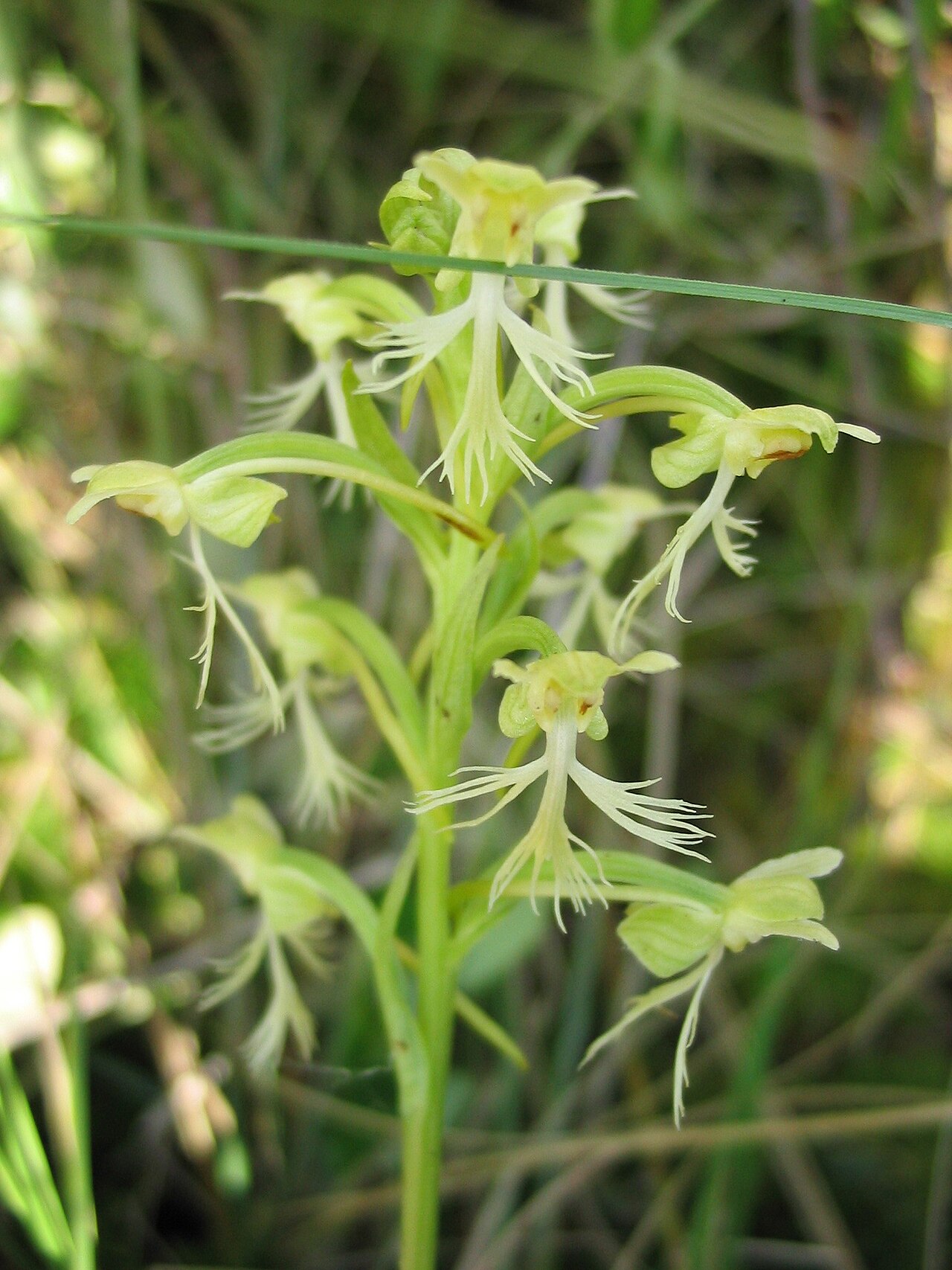
Platanthera lacera, known as Ragged Fringed Orchid, is a native terrestrial orchid of eastern North America. USDA PLANTS calls it green fringed orchid, and it is also known as green fringed orchis; an older scientific name is Habenaria lacera. In early to midsummer it produces a slender spike, usually 8 to 32 inches tall, of pale green to creamy white flowers. Each flower has a lip split into three parts that are cut into long, thread-like fringes, giving the plant its “ragged” look.
It is one of the most widespread fringed orchids in the East, growing from Manitoba and Newfoundland south to Georgia, the Gulf states and East Texas. It grows in wet meadows, fens, bogs, marsh edges, damp open woods and even moist old fields and roadside ditches. Its pale green color helps it blend in among grasses and sedges, so it is often overlooked.
Like all native orchids, ragged fringed orchid depends on soil fungi, especially when it is young. It should never be dug from the wild: transplanted plants almost always die. If you want to grow it, buy only nursery-propagated plants from a reputable grower, and support the protection of its wetland habitats.
Identification
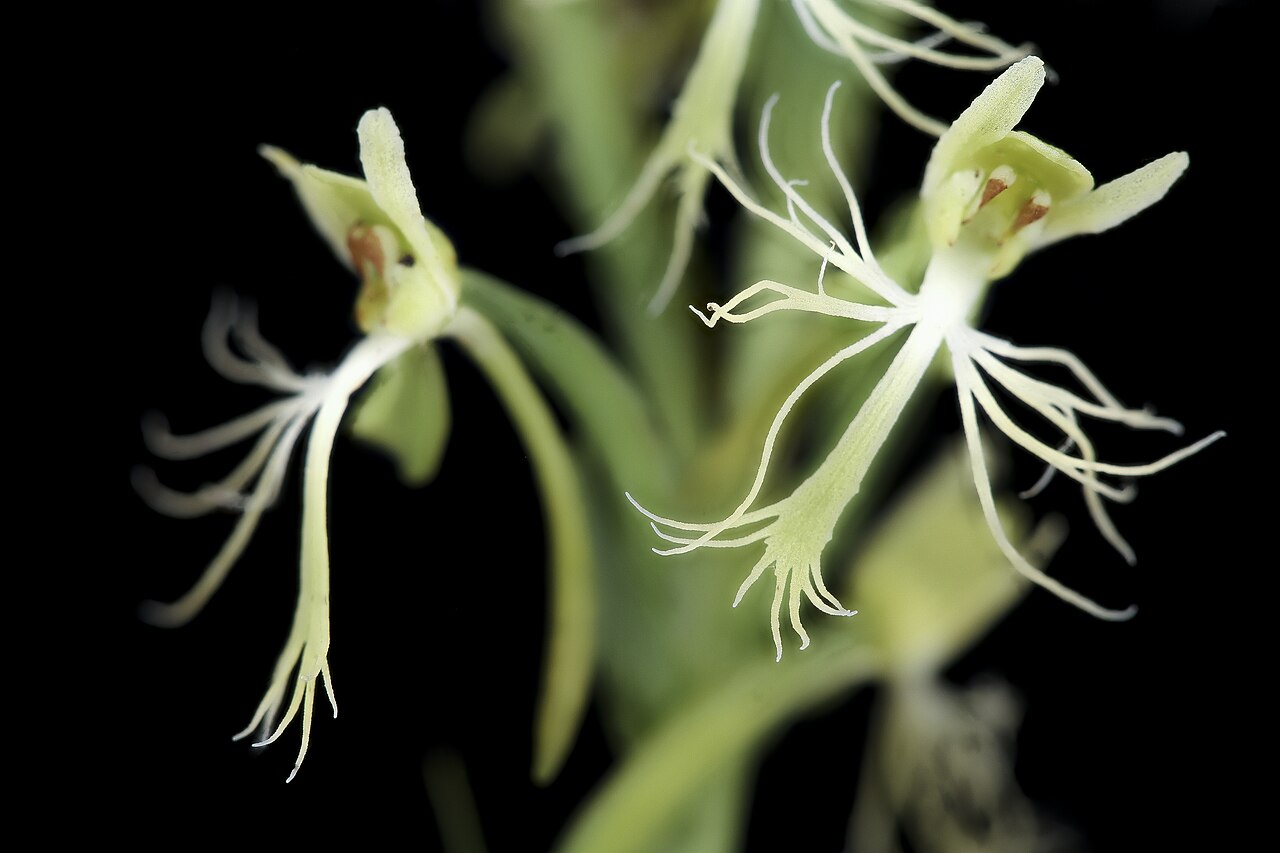
Look for a slender, leafy stem with a loose spike of greenish-white flowers whose lips are split into three deeply fringed parts, like tiny tassels.
Growth Habit
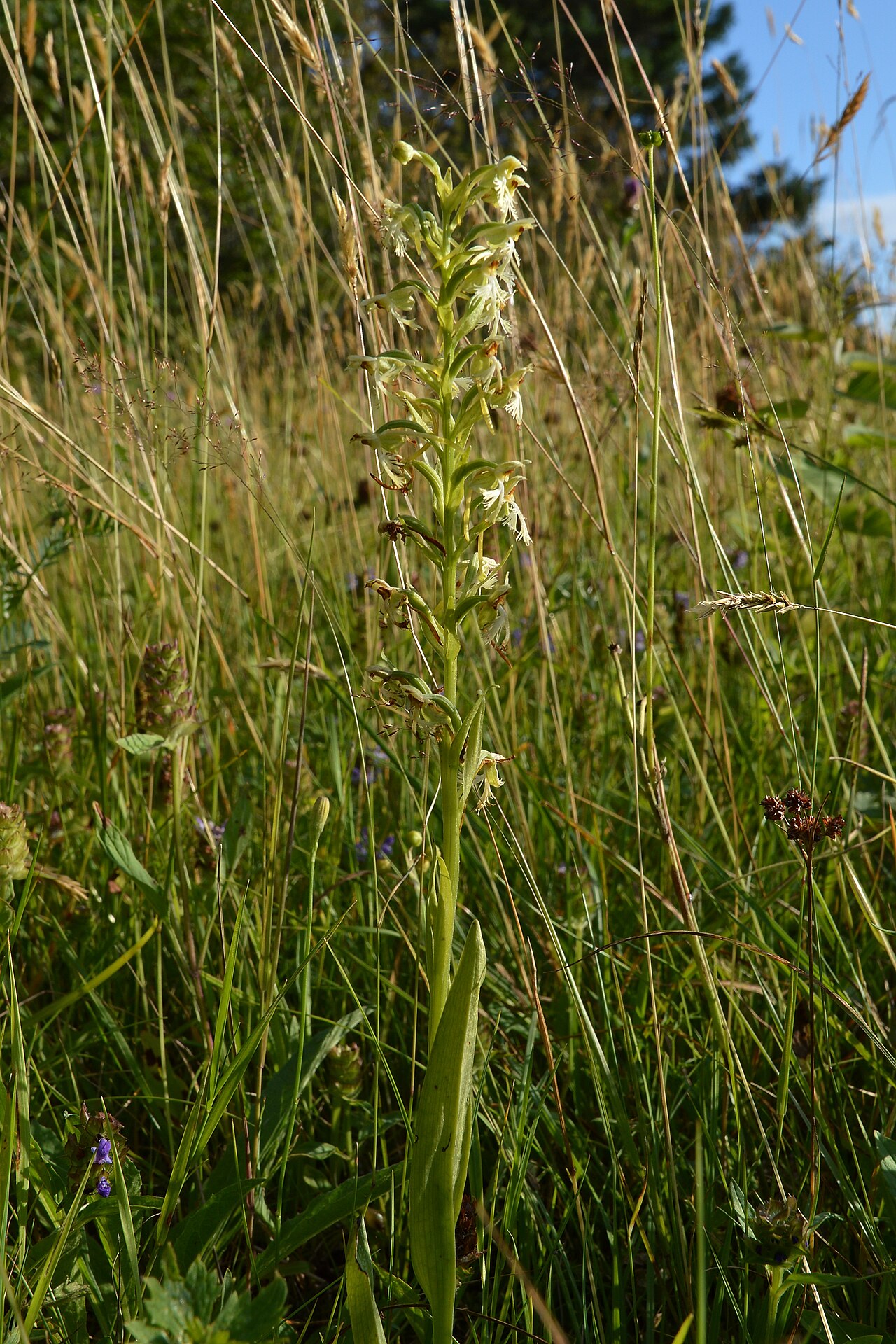
Ragged fringed orchid grows from fleshy, tuber-like roots and sends up a single, upright, leafy stem 8 to 32 inches tall. Plants may bloom one year and produce only leaves, or nothing visible, the next.
Leaves
There are usually two to five smooth, lance-shaped to elliptic leaves along the lower stem, 2 to 8 inches long, getting smaller upward and grading into narrow bracts in the flower spike.
Flowers
The flower spike is 2 to 8 inches long, with about 10 to 40 flowers. The flowers are pale green, yellowish green or creamy white. The upper sepal and two petals form a small hood, and the side sepals spread outward. The lip is about 1/2 to 3/4 inch long and divided into three narrow parts, each finely cut into long, thread-like fringes. A slender nectar spur, about 1/2 to 3/4 inch long, hangs behind the flower. Flowering runs from about June to August, earlier in the South.
Fruit
The fruit is an upright, ribbed capsule that releases thousands of dust-like seeds in late summer and fall. The seeds can develop only with the help of specific soil fungi.
Look-alikes
White fringed orchid (Platanthera blephariglottis) has pure white flowers with an undivided, fringed lip. Purple fringed orchids (P. psycodes and P. grandiflora) have purple flowers; ragged fringed orchid sometimes hybridizes with lesser purple fringed orchid, producing plants with pale purplish flowers. Orange fringed orchid has bright orange flowers. Eastern prairie and western prairie fringed orchids have much larger, creamy white flowers and are federally threatened. Small green wood orchid has small greenish flowers without fringes.
Quick Facts
| Scientific Name | Platanthera lacera |
| Family | Orchidaceae (orchid family) |
| Plant Type | Terrestrial orchid (herbaceous perennial) |
| Mature Height | 8–32 in |
| Mature Spread | 4–8 in |
| Growth Rate | Slow |
| Sun Exposure | Full sun to part shade |
| Water Needs | High; moist to wet soil |
| Soil Type | Moist, acidic to neutral sandy, peaty or loamy soil |
| Soil pH | Acidic to near neutral (about 4.5–7.0) |
| Bloom Time | June–August |
| Flower Color | Pale green to creamy white |
| Fall Color | None; dies back after seed set |
| Fruit | Ribbed capsule with dust-like seeds |
| Deer Resistant | No; deer often eat the flower spikes |
| USDA Hardiness Zones | 3–8 |
Native Range
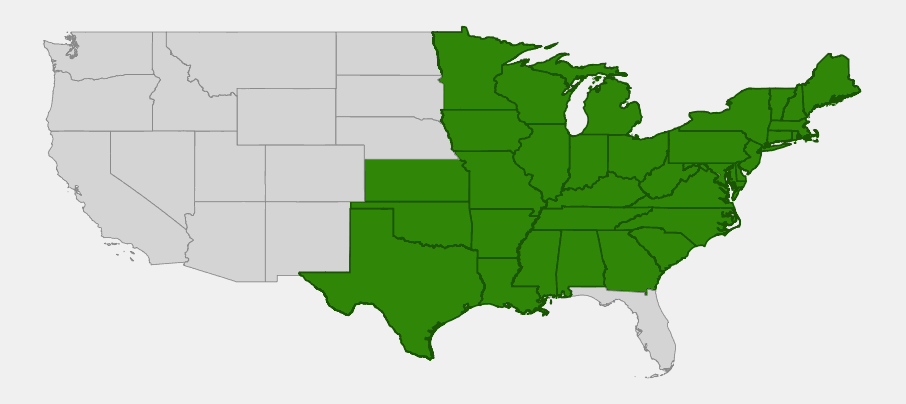
Ragged fringed orchid is native to eastern North America. USDA PLANTS lists it as native in 33 states, from Maine and Minnesota south to Georgia, Alabama, Mississippi, Louisiana and Texas, and west to Iowa, eastern Kansas and Oklahoma. In Canada it grows from Manitoba east through Ontario and Quebec to the Atlantic provinces, including Newfoundland.
It is most common in the Northeast, the Great Lakes region and the Appalachians, and becomes scattered and local on the southern Coastal Plain and at the western edge of its range in Iowa, Kansas, Oklahoma, Arkansas, Louisiana and East Texas, where it grows in the Pineywoods. It does not grow in South or West Texas or on the northern Great Plains.
It grows in a wide range of open, moist habitats: wet meadows, fens and bogs, marsh and swamp edges, wet prairies, seepage slopes, damp open woods and thickets, and sometimes in moist old fields, power-line corridors and roadside ditches. It is less demanding than many native orchids but still needs moist soil and open conditions.
📋 Regional plant lists featuring Ragged Fringed Orchid: New York, Pennsylvania & Northern New Jersey · Ohio & Indiana · Michigan, Wisconsin & Eastern Minnesota · Kentucky & Tennessee · Nebraska, Kansas & Eastern Colorado · Connecticut, Massachusetts & Rhode Island · New Hampshire, Maine & Vermont · Maryland, Virginia & West Virginia · Delaware, Southern New Jersey & Long Island · Illinois, Iowa & Missouri · Alabama, Georgia & Mississippi · North & South Carolina · Arkansas, Louisiana, Eastern Oklahoma & Eastern Texas · North Dakota, South Dakota & Western Minnesota
Growing & Care Guide
Ragged fringed orchid can be grown by experienced gardeners, but only from nursery-propagated (seed-grown, laboratory-raised) plants. Never dig plants from the wild: native orchids depend on specific soil fungi, wild-dug plants almost always die, and collecting them is illegal in many places. It is also listed as rare in some states at the edges of its range.
Light
Full sun to part shade. In the wild it grows in open meadows and in the light shade of woodland edges.
Soil & Water
It needs moist to wet, acidic to near-neutral soil that never dries out, such as a sandy or peaty mix with some leaf mold. A bog garden, the edge of a pond or a constantly moist meadow spot works well. Do not fertilize, and avoid heavy, stagnant clay.
Planting Tips
Plant nursery-grown plants in spring or fall, with the bud just below the surface, in a moist spot among low grasses and sedges where it will not be crowded by vigorous plants. Mark the spot, since plants are dormant for much of the year and may skip a year above ground.
Pruning & Maintenance
Leave the stems until the seed capsules release their seed. Protect the flower spikes from deer and rabbits with cages if needed. Keep taller plants from shading it out, but do not disturb the soil around the roots.
Propagation
Seed germination requires specific fungi and is done in laboratories by specialized growers. Mature plants sometimes form additional tubers. Home gardeners should buy propagated plants rather than attempt division.
Landscape Uses
- Bog and wetland gardens: a subtle, unusual orchid for constantly moist sites
- Wet meadow plantings: blends with native grasses, sedges and ferns
- Pond edges: grows at the moist margins of ponds and swales
- Moth gardens: night-flying moths visit its fragrant flowers
- Conservation: protecting wet meadows and fens helps this and other native orchids
Wildlife & Ecological Value
Ragged fringed orchid is part of the diverse plant life of eastern wetlands and wet meadows.
For Pollinators
The pale, fringed flowers are fragrant at night and are pollinated mainly by moths, including sphinx moths and other night-flying moths, which reach the nectar in the long spur. Pollen masses stick to the moth’s eyes or proboscis and are carried to the next flower.
For Birds
It provides little direct food for birds.
For Mammals
Deer and rabbits eat the leaves and flower spikes, which can prevent plants from setting seed in areas with many deer.
Ecosystem Role
Like all orchids, it depends on mycorrhizal fungi, especially as a seedling. Its presence indicates healthy, moist, open habitat. Drainage, development, succession to shrubs and trees, and heavy deer browsing are the main threats to its populations.
Cultural & Historical Uses
The genus name Platanthera comes from Greek words meaning “broad anther,” and the species name lacera means “torn,” describing the ragged, fringed lip. The species was first described by André Michaux in 1803 as Orchis lacera and was later placed in Habenaria, a name still used in older field guides.
Ragged fringed orchid hybridizes with lesser purple fringed orchid (Platanthera psycodes) where they grow together, producing Andrews’ fringed orchid (Platanthera × andrewsii), which has pale purple to pinkish flowers with a fringed, three-part lip.
Because it can grow in moist old fields and ditches, ragged fringed orchid is one of the native orchids most likely to be found by casual observers in the East. Still, it is uncommon and has declined where wet meadows have been drained or developed.
Frequently Asked Questions
What is the difference between ragged fringed orchid and green fringed orchid?
They are the same plant. USDA PLANTS uses the name green fringed orchid, while many field guides call it ragged fringed orchid.
Can I dig up a ragged fringed orchid and move it to my garden?
No. Native orchids depend on specific soil fungi and almost never survive being dug up. Collecting them is often illegal. Buy only nursery-propagated plants.
What pollinates ragged fringed orchid?
Mainly night-flying moths, which reach the nectar in the long spur and carry pollen to other flowers.
Where does it grow?
In wet meadows, fens, bogs, marsh edges, damp woods and moist fields across eastern North America, from Canada to the Gulf states and East Texas.
Why do I not see it every year?
Many orchids skip flowering in some years, or stay dormant underground. Deer browsing can also remove the flower spikes before they open.

Looking for a nursery that carries Ragged Fringed Orchid?
Browse our native plant nursery directory: Alabama & Arkansas · Connecticut, Delaware & Georgia · Illinois, Indiana, Iowa & Kansas · Kentucky, Louisiana, Maine, Maryland, Massachusetts, Michigan, Minnesota, Mississippi & Missouri · New Hampshire, New Jersey, New York, North Carolina, Ohio & Oklahoma · Pennsylvania, Rhode Island, South Carolina, Tennessee, Texas, Vermont & Virginia · West Virginia & Wisconsin

