
Labrador Violet (Viola labradorica)
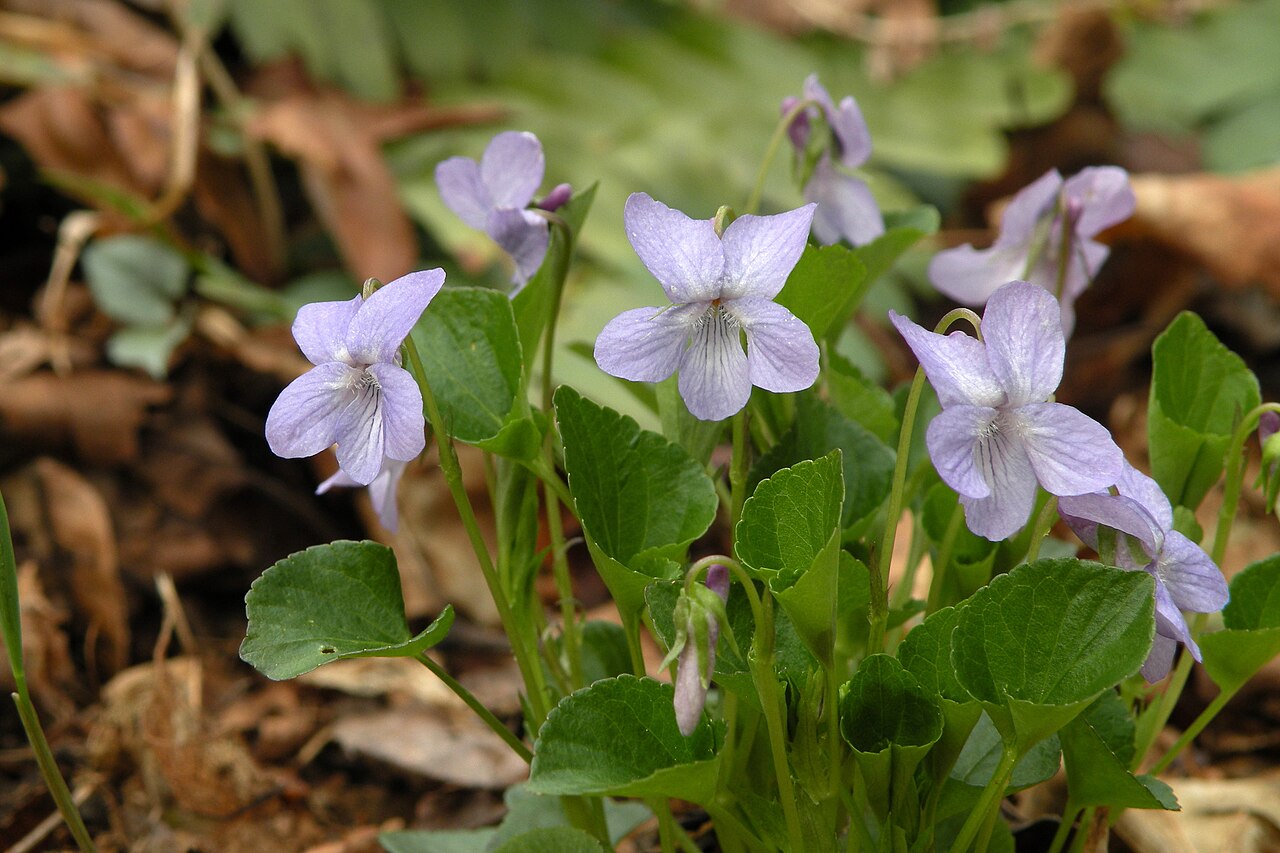
Viola labradorica, known as Labrador Violet, alpine violet (the USDA PLANTS name) or American dog violet, is a small, stemmed blue violet of moist woods, meadows and stream banks across eastern and northern North America. It belongs to the violet family (Violaceae).
From April to June it bears pale blue-violet to lavender flowers about 1/2 to 3/4 inch across, on leafy stems rather than directly from the roots. Its small, heart-shaped leaves and the fringed, comb-like stipules at the base of each leaf stalk help separate it from the familiar stemless violets of lawns and woods.
USDA PLANTS treats Viola labradorica broadly, including the plant long known as American dog violet, Viola conspersa. In that sense it ranges from Greenland, Labrador and the Canadian provinces south through the Great Lakes and the Appalachians to Georgia and Alabama. It is a charming native groundcover for shady, moist gardens, and an important host plant for fritillary butterflies.
Identification
Look in spring for a low, clumping violet with flowers on short leafy stems, small heart-shaped leaves, and fringed stipules at the base of each leaf stalk.
Growth Habit
Labrador violet is a low perennial that forms small clumps from a short rootstock, usually 2 to 6 inches tall in flower and taller as stems lengthen in summer. Unlike stemless violets, it has true leafy stems, with both flowers and leaves rising from the stems. Colonies spread slowly by seed and by new shoots.
Leaves
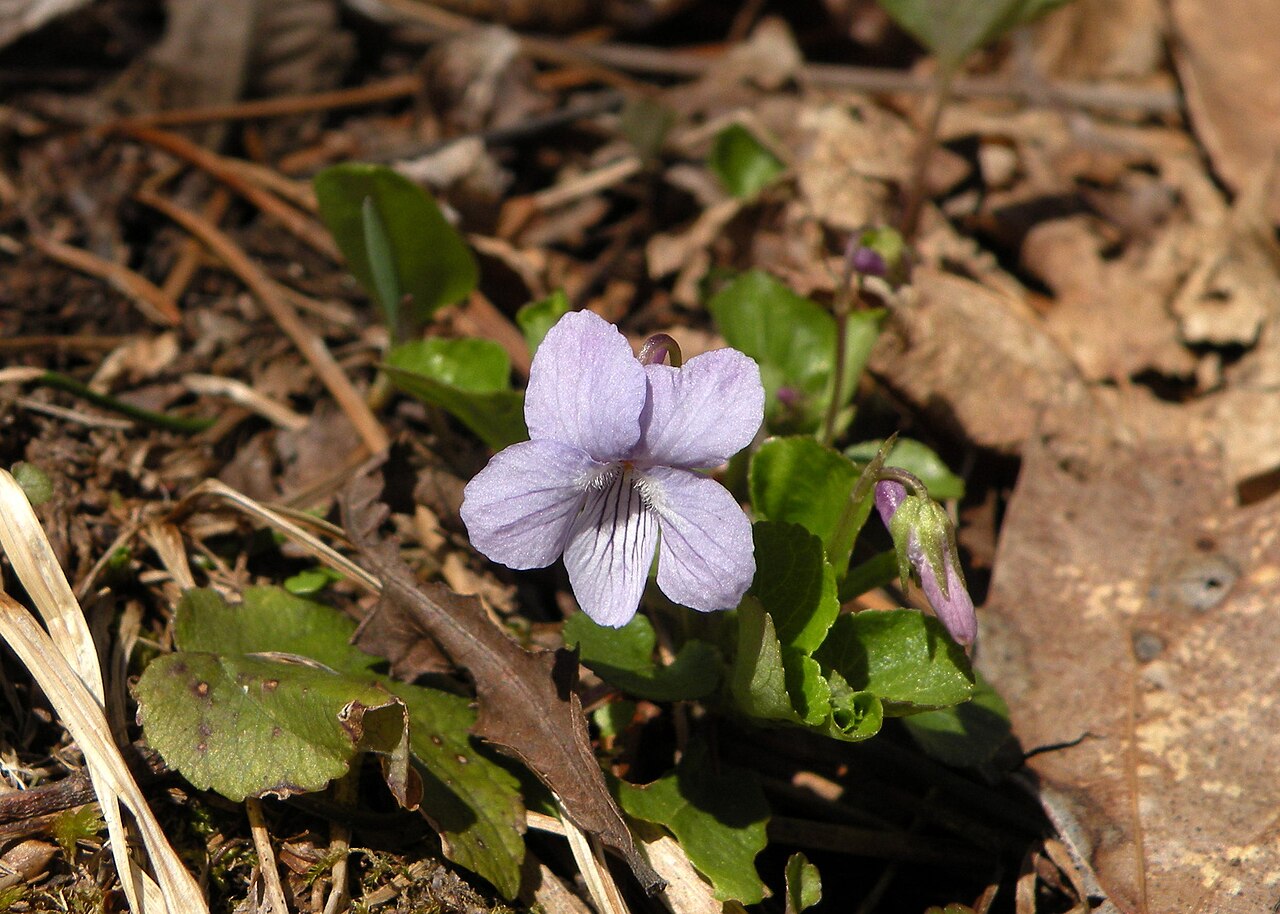
The leaves are small, about 3/4 to 1 1/2 inches wide, heart-shaped to kidney-shaped, with rounded teeth and a blunt to slightly pointed tip. They are green and mostly smooth. At the base of each leaf stalk is a pair of narrow stipules with fringed, comb-like edges, a key feature for identification.
Flowers
Flowers bloom from about April to June, rising on slender stalks from the leaf axils just above the foliage. They are pale blue-violet to lavender, about 1/2 to 3/4 inch across, with dark purple veins on the lower petals, a whitish center, tufts of hairs (beards) on the two side petals, and a short, blunt spur behind. Later in the season the plant also makes small, closed, self-pollinating flowers that produce seed without opening.
Fruit & Seeds
The fruit is a small, three-parted capsule that splits open in summer and flings out its brown seeds. Each seed carries a small, oily appendage (elaiosome) that attracts ants, which carry the seeds away and help spread the plant.
Look-alikes
Long-spurred violet (Viola rostrata) is also a stemmed blue violet with fringed stipules, but its spur is about 1/2 inch long and its side petals are beardless. Cream violet (Viola striata) is similar in form but has creamy white flowers. Early blue violet (Viola adunca) has a longer, hooked spur, smaller and often hairy leaves, and stipules with only a few teeth. Common blue violet is stemless, with larger leaves and flowers rising straight from the ground. The purple-leaved “Labrador violet” sold in garden centers is usually a cultivar of the European Viola riviniana, not this native species.
Safety Notes
Labrador violet is not known to be toxic. Violet flowers and young leaves of some species are eaten, but do not eat wild plants unless you are certain of their identity, and avoid collecting from roadsides or treated lawns.
Quick Facts
| Scientific Name | Viola labradorica (incl. Viola conspersa) |
| Family | Violaceae (violet family) |
| Plant Type | Herbaceous perennial wildflower |
| Mature Height | 2–6 in (to about 8 in by summer) |
| Mature Spread | 4–8 in; forms small colonies |
| Growth Rate | Moderate |
| Sun Exposure | Part shade to full shade |
| Water Needs | Medium to high; moist soil |
| Soil Type | Rich, humusy loam; also rocky or sandy soil with moisture |
| Soil pH | About 5.5–7.5 |
| Bloom Time | April–June |
| Flower Color | Pale blue-violet to lavender |
| Fall Color | Green; foliage persists into fall |
| Fruit | Small three-parted capsules |
| Deer Resistant | No; violets are browsed by deer and rabbits |
| USDA Hardiness Zones | 2–8 |
Native Range
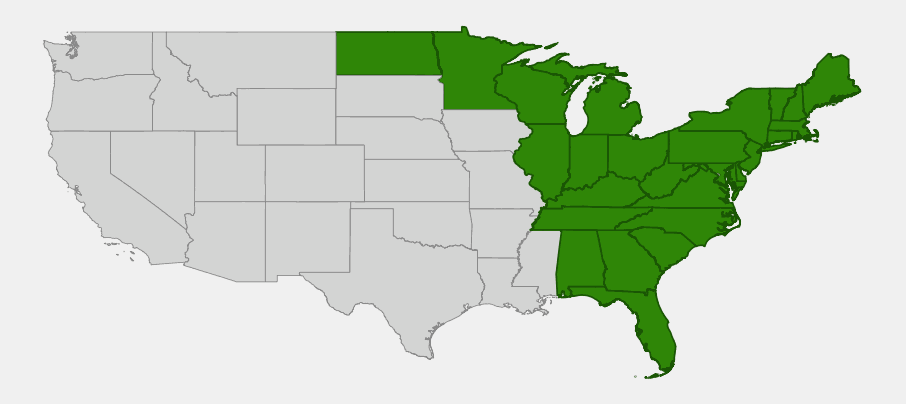
Labrador violet is native to eastern and northern North America, from Greenland, Labrador and Newfoundland west to Saskatchewan and the Northwest Territories. USDA PLANTS lists it as native in Alabama, Connecticut, Delaware, Florida, Georgia, Illinois, Indiana, Kentucky, Massachusetts, Maryland, Maine, Michigan, Minnesota, North Carolina, North Dakota, New Hampshire, New Jersey, New York, Ohio, Pennsylvania, Rhode Island, South Carolina, Tennessee, Virginia, Vermont, Wisconsin and West Virginia, plus the District of Columbia.
In the United States it is most common in the Northeast, the Great Lakes region and the Appalachians, and becomes scattered southward. Records from the Deep South, including Florida, are outlying at the southern edge of its range. USDA also shows a single Colorado record, far west of the rest of the range. The species is not mapped for Colorado by the Biota of North America Program (BONAP), and western stemmed blue violets there are usually the similar early blue violet, so Colorado is not treated as part of the native range here.
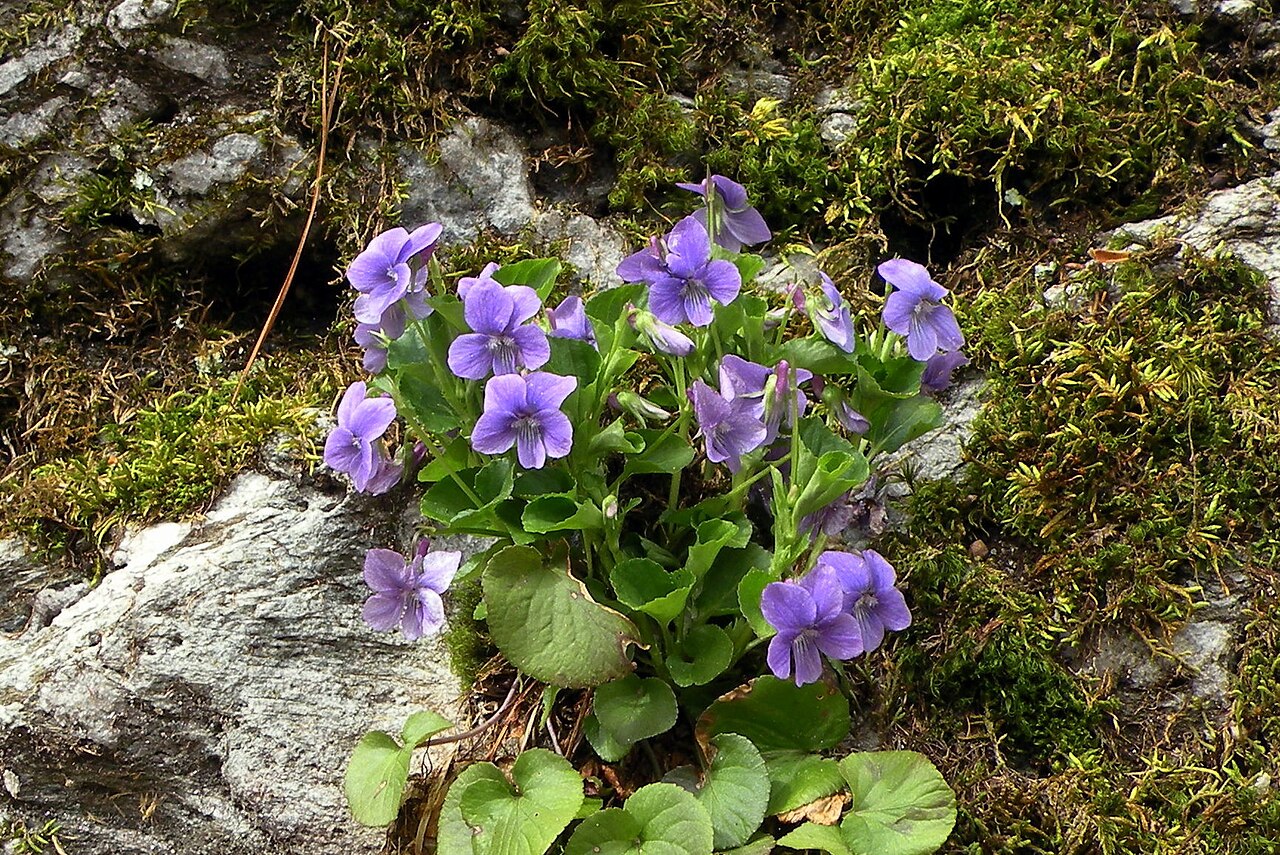
Labrador violet grows in moist deciduous and mixed forests, floodplain woods, stream banks, damp meadows, wooded slopes, rocky ledges and shady roadsides, often in rich, slightly acidic to neutral soil. In the far north it reaches open, cool habitats such as tundra edges and subalpine meadows, which explains the name “alpine violet.”
📋 Regional plant lists featuring Labrador Violet: New York, Pennsylvania & Northern New Jersey · Ohio & Indiana · Michigan, Wisconsin & Eastern Minnesota · Kentucky & Tennessee · Connecticut, Massachusetts & Rhode Island · New Hampshire, Maine & Vermont · Maryland, Virginia & West Virginia · Delaware, Southern New Jersey & Long Island · Illinois, Iowa & Missouri · Alabama, Georgia & Mississippi · North & South Florida · North & South Carolina · North Dakota, South Dakota & Western Minnesota
Growing & Care Guide
Labrador violet is an easy, low-maintenance native for moist shade. Look for plants sold as native Viola labradorica or Viola conspersa from native plant nurseries; the purple-leaved plant sold widely as “Labrador violet” is usually a European species.
Light
It grows best in partial to full shade, such as under deciduous trees, where it gets spring sun before the canopy fills in. It tolerates morning sun in cool climates if the soil stays moist.
Soil & Water
Give it moist, humus-rich, well-drained soil. It tolerates clay and rocky soil if moisture is steady. Water during dry spells in its first year; afterwards it usually needs extra water only in prolonged drought. Leaf litter left in place helps keep the soil cool and moist.
Planting Tips
Plant in spring or early fall, about 6 to 12 inches apart for a groundcover. It works well along woodland paths, between ferns and spring ephemerals, at the base of shrubs, and in shady rock gardens. Combine it with foamflower, Jacob’s ladder, wild ginger and sedges.
Pruning & Maintenance
No pruning is needed. Leave fallen leaves in place as mulch. It self-sows modestly through its closed summer flowers and ant-dispersed seeds; pull unwanted seedlings in spring. It is rarely troubled by pests, though slugs may chew the leaves.
Propagation
Divide established clumps in early spring or early fall. Seed is hard to collect because capsules split and throw seeds as they ripen; tie small mesh bags over maturing capsules to catch it. Sow fresh seed outdoors in fall, or cold-stratify it for about 60 days before spring sowing.
Landscape Uses
- Woodland groundcover: small, neat clumps for moist shade
- Butterfly gardens: a larval host for fritillary butterflies
- Shade and rock gardens: fits between stones, ferns and spring wildflowers
- Stream banks and rain garden edges: tolerates moist, shady ground
- Native lawn alternatives in shade: combines with sedges and other low natives
Wildlife & Ecological Value
Like other native violets, Labrador violet supports a surprising range of wildlife, from early-season bees to fritillary caterpillars and seed-dispersing ants.
For Pollinators
Small native bees, including mason bees and mining bees, as well as bee flies and early butterflies, visit the flowers in spring. Violets are the only larval host plants for many fritillary butterflies, such as the great spangled fritillary and the meadow fritillary, whose caterpillars feed on violet leaves at night.
For Birds
Ground-feeding birds such as juncos, sparrows and wild turkeys eat violet seeds, and ruffed grouse and bobwhite quail are known to feed on violet seeds and leaves.
For Mammals
White-tailed deer, rabbits and other small mammals browse violet leaves and flowers, and mice eat the seeds.
Ecosystem Role
Ants carry the seeds back to their nests for the oily elaiosomes and discard the seeds unharmed, often in rich, protected spots where they sprout. Violets are part of the native spring flora that sustains early pollinators and specialist butterflies in eastern forests.
Cultural & Historical Uses
The species was described in the early nineteenth century by the German botanist Franz von Paula Schrank, who named it for Labrador, hence labradorica. American dog violet was described separately by Ludwig Reichenbach as Viola conspersa, meaning “sprinkled,” likely for the dark veins and flecks on the petals. Many botanists have kept them as separate species, but USDA PLANTS and some modern treatments now combine them under the older name Viola labradorica.
The name “dog violet” was borrowed from Europe, where it describes unscented wild violets, regarded as inferior to the fragrant sweet violet. Labrador violet is likewise unscented.
In horticulture, the name “Labrador violet” has long been misapplied to a purple-leaved violet sold for groundcover, usually Viola riviniana ‘Purpurea’ from Europe. Gardeners looking for the native plant should check the source and buy from native plant nurseries.
Frequently Asked Questions
Is Labrador violet the same as American dog violet?
USDA PLANTS treats them as one species, Viola labradorica, and includes American dog violet (Viola conspersa) within it. Some botanists keep them separate, with American dog violet as the common southern form and Labrador violet as the northern form.
Is the purple-leaved Labrador violet sold at garden centers native?
Usually not. Most purple-leaved plants sold as “Labrador violet” are a cultivar of the European dog violet, Viola riviniana. The native Labrador violet has green leaves.
How do I tell Labrador violet from common blue violet?
Labrador violet has leafy stems, with flowers coming from the leaf axils, and fringed stipules. Common blue violet is stemless, with leaves and flowers rising directly from the ground, and its leaves are larger.
Does Labrador violet spread aggressively?
No. It forms small clumps and self-sows modestly, much less vigorously than common blue violet.
Which butterflies use Labrador violet?
Fritillary butterflies, such as the great spangled and meadow fritillaries, lay eggs near violets, and their caterpillars feed on the leaves.

Looking for a nursery that carries Labrador Violet?
Browse our native plant nursery directory: Alabama · Connecticut, Delaware, Florida & Georgia · Illinois & Indiana · Kentucky, Maine, Maryland, Massachusetts, Michigan & Minnesota · New Hampshire, New Jersey, New York, North Carolina, North Dakota & Ohio · Pennsylvania, Rhode Island, South Carolina, Tennessee, Vermont & Virginia · West Virginia & Wisconsin

