
Downy Pagoda Plant (Blephilia ciliata)
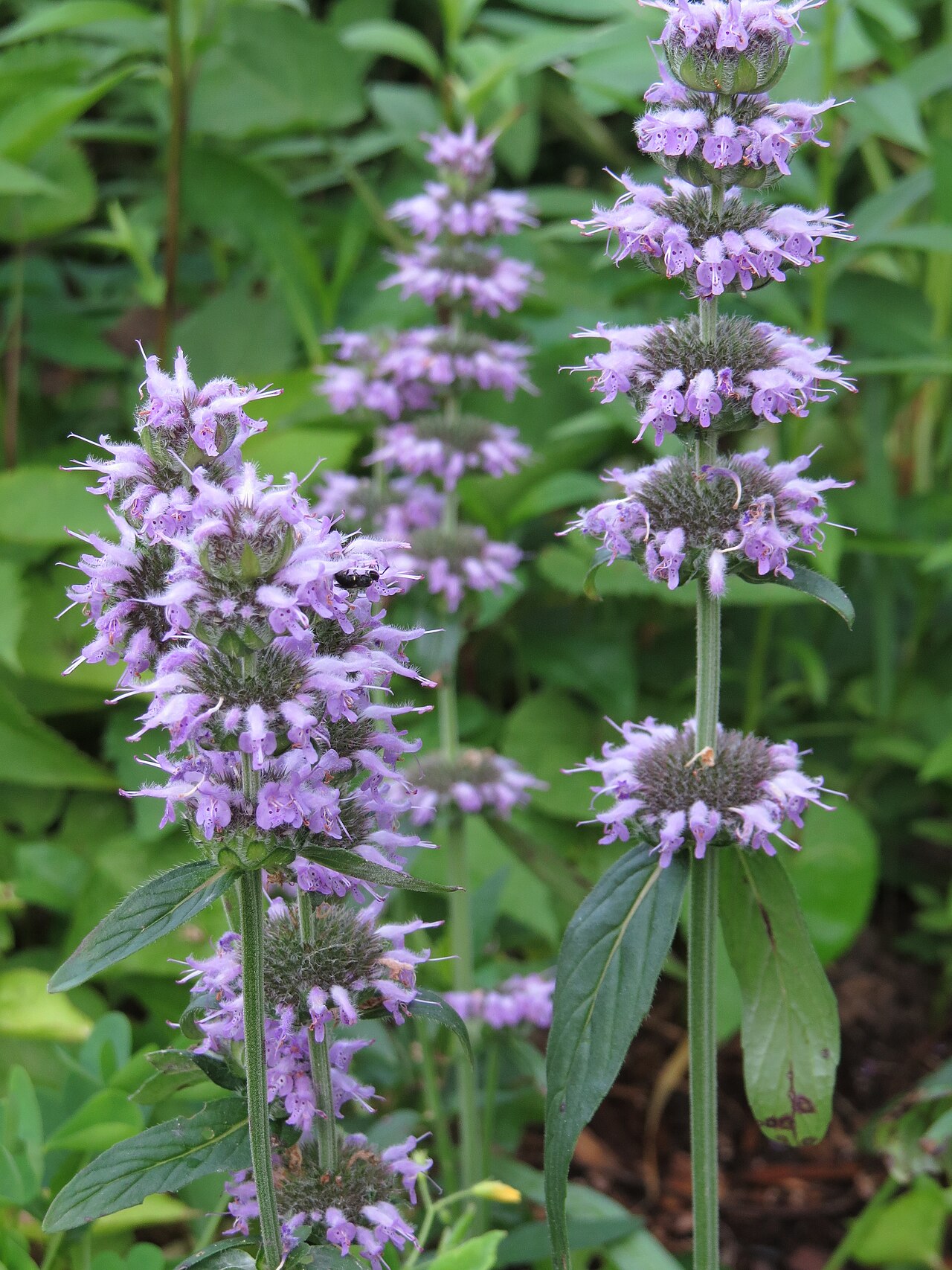
Blephilia ciliata, known as Downy Pagoda Plant or downy wood mint, is a native mint of open woods, glades and woodland edges in eastern and central North America. It belongs to the mint family (Lamiaceae) and is a close relative of the bee balms (Monarda).
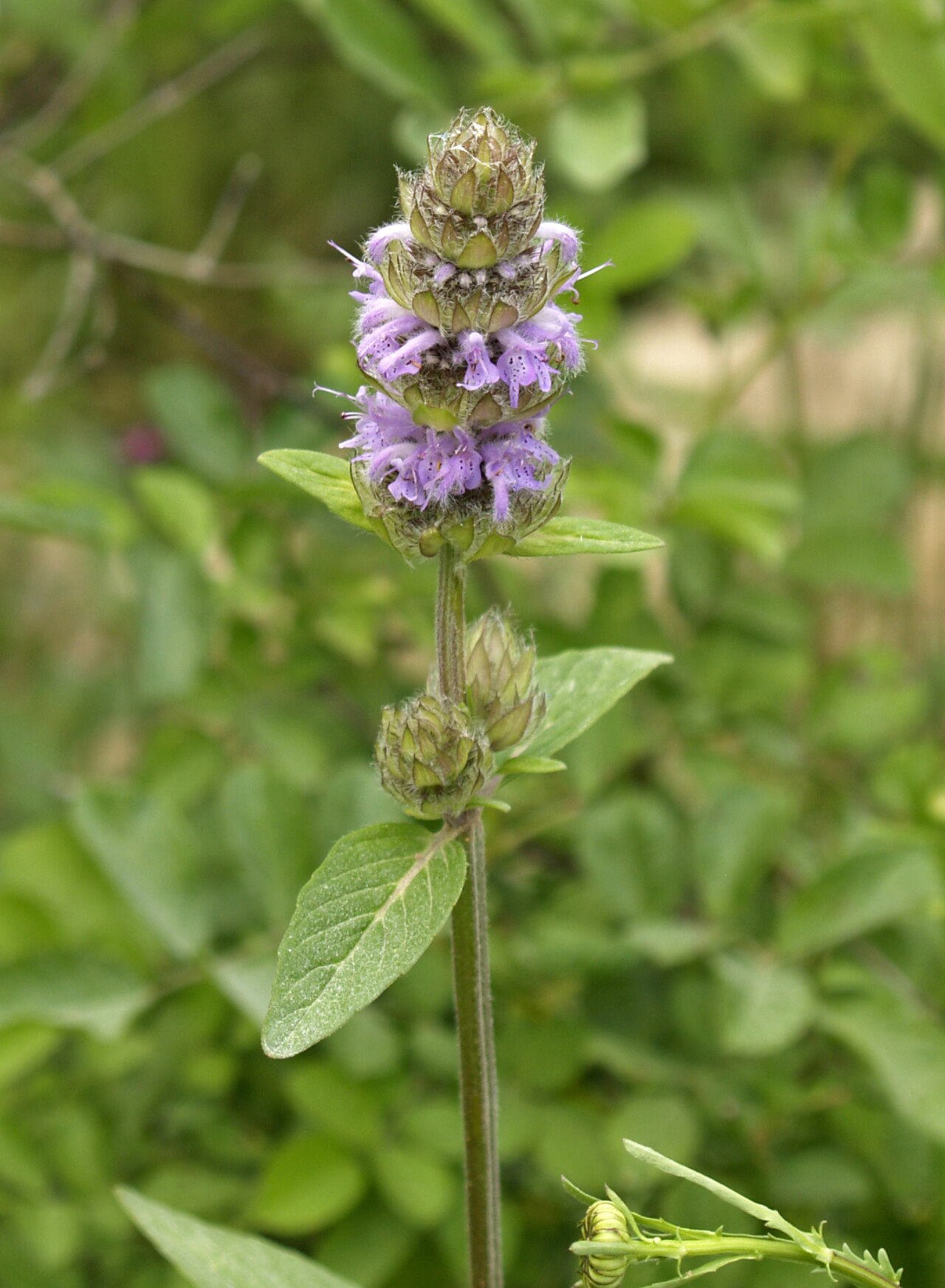
In late spring and early summer it raises square stems topped with several rounded whorls of pale lavender to blue-violet flowers, stacked one above another like the roofs of a pagoda. The lower lip of each flower is spotted with purple, and the whorls are fringed with soft hairs. The paired leaves are nearly stalkless, whitish and downy underneath, and smell faintly of mint when crushed.
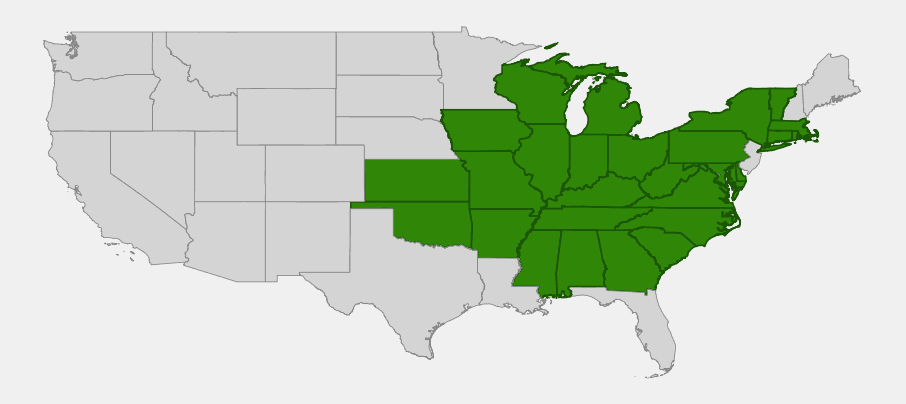
Downy pagoda plant grows from Vermont and southern Ontario west to Wisconsin, Iowa and Kansas and south to Georgia, Mississippi and Arkansas. It is a tough, drought-tolerant wildflower for sunny to lightly shaded gardens, and its flowers are busy with bumblebees and other native bees.
Identification
Look for a softly hairy, square-stemmed mint in open, often rocky woods or glades, with nearly stalkless paired leaves that are pale and downy beneath, and tiered whorls of small, purple-spotted lavender flowers in late spring.
Growth Habit
Downy pagoda plant is an herbaceous perennial that forms small clumps from a short rootstock and short rhizomes. It sends up one to several mostly unbranched, square stems about 1 to 2 1/2 feet tall, covered with short, fine, downy hairs. Small leafy rosettes often persist at the base through winter.
Leaves
The leaves are opposite, oblong to ovate or lance-shaped, about 1 1/2 to 3 inches long, with shallow, widely spaced teeth or nearly smooth edges. They sit on very short stalks or none at all. The upper surface is dull green; the underside is paler, whitish and densely downy. Crushed leaves have a mild minty scent.
Flowers
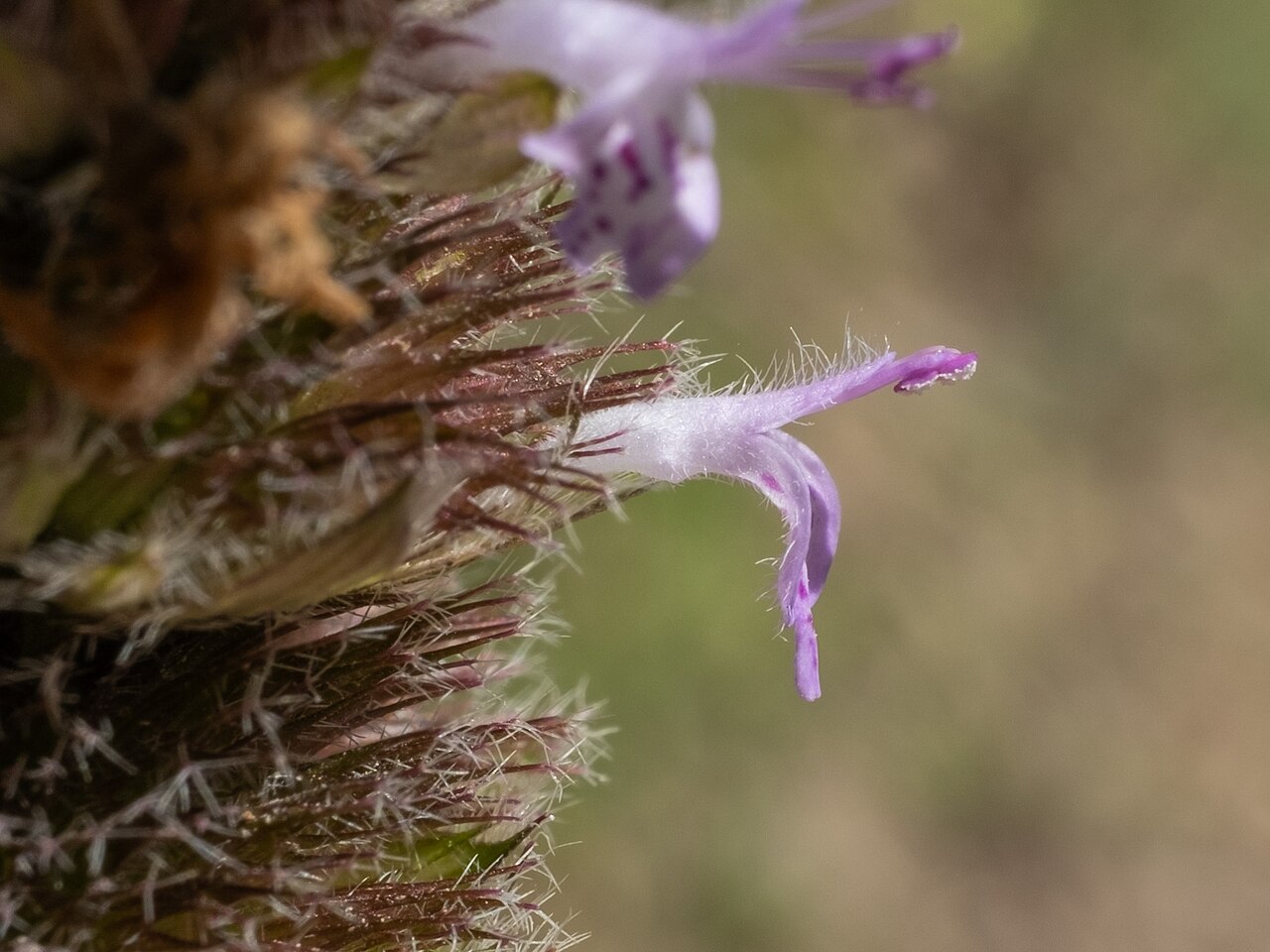
Flowering runs from about May into July, with scattered later blooms. The flowers are packed into two to five dense, globe-shaped whorls spaced along the top of the stem. Each whorl sits on a ring of broad, pointed bracts fringed with long hairs (the “eyelashes” of the genus name). Individual flowers are about 1/2 inch long and two-lipped: the upper lip is small and hooded, and the lower lip is broad and three-lobed, pale lavender to blue-violet with darker purple spots. Two stamens project from the throat.
Fruit & Seeds
Each flower leaves a hairy, ribbed calyx holding four tiny, smooth brown nutlets that ripen in mid to late summer. The dry, brown flower whorls stay on the stems into fall and winter and remain easy to recognize.
Look-alikes
Hairy wood mint (Blephilia hirsuta) grows in moister, shadier woods, blooms later in summer, has long-stalked, thin leaves and long, shaggy hairs, and its flowers are usually whiter. Wild bergamot (Monarda fistulosa) has a single, larger head of long, tubular lavender flowers at each stem tip rather than stacked whorls. Spotted beebalm (Monarda punctata) also has tiered whorls, but its flowers are yellowish with purple spots above showy pink to whitish bracts, and it blooms later in dry, sandy sites.
Safety Notes
Downy pagoda plant is not known to be toxic. It was used in traditional medicine, but it is not an established food or tea plant, so don’t use it medicinally without expert guidance.
Quick Facts
| Scientific Name | Blephilia ciliata |
| Family | Lamiaceae (mint family) |
| Plant Type | Herbaceous perennial wildflower |
| Mature Height | 1–2.5 ft |
| Mature Spread | 1–1.5 ft (slowly spreading clumps) |
| Growth Rate | Moderate |
| Sun Exposure | Full sun to partial shade |
| Water Needs | Low to moderate; drought tolerant once established |
| Soil Type | Well-drained loam, clay, rocky or gravelly soil; often over limestone |
| Soil pH | About 6.0–8.0 |
| Bloom Time | May–July |
| Flower Color | Pale lavender to blue-violet with purple spots |
| Fall Color | None notable; dry flower whorls persist |
| Fruit | Four small nutlets in hairy calyces |
| Deer Resistant | Yes; aromatic, hairy foliage |
| USDA Hardiness Zones | 4–8 |
Native Range
Downy pagoda plant is native to eastern and central North America, from Vermont, southern Ontario and Michigan west to Wisconsin, Iowa and eastern Kansas, and south to Georgia, Mississippi, Arkansas and eastern Oklahoma. USDA PLANTS lists it as native in Alabama, Arkansas, Connecticut, Delaware, Georgia, Illinois, Indiana, Iowa, Kansas, Kentucky, Maryland, Massachusetts, Michigan, Mississippi, Missouri, New York, North Carolina, Ohio, Oklahoma, Pennsylvania, Rhode Island, South Carolina, Tennessee, Vermont, Virginia, West Virginia and Wisconsin, plus the District of Columbia.
It is most common in the Ohio and middle Mississippi valleys, the Ozarks and the Interior Low Plateaus of Kentucky and Tennessee, where limestone glades and open oak woods suit it well. Toward the edges of its range, in New England, the Atlantic coastal plain and the northern Great Lakes, it becomes scattered and is considered rare in several states.
Typical habitats are dry to moist open woods and woodland edges, oak savannas and barrens, limestone and dolomite glades, prairie edges, thickets, rocky slopes, and old fields and roadsides with some shade. It favors sunny openings and light shade rather than deep forest.
📋 Regional plant lists featuring Downy Pagoda Plant: New Hampshire, Maine & Vermont · Connecticut, Massachusetts & Rhode Island · New York, Pennsylvania & Northern New Jersey · Delaware, Southern New Jersey & Long Island · Maryland, Virginia & West Virginia · North & South Carolina · Alabama, Georgia & Mississippi · Kentucky & Tennessee · Ohio & Indiana · Michigan, Wisconsin & Eastern Minnesota · Illinois, Iowa & Missouri · Nebraska, Kansas & Eastern Colorado · Arkansas, Louisiana, Eastern Oklahoma & Eastern Texas
Growing & Care Guide
Downy pagoda plant is sold by many native plant nurseries in the Midwest and East, and it is one of the easier native mints to grow. It handles dry, rocky soil and light shade, where it fills the bloom gap between spring wildflowers and summer prairie plants.
Light
Grow it in full sun to partial shade. It blooms most heavily with at least a half day of sun, but it also does well under the light shade of open oaks or at a woodland edge. In deep shade it gets lanky and flowers poorly.
Soil & Water
It prefers well-drained soil of average fertility and tolerates clay, rocky, gravelly and limestone-based soils. Water regularly during its first season; after that it is quite drought tolerant and needs watering only in long dry spells. Avoid soggy soil, especially in winter.
Planting Tips
Plant it in groups of three or more near the front or middle of a sunny border, rock garden, savanna planting or woodland edge, about 12 to 18 inches apart. It combines well with prairie phlox, columbine, little bluestem and sedges, and its late-spring bloom pairs nicely with early beardtongues and coreopsis.
Pruning & Maintenance
Little care is needed. Leave the dry flower whorls standing for winter interest and for seed, or cut the stems back in late winter. Unlike garden mints it spreads slowly and is not aggressive, though it may self-sow modestly in open soil. Cutting back spent stems after bloom sometimes brings a few later flowers.
Propagation
Sow seed outdoors in fall, or give it about 30 to 60 days of cold, moist stratification before sowing in spring. The seeds are tiny and need light to germinate, so press them onto the soil surface without covering them. Established clumps can be divided in early spring, and stem cuttings taken in early summer root readily.
Landscape Uses
- Pollinator gardens: late-spring nectar for bumblebees and other native bees
- Rock gardens and dry slopes: tolerates thin, rocky and limestone soils
- Woodland edges and savannas: blooms in sun to light shade
- Deer-resistant plantings: aromatic, hairy leaves are rarely browsed
- Glade and prairie restoration: a characteristic forb of limestone glades and open oak woods
Wildlife & Ecological Value
Downy pagoda plant blooms in late spring and early summer, providing nectar and pollen when many prairie plants have not yet started flowering.
For Pollinators
The flowers are visited mainly by bees, including bumblebees, digger bees (Anthophora), mason bees, small sweat bees and honey bees. Bee flies, syrphid flies, butterflies and skippers also stop for nectar. The purple spots on the lower lip act as nectar guides, and the projecting stamens dust visiting insects with pollen.
For Birds
It is not an important bird food plant. However, the insects it supports help feed songbirds, and small birds may pick seeds from the dried flower whorls.
For Mammals
The aromatic, hairy foliage is seldom eaten by white-tailed deer, rabbits or other mammals, which helps it persist in heavily browsed woods.
Ecosystem Role
As a forb of glades, savannas and open woods, downy pagoda plant is part of the diverse ground layer that depends on periodic fire or other disturbance to keep the canopy open. Like other native mints, it adds early-season floral resources for native bee populations.
Cultural & Historical Uses
Carl Linnaeus described this plant as Monarda ciliata in 1753 in Species Plantarum, based on specimens from eastern North America. The English botanist George Bentham later made it part of Blephilia, a small genus found only in eastern North America.
The genus name comes from the Greek blepharis, “eyelash,” and the species name ciliata means “fringed with hairs.” Both refer to the hair-fringed bracts and calyces around each flower whorl. The common names “pagoda plant” and “wood mint” describe its tiered flower heads and its woodland habitats.
Ethnobotanical records report that the Cherokee used a poultice of the leaves for headaches. Today the plant is valued mostly as a dependable native wildflower for pollinator and woodland-edge gardens.
Frequently Asked Questions
Does downy pagoda plant spread like garden mint?
No. It forms slowly expanding clumps and may self-sow a little, but it is not aggressive like peppermint or spearmint.
Is downy pagoda plant drought tolerant?
Yes. Once established it handles dry, rocky and limestone soils well and needs watering only during long droughts.
How is it different from hairy wood mint?
Downy pagoda plant grows in drier, sunnier sites, blooms earlier, and has nearly stalkless leaves with short, downy hairs. Hairy wood mint grows in moist shade, has long-stalked leaves and long, shaggy hairs, and blooms later in summer.
When does downy pagoda plant bloom?
Mainly from May into July, with peak bloom in late spring and early summer.
What pollinators visit downy pagoda plant?
Bumblebees, digger bees, mason bees, sweat bees and honey bees are the main visitors, along with bee flies, butterflies and skippers.

Looking for a nursery that carries Downy Pagoda Plant?
Browse our native plant nursery directory: Alabama & Arkansas · Connecticut, Delaware & Georgia · Illinois, Indiana, Iowa & Kansas · Kentucky, Maryland, Massachusetts, Michigan, Mississippi & Missouri · New York, North Carolina, Ohio & Oklahoma · Pennsylvania, Rhode Island, South Carolina, Tennessee, Vermont & Virginia · West Virginia & Wisconsin

