
Trailing Lespedeza (Lespedeza procumbens)
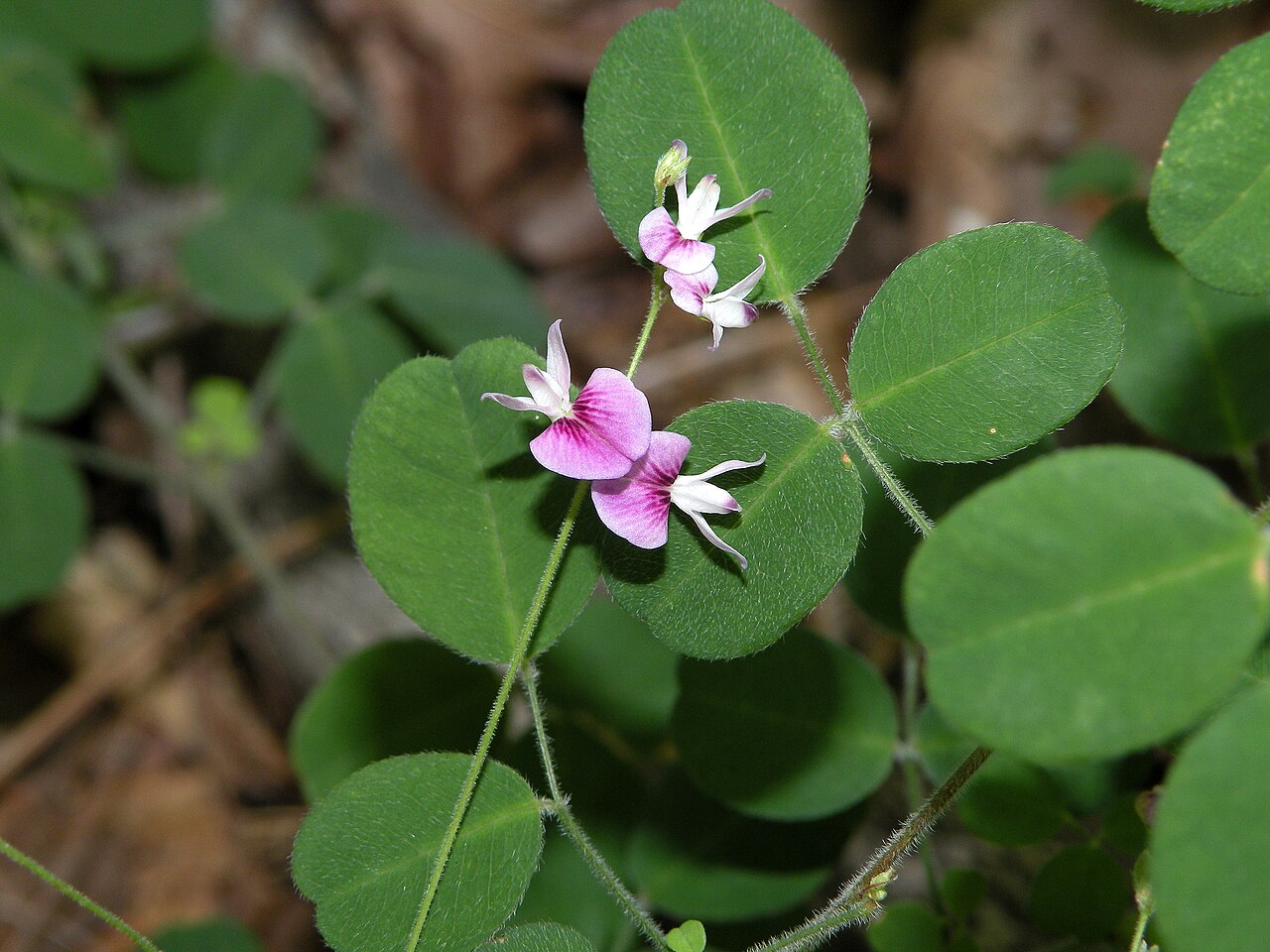
Lespedeza procumbens, known as Trailing Lespedeza or trailing bush-clover, is a low, sprawling perennial legume of dry, open woods, clearings and sandy or rocky ground in the eastern United States. It belongs to the pea family (Fabaceae). Its hairy stems trail along the ground for 1 to 3 feet, lined with small leaves divided into three rounded leaflets.
From midsummer into early fall, small clusters of pink to purple pea flowers rise on slender stalks above the leaves. Like other bush-clovers, it also forms tiny, petal-less flowers near the stem that pollinate themselves and set seed without opening. Each pollinated flower produces a small, flat, one-seeded pod.
Trailing lespedeza is a modest but useful native groundcover for dry, sunny or lightly shaded spots, such as sandy banks, rock gardens and woodland edges. As a legume it adds nitrogen to poor soils, and it supports bees, butterflies and seed-eating birds. It is not the invasive sericea lespedeza or the Asian bush-clovers.
Identification
Look for hairy, ground-hugging stems with three-part leaves and small pink-purple pea flowers on stalks that are longer than the leaves.
Growth Habit
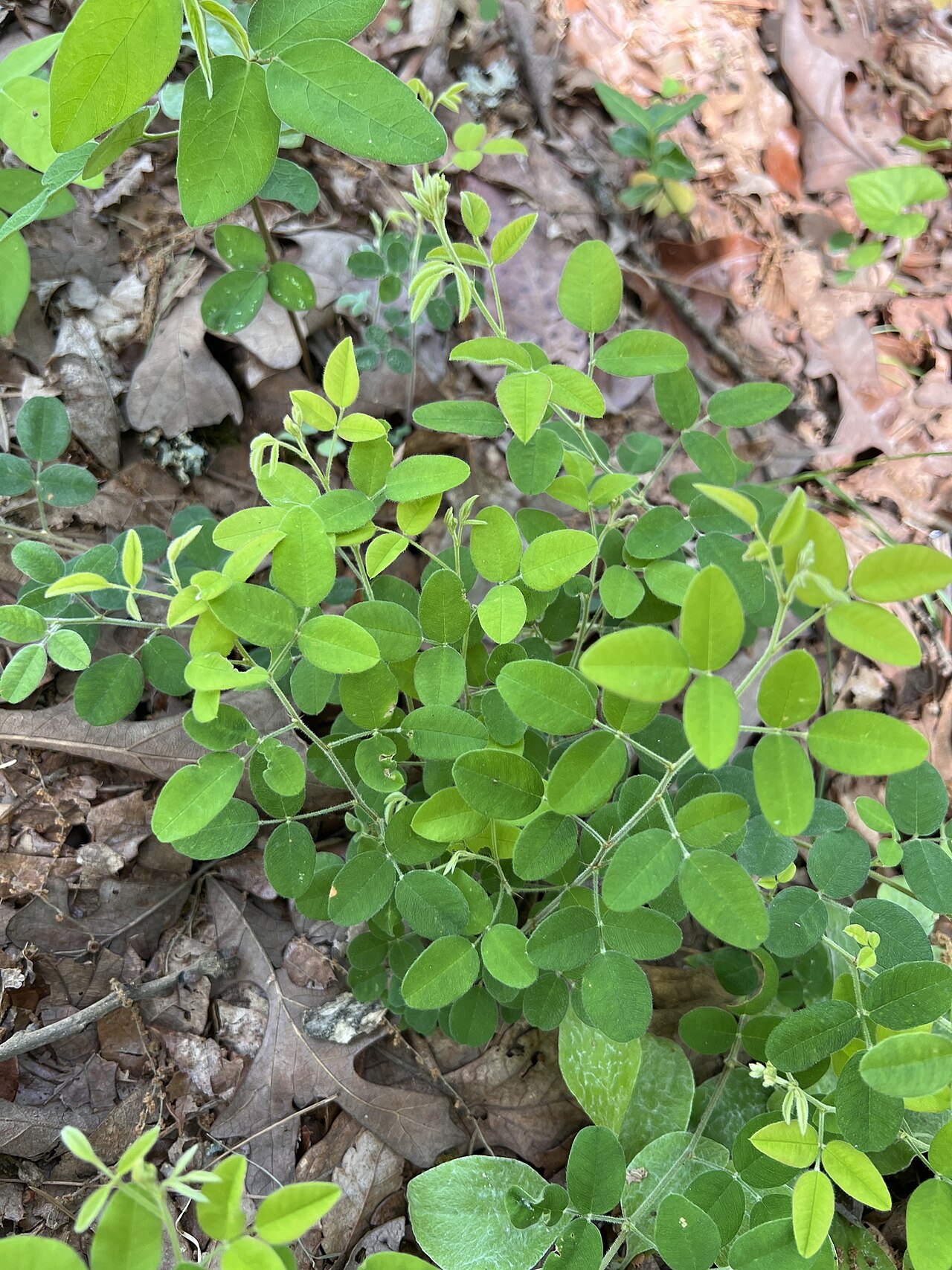
A perennial from a woody crown, with several to many slender stems that lie flat on the ground or arch slightly, 1 to 3 feet long but rarely more than 4 to 6 inches high. The stems do not root at the nodes. They are covered with soft, spreading hairs, a key difference from the similar creeping lespedeza.
Leaves
The leaves are alternate and divided into three leaflets. Each leaflet is oval to nearly round, 1/2 to 1 inch long, with a rounded or slightly notched tip, smooth edges and soft hairs, especially on the underside. Small, narrow stipules sit at the base of each leaf stalk.
Flowers
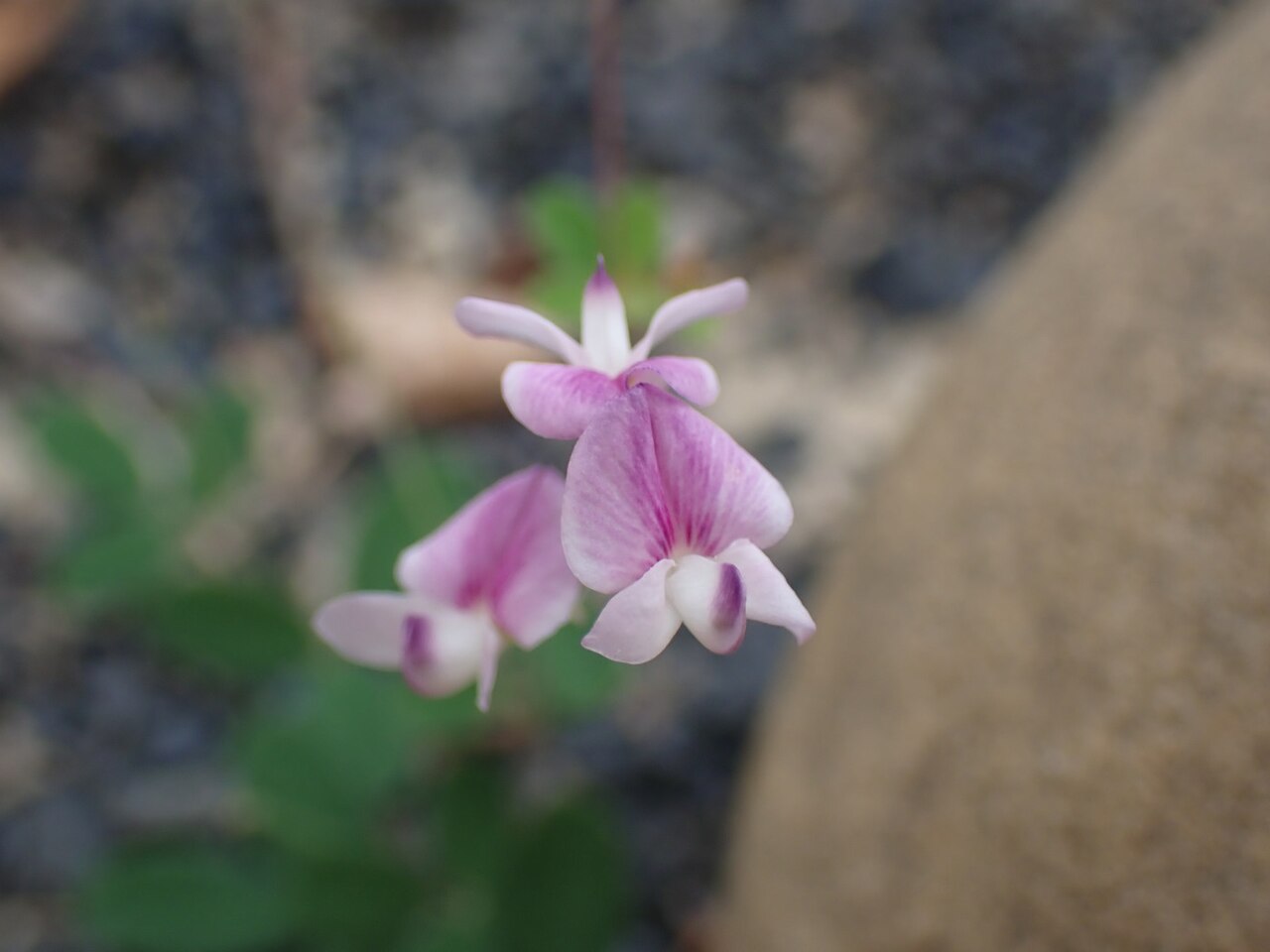
From July to September, clusters of 2 to 10 flowers grow on slender stalks from the leaf axils, usually held above the leaves. Each flower is about 1/4 inch long, pea-shaped, pink to purple with a darker spot on the upper petal. Small, closed (cleistogamous) flowers without petals also form in the leaf axils and self-pollinate.
Fruit
The fruit is a small, flat, oval pod about 1/8 to 1/4 inch long, hairy, and containing a single seed. Pods ripen in late summer and fall and do not split open.
Look-alikes
Creeping lespedeza (Lespedeza repens) is very similar but has nearly smooth stems or short hairs pressed flat against the stem. Upright bush-clovers such as slender bush-clover, hairy lespedeza and round-headed bush-clover stand erect. Invasive sericea lespedeza (L. cuneata) is upright, with wedge-shaped leaflets and creamy flowers. Small tick-trefoils, such as naked-flowered tick-trefoil, have jointed, sticky seed pods.
Quick Facts
| Scientific Name | Lespedeza procumbens |
| Family | Fabaceae (pea family) |
| Plant Type | Trailing herbaceous perennial legume |
| Mature Height | 2–6 in (stems 1–3 ft long) |
| Mature Spread | 1–3 ft |
| Growth Rate | Moderate |
| Sun Exposure | Full sun to part shade |
| Water Needs | Low; dry to medium soil |
| Soil Type | Sandy, rocky or gravelly soils; tolerates poor soil |
| Soil pH | Acidic to neutral (about 5.0–7.0) |
| Bloom Time | July–September |
| Flower Color | Pink to purple |
| Fall Color | None notable |
| Fruit | Small, flat, hairy one-seeded pod |
| Deer Resistant | No; browsed by deer and rabbits |
| USDA Hardiness Zones | 4–9 |
Native Range
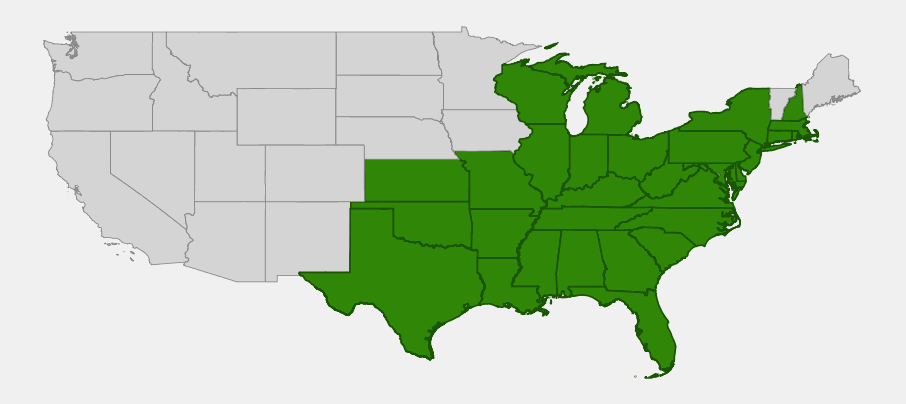
Trailing lespedeza is native to the eastern and central United States. USDA PLANTS lists it as native in 30 states, from southern New Hampshire and Massachusetts west through New York, southern Michigan and southern Wisconsin to Missouri, eastern Kansas and eastern Oklahoma, and south to northern Florida, the Gulf states and eastern Texas. It does not reach Canada.
It is most common in the Appalachian and Piedmont regions, the Ozarks and the Ohio Valley, and becomes scarcer in the northern and western edges of its range. In Florida it is limited to the northern part of the state, and in Texas to the eastern forests. Records from southern New Hampshire, southern Michigan, Wisconsin and Kansas are near the edge of its range.
It grows in dry, open oak and pine woods, woodland edges and clearings, sandy or rocky slopes and outcrops, old fields, roadsides and power-line corridors. It favors sunny breaks in the forest and is often found on poor, well-drained soils where competition from taller plants is low.
📋 Regional plant lists featuring Trailing Lespedeza: New York, Pennsylvania & Northern New Jersey · Ohio & Indiana · Michigan, Wisconsin & Eastern Minnesota · Kentucky & Tennessee · Nebraska, Kansas & Eastern Colorado · Connecticut, Massachusetts & Rhode Island · New Hampshire, Maine & Vermont · Maryland, Virginia & West Virginia · Delaware, Southern New Jersey & Long Island · Illinois, Iowa & Missouri · Alabama, Georgia & Mississippi · North & South Florida · North & South Carolina · Arkansas, Louisiana, Eastern Oklahoma & Eastern Texas
Growing & Care Guide
Trailing lespedeza is a low-maintenance plant for dry, lean ground. It is not often sold, but native plant nurseries and seed suppliers sometimes offer it, especially in mixes for dry woodland edges and meadows.
Light
Full sun to part shade. It flowers best with at least a few hours of direct sun, and it does well in the dappled light of open oak or pine woods.
Soil & Water
Plant in well-drained sandy, gravelly or rocky soil. It thrives in poor, acidic soils and does not need fertilizer, because it fixes nitrogen with the help of soil bacteria. Once established it is drought tolerant; avoid heavy, wet soils.
Planting Tips
Plant in spring or fall where it won’t be overrun by taller plants, such as at the front of a dry bed, along a path, on a sunny bank or among rocks. Seed can be scarified and sown in spring or sown untreated in fall. Inoculating seed with the right rhizobium bacteria can help on very poor or disturbed soils.
Pruning & Maintenance
Little care is needed. The stems die back in winter; cut or rake them away in early spring if you like a tidy look. Keep aggressive grasses and weeds from smothering the low stems.
Propagation
Grow from seed, which has a hard coat; nick or rub it with sandpaper, or soak it in hot water, before spring sowing. Plants can also be started from cuttings of new growth in early summer.
Landscape Uses
- Dry banks and slopes: a low, sprawling legume for poor, sunny ground
- Woodland edges: fills gaps among grasses and wildflowers in open woods
- Rock gardens: trails over and between rocks
- Meadow and savanna restoration: adds nitrogen and wildlife food to dry plantings
- Pollinator gardens: late-summer flowers for small bees
Wildlife & Ecological Value
Like other native bush-clovers, trailing lespedeza feeds insects, birds and mammals in dry, open woods.
For Pollinators
Its flowers are visited by bees, especially small native bees and bumblebees, which trip the pea flowers to reach the pollen and nectar. Native bush-clovers are host plants for caterpillars of several butterflies, including eastern tailed-blue, silver-spotted skipper and cloudywings.
For Birds
Northern bobwhite, wild turkey and other ground-feeding birds eat bush-clover seeds, which stay on or near the plants into winter.
For Mammals
White-tailed deer and rabbits browse the leaves and stems, which are protein-rich like those of other legumes.
Ecosystem Role
Like other legumes, it forms root nodules with nitrogen-fixing bacteria, adding nitrogen to poor, sandy and rocky soils. It is part of the diverse ground layer of open oak and pine woodlands, which depend on periodic fire or other disturbance to stay open.
Cultural & Historical Uses
The genus Lespedeza was named by André Michaux, who described this species in 1803, to honor Vicente Manuel de Céspedes, the Spanish governor of East Florida who supported his botanical travels. A printing error turned “Céspedes” into “Lespedez,” and the misspelled name stuck. The species name procumbens means “lying flat,” describing its trailing stems.
Several Asian bush-clovers, especially sericea lespedeza (Lespedeza cuneata), were widely planted for erosion control and forage in the 20th century and have become invasive in many states. Native species such as trailing lespedeza are a better choice for wildlife plantings.
Native bush-clovers have long been valued by wildlife managers as food plants for quail and turkey, and they are part of the native legume flora that land managers try to restore in open woodlands and savannas.
Frequently Asked Questions
Is trailing lespedeza invasive?
No. It is a native perennial that spreads slowly by its trailing stems and seed. It should not be confused with sericea lespedeza or other invasive Asian bush-clovers.
How do I tell trailing lespedeza from creeping lespedeza?
Trailing lespedeza has stems covered with soft, spreading hairs. Creeping lespedeza is nearly hairless or has short hairs pressed flat against the stem.
Does trailing lespedeza need rich soil?
No. It grows best in poor, well-drained sandy or rocky soil and fixes its own nitrogen.
When does trailing lespedeza bloom?
It blooms from about July to September, with small pink to purple pea flowers.
Is trailing lespedeza good for wildlife?
Yes. Bees visit its flowers, some butterflies use bush-clovers as caterpillar host plants, and quail, turkeys and deer eat its seeds and leaves.

Looking for a nursery that carries Trailing Lespedeza?
Browse our native plant nursery directory: Alabama & Arkansas · Connecticut, Delaware, Florida & Georgia · Illinois, Indiana & Kansas · Kentucky, Louisiana, Maryland, Massachusetts, Michigan, Mississippi & Missouri · New Hampshire, New Jersey, New York, North Carolina, Ohio & Oklahoma · Pennsylvania, Rhode Island, South Carolina, Tennessee, Texas & Virginia · West Virginia & Wisconsin

