
American Coinwort (Centella erecta)
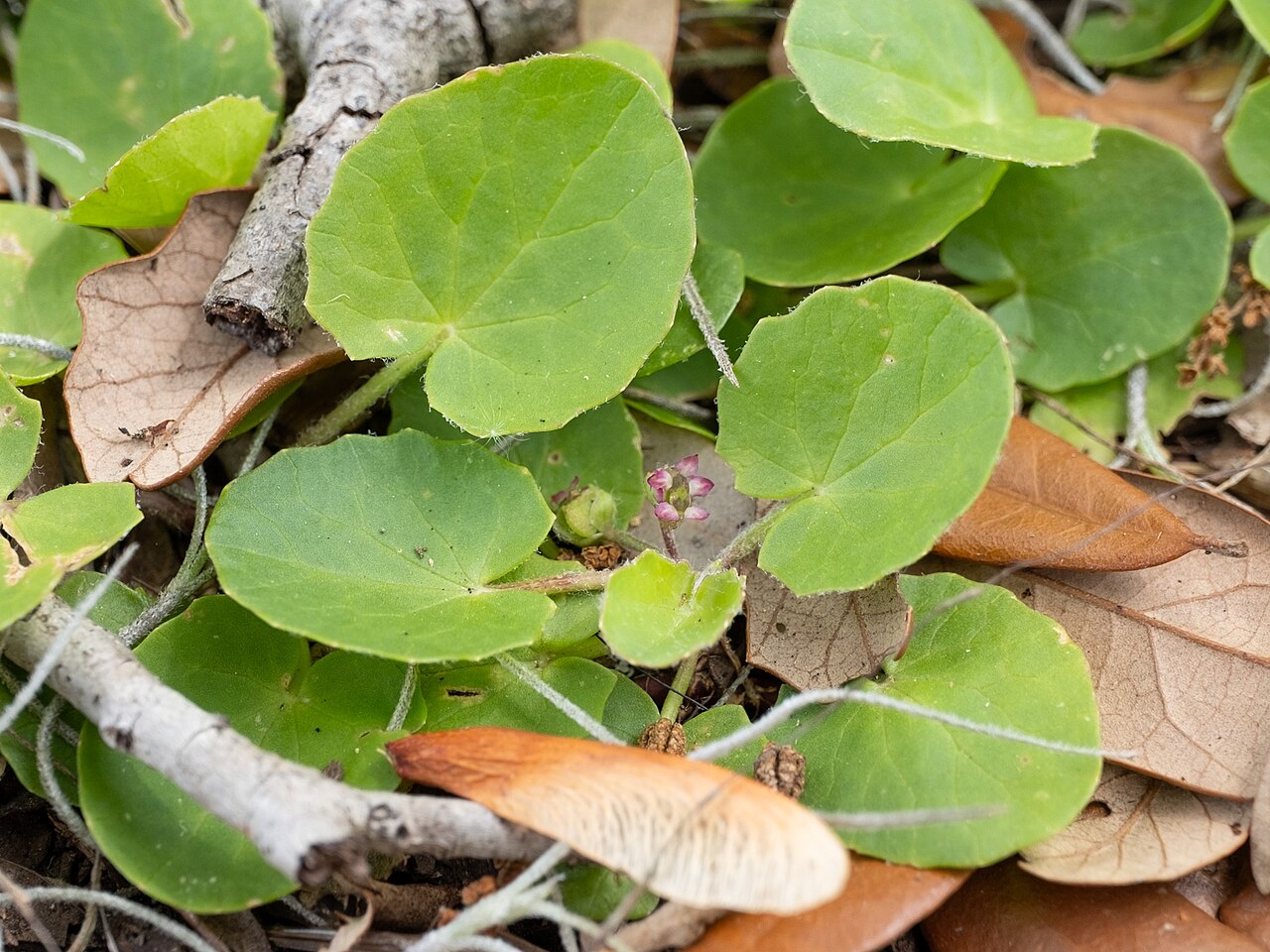
Centella erecta, known as American Coinwort, spadeleaf or erect centella, is a low, creeping perennial of wet, sandy ground on the Atlantic and Gulf Coastal Plains. It belongs to the carrot family (Apiaceae). It spreads by runners that root at the nodes and send up small clusters of rounded, long-stalked leaves with heart-shaped bases, usually only a few inches tall.
It is a close New World relative of the Asian gotu kola (Centella asiatica), and older American manuals often lumped the two together. American coinwort ranges from the mid-Atlantic coast to Texas and through the Caribbean, including Puerto Rico, Mexico and Central America, to South America.
In the garden it is a modest groundcover for wet, sunny to lightly shaded spots, such as rain gardens, ditch edges and damp lawns, and it is common in pine flatwoods and savannas. Its tiny flowers are easy to miss, but they feed small bees and flies. It should not be harvested or eaten as a substitute for gotu kola.
Identification
Look for low tufts of long-stalked, rounded leaves with heart-shaped or squared-off bases, connected by creeping runners, in damp, sandy places.
Growth Habit
A low perennial that spreads by slender runners (stolons) that root at each node, forming loose colonies. At each rooted node a tuft of one to several leaves rises 2 to 8 inches tall. The runners can be green or reddish.
Leaves
The leaf blades are oval to oblong or nearly round, about 1 to 3 inches long, with a heart-shaped, rounded or squared base and smooth to slightly wavy or toothed edges. They have several main veins spreading from the base and are held on long, upright stalks that are often longer than the blades. The leaves are smooth or slightly hairy.
Flowers
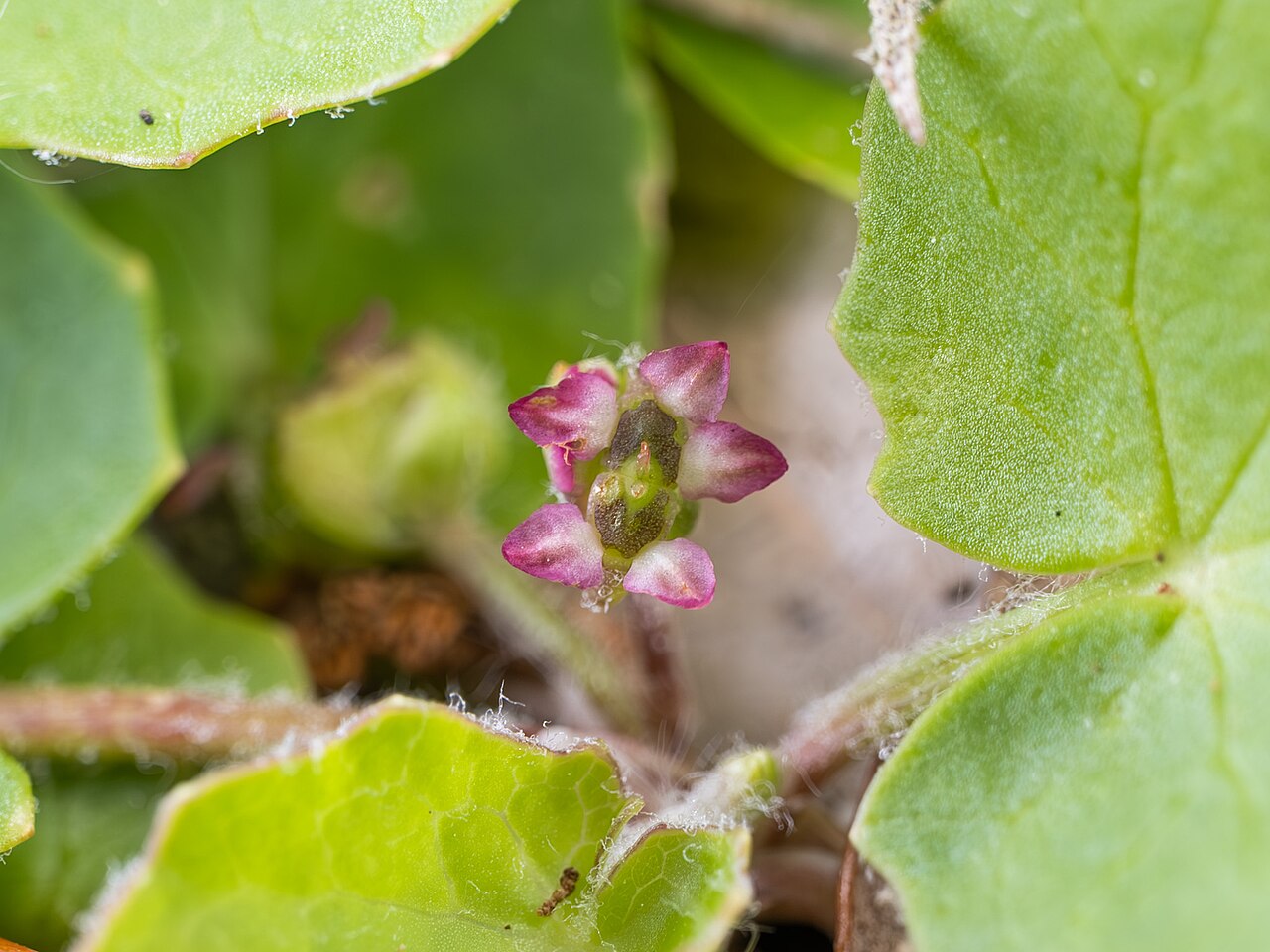
From spring into fall, tiny flowers grow in small, head-like umbels of usually 2 to 4 flowers, on short stalks from the base of the leaf tufts. Each flower is about 1/8 inch across, with five pinkish, purplish or whitish petals. They are often hidden below the leaves.
Fruit
The fruit is a small, flattened, ribbed schizocarp about 1/8 inch long that splits into two one-seeded halves when ripe.
Look-alikes
Pennyworts (Hydrocotyle), such as largeleaf pennywort, also creep in wet ground, but most have round leaves with the stalk attached at the center of the blade or with a deep notch, and their flowers are in larger umbels on longer stalks. Gotu kola (Centella asiatica), an Asian species sold as an herb, is very similar; the two are separated mainly by technical details of the leaves, flowers and fruits.
Quick Facts
| Scientific Name | Centella erecta (syn. Centella asiatica in older U.S. works) |
| Family | Apiaceae (carrot family) |
| Plant Type | Creeping herbaceous perennial |
| Mature Height | 2–8 in |
| Mature Spread | 1–3 ft (spreading by runners) |
| Growth Rate | Moderate to fast |
| Sun Exposure | Full sun to part shade |
| Water Needs | High; moist to wet soil |
| Soil Type | Wet sand, sandy peat or loam |
| Soil pH | Acidic (about 4.5–6.5) |
| Bloom Time | Spring to fall |
| Flower Color | Pinkish, purplish or white |
| Fall Color | None notable; may stay green in mild winters |
| Fruit | Small, flattened, ribbed schizocarp |
| Deer Resistant | Moderate |
| USDA Hardiness Zones | 7–11 |
Native Range
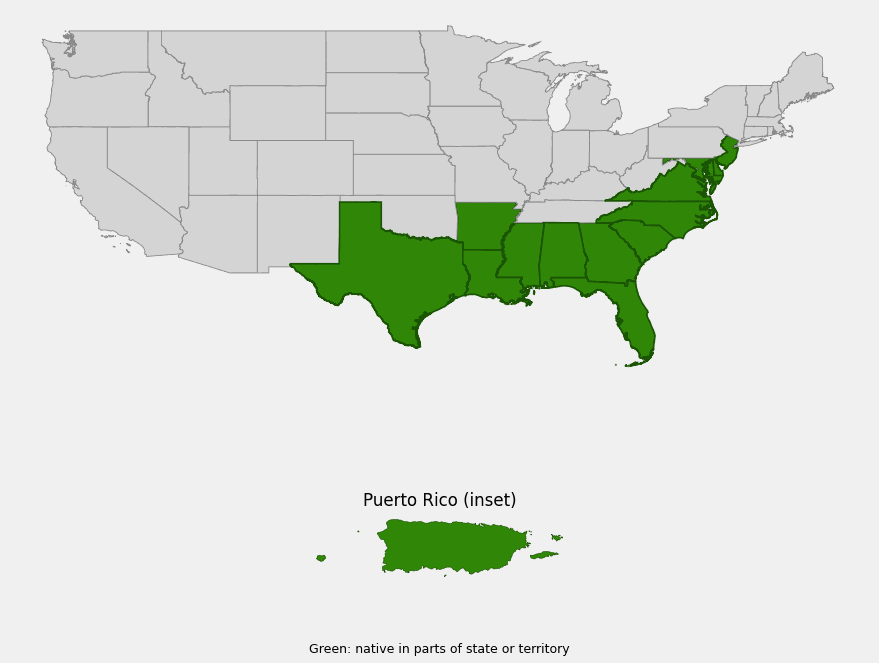
American coinwort is native to the warm-temperate and tropical Americas. In the United States it grows on the Atlantic and Gulf Coastal Plains, from Delaware and Maryland south through Virginia and the Carolinas to Florida, and west through Georgia, Alabama, Mississippi and Louisiana to Arkansas and Texas. It is also native in Puerto Rico. Beyond the U.S. it grows in the Caribbean, Mexico, Central America and South America as far as Argentina and Chile.
New Jersey is at the northern edge of its range, and the species is considered historical there. In Texas it is most common in the eastern and southeastern parts of the state and along the coast, with scattered records south into South Texas. USDA PLANTS also lists Oregon, but there are no herbarium or observation records to support that, and it is not included here.
It grows in damp, sunny or lightly shaded places with sandy or peaty soil: wet pine flatwoods and savannas, the edges of bogs, swamps, ponds and cypress domes, wet ditches and roadsides, and moist lawns and pastures. It does well in places that are periodically flooded and tolerates mowing.
📋 Regional plant lists featuring American Coinwort: New York, Pennsylvania & Northern New Jersey · Maryland, Virginia & West Virginia · Delaware, Southern New Jersey & Long Island · Alabama, Georgia & Mississippi · North & South Florida · Puerto Rico · North & South Carolina · Arkansas, Louisiana, Eastern Oklahoma & Eastern Texas · South & West Texas
Growing & Care Guide
American coinwort is easy to grow in moist, acidic, sandy soil in the Southeast. It is not widely sold, but it often appears on its own in damp lawns and garden edges within its range, where it can be left as a native groundcover.
Light
Full sun to part shade. It grows most densely in sun with steady moisture, and more sparsely in shade.
Soil & Water
It needs consistently moist to wet, acidic soil, such as sand or sandy peat. It tolerates short periods of flooding and does poorly in dry soil, where it goes dormant or dies back.
Planting Tips
Plant rooted runners or small clumps in spring, 8 to 12 inches apart, in a rain garden, bog garden, pond edge or low, damp area of the lawn. It combines well with small wetland plants such as sundews, meadow beauties and pennyworts.
Pruning & Maintenance
Little care is needed. It tolerates mowing, so it can be left in damp lawns. Keep taller plants from shading it out, and pull it back where it spreads beyond its space.
Propagation
It is easy to propagate by cutting off rooted pieces of runner and replanting them in moist soil. It can also be grown from seed sown on the surface of damp soil in spring.
Landscape Uses
- Rain and bog gardens: a low groundcover for constantly damp spots
- Wet lawns: a native alternative to turf in soggy areas, tolerant of mowing
- Pond and ditch edges: helps hold wet, sandy soil
- Savanna and flatwoods restoration: part of the ground layer of wet pinelands
- Pollinator gardens: tiny flowers for small bees and flies
Wildlife & Ecological Value
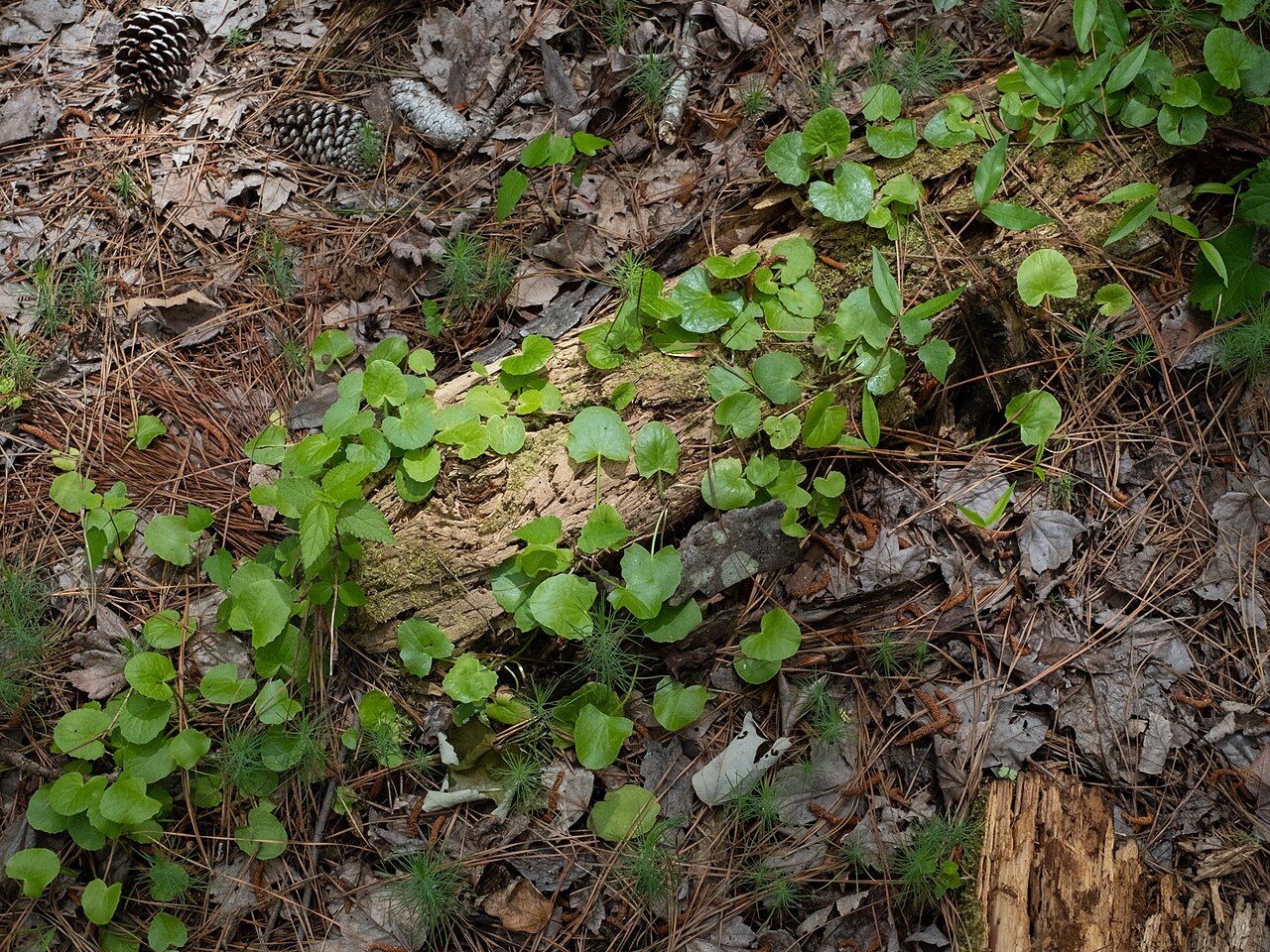
American coinwort is a common member of the ground layer in wet pinelands and other damp habitats of the Coastal Plain.
For Pollinators
Its tiny flowers are visited by small native bees, wasps and flies. Like other plants in the carrot family, they offer easily reached nectar and pollen.
For Birds
Its colonies shelter insects and other small invertebrates eaten by ground-feeding birds of wet pinelands and wetland edges.
For Mammals
Rabbits and deer occasionally graze it. Its low mats provide cover for small animals such as frogs and salamanders in moist areas.
Ecosystem Role
Its creeping runners help bind wet, sandy soils along ditches, pond margins and savannas. It recovers quickly after fire and mowing, which makes it a typical part of frequently burned longleaf pine flatwoods and savannas.
Cultural & Historical Uses
The origin of the genus name Centella, used by Linnaeus, is uncertain. The species name erecta refers to its upright leaves. The common names “coinwort” and “spadeleaf” describe the round or spade-shaped leaves.
For many years American botanists treated this plant as Centella asiatica, the Asian gotu kola used in traditional medicine and as a vegetable in Asia. Most modern treatments recognize the American plant as a separate species, Centella erecta.
Because it resembles gotu kola, it is sometimes picked as a wild herb. Its chemistry and safety are not well studied, and it can grow in ditches and other places with contaminated water, so it should not be eaten or used as a home remedy.
Frequently Asked Questions
Is American coinwort the same as gotu kola?
No. They are close relatives and look very similar, but gotu kola is Centella asiatica from Asia. American coinwort, Centella erecta, is native to the Americas. Older U.S. books call both Centella asiatica.
Where does American coinwort grow?
On the Atlantic and Gulf Coastal Plains from Delaware and Maryland to Florida and Texas, in Arkansas and Puerto Rico, and south through the tropical Americas.
Is American coinwort a weed in lawns?
It often appears in damp, sunny lawns in the Southeast. It is a native plant that tolerates mowing, so many gardeners simply leave it as part of a low-maintenance lawn.
Does American coinwort need wet soil?
Yes. It grows best in constantly moist to wet, acidic, sandy soil and tolerates occasional flooding.
Can I eat American coinwort?
It is not recommended. Its safety has not been studied as well as that of gotu kola, and plants from ditches and wet roadsides may take up pollutants.

Looking for a nursery that carries American Coinwort?
Browse our native plant nursery directory: Alabama & Arkansas · Delaware, Florida & Georgia · Louisiana, Maryland & Mississippi · New Jersey & North Carolina · South Carolina, Texas & Virginia

