
Wild Pink (Silene caroliniana)
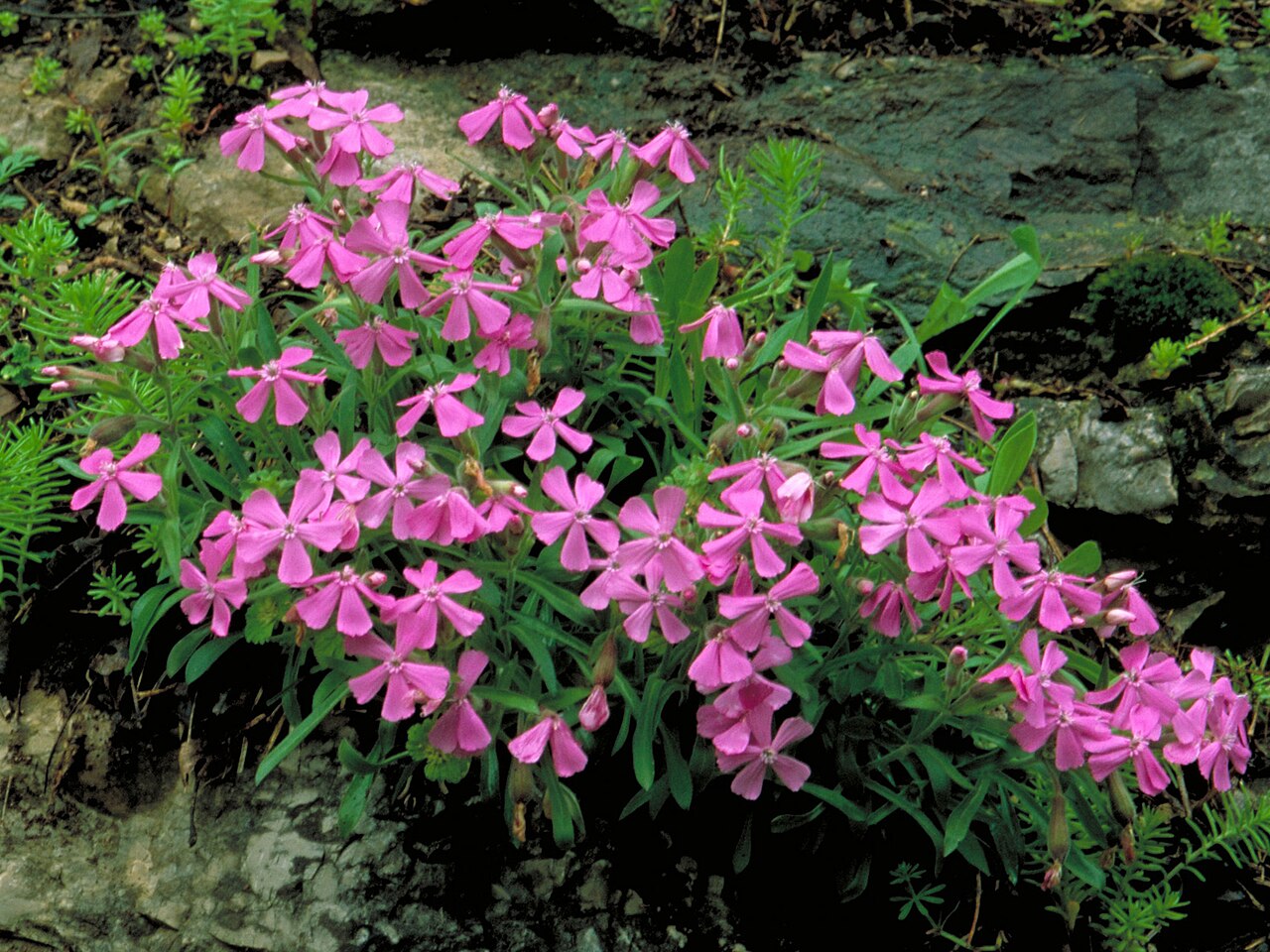
Silene caroliniana, known as Wild Pink, Carolina wild pink or sticky catchfly (the USDA name), is a low, mound-forming spring wildflower of dry, rocky woods in the eastern United States. In April and May a single plant can carry dozens of bright to pale pink, five-petaled flowers, often so many that they hide the narrow leaves beneath them. Plants are usually only 3 to 8 inches tall.
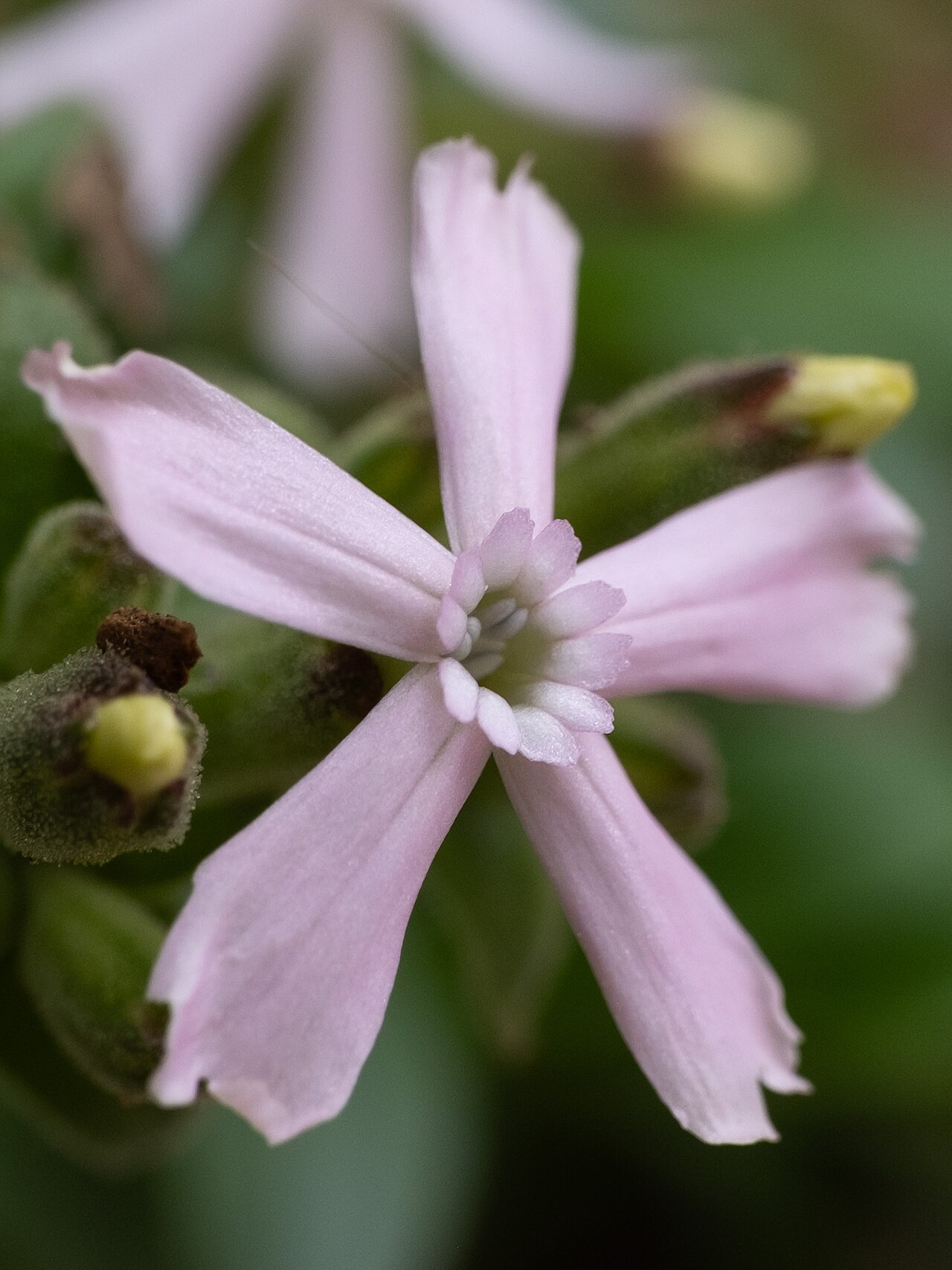
It belongs to the pink family (Caryophyllaceae), along with fire pink and starry campion. The name “pink” here does not refer to the color but to the family, whose members often have petals with notched or “pinked” edges, as if cut with pinking shears. The name sticky catchfly comes from the glandular, sticky hairs on the flower stalks and calyx, which can trap small insects.
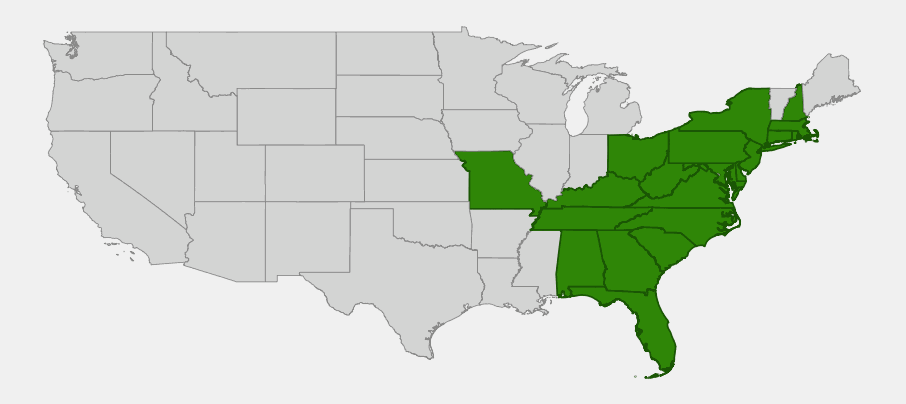
Wild pink grows from southern New England and New York south to Georgia and northern Alabama, and west to Ohio, Kentucky, Tennessee and Missouri. It is a superb plant for rock gardens and dry, sunny woodland edges. This guide covers how to identify it, where it grows, how to grow it, and its value to pollinators.
Identification
Wild pink is easiest to recognize in spring, when its low clumps are covered with clear pink flowers. Look for a small, tufted plant on dry, rocky or sandy ground, with narrow basal leaves and sticky flower stalks.
Growth Habit
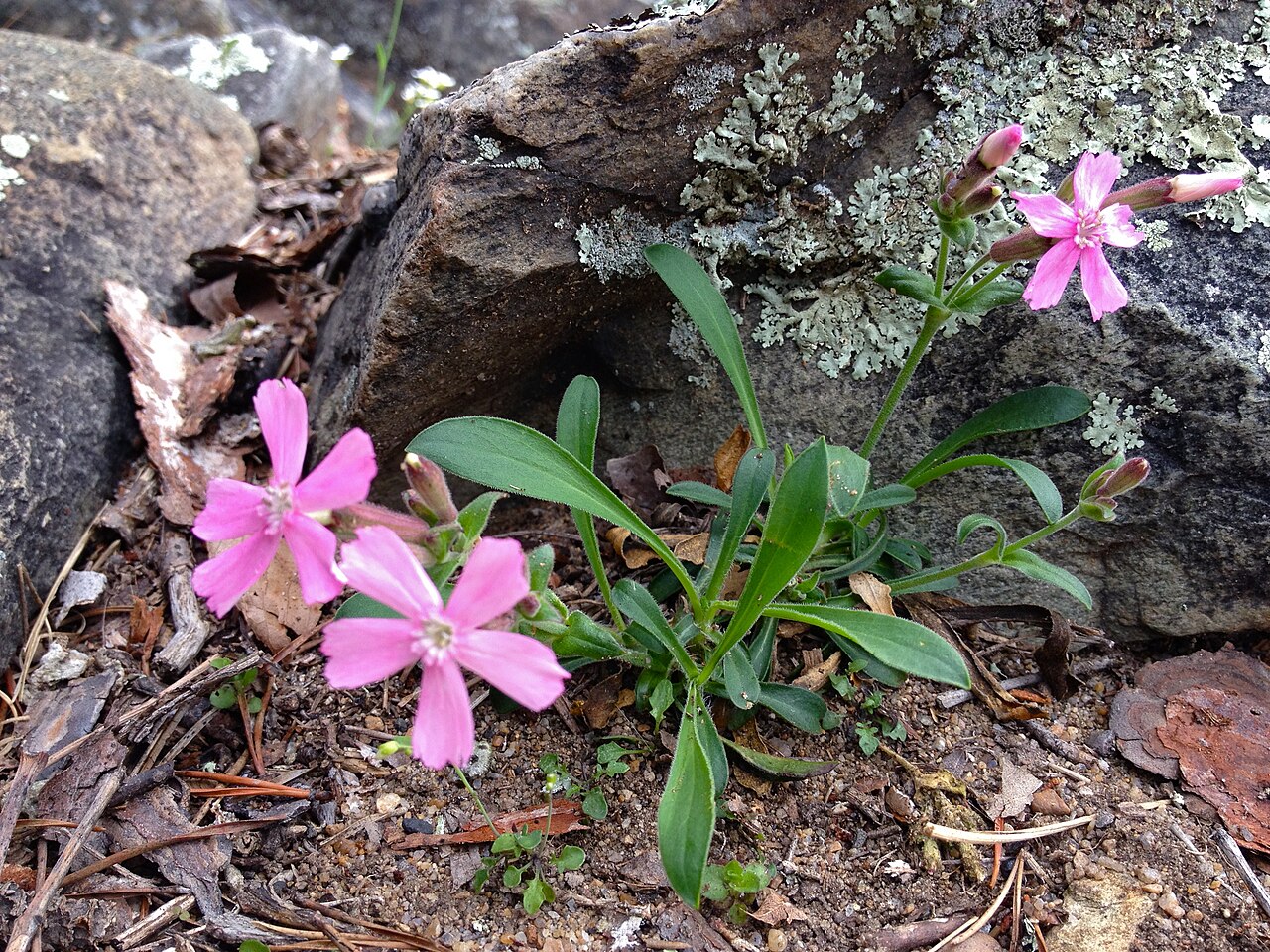
It is a low, clump-forming perennial with a woody taproot. Each plant forms a rosette of basal leaves from which several short, leafy flowering stems rise in spring, usually 3 to 8 inches tall and occasionally to about 10 inches. Older plants can form small mounds 6 to 12 inches across.
Leaves
The basal leaves are narrow and spoon- to lance-shaped, up to about 4 inches long, and often somewhat hairy. The flowering stems carry two to four pairs of smaller, opposite leaves. The basal rosette usually stays green through much of the year.
Flowers
The flowers are about 1 inch across, with five wedge-shaped petals that are pink to rose, occasionally pale pink or white, and slightly notched or wavy at the tips. They are carried in loose, flat-topped clusters at the tips of the stems. Each flower sits on a slender, tubular calyx covered with sticky glandular hairs. Bloom time is mainly April to June, earliest in the south.
Fruit & Seeds
After flowering, each calyx encloses a small capsule that splits open at the top when ripe, releasing numerous tiny, dark seeds in early summer.
Subspecies
Three subspecies are recognized. Subspecies pensylvanica occupies the northeastern part of the range, subspecies wherryi the western part, from Ohio and Kentucky to Missouri, and subspecies caroliniana the southeastern part. They differ mainly in leaf hairiness and the stickiness of the stems.
Look-alikes
Fire pink has bright scarlet, deeply notched petals and taller stems. Moss phlox forms similar pink mats on rocky ground in spring, but it has stiff, needle-like leaves and petals notched at the tip without a sticky calyx tube. Wild pink is recognized by its low clumps, broader basal leaves and sticky, tubular calyces.
Quick Facts
| Scientific Name | Silene caroliniana Walter |
| Family | Caryophyllaceae (pink family) |
| Plant Type | Herbaceous perennial wildflower |
| Mature Height | 3–8 in (to 10 in) |
| Mature Spread | 6–12 in |
| Growth Rate | Slow to moderate |
| Sun Exposure | Full sun to part shade |
| Water Needs | Low; dry to medium, well-drained soil |
| Soil Type | Rocky, gravelly, sandy or shaly soils with excellent drainage |
| Soil pH | About 5.0–7.0 (acidic to neutral) |
| Bloom Time | April–June |
| Flower Color | Pink to rose, occasionally white |
| Fall Color | None; basal rosette stays green |
| Fruit | Small capsule with many tiny seeds |
| Deer Resistant | Moderately; low and sticky, seldom heavily browsed |
| USDA Hardiness Zones | 5–8 |
Native Range
Wild pink is native to the eastern United States. USDA PLANTS lists it from Massachusetts, New Hampshire, Rhode Island and Connecticut west to Ohio and Missouri and south to Georgia, Alabama and Florida. It is most frequent in the Appalachian region and the Piedmont, and it is scattered and often uncommon at the edges of its range.
At the northern edge of its range in New Hampshire and in parts of New England it is rare. In Missouri it grows in the Ozarks, represented by subspecies wherryi. At the southern edge, in Florida, the Atlas of Florida Plants lists it as native but state-listed as endangered, and it is very rare there. Anywhere it is uncommon, buy nursery-propagated plants or seed and never dig plants from the wild.
It grows in dry, open places with thin, well-drained soil: rocky and sandy woodlands, oak and pine woods, wooded slopes and bluffs, rock outcrops and ledges, shale barrens and sandy clearings. It is found from near sea level on the Coastal Plain to the mountains.
📋 Regional plant lists featuring Wild Pink: New York, Pennsylvania & Northern New Jersey · Ohio & Indiana · Kentucky & Tennessee · Connecticut, Massachusetts & Rhode Island · New Hampshire, Maine & Vermont · Maryland, Virginia & West Virginia · Delaware, Southern New Jersey & Long Island · Illinois, Iowa & Missouri · Alabama, Georgia & Mississippi · North & South Florida · North & South Carolina
Growing & Care Guide
Wild pink is one of the showiest small native wildflowers for rock gardens, dry slopes, wall plantings and the sunny edge of a woodland garden. It is sold by many native plant nurseries in the East. The key to success is excellent drainage and freedom from crowding.
Light
Give it full sun to part shade. In the wild it often grows in the dappled light of open oak woods; in gardens it flowers best with at least half a day of sun, ideally with some afternoon shade in the South.
Soil & Water
Plant it in lean, rocky, gravelly or sandy soil that drains quickly. It tolerates drought once established and dislikes wet, heavy soil, especially in winter, when soggy conditions can rot the crown. Water new plants during their first season, then only in prolonged drought.
Planting Tips
Plant in spring or fall in a rock garden pocket, between stones in a dry wall, on a sunny bank or at the front of a dry border. Keep mulch thin and away from the crown, and use gravel rather than thick organic mulch. It combines well with moss phlox, columbine, pussytoes, birdsfoot violet and low native grasses.
Pruning & Maintenance
No pruning is needed. Leave some seed capsules to ripen if you want plants to self-sow. Keep taller, aggressive plants and leaf litter from smothering the low rosettes. Individual plants can be short-lived in rich garden soil but persist for years in lean, well-drained sites.
Propagation
Grow it from seed collected from ripe capsules in early summer. Sow seed outdoors in fall, or give it a period of cold, moist stratification before sowing indoors in late winter. Plants can also be started from cuttings of young shoots taken in spring. Its taproot makes older plants difficult to move, so transplant young plants only.
Landscape Uses
- Rock gardens and walls: a low, showy mound of pink flowers for lean, rocky soil
- Woodland edges: spring color in dry, open shade beneath oaks and pines
- Pollinator gardens: early nectar for butterflies, bees and other long-tongued insects
- Slopes and dry banks: tolerates drought and thin soil once established
- Habitat restoration: a native wildflower for dry woodland, barrens and outcrop restoration
Wildlife & Ecological Value
Wild pink brightens dry woods and rocky openings in spring, when it is an important early nectar source for pollinators.
For Pollinators
The nectar sits at the base of a narrow calyx tube, so it is best reached by long-tongued visitors such as butterflies, skippers, day-flying moths, bee flies and long-tongued bees. Early butterflies, including swallowtails, are frequent visitors, and ruby-throated hummingbirds occasionally visit the flowers. The sticky hairs on the stalks may discourage crawling insects, such as ants, that would take nectar without pollinating.
For Birds
Wild pink is too small to provide much cover, but birds may glean insects from plants and take some of the tiny seeds.
For Mammals
It is not a significant food plant for mammals. The low, sticky plants are only occasionally browsed by deer and rabbits.
Ecosystem Role
Wild pink is a characteristic plant of dry, open, rocky and sandy habitats, such as oak woodlands, shale barrens and outcrops, which have declined with fire suppression, development and shading by dense woody growth. Healthy populations are a sign of well-managed open woodland, and it benefits from occasional thinning or prescribed fire in natural areas.
Cultural & Historical Uses
The species was described by Thomas Walter in his Flora Caroliniana of 1788, based on plants from South Carolina, which gave it the name caroliniana. The genus name Silene is often linked to Silenus, a companion of Bacchus in Greek mythology who was described as covered in foam, a reference to the sticky secretions of many species.
Wild pink was popular with early twentieth-century wildflower enthusiasts. Elizabeth G. Britton, a founder of the New York Botanical Garden, included it in her book Wild Plants Needing Protection, a reminder that showy wildflowers were often dug or picked from the wild. Today nursery-grown plants are widely available, so there is no need to collect wild plants.
The name “pink” for this family comes from the old verb “to pink”, meaning to cut with a scalloped or zigzag edge, as with pinking shears. It referred to the fringed petals of garden pinks (Dianthus), and the color pink was later named after these flowers rather than the other way around.
Frequently Asked Questions
Why is wild pink also called sticky catchfly?
Its flower stalks and calyx tubes are covered with sticky glandular hairs that can trap small insects. USDA PLANTS uses the name sticky catchfly.
When does wild pink bloom?
Mainly from April to June, earlier in the South and later in the North and at higher elevations.
Where does wild pink grow?
It grows in dry, rocky or sandy open woods, slopes, ledges and barrens from southern New England and New York to Georgia and northern Alabama, and west to Ohio, Kentucky, Tennessee and Missouri.
How do I grow wild pink?
Plant it in full sun to part shade in lean, rocky or sandy soil with excellent drainage. Avoid wet soil and thick mulch, which can rot the crown.
Is wild pink rare?
It is common in parts of the Appalachians and Piedmont but rare at the edges of its range, including New Hampshire and Florida, where it is state-listed as endangered. Buy nursery-propagated plants rather than collecting from the wild.

Looking for a nursery that carries Wild Pink?
Browse our native plant nursery directory: Alabama · Connecticut, Delaware, Florida & Georgia · Kentucky, Maryland, Massachusetts & Missouri · New Hampshire, New Jersey, New York, North Carolina & Ohio · Pennsylvania, Rhode Island, South Carolina, Tennessee & Virginia · West Virginia

