
Yellow Wakerobin (Trillium luteum)
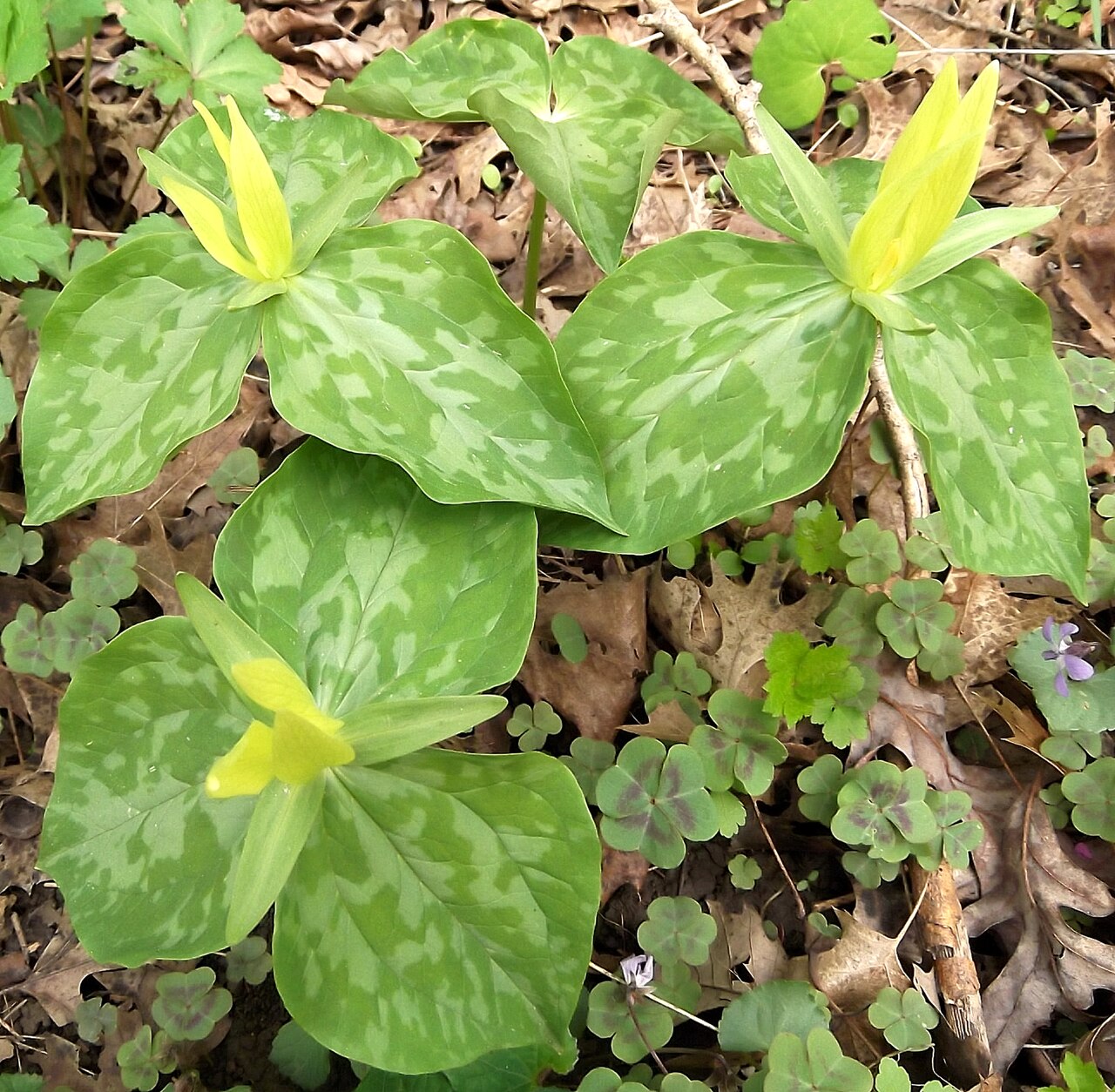
Trillium luteum, known as Yellow Wakerobin, yellow trillium or lemon trillium, is a spring wildflower of the southern Appalachians, most famous for the carpets it forms in and around Great Smoky Mountains National Park. Each plant has a single whorl of three broad, silver-mottled leaves, and sitting directly on them, without a flower stalk, is one upright flower with three narrow, lemon-yellow petals that give off a lemony scent.
It is one of the “sessile” trilliums, the group whose flowers have no stalk, and it was once treated as a yellow form of toadshade (Trillium sessile var. luteum). Its natural range is small, centered on eastern Tennessee and western North Carolina, but its beauty and toughness have made it one of the most widely grown trilliums in gardens, and it has escaped from cultivation in several states well outside its home range.
Like all trilliums, it grows slowly, takes years to reach flowering size, and is harmed by digging from the wild. This guide covers how to identify yellow wakerobin, where it truly grows wild, and how to grow nursery-propagated plants in a shade garden.
Identification
Yellow wakerobin is easy to recognize in bloom: a stalkless, upright, lemon-yellow flower sitting on three mottled leaves. The main source of confusion is with other sessile trilliums, some of which have yellowish forms.
Stem & Growth Habit
Each plant grows from a short, thick underground rhizome and sends up a single unbranched stem, usually 6 to 16 inches tall. Mature plants form slowly expanding clumps, and in good habitat they grow in large, dense colonies that can cover whole hillsides. The plants appear in early spring and go dormant by midsummer.
Leaves
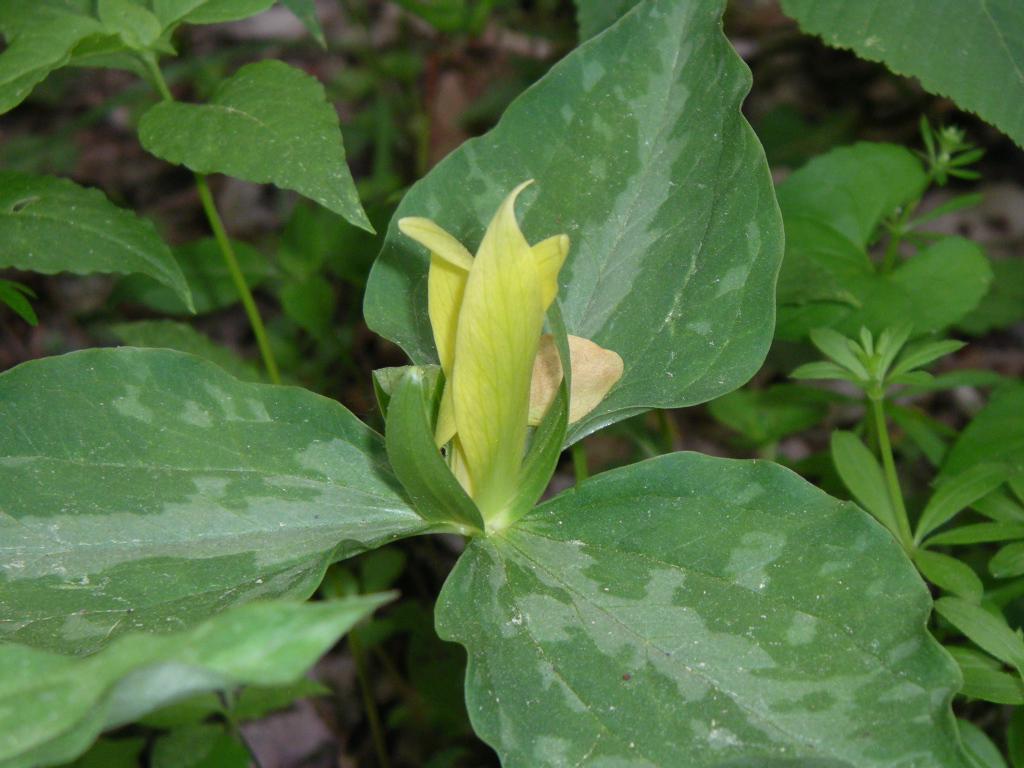
At the top of the stem is a single whorl of three stalkless leaves (technically bracts), each broadly oval, about 3 to 6 inches long. They are mottled with patches of pale silver-green and darker green, a pattern that is strongest in spring and fades as the season progresses.
Flowers
The single flower sits directly on the leaves, with no flower stalk. It has three green sepals that spread outward and three erect, narrow, lemon-yellow to greenish-yellow petals, 1½ to 3½ inches long, that stay upright and slightly cupped rather than opening wide. The flower has a distinct sweet, lemony fragrance, especially in warm sun. It blooms from early April to May, depending on elevation.
Fruit & Seeds
After flowering, the ovary swells into a fleshy, greenish, six-angled berry that ripens in early summer. The seeds have a fatty appendage (elaiosome) that attracts ants, which carry them away and help disperse them. Seedlings take several years to reach flowering size.
Look-alikes
Little sweet Betsy (Trillium cuneatum) usually has maroon to brownish petals, though yellowish forms occur, and has a spicy or musky rather than lemony scent; the two hybridize where they meet. Toadshade (Trillium sessile) is a smaller plant with maroon petals. Several other yellow sessile trilliums grow in the Deep South, so plants in Alabama and the Gulf states should be identified carefully.
Quick Facts
| Scientific Name | Trillium luteum (syn. T. sessile var. luteum) |
| Family | Melanthiaceae (bunchflower family; formerly in Liliaceae) |
| Plant Type | Herbaceous perennial spring ephemeral |
| Mature Height | 6–16 in |
| Mature Spread | 8–12 in; slowly forms colonies |
| Growth Rate | Slow |
| Sun Exposure | Part shade to full shade |
| Water Needs | Medium; moist in spring |
| Soil Type | Rich, humus-rich, well-drained loam |
| Soil pH | About 6.0–7.5 (slightly acidic to neutral) |
| Bloom Time | April–May |
| Flower Color | Lemon yellow to greenish yellow |
| Fall Color | None; dormant by midsummer |
| Fruit | Fleshy greenish berry with ant-dispersed seeds |
| Deer Resistant | Low; deer browse trilliums |
| USDA Hardiness Zones | 4–8 |
Native Range
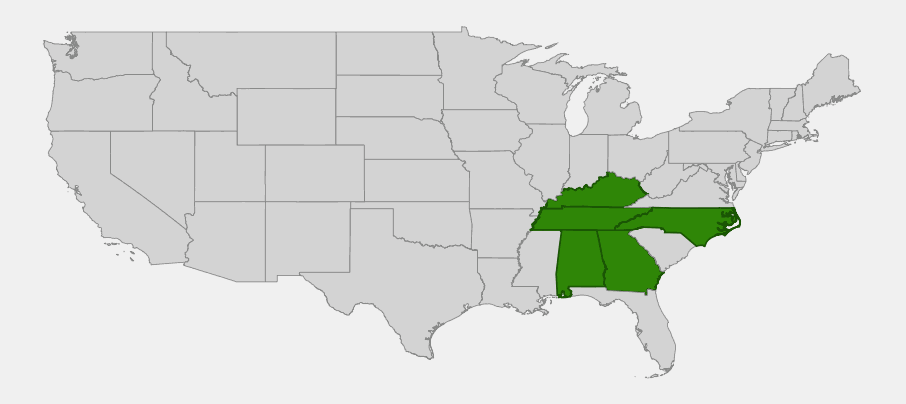
Yellow wakerobin has a small natural range centered on the southern Appalachians. It grows wild from southeastern Kentucky through eastern Tennessee and western North Carolina to northwestern Georgia, and it is especially abundant in and around Great Smoky Mountains National Park, where it carpets many rich coves and low slopes near Gatlinburg in April. A few disjunct populations of yellow sessile trilliums in central Alabama have been identified as this species, though botanists disagree about them; treat Alabama as an outlying record.
USDA PLANTS also lists it in South Carolina and Virginia, but the populations outside the core range are generally considered garden escapes or introductions rather than native stands. This page therefore treats only Alabama, Georgia, Kentucky, North Carolina and Tennessee as its native range. Yellow wakerobin is also naturalized in places far from the Appalachians, including Pennsylvania, Maryland, Michigan and Ontario, where it was planted and spread.
Within its native range it grows in rich, moist, deciduous forests, especially cove hardwood forests on limestone or other base-rich soils, on lower slopes, along streams and in ravines. It is mostly found at low to middle elevations, where the soil is deep, loamy and covered with leaf litter.
📋 Regional plant lists featuring Yellow Wakerobin: Kentucky & Tennessee · Alabama, Georgia & Mississippi · North & South Carolina
Growing & Care Guide
Yellow wakerobin is one of the easiest trilliums to grow in a shade garden, and once settled it forms long-lived, slowly spreading clumps. Patience is the key: it grows slowly and resents disturbance. Buy only nursery-propagated plants from reputable native plant nurseries, and never dig trilliums from the wild. Wild-collected plants rarely establish well, and digging has depleted many wild populations.
Light
Part shade to full shade. It does best under deciduous trees, where it gets spring sun before the canopy leafs out and shade in summer while it is dormant.
Soil & Water
Give it rich, humus-rich, well-drained soil that stays moist in spring. It tolerates slightly acidic to near-neutral soils and grows especially well in loamy soil with plenty of leaf mold. Avoid soggy soil, which rots the rhizomes. Once dormant in summer, it tolerates drier conditions.
Planting Tips
Plant rhizomes or potted plants in fall or early spring, setting the rhizome about 2 to 4 inches deep. Amend the planting area with leaf mold or compost, and mulch with shredded leaves. Plant in groups for a natural look, and combine it with spring ephemerals and ferns that will fill in after it goes dormant.
Pruning & Maintenance
No pruning is needed. Leave the leaves in place until they yellow and die back naturally, since they feed the rhizome for next year. Each fall, let fallen tree leaves stay on the bed as a natural mulch. Protect it from deer, which readily browse trilliums and can wipe out a planting.
Propagation
Established clumps can be divided carefully in late summer or fall, keeping a bud on each piece of rhizome. Seed is slow: sow fresh seed outdoors in summer and expect two winters before germination and several more years before flowering. Do not collect seed or plants from wild populations without permission.
Landscape Uses
- Woodland and shade gardens: a long-lived, colony-forming spring flower under deciduous trees
- Spring ephemeral plantings: with woodland phlox, mayapple, bleeding hearts and other spring wildflowers
- Fragrance: one of the few trilliums with a pleasant, lemony scent
- Fern and foliage beds: the mottled leaves look good before and after flowering
- Naturalizing: in rich, undisturbed woodland where it can slowly spread
Wildlife & Ecological Value
Like other trilliums, yellow wakerobin is part of the spring flush of life on the forest floor, and it depends on animals for both pollination and seed dispersal.
For Pollinators
The fragrant flowers attract small bees, flies and beetles early in spring. The lemony scent is thought to help draw insects to the upright, partly closed flowers.
For Birds
The plant offers little direct food for birds, but it is part of the rich forest floor plant community that supports insects eaten by ground-feeding birds.
For Mammals
White-tailed deer eat trilliums readily, and heavy deer browsing is a major cause of trillium decline in many eastern forests. Small mammals may eat the fleshy fruits.
Ecosystem Role
The seeds carry a fatty appendage called an elaiosome. Ants carry the seeds to their nests, eat the appendage and discard the seed, often in a favorable spot. This ant dispersal is slow, which is one reason trillium colonies spread only gradually and recover poorly from disturbance.
Cultural & Historical Uses
The name wakerobin refers to the trilliums’ early bloom, around the time robins return in spring. The species name luteum means “yellow” in Latin. It was first described in 1813 as a yellow variety of toadshade, and was raised to a full species by the botanist Thomas Grant Harbison in 1901.
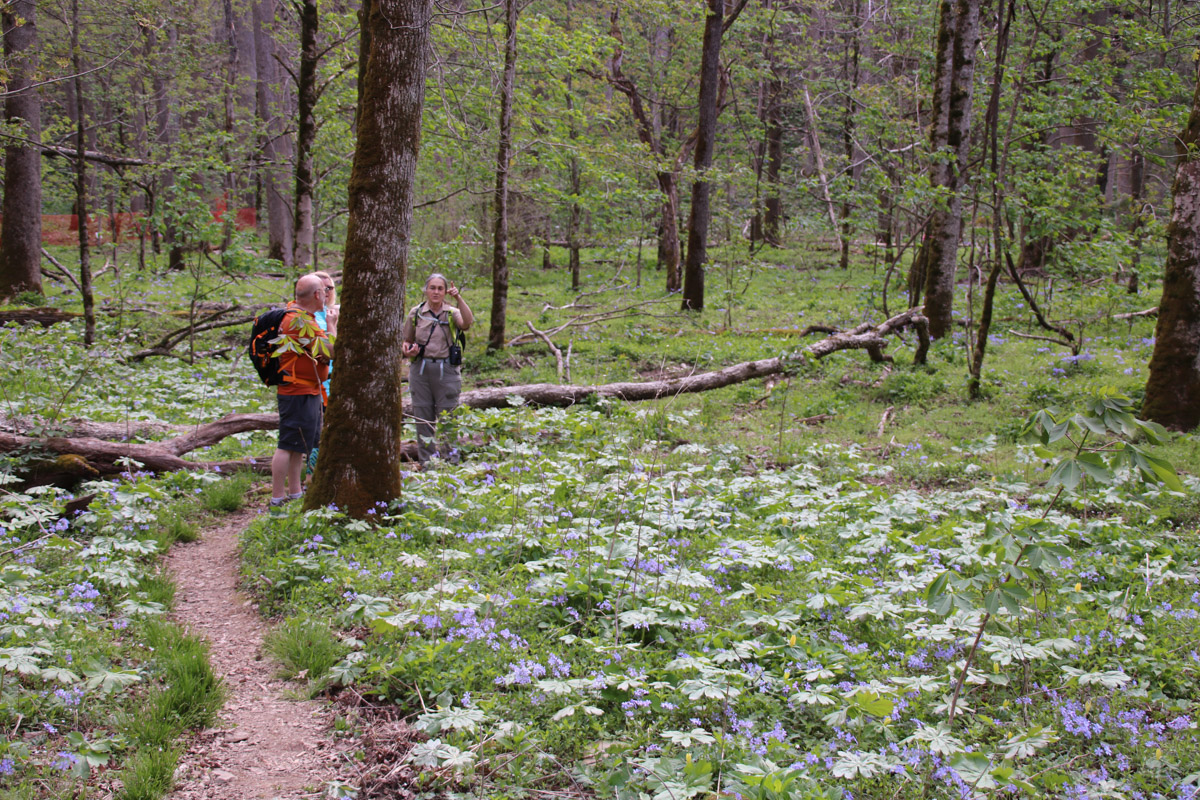
Yellow wakerobin is one of the signature wildflowers of spring in the Great Smoky Mountains, where it is common in the rich forests around Gatlinburg, and it is celebrated during the park’s spring wildflower events. In Britain it has earned the Royal Horticultural Society’s Award of Garden Merit.
Because it has been grown in gardens for so long, yellow wakerobin now appears far outside its natural range, from Pennsylvania and Maryland to Michigan and Ontario. Those escaped colonies are a reminder of how easily a garden plant can spread, and why range maps for this species show only the core southern Appalachian states.
Frequently Asked Questions
Where is yellow wakerobin native?
Mainly in the southern Appalachians, from southeastern Kentucky through eastern Tennessee and western North Carolina to northwestern Georgia, with disputed outlying records in Alabama. Populations farther north and east are mostly garden escapes.
Does yellow trillium smell?
Yes. The flowers have a pleasant, lemony scent, unlike some related trilliums whose flowers smell spicy or musky.
Can I dig yellow trillium from the woods?
No. Trilliums grow slowly, rarely survive transplanting, and digging harms wild populations. Buy nursery-propagated plants instead.
When does yellow wakerobin bloom?
From early April to May, depending on elevation. The plant goes dormant by midsummer.
How is it different from little sweet Betsy?
Little sweet Betsy (Trillium cuneatum) usually has maroon or brownish petals and a spicy scent; yellow wakerobin has lemon-yellow petals and a lemony scent.

Looking for a nursery that carries Yellow Wakerobin?
Browse our native plant nursery directory: Alabama · Georgia · Kentucky · North Carolina · Tennessee

