
Textile Onion (Allium textile)
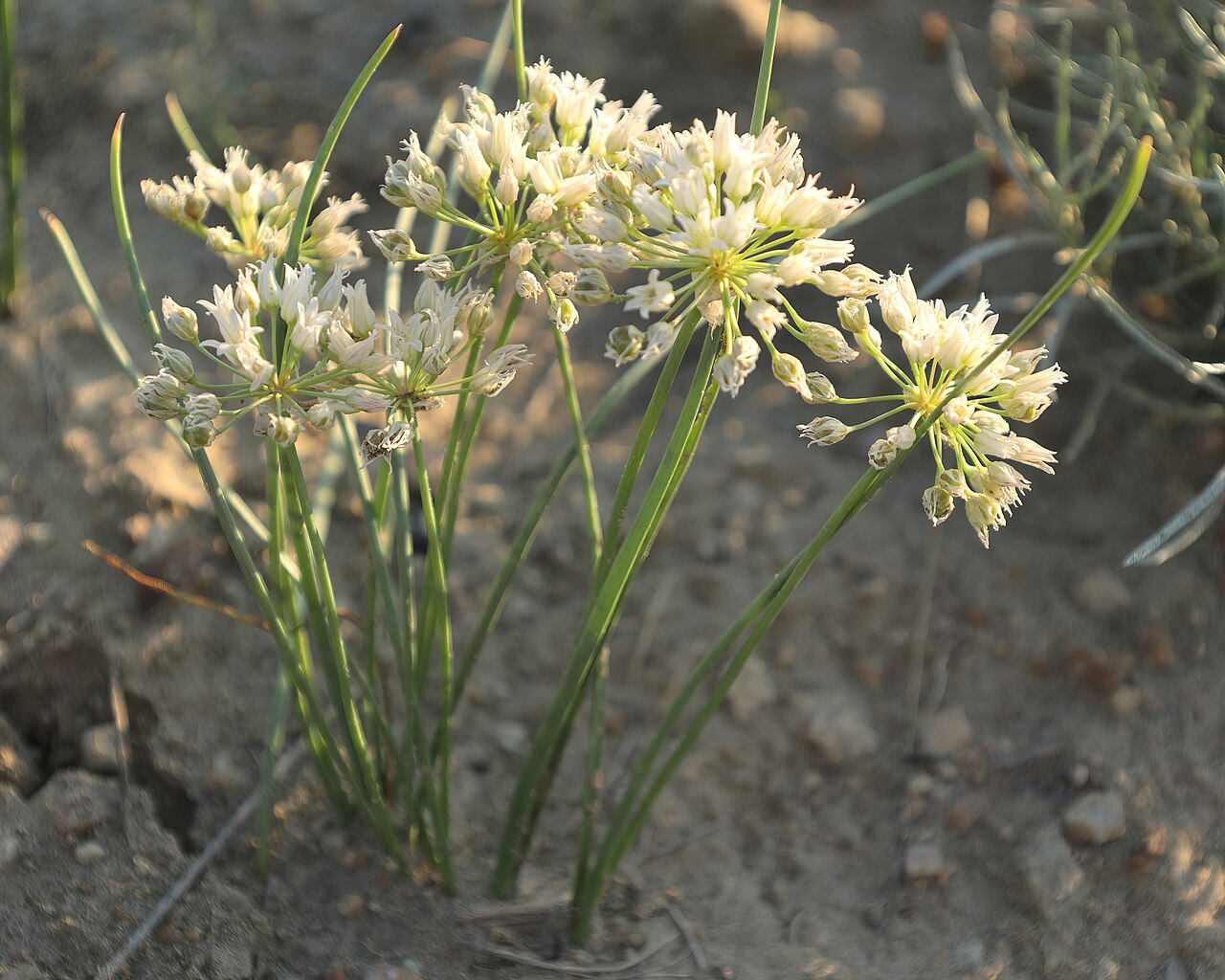
Allium textile, known as Textile Onion, prairie onion or white wild onion, is a small native wild onion of the Great Plains and the sagebrush country of the Intermountain West. In spring and early summer it raises compact, upright clusters of white, star-shaped flowers on stems usually only 4 to 10 inches tall. It is one of the most common and widespread wild onions of dry prairies, plains and sagebrush steppe from Saskatchewan and Minnesota to New Mexico and Nevada.
It belongs to the onion genus Allium (now usually placed in the amaryllis family, Amaryllidaceae), and like other onions it grows from a small bulb and smells strongly of onion when crushed. The name textile refers to the outer coat of the bulb, which is made of a fine, netted mesh of fibers that looks like woven cloth. That netted bulb coat is one of the best ways to tell it from similar species.
Textile onion is an early bloomer of dry, open grasslands, and it is a useful plant for dry rock gardens and prairie plantings. This guide covers how to identify it, how to tell it from the poisonous death camas, where it grows, how to grow it, and its value to pollinators and wildlife.
Identification
Textile onion is a short, white-flowered wild onion with an upright (not nodding) flower cluster and usually two narrow leaves per stem. It grows on dry plains, hills and sagebrush flats, and every part smells of onion when crushed.
Growth Habit
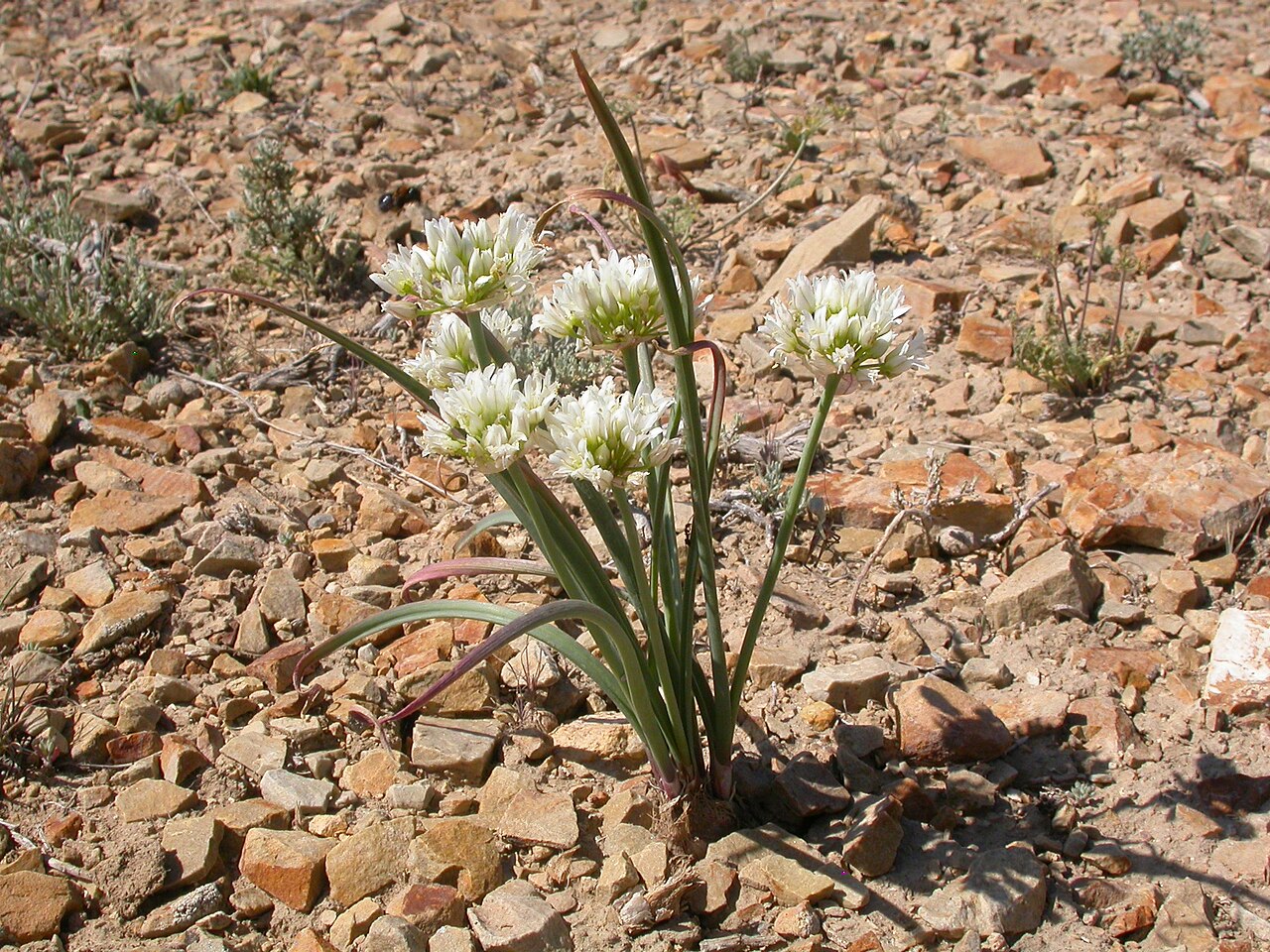
It is a small perennial, usually 4 to 10 inches tall and occasionally to about 16 inches, growing from an egg-shaped bulb a few inches below the surface. Plants grow singly or in small clumps, and each bulb sends up one leafless flowering stem (scape).
Bulb
The bulb is about 1/2 to 1 inch long, covered with a gray to brown outer coat of fine, net-like fibers, like a coarse fabric. Bulbs may be clustered. This netted coat gives the plant its name and separates it from several other white-flowered onions of the region.
Leaves
There are usually two narrow, grass-like leaves per bulb, channeled or nearly flat, and about as long as or longer than the flowering stem. They are green at flowering time and wither by midsummer.
Flowers
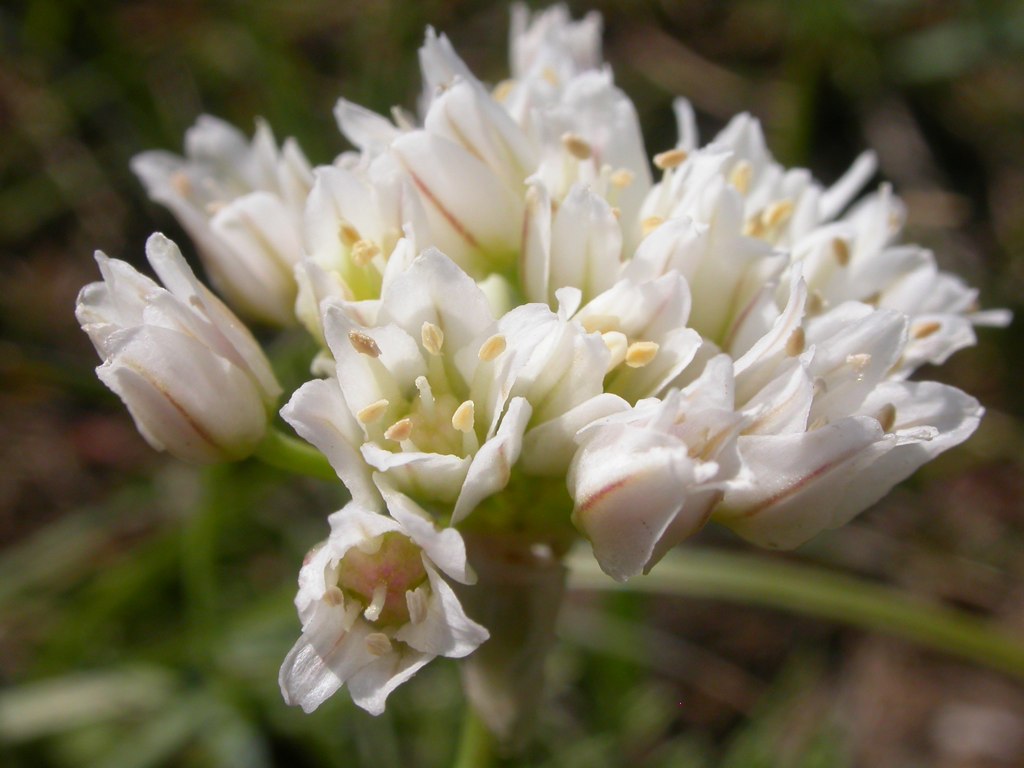
The flowers are in a compact, erect, rounded umbel of about 10 to 30 flowers at the top of the stem. Each flower is about 1/4 inch long, with six pointed white tepals, sometimes with a faint pink or greenish midvein, and pale yellow anthers. The tepals become stiff and papery after flowering and remain around the developing fruit. Bloom time is mainly April to June, depending on elevation and latitude.
Fruit & Seeds
The fruit is a small, three-lobed capsule with a crest of small projections at the top, held upright in the umbel. It splits to release small, angular, black seeds in summer.
Look-alikes
Death camas (Toxicoscordion venenosum and related species) grows in the same habitats and has similar creamy white flowers, but it is highly poisonous. Death camas has no onion smell, its flowers are in an elongated raceme rather than a rounded umbel, and its leaves are broader and V-shaped. Never eat a wild onion unless it clearly smells of onion. Nodding onion has pink flowers in a nodding cluster. Prairie onion (Allium stellatum) has pink flowers and blooms in late summer. Wild garlic often has bulblets in the flower head and grows in moister places.
Quick Facts
| Scientific Name | Allium textile A. Nelson & J.F. Macbr. |
| Family | Amaryllidaceae (amaryllis family; formerly Liliaceae or Alliaceae) |
| Plant Type | Bulbous perennial wildflower |
| Mature Height | 4–10 in (occasionally to 16 in) |
| Mature Spread | 2–6 in; forms small clumps |
| Growth Rate | Slow to moderate |
| Sun Exposure | Full sun |
| Water Needs | Low; dry in summer |
| Soil Type | Well-drained sandy, gravelly, rocky or clay-loam soils |
| Soil pH | About 6.5–8.5 |
| Bloom Time | April–June |
| Flower Color | White, sometimes with a pinkish or greenish midvein |
| Fall Color | None; leaves wither by midsummer |
| Fruit | Small upright capsule with black seeds |
| Deer Resistant | Moderately; onion-scented foliage is lightly grazed |
| USDA Hardiness Zones | 3–7 |
Native Range
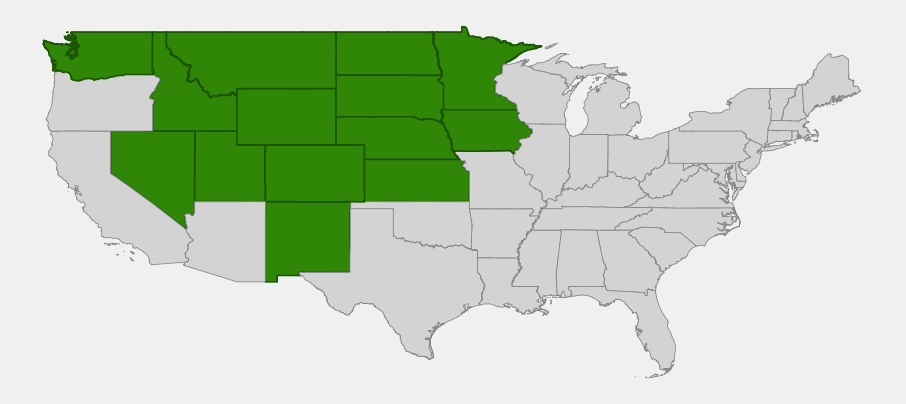
Textile onion is native to the Great Plains and the interior West of North America. USDA PLANTS lists it in Colorado, Iowa, Idaho, Kansas, Minnesota, Montana, North Dakota, Nebraska, New Mexico, Nevada, South Dakota, Utah, Washington and Wyoming, and in the Canadian provinces of Alberta, Saskatchewan and Manitoba.
It is most abundant on the northern Great Plains, from the Prairie Provinces through Montana, the Dakotas, Wyoming, Nebraska and Colorado, and in the sagebrush steppe and foothills of Wyoming, Montana, Idaho, Utah and Colorado. Toward the edges of its range it becomes local: in western Minnesota and northwestern Iowa on dry prairies, in eastern Washington and northern Nevada in sagebrush, and in northern New Mexico.
It grows in dry, open places: short-grass and mixed-grass prairie, sagebrush steppe, gravelly hills, badlands, rocky ridges and dry meadows, from the plains up into the foothills and lower mountains. It is most often found on well-drained, gravelly, sandy or clay soils and tolerates alkaline conditions.
📋 Regional plant lists featuring Textile Onion: Idaho, Eastern Oregon & Eastern Washington · Montana & Wyoming · Michigan, Wisconsin & Eastern Minnesota · Nebraska, Kansas & Eastern Colorado · Utah & Western Colorado · Illinois, Iowa & Missouri · North Dakota, South Dakota & Western Minnesota · California & Nevada
Growing & Care Guide
Textile onion is an easy, small-scale wildflower for dry, sunny gardens on the Plains and in the Intermountain West. It is offered by a few native seed suppliers and specialty nurseries, and it is easy to grow from seed. It flowers in spring, then goes dormant as the soil dries in summer.
Light
Grow it in full sun. It is a plant of open grasslands and does poorly in shade.
Soil & Water
It needs well-drained soil: sandy, gravelly or rocky soil is ideal, and it tolerates lean clay loam if drainage is good. Water is needed mainly in spring while it grows and blooms. It should be kept fairly dry in summer, when the bulbs are dormant, so avoid planting it with thirsty plants that need regular irrigation.
Planting Tips
Sow seed in fall, or plant dormant bulbs in late summer or fall about 2 to 3 inches deep. Because it is small, plant it in groups at the front of a dry border, in a rock garden, between stepping stones or among short grasses such as blue grama and June grass, where its white flowers show up well.
Pruning & Maintenance
No pruning is needed. Let the leaves wither naturally so they can feed the bulb for next year, and leave the seed heads to ripen if you want plants to self-sow. Mark where the bulbs are, since they disappear in summer.
Propagation
Grow it from seed sown outdoors in fall, which provides the cold, moist period the seeds need. Seedlings look like fine grass at first and may take two to four years to bloom. Established clumps with several bulbs can be divided in late summer when dormant. Do not dig bulbs from the wild.
Landscape Uses
- Rock gardens: a small, early wildflower for dry, gravelly soils
- Prairie plantings: spring color among short and mixed grasses
- Sagebrush and xeric gardens: summer-dormant and needs little water
- Pollinator gardens: spring nectar for native bees and small butterflies
- Habitat restoration: for dry prairies and sagebrush steppe across the West
Wildlife & Ecological Value
Textile onion is a small but widespread part of the spring flora of the plains and sagebrush, providing nectar and pollen early in the season.
For Pollinators
The open, white flowers offer nectar and pollen to small native bees, including sweat bees and mining bees, as well as flies, small butterflies and beetles. Its early bloom helps support pollinators before most prairie flowers open.
For Birds
The small seeds may be eaten by ground-feeding birds such as sparrows and larks, and sage-grouse and sharp-tailed grouse feed heavily on the leaves and flowers of spring forbs in the same habitats.
For Mammals
Pronghorn, deer, elk and livestock graze the leaves and flowers lightly in spring. Pocket gophers, ground squirrels and other small mammals eat the bulbs.
Ecosystem Role
Textile onion is part of the diverse community of spring-blooming forbs in prairies and sagebrush steppe. Its summer dormancy lets it avoid drought and grazing, and it often persists in grasslands that have been grazed for long periods. A healthy population of native forbs like this one is a sign of good rangeland condition.
Cultural & Historical Uses
Wild onions, including textile onion, were gathered as food by many Indigenous peoples of the Plains and the interior West, who ate the bulbs raw or cooked and used them to flavor other foods. Early explorers and settlers also ate them. If you gather wild onions, be absolutely sure of identification, since the deadly death camas grows in the same places; true onions always smell of onion. Also note that onions and garlic, including wild species, are toxic to dogs, cats and horses, and large amounts can cause digestive upset in people.
The species was described in 1913 by Aven Nelson and J. Francis Macbride from plants collected in the Rocky Mountain region. Aven Nelson was the founder of the Rocky Mountain Herbarium at the University of Wyoming and described many plants of the region. The name textile, meaning “woven,” refers to the fabric-like mesh on the bulb.
For ranchers and naturalists on the northern Plains, the white clusters of textile onion are one of the familiar signs of spring on the prairie, blooming alongside Hood’s phlox, pasqueflowers and early milkvetches.
Frequently Asked Questions
Is textile onion edible?
Yes, the bulbs are edible and were eaten by Indigenous peoples and settlers. But it can be confused with poisonous death camas, so only eat a wild onion if you are sure of the identification and it clearly smells of onion.
Why is it called textile onion?
The bulb is covered by a coat of fine, net-like fibers that look like woven cloth. The species name textile means “woven.”
How do I tell textile onion from death camas?
Textile onion smells strongly of onion and has a rounded flower cluster. Death camas has no onion smell, has its flowers in a longer cluster along the stem and has broader leaves. Never eat a plant that does not smell like onion.
When does textile onion bloom?
Mainly from April to June, earlier on the southern Plains and later at higher elevations and in the north.
Can I grow textile onion in my garden?
Yes, in full sun and dry, well-drained soil. It is best grown from seed sown in fall and goes dormant in summer, so keep it on the dry side after flowering.

Looking for a nursery that carries Textile Onion?
Browse our native plant nursery directory: Colorado · Idaho, Iowa & Kansas · Minnesota & Montana · Nebraska, Nevada, New Mexico & North Dakota · South Dakota & Utah · Washington · Wyoming

