
Creeping Lespedeza (Lespedeza repens)
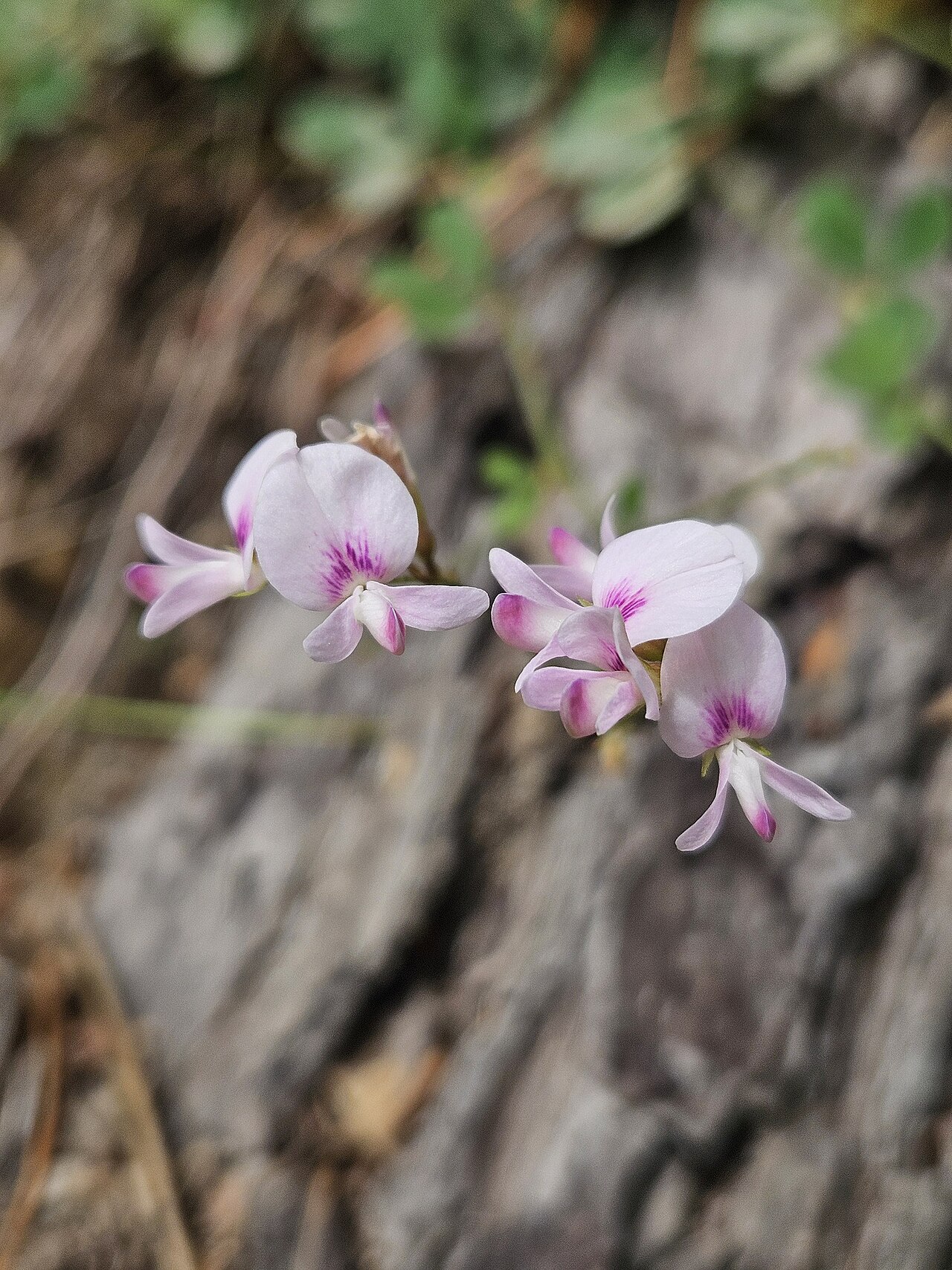
Lespedeza repens, known as Creeping Lespedeza or creeping bush-clover, is a low, trailing perennial of the pea family (Fabaceae) native to dry, open woods and clearings across the eastern and central United States. Its slender stems run flat along the ground, carrying small three-part leaves, and from late spring to early fall it sends up thin stalks with loose clusters of small pink to violet pea flowers.
It is one of the native bush clovers, and it should not be confused with the invasive lespedezas from Asia. Sericea lespedeza (Lespedeza cuneata), shrubby bicolor lespedeza (Lespedeza bicolor) and the Japanese and Korean clovers (Kummerowia, once included in Lespedeza) were widely planted for erosion control and forage and are now serious weeds in many states. Creeping lespedeza is a modest native plant that grows in balance with its neighbors.
Like other legumes, it works with soil bacteria to fix nitrogen, improving thin, dry soils. Its flowers are visited by bees, its foliage feeds caterpillars of several butterflies, and its seeds are eaten by bobwhite quail and other birds. This guide covers how to identify it, where it grows, how to use it in a garden, and its value to wildlife.
Identification
Creeping lespedeza is easy to overlook until it flowers. Look for very slender, trailing stems lying flat on the ground, small leaves divided into three leaflets, and small purple-pink pea flowers on thin stalks that rise above the leaves.
Stems & Growth Habit
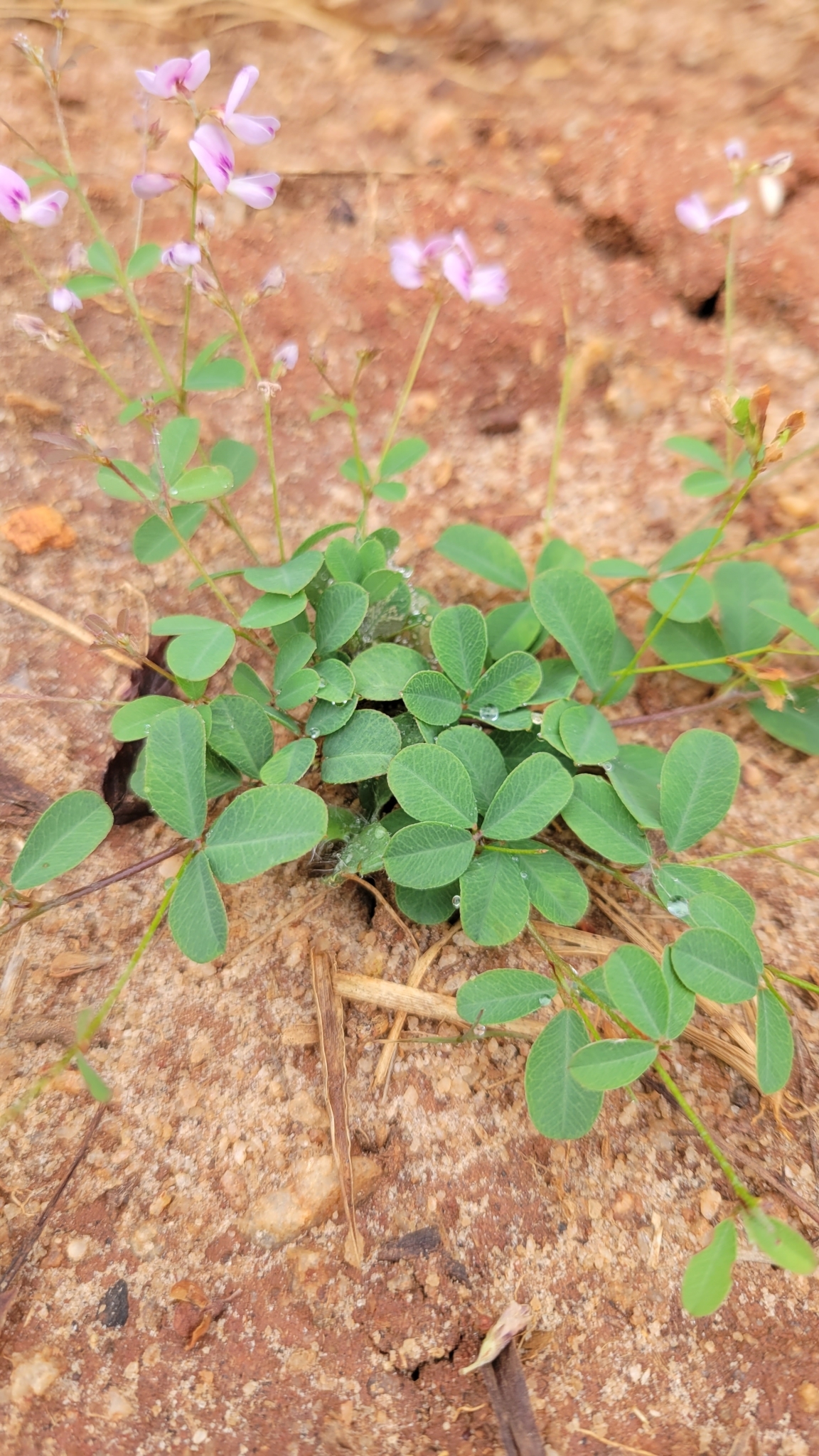
Several thin stems spread from a perennial root crown and trail flat along the ground, usually 6 inches to 2 feet long. The plant rarely rises more than a few inches high. The stems are smooth or have a few short hairs pressed flat against them, and they can root where they touch the ground. Each plant forms a loose, open patch rather than a dense mat.
Leaves
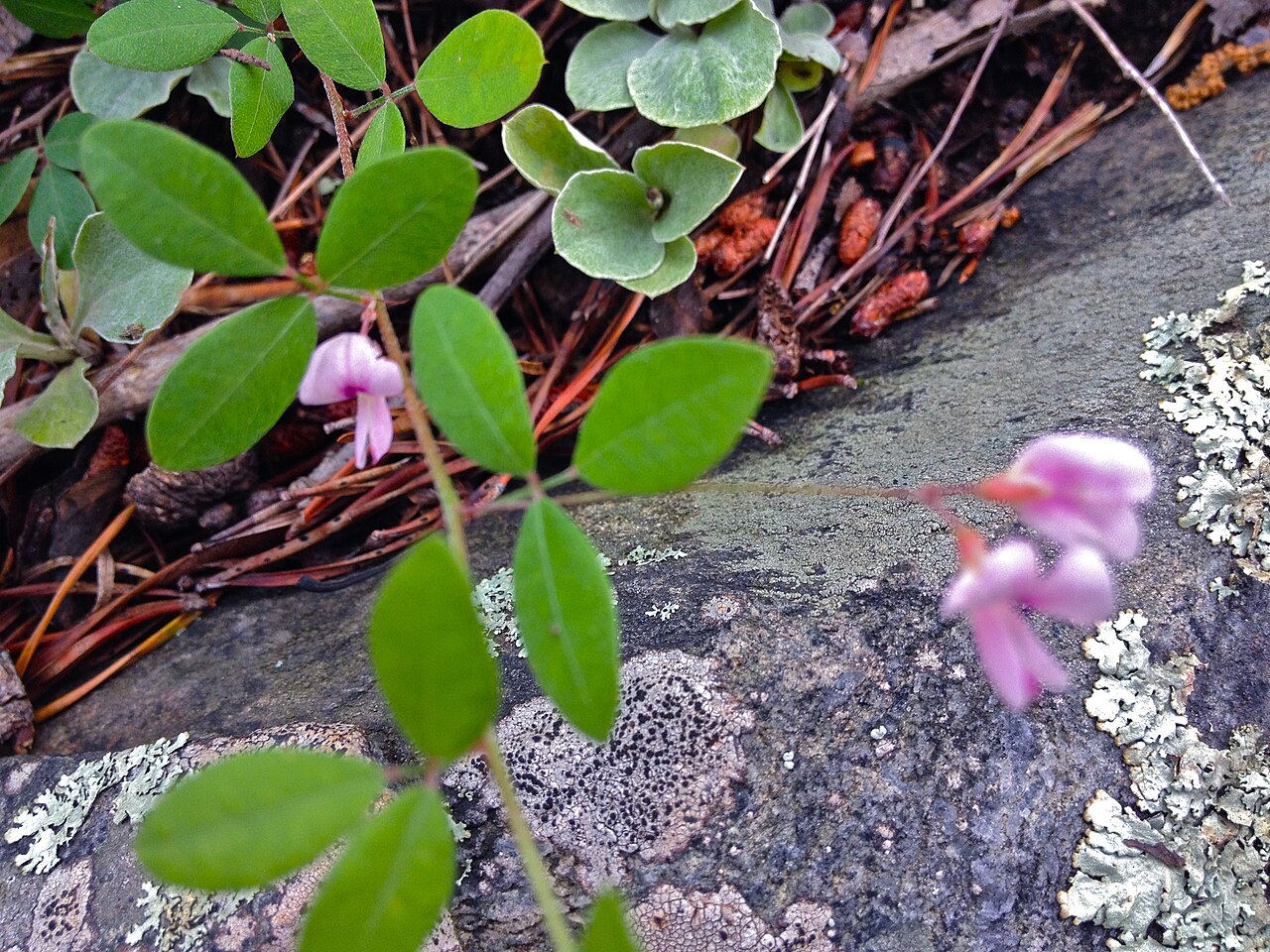
The leaves are alternate and divided into three leaflets, like a small clover. Each leaflet is elliptic to oval or slightly broader toward the tip, usually about 1/4 to 3/4 inch long, with a smooth edge and a few flattened hairs on the underside. The middle leaflet has a short stalk of its own.
Flowers
The flowers are typical small pea flowers, about 1/4 inch long, pink-purple to violet or nearly white with darker purple markings at the base of the upper petal. They are borne in loose clusters of a few flowers at the ends of slender stalks that are usually longer than the leaves. Like other lespedezas, the plant also produces tiny, closed, self-pollinating flowers in the leaf axils that never open. The main bloom is from May to September.
Fruit & Seeds
Each flower produces a small, flat, oval pod, a little over 1/8 inch long, holding a single seed. The pods do not split open; they drop with the seed inside in late summer and fall.
Look-alikes
Trailing lespedeza (Lespedeza procumbens) is very similar and also native. Its stems are covered in spreading hairs, so it looks fuzzy, while creeping lespedeza is smooth or has only flattened hairs. Sericea lespedeza, the invasive Asian species, is quite different: an upright plant 2 to 5 feet tall with crowded, narrow, wedge-shaped leaflets and creamy white flowers. The Asian Kummerowia clovers are small, branched annuals with leaflets marked by fine parallel veins and nearly stalkless flowers in the leaf axils.
Quick Facts
| Scientific Name | Lespedeza repens (L.) W.P.C. Barton |
| Family | Fabaceae (pea or legume family) |
| Plant Type | Trailing herbaceous perennial |
| Mature Height | 2–6 in |
| Mature Spread | 6 in–2 ft (stem length) |
| Growth Rate | Moderate |
| Sun Exposure | Full sun to part shade |
| Water Needs | Low; dry to medium soils |
| Soil Type | Dry sandy, rocky or gravelly soils; open woods and clearings |
| Soil pH | Acidic to near neutral (about 5.0–7.0) |
| Bloom Time | May–September |
| Flower Color | Pink-purple to violet, sometimes nearly white |
| Fall Color | None notable |
| Fruit | Small, flat, one-seeded pods |
| Deer Resistant | No; browsed by deer and rabbits |
| USDA Hardiness Zones | 5–9 |
Native Range
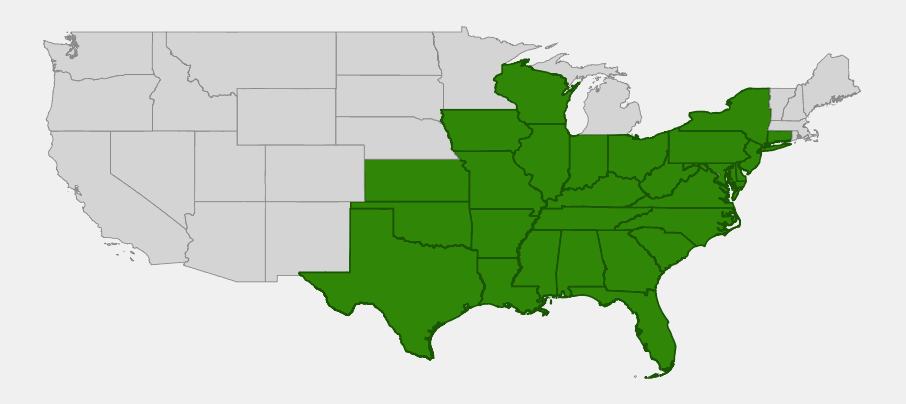
Creeping lespedeza is a plant of the eastern and central United States. USDA PLANTS lists it from Connecticut and New York south to Florida, and west to Texas, Oklahoma and Kansas, north through the Midwest to Iowa and Wisconsin. The Lady Bird Johnson Wildflower Center describes the same range: New York and Connecticut south to Florida, west to Texas, and north to Kansas and Wisconsin.
It is most common in the Southeast, from the Piedmont and coastal plain of the Carolinas and Georgia to the Ozarks, the Ouachitas and East Texas. Toward the edges of its range it becomes rare. In Connecticut it is ranked extremely rare (S1) and listed as a species of special concern, and records in New York, Wisconsin, Kansas and the western edge of its range are scattered, outlying populations. In Texas it grows mainly in the eastern and central parts of the state.
Typical habitats are dry, open oak and oak-pine woods, woodland edges, clearings, rocky slopes, sandy roadside banks and old fields, usually on acidic, well-drained soils. It is often found where the soil is thin or sandy and competition from tall plants is limited.
📋 Regional plant lists featuring Creeping Lespedeza: New York, Pennsylvania & Northern New Jersey · Ohio & Indiana · Michigan, Wisconsin & Eastern Minnesota · Kentucky & Tennessee · Nebraska, Kansas & Eastern Colorado · Connecticut, Massachusetts & Rhode Island · New Hampshire, Maine & Vermont · Maryland, Virginia & West Virginia · Delaware, Southern New Jersey & Long Island · Illinois, Iowa & Missouri · Alabama, Georgia & Mississippi · North & South Florida · North & South Carolina · Arkansas, Louisiana, Eastern Oklahoma & Eastern Texas
Growing & Care Guide
Creeping lespedeza is a small, low-maintenance plant for dry, lean soil. It is rarely sold, but native seed suppliers and specialist nurseries sometimes offer it, and it is a natural choice for dry woodland edges, sandy slopes and meadow plantings where you want a low, flowering legume. Always buy plants or seed of native lespedezas from a source that labels the species, so you do not bring in one of the invasive Asian species by mistake.
Light
It grows in full sun to part shade. In the wild it is common in open, sunny woods and edges; in deeper shade it grows thinly and flowers less.
Soil & Water
Give it well-drained, sandy, gravelly or rocky soil, ideally somewhat acidic. It is adapted to poor, dry soil and does not need fertilizer; as a legume it supplies much of its own nitrogen. Water new plantings during dry spells in the first season. After that it is drought tolerant.
Planting Tips
Plant it where it will not be smothered by tall, vigorous plants: along a path, on a dry bank, at the front of a meadow planting or under open oaks and pines. It pairs well with low grasses such as poverty oatgrass and little bluestem and with other dry-soil wildflowers. Because it is small and open, plant several together for a visible patch.
Pruning & Maintenance
No pruning is needed. Leave the stems in place over winter; the plant dies back and regrows from the root crown in spring. The main task is keeping aggressive weeds, including invasive lespedezas, from crowding it out.
Propagation
Grow it from seed. The seed coat is hard, so scarify the seeds lightly (rub them on fine sandpaper) or soak them before sowing, and sow in spring in warm soil. Lespedezas form root nodules with specific soil bacteria; if you are planting in a new area, adding a little soil from around existing native lespedezas, or a commercial inoculant for lespedeza, can help. Stems that root where they touch the ground can also be separated and potted.
Landscape Uses
- Dry woodland edges: a low, trailing wildflower for sandy or rocky soil in sun or light shade
- Meadow and prairie plantings: a native legume that adds nitrogen to lean soils
- Butterfly gardens: a larval host for sulphurs, blues and duskywings
- Wildlife plantings: seeds eaten by bobwhite quail and other birds
- Slope and bank cover: trailing stems that help hold thin, dry soil
Wildlife & Ecological Value
Native lespedezas are an important part of the legume layer of dry woodlands and grasslands in the East, and creeping lespedeza contributes on a small scale.
For Pollinators
The small pea flowers are visited mainly by bees, including small native bees that can open the keel petals. Native lespedezas are larval hosts for several butterflies, including the eastern tailed-blue, the cloudless sulphur and other sulphurs, and duskywing skippers such as the wild indigo duskywing, whose caterpillars feed on the leaves of plants in the pea family.
For Birds
Lespedeza seeds are a well-known food of northern bobwhite quail, and wild turkeys and songbirds such as sparrows and juncos also eat them. The one-seeded pods drop to the ground, where ground-feeding birds find them in fall and winter.
For Mammals
Deer and rabbits browse the leaves and stems of native lespedezas, which are rich in protein. Small rodents eat the seeds.
Ecosystem Role
Through its partnership with nitrogen-fixing bacteria in root nodules, creeping lespedeza adds nitrogen to thin, sandy and rocky soils, benefiting the plants around it. In dry oak woods and fire-maintained openings it is one of many low legumes that help make up the diverse ground layer; it does best where periodic fire or thin soils keep taller plants from shading it out.
Cultural & Historical Uses
The genus Lespedeza honors Vicente Manuel de Céspedes, a Spanish governor of East Florida in the late 1700s; a misreading of his name in the original publication turned “Céspedes” into “Lespedez”. The species name repens means “creeping” in Latin. Linnaeus first described the plant as Hedysarum repens, and it was moved to Lespedeza by William P.C. Barton.
In the twentieth century, Asian lespedezas were planted on a large scale across the South for erosion control, forage and wildlife food. Several of them, especially sericea lespedeza, have since become invasive, forming dense stands that crowd out native grasses and wildflowers. Native species such as creeping lespedeza are a better choice for wildlife plantings and are part of the original plant communities that land managers now try to restore.
Because native bush clovers hybridize and vary, they can be tricky to identify. Creeping lespedeza is one of the easier ones: a smooth, flat-lying plant with small purple flowers on long, thin stalks.
Frequently Asked Questions
Is creeping lespedeza invasive?
No. Creeping lespedeza is native to the eastern and central United States. The invasive lespedezas are Asian species, especially sericea lespedeza (Lespedeza cuneata) and bicolor lespedeza, along with the closely related Japanese and Korean clovers (Kummerowia).
How do I tell creeping lespedeza from trailing lespedeza?
Both trail on the ground and have purple pea flowers. Trailing lespedeza has stems covered in spreading hairs, while creeping lespedeza’s stems are smooth or have only a few hairs pressed flat against them.
Where does creeping lespedeza grow?
It grows in dry, open woods, clearings, rocky slopes and sandy banks from Connecticut and New York south to Florida and west to Texas, Kansas and Wisconsin. It is most common in the Southeast and rare at the northern edge of its range.
Does creeping lespedeza help the soil?
Yes. Like other legumes, it hosts nitrogen-fixing bacteria in its roots, which add nitrogen to poor, dry soils.
What wildlife uses creeping lespedeza?
Bees visit the flowers, caterpillars of blues, sulphurs and duskywings can feed on the leaves, bobwhite quail and other birds eat the seeds, and deer and rabbits browse the foliage.

Looking for a nursery that carries Creeping Lespedeza?
Browse our native plant nursery directory: Alabama & Arkansas · Connecticut, Delaware, Florida & Georgia · Illinois, Indiana, Iowa & Kansas · Kentucky, Louisiana, Maryland, Mississippi & Missouri · New Jersey, New York, North Carolina, Ohio & Oklahoma · Pennsylvania, South Carolina, Tennessee, Texas & Virginia · West Virginia & Wisconsin

