
Sky Pilot (Polemonium viscosum)
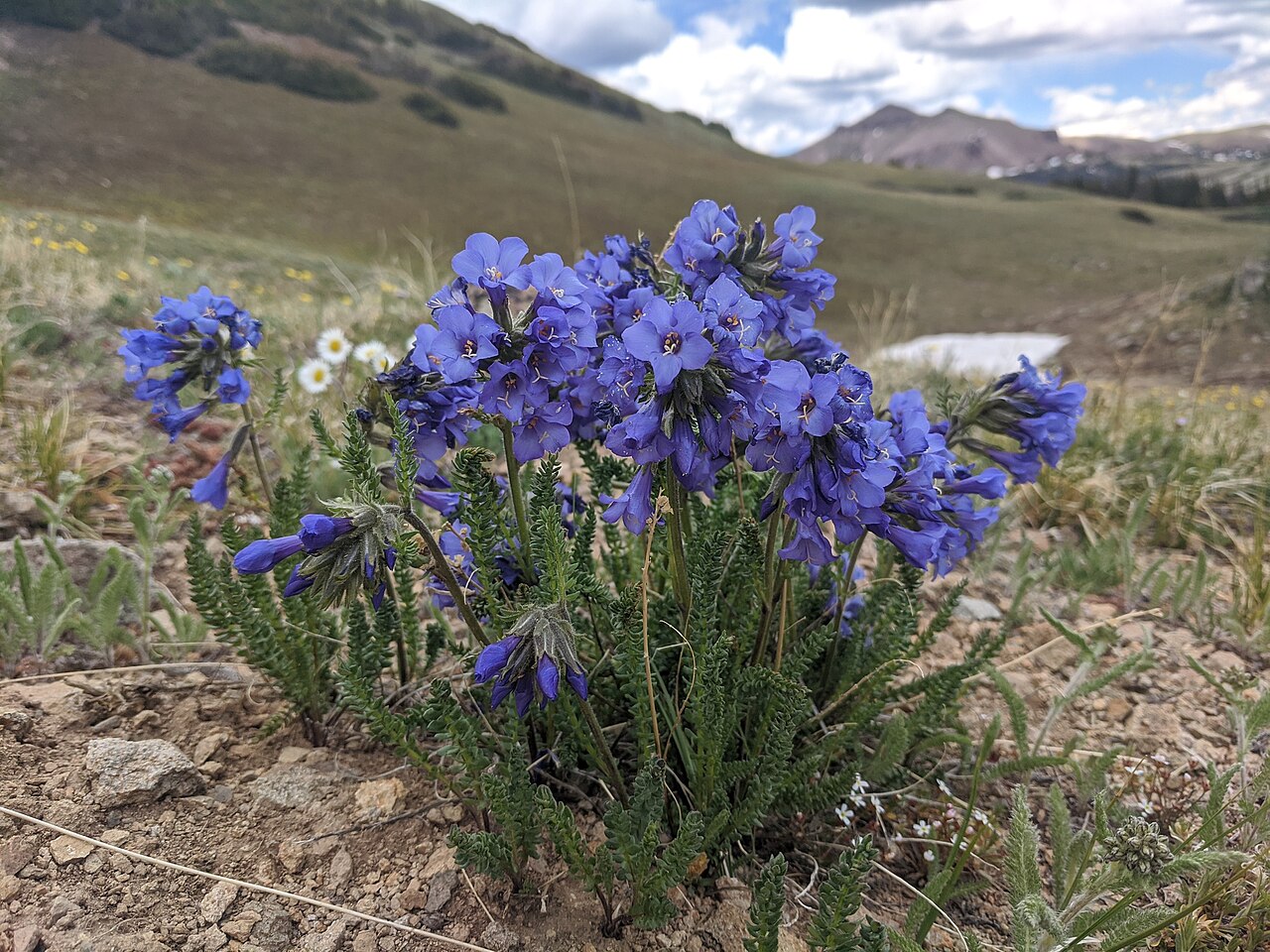
Polemonium viscosum, known as Sky Pilot, sticky polemonium, sticky Jacob’s-ladder or skunkweed, is a low alpine perennial of the phlox family (Polemoniaceae) native to the high mountains of western North America, from British Columbia and Alberta south through the Rocky Mountains and Great Basin ranges to New Mexico. It forms tight clumps of sticky, finely divided leaves and, in early summer, round clusters of bright blue-violet, funnel-shaped flowers with orange anthers.
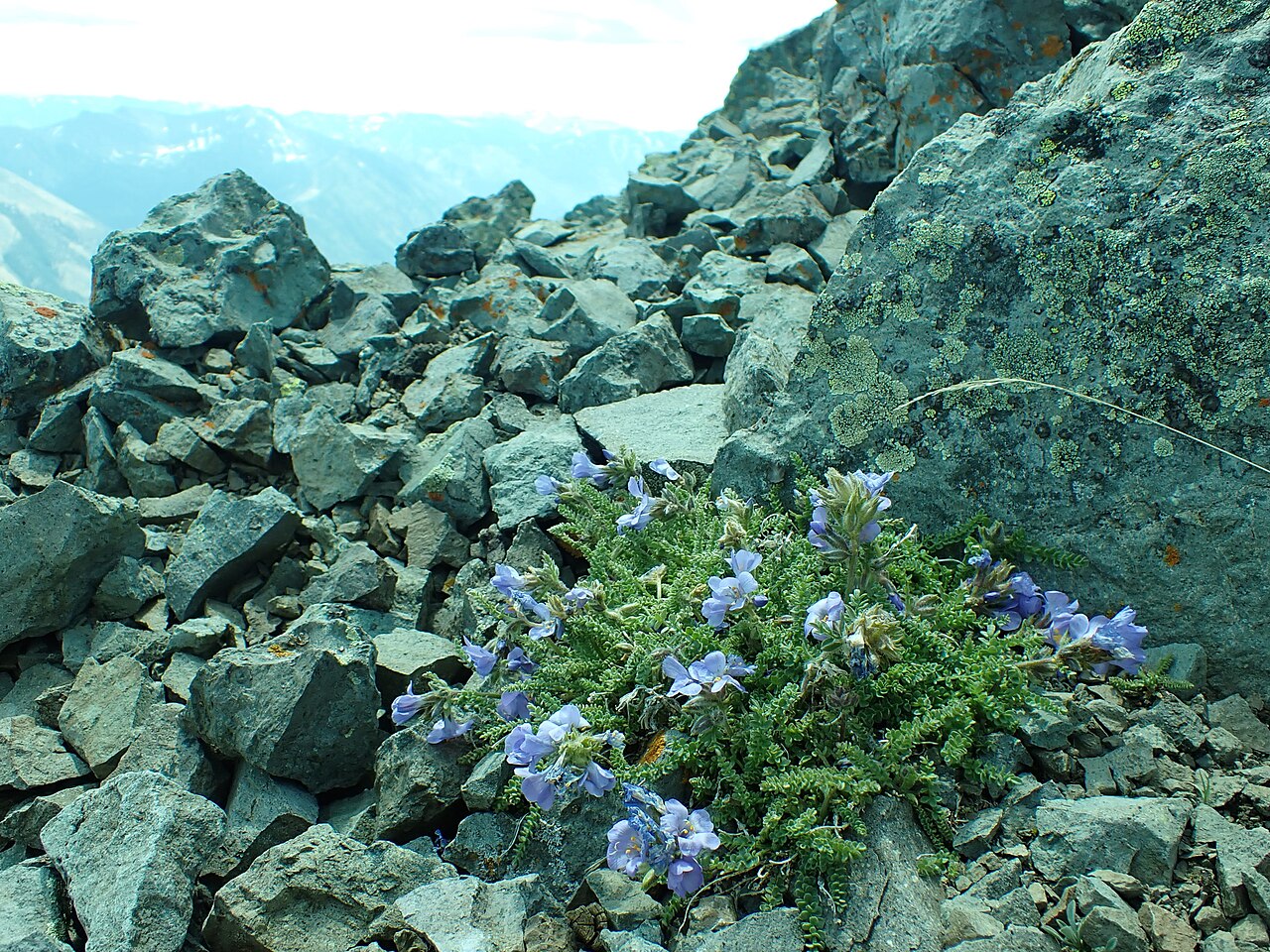
It grows on rocky summits, talus slopes, ridges and fellfields, mostly above treeline at about 9,000 to 14,000 feet. On many of the highest Rocky Mountain peaks it is one of the last flowers hikers see before the summit, which is how it earned the name sky pilot.
The flowers smell sweet, but the sticky, glandular leaves give off a strong musky or skunky odor, especially when brushed. It is a classic plant of the alpine tundra and an important early-summer food source for high-elevation bumble bees.
Identification
Look for a low clump of sticky, ladder-like leaves with many tiny leaflets and dense round heads of blue-violet funnel flowers on rocky ground above treeline.
Growth Habit
It is a clump-forming perennial 4 to 12 inches tall from a stout, branched root crown. Old leaf bases persist around the crown. The whole plant is covered with sticky glandular hairs and has a musky smell.
Leaves
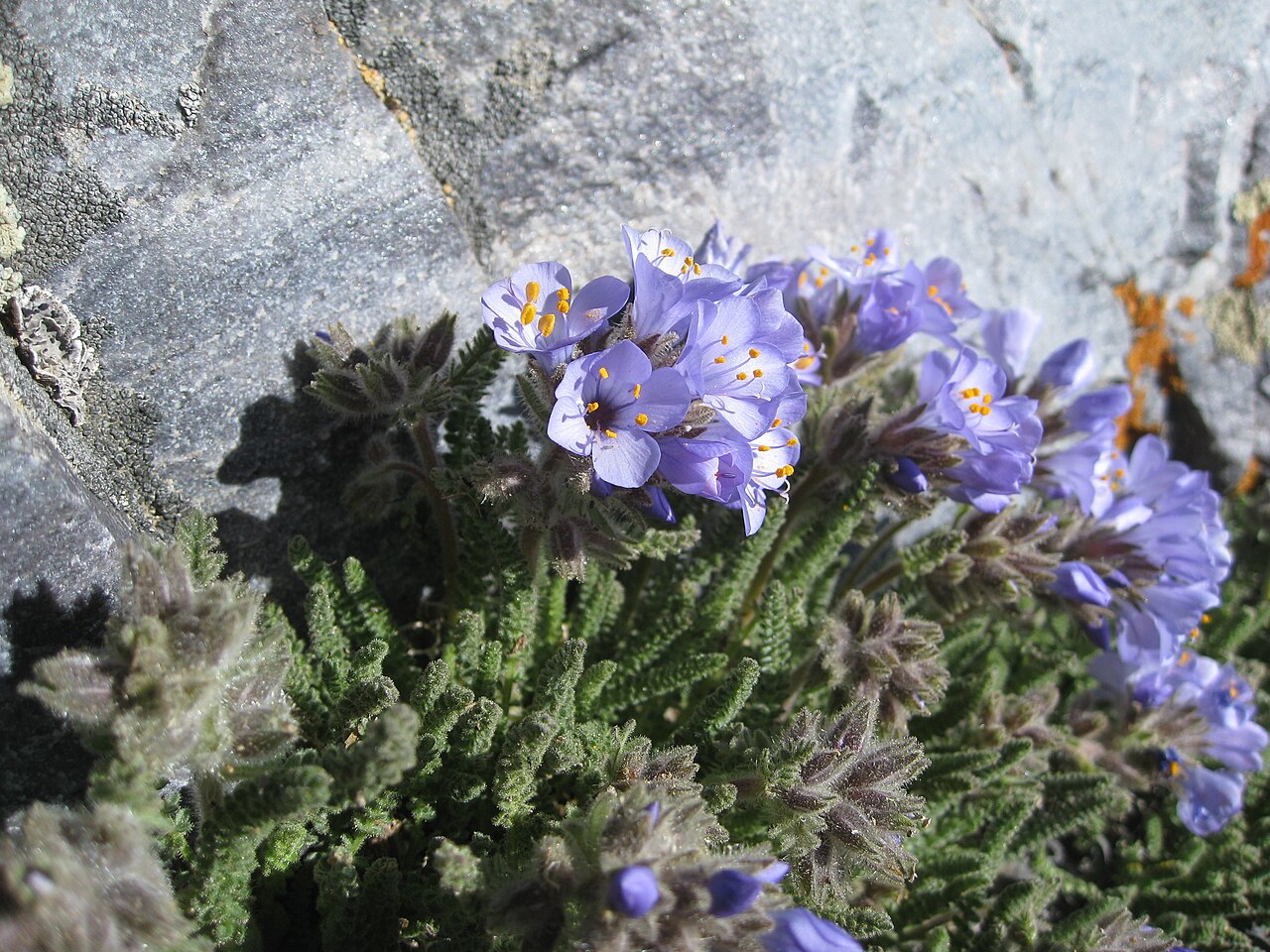
Most leaves are basal, narrow and 2 to 6 inches long. Each is divided into many tiny leaflets that are themselves often split into 2 to 5 lobes and arranged in whorls around the leaf stalk, so the leaf looks like a narrow green bottlebrush rather than a flat ladder.
Flowers
Flowers are held in dense, rounded heads at the tips of the stems. Each flower is funnel-shaped, about 3/4 to 1 inch long, with five rounded lobes, usually deep blue to blue-violet, rarely white. The stamens have bright orange-yellow anthers. Bloom time is June to August, depending on snowmelt.
Fruit
The fruit is a small three-chambered capsule held inside the sticky, persistent calyx. Each capsule holds a few seeds.
Look-alikes
Other Jacob’s-ladders, such as tall Jacob’s-ladder and Jacob’s ladder, grow lower in forests and meadows and have flat leaves with larger, undivided leaflets in two rows. Elegant sky pilot (Polemonium elegans) of the Cascades has broader, undivided leaflets and smaller flowers. Alpine forget-me-nots (Eritrichium) have flat, sky-blue flowers with yellow centers and silvery leaves.
Quick Facts
| Scientific Name | Polemonium viscosum |
| Family | Polemoniaceae (phlox family) |
| Plant Type | Alpine perennial wildflower |
| Mature Height | 4–12 in |
| Mature Spread | 6–12 in |
| Growth Rate | Slow |
| Sun Exposure | Full sun |
| Water Needs | Medium in spring; dry and very well drained in summer |
| Soil Type | Rocky, gravelly or scree soil; excellent drainage |
| Soil pH | Acidic to neutral (about 5.5–7.5) |
| Bloom Time | June–August |
| Flower Color | Blue to blue-violet, rarely white |
| Fall Color | None |
| Fruit | Small three-chambered capsule |
| Deer Resistant | Yes; sticky, strong-smelling foliage |
| USDA Hardiness Zones | 3–6 |
Native Range
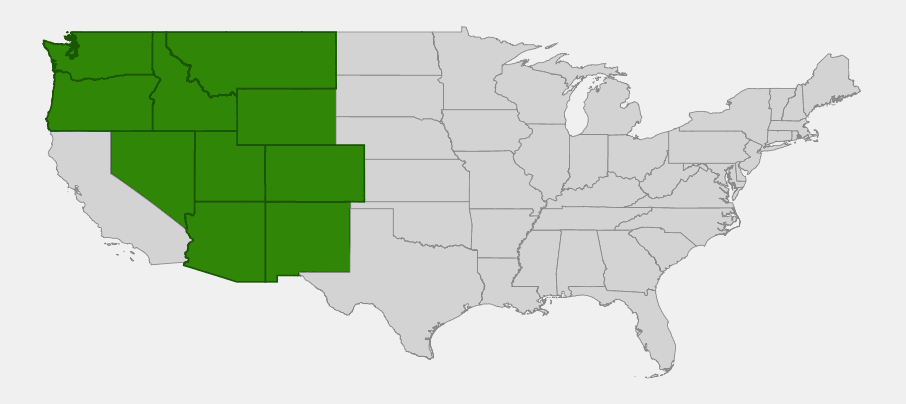
Sky pilot is native to the mountains of western North America. USDA PLANTS lists it as native in Arizona, Colorado, Idaho, Montana, Nevada, New Mexico, Oregon, Utah, Washington and Wyoming, and in British Columbia and Alberta, Canada.
Its center of abundance is the Rocky Mountains of Colorado, Wyoming and Montana, where it grows on many of the high peaks. It also grows on the highest ranges of Utah, Nevada (including Wheeler Peak in Great Basin National Park), northern New Mexico, Idaho, the Wallowa Mountains of northeastern Oregon and the northeastern Cascades of Washington. Arizona records are few and local.
It grows in alpine tundra, fellfields, talus and scree slopes, rocky ridges and summits, and at the upper edge of the subalpine forest, mostly from about 9,000 to 14,000 feet in the southern Rockies and lower in the north.
📋 Regional plant lists featuring Sky Pilot: Idaho, Eastern Oregon & Eastern Washington · Montana & Wyoming · Utah & Western Colorado · Arizona & New Mexico · California & Nevada
Growing & Care Guide
Sky pilot is a true alpine and is a challenge to grow at low elevations. It is best enjoyed in the mountains, or grown by experienced rock gardeners in cool climates using nursery-raised plants or seed.
Light
Full sun. In hot lowland gardens, give it bright light with protection from afternoon heat.
Soil & Water
Very gritty, fast-draining soil such as scree or a gravel-rich rock garden mix. It needs moisture in spring, like snowmelt, and dry roots in summer. Wet, heavy soil or warm, humid nights usually kill it.
Planting Tips
Plant in a raised scree bed, crevice garden or trough, tucked between rocks. It does best where winters are cold and summers are cool. Never dig plants from the mountains; buy seed or plants from specialist alpine nurseries.
Pruning & Maintenance
No pruning is needed. Remove spent flower stems if you don’t want seed. Top-dress with gravel to keep the crown dry.
Propagation
Grow from seed sown in fall or given a cold, moist stratification period before sowing in spring. Seedlings grow slowly and may take two or more years to flower.
Landscape Uses
- Alpine and rock gardens: for experienced growers in cool-summer climates
- Crevice gardens and troughs: tucked into gritty soil between stones
- Pollinator support: early-summer food for alpine bumble bees
- Wildflower viewing: a signature flower of high Rocky Mountain summits
- High-elevation restoration: part of native alpine plant communities
Wildlife & Ecological Value
Sky pilot is one of the most important early-summer flowers for insects living above treeline.
For Pollinators
Bumble bee queens and workers are its main pollinators, and it is one of the best-known examples of a bumble bee flower in alpine tundra. Research on Rocky Mountain populations has shown that bumble bees favor plants with larger flowers. Flies and other insects visit plants at lower elevations. The sticky hairs and skunky smell of the leaves and calyx help keep nectar-stealing ants away.
For Birds
Its seeds are small and few, but alpine birds such as white-tailed ptarmigan and rosy-finches forage in the same fellfields and may eat them.
For Mammals
Pikas, marmots and mountain goats share its habitat, though its strong-smelling, sticky foliage is not a favored food.
Ecosystem Role
As a long-lived perennial on bare rock and gravel, it helps hold and build soil in harsh alpine habitats. Its flowers are a major nectar source in the short alpine summer.
Cultural & Historical Uses
The name sky pilot is an old slang term for a preacher or chaplain, someone who guides people heavenward. The plant got the name because it grows on the highest peaks, closer to the sky than almost any other flower.
Mountaineers in Colorado know sky pilot as a summit flower, and its musky odor is often noticed before the flowers are seen. That smell earned it the less flattering name skunkweed. The flowers themselves have a sweet scent.
The genus name Polemonium probably comes from Polemon, a figure from ancient Greek writing, and Jacob’s-ladder refers to the ladder-like arrangement of leaflets in many species. The species name viscosum means sticky.
Frequently Asked Questions
Why is it called sky pilot?
“Sky pilot” is old slang for a preacher. The plant earned the name because it grows on high mountain summits, closer to the sky than almost any other flower.
Why does sky pilot smell like a skunk?
Its sticky glandular hairs give the leaves and calyx a strong musky odor. The flowers themselves smell sweet. The sticky hairs and odor may help discourage ants and other nectar robbers.
Where can I see sky pilot?
Look on rocky alpine ridges and summits in the Rocky Mountains, especially in Colorado, Wyoming and Montana, and on the high peaks of Utah and Nevada, from late June to August.
Can I grow sky pilot in my garden?
Only with difficulty. It needs very gritty, well-drained soil, cold winters and cool summers. Experienced rock gardeners grow it from seed in scree beds or troughs.
Is sky pilot the same as Jacob’s ladder?
It belongs to the same genus. Sky pilot is an alpine species with tiny whorled leaflets and dense round flower heads, while lowland Jacob’s ladders have flat leaves with larger leaflets.

Looking for a nursery that carries Sky Pilot?
Browse our native plant nursery directory: Arizona · Colorado · Idaho · Montana · Nevada & New Mexico · Oregon · Utah · Washington · Wyoming

