
Drummond’s Milkvetch (Astragalus drummondii)
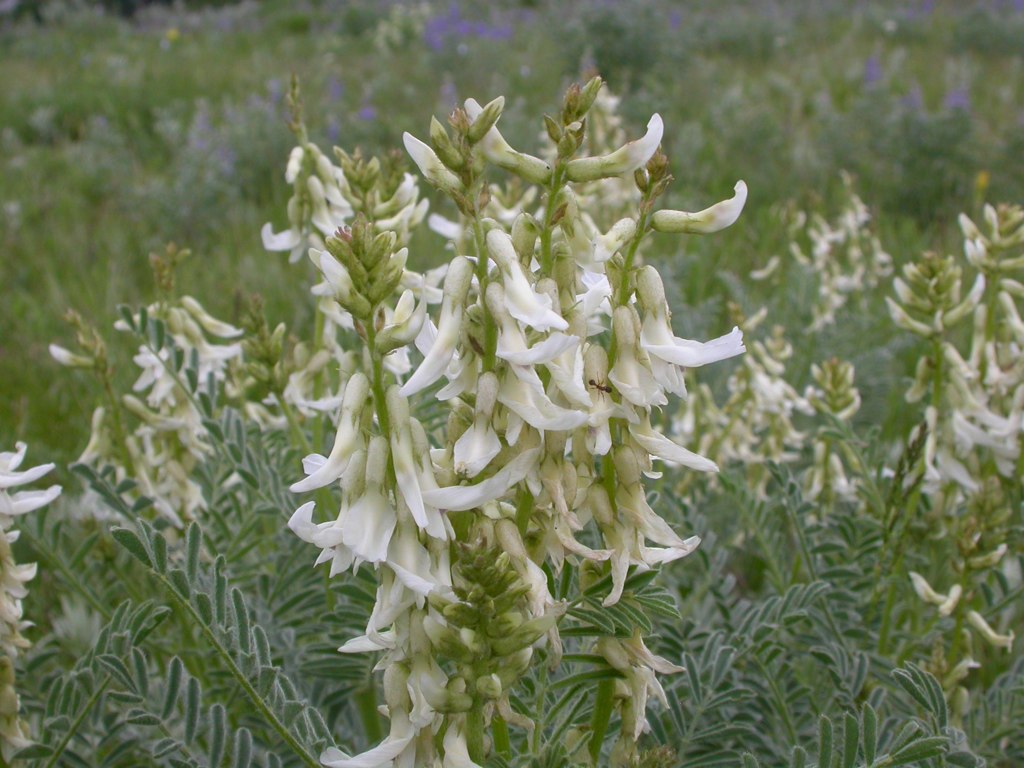
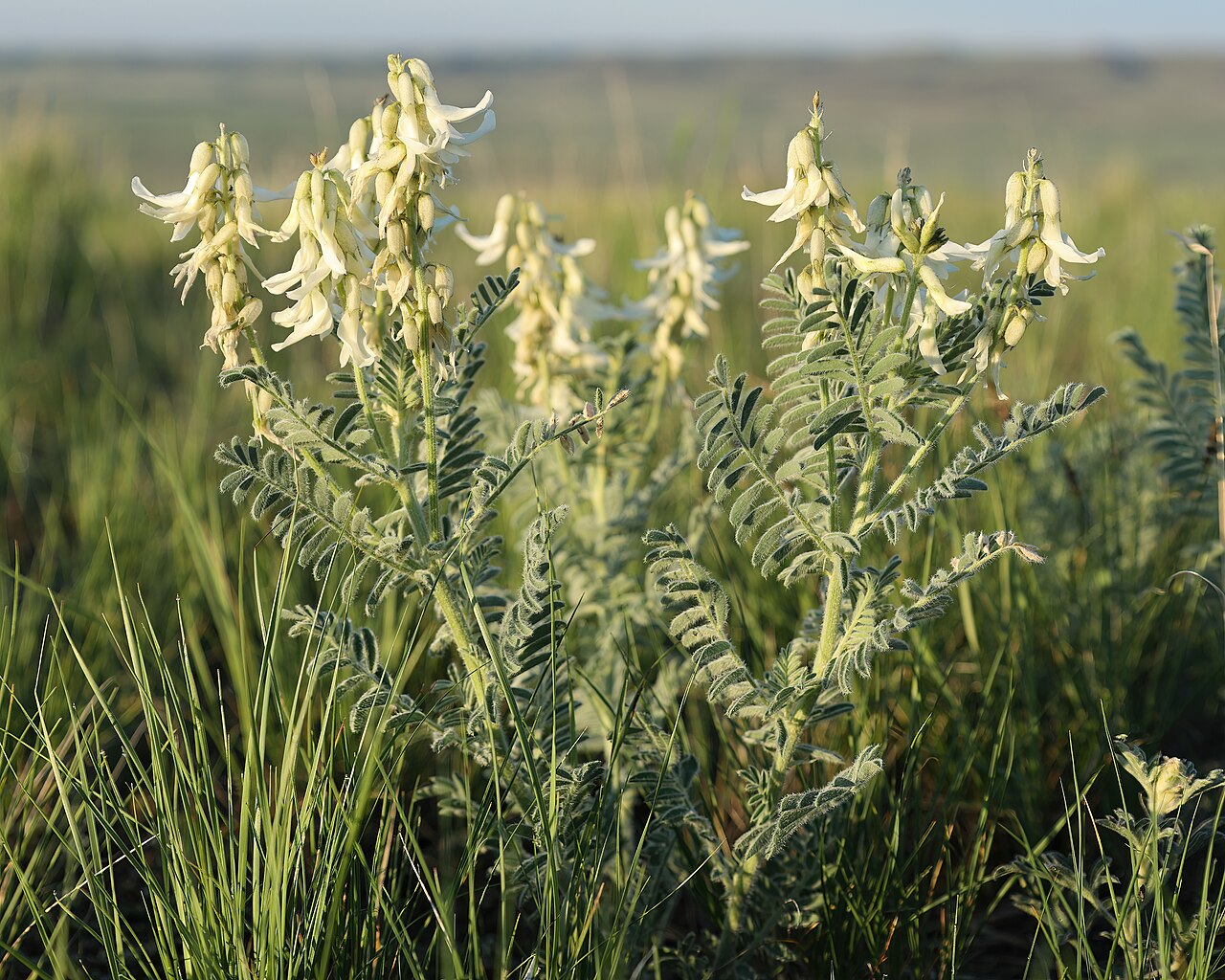
Astragalus drummondii, known as Drummond’s Milkvetch, is a tall, clump-forming perennial in the pea family (Fabaceae) of the northern Great Plains and Rocky Mountain foothills. In late spring and early summer it raises dense spikes of creamy white pea flowers above gray-green, shaggy-hairy leaves. It is one of the most conspicuous milkvetches of western prairies, often growing 1 to 2 feet tall and forming bushy clumps.
It grows in grasslands, sagebrush, open pine and oak woodland, roadsides and hillsides from Alberta, Saskatchewan and British Columbia south through Montana, the Dakotas, Wyoming and Nebraska to Colorado, Utah and New Mexico. It tolerates grazing and disturbance well and is often abundant along roads and on overgrazed range.
Safety note: many milkvetches (Astragalus) are poisonous to livestock and people, through selenium, nitro compounds or the locoweed alkaloid swainsonine. Samples of Drummond’s milkvetch tested in New Mexico did not contain swainsonine, but its chemistry is not fully known. Do not eat any part of the plant, and do not rely on it as safe forage.
Identification
Look for bushy clumps of erect, hairy stems with gray-green, many-leafleted leaves and dense spikes of white to cream pea flowers, followed by drooping, hairless pods with a deep groove underneath.
Growth Habit
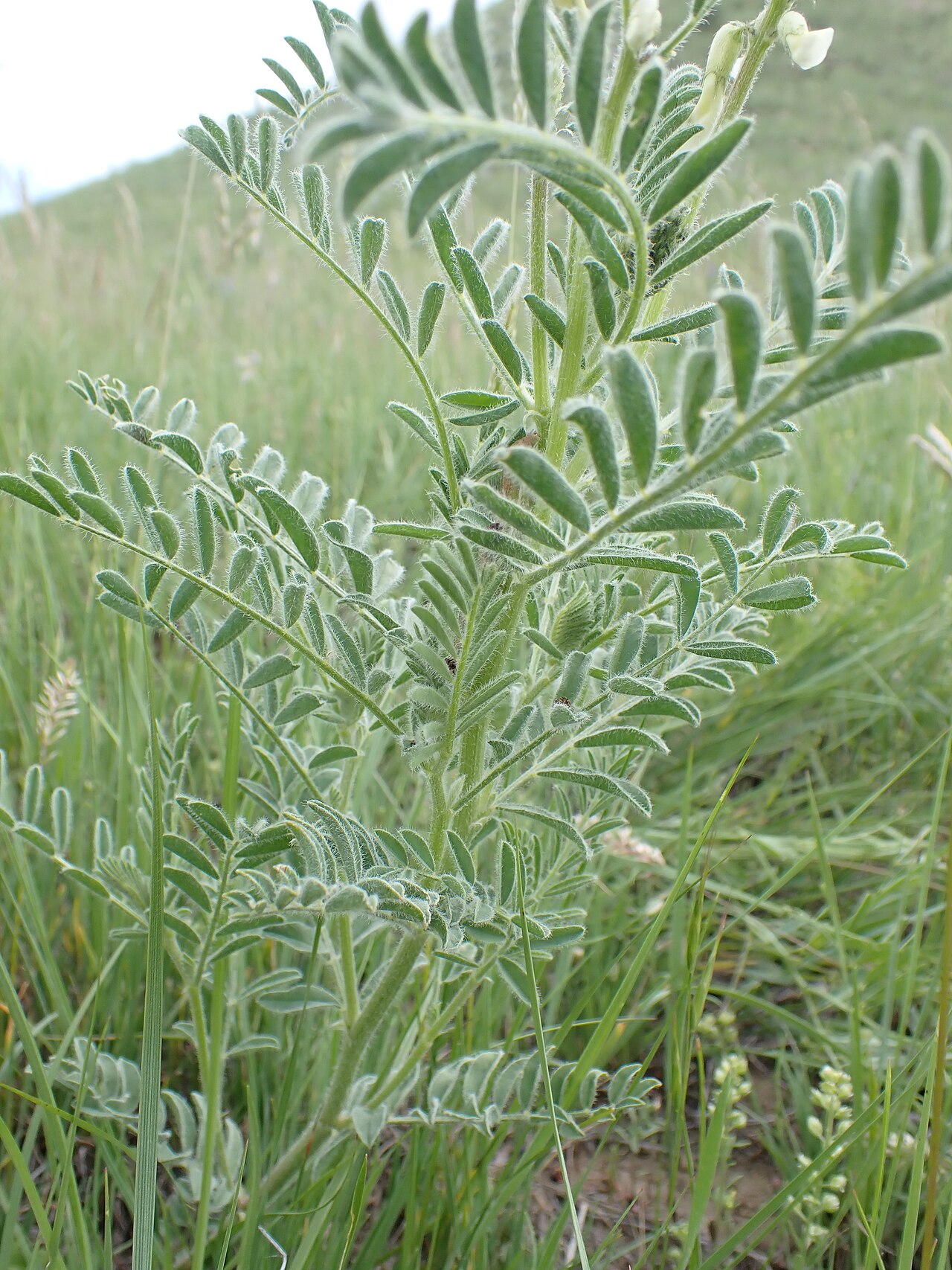
A long-lived perennial with a deep taproot and a woody crown. Several to many stout, erect or ascending stems grow from the base to form a clump about 16 to 28 inches tall. Stems and leaves are covered with long, soft, spreading white hairs, giving the plant a shaggy, gray-green look.
Leaves
The leaves are alternate and pinnately compound, about 2 1/2 to 5 1/2 inches long, with roughly 15 to 33 narrow, oblong leaflets. The leaflets are hairy, especially underneath, and often slightly folded.
Flowers
Flowers are borne in elongated, dense to somewhat loose spikes (racemes) on stalks that rise above the leaves. Each pea-like flower is about 3/4 to 1 inch long, white to cream or pale yellowish, sometimes with a purplish tip on the keel. The calyx is hairy, often with black hairs mixed in. It blooms from about May to July.
Fruit
The pods are about 1 1/2 inches long, narrow, hairless, and hang downward on a short stalk. They have a deep groove along the lower side, which is a key feature for identification, and they dry to a papery tan.
Look-alikes
Canadian milkvetch (A. canadensis) has greenish-cream flowers in crowded spikes, nearly hairless leaves, and erect pods. White locoweed (Oxytropis sericea) has silky, silvery leaves all at the base, leafless flower stalks and keel petals with a sharp point; it is a dangerous locoweed. Other white-flowered milkvetches are smaller or have different pods, so check the hairy foliage and grooved, drooping pods.
Quick Facts
| Scientific Name | Astragalus drummondii |
| Family | Fabaceae (pea family) |
| Plant Type | Herbaceous perennial |
| Mature Height | 16–28 in |
| Mature Spread | 12–24 in |
| Growth Rate | Moderate |
| Sun Exposure | Full sun |
| Water Needs | Low; drought tolerant |
| Soil Type | Sandy, loamy or gravelly well-drained soils |
| Soil pH | Neutral to alkaline (about 6.5–8.5) |
| Bloom Time | May–July |
| Flower Color | White to cream |
| Fall Color | None; stems dry to tan |
| Fruit | Drooping, hairless pods with a deep groove underneath |
| Deer Resistant | Unknown; treat as potentially toxic to livestock |
| USDA Hardiness Zones | 3–7 |
Native Range
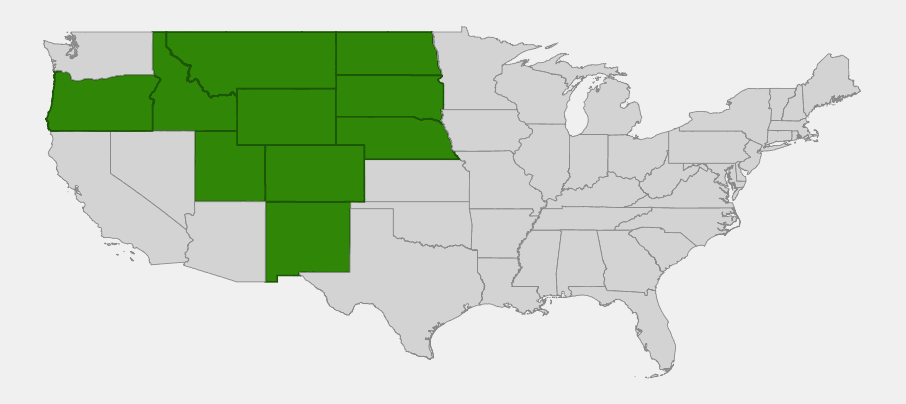
USDA PLANTS lists Drummond’s milkvetch as native to Colorado, Idaho, Montana, Nebraska, New Mexico, North Dakota, Oregon, South Dakota, Utah and Wyoming. In Canada it grows in Alberta, Saskatchewan and British Columbia. It is most common in Montana, Wyoming, the western Dakotas, western Nebraska and Colorado.
It reaches eastern Idaho, central Utah and northern New Mexico at the edges of its range. The USDA record for Oregon appears to be an outlying record; the species is rarely if ever reported there today.
It grows in mixed-grass and shortgrass prairie, sagebrush steppe, foothill grasslands, open ponderosa pine and oak woodland, on hillsides and along roads. It tolerates both dry and moderately moist soils and often increases on disturbed and heavily grazed ground.
📋 Regional plant lists featuring Drummond’s Milkvetch: Idaho, Eastern Oregon & Eastern Washington · Montana & Wyoming · Nebraska, Kansas & Eastern Colorado · Utah & Western Colorado · North Dakota, South Dakota & Western Minnesota
Growing & Care Guide
Drummond’s milkvetch is a tough prairie perennial for dry, sunny sites in the northern Plains and Rocky Mountain region. It is rarely sold but can be grown from seed. Because many milkvetches are toxic, avoid planting it where livestock graze or where children might eat the pods.
Light
Full sun. It becomes floppy and blooms poorly in shade.
Soil & Water
Plant in well-drained sandy, loamy or gravelly soil. It is drought tolerant once established and rarely needs watering in its native region. Avoid wet, heavy soils, where the crown can rot.
Planting Tips
Sow seed directly in fall, or start seedlings in deep pots to protect the taproot and plant them out in spring. Once established, the taproot makes it hard to move. It mixes well with native bunchgrasses and other prairie wildflowers.
Pruning & Maintenance
Cut stems back after seed has dropped or in early spring. Little other care is needed.
Propagation
By seed. The hard seed coat should be scarified (nicked or rubbed with sandpaper) before sowing, or soaked in hot water. Seed germinates best in warm soil. Like other legumes, it forms root nodules with nitrogen-fixing bacteria.
Landscape Uses
- Prairie restoration: a native legume for dry grasslands
- Pollinator gardens: spring flowers for bumble bees
- Dry meadows: showy white spikes among bunchgrasses
- Roadside plantings: tolerates disturbance and dry soil
- Wildflower identification: a common, distinctive prairie milkvetch
Wildlife & Ecological Value
Drummond’s milkvetch is part of the native legume community of western grasslands, which feeds pollinators and enriches the soil.
For Pollinators
The pea flowers are pollinated mainly by bumble bees and other strong native bees that can open the keel. Milkvetches are also host plants for the caterpillars of several butterflies, including some blues and sulphurs.
For Birds
Seeds may be eaten by ground-feeding birds such as grouse and sparrows, though it is not a major food source.
For Mammals
Because many milkvetches are toxic, grazing animals often avoid them. Its value as forage is uncertain, and ranchers should not assume it is safe.
Ecosystem Role
As a legume, it hosts nitrogen-fixing bacteria in its root nodules, adding nitrogen to prairie soils. Its deep taproot helps it survive drought and grazing.
Cultural & Historical Uses
The species is named for Thomas Drummond (about 1790–1835), a Scottish naturalist who collected plants in the Canadian Rockies and prairies in the 1820s and later in Texas. Sir William Hooker described it in Flora Boreali-Americana from Drummond’s collections.
The genus name Astragalus is an ancient Greek name for a legume. The common name “milkvetch” comes from an old belief that some species increased milk production in goats.
With several thousand species, Astragalus is the largest genus of flowering plants in the world. Western North America is one of its centers of diversity, and many species are found nowhere else.
Frequently Asked Questions
Is Drummond’s milkvetch poisonous?
Many milkvetches are poisonous to livestock. Samples of Drummond’s milkvetch tested in New Mexico did not contain swainsonine, the main locoweed toxin, but its chemistry is not fully known. Never eat it, and don’t treat it as safe forage.
Is Drummond’s milkvetch a locoweed?
It is not usually called a locoweed, but it belongs to the same genus as several locoweeds. Locoweeds contain swainsonine, which was not found in tested samples of this species.
How can I identify Drummond’s milkvetch?
Look for a tall, bushy clump of shaggy-hairy, gray-green stems and leaves, spikes of white to cream pea flowers, and hairless, drooping pods with a deep groove underneath.
Where does it grow?
In prairies, sagebrush and open foothill woodland from Alberta and Saskatchewan south to Colorado, Utah and New Mexico.
Is it good for pollinators?
Yes. Bumble bees and other native bees visit the flowers, and milkvetches are host plants for several butterflies.

Looking for a nursery that carries Drummond’s Milkvetch?
Browse our native plant nursery directory: Colorado · Idaho · Montana · Nebraska, New Mexico & North Dakota · Oregon · South Dakota & Utah · Wyoming

