
Yellow Columbine (Aquilegia flavescens)
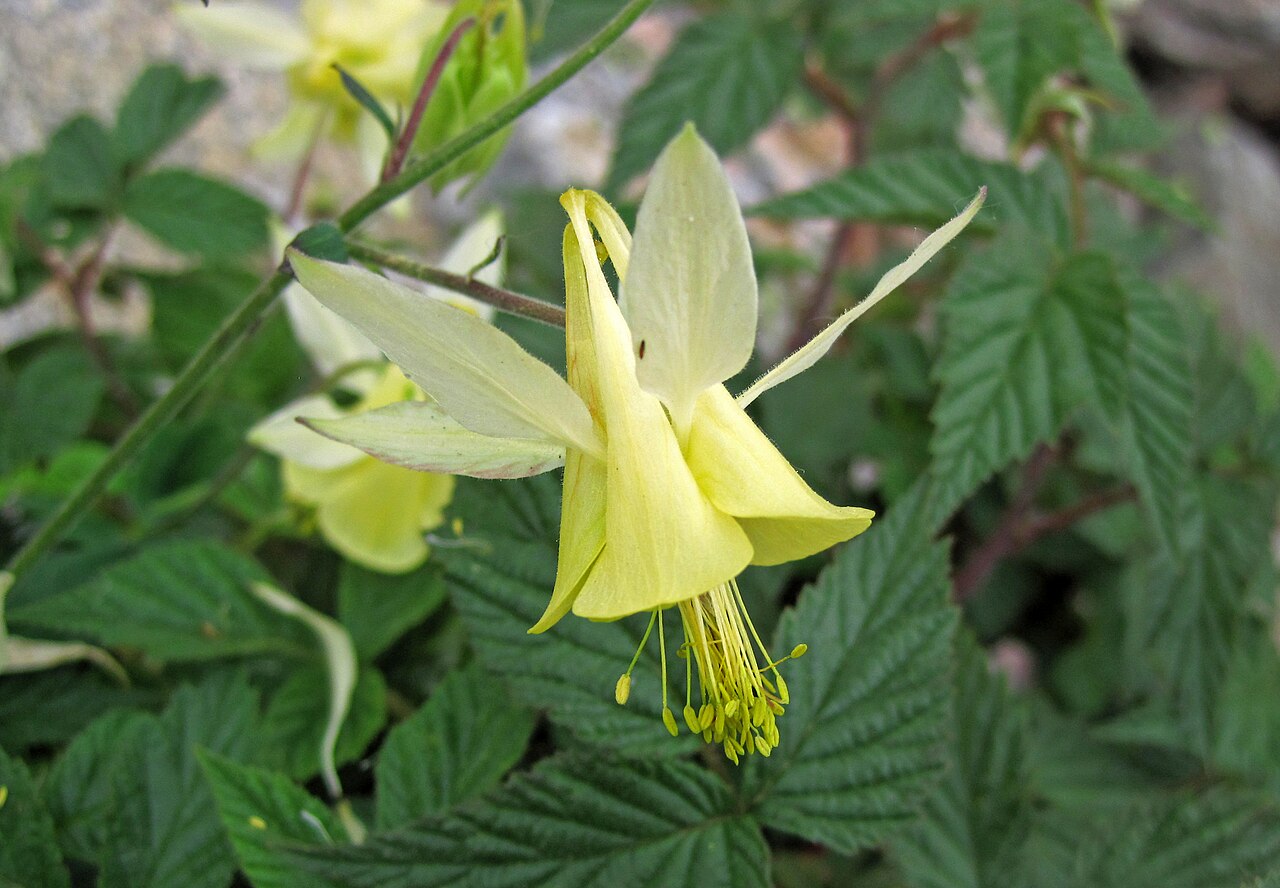
Aquilegia flavescens, known as Yellow Columbine, is a graceful mountain wildflower of the northern Rocky Mountains and the inland Pacific Northwest. In early to midsummer it holds nodding flowers about 1 to 1½ inches long on slender, branching stems 8 to 30 inches tall. Each flower has pale to lemon-yellow sepals, a cup of yellow or cream petals and five short spurs that curve inward into hooks at the tips. The leaves are the familiar lacy, three-part columbine leaves.
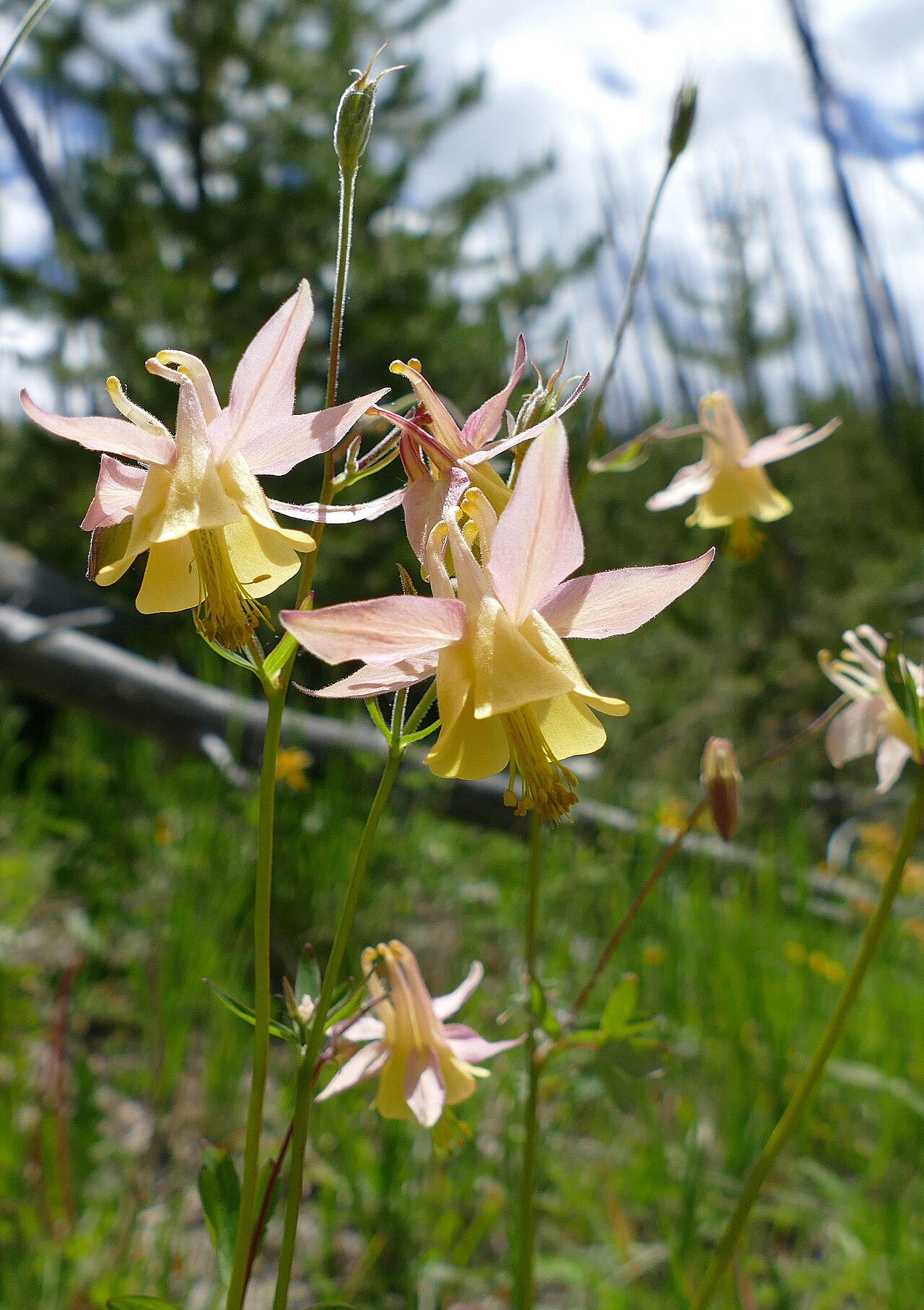
It belongs to the buttercup family (Ranunculaceae) and grows in moist subalpine meadows, avalanche chutes, open conifer woods, rocky slopes and talus, often at high elevation. Some plants have pinkish or salmon-tinged sepals, and where it grows with red-and-yellow western columbine, the two species hybridize and produce plants with intermediate colors.
Yellow columbine is a fine native plant for cool, moist gardens in and near the mountains, and it is a favorite of bumble bees and hawk moths. Like other columbines it is mildly toxic and should not be eaten. This guide covers identification, range, growing tips and its value to wildlife.
Identification
Look for nodding, pale yellow columbine flowers with short, hooked spurs in mountain meadows and open woods of the northern Rockies in summer. The hooked spurs and pale color set it apart from the other columbines in its range.
Stems & Roots
Plants grow from a thick, woody taproot and branched crown. The flowering stems are upright, slender and branched, usually 8 to 30 inches tall, with a few smaller leaves. The plants are smooth to slightly hairy, and the upper stems may be glandular.
Leaves
Most leaves are basal, on long stalks. They are twice divided into three (biternate), with rounded, deeply lobed leaflets, green above and paler beneath. Each leaflet is borne on its own short stalk, giving the foliage a delicate, airy look.
Flowers
The flowers nod at the ends of the stems and branches. Five spreading sepals, about ½ to 1 inch long, are pale yellow, lemon yellow or sometimes pink or salmon. Five petals form a cup in the center with rounded, yellow to cream blades, and each petal extends backward into a hollow nectar spur about ⅓ to ¾ inch long that curves inward to a hooked tip. Many yellow stamens hang below the petals. Bloom time is June to August, depending on elevation and snowmelt.
Fruit & Seeds
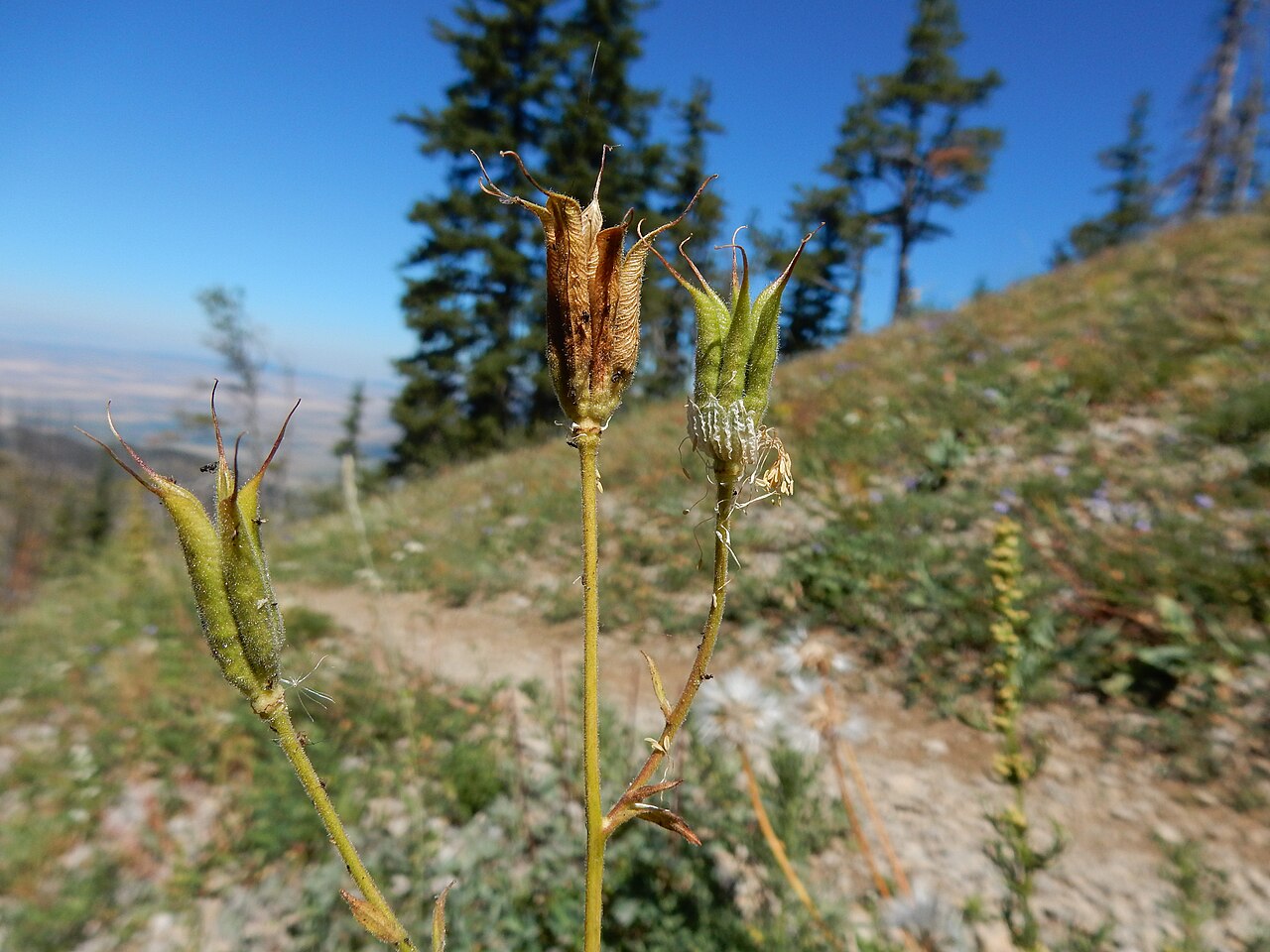
Each flower produces a cluster of five erect, slender pods (follicles) about ¾ to 1 inch long with pointed beaks. They split down one side in late summer to release many small, shiny black seeds.
Look-alikes
Western columbine has red sepals and spurs with yellow petal blades, and its spurs are straight rather than hooked. Colorado blue columbine has large, upward-facing blue and white flowers with long, straight spurs. Golden columbine of the Southwest has much longer, straight spurs.
Quick Facts
| Scientific Name | Aquilegia flavescens S. Watson |
| Family | Ranunculaceae (buttercup family) |
| Plant Type | Herbaceous perennial |
| Mature Height | 8–30 in |
| Mature Spread | 8–18 in |
| Growth Rate | Moderate |
| Sun Exposure | Full sun to part shade |
| Water Needs | Moderate; evenly moist soil |
| Soil Type | Moist, well-drained, rocky or loamy soil |
| Soil pH | About 5.5–7.5 |
| Bloom Time | June–August |
| Flower Color | Pale to lemon yellow; sometimes pink- or salmon-tinged |
| Fall Color | Leaves may turn yellowish to reddish |
| Fruit | Cluster of five erect, beaked follicles |
| Deer Resistant | Moderately; occasionally browsed |
| USDA Hardiness Zones | 3–7 |
Native Range
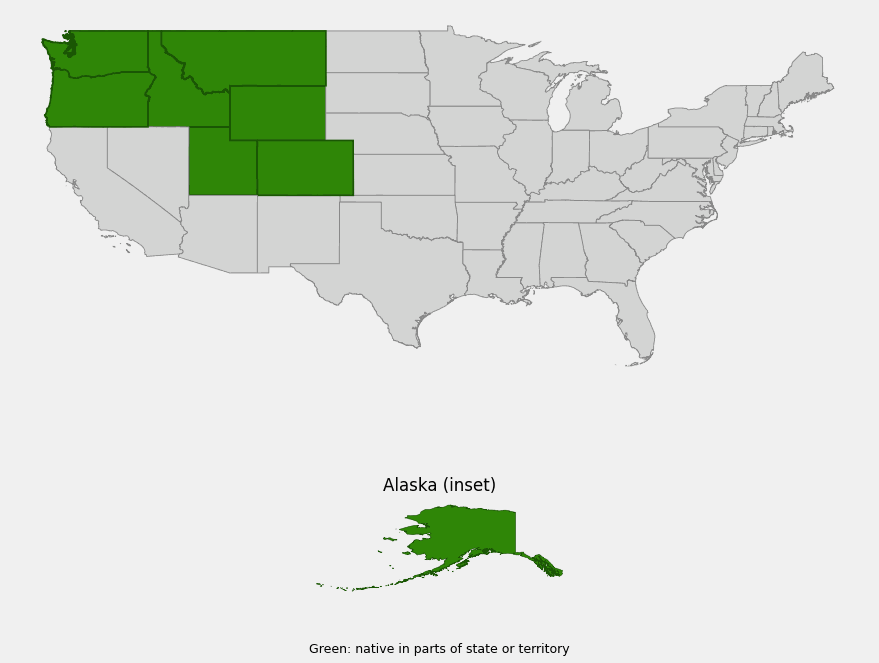
Yellow columbine is native to the mountains of western North America. USDA PLANTS lists it in Montana, Wyoming, Idaho, Washington, Oregon, Utah and Colorado, and also in Alaska. In Canada it grows in British Columbia and Alberta. Its center of abundance is the northern Rocky Mountains of Montana, Idaho, Wyoming, Alberta and southeastern British Columbia, including Glacier and Yellowstone National Parks.
From there it extends west into the mountains of northeastern Oregon, such as the Wallowa and Blue Mountains, and into the Cascades and northeastern mountains of Washington, and south into the mountains of Utah and Colorado. The Alaska record is an outlying one: a herbarium specimen from the lower Taku River valley in southeast Alaska, near the British Columbia border. Plants seen in Alaskan towns are garden escapes or cultivated.
It grows mostly at middle to high elevations, roughly 4,000 to 11,500 feet (1,300 to 3,500 m), in moist subalpine and alpine meadows, along streams, in avalanche chutes, open spruce and fir forests, rocky slopes and talus.
📋 Regional plant lists featuring Yellow Columbine: Montana & Wyoming · Idaho, Eastern Oregon & Eastern Washington · Utah & Western Colorado · Alaska
Growing & Care Guide
Yellow columbine is offered by some native nurseries and seed companies in the northern Rockies and Pacific Northwest. It is easiest to grow in regions with cool summers and cold winters. Safety note: like other columbines, its seeds and roots contain compounds that can be harmful if eaten. Do not eat any part of the plant, and keep children and pets from chewing on it.
Light
Give it full sun in cool mountain gardens and part shade, especially afternoon shade, in warmer lowland gardens.
Soil & Water
It prefers moist but well-drained soil, ideally gravelly or rocky loam with some organic matter. Water regularly during dry spells, especially in its first year. It dislikes soggy soil in winter and long periods of heat and drought.
Planting Tips
Plant in spring or early fall, setting the crown level with the soil. Space plants about a foot apart. It looks best in small groups at the edge of a woodland or rock garden, or among other mountain wildflowers.
Pruning & Maintenance
Remove faded flower stems to tidy plants, or leave some to set seed. Like many columbines, individual plants may live only a few years in gardens, but they reseed. Leaf miners can make pale trails in the leaves; cut damaged foliage back after bloom and new leaves will grow.
Propagation
Grow it from seed. Sow outdoors in fall, or give seed a cold, moist stratification of about 3 to 4 weeks before sowing in spring. Seedlings usually bloom in their second year. Columbines hybridize readily, so seed from gardens with other columbines may not come true.
Landscape Uses
- Mountain and rock gardens: an airy, pale yellow accent among rocks and other alpine plants
- Woodland edges: for light shade under conifers in cool-summer regions
- Hummingbird and pollinator gardens: attracts bumble bees, hawk moths and sometimes hummingbirds
- Meadow restoration: fits subalpine and montane meadow plantings within its range
- Native plant gardens: a regional alternative to non-native yellow garden columbines
Wildlife & Ecological Value
Yellow columbine is an important early-summer nectar plant in the mountains, with a flower shaped for long-tongued pollinators.
For Pollinators
Nectar collects at the tips of the spurs, where it can be reached by long-tongued insects such as bumble bees and hawk moths. Bumble bees sometimes bite holes in the spurs to rob nectar, and smaller bees then use the holes too. Bees also gather pollen from the hanging stamens. Hummingbirds visit occasionally, especially pinkish-flowered and hybrid plants.
For Birds
Hummingbirds visit the flowers for nectar, and some seed-eating birds eat the small black seeds that fall from the open pods.
For Mammals
Deer and elk may graze it occasionally, but it is not a preferred food. Small rodents may eat the seeds.
Ecosystem Role
Yellow columbine is part of the diverse wildflower community of subalpine meadows and forest openings. Where it meets western columbine, it hybridizes freely, and botanists have studied these hybrid zones to learn how flower color and spur shape affect which pollinators visit.
Cultural & Historical Uses
Sereno Watson described Aquilegia flavescens in 1871, from plants collected during the U.S. Geological Exploration of the Fortieth Parallel. The species name means “becoming yellow” or “yellowish.” The genus name Aquilegia is often linked to the Latin aquila, eagle, for the claw-like spurs, and the common name columbine comes from the Latin columba, dove.
Some Indigenous peoples of the West used columbine roots and seeds medicinally, but such uses require expert knowledge, and the plant should not be eaten. The Smithsonian artist Mary Vaux Walcott painted yellow columbine, under the name lemon columbine, for her 1925 portfolio of North American wildflowers.
For hikers in Glacier, Yellowstone and the Canadian Rockies, its pale nodding flowers are among the characteristic wildflowers of summer trails, often growing beside glacier lilies and fleabanes soon after snowmelt.
Frequently Asked Questions
How is yellow columbine different from golden columbine?
Golden columbine (Aquilegia chrysantha) grows in the Southwest and has upward-facing flowers with very long, straight spurs. Yellow columbine grows in the northern Rockies and Pacific Northwest and has nodding flowers with short spurs hooked at the tips.
Why do some yellow columbines have pink flowers?
Pink or salmon-tinged sepals occur naturally in some populations. Pinkish and orange plants may also be hybrids with red western columbine, which grows in many of the same areas.
Is yellow columbine poisonous?
Columbines contain compounds that can be harmful if eaten, especially in the seeds and roots. It is not dangerous to touch, but do not eat any part of it.
Can I grow it in a lowland garden?
Yes, with care. Give it part shade, moist but well-drained soil and water during summer heat. It grows best in cool-summer climates.
Does yellow columbine grow in Alaska?
Only as an outlying record. USDA PLANTS lists Alaska based on a herbarium specimen from the Taku River valley in southeast Alaska, near British Columbia. Its main range is the northern Rockies.


